
The following article is the summary of multiple conversations from the Fluorescent Minerals Facebook group, where people experimented with tenebrescent minerals and reported their observations.
Tenebrescence is a reversible photochromic phenomenon in which a mineral changes color after exposure to ultraviolet radiation and later fades back toward its original state. Unlike ordinary fluorescence, which appears only while a specimen is illuminated, tenebrescence persists after the light source is removed. The effect is especially well known in minerals such as hackmanite, tugtupite, and certain sulfur-bearing sodalites from Greenland and Afghanistan. The long discussion collected from the Fluorescent Mineral Facebook group explored this phenomenon through a series of informal but carefully observed experiments aimed at understanding how ultraviolet light, visible light, heat, and crystal defects interact to produce reversible color changes.
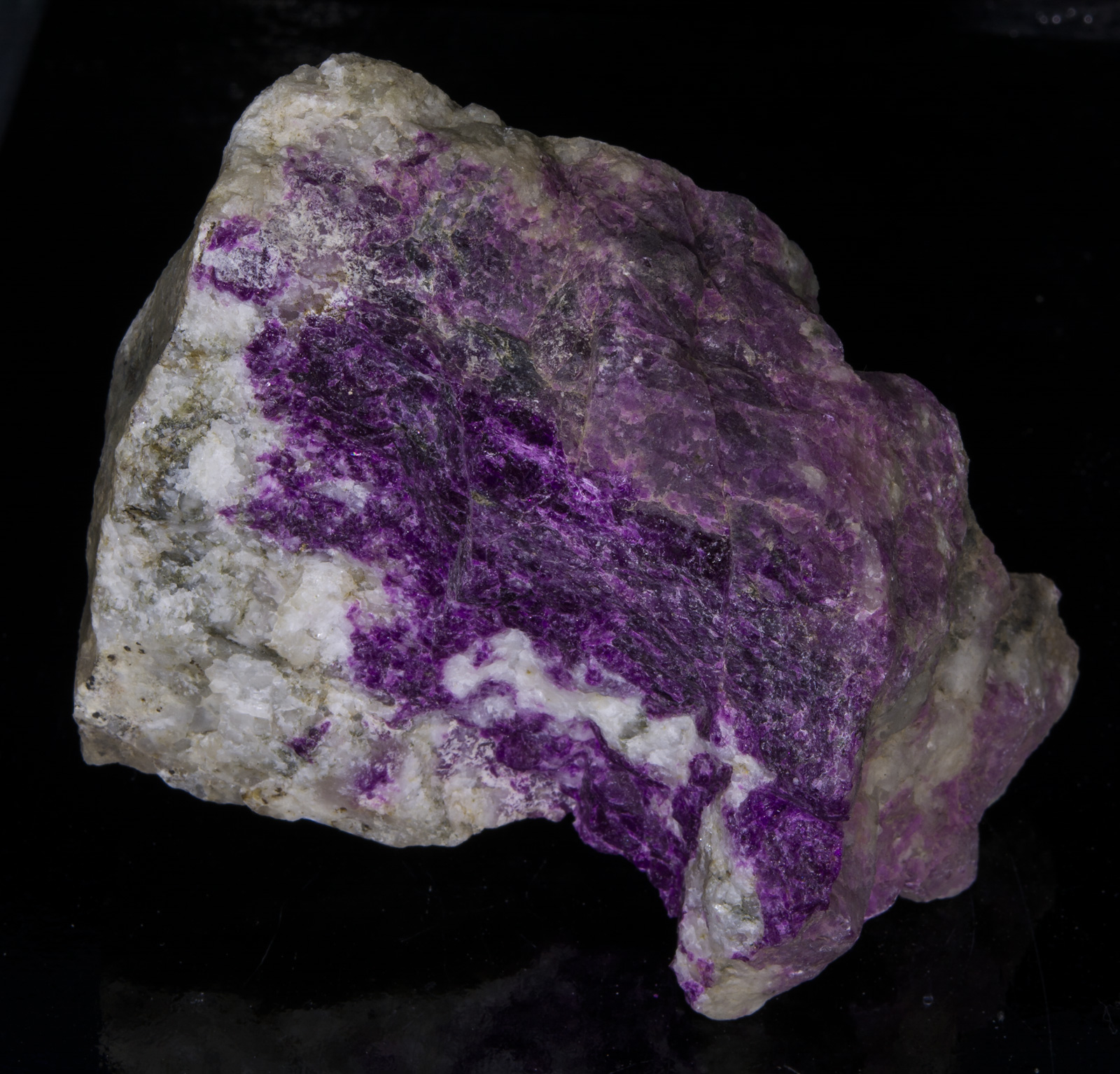
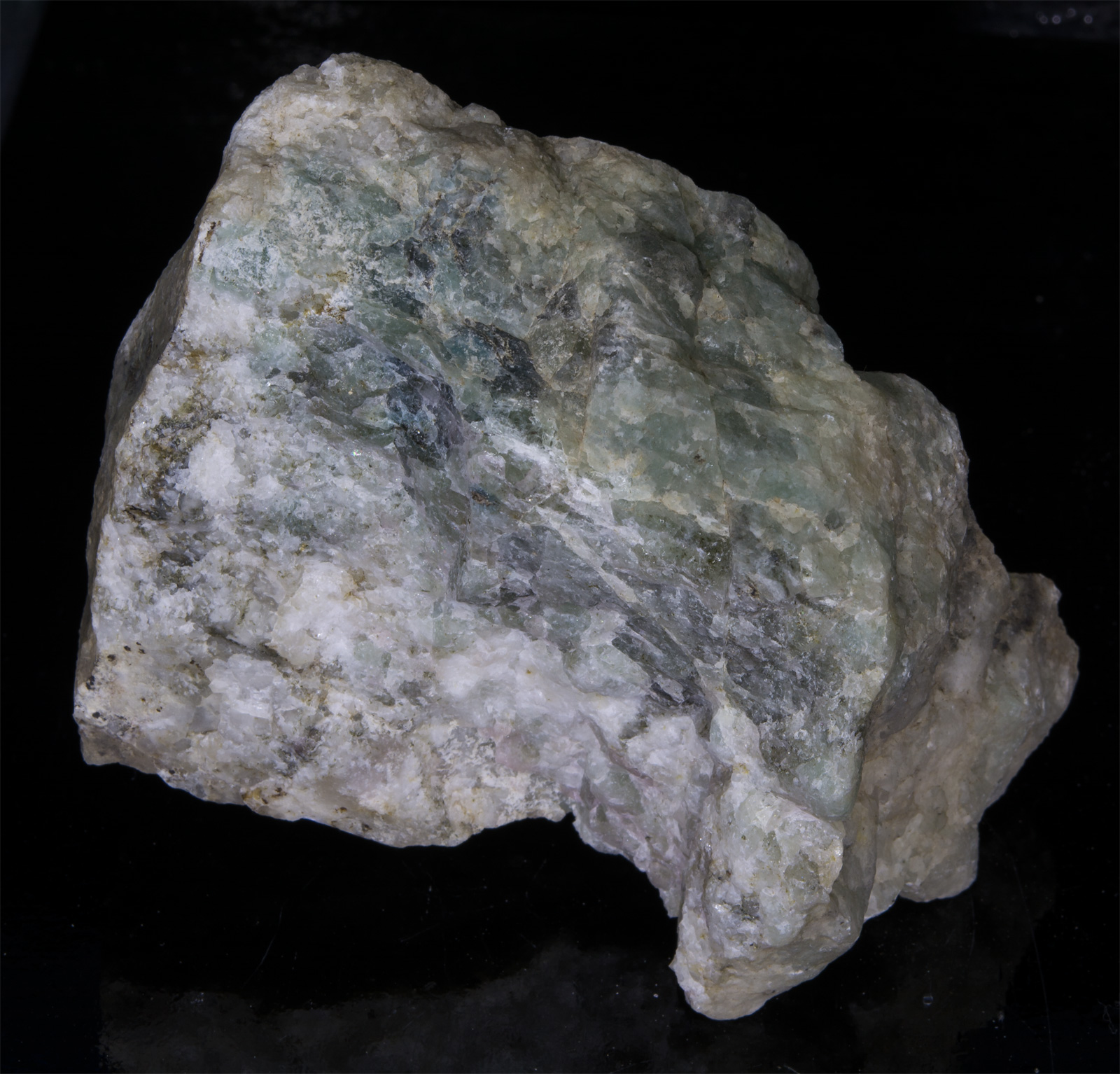
The central idea emerging from the discussion is that tenebrescence is caused by metastable “color centers” within the crystal lattice. Ultraviolet radiation excites electrons into trapped states associated with defects or impurities, most likely sulfur species and lattice vacancies in sodalite-group minerals. These trapped electrons alter the absorption of visible light, causing the mineral to appear colored. Over time, heat or visible light can release or rearrange these electrons, allowing the mineral to fade again.
Tenebrescence & Time
One of the most extensive experiments involved prolonged dark storage of tugtupite specimens. Samples were first exposed to ultraviolet light to induce coloration and then wrapped in aluminum foil or placed in closed boxes inside dark cabinets for periods of several months. Other samples were stored without prior UV excitation as controls. The purpose of the experiment was to test whether tugtupite naturally deepens in color while kept in darkness, a claim occasionally reported by collectors.
The results did not support the hypothesis of spontaneous darkening in darkness. Instead, specimens that had been strongly activated by UV exposure gradually faded over time, though some retained residual coloration for months. The most transparent and intensely colored samples retained their color longest. When re-exposed to ultraviolet light, the color returned rapidly. The experiment suggested that darkness mainly slows bleaching rather than actively producing tenebrescence.
If this is the case, why do ancient buried minerals retain the ability to exhibit strong tenebrescence after millions of years? One proposed explanation was that natural background radiation continuously regenerates or stabilizes color centers underground geological timescales.
Tenebrescence & Heat
A third major line of experimentation involved heating specimens with industrial heat guns. Samples of tugtupite and red sodalite were photographed before heating, exposed to high temperatures for periods typically ranging from ten to twenty minutes, and then re-examined both visually and under ultraviolet light.
Moderate heating generally did not induce tenebrescence by itself. Instead, heat often weakened or erased existing coloration. Some specimens lost fluorescence temporarily after heating, while others lost tenebrescent color but regained it after renewed UV exposure. In several cases, intense heating nearly eliminated visible color entirely, though the tenebrescent response could later be “recharged” with ultraviolet light. Repeated heating cycles appeared to reduce the strength of the effect in some specimens, suggesting partial annealing or permanent modification of defect structures.
These observations supported the idea that thermal energy destabilizes trapped electronic states rather than creating them. The experiments also highlighted an important distinction between fluorescence and tenebrescence: fluorescence often appeared more sensitive to heat damage than the reversible color centers responsible for tenebrescence.
Tenebrescence & Sunlight
Several observations and experiments explored the competing roles of ultraviolet and visible light in the development and fading of tenebrescence. Freshly fractured Greenland sodalite, for example, was sometimes nearly white immediately after exposure, but then slowly developed pink or red coloration when left outdoors under cloudy skies or indirect daylight. Curiously, intense direct sunlight often produced weaker coloration than diffuse light. This behavior suggested that ultraviolet radiation and visible light may act in opposition to one another. Diffuse daylight contains substantial ultraviolet radiation but less intense visible illumination than direct sunlight, potentially allowing color centers to form faster than they are destroyed. In direct sunlight, by contrast, intense visible wavelengths may bleach the color centers almost as rapidly as ultraviolet light creates them.
To investigate this possibility more directly, specimens were also exposed to sunlight filtered through yellow UV-blocking materials, such as protective goggles or filters designed to absorb ultraviolet wavelengths. Since most of the ultraviolet component was removed, any fading would have to result primarily from visible light. The minerals nevertheless faded noticeably under filtered illumination, demonstrating that visible wavelengths alone can destroy or “bleach” tenebrescent color centers after they are formed. Together, these observations led to a proposed two-stage mechanism in which ultraviolet radiation creates metastable electron traps associated with color centers, while visible light destabilizes those traps and restores the original electronic arrangement. This model provided a coherent explanation for why some specimens darken under weak UV-rich diffuse light yet fade in strong direct sunlight dominated by intense visible illumination.
Conclusion
Overall, the experiments collectively supported a coherent picture of tenebrescence as a reversible defect-driven photochromic process. Ultraviolet radiation creates metastable electronic states associated with lattice defects and sulfur-related impurities. Visible light and heat destabilize these states, causing the mineral to fade. The exact balance between activation and bleaching depends strongly on the mineral’s chemistry, defect structure, thermal history, and optical environment. While the experiments discussed were informal and lacked rigorous instrumental controls, together they formed a surprisingly consistent body of observational evidence that aligns well with modern scientific models of photochromic color centers in minerals.