
Originally posted on Nature’s Rainbows in 2018 by Chris Clemens.
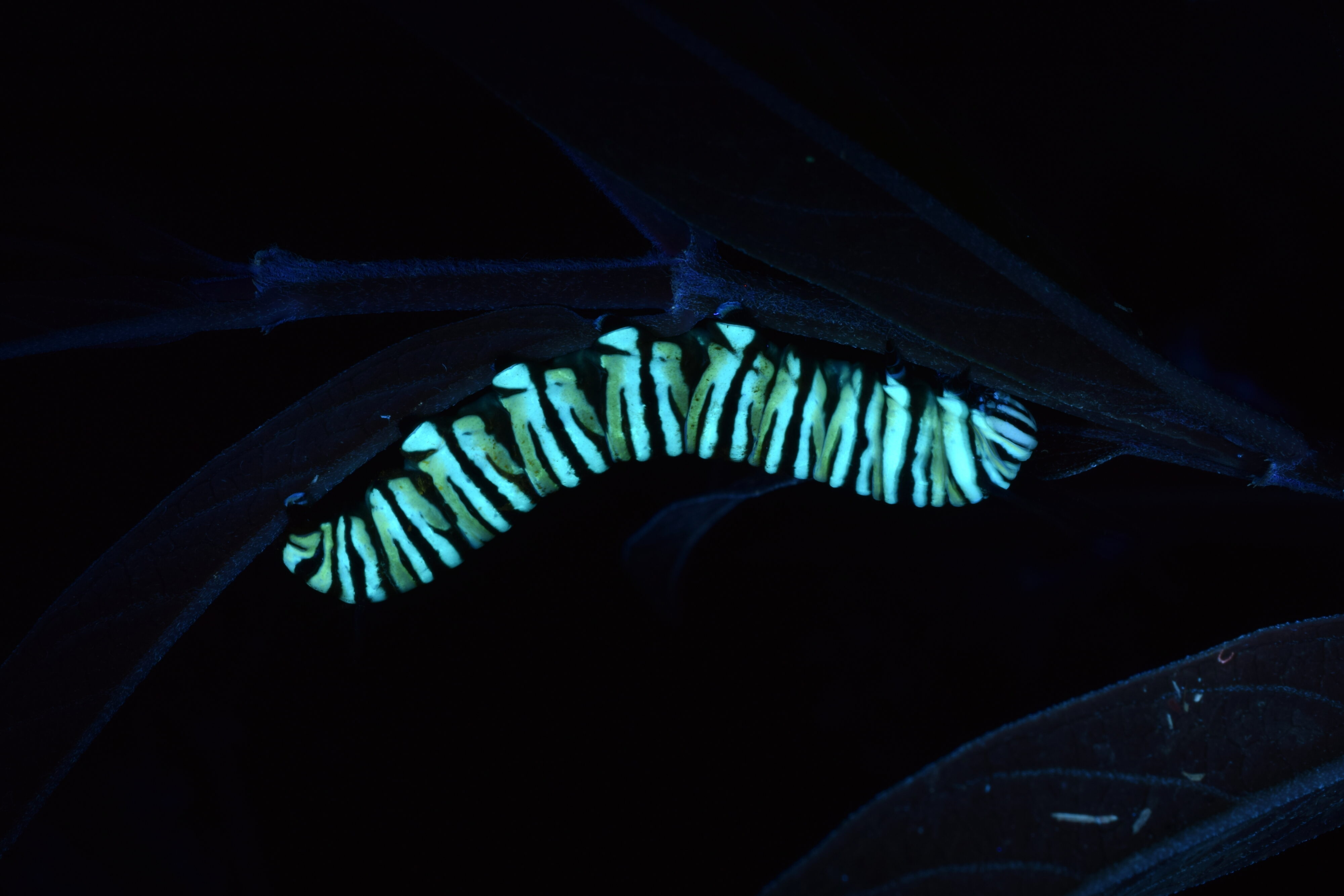
As a biologist, my interest in entomology predates my fascination with fluorescent minerals by decades, so it was only natural that when my wife Kristine and I found some monarch butterfly eggs last summer, I would examine them for fluorescence under UV at their various stages of development into adult butterflies. All butterflies (and moths) undergo 4 primary stages of development through the process of metamorphosis: 1.) egg, 2.) larva, 3.) pupa, and 4.) adult. The idea for this project was conceived when I found a nearly fully developed monarch caterpillar, and on a whim checked it for fluorescence under the high output beam of a Convoy S2+ long wave ultraviolet (UV) flashlight. To my surprise, the larva was fluorescent, and thus this project was born.
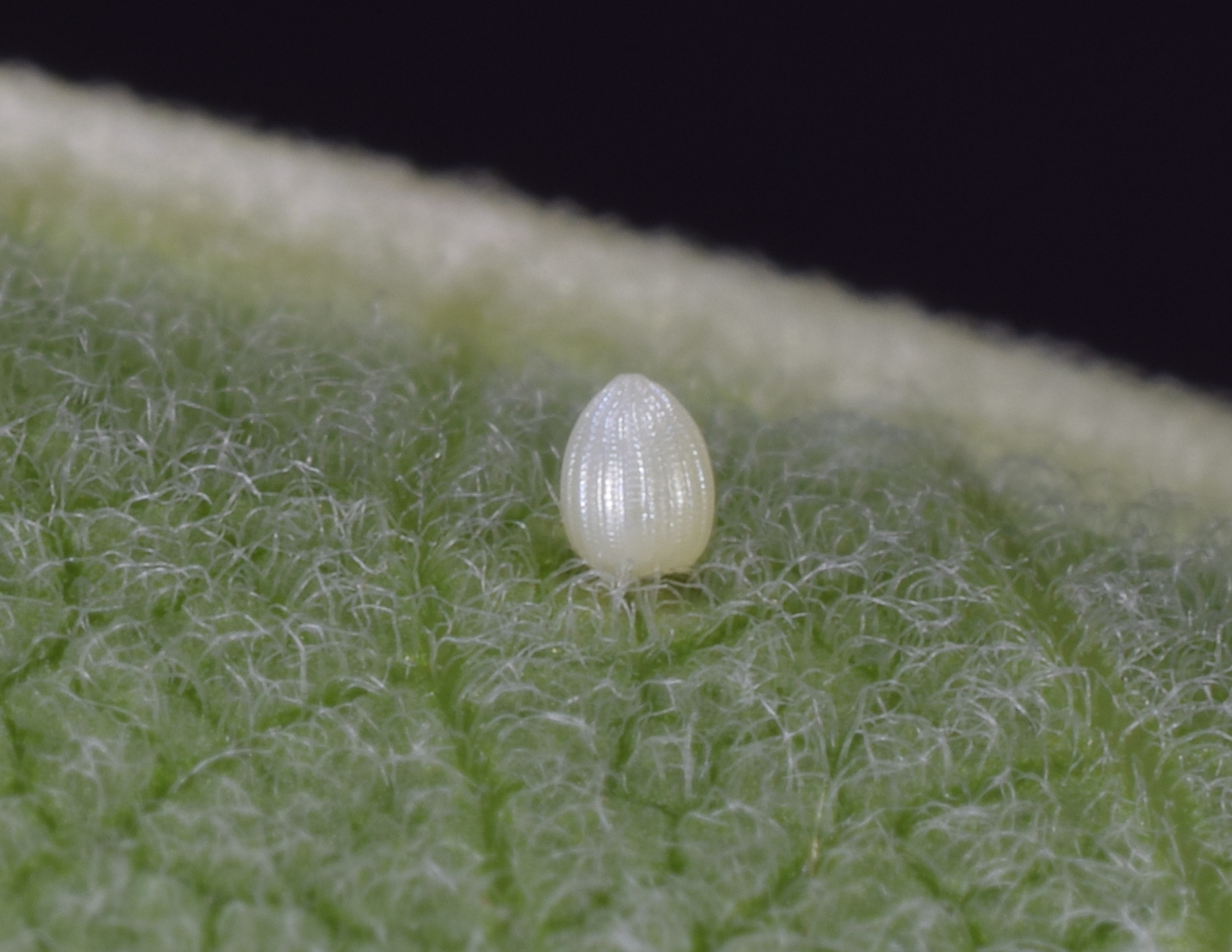
This study begins with a mountain bike ride last summer through the Grand Kankakee Marsh in northwestern Indiana. As we were riding along the trail, my wife and I noticed a female monarch butterfly making the rounds from plant to plant through the local population of milkweed, laying eggs on the undersides of the leaves. Milkweeds of the genus Asclepias are the preferred food plant for the monarch caterpillar, and due to their content of cardenolide glycosides, a family of cardiotoxic steroids, they confer to the monarch larvae and adult butterflies poor taste and toxicity, therefore providing a defense against potential predators that might otherwise eat them. We stopped and collected several milkweed leaves with eggs attached and took them home. The following photograph (Figure 1) shows a close-up view of one of the eggs.
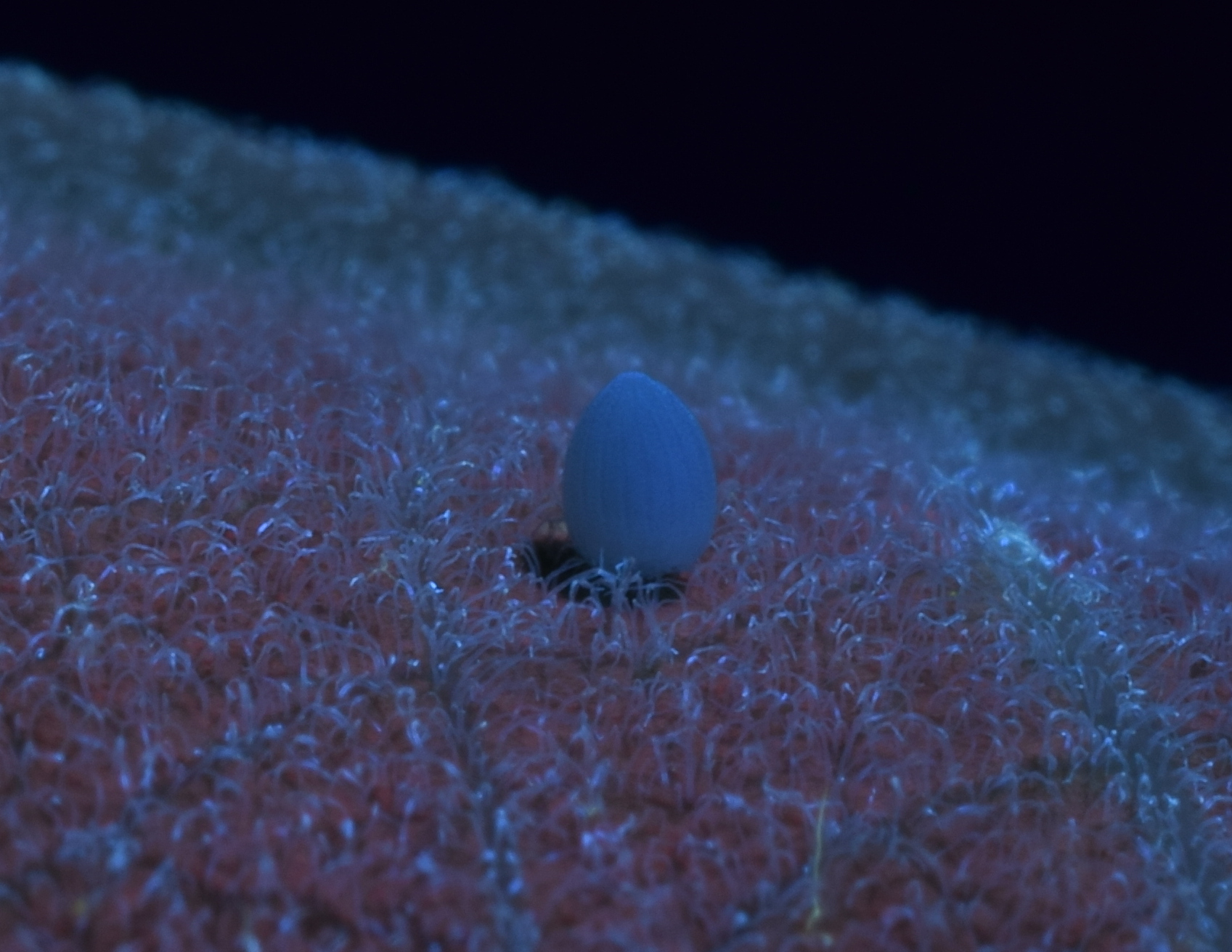
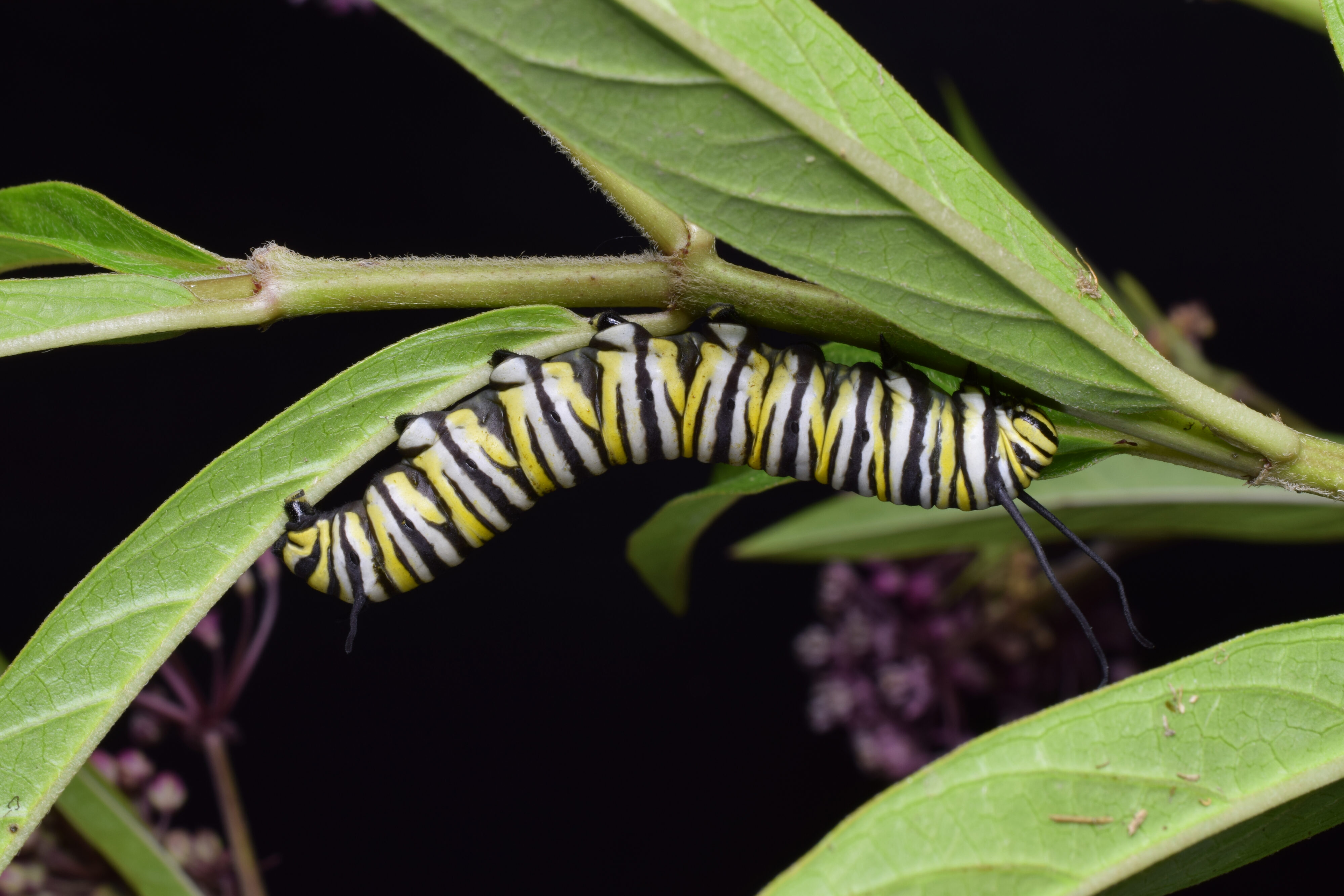
Within several days of finding the eggs, they hatched into tiny monarch larvae, each only a couple of millimeters long. Having a garden planted with native plants in our back yard, including several milkweed species, we had an abundant supply of food plants and were well equipped to raise the hatchling monarch caterpillars. After four molts over the course of approximately 10 days, the monarch caterpillars were full grown. Figure 3, following, shows one of the full grown larva.
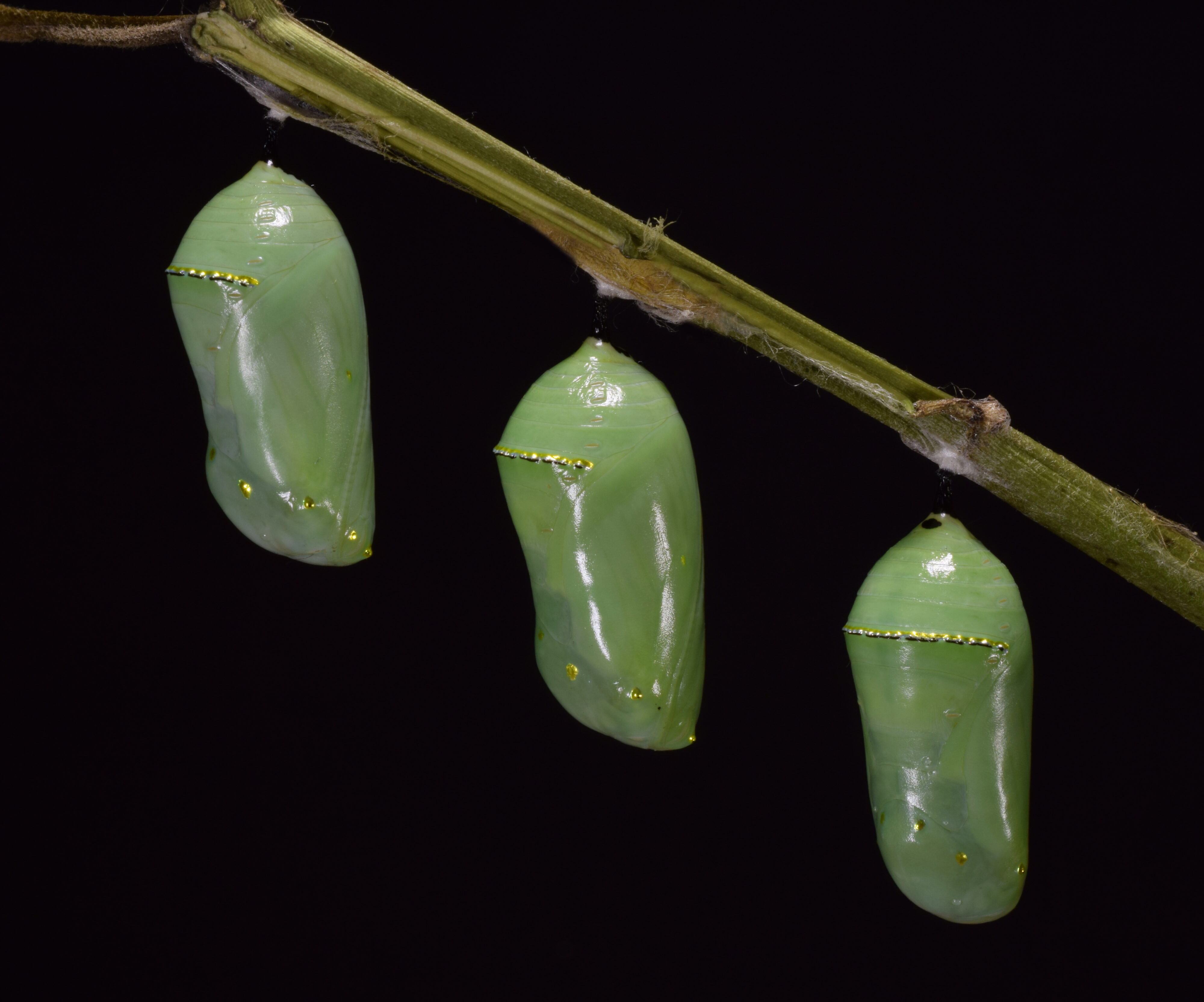
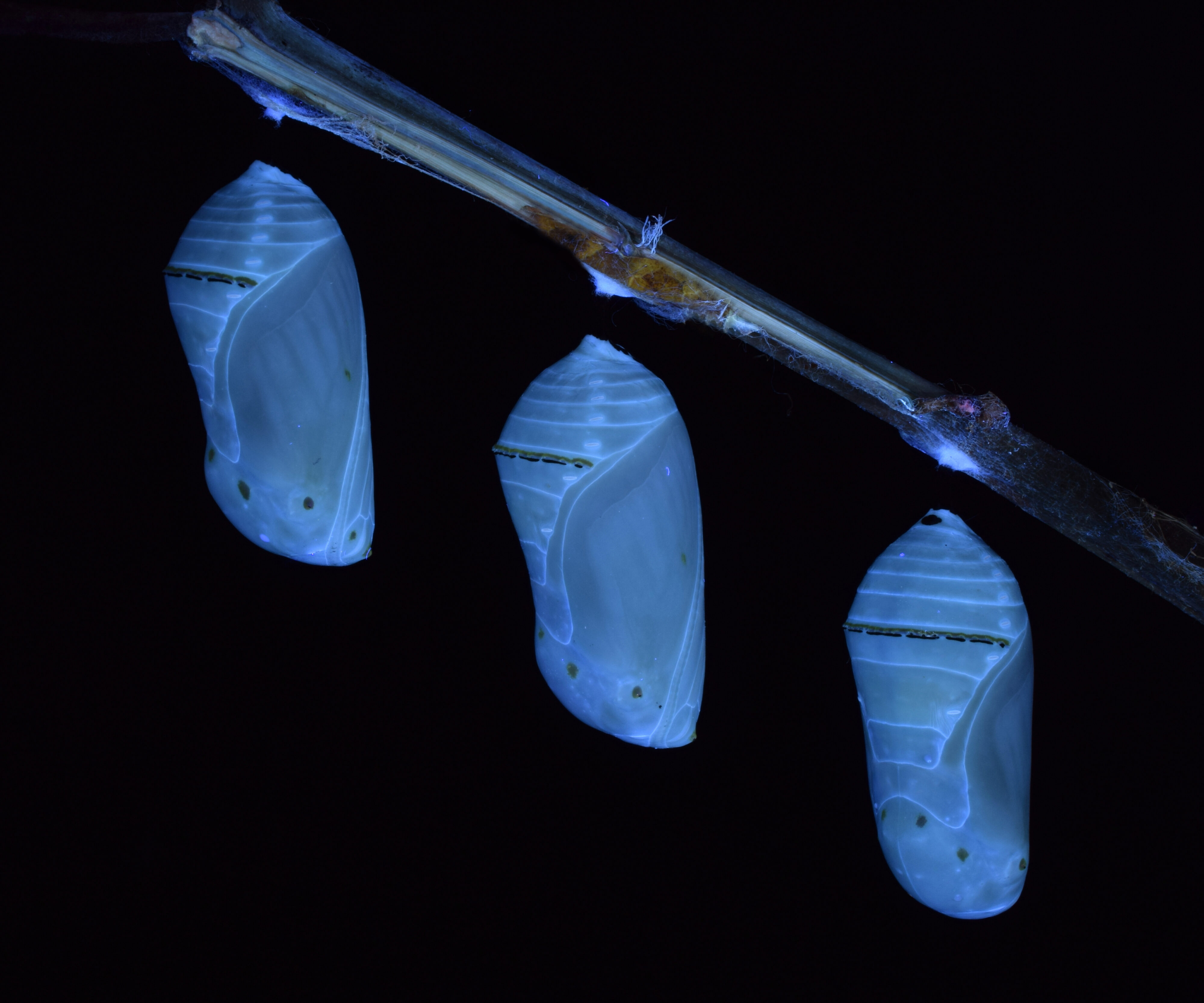
Within 24 hours of taking the photographs of the fully developed larvae, they attached themselves by their rear legs and a pad of silk to the stem of the milkweed plant, hung upside down and shed their skins as caterpillars for the last time. The pupal stage emerged, and quickly hardened into beautiful green chrysalises adorned with metallic gold and black spots. The following photograph (Figure 5) shows three chrysalises.
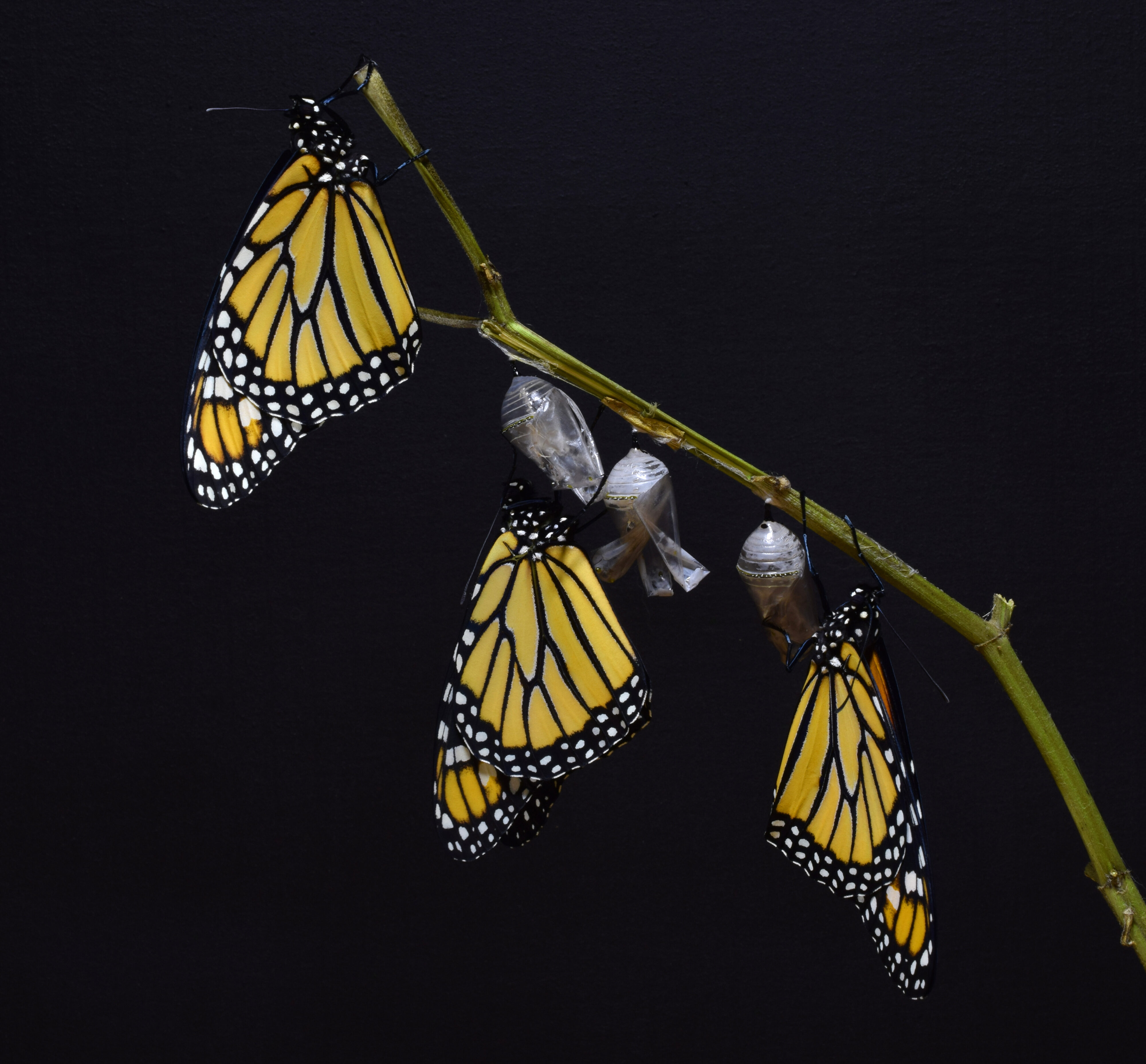
After nearly two weeks, the chrysalises hatched into fully developed, adult monarch butterflies. While hanging from the empty shells of their chrysalises, the adult butterflies pumped fluid into their wings, allowing them to expand and harden over the next several hours. The following picture (Figure 7) shows the adult butterflies a few hours after hatching.
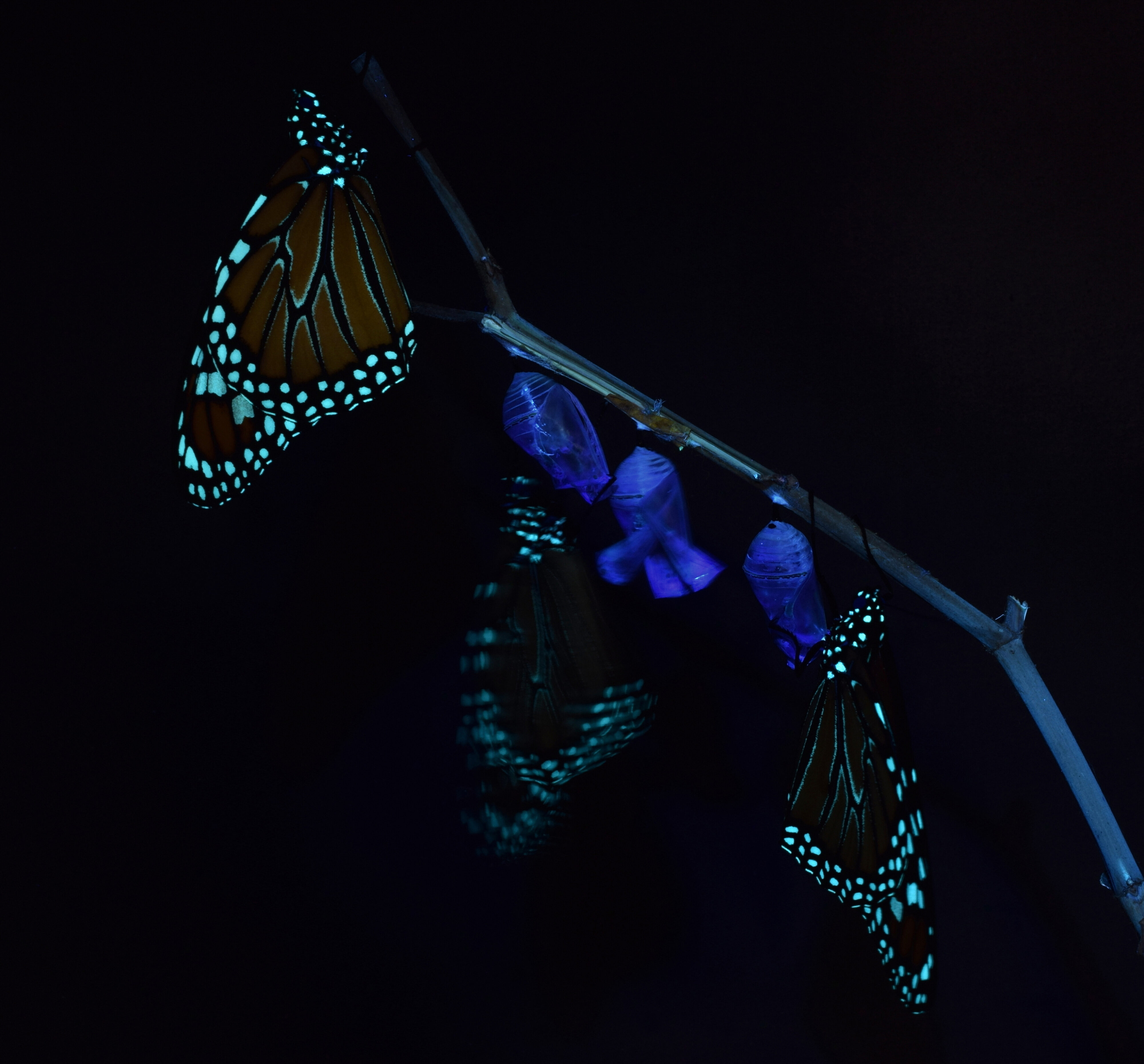
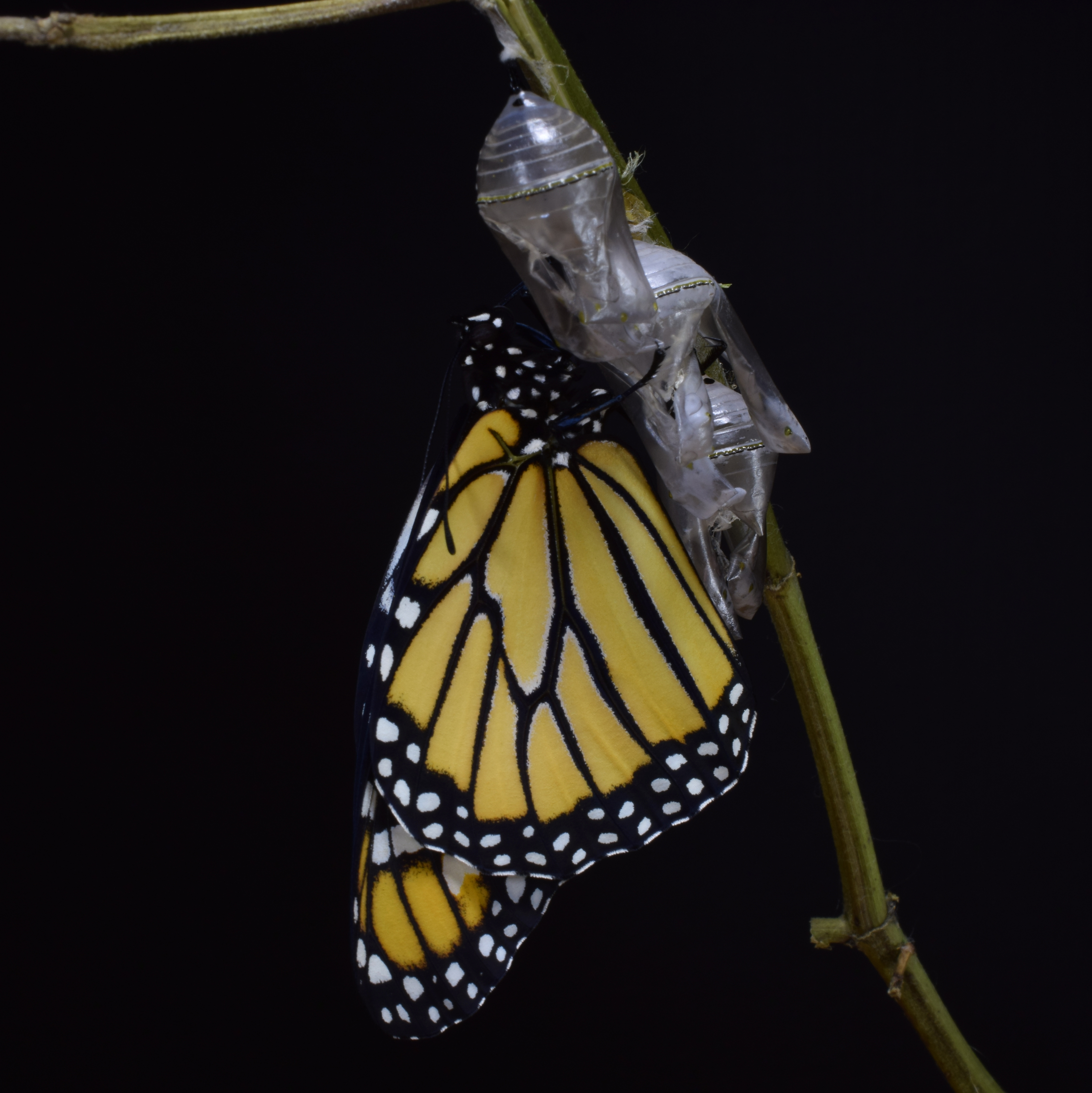
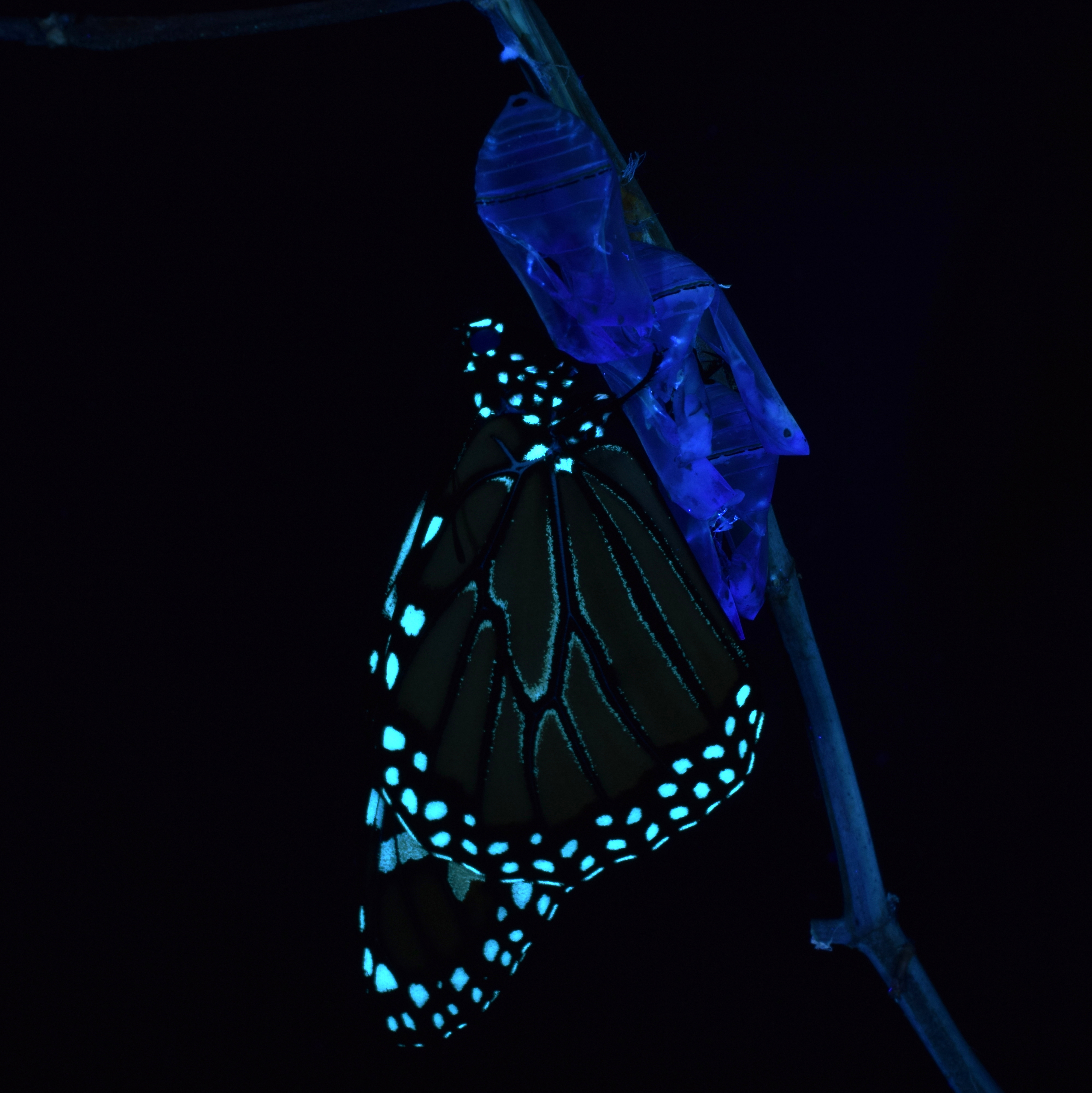
Biofluorescence occurred in the monarch butterfly during all stages of its life cycle except the egg. The mechanism of fluorescence cannot be known with certainty without further analysis to determine the responsible fluorophore(s); however, it may be related to the cardenolide glycosides stored in the bodies of the caterpillar and adult butterflies, as some of these compounds are known to fluoresce light blue under long wave UV. If this is the case, it might explain why the eggs are not significantly fluorescent, as they are produced prior to the consumption of the milkweed food plant from which the cardenolide glycosides are obtained. Alternately, the fluorescence might be activated by a component of the outer cuticle of the larva and chrysalis, such as chitin, which produces blue/white fluorescence in some arthropods. In the adult butterflies, the white fluorescent response of the spots is likely associated with some component of the white wing and body scales. Whether the observed fluorescence plays a biological role in the life of the monarch butterfly, or is simply a biochemical coincidence, is not known. It would be interesting to expand this study to include other species of butterflies, moths, and other insects to determine how widespread the phenomenon of biofluorescence is within the insect world.