
Originally posted on Nature’s Rainbows in 2018 by John Smith.
In early September 2018, after it looked like my grandchildren’s parents were required to prepare for a U.S. Government shutdown on the first of October, I cancelled my plans to take the grandchildren to the fall Franklin Mineral Show (from September 29-30, 2018). As a Plan B, I decided to go to the Midwest Chapter of the Fluorescent Mineral Society (FMS) meeting and fieldtrips near Cave-in Rock, IL from September 28-29. I found two other activities in the region that I could take in for an extended 3-segment trip. My trip started on September 27 and ended on October 2. I flew into Nashville, TN from Washington (DC) Dulles Airport that is about 20 miles from my home.
Trip Segment 1: Keokuk, Iowa and Hamilton, Illinois
Two years ago my wife and I went to Geodefest in Hamilton, IL. Even though the fest is in Illinois and the geode collecting trips are in Illinois and Missouri, the geodes are all named for the earliest collected geodes in that region from Keokuk, Iowa. Today most Keokuk geodes are not collected in Iowa. In 2016, as neophytes, we collected quite a few geodes. However, not having what I call the “gift of the heft,” a lot of our geodes were solid and “undesirable.” Probably better than the collecting was the silver picking from the many dealers there. My take from these dealers included some treasures for my other collecting interests, including agates and fossils. As for fluorescent minerals, there were many more options than you might expect for a Midwestern show. I saw quite a few well-known fluorescent minerals, such as Dugway geodes and Mexican adamite, for sale the first day but I did not purchase any of these, as I focused on fluorescent Keokuk geodes. There must have been some other fluorescent collectors there, because by the end of the fest, these better known fluorescents were sold. The major new finds for me were a few moderately MW FL Midwestern calcites. The calcites included those in Keokuk geodes from Iowa, Missouri and Illinois. Some of the geodes have cream or golden colored fluorescent rinds, too. There were also beautiful natural light calcites from the Linwood Mine in Iowa and the Sweetwater Mine in Missouri. Most of these calcites are quite beautiful MW fluorescents in shades of rose-pink and magenta, also, but they are only moderately bright. Of course there were very reasonably priced beautiful natural light Keokuk geodes, too.
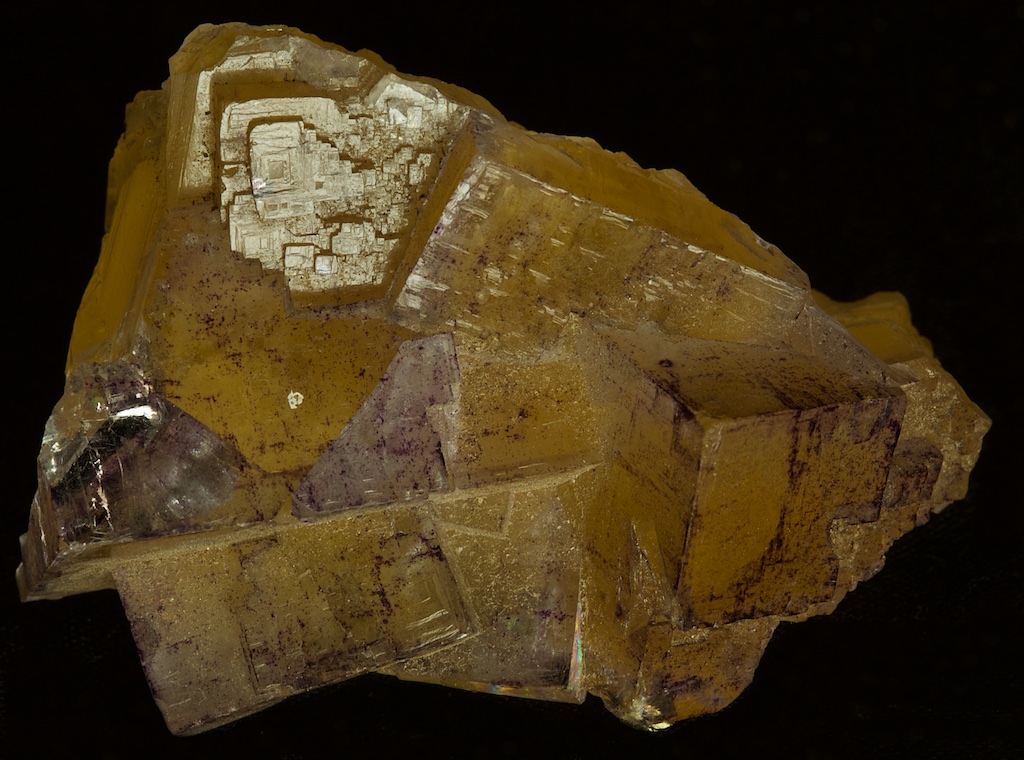
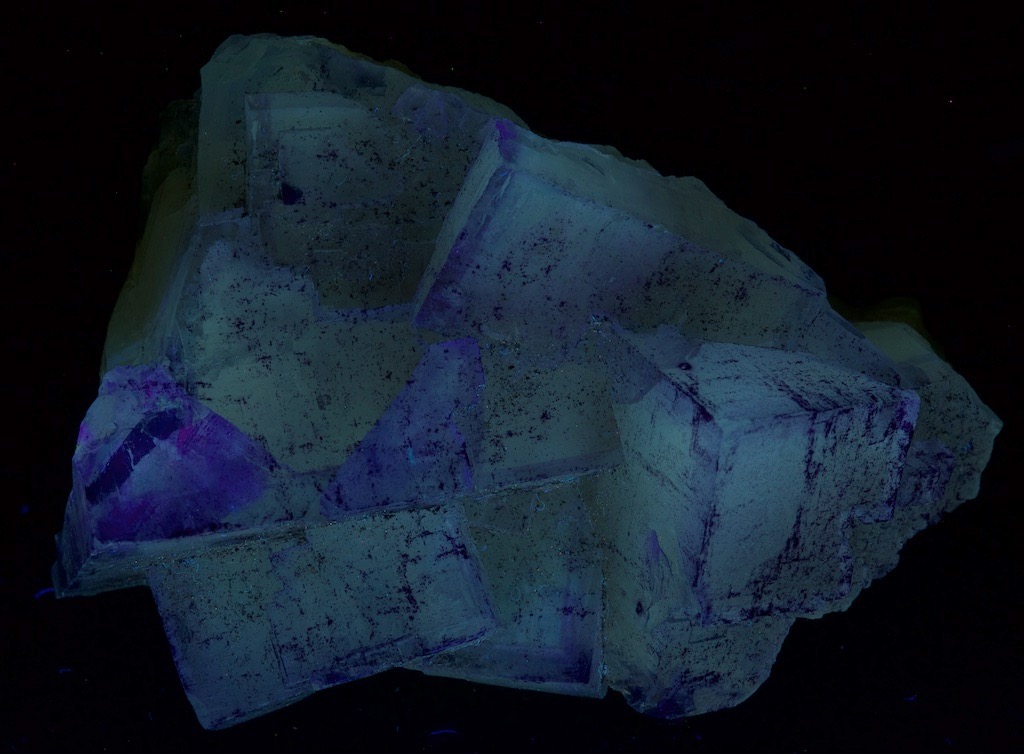
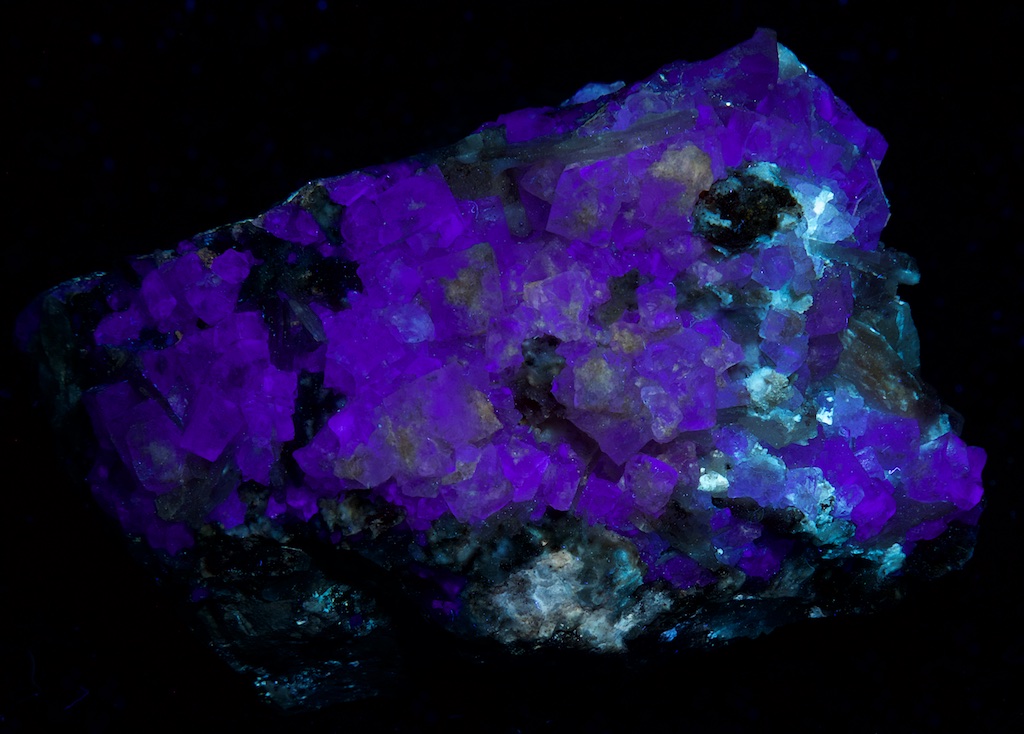
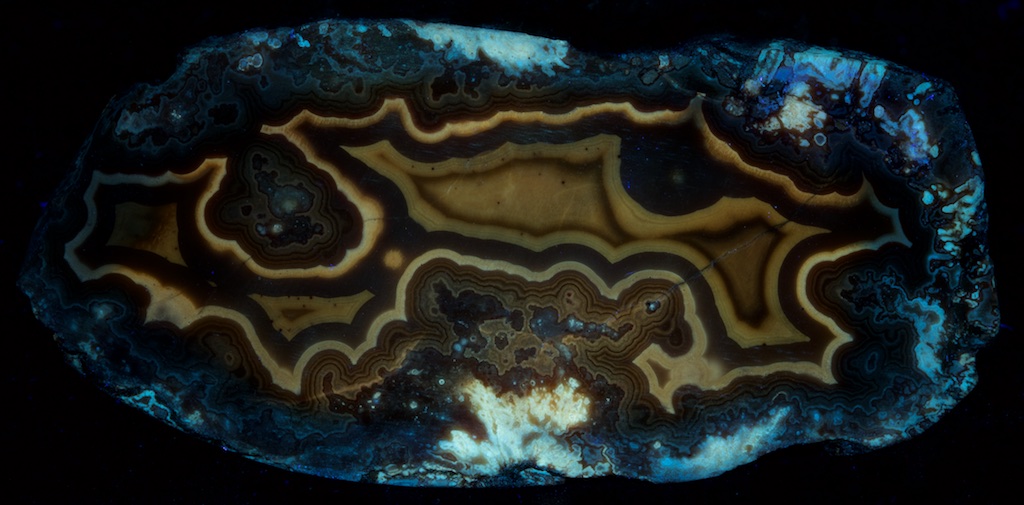
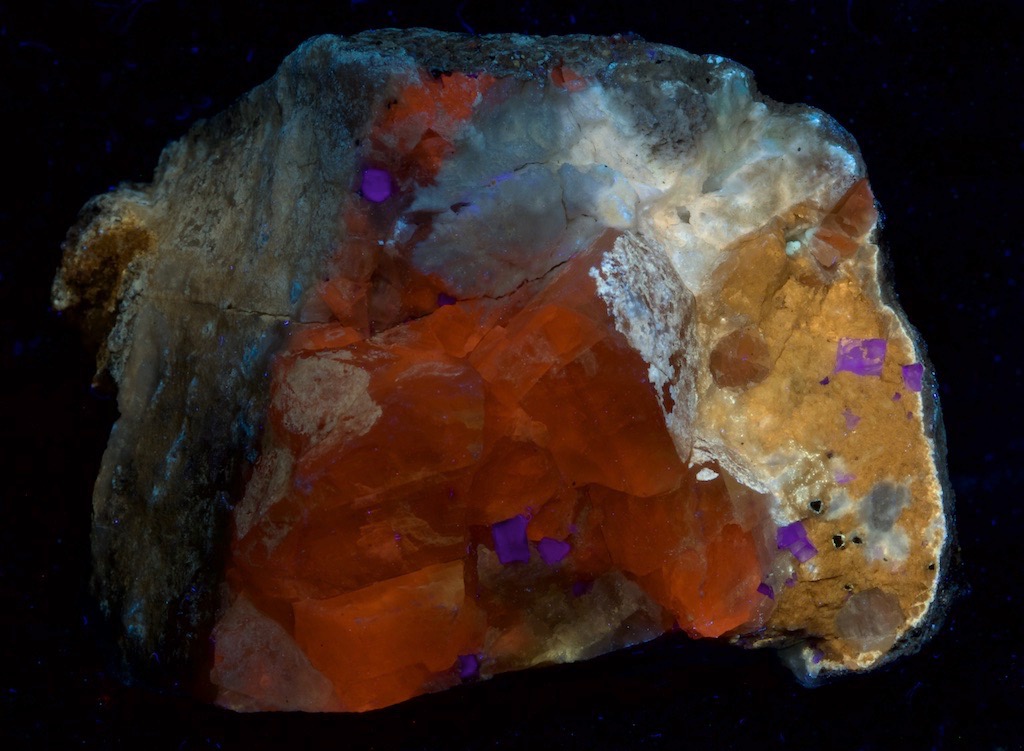
But that was in 2016 and this is 2018. I had such a good silver pick collecting time at the fest in 2016 that I decided to make the long drive to Geodefest on Thursday and then the next day drive back to the Midwest FMS meeting, which included a collecting trip at the Annabel Lee Mine about 6 hours away on Friday night starting at 6 pm. To make it there in time for the collecting trip I had to make it a quick silver pick collecting trip at the Geodefest dealers. I was not disappointed. Even though the fest officially started at 8 am on Friday, several dealers opened up Thursday night for a sneak preview. The first rock I bought was a miniature yellow and violet crystalline fluorite from Cave-in-Rock, IL (see photos 2a and 2b below). The dealer had other nice and larger fluorite crystals but none glowed like that one. I also found some Kentucky agates and one turned out to be fluorescent (see photo 5). There were no fossils that I “had to have.”
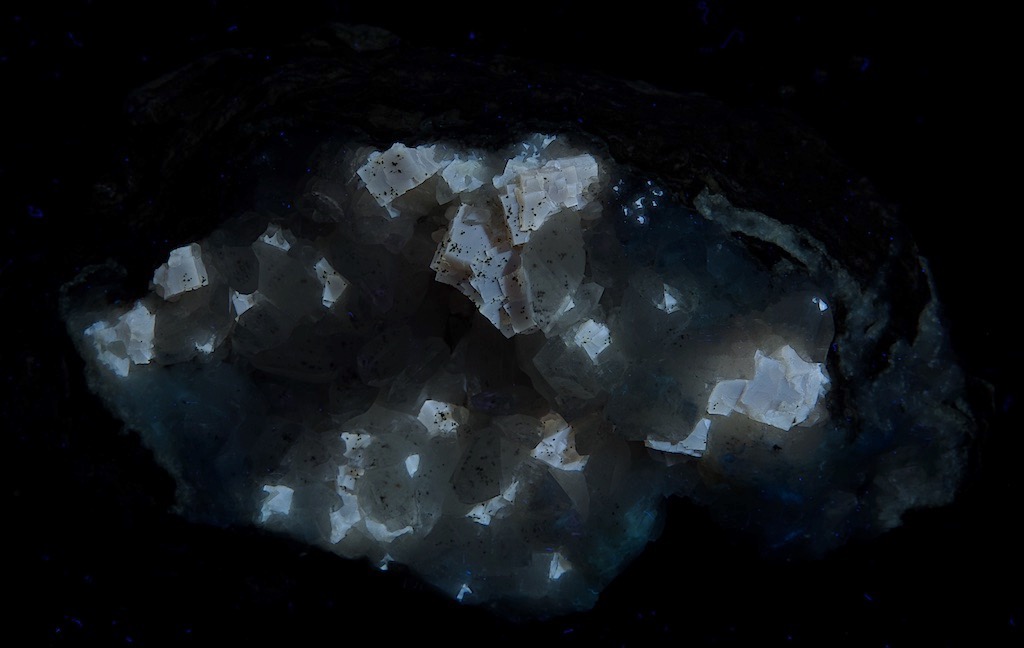
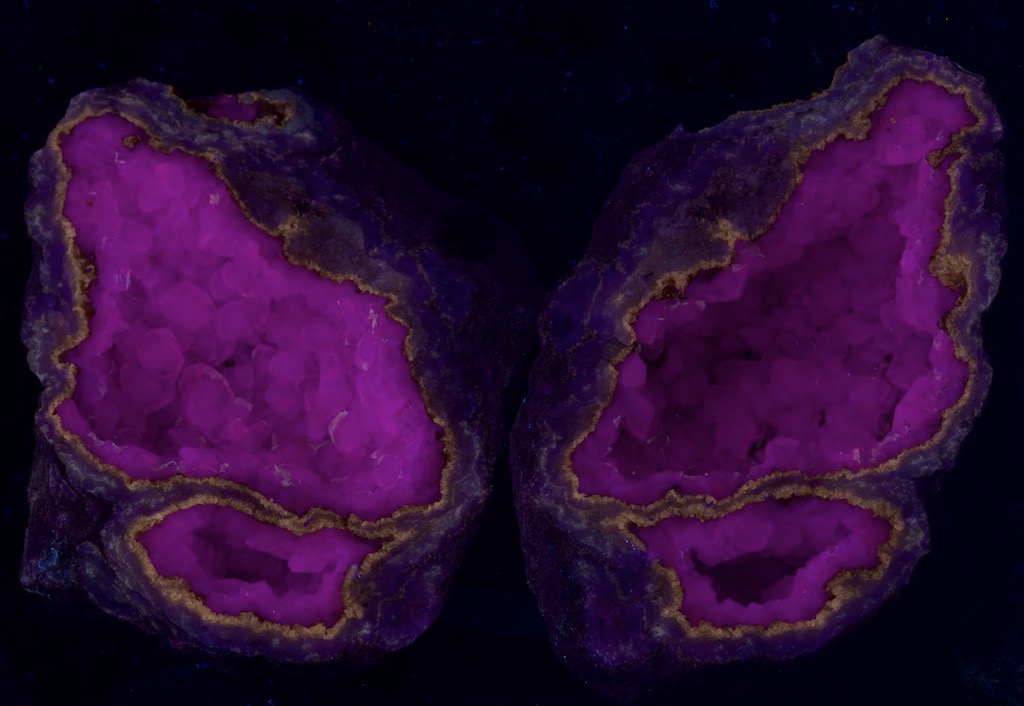
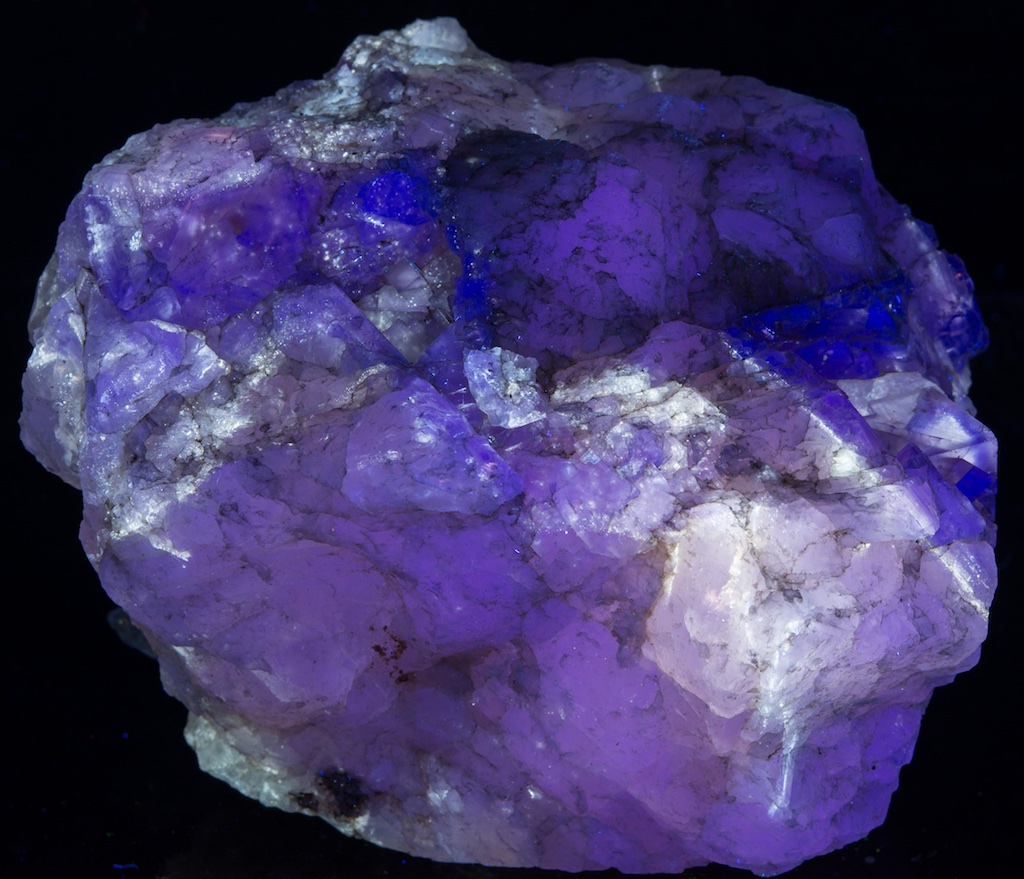
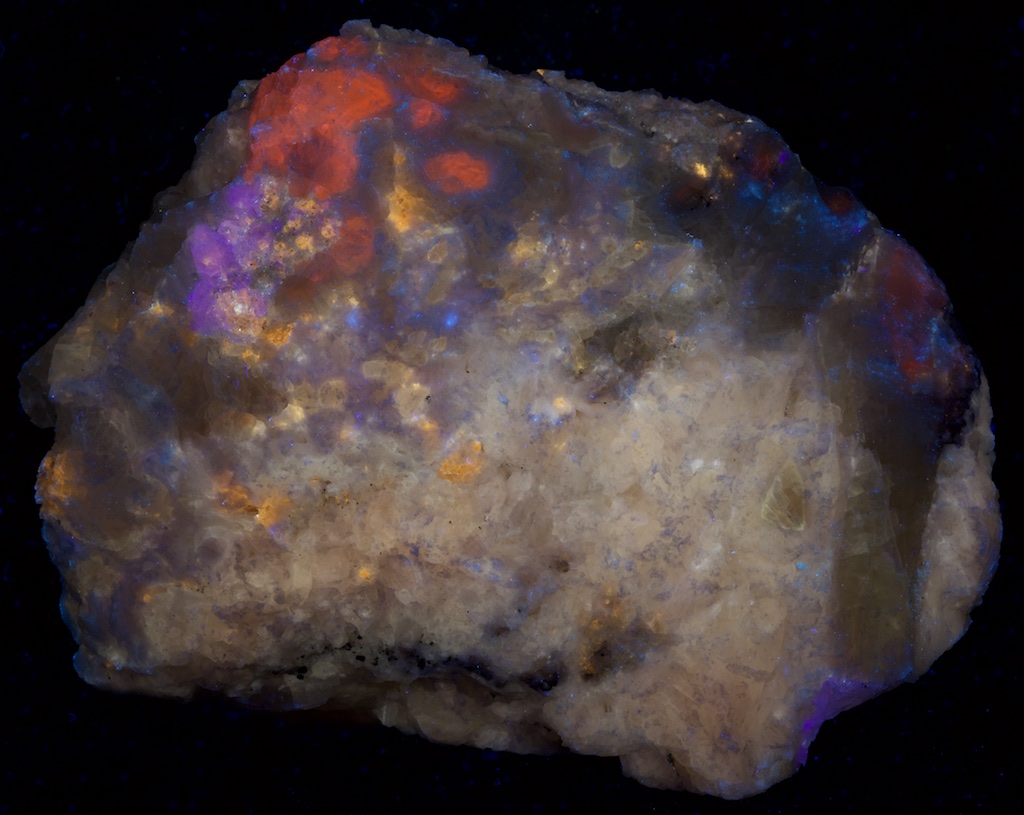
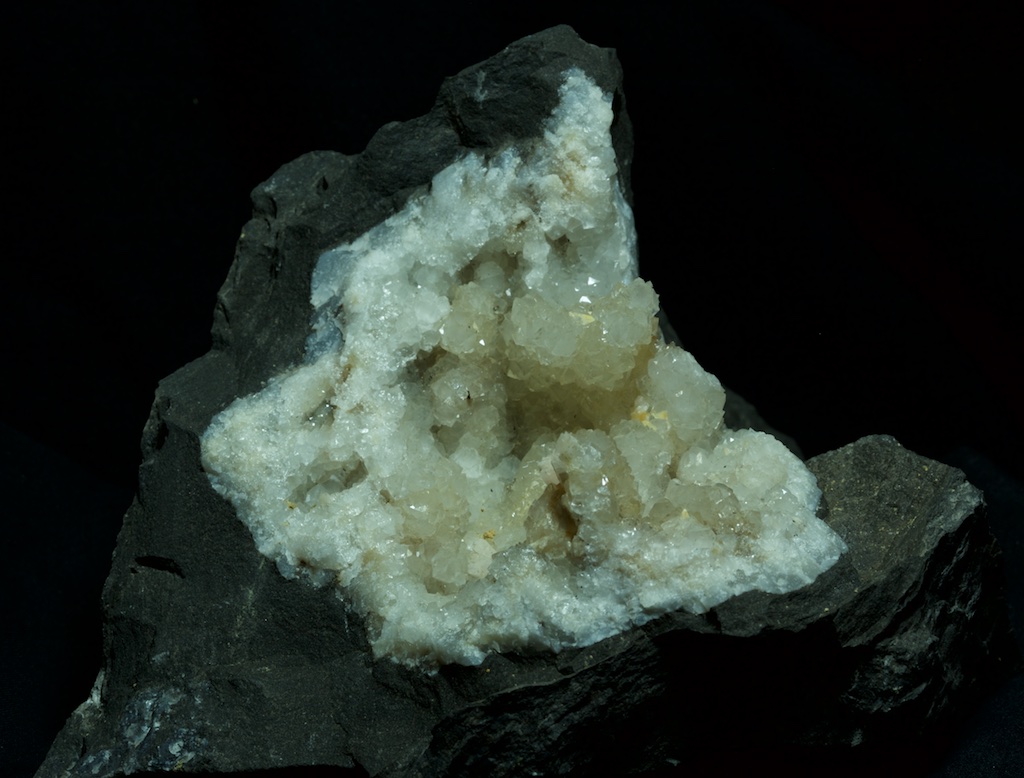
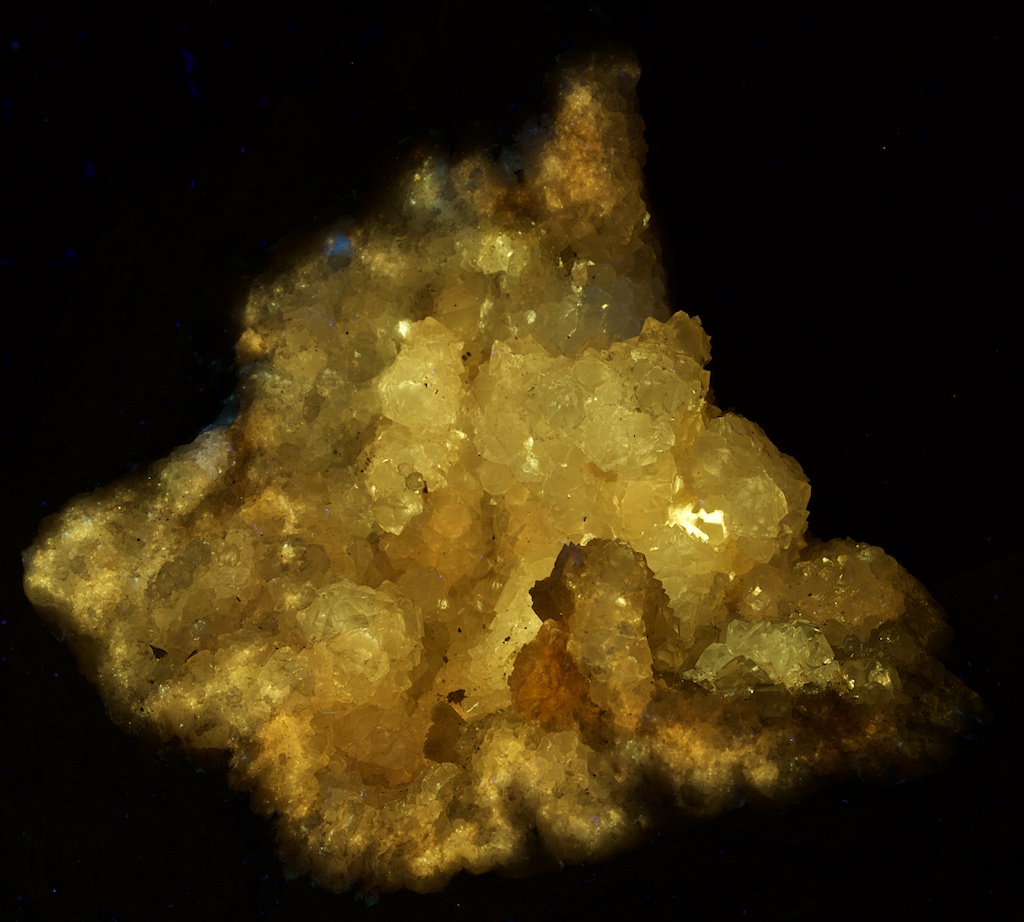
Friday morning I picked up a few more (I already have around 10) MW fluorescent Keokuk geodes (see one at photo 3) and some natural light geodes. The few Linwood Mine calcites there did not entice me and there were no Missouri calcites that I saw. However, the most interesting finds of the show for me were some calcites and fluorites from the Waterloo South Quarry in Black Hawk County, Iowa (photo 1 below). These were similar to the famous fluorites and calcites from nearby and closed Pints Quarry in Raymond, Iowa. These fluorites are organic-activated and glow and afterglow creamy-colored in all waves. The calcites are a comparatively weak pink. One of the dealers who had these Waterloo South rocks also had some apparently self-collected LW two-color massive fluorites from Luna Co., NM (see photo 4)and weak lilac SW strong afterglow and LW blue FL (no afterglow) botryoidal fluorite, also from Luna Co., NM. So I was happy with FL Keokuk geodes from two new locations and some nice FL fluorites (plus I enjoyed seeing old friends).
Trip Segment 2: The FMS Midwest Chapter Annual Meeting
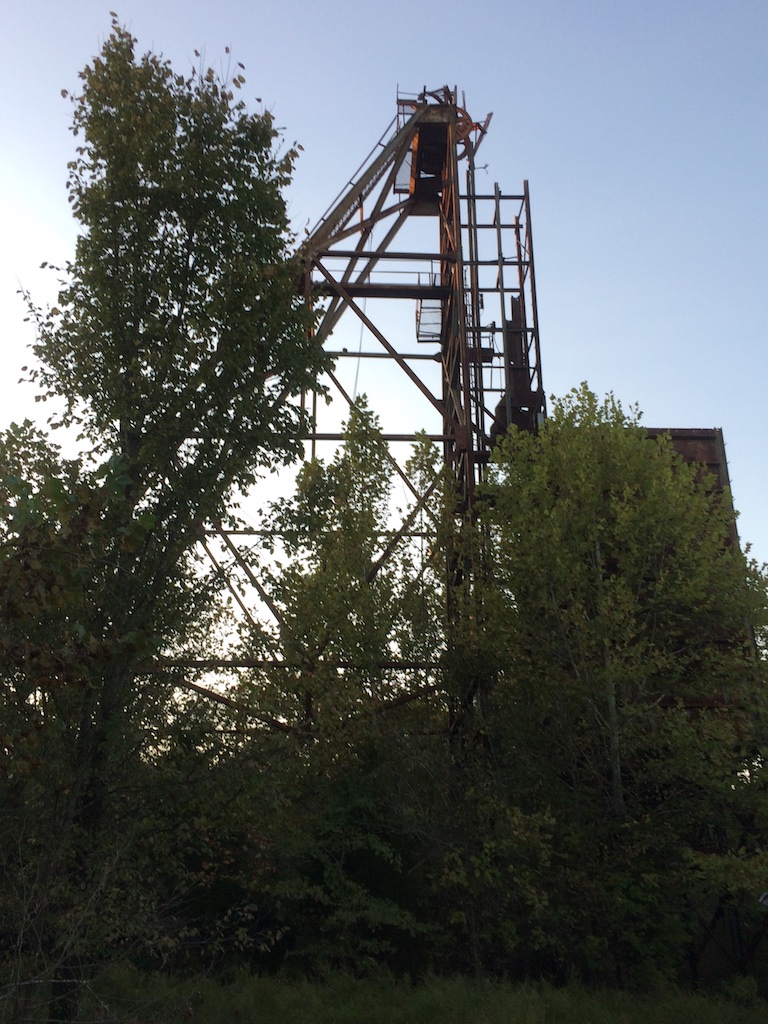
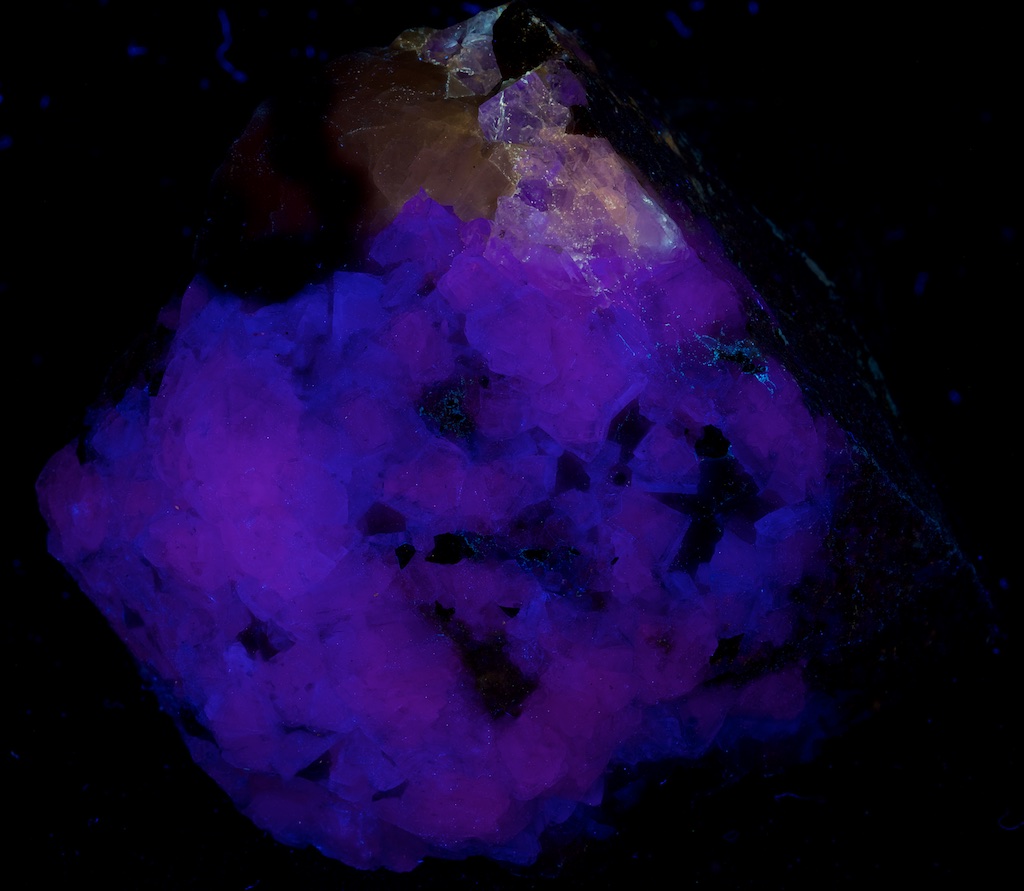
Chapter President, Chris Clemens, did an outstanding job arranging the Midwest Regional FMS Meeting and has a giant shout out from me. The first event was a collecting trip to the abandoned Annabel Lee Mine, north of Cave-in-Rock, on Friday night (see Figure 6). There were probably fifteen to twenty collectors there and most collected more rocks than I did that night. What I did collect was a bunch of chigger (or redbug) bites around my ankles. This in spite of my good friend Steve Caldwell’s warning that I did not heed. Steve sprayed down with DEET so I hope he fared better. In the daylight I had accumulated a large pile of candidate rocks that I had collected and cracked to check for fluorescence when it got dark. My one little keeper piece was a small two-color fluorite rock (see Figure 7). None of the other pieces were better than those I previously had collected from the area.
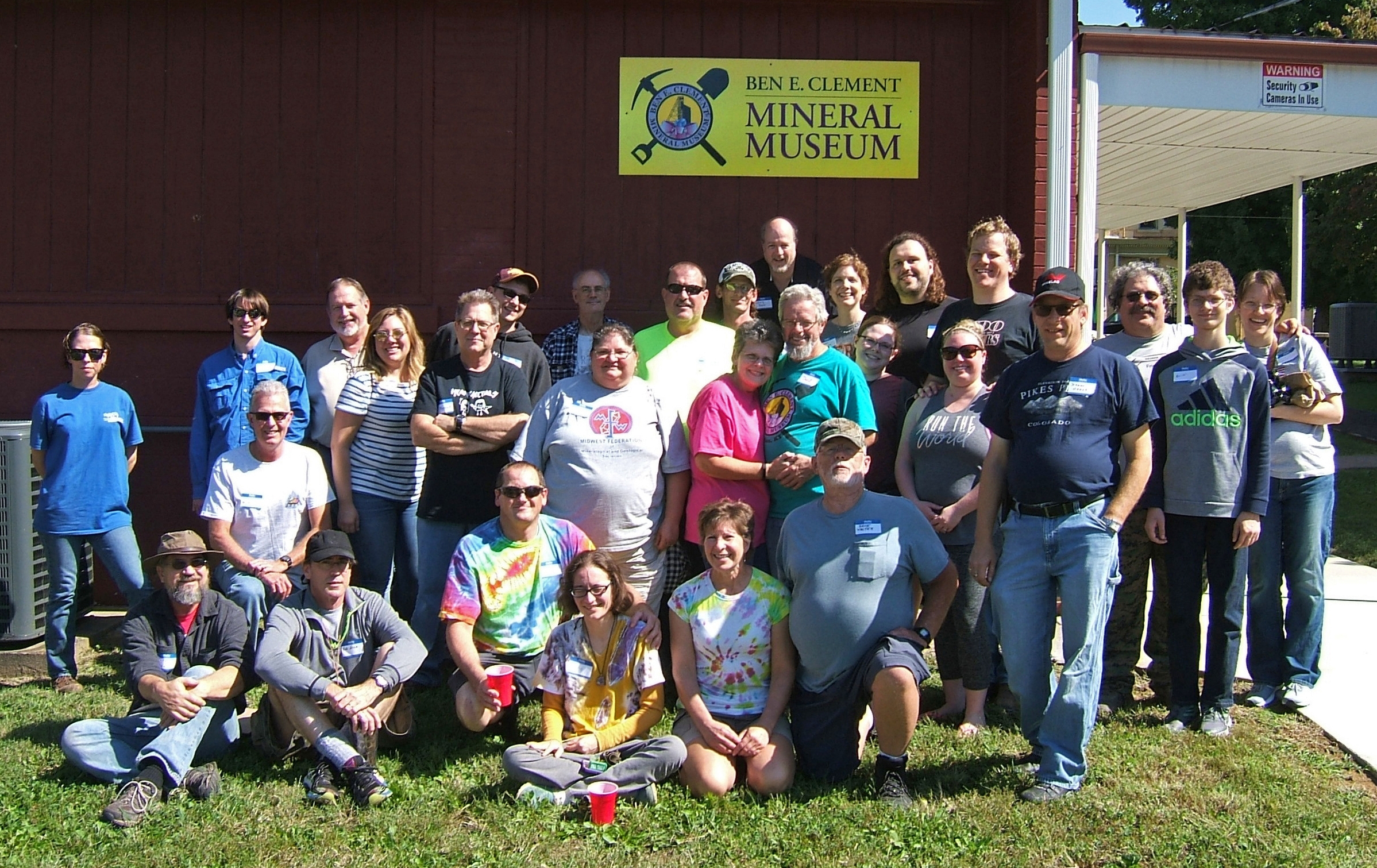
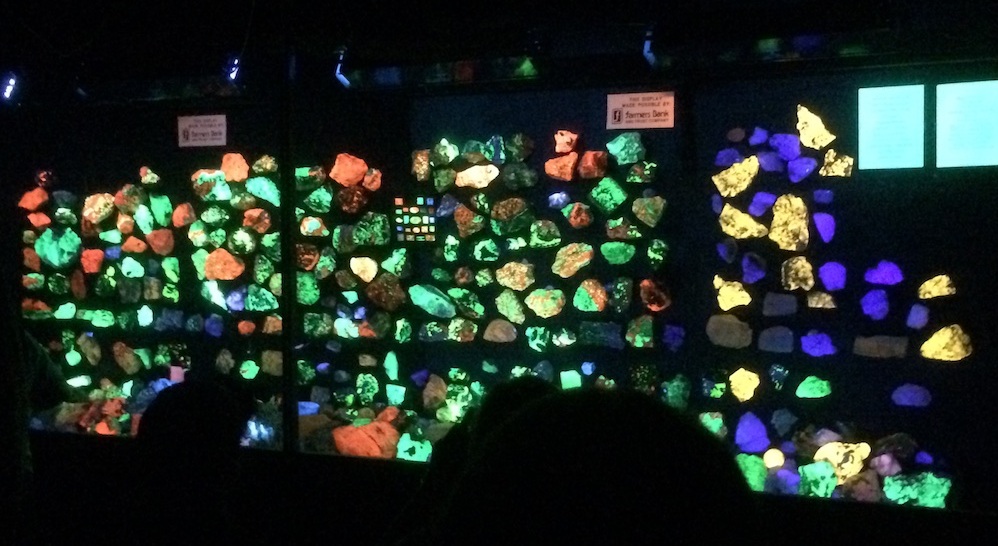
The FMS Midwest Regional Chapter meeting was on Saturday morning at the Ben E. Clement Mineral Museum in Marion, Kentucky, not far across the Ohio River from the Annabel Lee Mine. There were about 35 attendees. The meeting started with donuts and coffee and show/tell, swap, and sale of glowing rocks. The Museum Staff were very gracious and wonderful site hosts/hostesses. The museum shop had lots of natural light and FL rocks for sale including some accessed from the Ben E. Clement collection. Ben Clement’s son Ed gave us a tour and spoke about his father’s collecting/collections and the museum history. My favorite part of the tour was the lights out segment in two particular rooms containing fluorite crystal and cleaved crystal specimens, here we could fire up our convoys and look at Ben Clement’s magnificent fluorites under UV. I have regrets that I did not attempt to take some cell phone photos, but it was understandably crowded with admirers. Photo 9 is the museum fluorescent mineral display. We returned to the meeting room for a pizza lunch. There was a brief business meeting and a group photo (see Figure 8). We then prepared for the three other field activities for the afternoon.
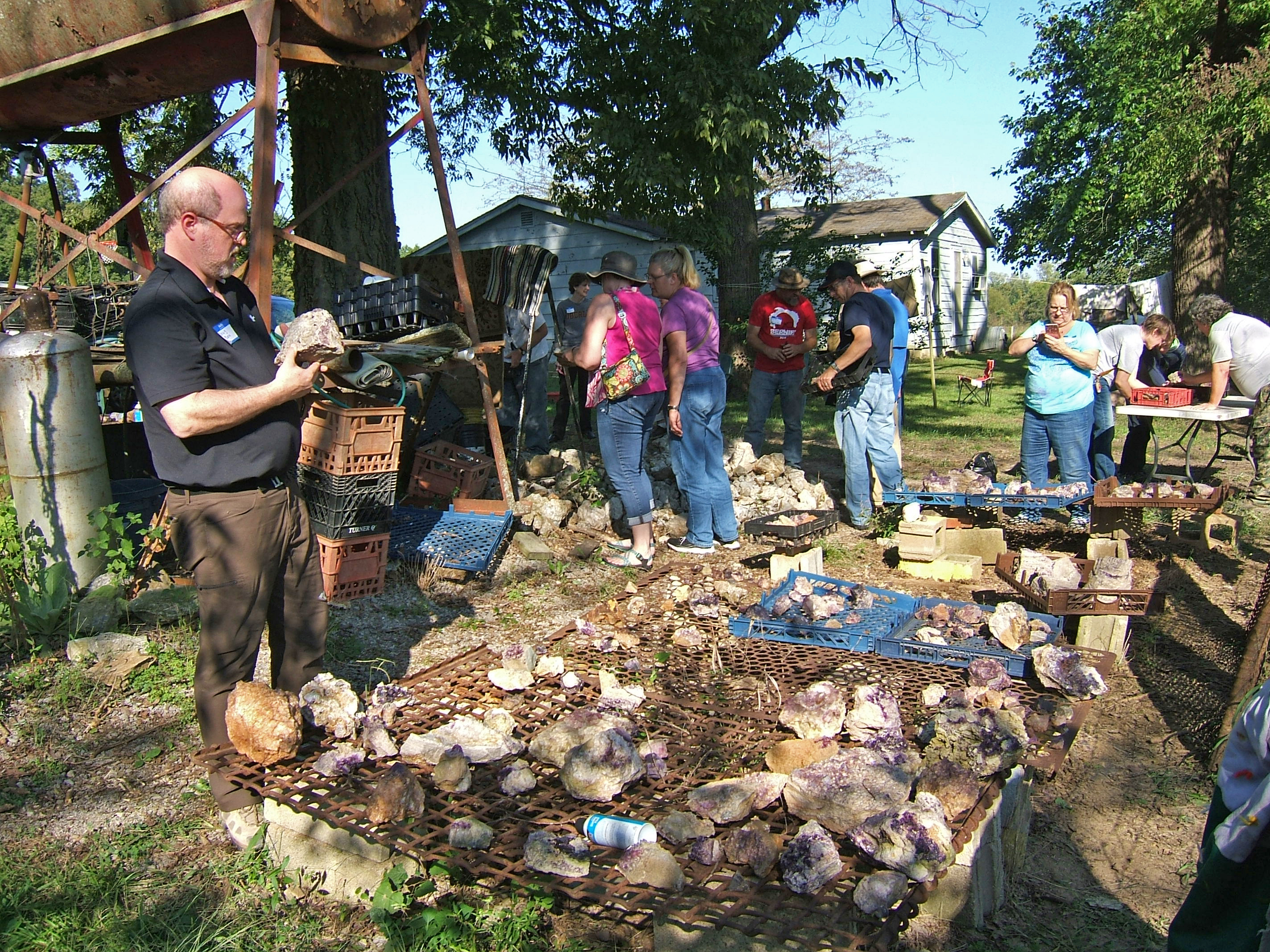
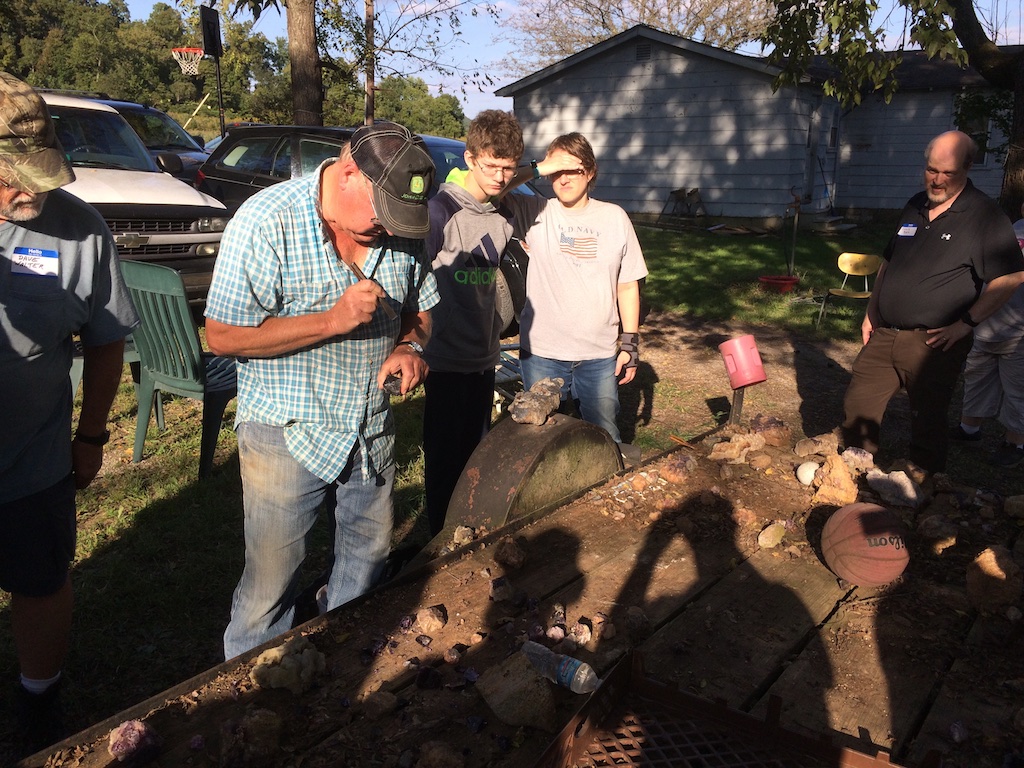
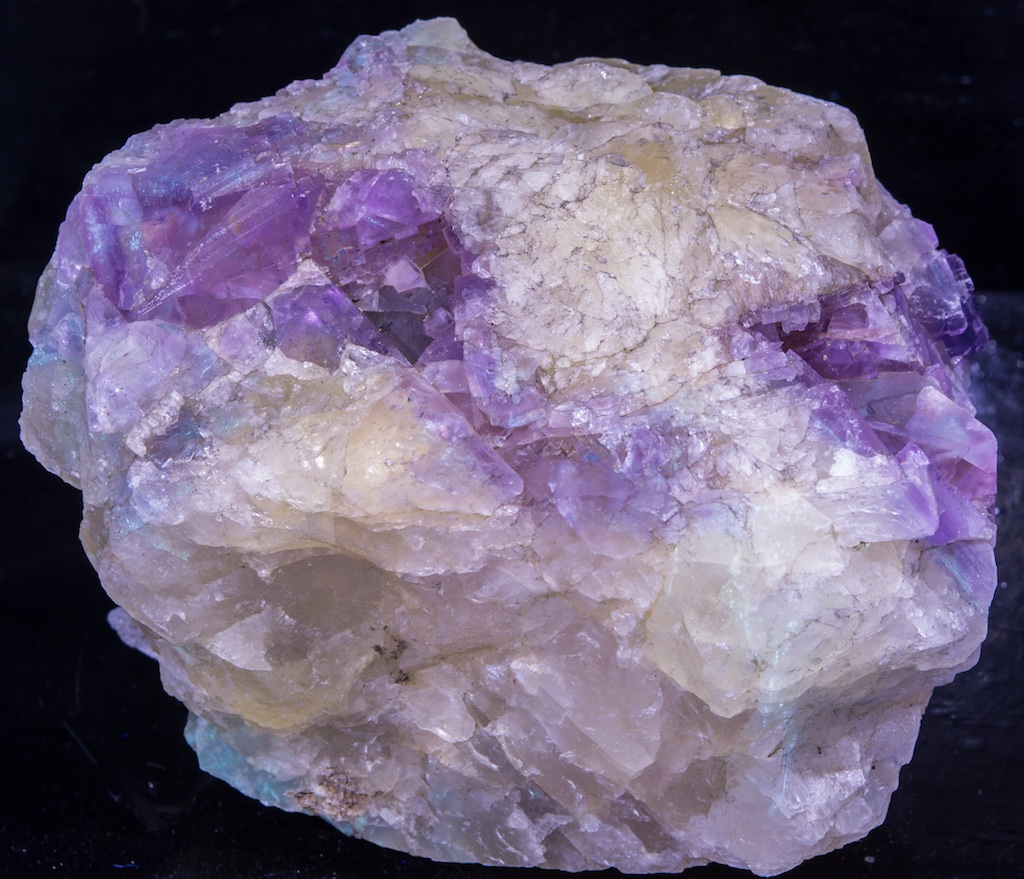
Gary Griffith is the last miner of fluorite in the fluorspar belt of Illinois and Kentucky. However, he mines only for mineral specimens. Our caravan of more than 15 cars crept down the country road in front of his house and parked. There were areas with large fluorite specimens on metal grates and calcite specimens in a pile on the ground. Gary also had egg cartons filled with octahedra that he had cleaved from fluorite that was not suitable for collector specimens. When we were there he did not have many museum grade specimens for sale, but that was the other type of fluorite he had for sale. Many of us armed with convoys looked at all of these types of material and traded money for rocks. My cart ended up with 8 fluorites/calcites and 8 cleaved octahedra for my sons and grandchildren (see Mark Cole’s photos, Figures 11a and 11b, of one of the rocks I bought from Gary). After all purchases were completed, Gary quickly and expertly demonstrated the preparation of a fluorite octahedron from rough fluorite (see Figure 10). He also showed us the material sold as fluorspar for commercial purposes. I did not get a close look but it appeared to me to look like brown granular hard masses of rock.
It was a fun meeting/trip and exciting to collect with so many glowhounds. It will be difficult for Chris to top this next year. The Midwest is not fraught with locations where the general public can collect beautiful fluorescent rocks. Maybe next year the group will collect Yooperlites.
Trip Segment 3: The Visit to Cole Mountain
I flew to Nashville rather than St. Louis because I wanted to visit Mark Cole, in Dowelltown, TN. Mark is my fluorescent rock mentor and probably the most skilled fluorescent rock photographer in the world. I asked ahead of time if we could collect at the Woodbury (Cannon County), TN geode location about 20 miles south of Dowelltown. On the internet and at Mark’s house I had seen the geodes with organic inclusions from this site and hoped to be able to collect one of my own.
My usual rock collecting activities at Cole Mountain include collecting with the silver pick in the rock room and the wall. Not long after I arrived I noticed a weather forecast of rain on Monday, therefore I asked Mark if he could reschedule the field trip to the Woodbury roadcut to Sunday. After picking up supplies in the beautiful little town of Smithville, we headed to Woodbury.
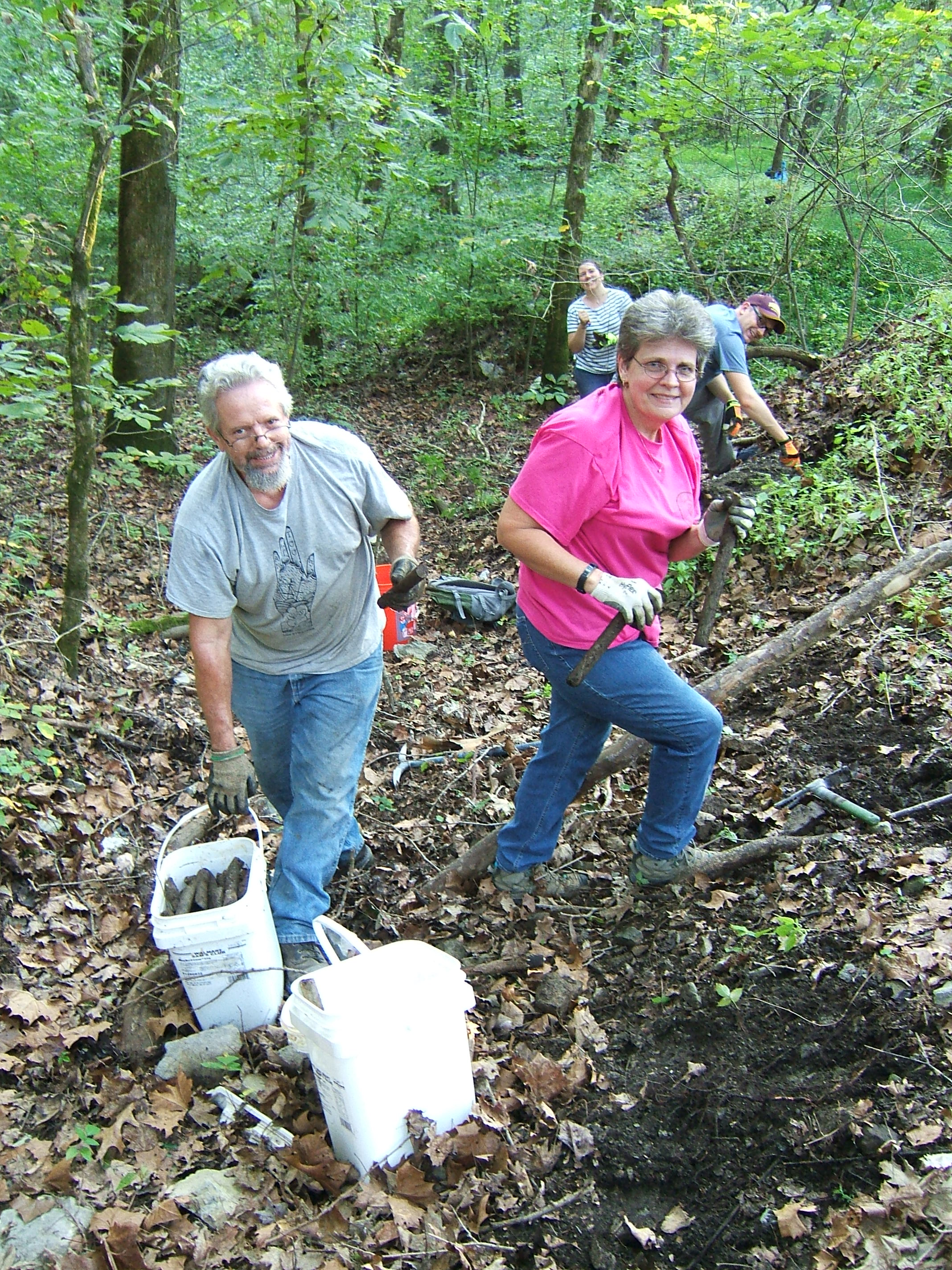
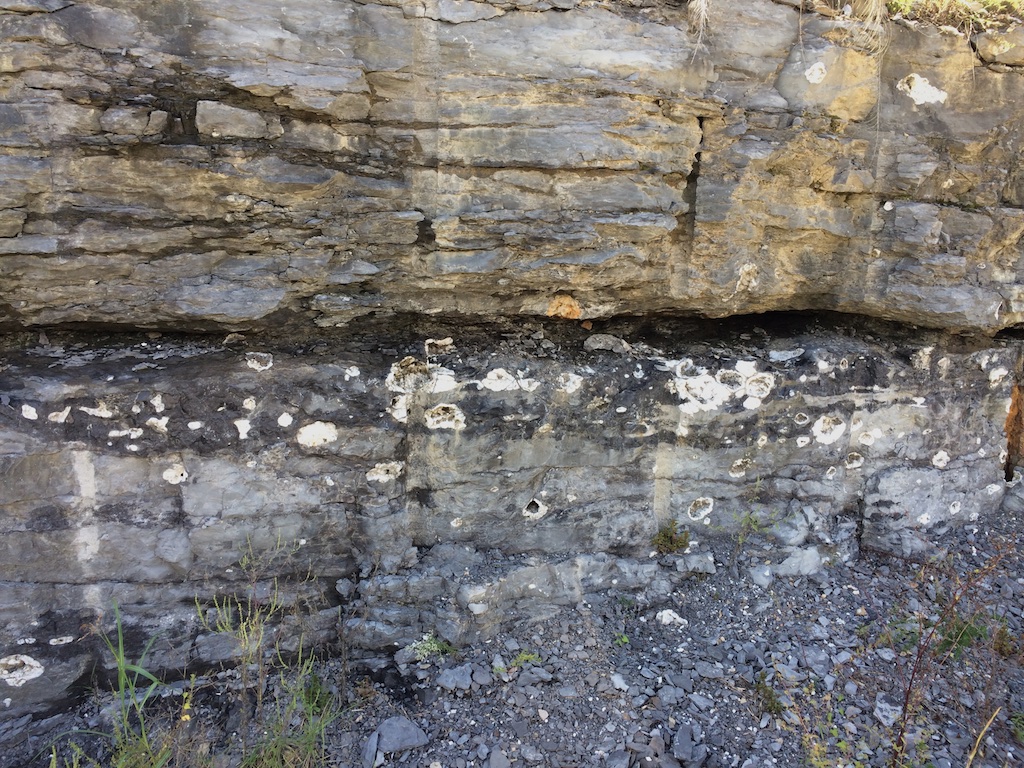
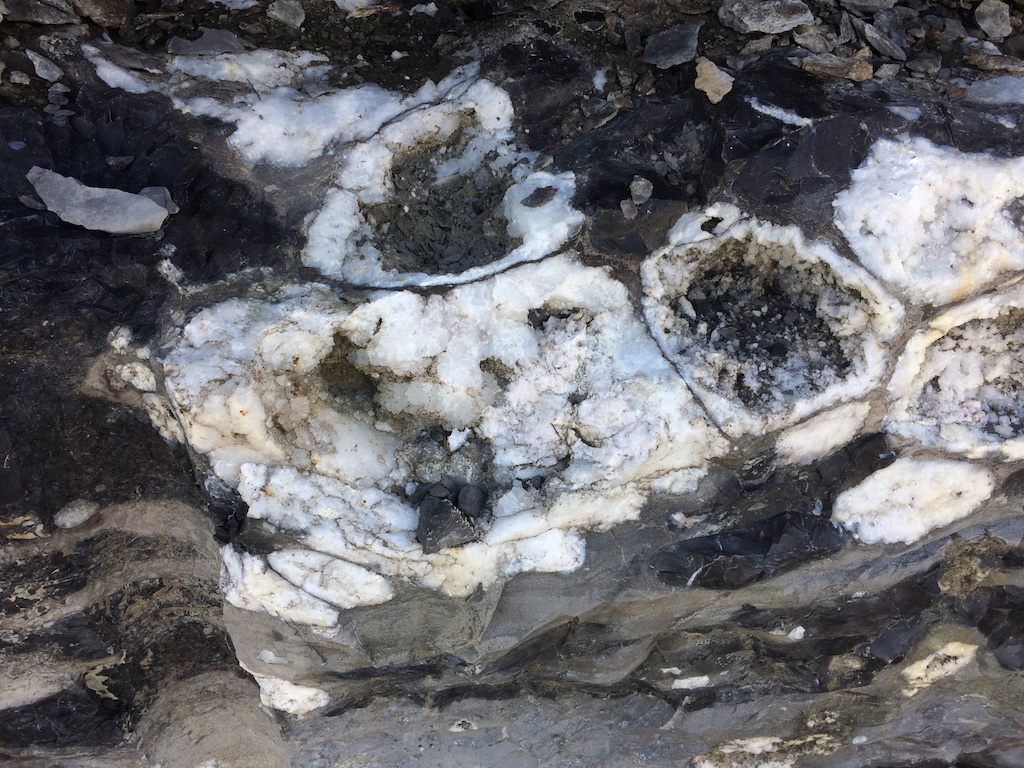
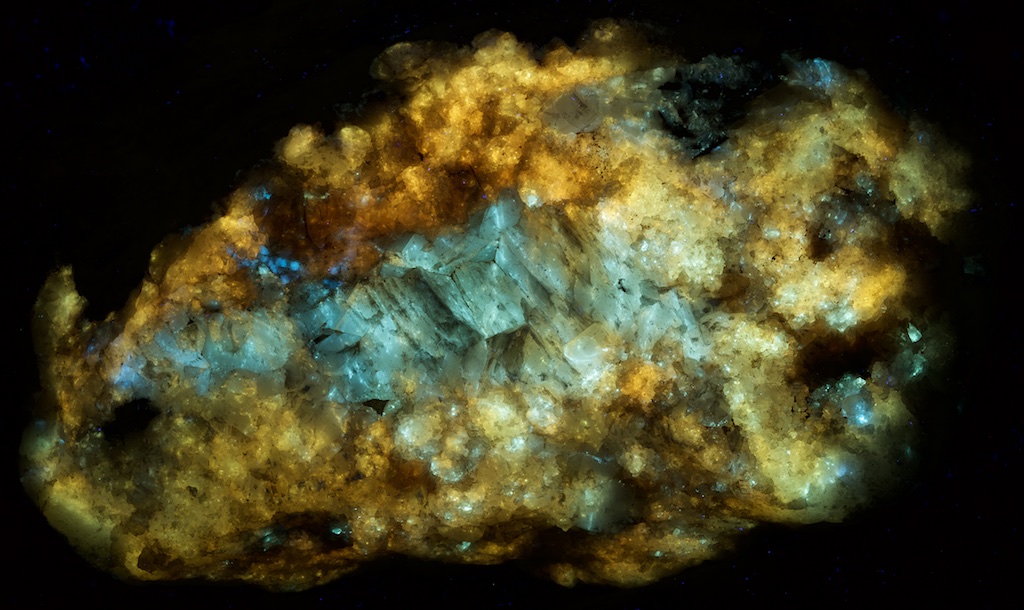
The collecting heyday for the Woodbury roadcut occurred when the U.S. 70S was being widened a few years ago. Word spread quickly and the site was heavily collected then and since then. This meant we probably would only be able to collect only a limited number of geodes. The spoils from the original road-widening event are nearby but are mostly covered with vegetation. Some of these of spoils are in the open on top of the edge of top of the roadcut, but we did not try to collect any of these. The color of this older host rock is a light gray. The Warsaw Formation in the roadcut is not much more that about 10 feet high. Geodes are found throughout the roadcut but are more numerous in the middle layers. Geodes appear to be mostly white in a dark gray fairly dense and hard bituminous dolostone (see Figures 15a and 15b).
It was another delightful and successful visit to Cole Mountain. I hope to visit again.