
Can a 405nm blue-violet laser pointer be useful for fluorescent minerals? A long discussion among fluorescent mineral collectors came to a fairly clear conclusion: yes—but it is a specialized tool and not a replacement for proper UV lighting.
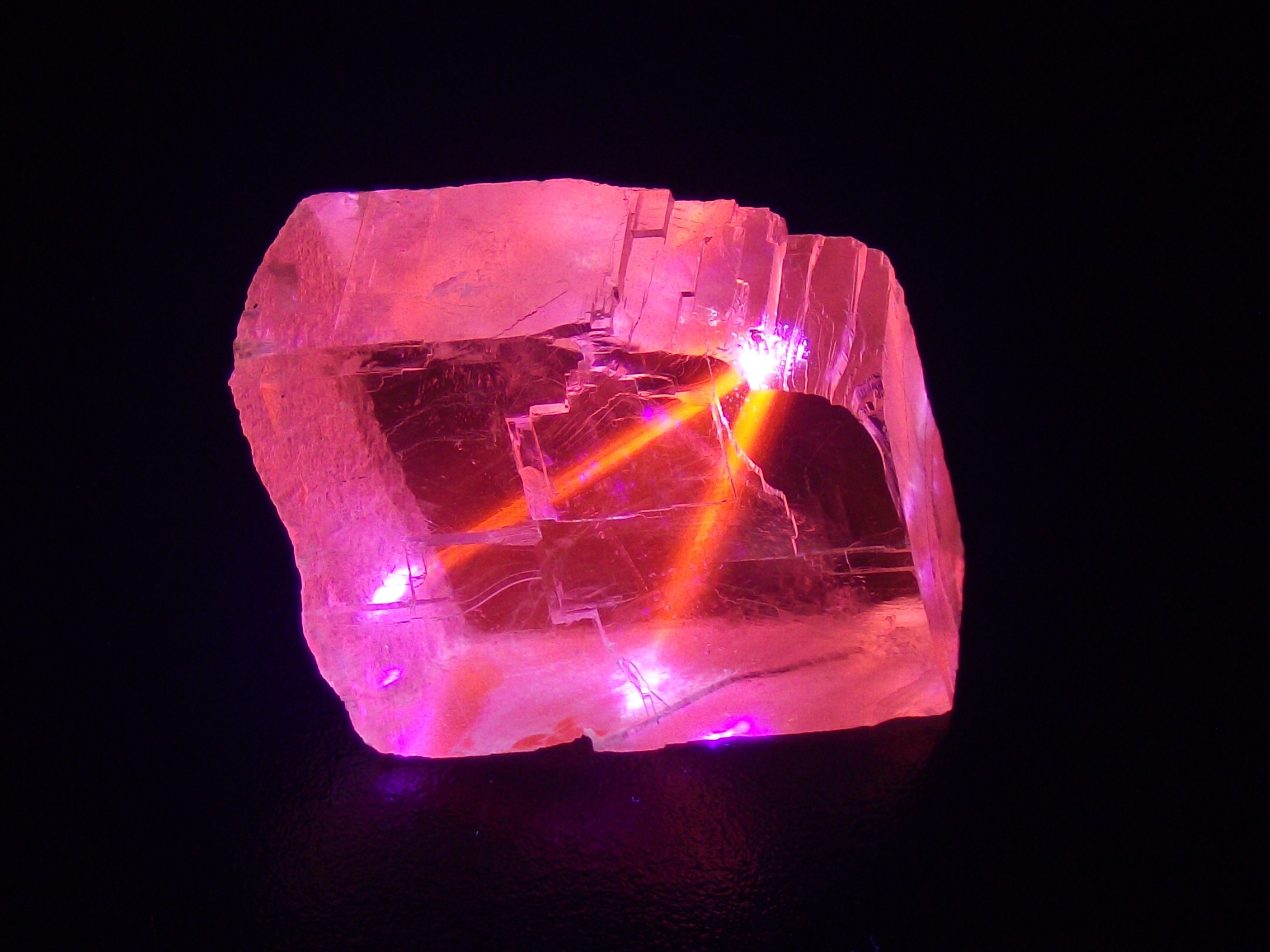
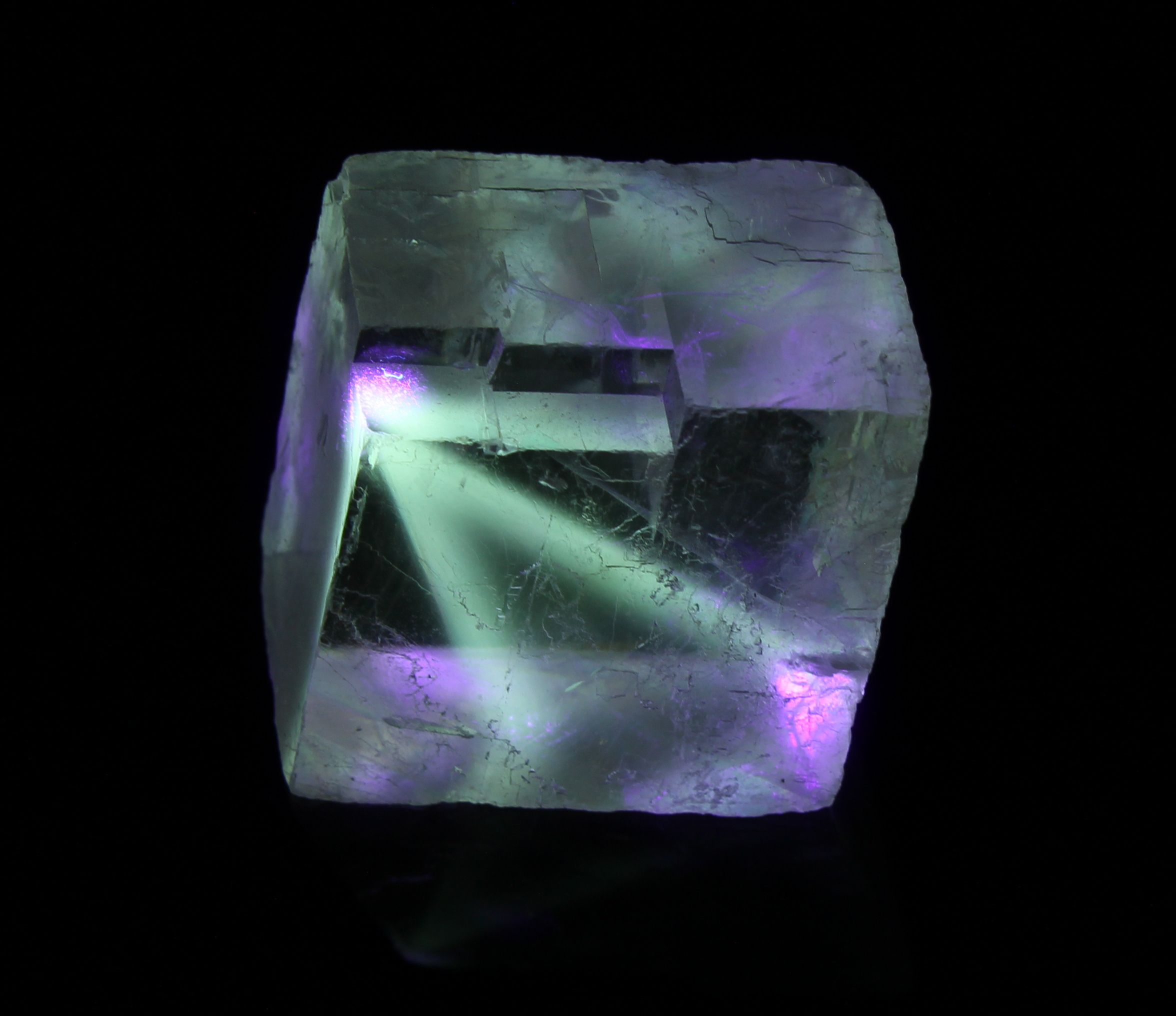
A 405nm laser can excite fluorescence in a surprising number of minerals. Calcite, fluorite, sodalite, tugtupite, chalcedony, wernerite, some scheelite, manganese-bearing calcite, and ruby can all show a response. Some minerals may also phosphoresce after being traced with the laser. Because 405nm is close to the visible end of the spectrum, its effects can be quite different from those seen under conventional shortwave, midwave, or longwave UV.
The narrow laser beam can be useful for locating small fluorescent areas, checking fluorescent inclusions in minerals such as quartz, or quickly testing individual specimens at shows. Lasers with adjustable focus can be especially useful because the beam can be defocused into a larger spot. This makes it easier to illuminate a larger area and can also reduce the intensity of reflections from shiny crystal faces.
How useful is a 405nm laser for field collecting? That depends greatly on the mineral and the conditions. In bright daylight, its usefulness can be limited, and getting close to the specimen may be necessary. On the other hand, fluorescence and phosphorescence can sometimes be detected surprisingly well, even outdoors. It can be a handy way to check material quickly or identify areas worth examining more carefully under proper UV lighting.
One thing that can make a big difference is yellow or amber glasses or filters that actually block 405nm light. The glasses reduce the bright blue-violet reflection from the laser, allowing the fluorescence to stand out much more clearly. Not all yellow glasses block 405nm, however, so simply being yellow is not enough.
A proper 365nm UV flashlight is generally much more useful for fluorescent mineral collecting. It provides a wider beam, excites a broader range of longwave fluorescent minerals, and gives a more conventional view of the specimen’s fluorescence. A 405nm laser is best thought of as an additional tool—one that can sometimes produce interesting or useful results that conventional UV lighting does not.
Bottom Line
A 405nm laser pointer can be an inexpensive and fun addition to a fluorescent mineral collector’s toolkit. It can reveal fluorescence in some unexpected minerals, help locate small fluorescent areas, and produce effects that differ from conventional UV lamps. But it is best treated as an experimental or supplementary tool, rather than a substitute for proper shortwave, midwave, or longwave UV lighting.
One final warning: lasers require care. Power ratings on inexpensive lasers are often unreliable, and direct exposure to the eyes—or even strong reflections from shiny mineral surfaces—can be hazardous. Never shine a laser into anyone’s eyes, and use extra caution when examining highly reflective specimens.