Comparison of 365nm to 395nm UV flashlight

by | Equipment

I recently had the opportunity to test a 395nm 100 LED unfiltered flashlight. It is advertised as having 100 high power LEDs and claims to have high radiant intensity, a flood effect, and an 18-watt UV beam suitable for commercial and domestic use, even in ambient light.

To this I say phooey. All lies. It is not 18 watts; I have no idea what they are talking about, but even being extremely generous it is at best 4 watts of UVA. More likely around/less than 2 watts. It may consume 18 watts of power to generate all the blue light, but I even doubt that.
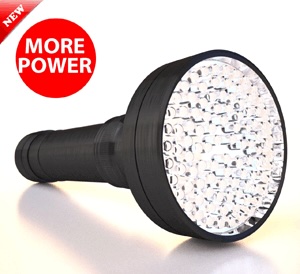
For its price, it’s not a total waste of money, but for serious mineral enthusiasts there are better options. If you’re looking for scorpions, cat urine, scanning your hotel room, etc., this would probably be just fine. But if you’re using it for mineral fluorescence this ain’t the light.

But, if you insist, please install a visible light blocking filter on it. That’s why I tested it – so I could cut a piece of Wood’s Glass to filter out all the objectionable blue/purple light the cheap 395nm LEDs generate. It took about 20 minutes on my lapidary wheel to round down a piece of Wood’s Glass to replace the cheap plastic lens. The resulting light is almost acceptable for mineral use (but I still highly recommend you invest in a serious 365nm flashlight). (BTW – Wood’s Glass for this light is actually better than a Hoya filter because the UV is almost in the visible region and Hoya doesn’t pass it very well).

I selected a bunch of rocks as a demonstration. Took pictures of them under the flashlight without the filter and then with the filter. I also took pictures with my filtered 365nm LED flashlight. An animation at the end of this post shows the differences very clearly.
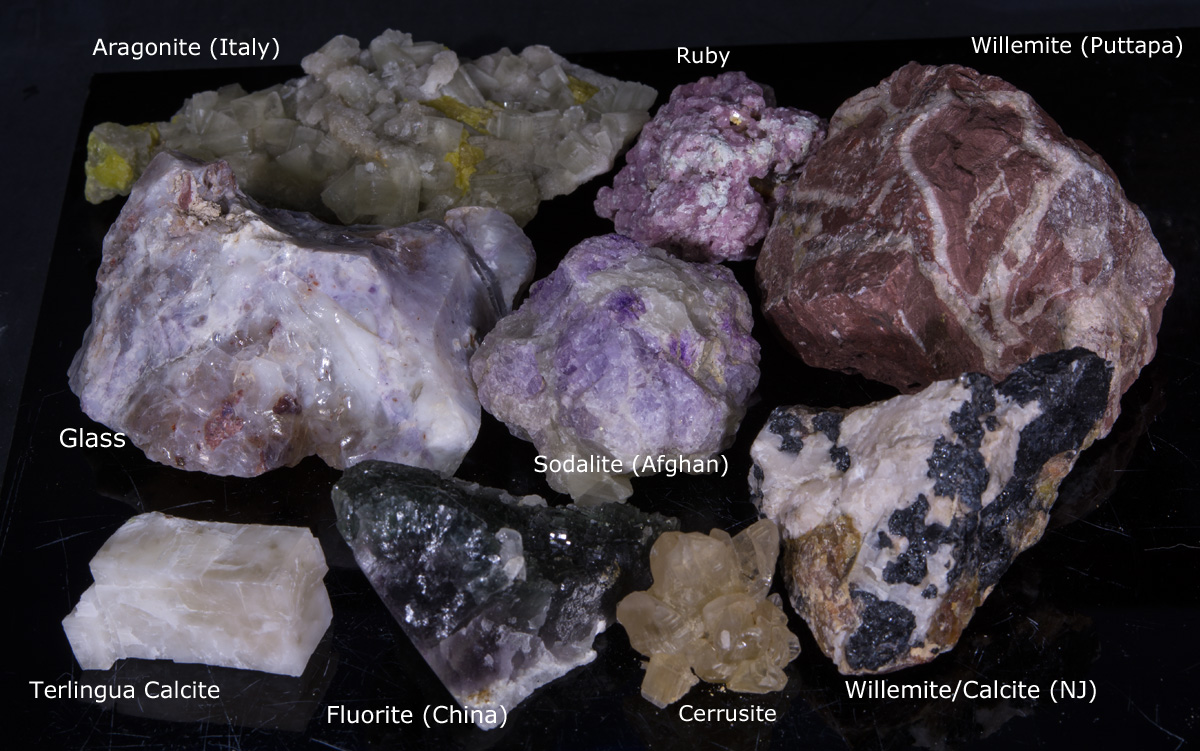
Index to the rocks, white light.
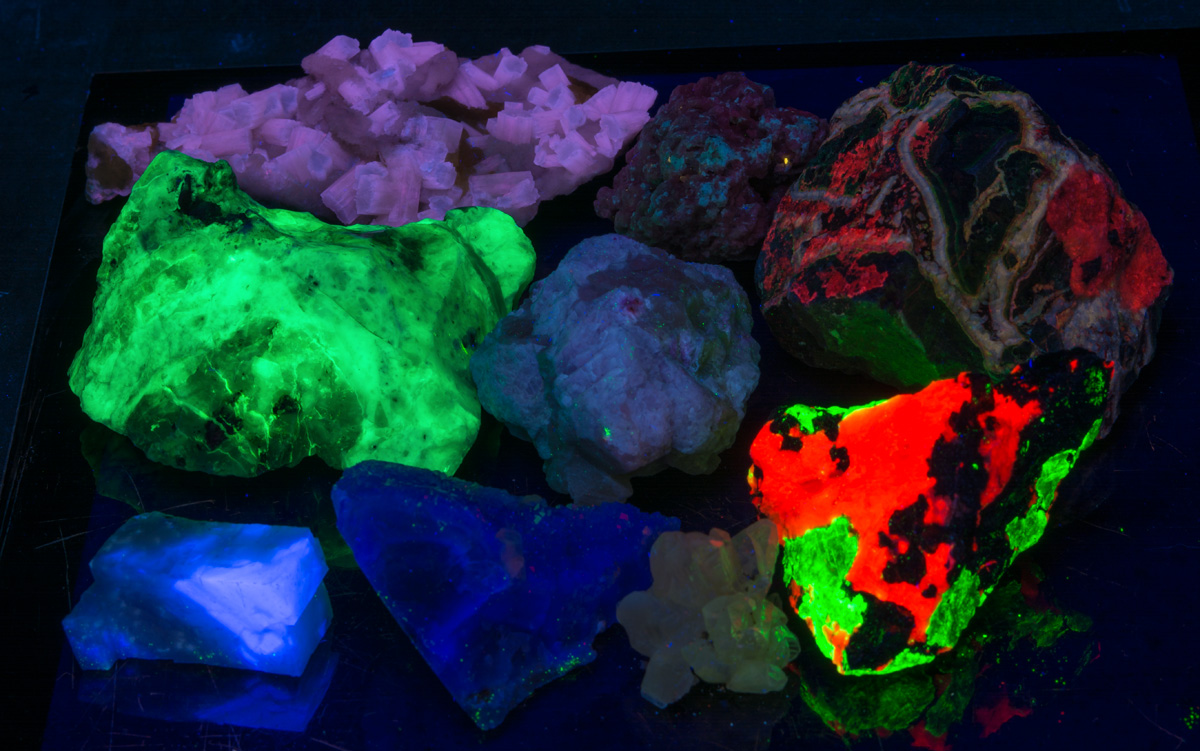
Tthe rocks under shortwave UV. Some will appear overexposed – very difficult to take a bunch of different intensity rocks and photograph them all at once, but I wanted to provide this as a reference. Note that the ruby is not SW fluorescent, the cerussite and fluorite barely fluorescent. Terlingua calcite is blue. Afghan sodalite is white. Aragonite is violet/pink.

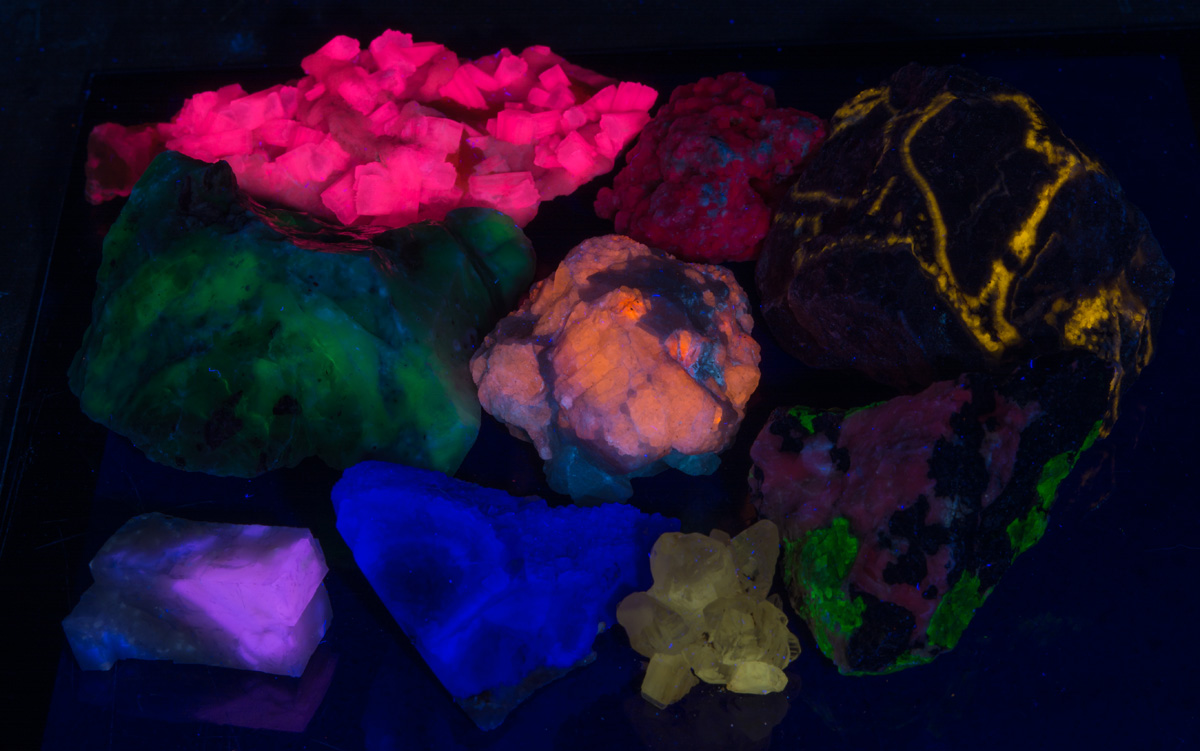
The rocks under 365nm filtered flashlight. Notable in this picture: the ruby a dull red, the cerussite and fluorite are nicely fluorescent. Terlingua calcite is pink. Afghan sodalite is orange. Aragonite is hot pink. Willemite is green with a dull glow from the calcite. Both the Franklin willemite and the Puttapa willemite are nicely fluorescent.
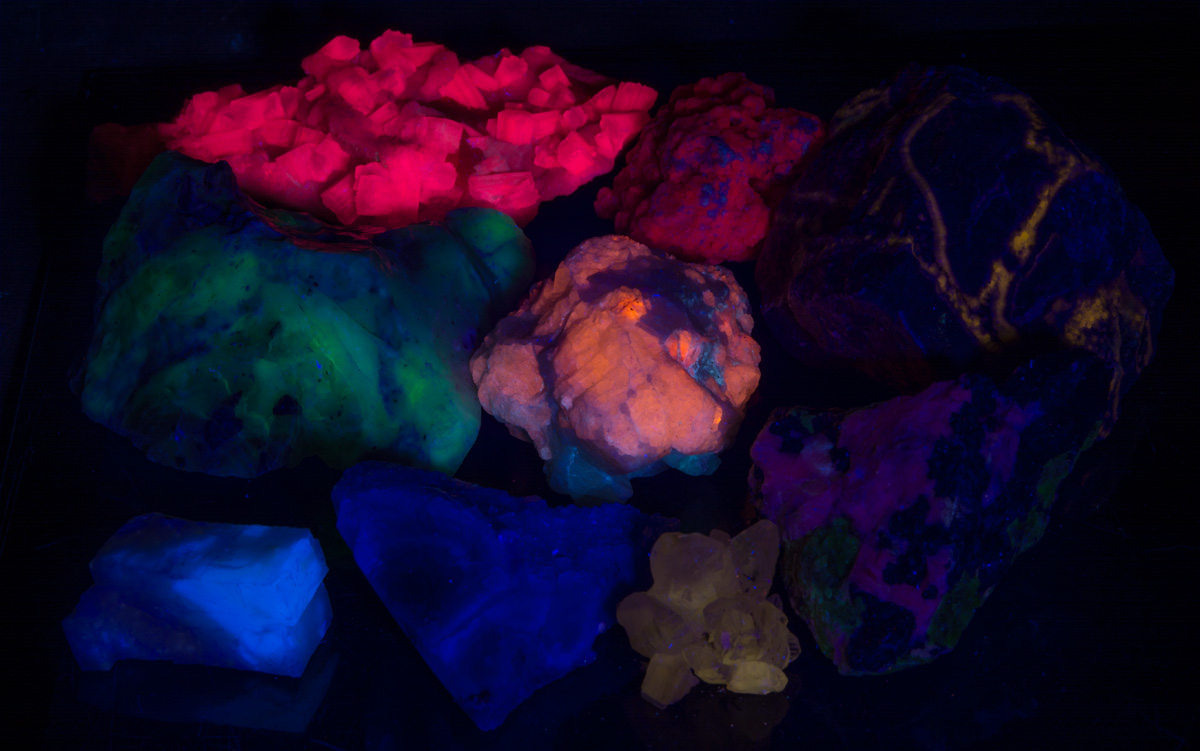
The rocks under 395nm filtered flashlight. Notable in this picture: the ruby a brighter red, the cerussite and fluorite are somewhat fluorescent, but dimmer. Terlingua calcite is blue (this is very interesting, the shift back to blue). Afghan sodalite is still orange. Aragonite is hot pink but slightly duller. Franklin willemite is not fluorescent, Puttapa willemite dimmer.
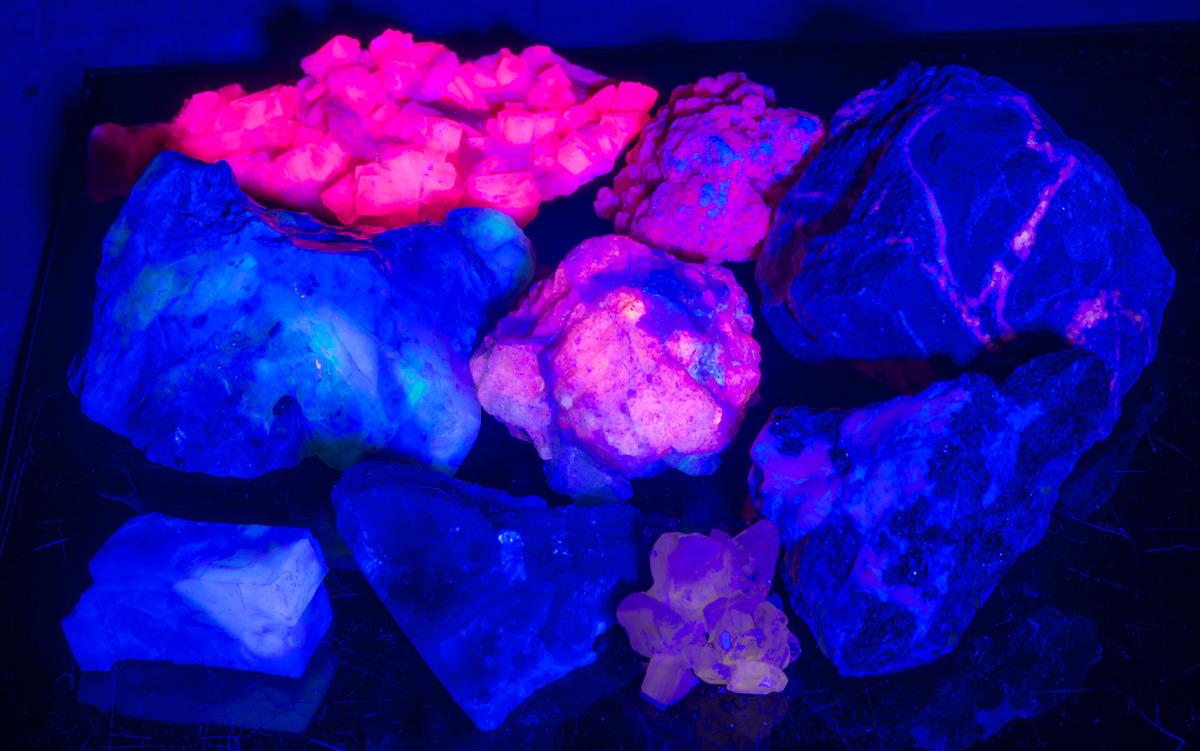
The rocks under unfiltered 390nm flashlight: If this picture doesn’t convince you of the need for a filter, nothing will. All of these pictures were taken under identical conditions, exposure settings, and RAW development settings. The blue cast in this picture shows you why all those pictures on Ebay look blue. Useless for minerals. The blue overwhelms all the color and changes tints on everything.

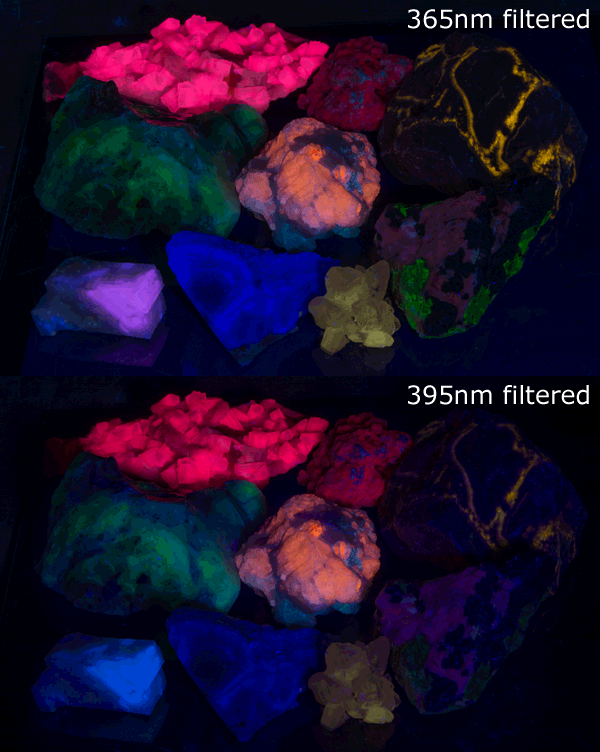
An animation showing the difference in fluorescence between the two filtered lights – 365nm and 395nm.
Moral of the story: 395nm FILTERED flashlights are kind of OK. Not everything will be fluorescent compared to 365nm flashlights, but it’s better than nothing (just barely IMHO). UNFILTERED flashlights are a waste of money for the fluorescent mineral hobbyist.
Originally posted on Nature’s Rainbows.