
A member asked a practical question: do all rubies fluoresce the same way, and if they do not, can weak fluorescence be predicted from the way a specimen looks in daylight?
The answer is no on both counts. Rubies do not all fluoresce the same way. Some glow intensely, some respond weakly, and some appear inert under ordinary ultraviolet testing. Chromium is the main activator behind ruby’s red fluorescence, while iron can reduce or quench that response. That helps explain part of the variation, but it does not make the result easy to predict from appearance alone.
Visible color can be misleading. A purplish cast, reduced saturation, or a slightly brownish look may suggest more iron in some specimens, and in some cases that may go along with weaker fluorescence. Sometimes that impression will be correct. Sometimes it will not. Pale ruby can fluoresce very well, and red or reddish ruby can still be weak. Daylight appearance may hint at possibilities, but it does not predict fluorescent behavior reliably enough to spare anyone the trouble of testing the specimen.
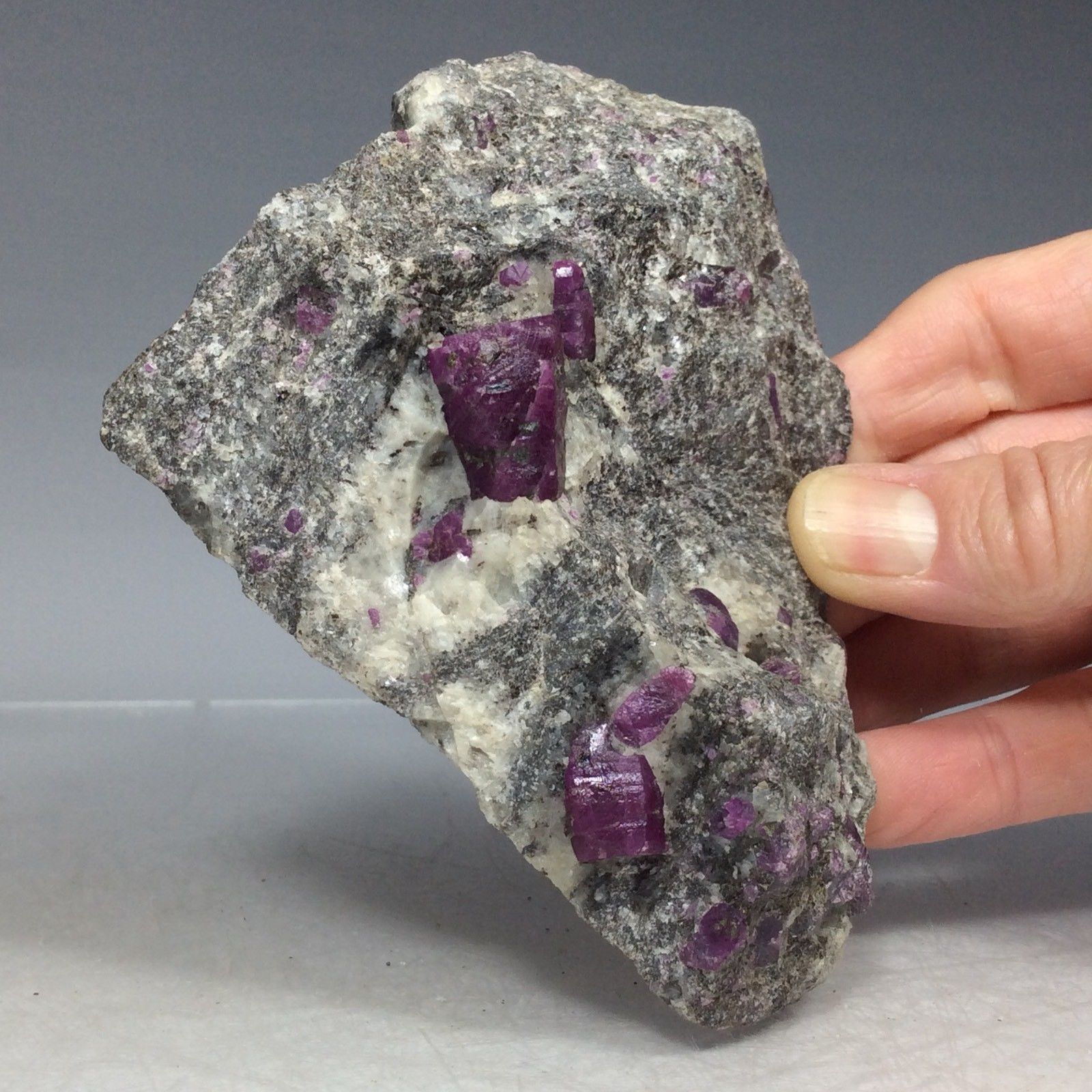
One Madagascar specimen makes that point especially well. In visible light it looked purple enough that a strong response seemed doubtful. After it was tested, it fluoresced very nicely. That does not establish a general rule about Madagascar ruby, but it does show how easily a visual guess can fail. The specimen itself had the final word, not the daylight photograph.
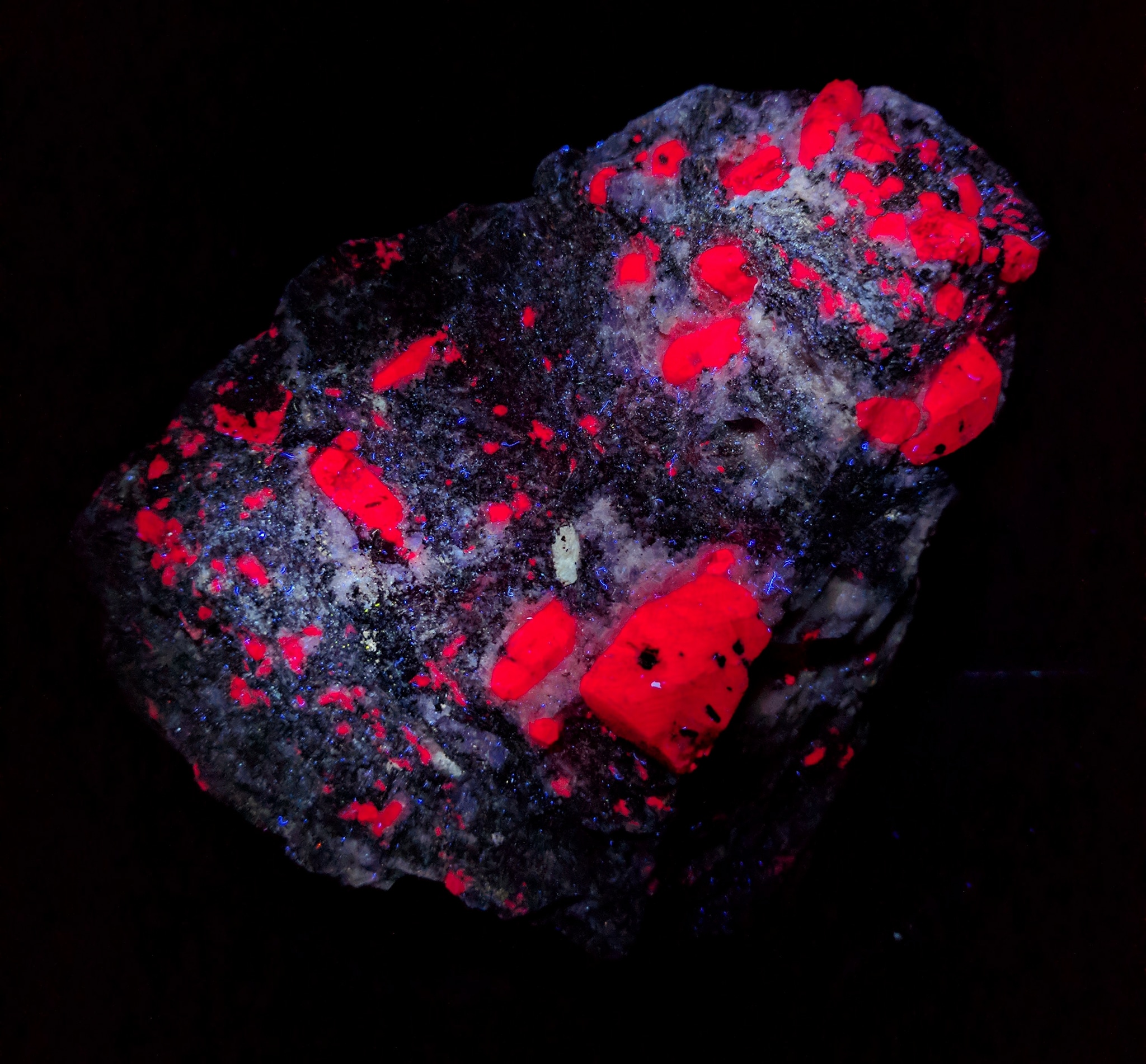
Locality can help, but only up to a point. Burmese rubies have a well-earned reputation for especially strong fluorescence. Other localities are often less consistent, and some are associated with weaker response. Even here, though, broad patterns only go so far. Rubies from the same locality can still vary noticeably from specimen to specimen, so locality may suggest a tendency without predicting the behavior of an individual piece with confidence.
Testing conditions add another layer. Blue-filtered LED light, strong 365 nm excitation, and 405 nm laser excitation may all bring out different aspects of the same specimen. Temperature can matter as well. Informal testing with ruby fluorescence suggests that corundum may show stronger fluorescence at elevated temperatures. A ruby that seems unimpressive under one set of conditions may look better under another, but that does not mean every ruby is secretly a strong fluorescer waiting for the right lamp.
The most useful conclusion is a blunt one. You cannot tell how well a ruby will fluoresce just by looking at it in daylight. And even if a red specimen fluoresces bright red under longwave UV, that still does not prove it is ruby. Other minerals, especially spinel, can do the same thing. The reverse is also true: a weak response, or no obvious response, does not prove that a specimen is not ruby. Fluorescence is a clue, sometimes a very good one, but rarely the whole answer.
So the answer to the original question is simple, even if the reasons are not. No, rubies do not all fluoresce the same. Differences in chemistry, locality, temperature, excitation source, and viewing conditions all contribute to that variation. And no, daylight appearance is not a dependable shortcut. Ruby still has to be judged specimen by specimen.
Editor’s note: This article was adapted from archived material originally published on Nature’s Rainbows. It draws on observations and specimen images shared by Bruce White, Don Newsome, Richard David Armstrong, Mark Cole, Charles Gould, Doug Bank, and others. The article was developed with editorial assistance from AI and with substantial editorial guidance, revision, and final review by Doug Bank.