
Five Fluorescent Minerals -- Dara-i-Pioz, Tajikistan
Contributed by: Michael Crawford
Date: Aug 7th, 2026
Locality: Dara-i-Pioz Massif, Districts of Republican Subordination, Tajikistan (See on Mindat)
Size: 11 x 11 cm
Description:
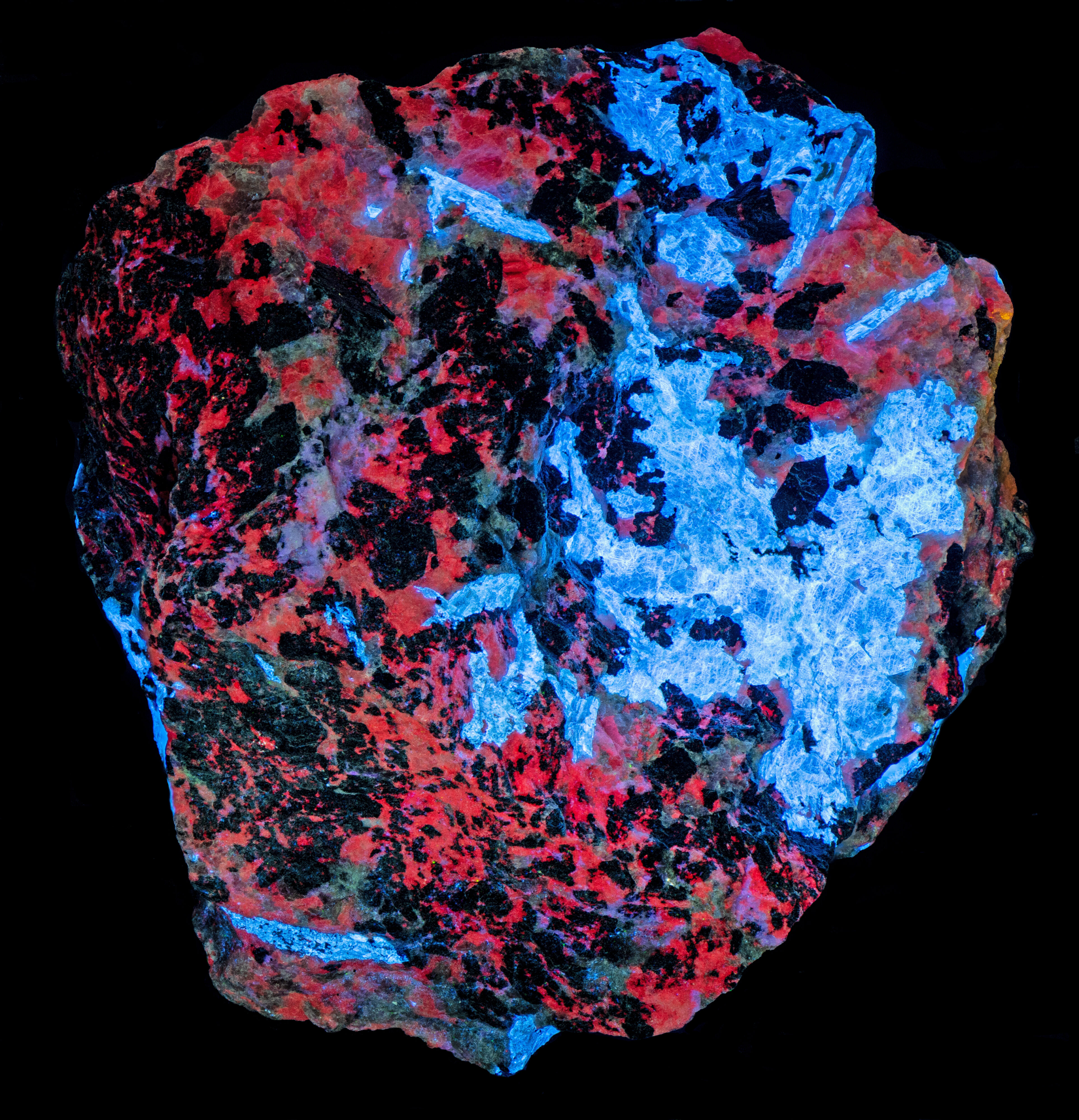
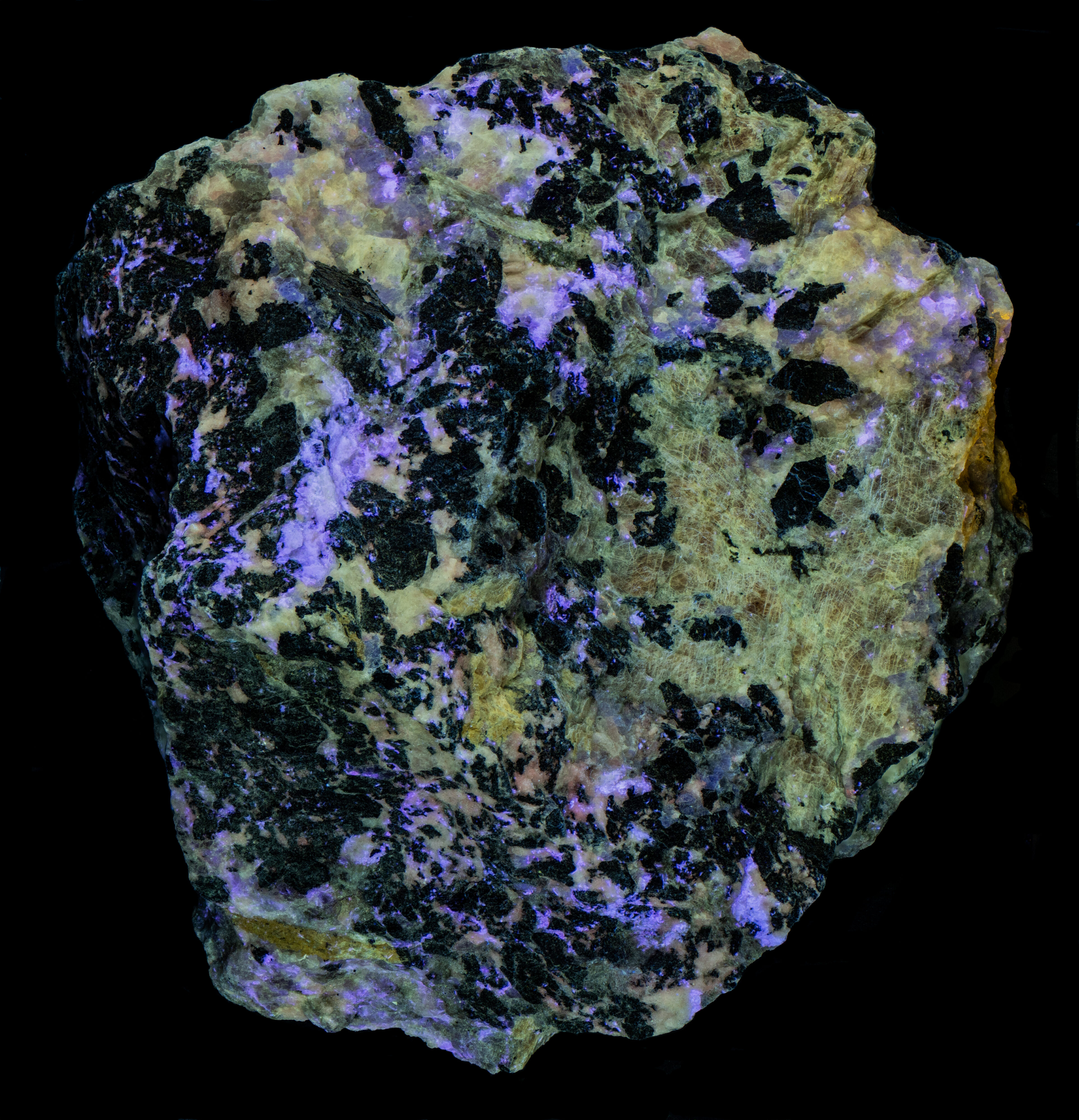
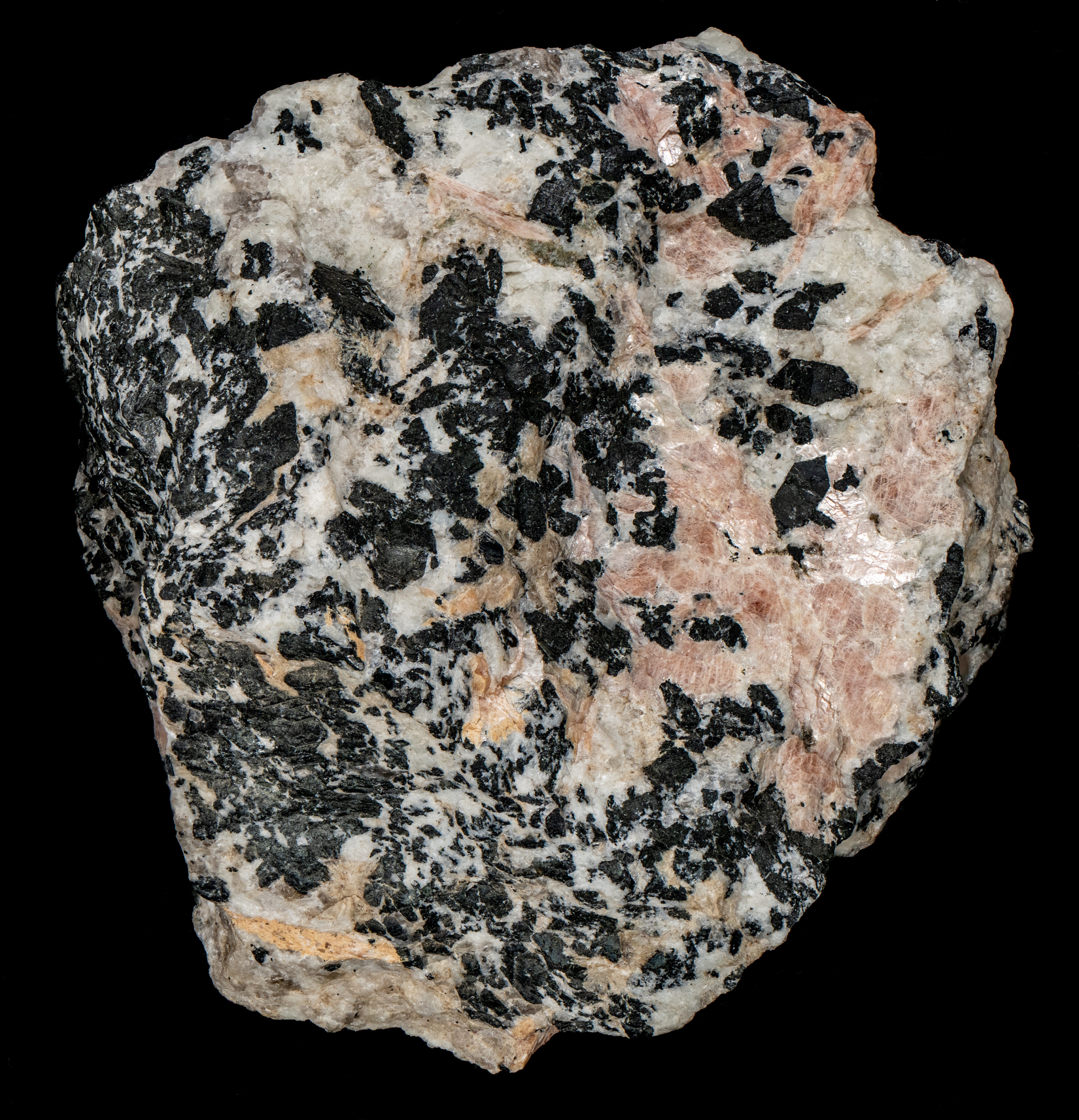
This is a specimen with five fluorescent minerals from Dara-i-Pioz, Tajikistan. Dara-i-Pioz is a very remote location in the Alai Range that is part of the Tien Shan Mountains in central Tajikistan. The specimen comes from the Dara-i-Pioz Massif, an unusual granitoid intrusion enriched in boron, lithium, beryllium, zirconium, and many cesium-bearing minerals. Dara-i-Pioz is the type locality for 47 minerals, including the baratovite (KCa7(Ti,Zr)2Li3Si12O36F2) present in this specimen. This specimen also contains albite, microcline, fluorapatite, and fluorite.
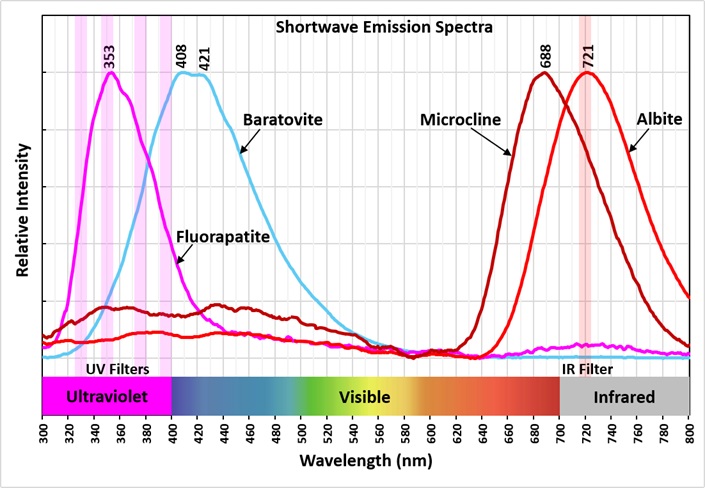
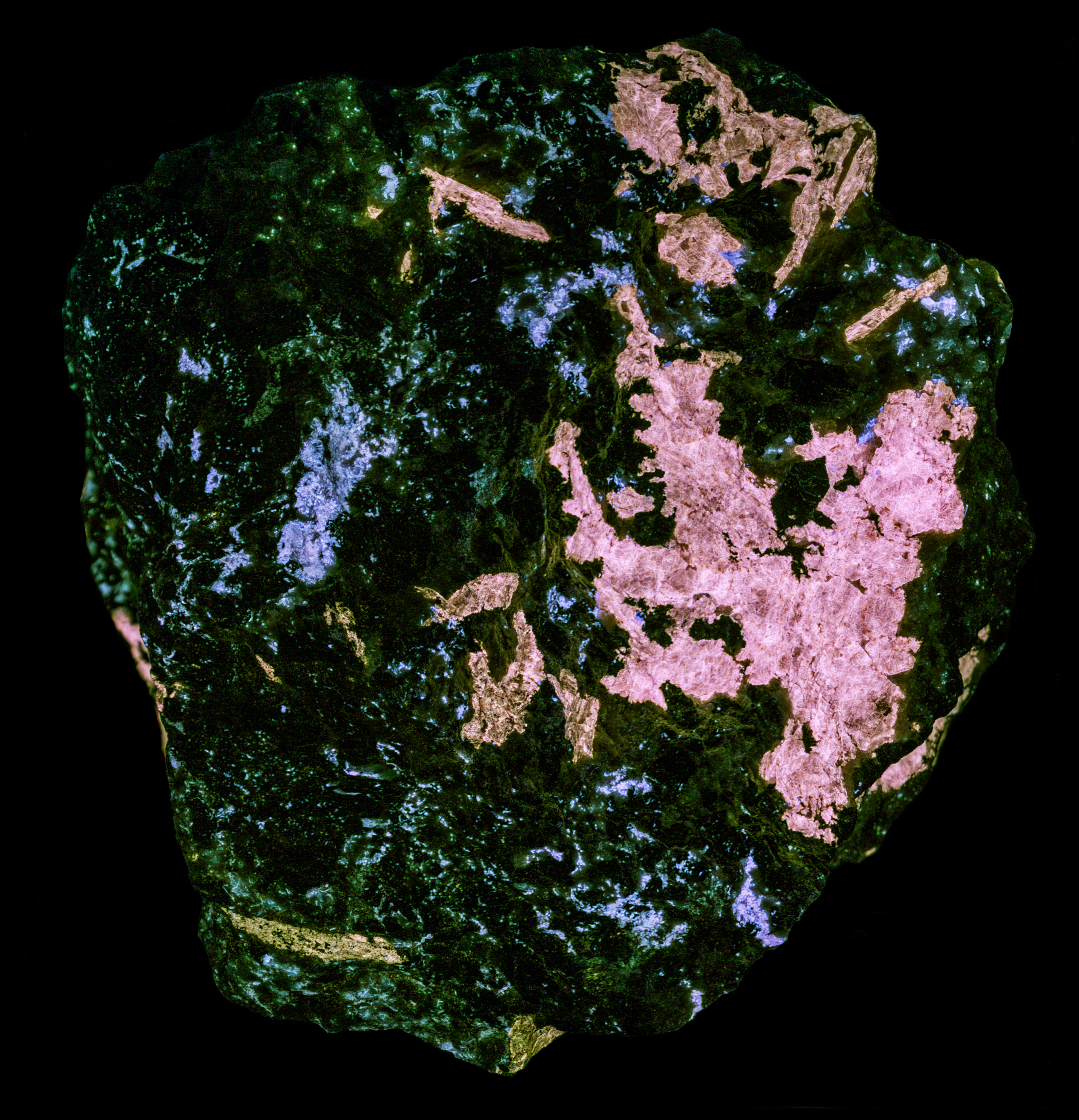
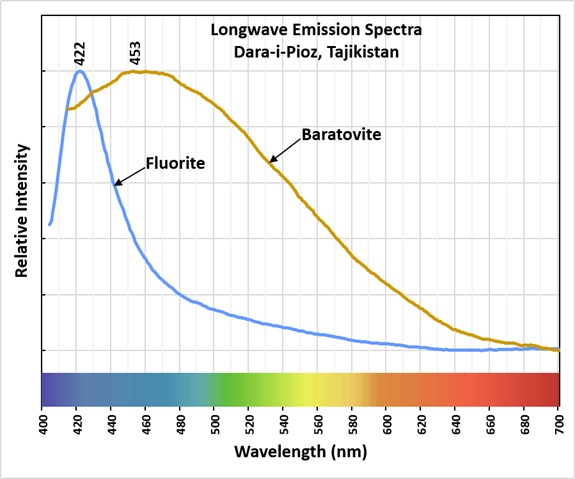
Baratovite's shortwave emission spectrum has a double peak at 405 nm and 421 nm, with a shoulder extending into the ultraviolet. Its fluorescence is likely activated by TiO6, which is chemically part of the baratovite structure, making the fluorescence intrinsic. Smaller peaks suggest that a rare earth element, possibly cerium, may also contribute to the light blue fluorescence. Baratovite has a pale yellowish-brown fluorescence under longwave and midwave UV light. The longwave emission spectrum is a very broad peak with a maximum around 453 nm. Titanium oxide in the baratovite is a possible activator for this LW fluorescence.
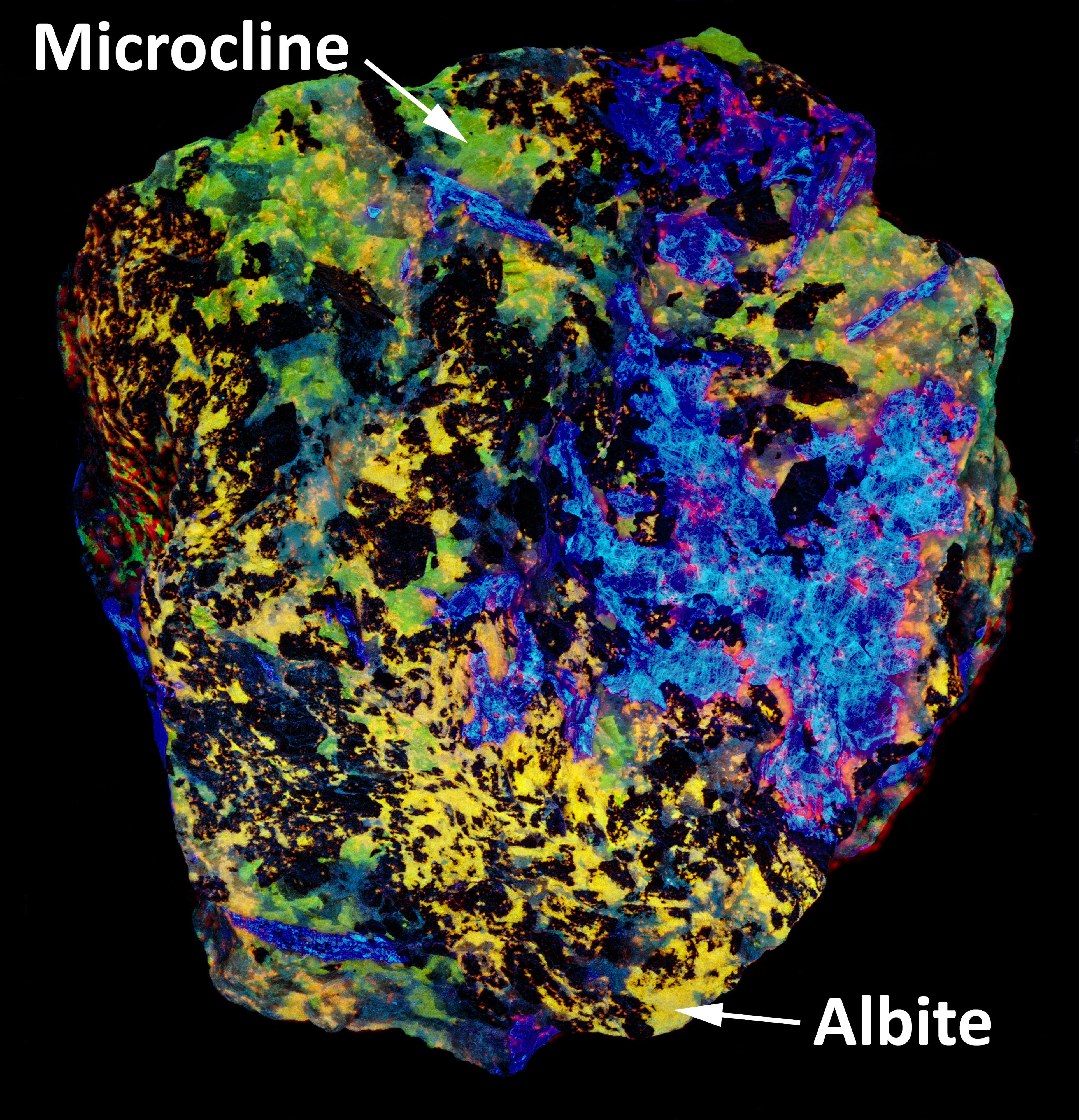
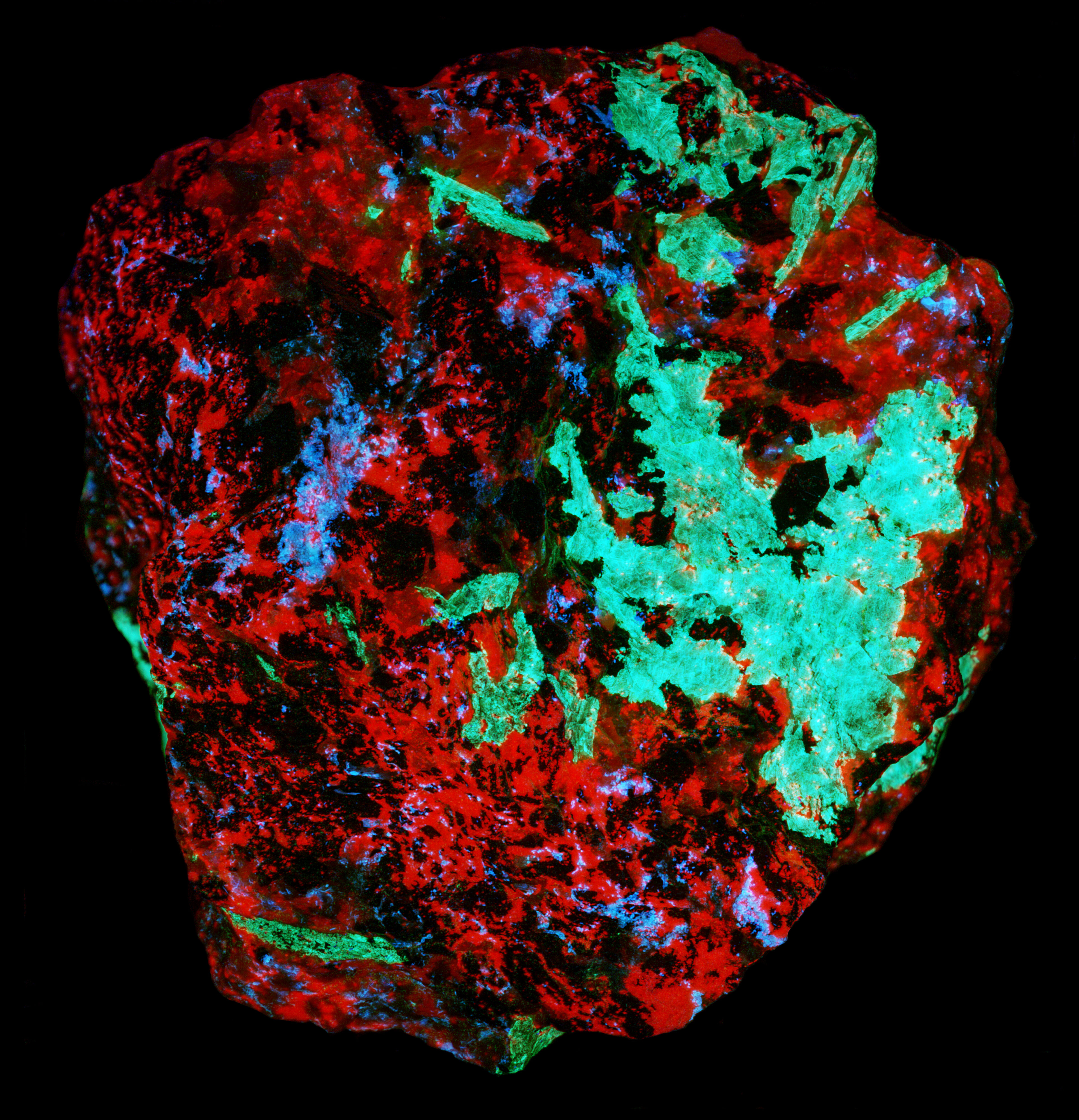
Abundant feldspar is also found in the specimen. The feldspar fluoresces red under shortwave UV light. Shortwave emission spectra show that two types of felspar occur in the specimen: albite (Na(AlSi3O8)) and microcline (K(AlSi3O8)). The spectrum of microcline is a broad peak with a maximum at 688 nm. The albite spectrum is also a broad peak, but its maximum is in the near infrared region at 721 nm. The red fluorescence in both feldspars is activated by ferric iron (Fe3+) substituting for aluminum (Fe3+). The two feldspars have a slight difference in red hue, but they are difficult to distinguish in the image of shortwave fluorescence. However, a color infrared image clearly shows the different feldspar types. Albite is yellow and microcline is green in the color infrared image. The color infrared image is composed of a near infrared image (720 nm bandpass) (assigned to red) combined with images of red visible light (assigned to green) and green visible light (assigned to blue).
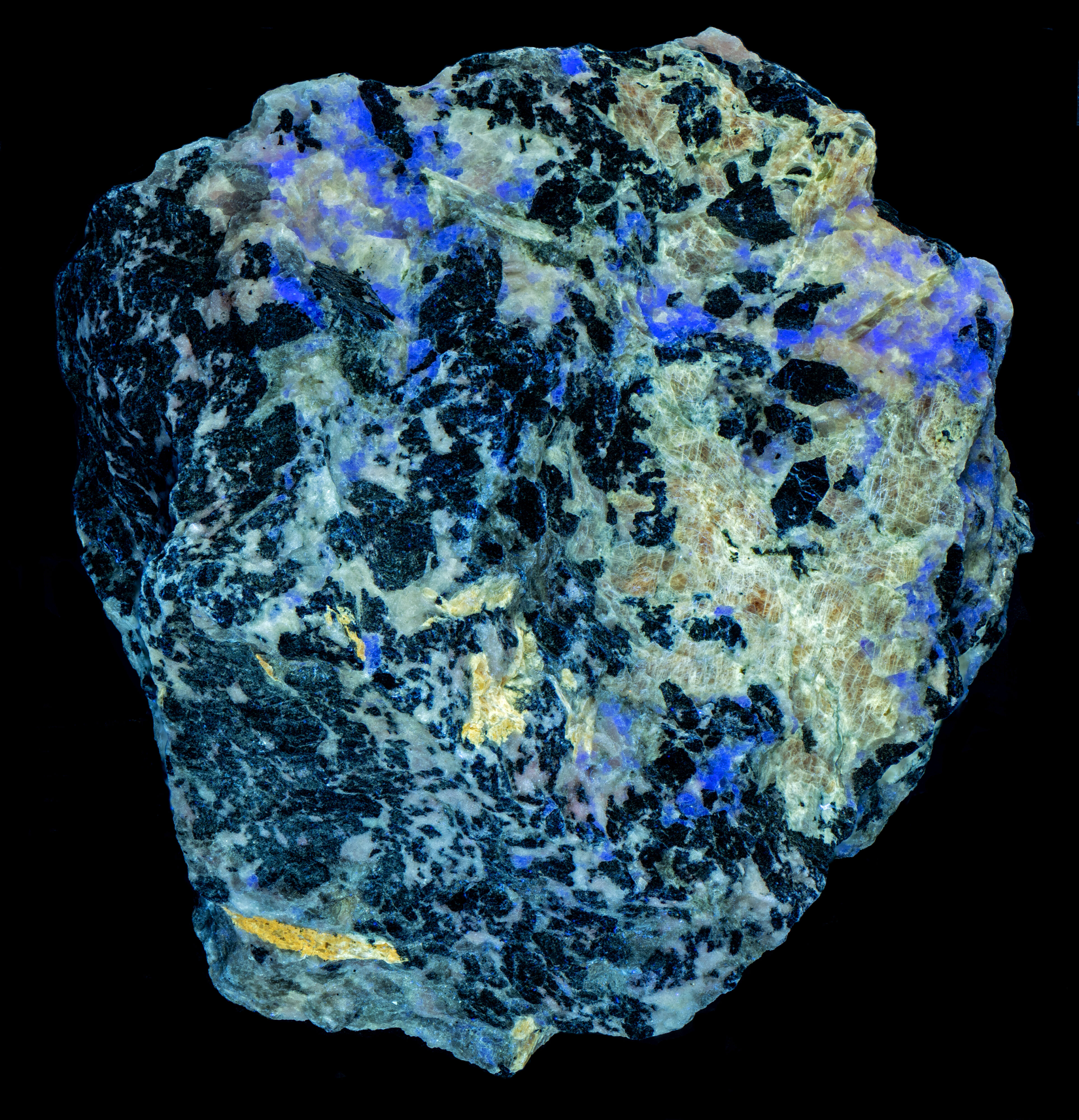
The image of longwave fluorescence shows scattered grains of blue fluorite (CaF2). The emission spectrum shows the typical signature of fluorite activated by europium (Eu2+) with a peak at 422 nm. The fluorite is non-fluorescent under midwave and shortwave light.
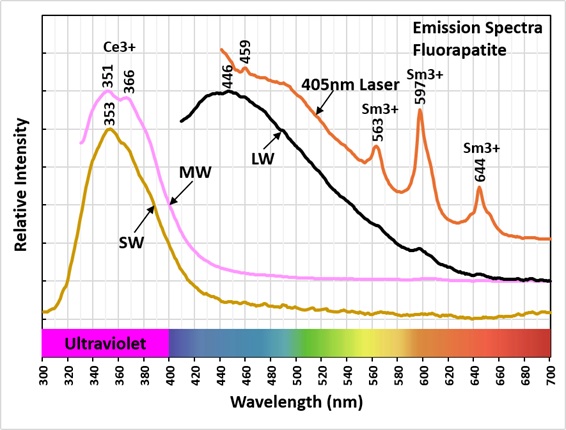
The midwave image shows scattered grains of violet fluorapatite (Ca5(PO4)3F). The fluorapatite has very bright fluorescence in the ultraviolet region under midwave and shortwave illumination. This fluorescence is considerably brighter than any visible fluorescence. The shoulder ultraviolet emission extends into the visible region producing the observed violet fluorescence seen under midwave light. There is no obvious visible fluorescence from the fluorapatite under shortwave light. The fluorapatite is clearly seen in the false color images of the ultraviolet fluorescence under both SW and MW light. The ultraviolet fluorescence is activated by cerium (Ce3+). The baratovite also exhibits fluorescence in the ultraviolet region from its blue emission that extends into the ultraviolet.
The emission spectrum created by a 405nm laser shows three sharp peaks (563 nm, 597 nm and 644 nm) that are activated by samarium (Sm3+) which produces an orange color.
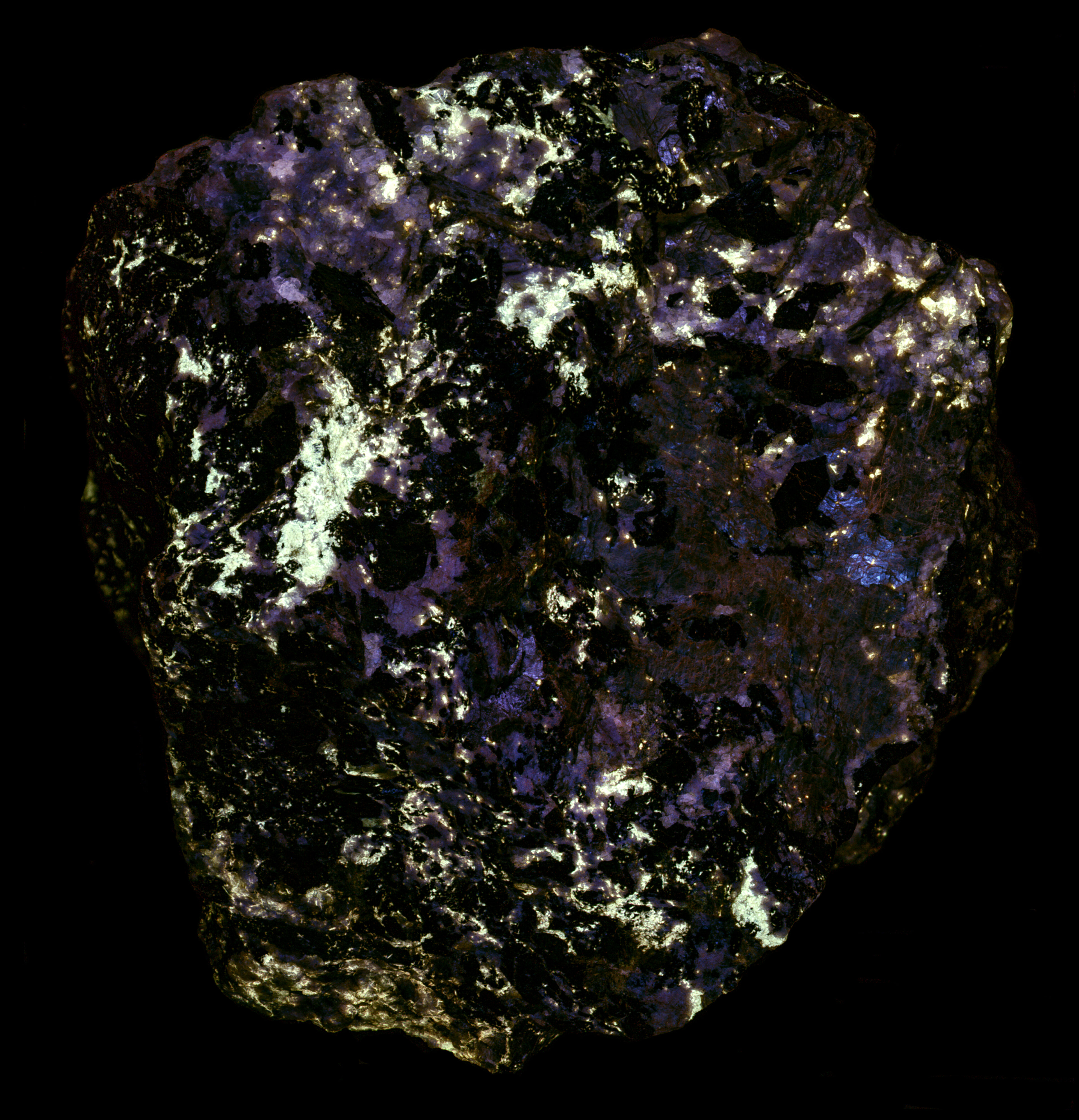
Summary of luminescence responses:
Albite (Mindat) (RRUFF)
- Fluorescence under Shortwave (255nm LED) UV light: Red
- Fluorescence under Longwave (365nm LED) UV light: Yellow
- Fluorescence under Midwave (305nm LED) UV light: Yellow
- Fluorescence under Shortwave (255nm LED) UV light: Blue
- Fluorescence under Midwave (305nm LED) UV light: Violet
- Fluorescence under Longwave (365nm LED) UV light: Blue
- Fluorescence under Shortwave (255nm LED) UV light: Red