
How do you know whether your UV flashlight is really producing the wavelength it claims? You could use a spectrometer, of course, but there is a much simpler option that is especially appealing to mineral collectors: use a fluorescent mineral as a rough UV wavelength indicator.
The idea is simple. Some minerals respond very differently to different UV wavelengths. A specimen may fluoresce strongly under 365nm UV, for example, but show little or no fluorescence under 395nm. Others can even change the color of their fluorescence as the wavelength changes.
Agrellite is one of the classic minerals used to demonstrate this effect. Its fluorescence can change significantly between different UVA wavelengths, making it useful for distinguishing UV around the 350–370 nm range. Its activators absorb certain wavelengths more efficiently than others, and the resulting fluorescence changes with the excitation wavelength. Under 365nm the pink fluoresce is barely visible, but it fluoresces much more strongly under 350nm or less.
Terlingua calcite is another example: it can show a strong pink fluorescence under 365 nm UV, while the same specimen may show a much weaker and different-colored response under 395 nm. Other minerals, including some specimens of cerussite, aragonite, and willemite, can also show noticeable differences.
This can be a useful quick test when comparing flashlights. Put the same specimen under each light, keep the distance and lighting conditions similar, and look at both the intensity and color of the fluorescence.
But there is an important limitation: a mineral is not a calibrated UV detector. Fluorescence depends on much more than the nominal wavelength of the flashlight. The particular specimen, activator concentration, intensity of the UV, distance from the specimen, and even visible-light leakage from the flashlight can all affect what you see. Two pieces of the same mineral may therefore behave differently. And a mineral that fluoresces under 365nm but not under 395nm tells you that the two lights produce different excitation, but it doesn’t prove that one is exactly 365 nm.
Still, fluorescent minerals can make surprisingly good UV flashlight test specimens. If you have a few minerals with well-known and strongly wavelength-dependent fluorescence, they can quickly reveal whether two lights are producing substantially different UV. Sometimes the best UV detector is already sitting in your mineral cabinet.
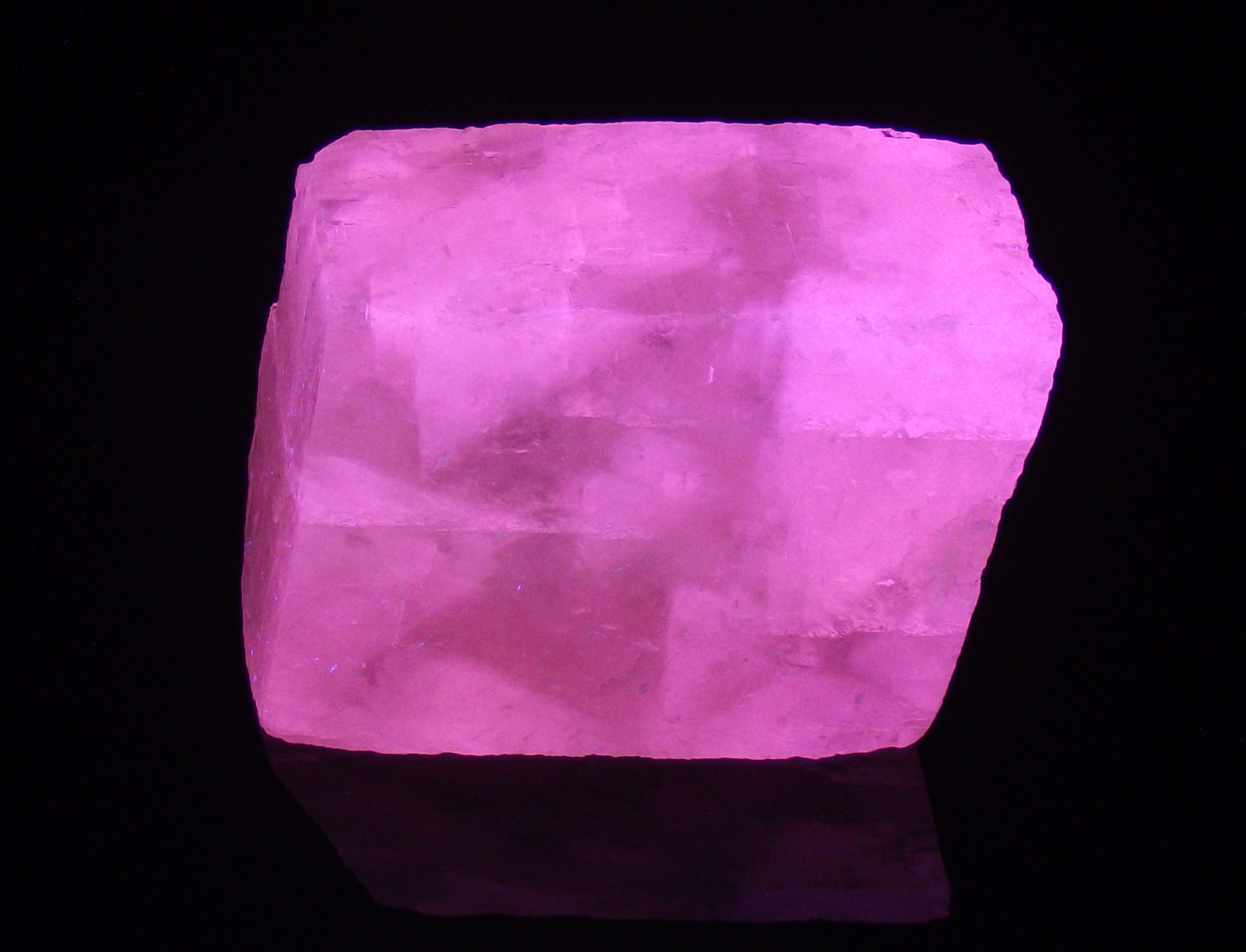
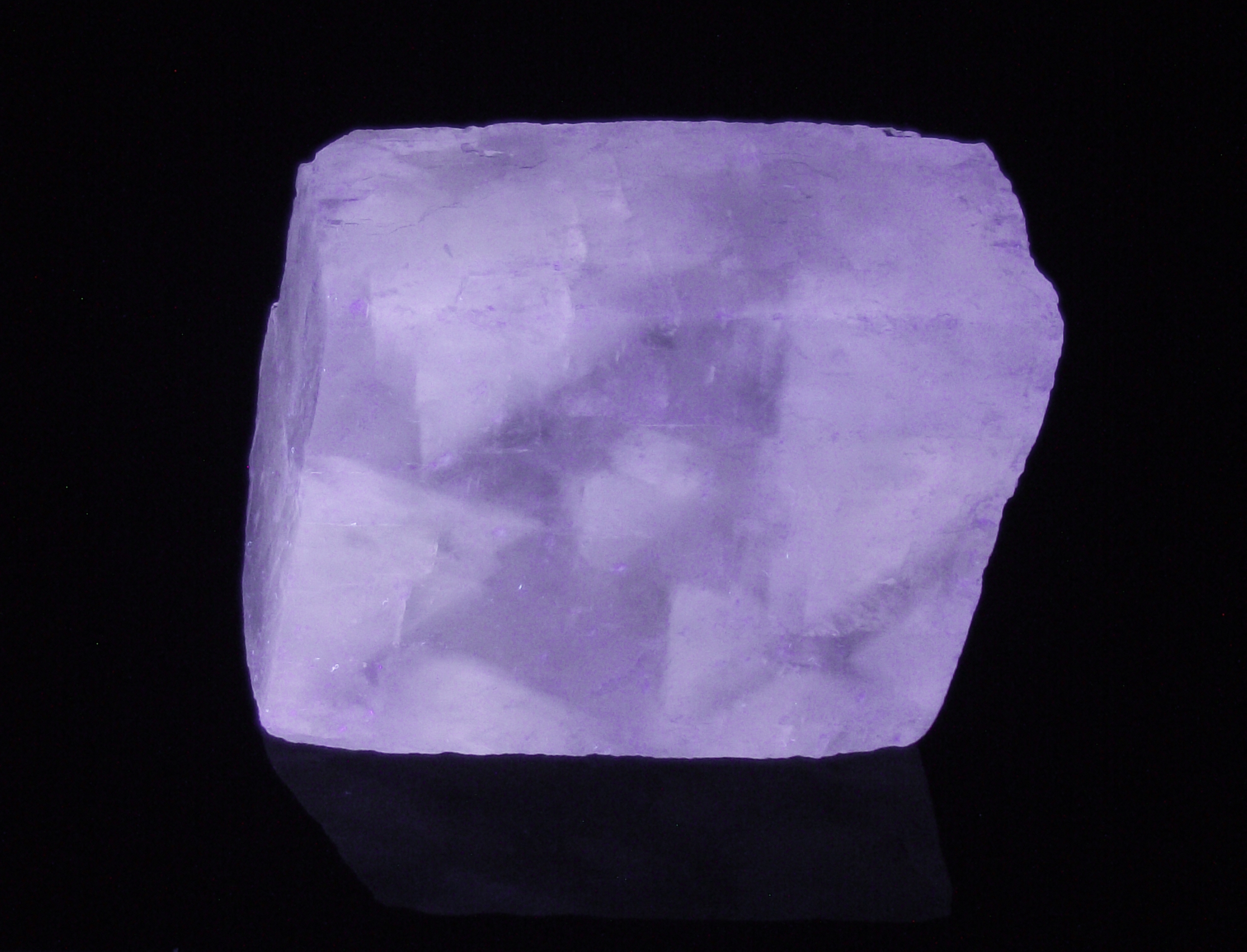
A terlingua type calcite. Fluorescent bright pink under longwave uv light (365nm), and bluish under 395nm light. Photos by Frédéric Messier Leroux.