
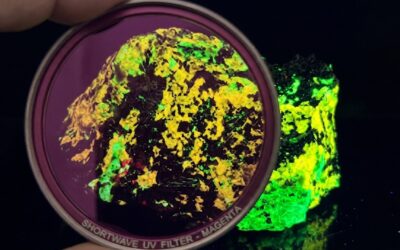
Photographing Esperite using a Magenta Filter
Esperite is one of the most difficult minerals to photograph. The bright yellow of Esperite is very close to the bright green fluorescence of Willemite. The two together general blow out the exposure on most every camera. Most of the time, the esperite tends to look...
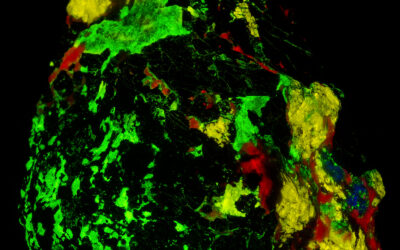
Photographing Esperite (and other “hard rocks”)
Originally posted on Nature's Rainbows in June 2016. I have a nickname for esperite pieces – I call them “hard rocks”, very hard to photograph. Our rocks “glow” like a lightbulb. Imagine trying to take a picture of a Christmas tree. The lights end up looking...
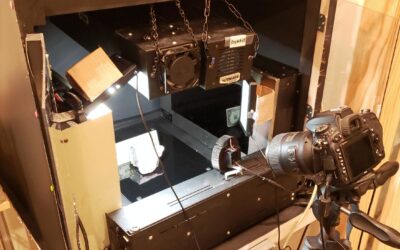
Fluorescent Mineral Photography Studio
This article was originally published on Nature’s Rainbow in 2022. While visiting my granddaughter in Florida I had time to revamp my daughter's UV light box. The old one was too small for the large specimens she's been photographing lately, and the lighting was...
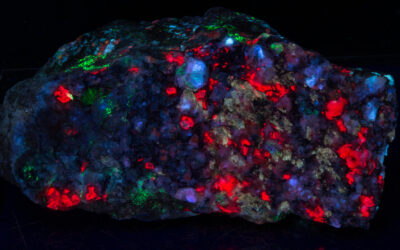
Crack that Rock! (You never know what’s inside)
This article was originally published on Nature’s Rainbow. Seems to go without saying for most experienced fluorescent mineral collectors; rocks that sit exposed to the elements for millennia (give or take a few million years) develop a "rind" on the outside, oxidize,...
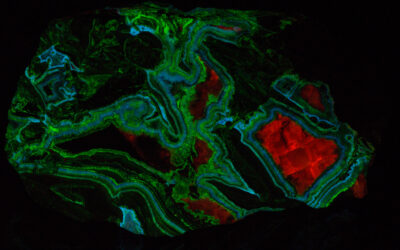
Catching the Afterglow: Taking Pictures of Phosphorescent Minerals
This article was originally published on Nature’s Rainbow. Many minerals exhibit an “afterglow” when the UV light is turned off. This glow can last for milliseconds or hours depending on the mineral. Some are very bright while others are barely perceptible. Examples...
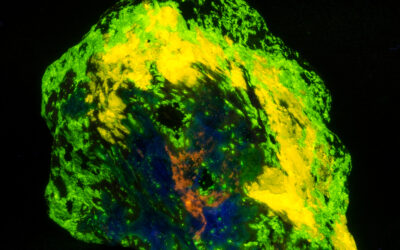
Another Esperite Photography Tutorial
This article was originally published on Nature's Rainbow in 2017. After a recent recurring discussion on the photography of Esperite, I posted an image I created several years ago. Someone asked how I did it, and because I documented what I did in an email discussion...

Alive and fluorescing… coral
At the Maui Ocean Center in Malaea... Not to be missed: fluorescing coral! Quite a few species appear to fluoresce in long wave UV. Strictly speaking they're not minerals yet, but they could be found as such in a few eons.This article was originally published on...

I built a beautiful fluorescent display: what do I use for a front panel?
Folks are very creative and we’ve seen some great displays filled with glowing rocks and lit by powerful UV lights. But, as we know, UV can be dangerous to your eyes; viewers must be protected from the harmful UV rays. And a front cover helps keep that pesky dust and...

Is my rock really fluorescent?
A question often asked: “Is the blue fluorescence in this rock real?”. This is a pretty common question, or often a wrong conclusion made by many first starting out in our hobby. Our UV lights have UV bandpass filters (“filter” defined here for our purposes as UV transmitting, visible blocking) which block the visible light…

The “Feldspar Effect”: Is This Really a Fluorescent Mineral?
There is something I call the "feldspar effect". When people first start collecting fluorescent minerals in the field they usually are amazed at the typical fluorescence of your average feldspar. As they gain experience and see more fluorescent minerals they realize...