
Baratovite and Feldspar from Dara-i-Pioz, Tajikistan
Contributed by: Michael Crawford
Date: Feb 19th, 2026
Locality: Dara-i-Pioz Massif, Districts of Republican Subordination, Tajikistan (See on Mindat)
Size: 8 x 9 cm
Description:
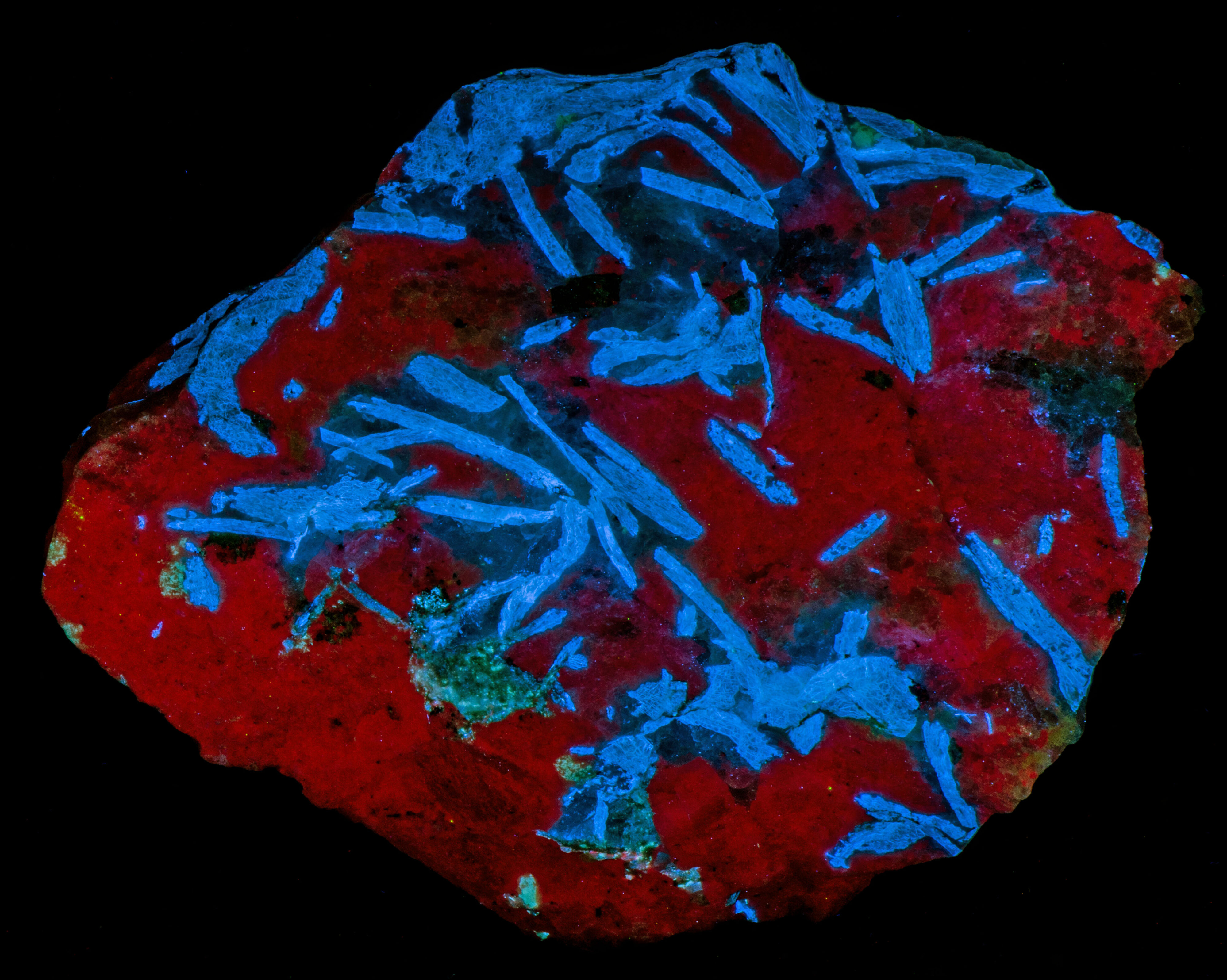
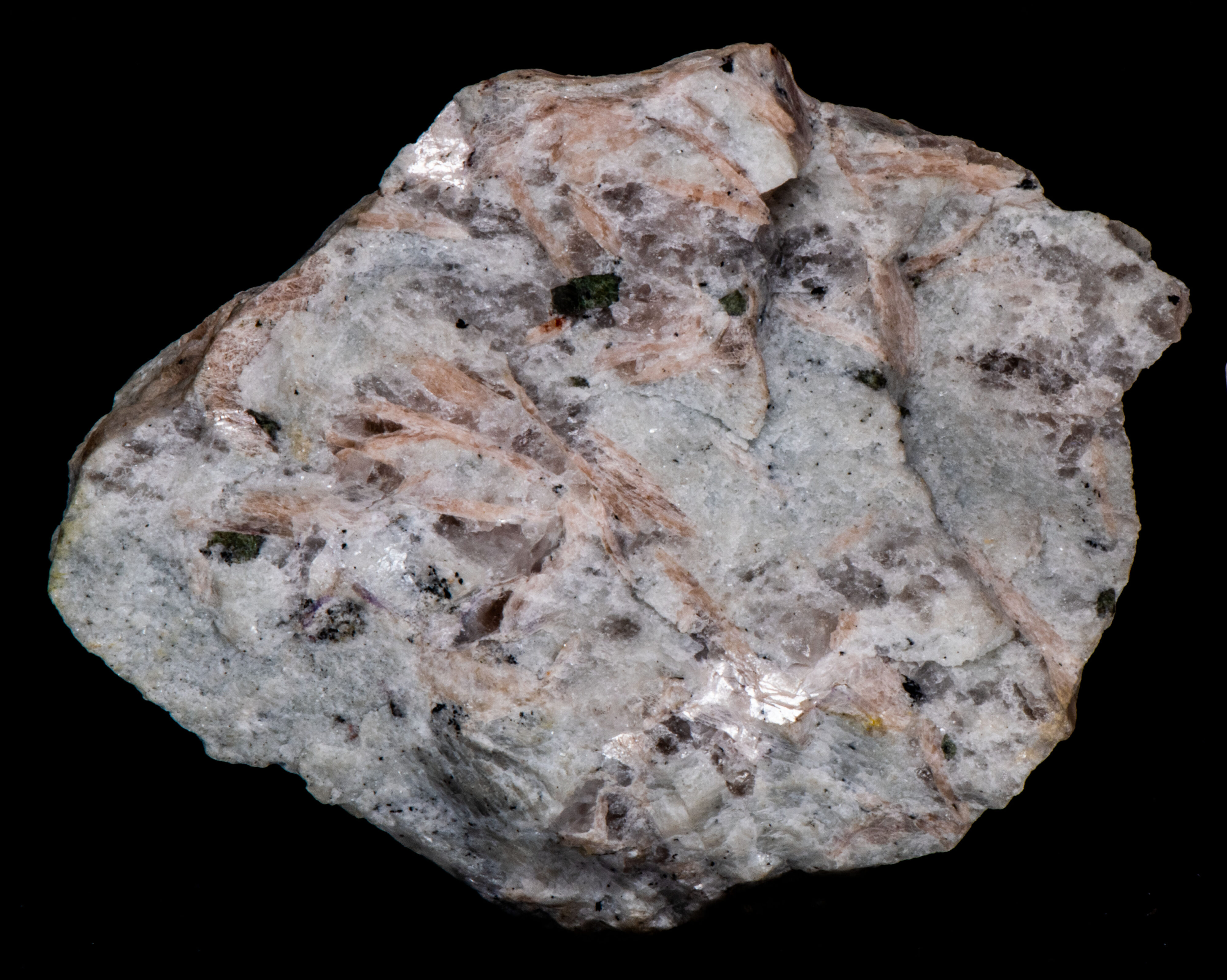
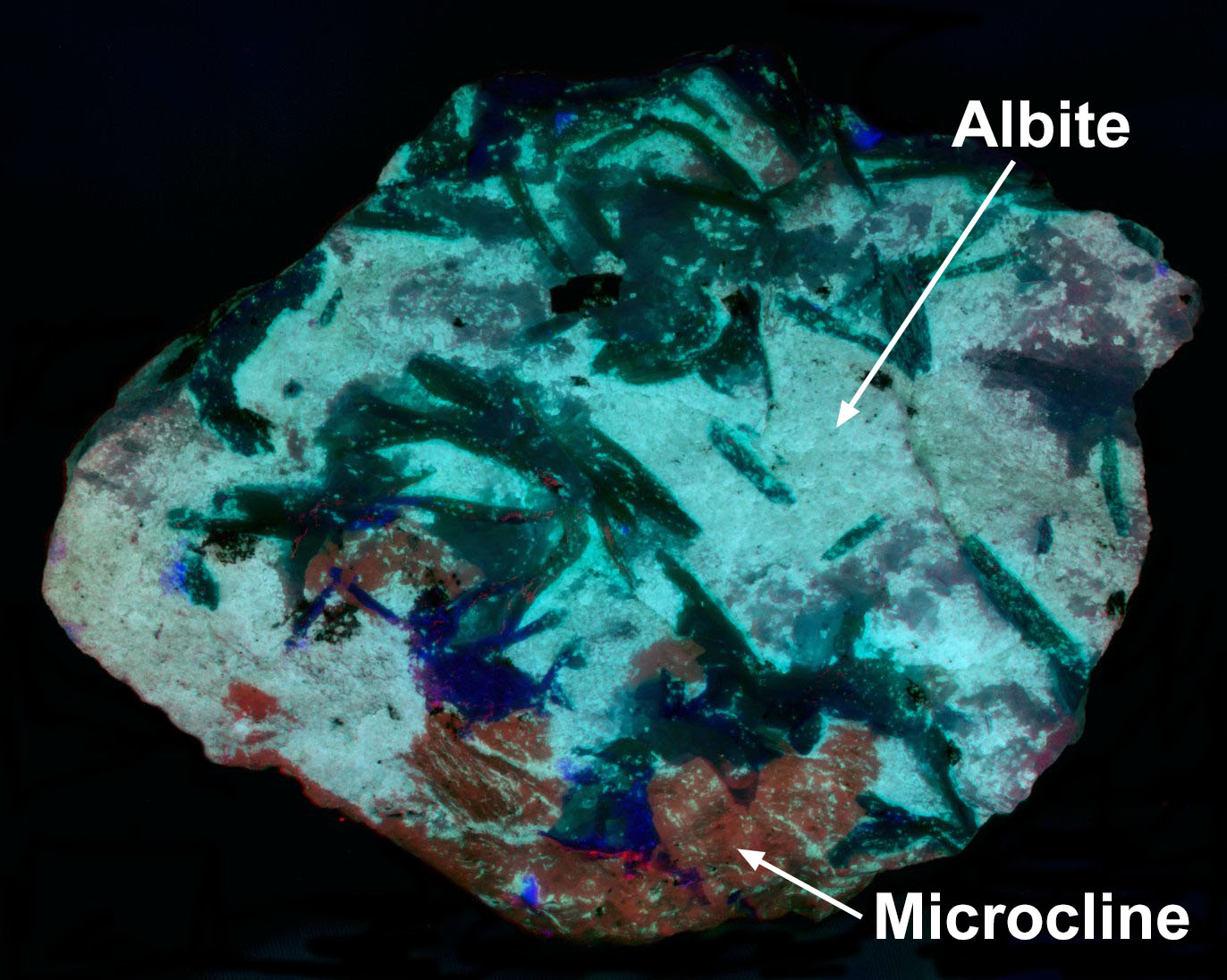
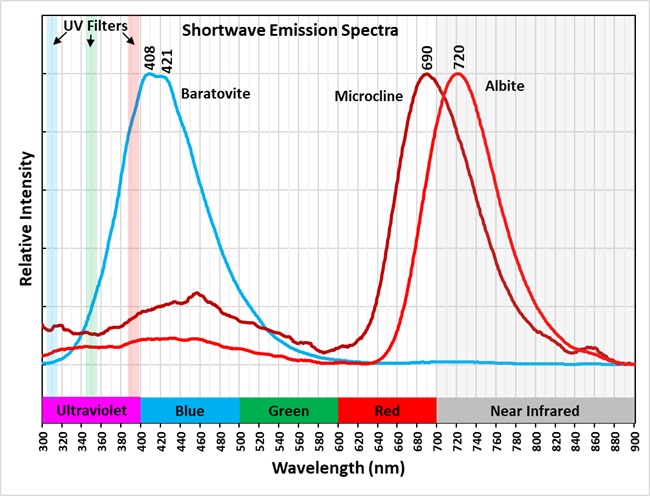
Baratovite (KCa7(Ti,Zr)2Li3Si12O36F2) crystals in a matrix of feldspar from Dara-i-Pioz, Tajikistan. The baratovite fluoresces bright bluish white under shortwave illumination. The feldspar fluoresces red under shortwave light. An image of the near infrared fluorescence shows the matrix is composed of two types of feldspar. Most of the feldspar is albite (Na(AlSi3O8)) (bluish-white) with some microcline (K(AlSi3O8)) (red). The spectrum of the microcline has a maximum in the visible at 690nm and the albite fluorescent peak is in the near infrared at 720nm. The baratovite is non-fluorescent in the near infrared. The feldspar fluorescence is activated by ferric iron (Fe3+) replacing aluminum in the feldspar lattice.
The shortwave emission spectrum of baratovite has a double peak at 408 nm and 421 nm. The shoulder of the peak extends into the ultraviolet. The fluorescence is likely activated by TiO6 that is chemically part of the baratovite. Therefore, baratovite’s fluorescence is intrinsic.
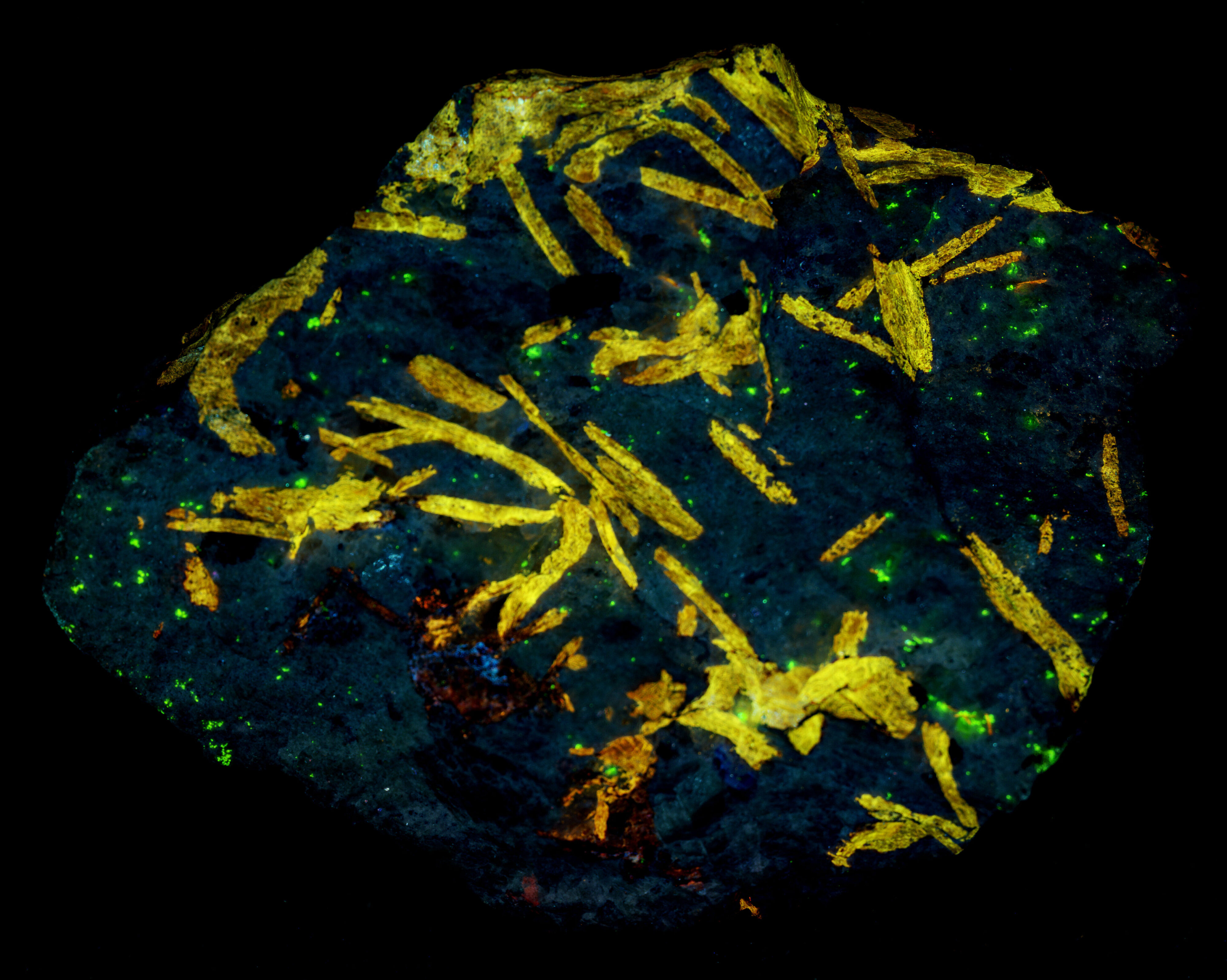
Summary of luminescence responses:
Albite (Mindat) (RRUFF)
- Fluorescence under Shortwave (255nm LED) UV light: Red
- Fluorescence under Shortwave (255nm LED) UV light: Blue
- Fluorescence under Shortwave (255nm LED) UV light: Red