
Flurapatite Jumillite Calcite Chalcedony
Contributed by: Daniel C. Montero
Date: May 6th, 2026
Locality: Nuestra Señora del Carmen Mines, La Celia lamproite outcrops, Jumilla, Murcia, Spain (See on Mindat)
Description:
The fluorapatite is shown orange in SW and pink in MW that in combination with jumillite, calcite and chalcedony are really attractive
One of the largest samples was extracted more than 40 years ago by a colleague when access was allowed to the interior of this mine, which today is impossible to access since it is now a monument of cultural interest.
Volcano La Celia.
It is located on a large volcanic field that dates from the Intrapliocene, and that includes the region of Murcia, and most of the province of Albacete, in which said volcanic field, is also the Cancarix volcano. The Segura River and the Mundo River cross this field. The volcanic field is formed by many eroded volcanic cones and many lava flows.
The volcano of La Celia, on its slopes. You can find the remains of the La Celia mines. They were opened during the early twentieth century, and a mineral called fluorapatite was extracted, which transported the mineral by a train, to the town of Minateda, in the municipality of Hellín. The mine is currently abandoned.
Fluorapatite de Jumilla is known since the late eighteenth century. It was first known as chrysolithe and was analyzed by Vauquelin in 1797. For some time, the term Spargelstein, Aspergine, Esparraguina was used.
The main function of this exploitation was the extraction of apatite-rich rock to be used as phosphate fertilizer.
Historical site and world famous for its magnificent fluorapatite crystals known since the eighteenth century with the name "Chrysolithe d'Espagne" (Romé de L'Isle) and also known as "Spargelstein" (Werner) in Spanish. "Esparraguina" by the similarity of the crystals with the stems of the asparagus.
They were analyzed for the first time by Vauquelin classifying them as calcium phosphate. Proust discovered the presence of fluoride in this mineral. The crystals were also studied for the crystallographers Romé de L'Isle, Haüy, Michael Levy, Schauf Albrecht and Heinrich Adolf Baumhauer among others, which gives us a clear idea of the importance of this historical site in relation to global mineralogy. A detail about the history of this town can be seen in Calvo (2015).
The deposit is related to the post-magmatic alteration of a rare volcanic (or subvolcanic) rock of ultra-potassium composition called lamproites historically known as "Jumilitas" (through the city of Jumilla, which is the most important city near the outcrops) associated with diapiric outcrops of Keuper facies (Triassic) being the age of diapiric movements of the Miocene and volcanic extrusions of the Upper Pliocene Age.
Within the vacuoles in the altered parts of the volcanic rock is found, together with the magnificent specimens of fluorapatite, a complex paragenesis that highlights the pseudobrookite crystals and the rare borate yuanfuliite.
Originally posted by Daniel C Montero on Nature's Rainbows in 2018.
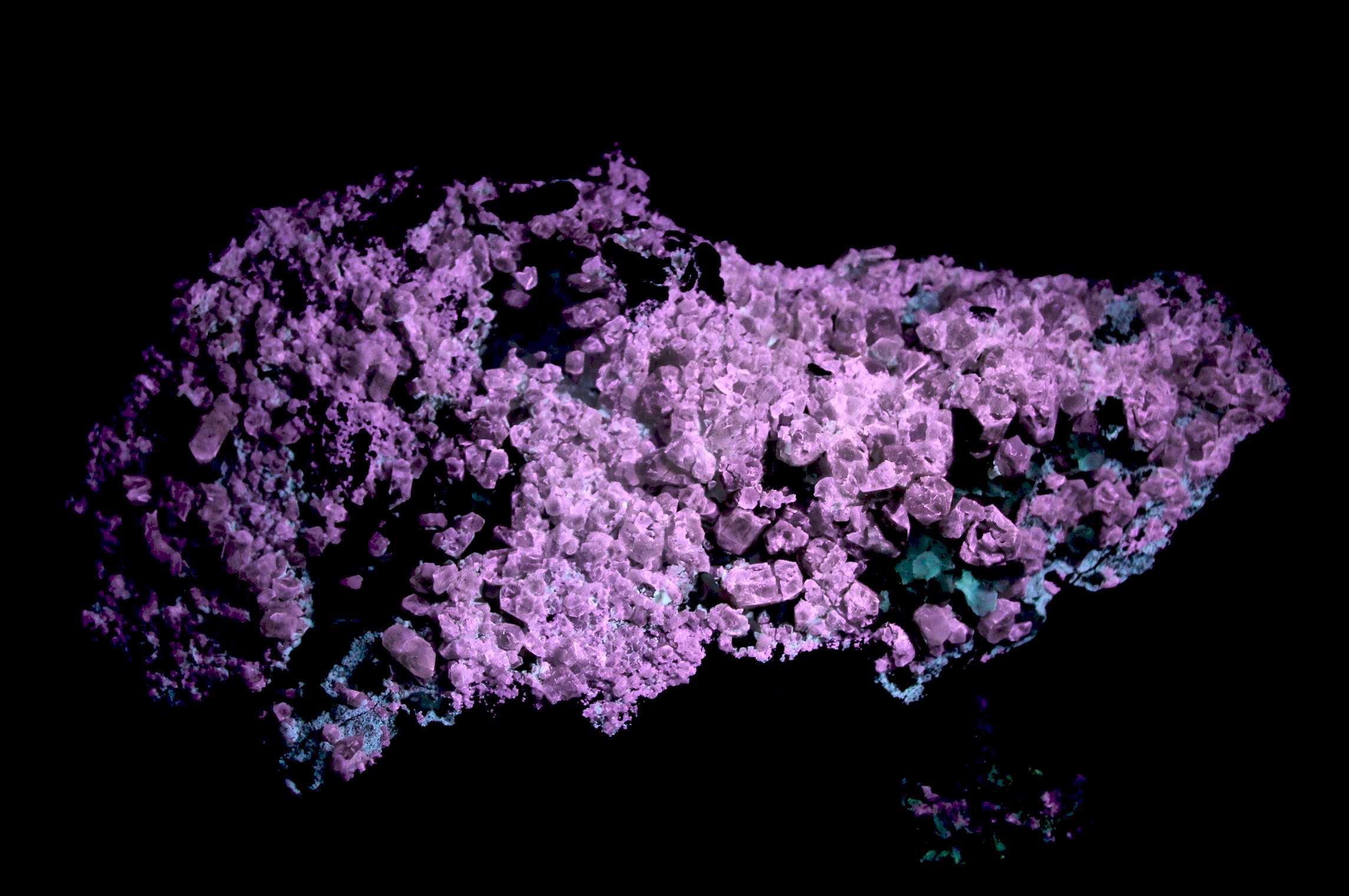
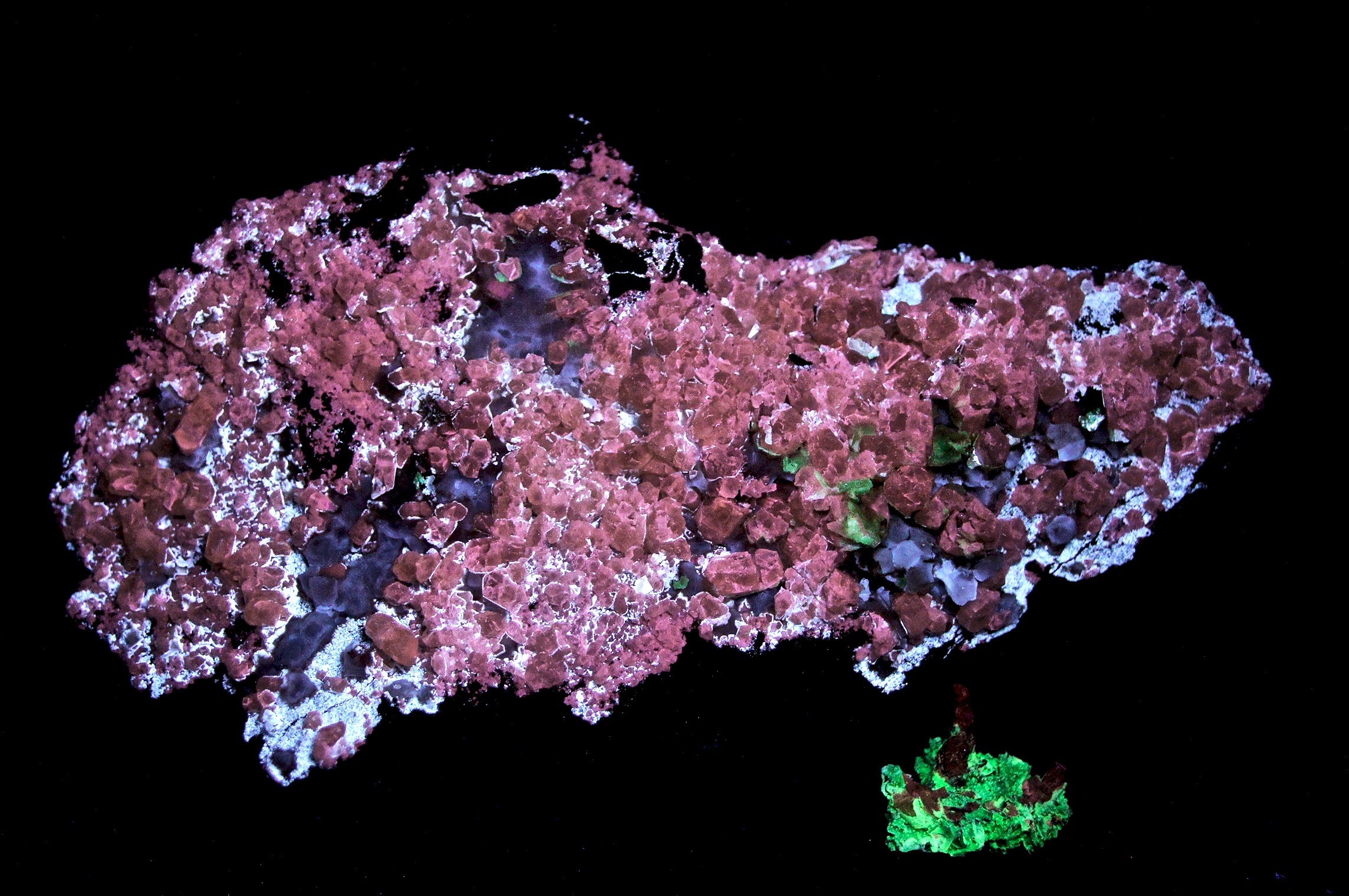
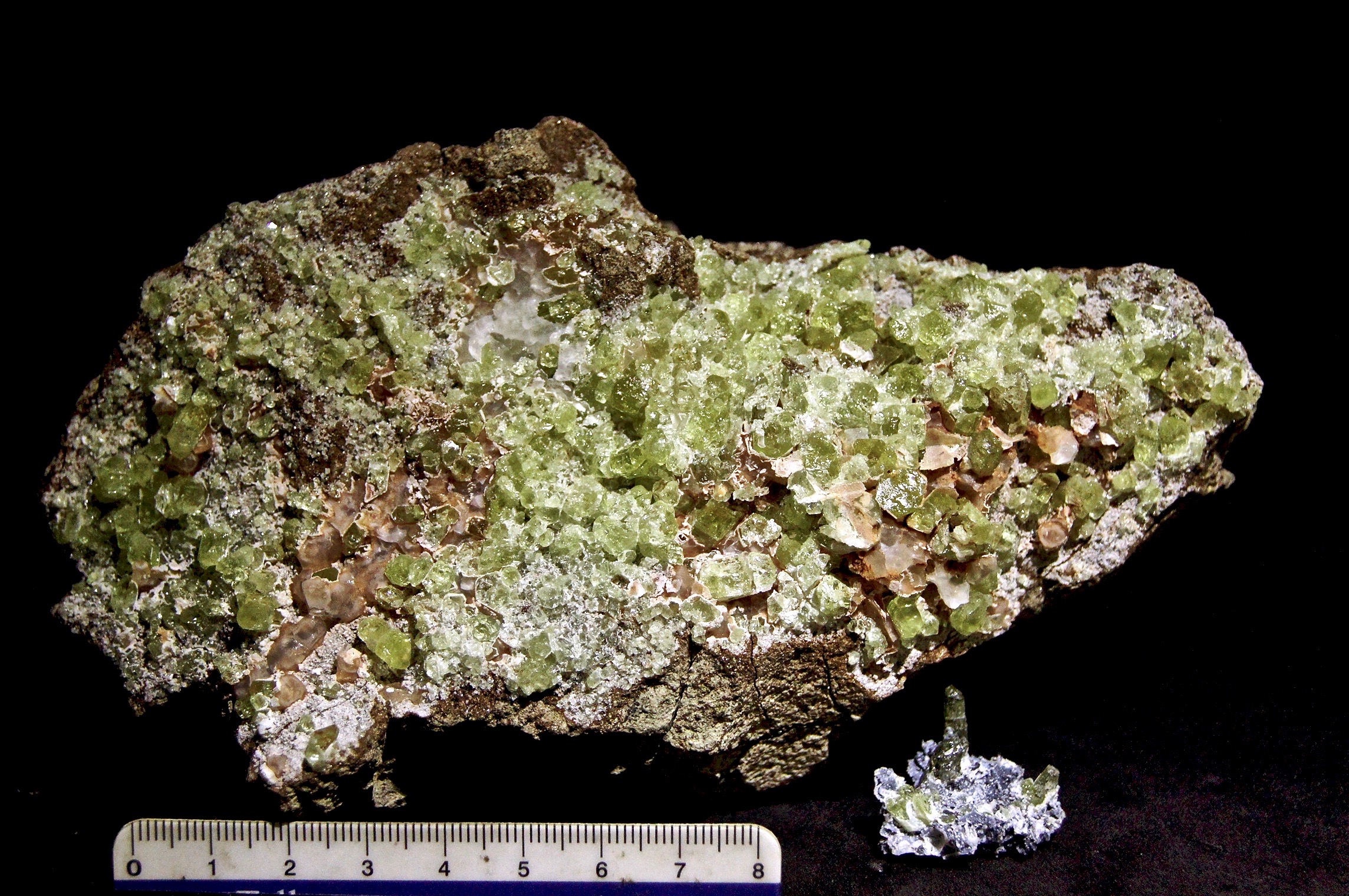
Summary of luminescence responses:
Fluorapatite (Mindat) (RRUFF)
- Fluorescence under Shortwave (254nm Lamp/Mercury) UV light: Orange
- Fluorescence under Midwave (305nm Lamp/Mercury) UV light: Violet