
Septarian Nodule - Orderville, Utah
Contributed by: Chris Clemens
minID: Y9H-9N9
Date: May 1st, 2026
Locality: Muddy Creek, Orderville, Kane County, Utah, USA (See on Mindat)
Size: 12 x 1.25 x 14 cm
Weight: 346 g
Description:
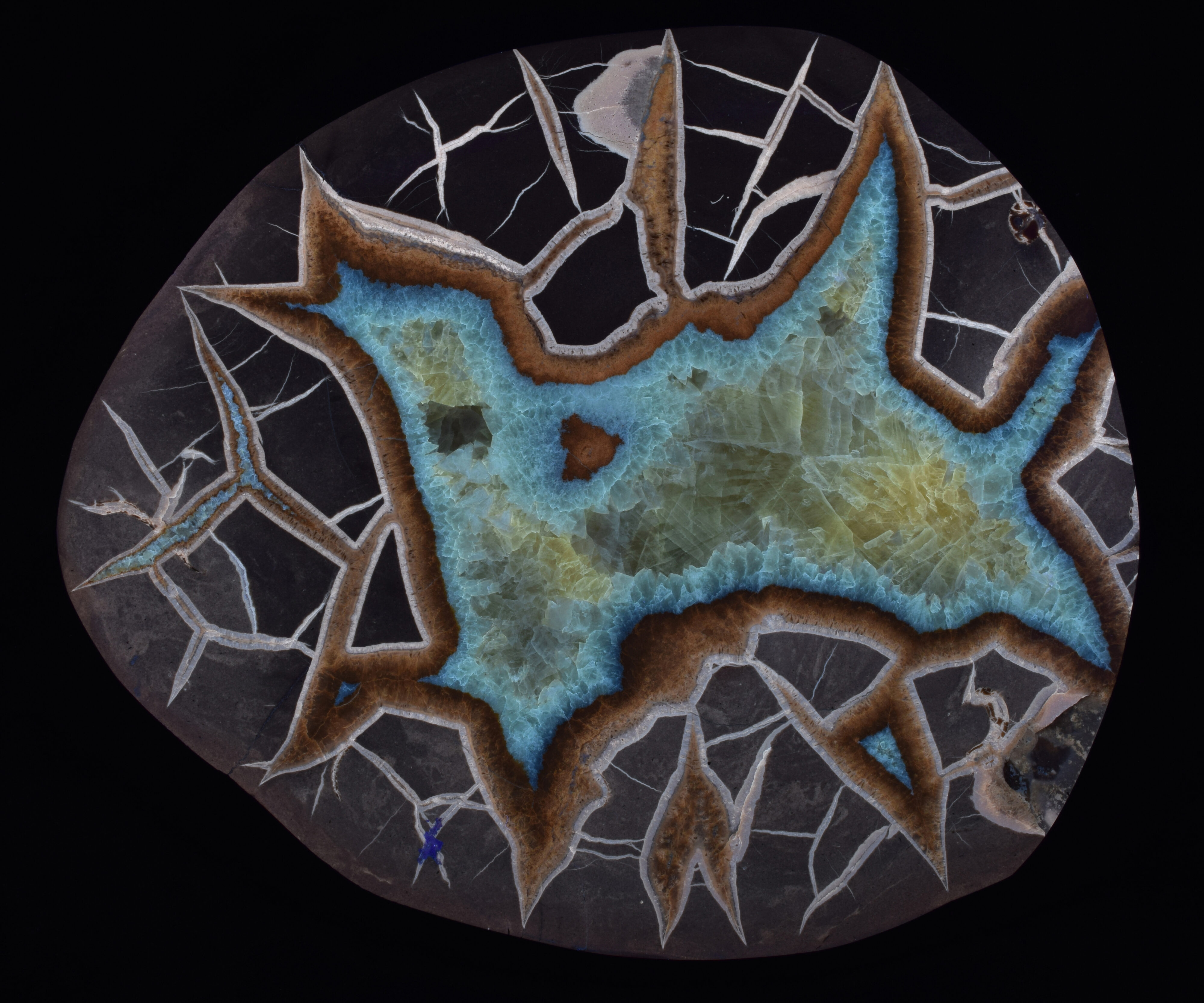
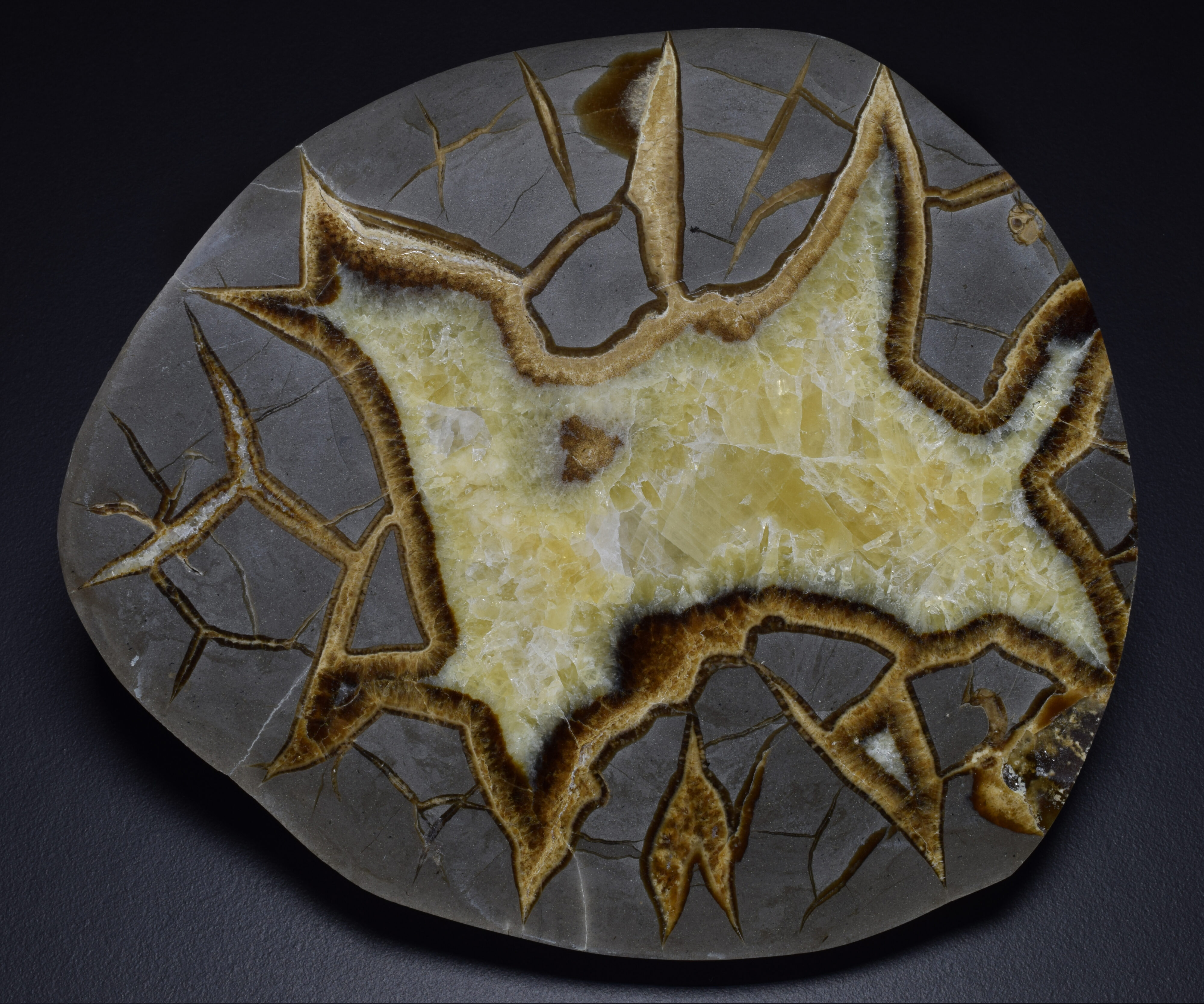
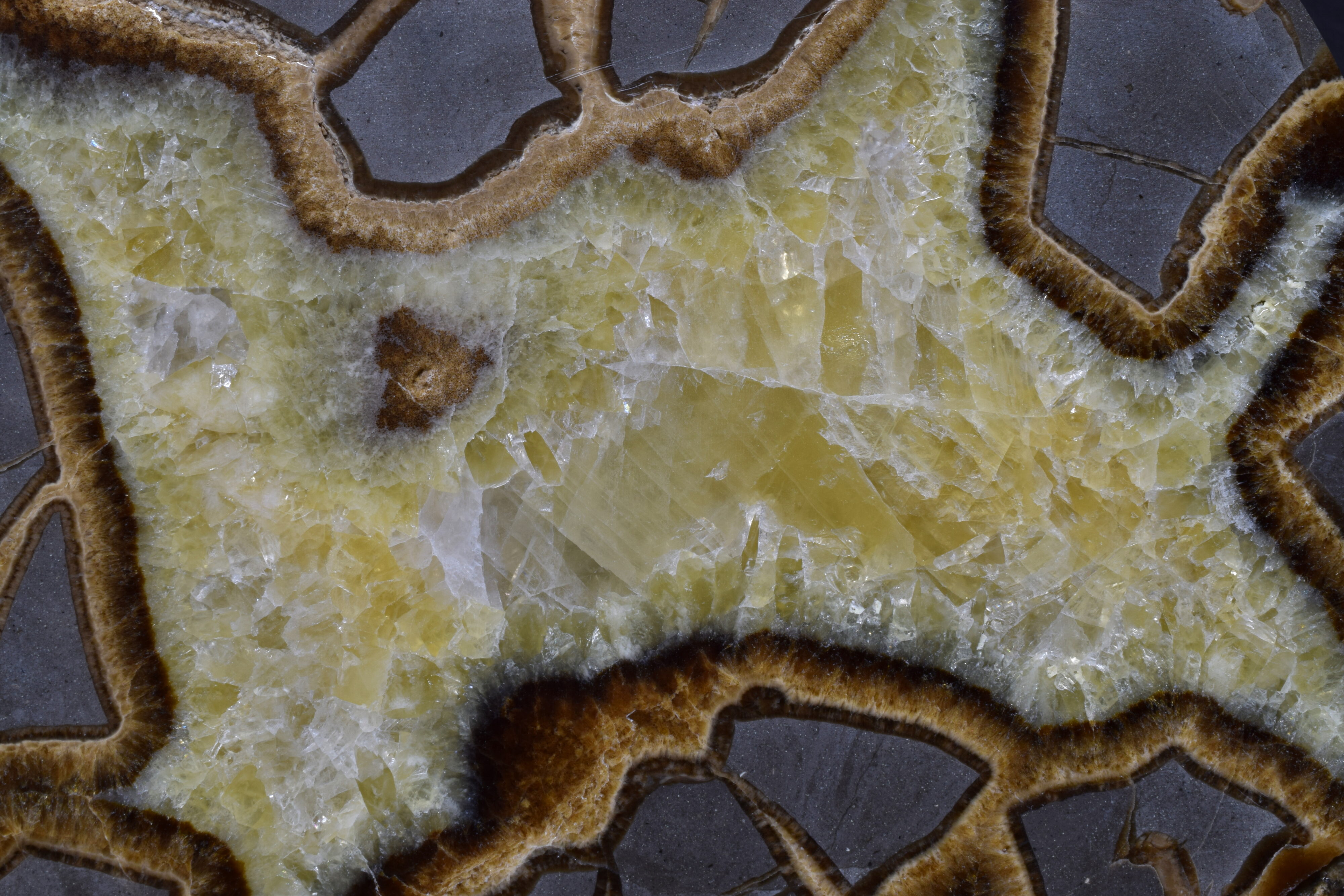
This is a polished slice of a septarian nodule from the famous Muddy Creek location in Orderville, Kane County, Utah. The interiors of these nodules are often brightly fluorescent and phosphorescent under UV, as is the case with this example.
Although the process of formation of these interesting geological curiosities is still debated, the predominant theory is that they originated as undersea concretions formed from marine organic matter and mud during the Cretaceous period. When the ocean receded, the concretions were exposed to the air, causing them to dry and crack internally. Calcium carbonate originating from decomposing shells of marine organisms percolated into the cracks and precipitated as calcite and aragonite. The result is a thin layer of aragonite lining the cracks, separating the mudstone exterior from the calcite interior. The septarian nodules from Utah can also contain barite and siderite.
Orderville Utah, septarian nodules often have brightly fluorescent interiors due to the calcite and aragonite content. The fluorescent response is similar under all UV wavelengths but is typically brightest and warmer under longwave.
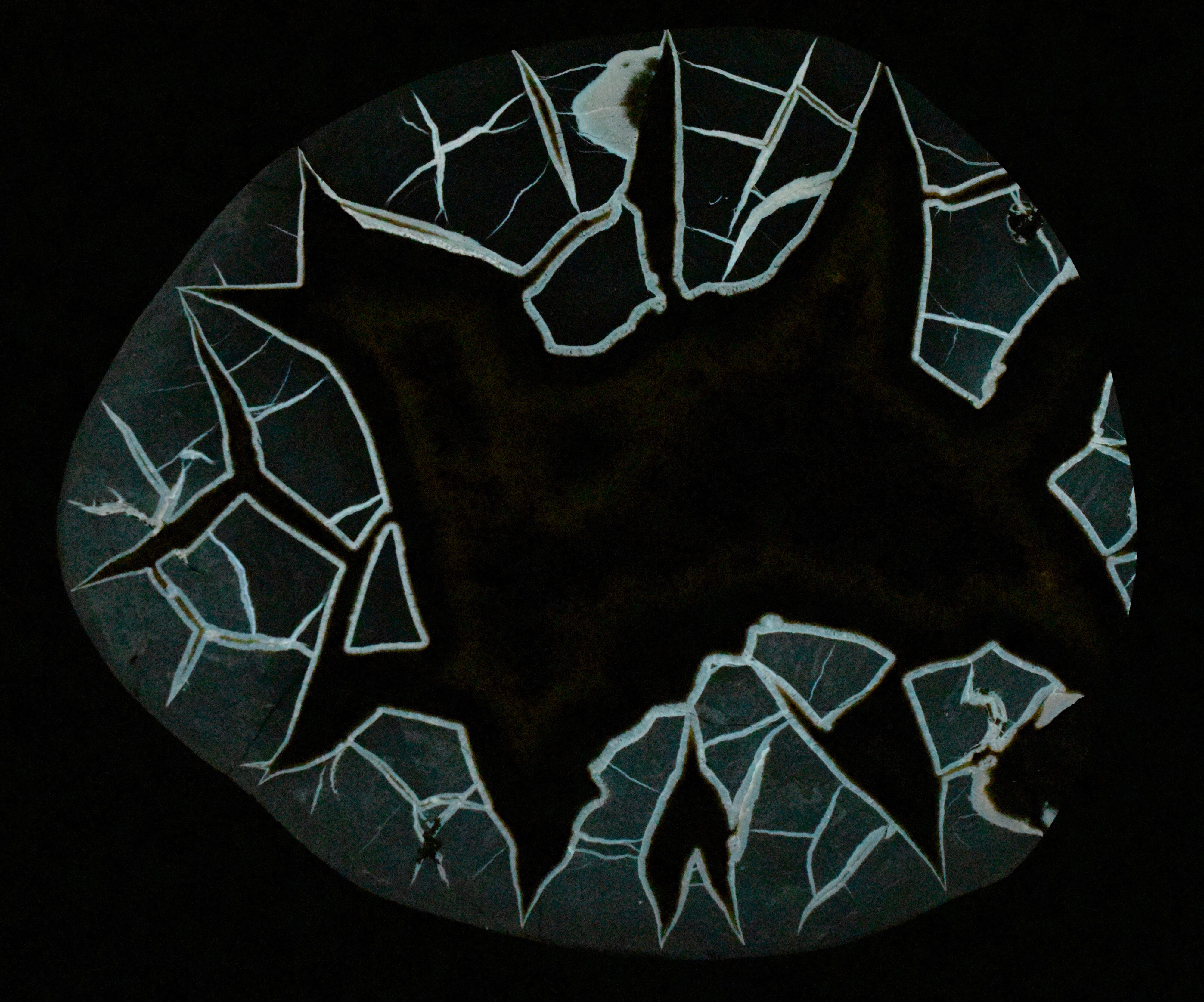
The aragonite layer is also phosphorescent following exposure to all wavelengths of UV. However, the color of the phosphorescent response varies somewhat depending on the wavelength of excitation. Note the subtle color shift of the phosphorescent response; white after short wave, greenish/white after mid wave, and yellow after long wave. The mudstone also shows dim phosphorescence after UV.
Originally posted by Chris Clemens on Nature's Rainbows in 2017.
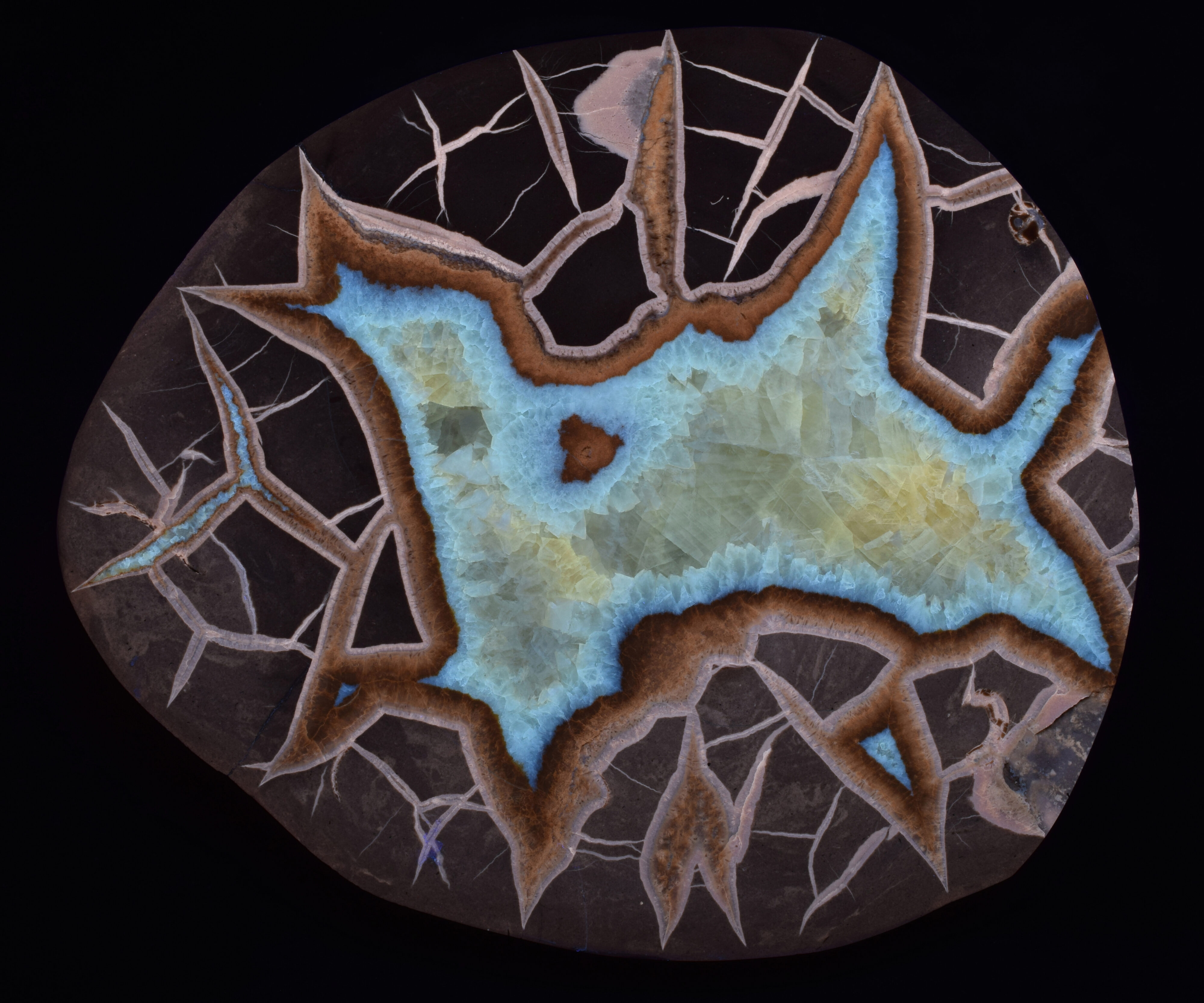
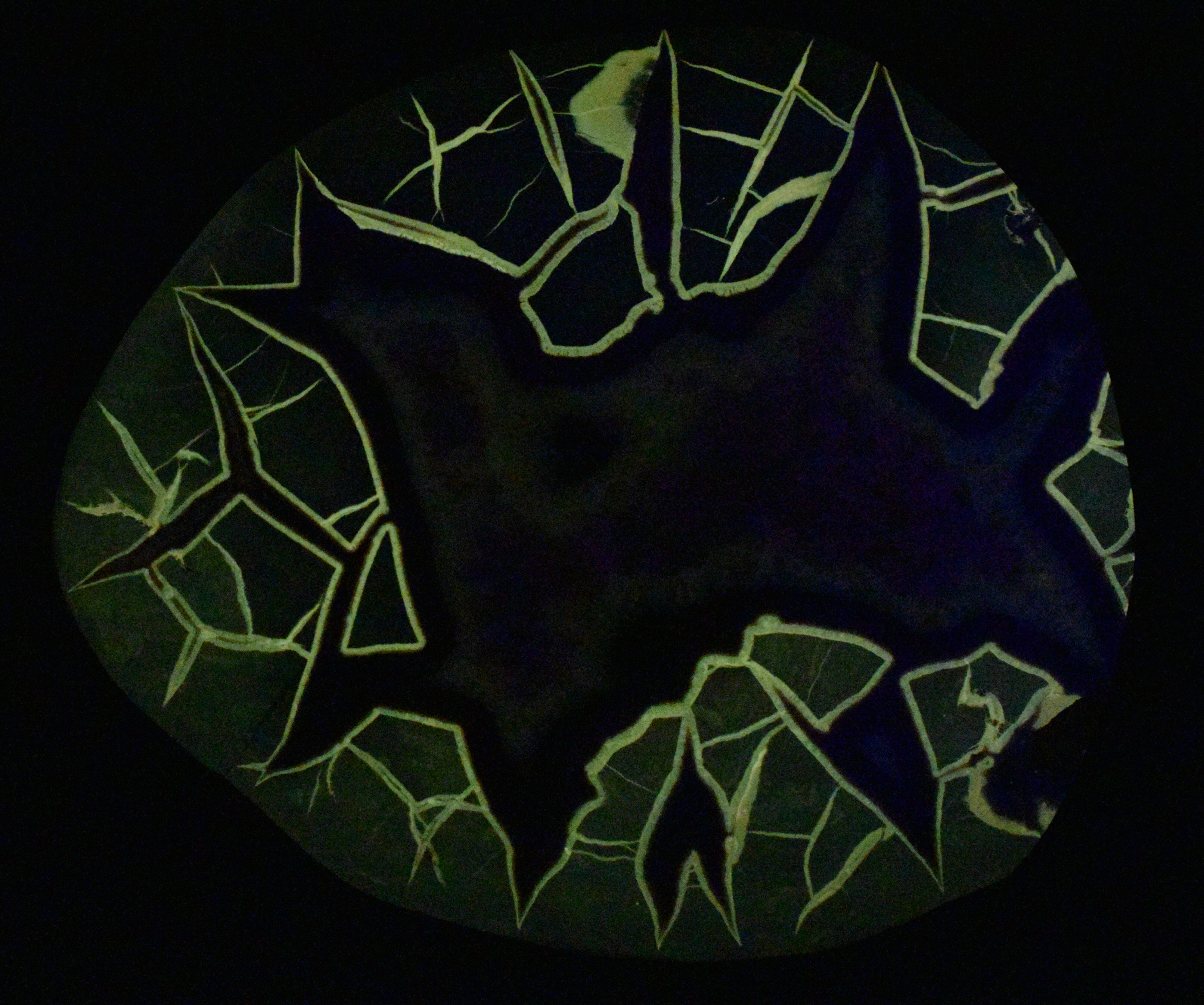
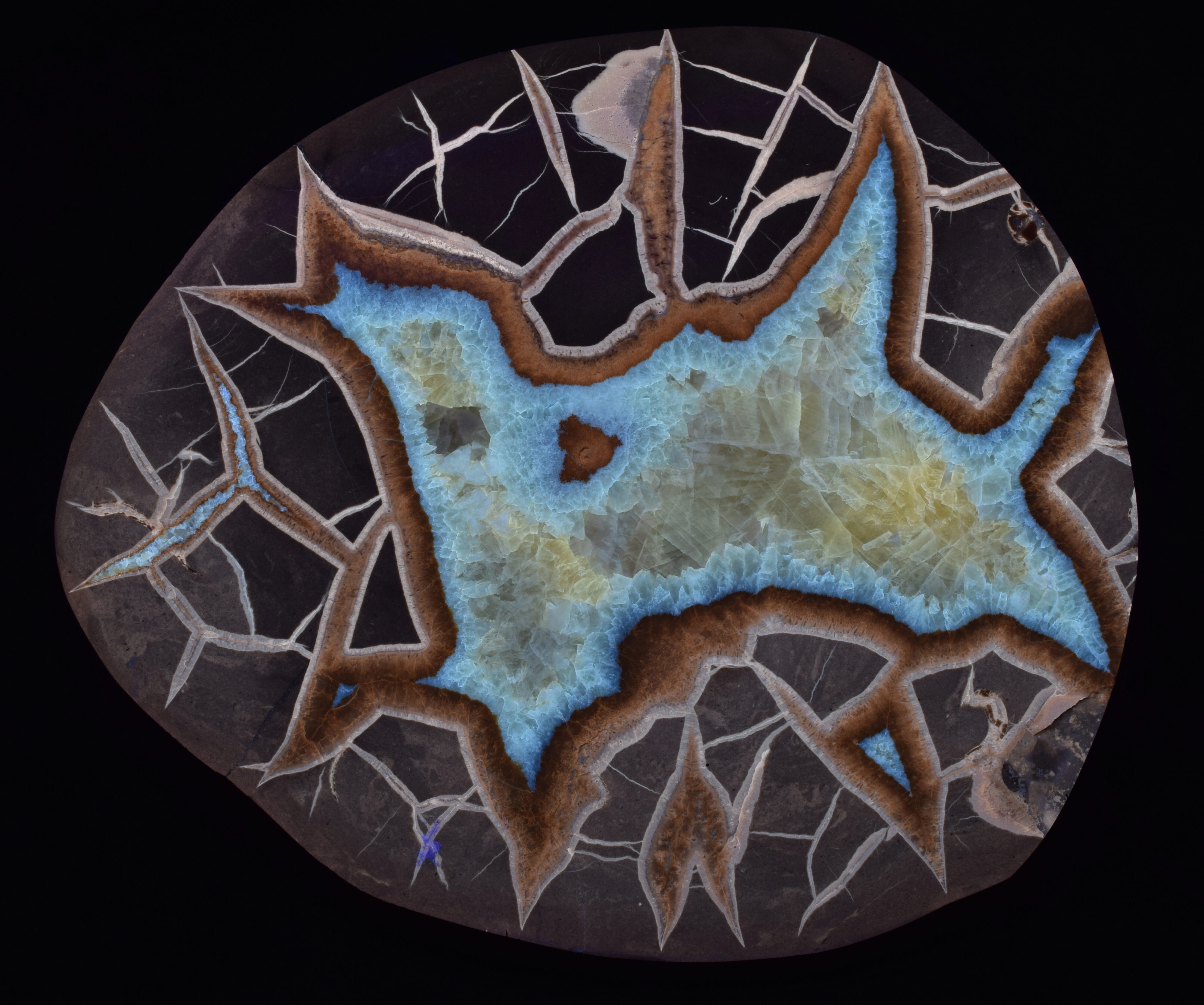
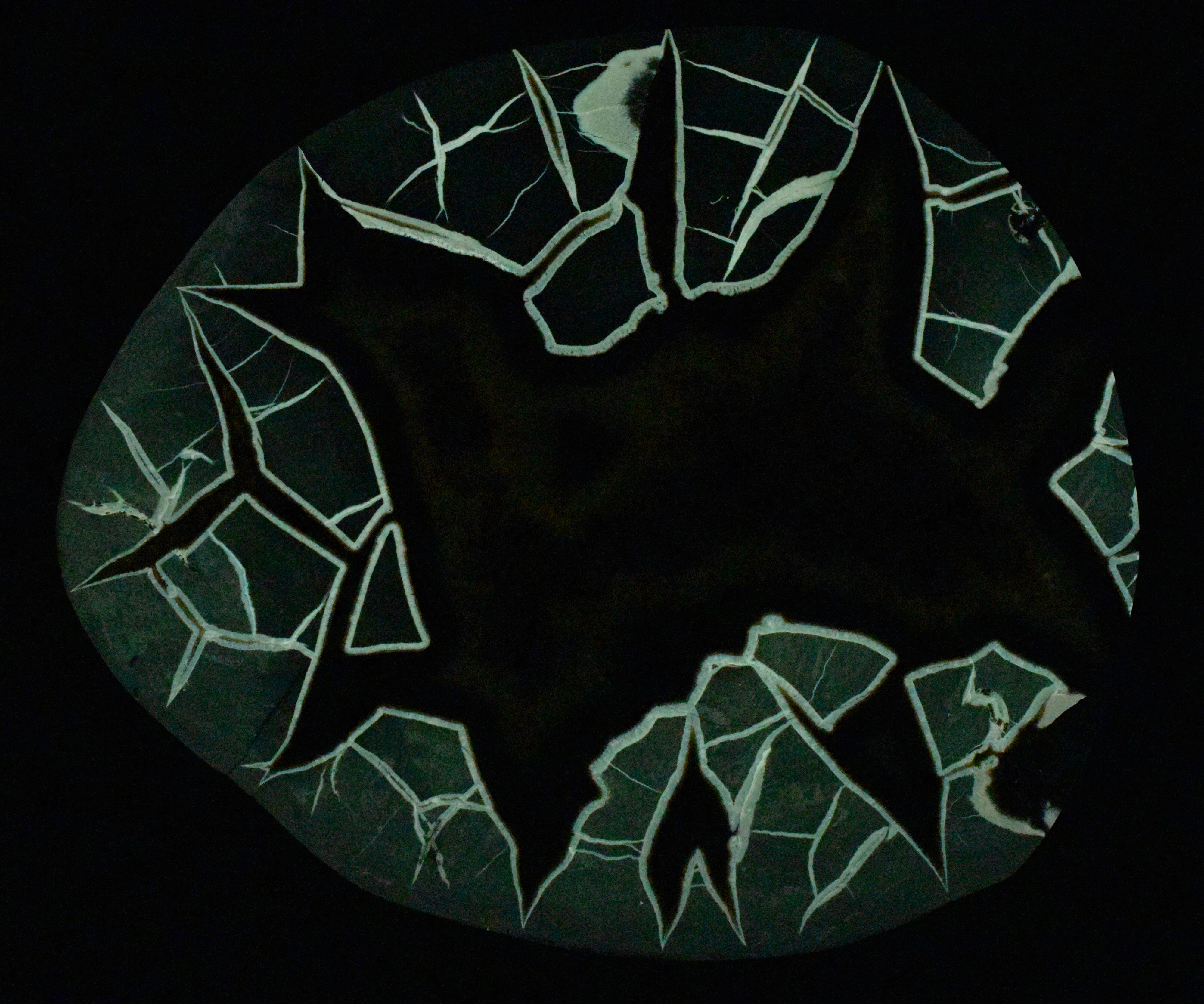
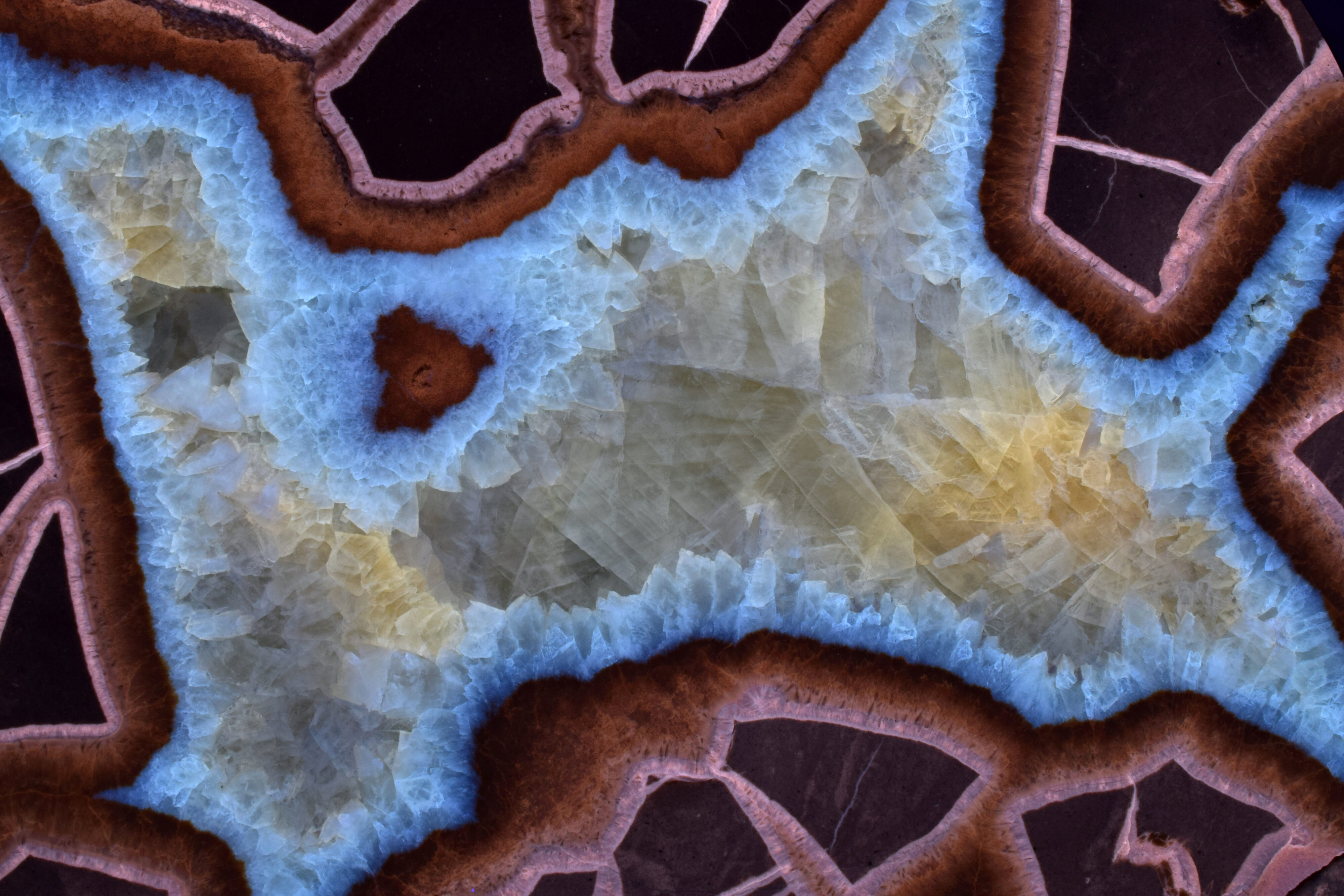
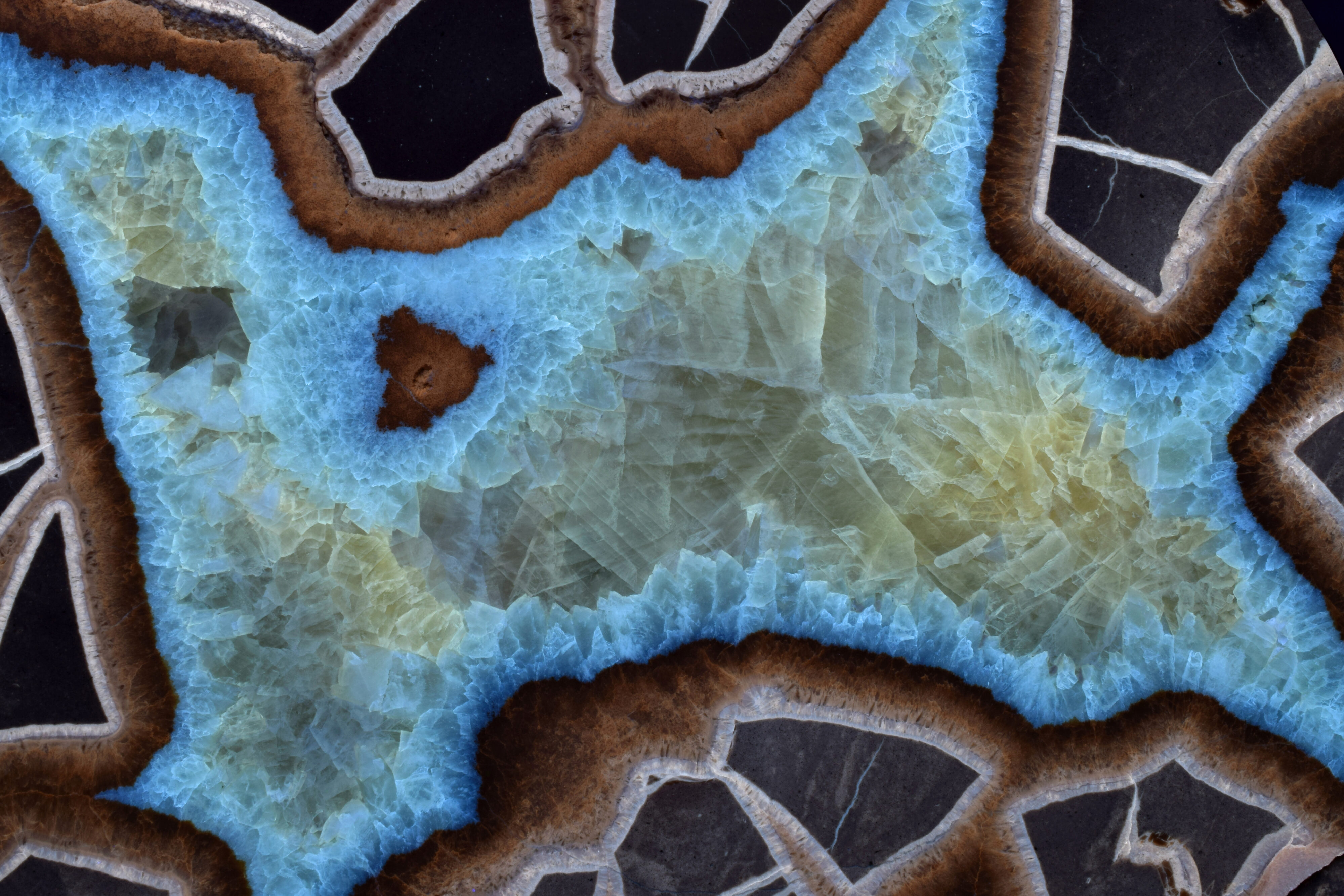
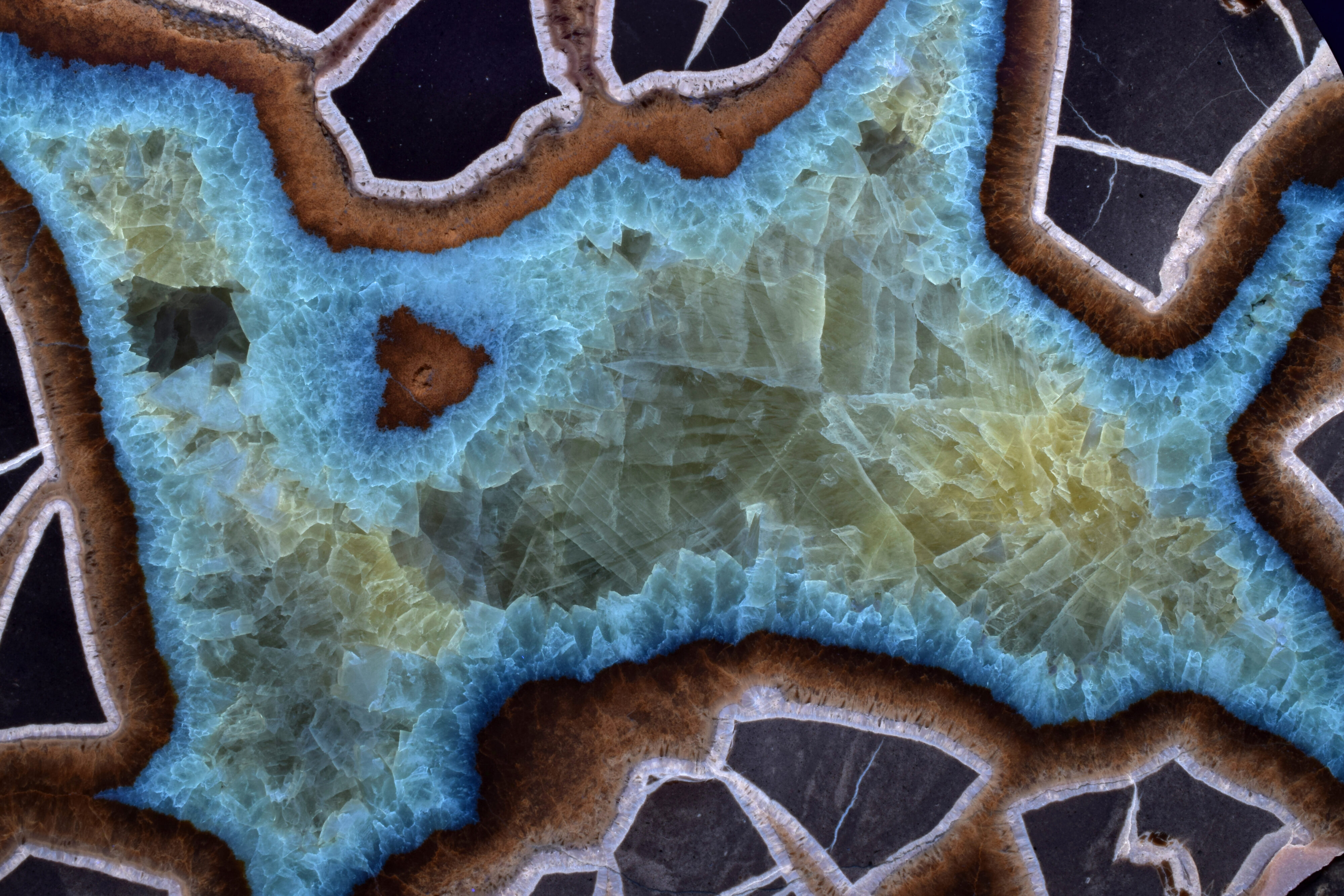
Summary of luminescence responses:
Aragonite (Mindat) (RRUFF)
- Fluorescence under Longwave (365nm LED) UV light: Yellow
- Afterglow after exposure to Longwave (365nm LED) UV light: Green
- Fluorescence under Midwave (305nm Lamp/Mercury) UV light: White
- Afterglow after exposure to Midwave (305nm Lamp/Mercury) UV light: Yellow
- Fluorescence under Shortwave (254nm Lamp/Mercury) UV light: White
- Afterglow after exposure to Shortwave (254nm Lamp/Mercury) UV light: White
- Fluorescence under Longwave (365nm LED) UV light: Blue
- Fluorescence under Midwave (305nm Lamp/Mercury) UV light: Blue
- Fluorescence under Shortwave (254nm Lamp/Mercury) UV light: Blue
- Fluorescence under Longwave (365nm LED) UV light: Yellow
- Fluorescence under Midwave (305nm Lamp/Mercury) UV light: Yellow
- Fluorescence under Shortwave (254nm Lamp/Mercury) UV light: Yellow