
Terlingua Calcite, a Beautiful Rock of Many Faces
Contributed by: Chris Clemens
minID: 575-WW3
Date: Apr 21st, 2026
Locality: Little 38 Mine, Brewster County, Texas, USA (See on Mindat)
Size: 5.5 x 3.5 x 6.5 inches
Weight: 5.1 lb
Description:
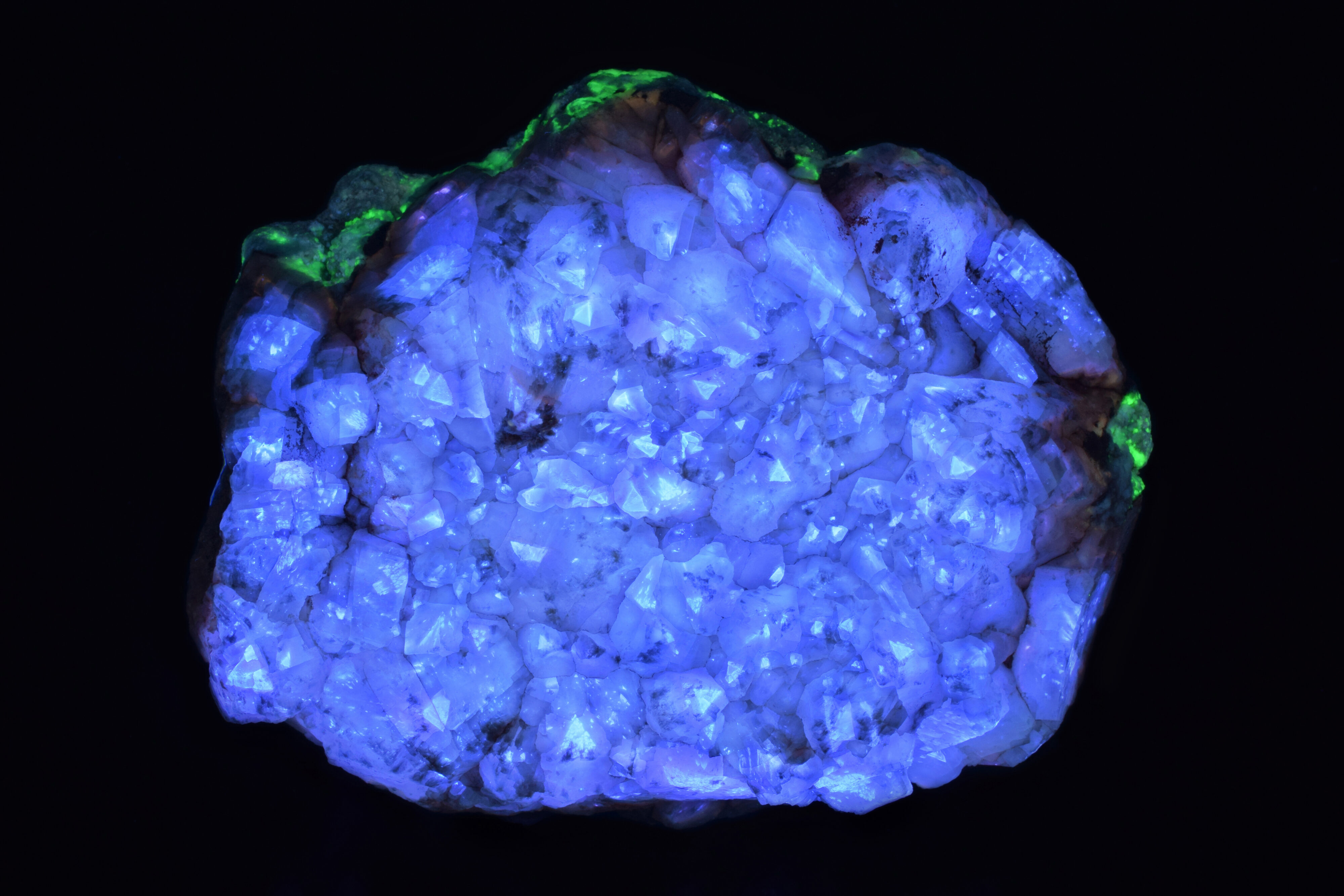
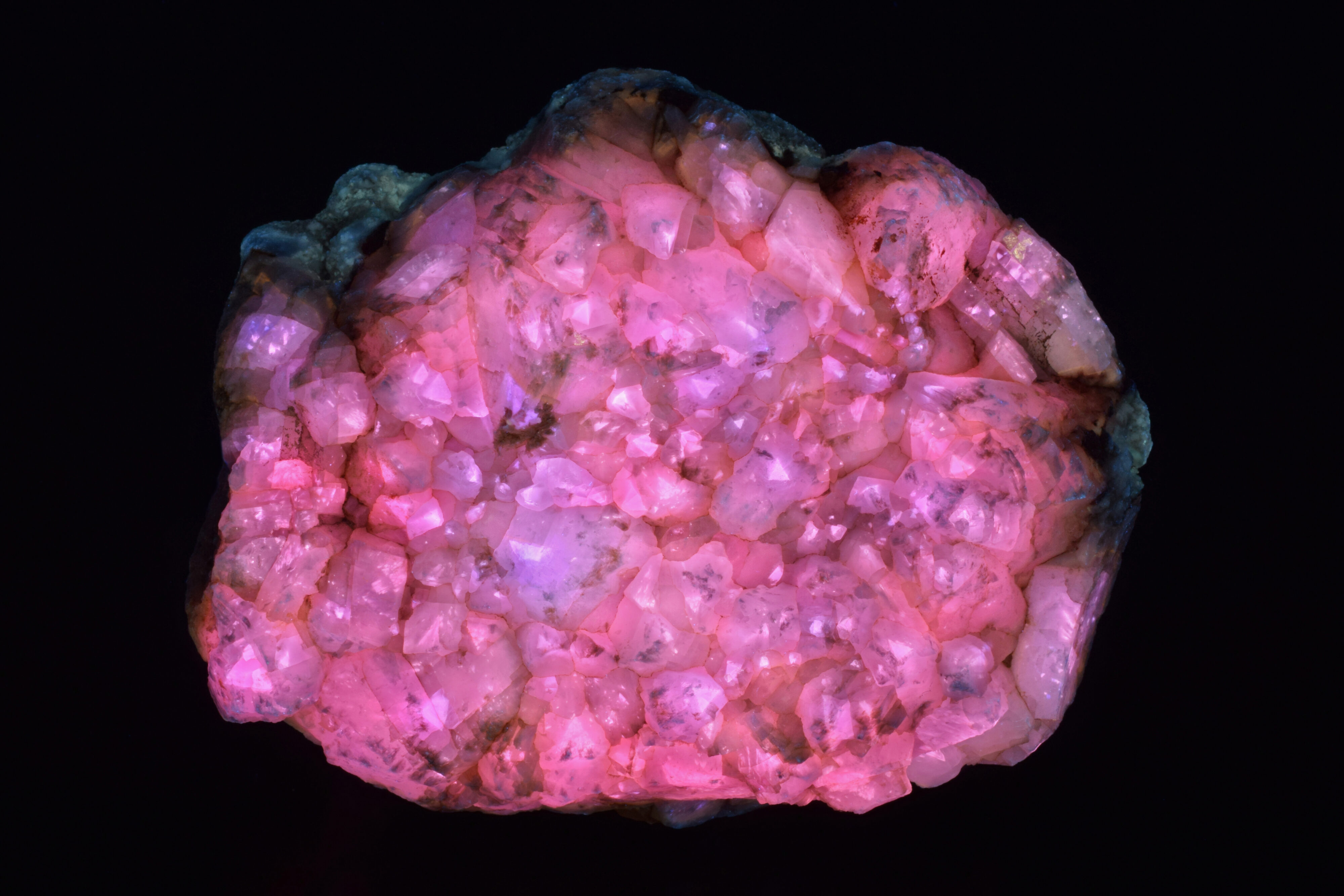
Terlingua calcite is a rock of many faces, as few other fluorescent minerals show such a varied fluorescent response under different UV wavelengths. It is one of the most spectacular and beautiful fluorescent minerals due to its bright, multi-colored, multi-wave, fluorescent response, and bright, persistent phosphorescence. By definition, it is a variety of the mineral calcite that was found in the area of Terlingua, Texas, that shows bright blue/white fluorescence under shortwave UV (254nm), with bright and lasting blue phosphorescence; lavender fluorescence under midwave UV (302nm), with blue phosphorescence similar to that seen after short wave, but not as bright; and lastly, bright pink fluorescence under longwave UV (365nm), sometimes accompanied by brief, dim phosphorescence. The specimen featured here is an exceptional example of Terlingua calcite due to its large size and spectacular fluorescence.
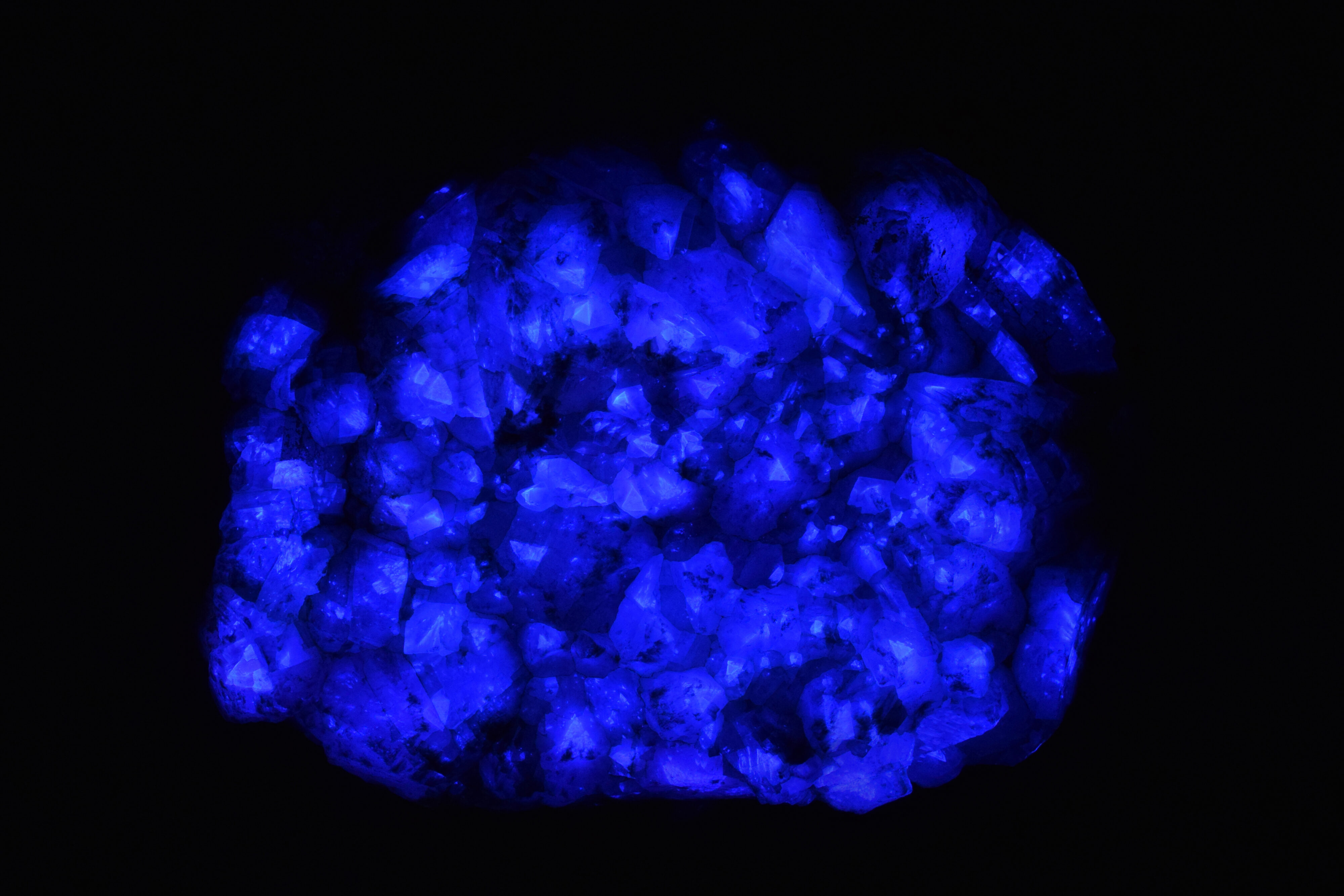
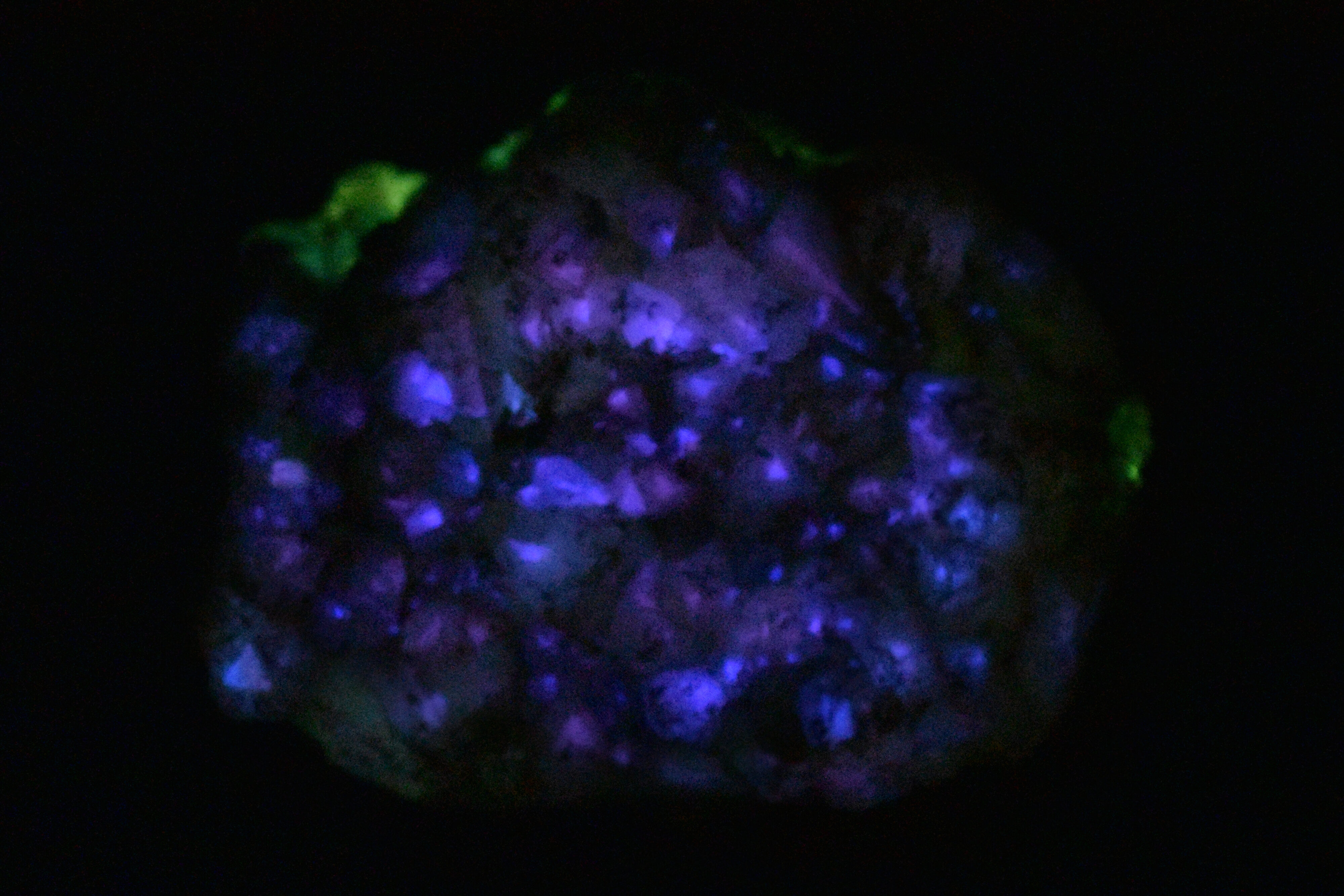
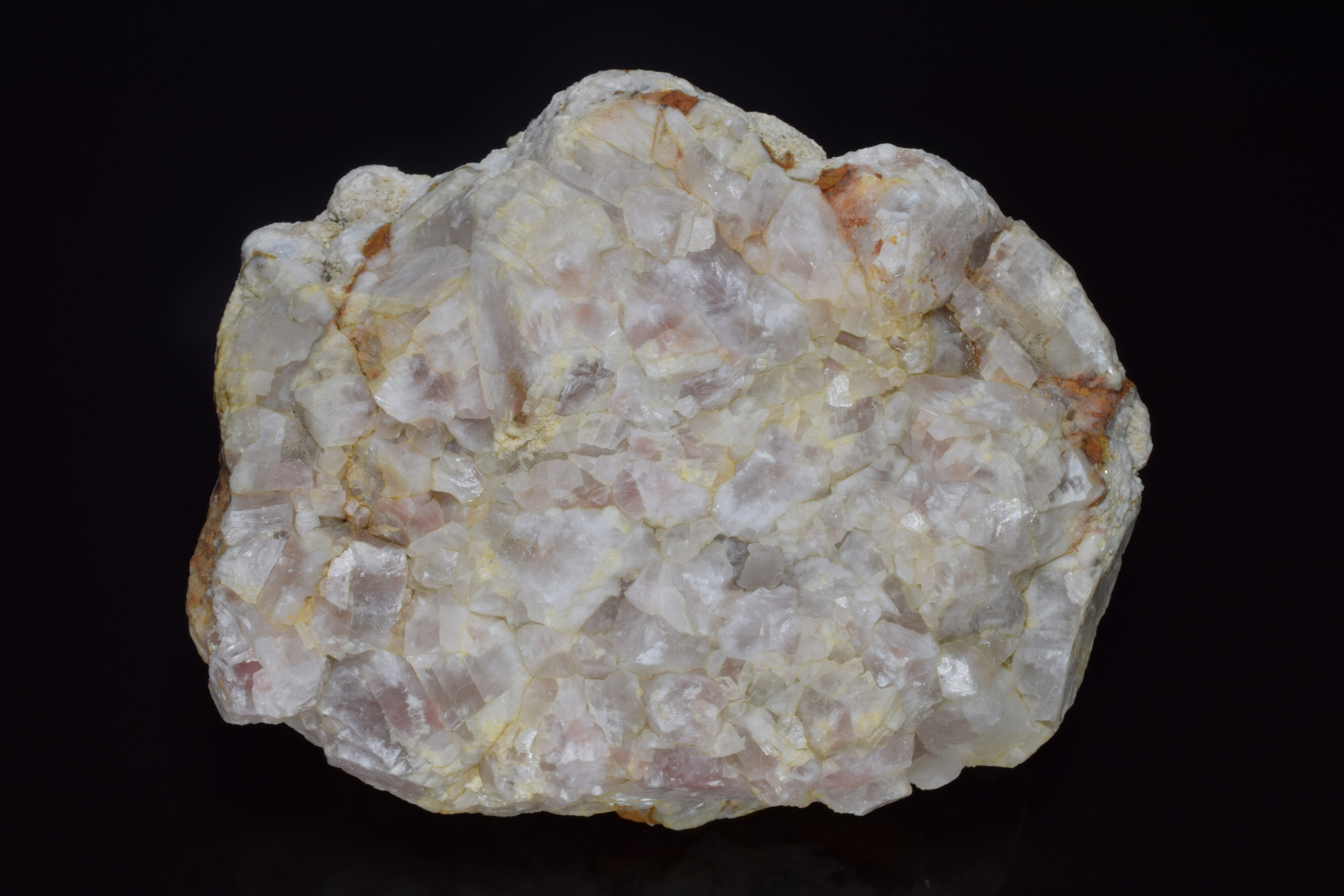
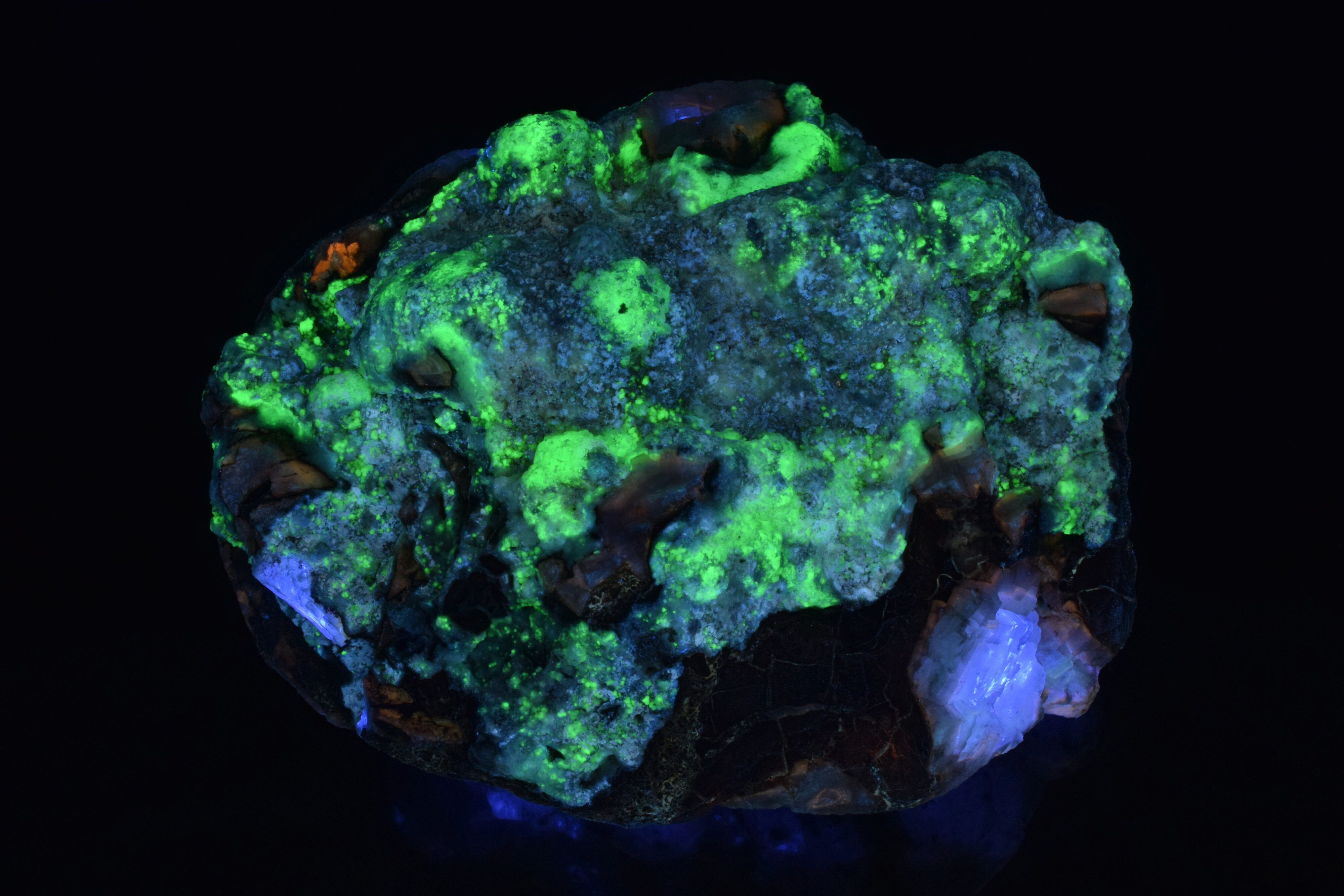
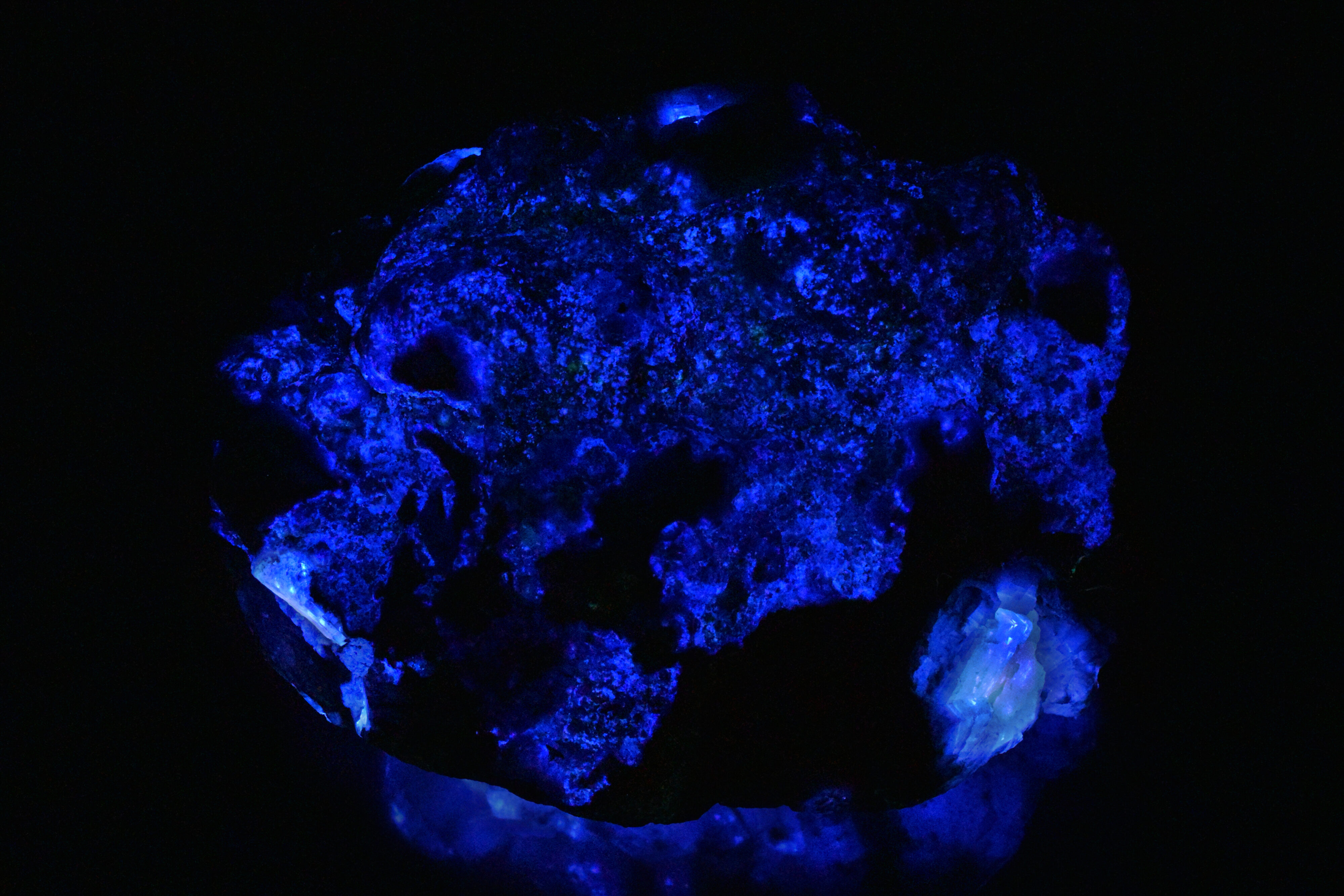
The two main sides of this specimen show a dramatically different series of responses under UV. Most of the calcite is exposed on the front side of the piece, while the back side is dominated by chalcedony, aragonite and a non-fluorescent red/brown matrix. The calcite crystals have pink zones internal to the cleavage faces. These zones are often present in Terlingua calcite and generally correspond to the areas of brightest fluorescence. The calcite shows bright blue/white fluorescence under shortwave UV. There are triangular zones of bright fluorescence, another characteristic typical for Terlingua calcite. The areas of green fluorescence seen along the upper left and right edges are caused by uranyl-activated chalcedony. Bright and long-lasting blue phosphorescence/afterglow following exposure to shortwave UV. This is another characteristic typical of Terlingua calcite.
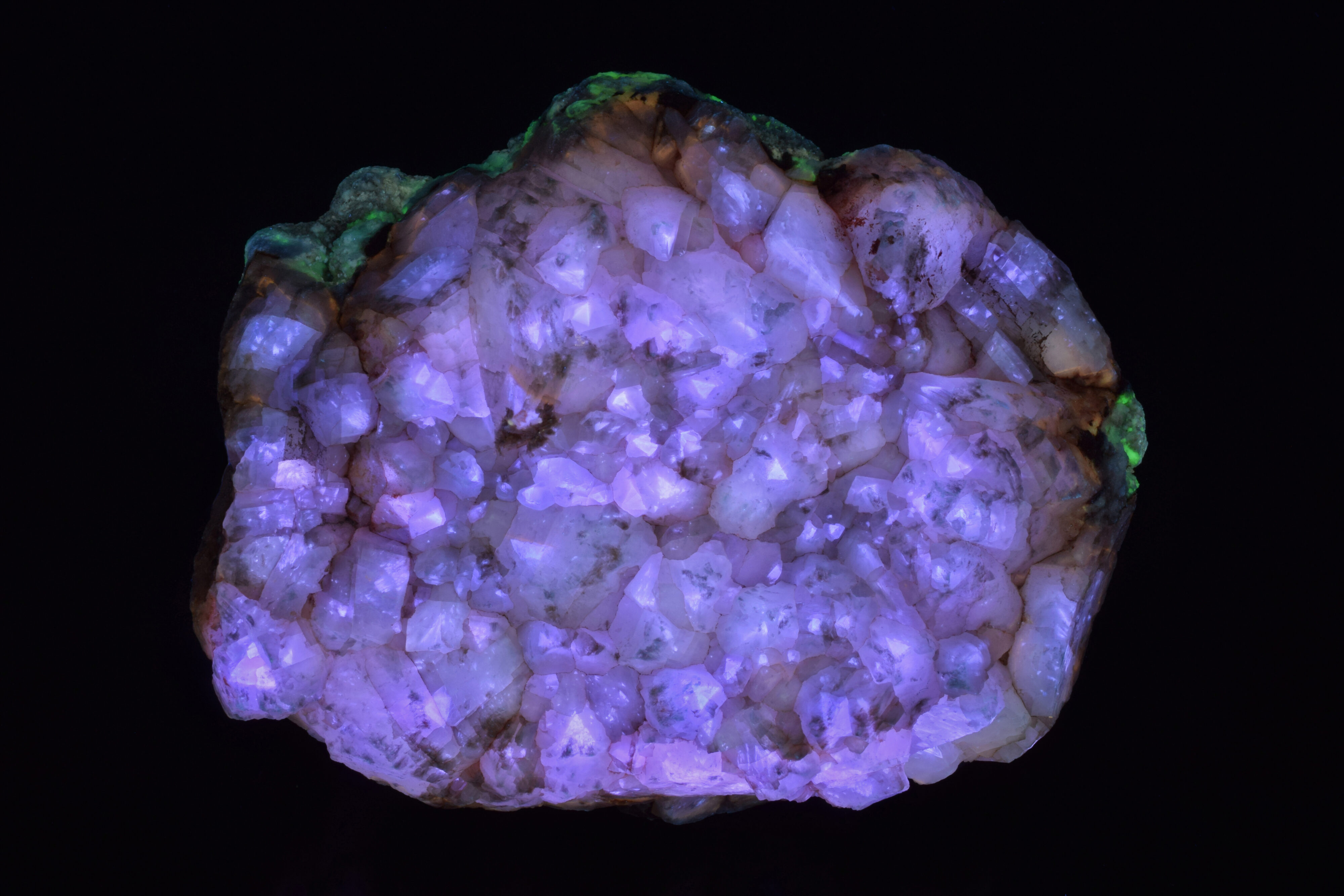
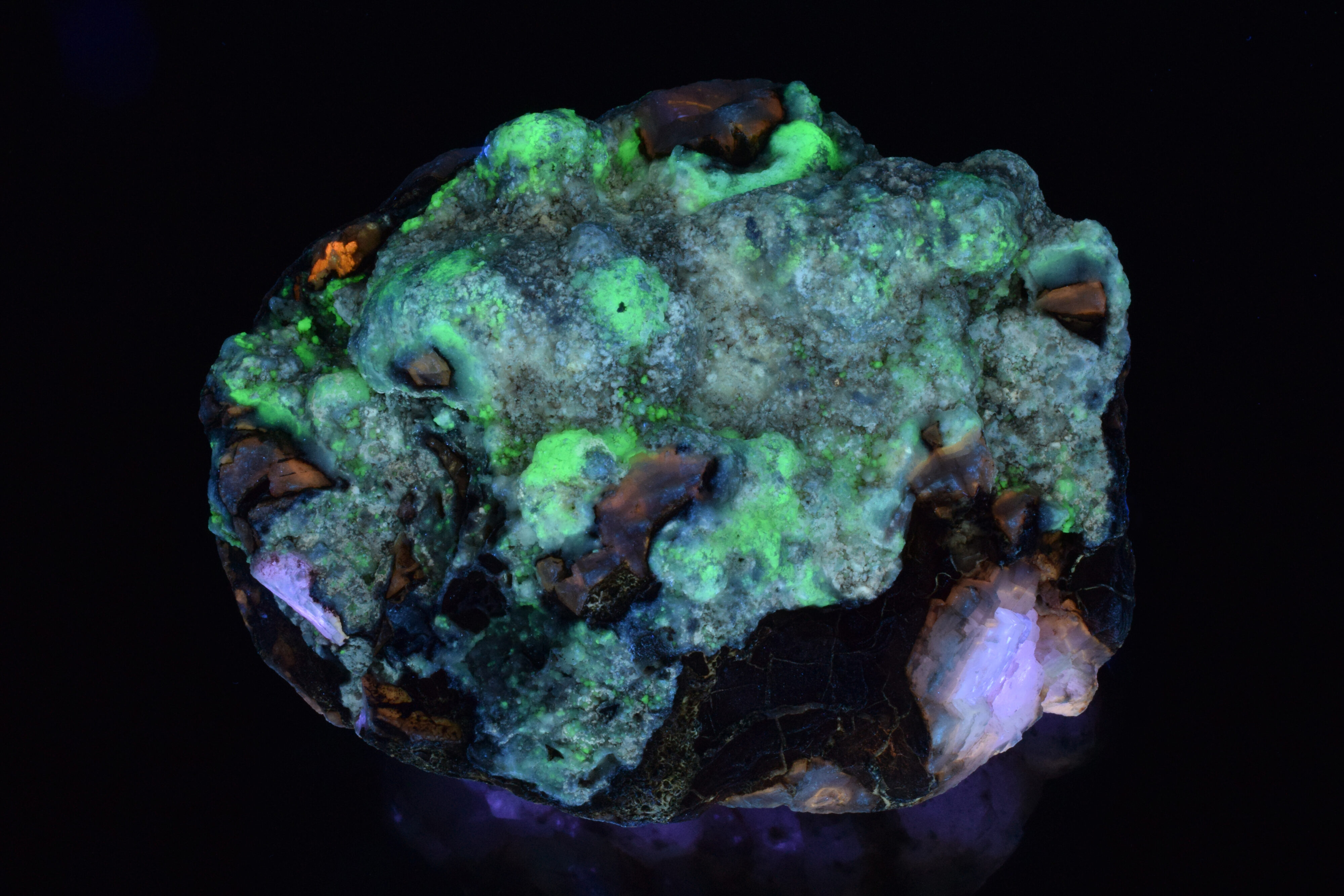
Many specimens of Terlingua calcite show a lavender-colored fluorescent response under midwave UV (305nm). Following exposure to midwave UV, blue phosphorescence/afterglow is seen, although not as bright or long-lasting as after exposure to shortwave UV.
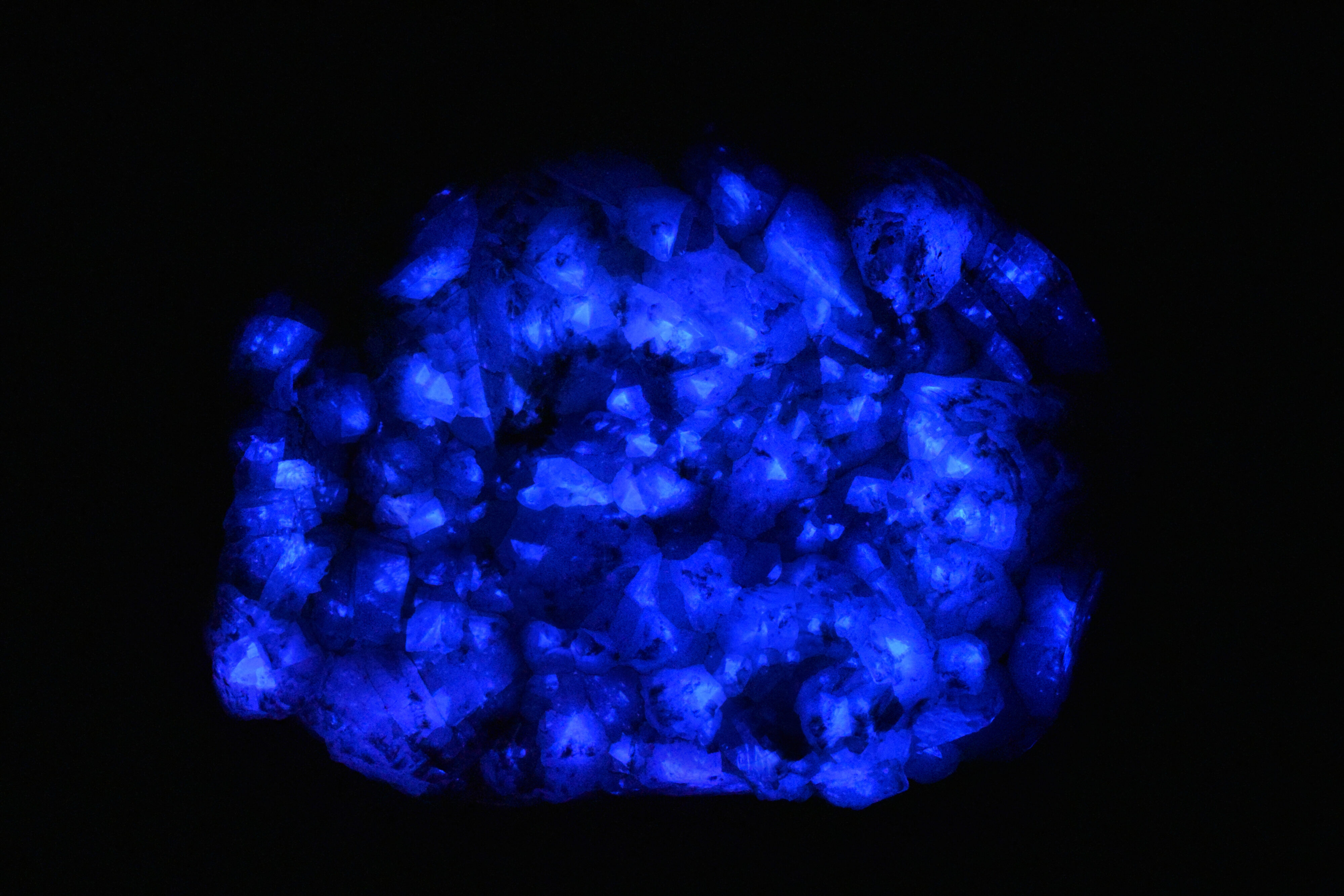
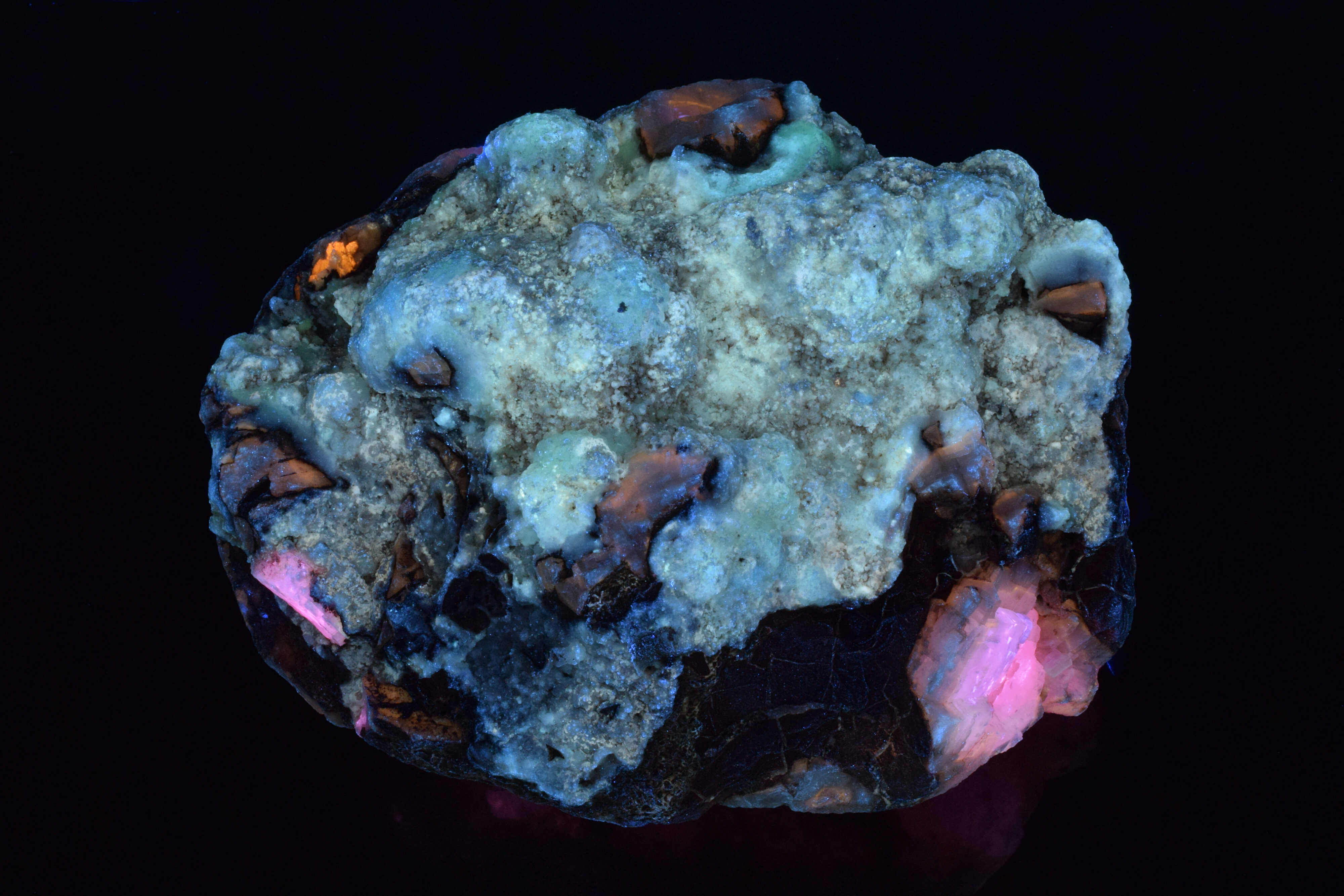
One of the most striking characteristics of Terlingua calcite is the bright pink fluorescence seen under longwave UV. Similar to the responses seen under shortwave and midwave UV, there are bright triangular zones of fluorescence. Some Terlingua calcite displays brief, dim, phosphorescence/afterglow following exposure to longwave UV. To the naked eye, this response appears as a dim, very short-lived, ghostly white glow after the longwave lamp is turned off.
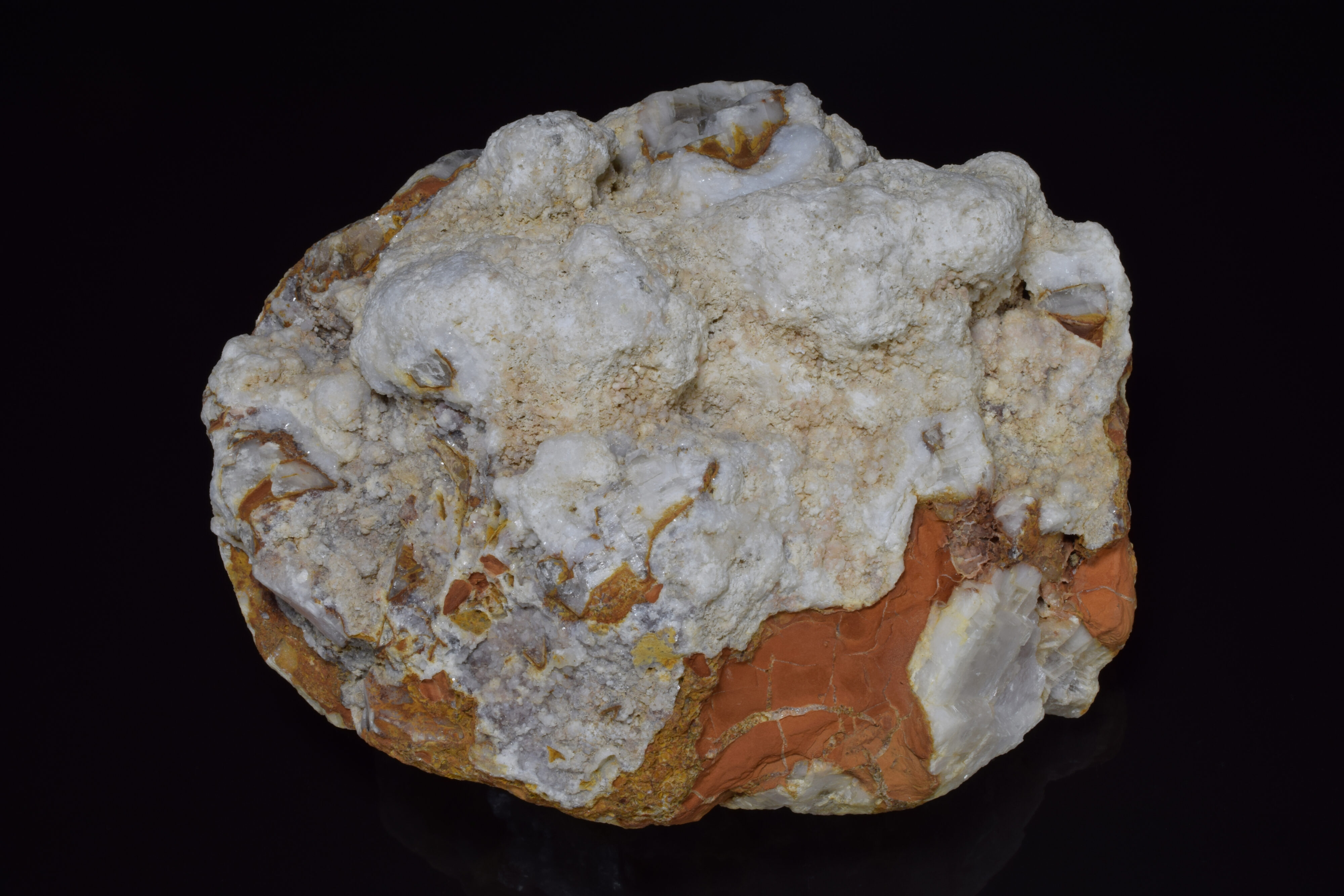
The reverse side of this specimen is nearly as interesting as the front and has a more varied mineral presentation. This side is dominated by areas of light-colored chalcedony and aragonite, and a red/brown non-fluorescent matrix. Small patches of calcite are visible in the lower left and right corners of the piece. The back side of this specimen shows a completely different assemblage of fluorescent colors under shortwave UV compared with the front. Uranyl-activated chalcedony shows a bright green response, while the aragonite fluoresces a softer pale blue. Several patches of Terlingua calcite, visible along the lower edge of the piece, add bright blue/white, fluorescent accents. After the shortwave source is shut off, blue phosphorescence/afterglow is seen over the majority of the specimen.
Under midwave UV, the chalcedony glows a paler green color, while the aragonite shows a brighter cream/white response. Patches of other minerals, possibly calcite, fluoresce various shades of orange. The Terlingua calcite shows the typical lavendar fluorescence. Under longwave UV, the chalcedony and aragonite both show a similar pale blue/white, fluorescent response, while the patches of Terlingua calcite show characteristic bright pink fluorescence.
Originally posted by Chris Clemens on Nature's Rainbows in 2019.
Summary of luminescence responses:
Aragonite (Mindat) (RRUFF)
- Fluorescence under Longwave (365nm LED) UV light: White
- Fluorescence under Midwave (305nm Lamp/Mercury) UV light: White
- Fluorescence under Shortwave (254nm Lamp/Mercury) UV light: White
- Afterglow after exposure to Shortwave (254nm Lamp/Mercury) UV light: Blue
- Fluorescence under Longwave (365nm LED) UV light: Pink
- Fluorescence under Midwave (305nm Lamp/Mercury) UV light: Violet
- Fluorescence under Shortwave (254nm Lamp/Mercury) UV light: Blue
- Afterglow after exposure to Longwave (365nm LED) UV light: Violet
- Afterglow after exposure to Midwave (305nm Lamp/Mercury) UV light: Blue
- Afterglow after exposure to Shortwave (254nm Lamp/Mercury) UV light: Blue
- Fluorescence under Shortwave (254nm Lamp/Mercury) UV light: Green
- Fluorescence under Midwave (305nm Lamp/Mercury) UV light: Green