
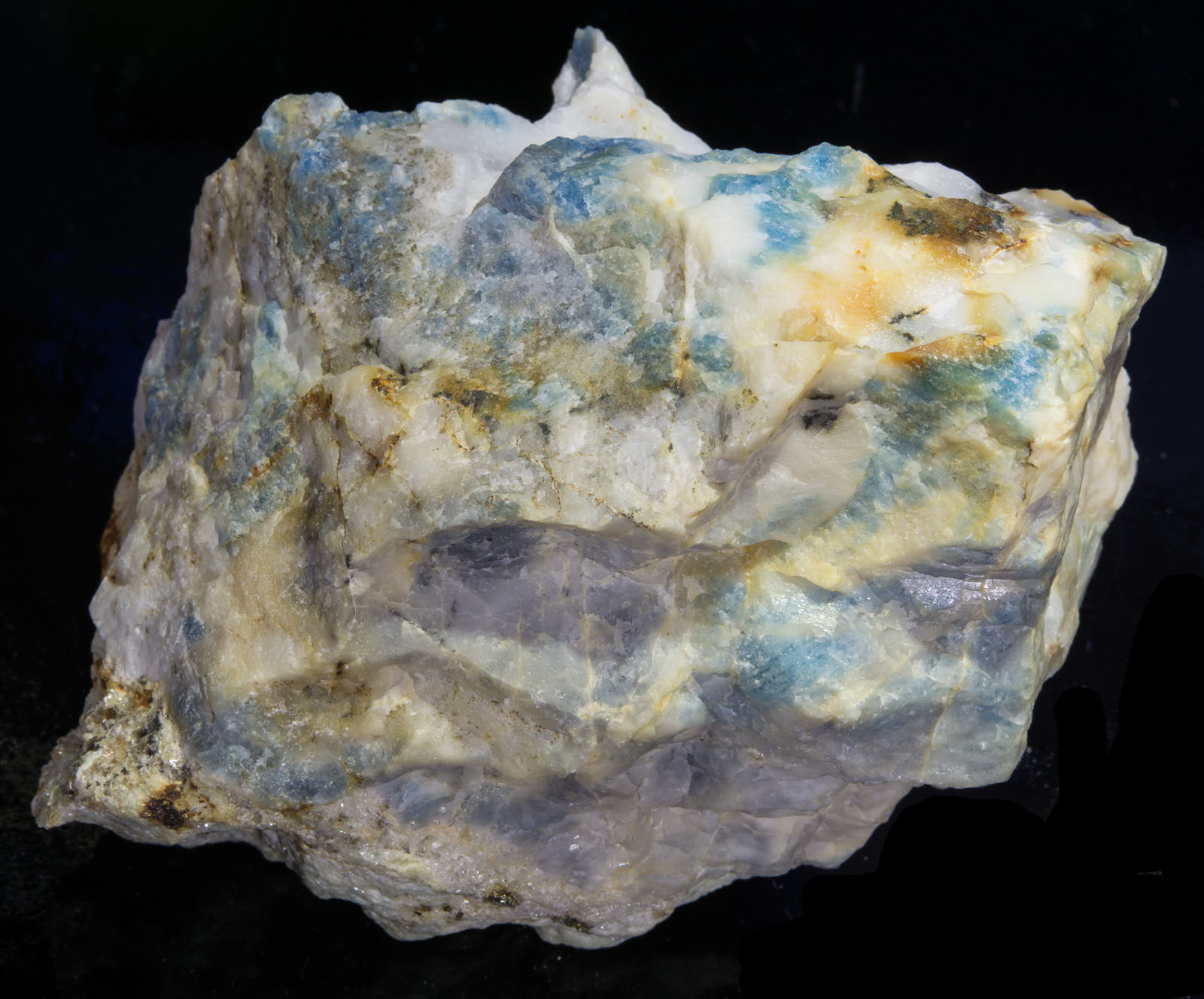
Hauyne, Gonnardite, Calcite, Phlogopite - Afghanistan
Contributed by: Mark Cole
Date: Apr 13th, 2026
Locality: Sar-e-Sang, Kuran wa Munjan District, Badakhshan, Afghanistan (See on Mindat)
Size: 4 x 3 x 5.5 inches
Weight: 1.8 lb
Description:
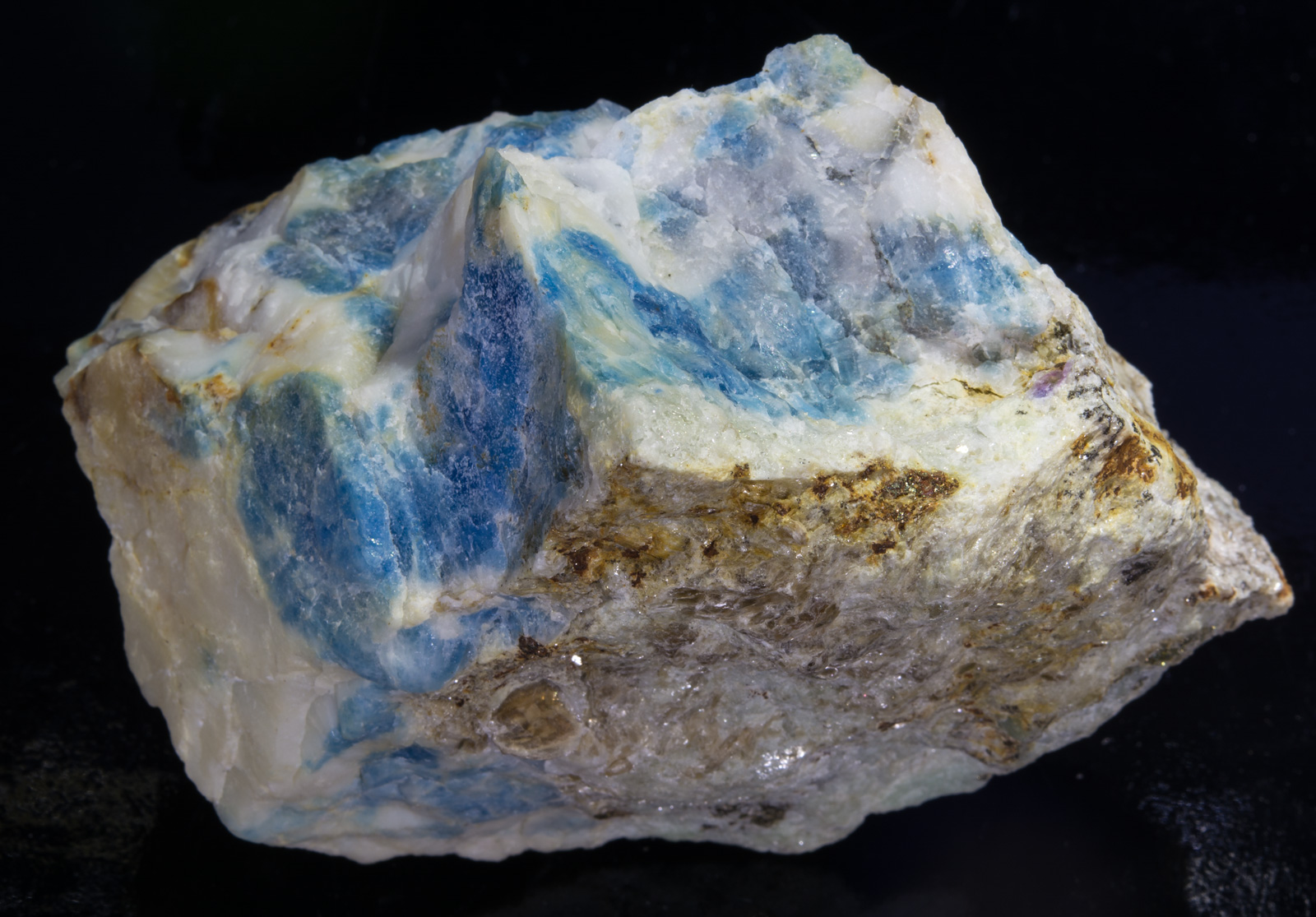
Haüyne is a very interesting mineral. As are sodalite, nosean, and even lazurite. In fact - they are all pretty much the same and very hard to distinguish from each other. They are all members of the cancrinite sodalite group and even EDS has a hard time telling them apart.
A note about the blue stuff:
Most of the blue minerals from Badakhshan are members of the Cancrinite Sodalite Group. These include the following:
- Lazurite: Na6Ca2(Al6Si6O24)(SO4,S,S2, S3,Cl,OH)2
- Afghanite: Na22Ca10(Si24Al24)O96(SO4)6Cl6
- Haüyne: (Na,K)3(Ca,Na)(Al3Si3O12)(SO4,S,Cl
- Nosean: Na8(Al6Si6O24)(SO4) · H2O
- Sodalite: Na8(Al6Si6O24)Cl2
All of these minerals are often misidentified and confused with each other. The absence of calcium and chlorine (or the presence) is often the only characteristic separating nosean from hauyne for example, in massive form (no crystals) there is little visible difference. Lazurite has more sulfide while hauyne has more sulfate. Minrec reports that most lazurite is sulfide-rich hauyne. I am pretty sure much of the massive material also has afghanite thrown in for good measure.
So - if there are no crystals to help in the identification, the massive blue mineral could be many things. Worse, the fluorescent activators have not been studied in this area, and it is very unclear what is going on. But they sure do make for some confusing but beautiful fluorescent specimens.
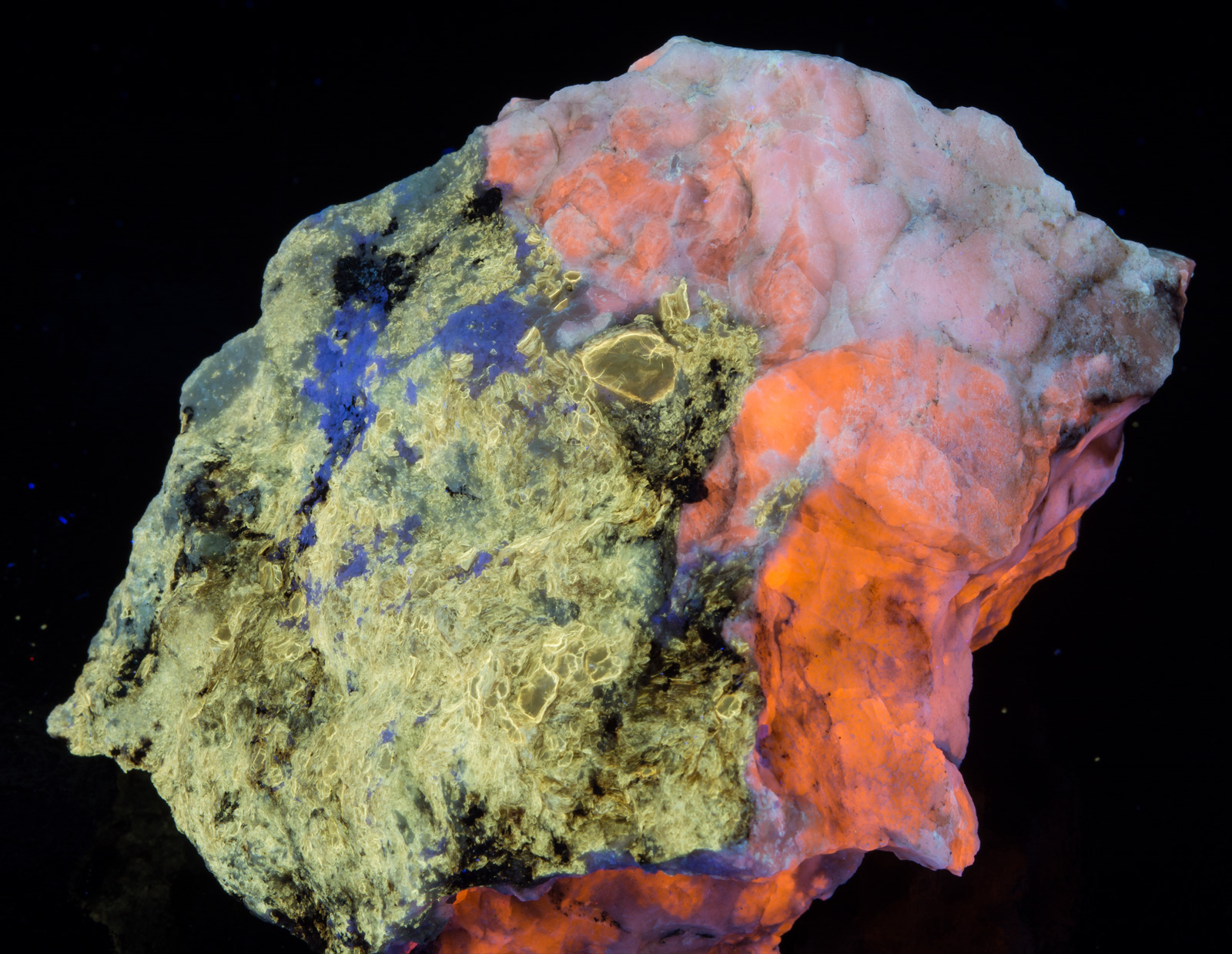
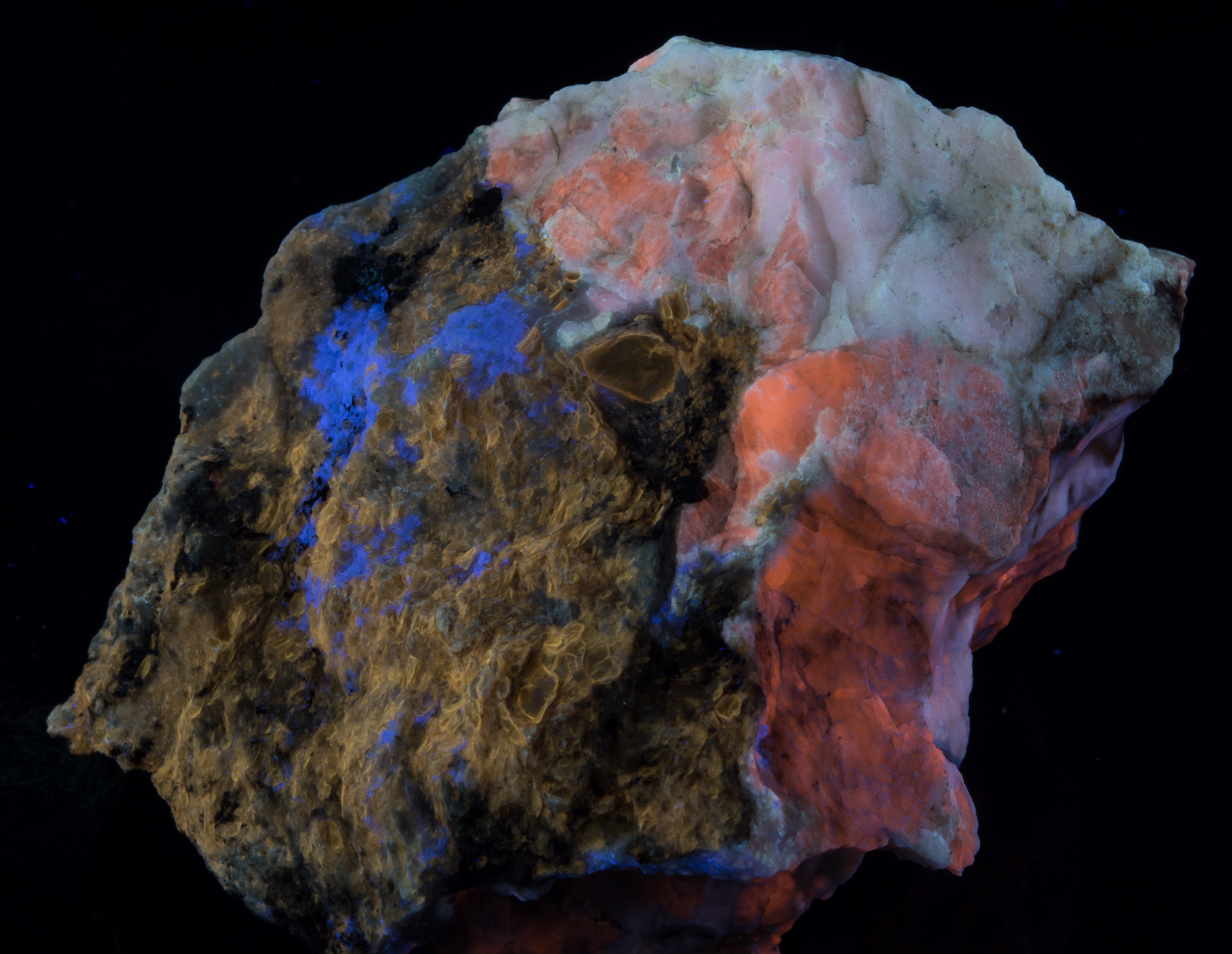
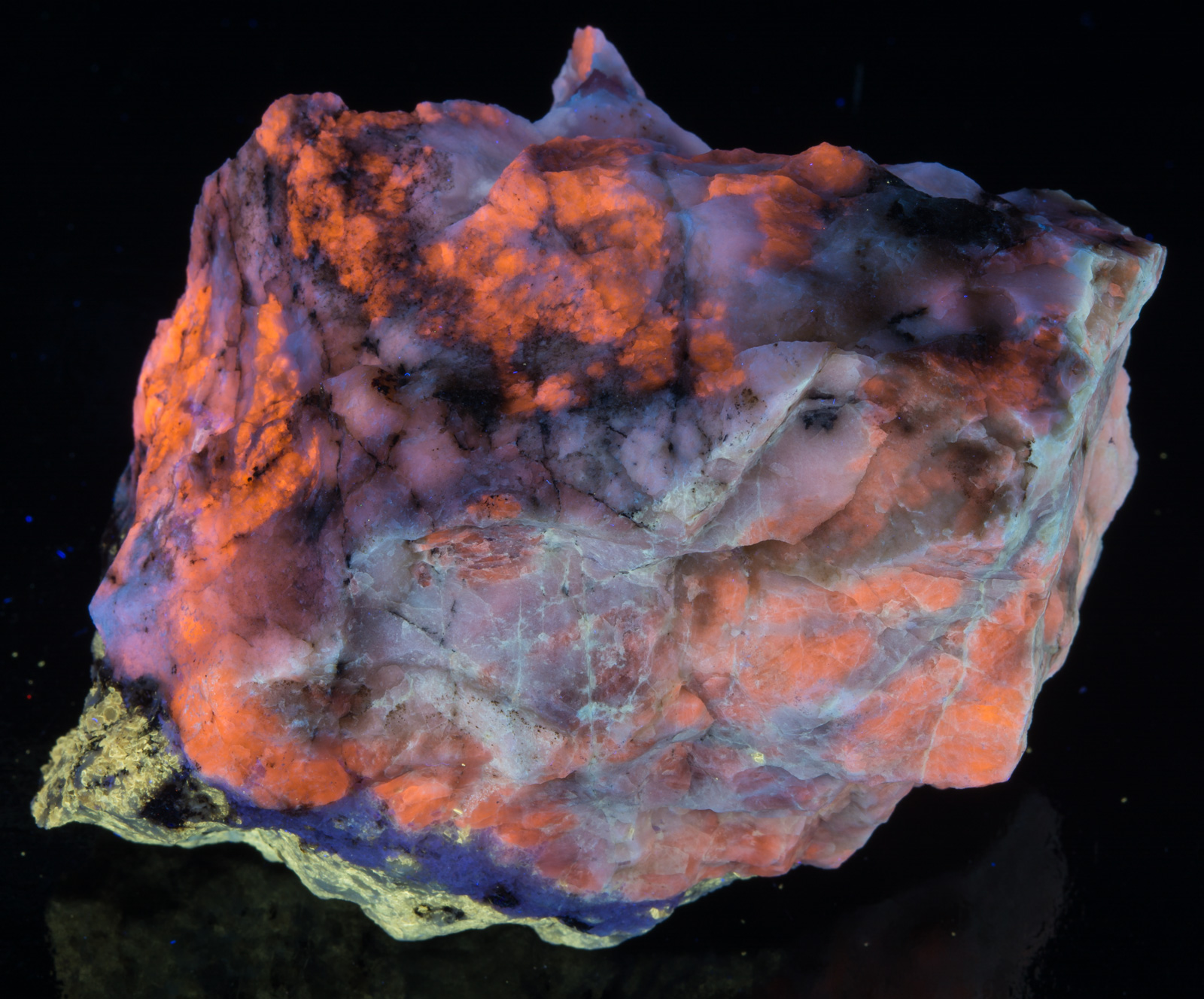
This piece (as most from this area) is best displayed using multiple wavelengths - FULLWAVE. This piece shows best under a combination of longwave, midwave and shortwave (what I call "Fullwave" - SW+MW+LW), although it is very respectable under SW and MW alone. The haüyne fluoresces a bright, burnt orange under LW, phlogopite a bright yellow under SW, the gonnardite is exceedingly bright under MW, but is fluorescent under all three. There appears to be calcite in areas that also have an orange fluorescence. Very interesting is the area of blue fluorescence. This mineral fluoresces only under midwave (MW) - one of the only minerals I know of that is MW fluorescent ONLY. (Remember, the fullwave pics are all three wavelengths so you will see all in a bright splash of color.) Gonnardite is an alteration product of hauyne and fluoresces a bright white to creamy white under both LW and SW (and MW). You will most often find it associated with hauyne.
A little about lazurite and lapis lazuli: The "real" gemstone lazurite is rarely fluorescent, not translucent and always a deep blue. Lazurite is a tectosilicate belonging to the sodalite group. The main members of the group found in Sar-e-Sang are: sodalite, nosean, haüyne, and lazurite. Lapis Lazuli is a rock - The primary minerals found in lapis lazuli are: sodalite, hauyne/afghanite, pyrite, calcite, phlogopite, feldspars, scapolite, forsterite, nepheline, afghanite, and wollastonite.
The amount of sulfur in these specimens plays an important role in fluorescence, but I am sure there are numerous activators that have not been discovered yet. Study is needed on the fluorescence of these minerals.
Lucky specimens will have calcite (although the miners do their best to etch the calcite away to reveal the valuable afghanite crystals. Almost always the calcite is a nice orange under SW and MW, strongest MW. Bright yellow fluorescing phlogopite is often found also (SW). In rare cases phlogopite will also fluoresce under MW - a butterscotch color, and sometimes even under LW - just a darker butterscotch.
The end result of all this information - a very confused rock, but very beautiful - pure color splash, bright, and unique.
Originally posted by Mark Cole on Nature's Rainbows in 2017.
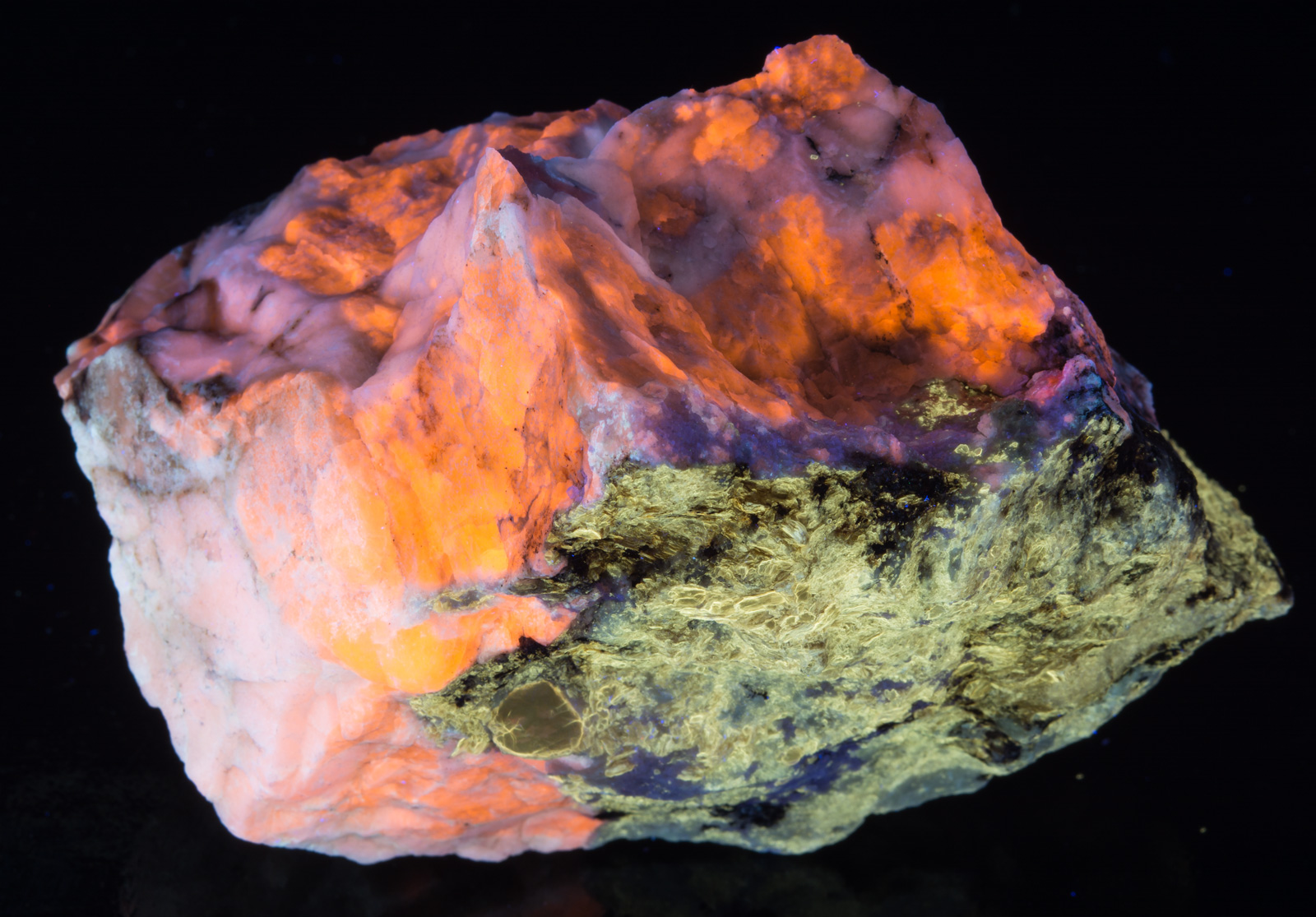
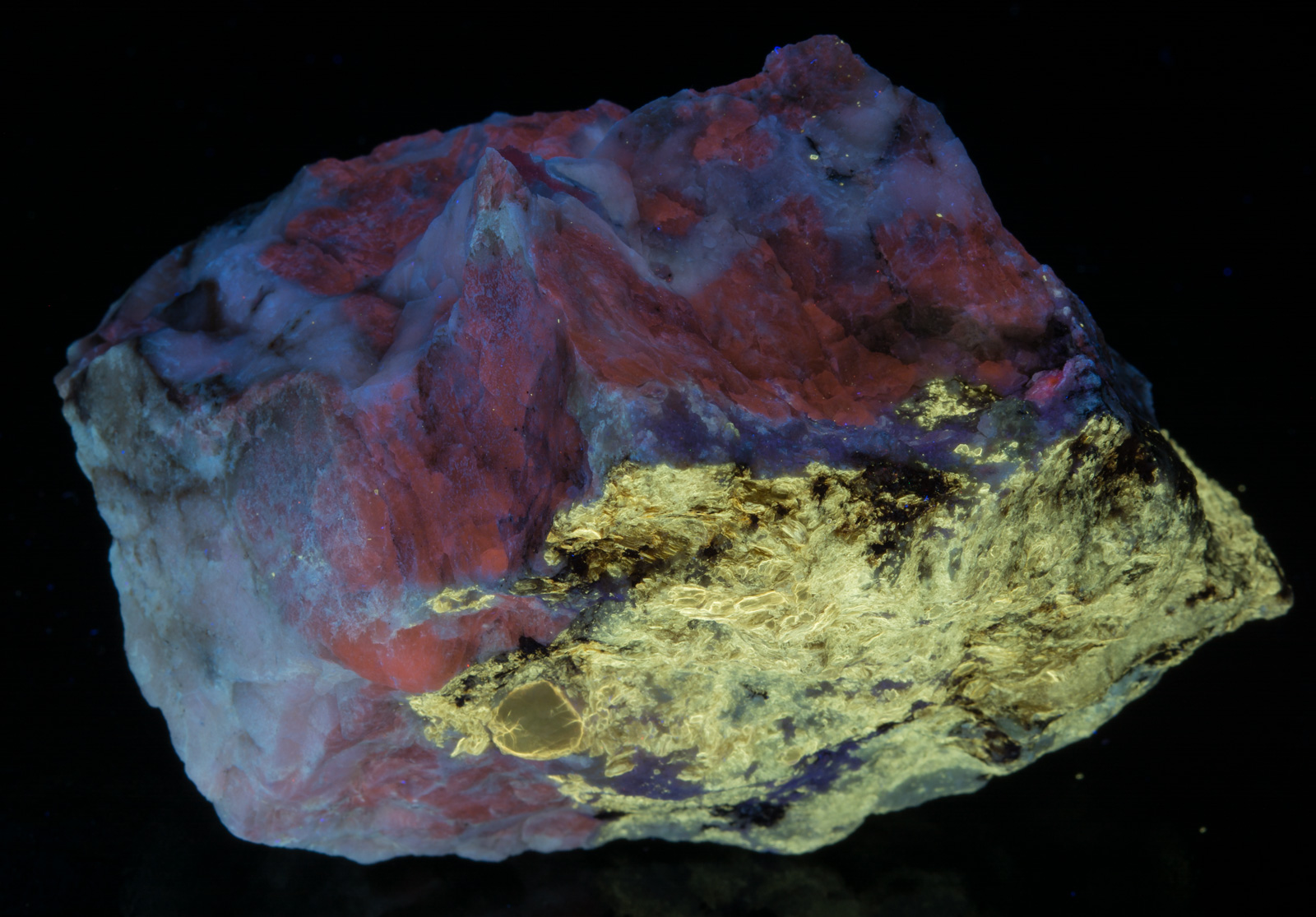
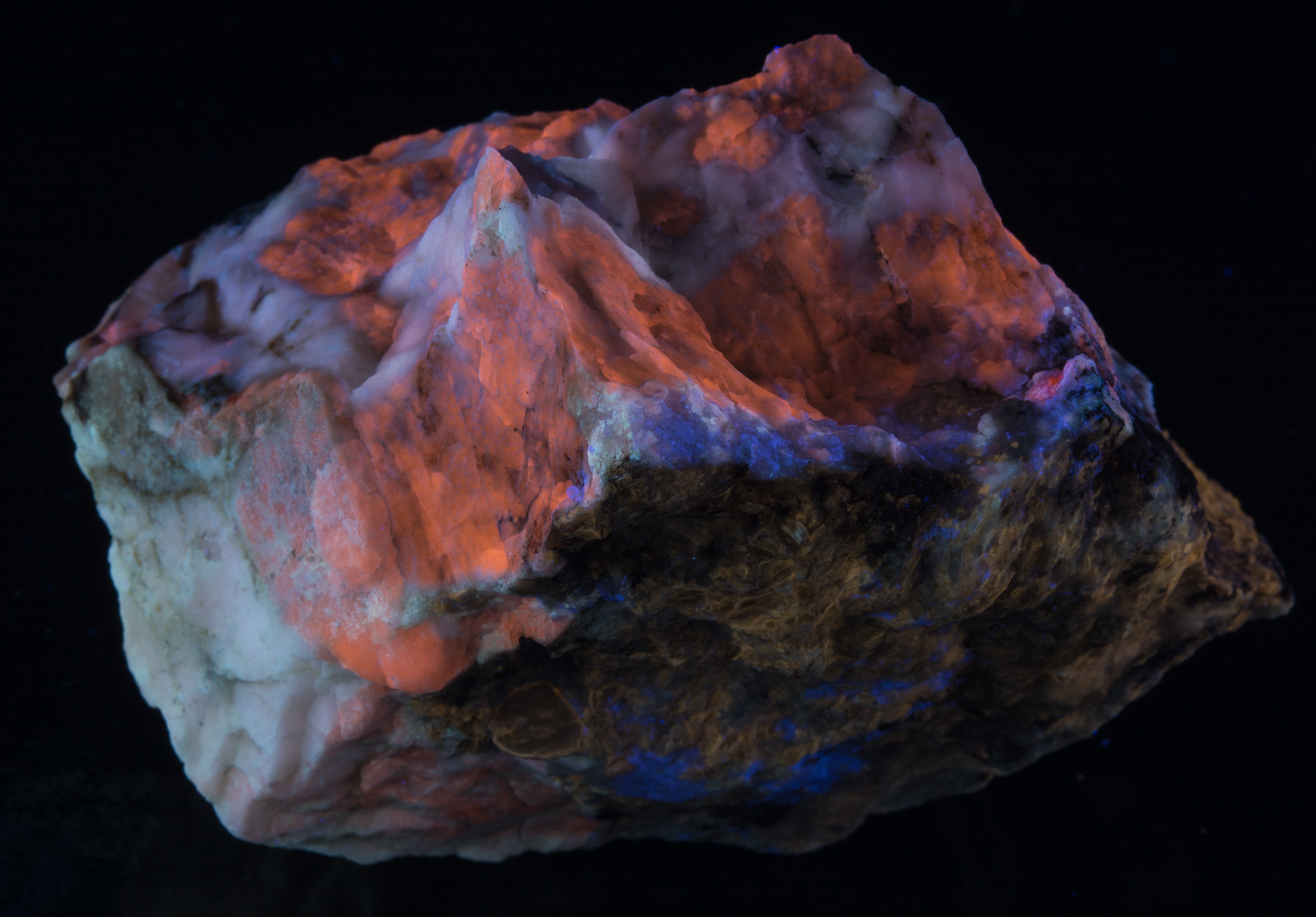
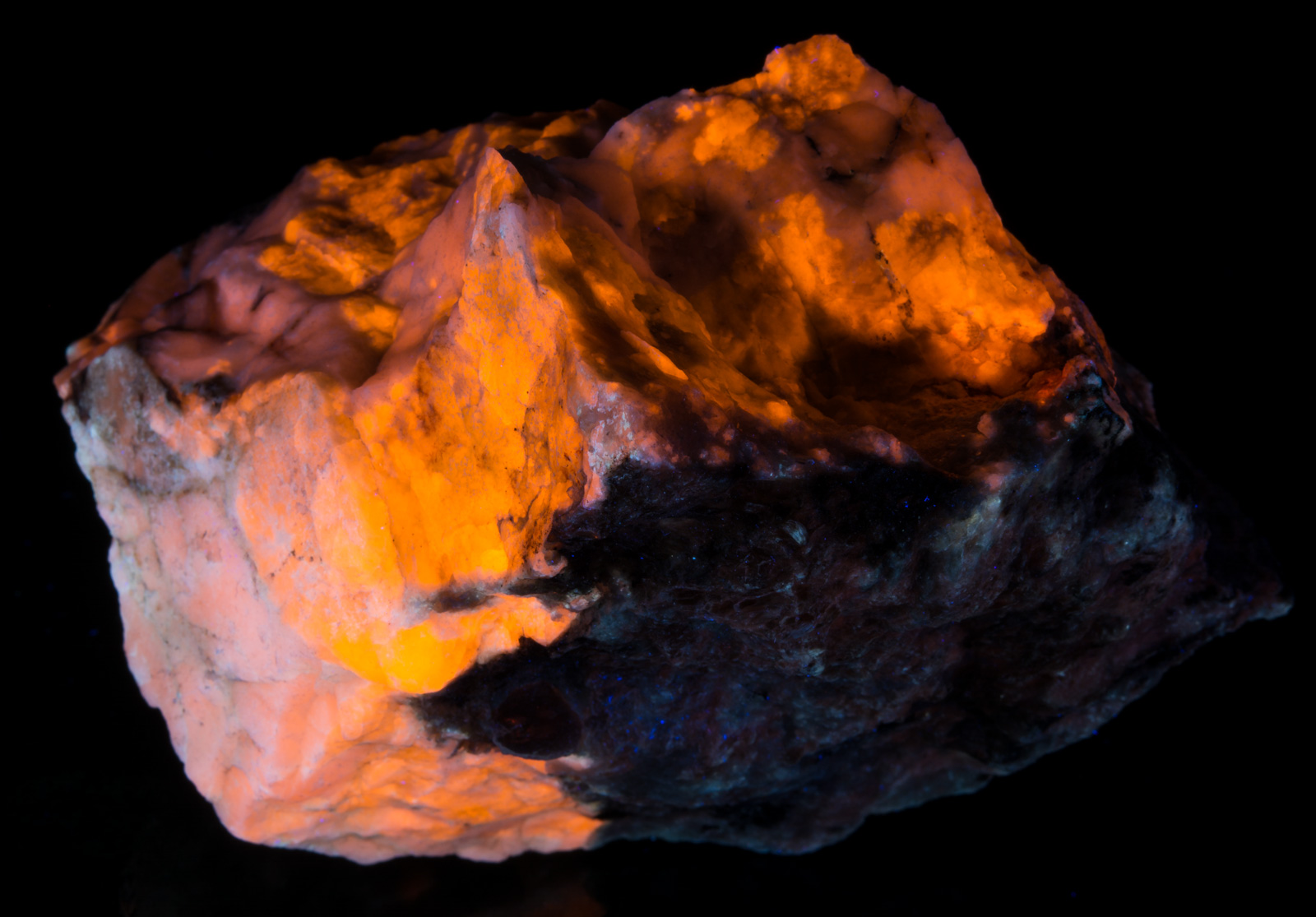
Summary of luminescence responses:
Gonnardite (Mindat) (RRUFF)
- Fluorescence under Midwave (305nm Lamp/Mercury) UV light: White
- Fluorescence under Shortwave (254nm Lamp/Mercury) UV light: White
- Fluorescence under Longwave (365nm LED) UV light: Orange
- Fluorescence under Midwave (305nm Lamp/Mercury) UV light: Red
- Fluorescence under Shortwave (254nm Lamp/Mercury) UV light: Red
- Fluorescence under Shortwave (254nm Lamp/Mercury) UV light: Yellow