
Very Tenebrescent Sodalite var. Hackmanite with Richterite - Badakshan, Afghanistan
Contributed by: Mark Cole
Date: Apr 6th, 2026
Locality: Sar-e-Sang, Kuran wa Munjan District, Badakhshan, Afghanistan (See on Mindat)
Description:
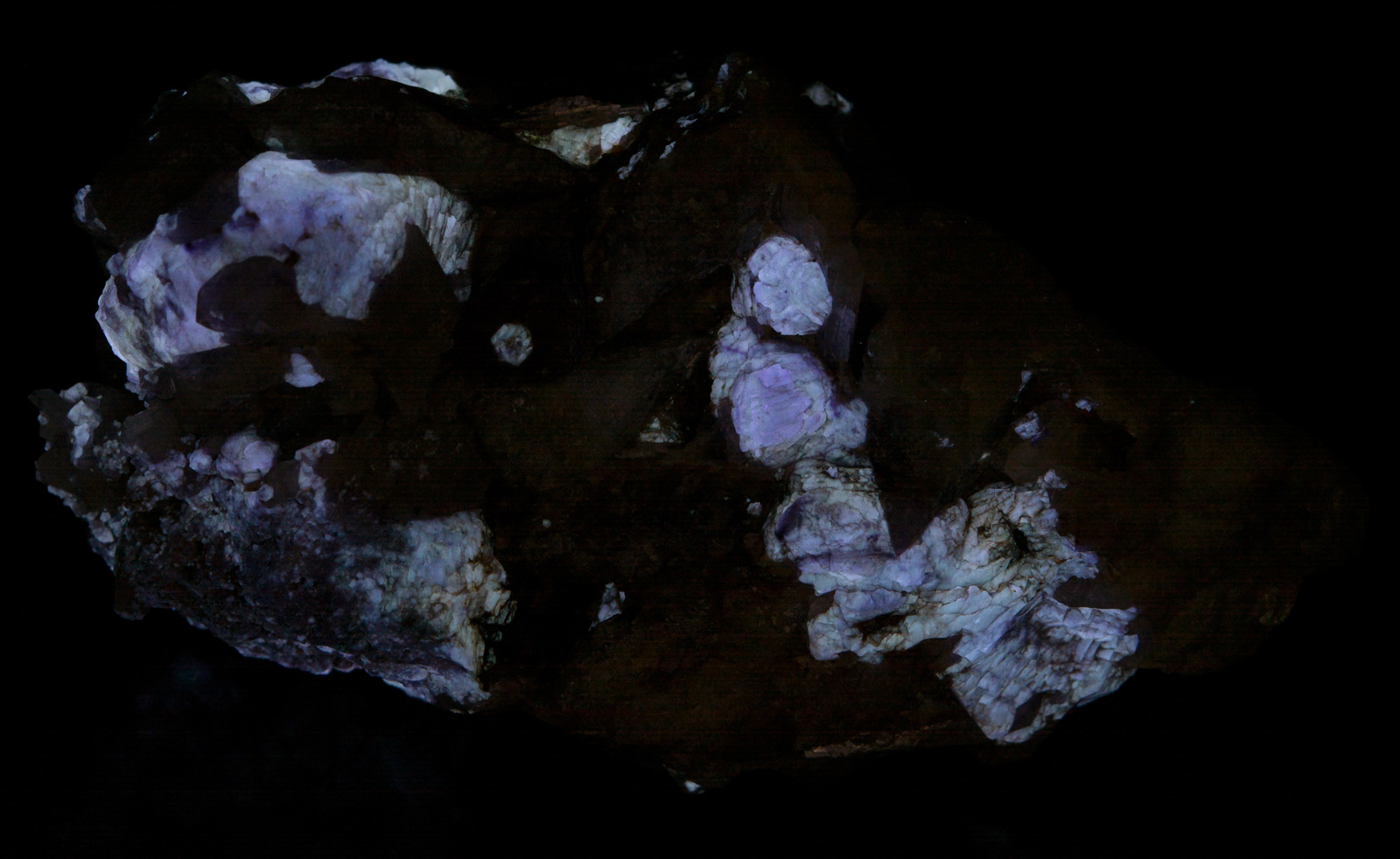
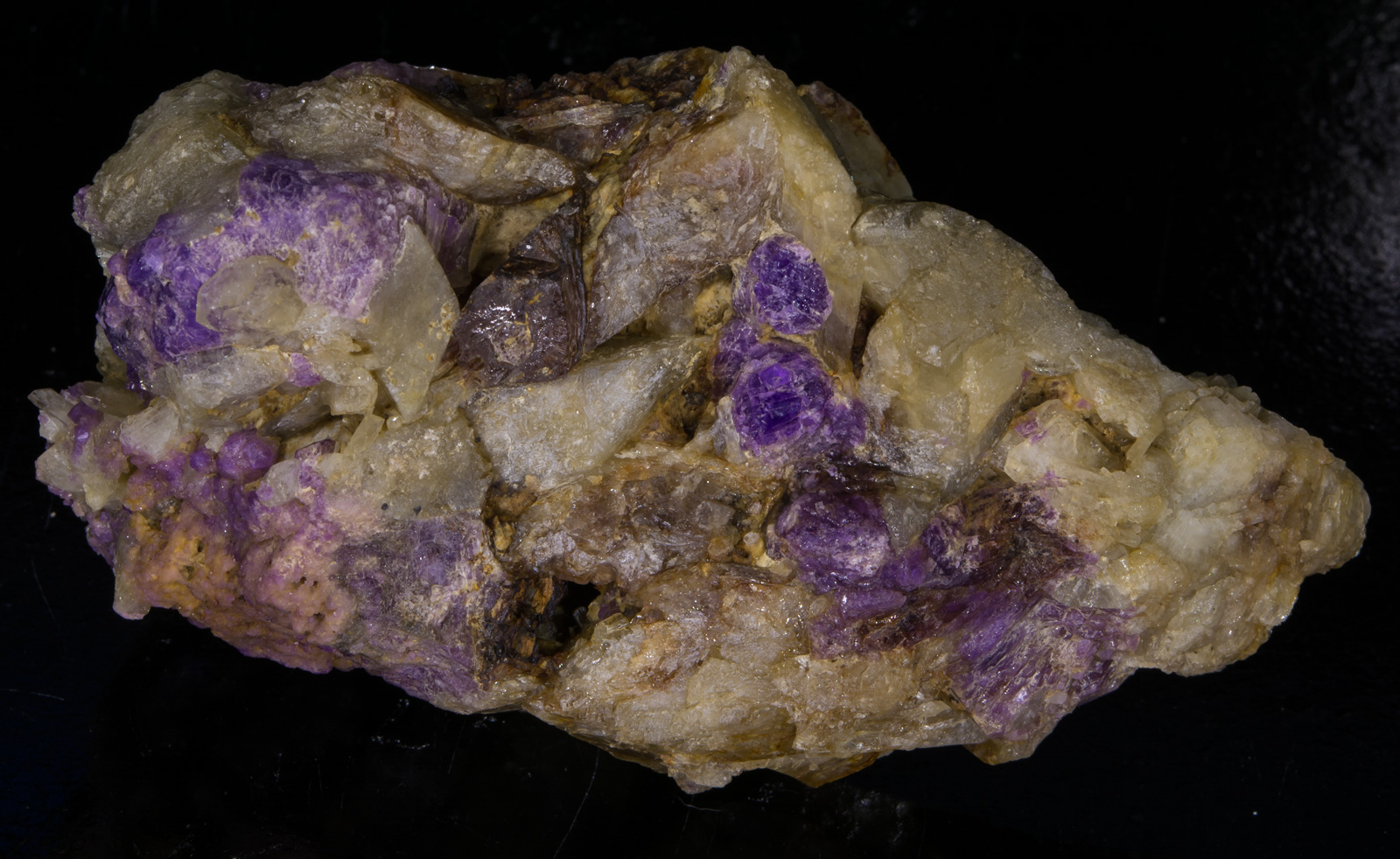
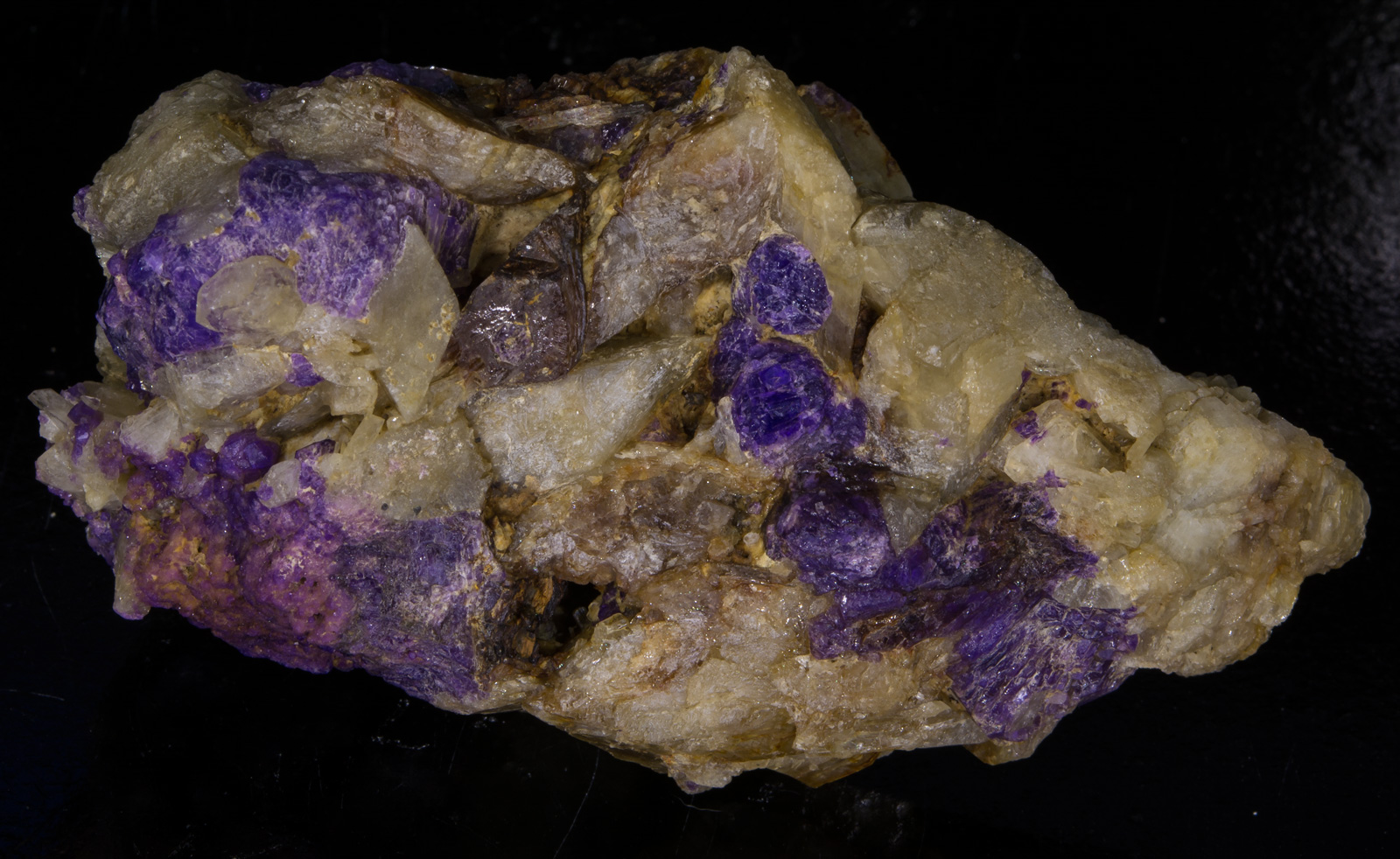
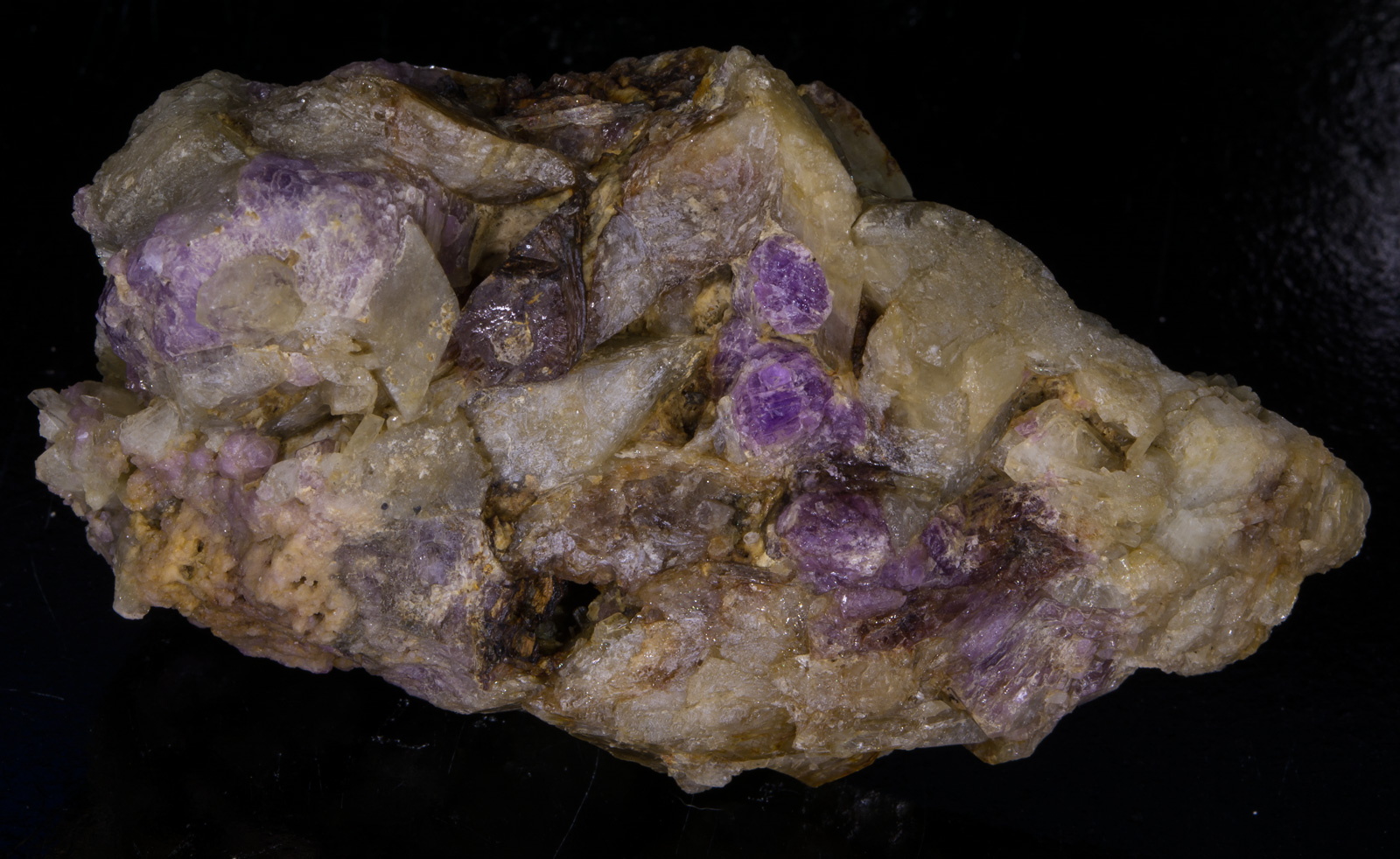
Sodalite var. hackmanite from Afghanistan is very tenebrescent. Upon exposure to ultraviolet light (shortwave or longwave) it changes its natural color to a deep purple. This change happens in seconds. After a few hours/days in bright white light it fades back to its original color (very different from Greenland hackmanite which can fade just as quickly as it deepens in color).
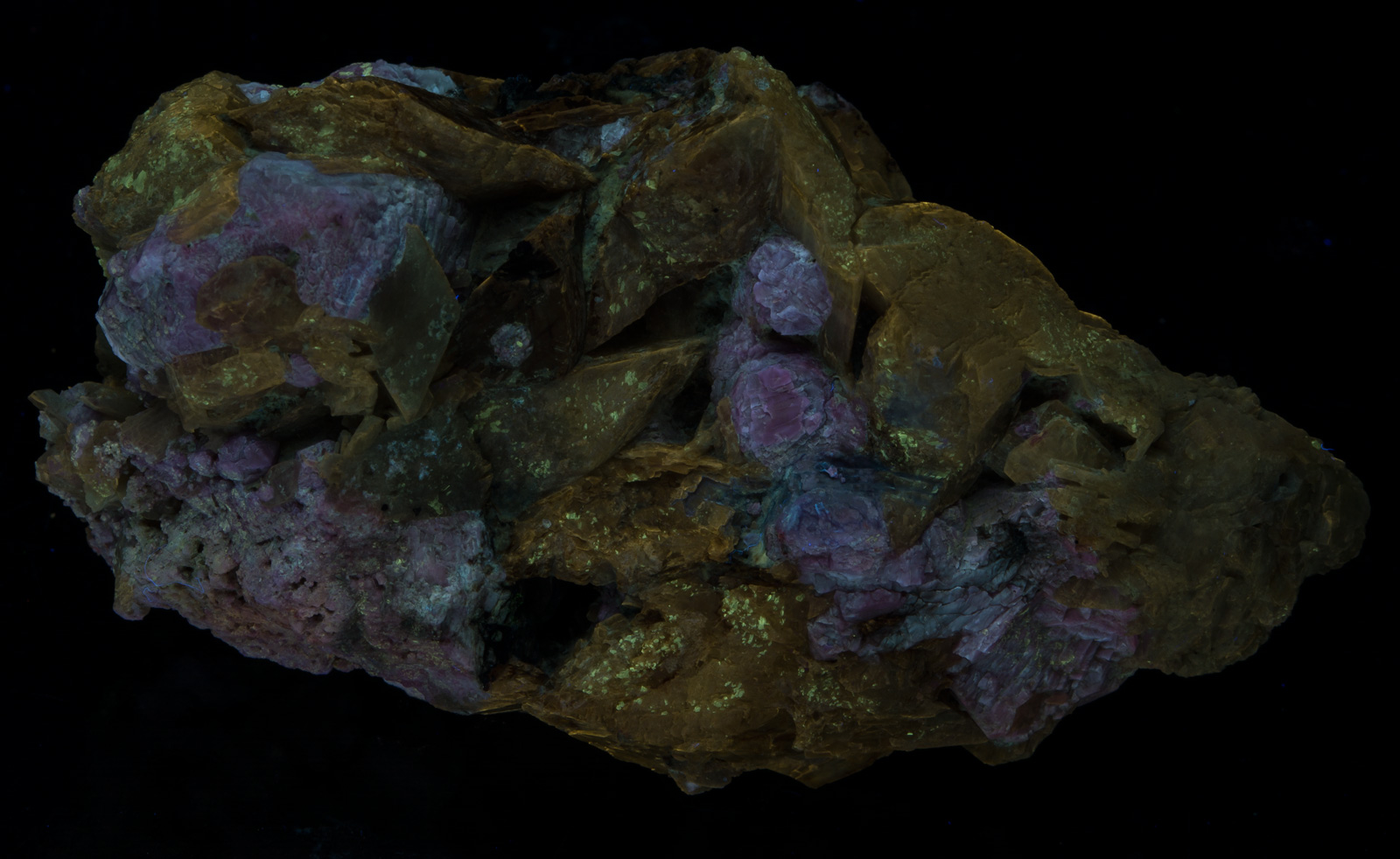
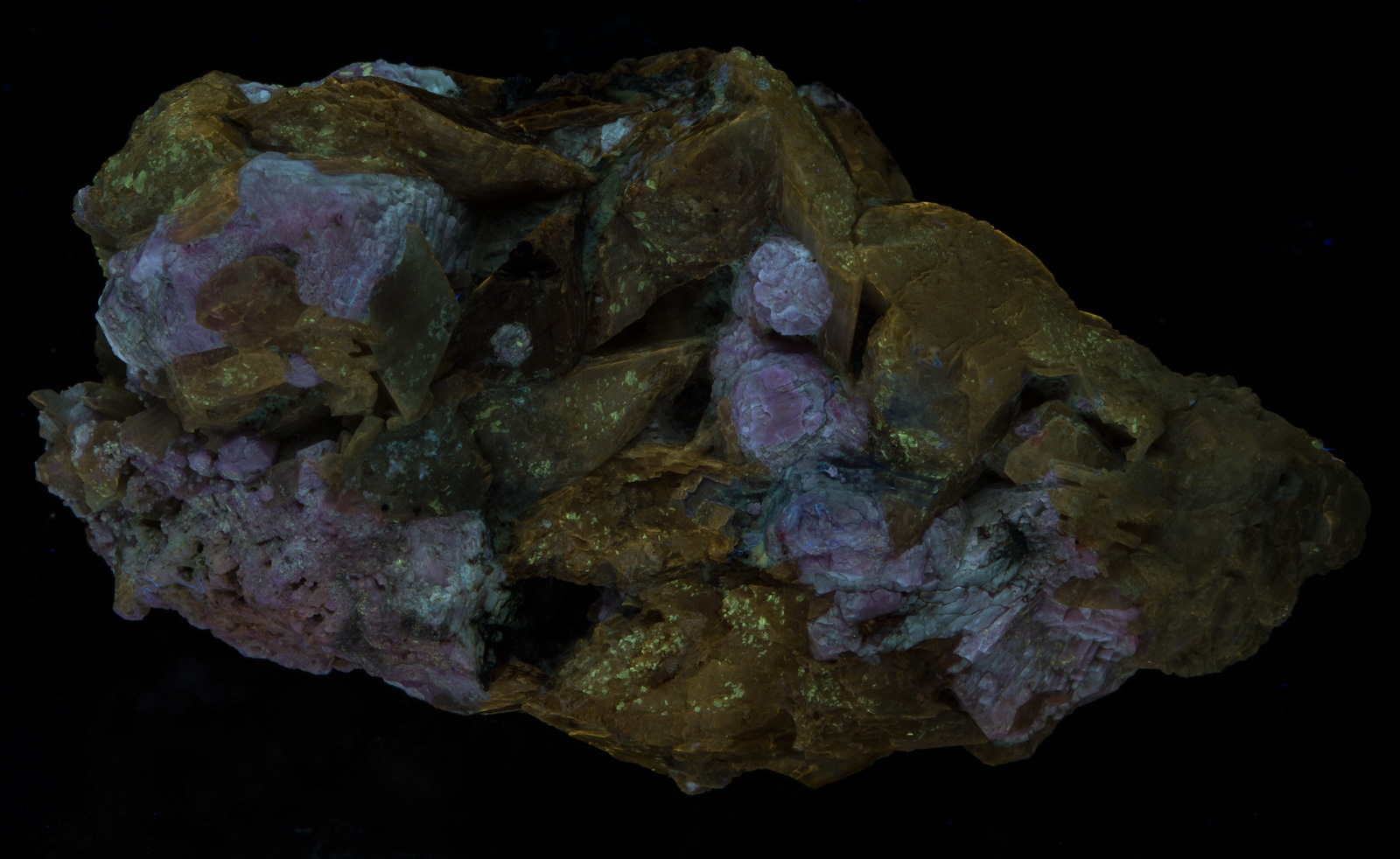
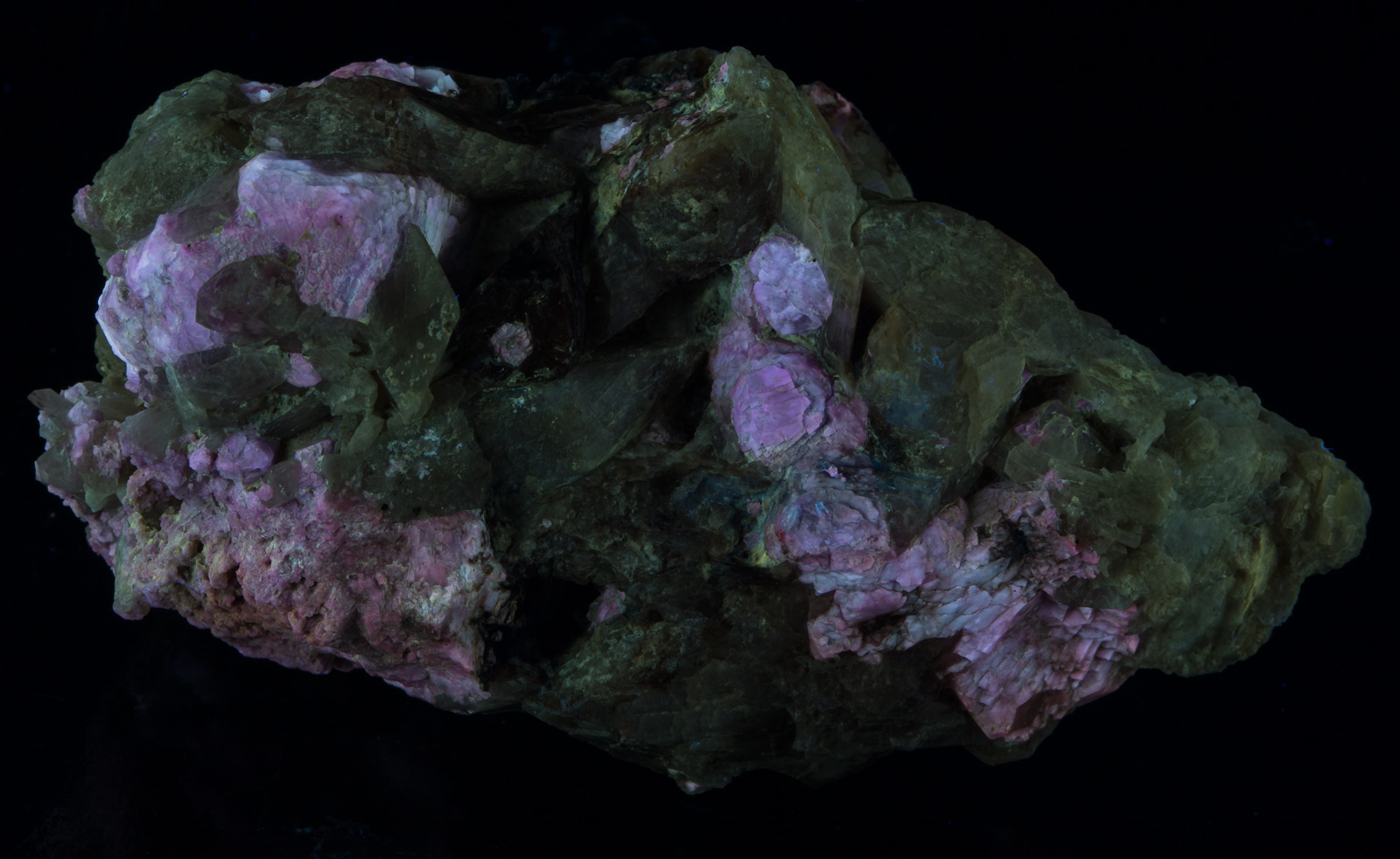
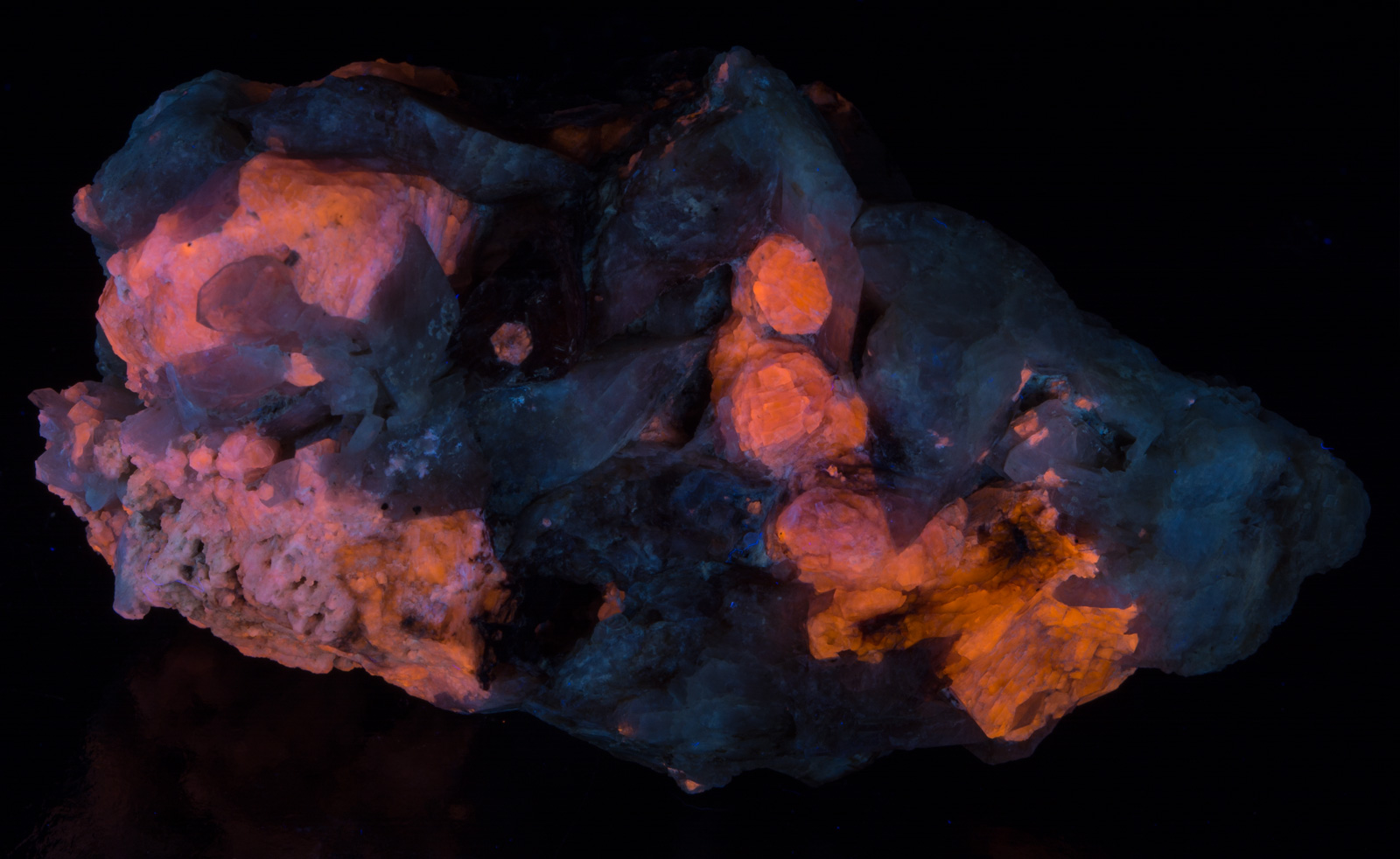
The fluorescence under longwave UV is a bright orange. Under shortwave and midwave the color shifts to a whitish color. Very interesting (to me) is that it takes a noticeable amount of time for the fluorescence to set up under SW. Since these pieces are also very phosphorescent (see picture below) it seems that it takes a while for the electrons to get "excited" (the same characteristic that causes phosphorescence - takes a while for them to get "unexcited". Note the slight difference in brightness in the two shortwave pictures - one showing the initial fluorescence, the other after a couple of minutes.
The richterite fluoresces a dull yellow/green with spots under shortwave.
Originally posted by Mark Cole on Nature's Rainbows in 2016.
Summary of luminescence responses:
Hackmanite (Mindat) (RRUFF)
- Fluorescence under Longwave (365nm LED) UV light: Orange
- Fluorescence under Midwave (305nm Lamp/Mercury) UV light: Pink
- Fluorescence under Shortwave (254nm Lamp/Mercury) UV light: White
- Afterglow after exposure to Shortwave (254nm Lamp/Mercury) UV light: White
- Tenebrescence after exposure to Longwave (365nm LED) UV light: Purple
- Fluorescence under Shortwave (254nm Lamp/Mercury) UV light: Purple
- Fluorescence under Shortwave (254nm Lamp/Mercury) UV light: Yellow