
Tugtupite from the Type Locality – Greenland
Contributed by: Michael Crawford
Date: Mar 12th, 2026
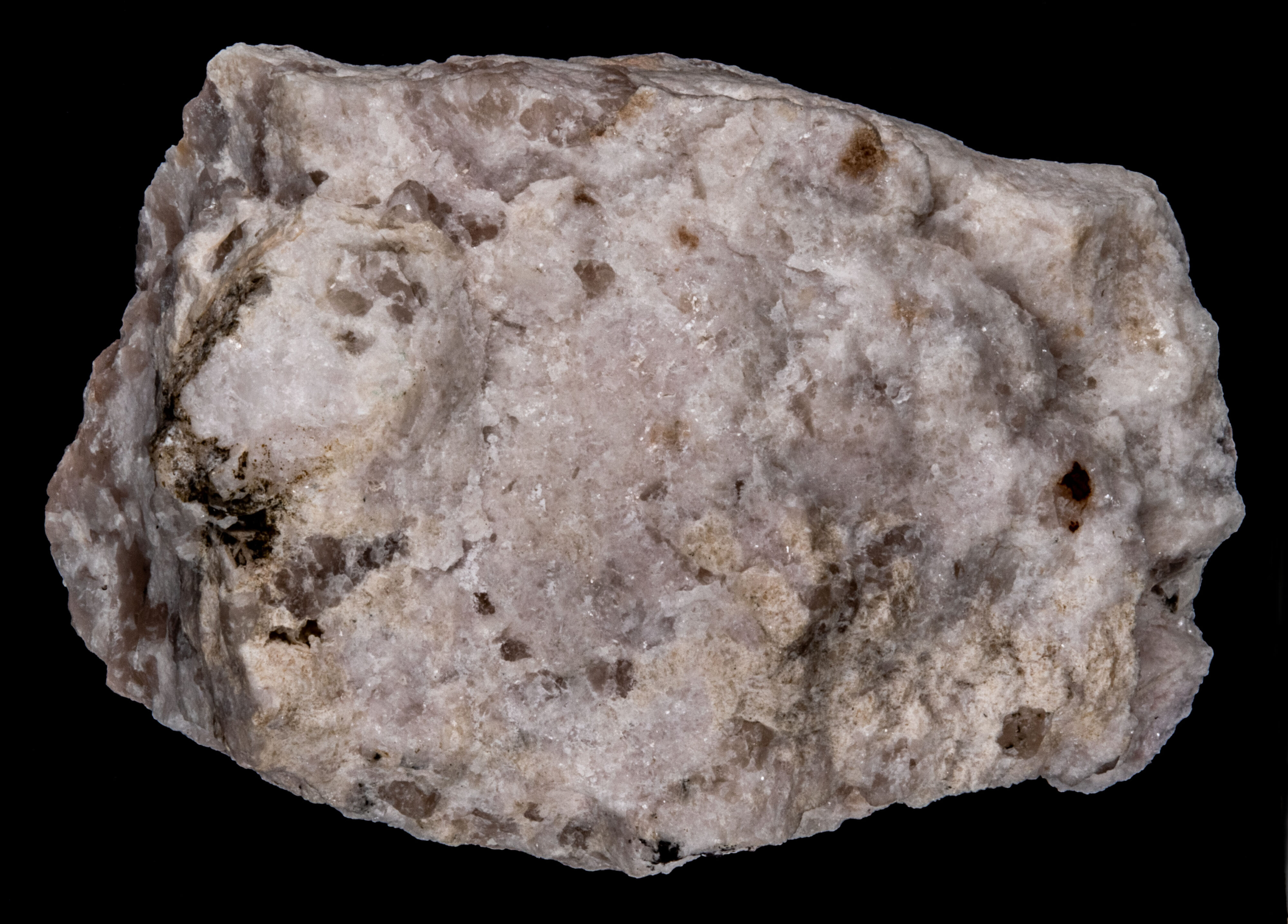
Locality: Tugtup Agtakôrfia, Tunulliarfik Fjord, Ilímaussaq complex, Kujalleq, Greenland (See on Mindat)
Size: 9 x 13 cm
Description:
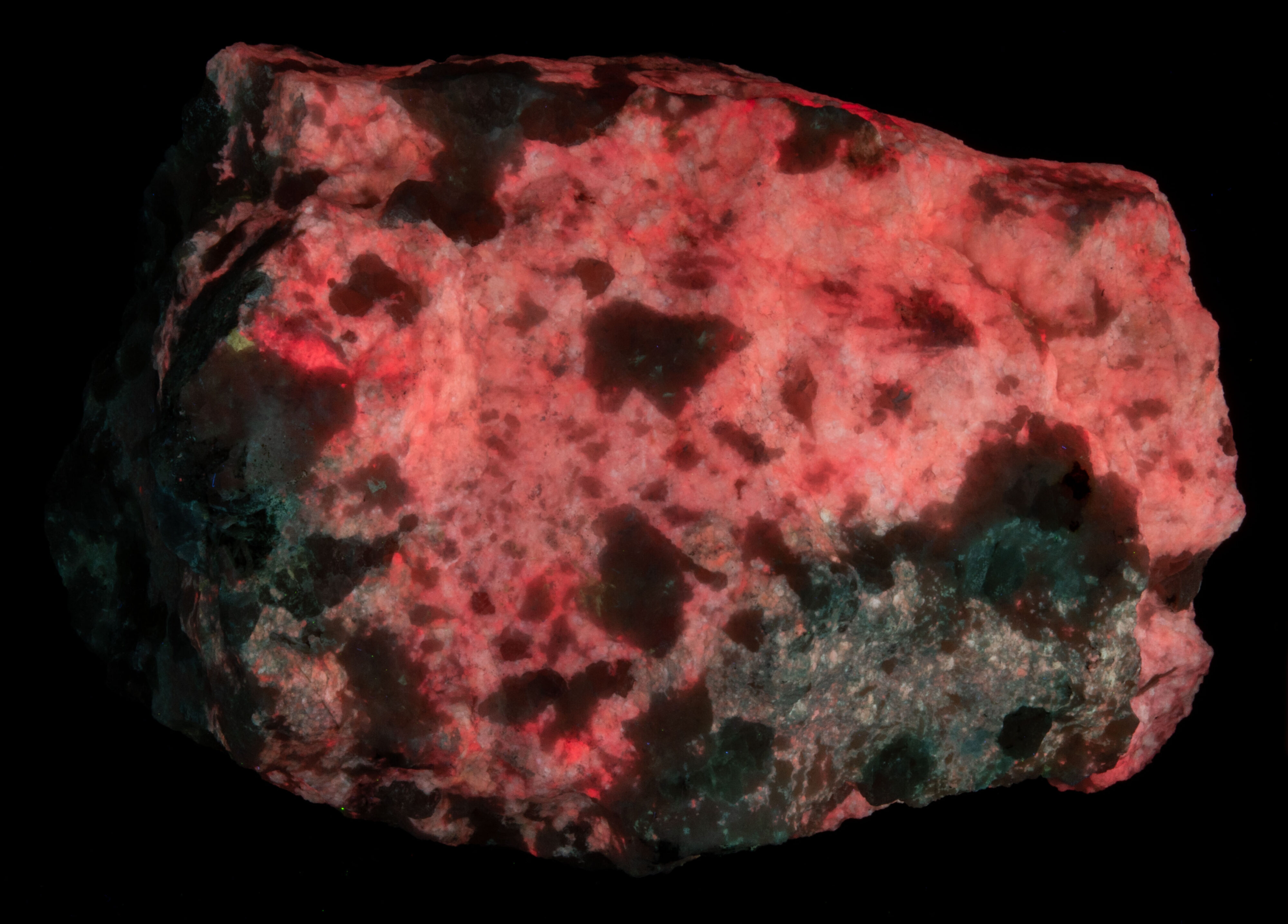
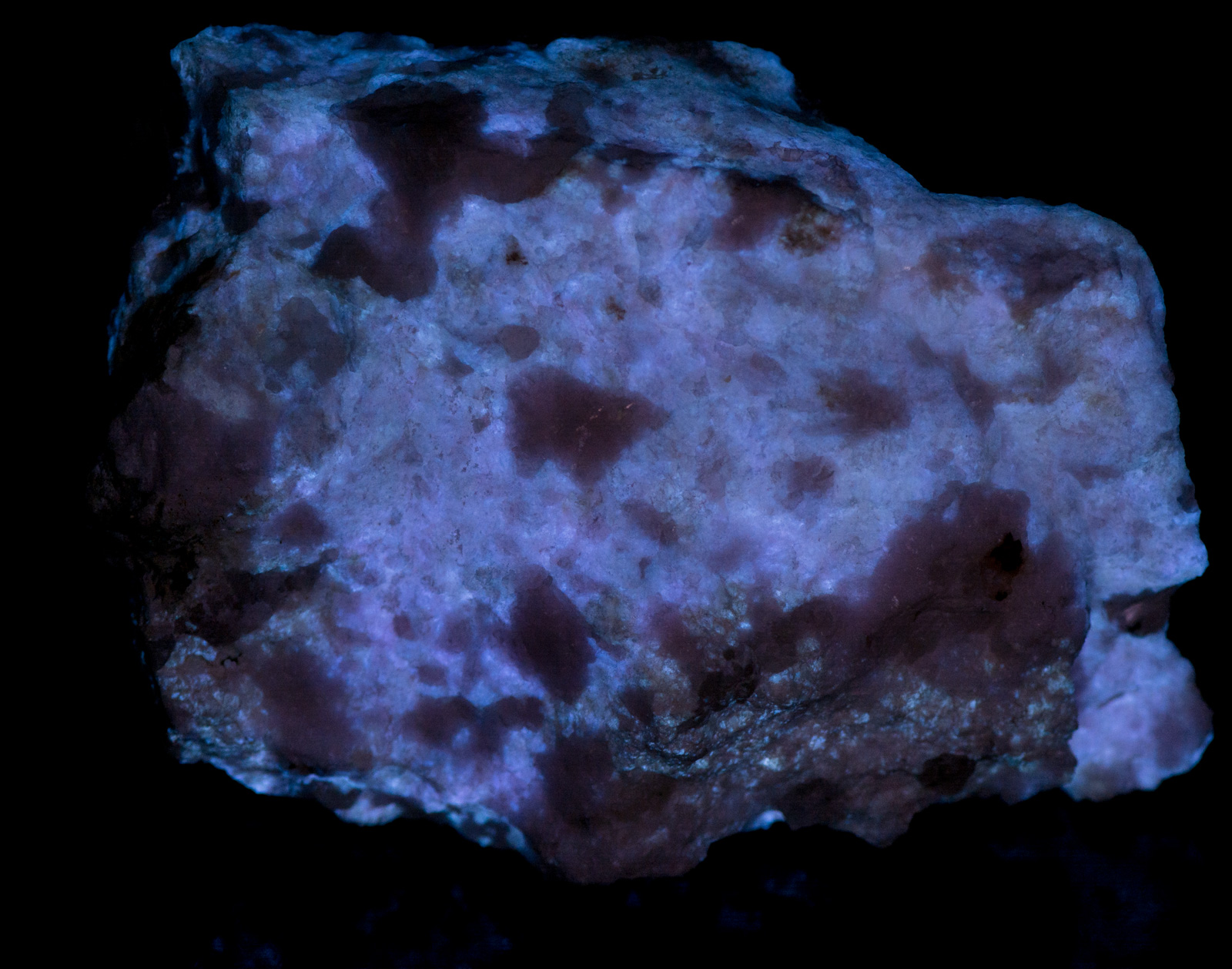
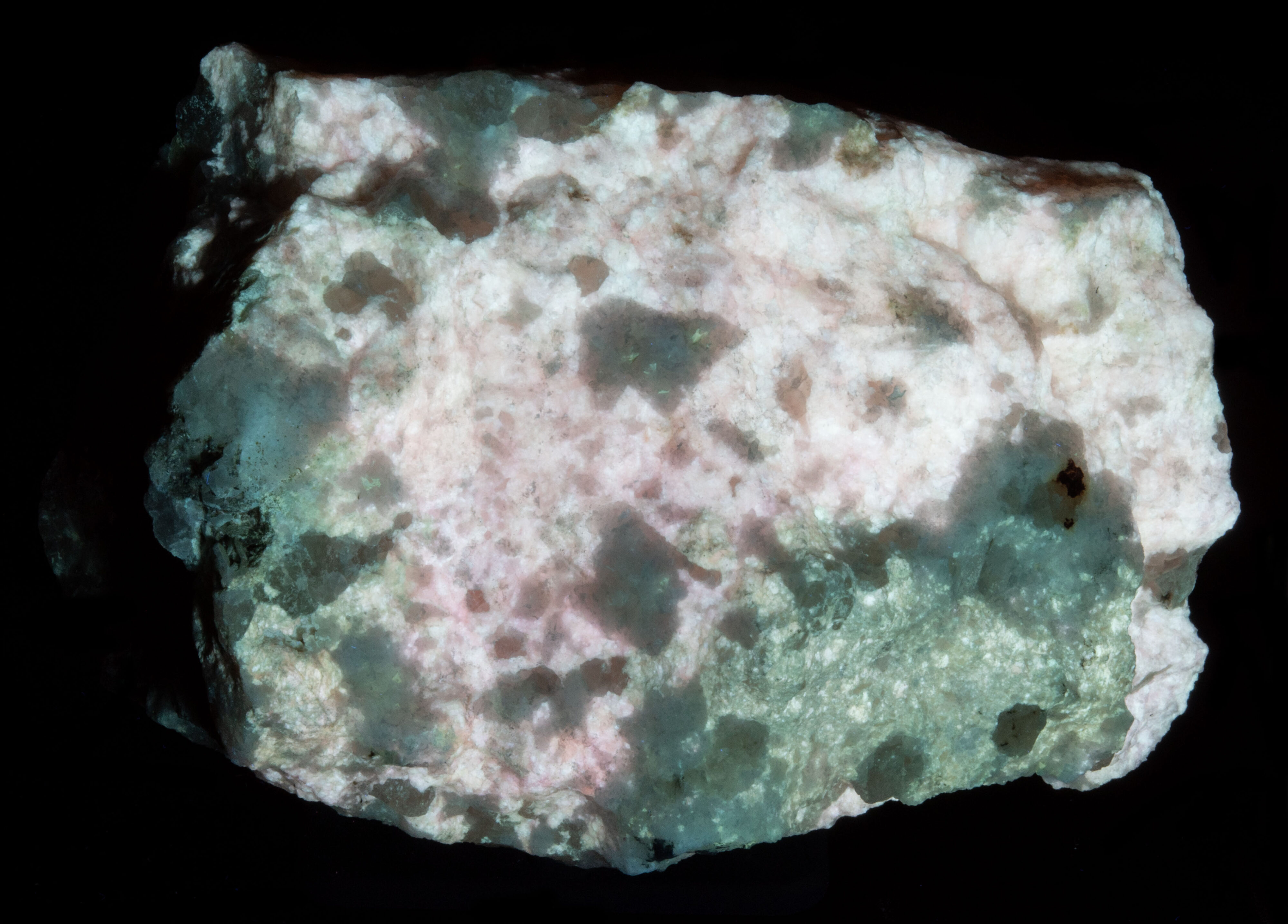
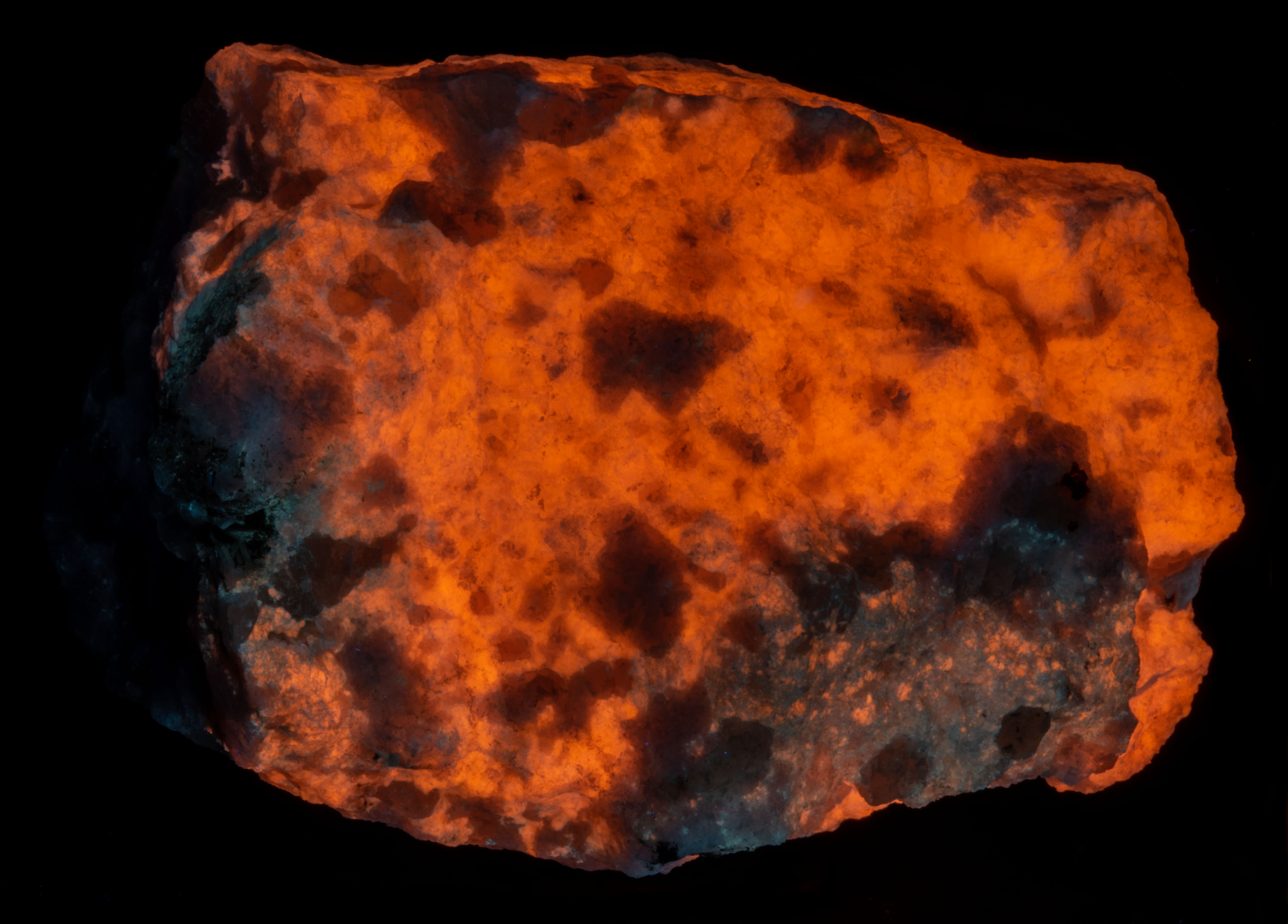
Tugtupite is found in only three places in the world: Greenland, Kola Russia, and MSH Canada. Only pieces from Greenland are of any significant size and offer a wide range of responses. This piece is from the exact place where tugtupite was originally discovered in the late 50's - Tugtup Aktoforia, Ilimaussaq Complex, Greenland. It is very unusual, showing a strong peach fluorescence under SW, a whitish color under MW, and the typical salmon color under LW. It is also very phosphorescent. These pieces are not usually tenebrescent. (When first discovered by a member of the MinerShop Geo-Tours it was not even recognized to be tugtupite and was given the nickname "Tugtulite" until an ID was confirmed.)
Originally posted by Mark Cole on Nature's Rainbows.
UPDATE: This specimen is now in the collection of Michael Crawford. He has added the following discussion that describes emission spectra of the tugtupite (Na4BeAlSi4O12Cl) and albite (Na(AlSi3O8)) that also occurs in the specimen.
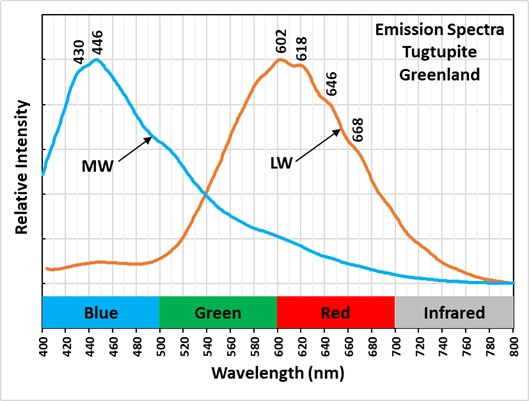
The emission spectra of tugtupite indicates that the varying color responses under different wavelengths are caused by different activators. Under longwave light, the disulfide ion (S2-) replacing chlorine (Cl-)activates the orange fluorescence, with the spectrum showing a broad peak accompanied by smaller vibronic peaks at 602 nm, 618 nm, 646 nm and 668 nm.
Midwave fluorescence exhibits reduced fluorescence from disulfide activation and increased blue fluorescence, with the emission spectrum peaking at 446 nm and a shoulder at 430 nm. This fluorescence might be activated by titanium (Ti3+) paired with an adjacent oxygen vacancy. This form of activation and fluorescence occurs in sodalite (Norrbo and others, 2017) which has an atomic structure like tugtupite which belongs to the sodalite group. The titanium-oxygen vacancy also activates the afterglow.
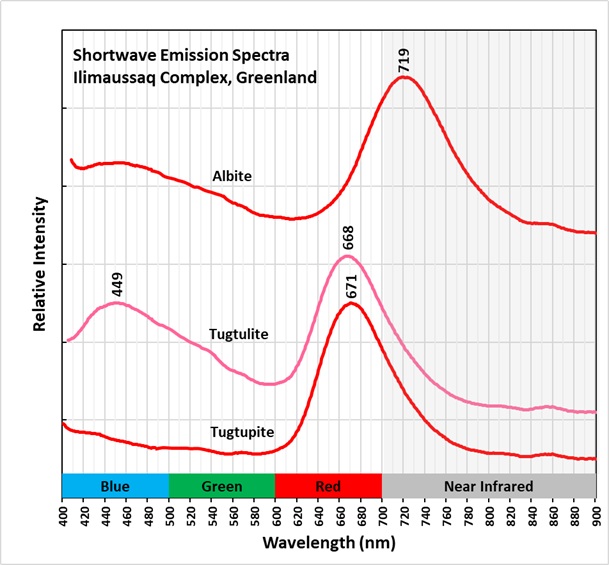
Ferric iron (Fe3+) replacing aluminum within the tugtupite structure serves as the activator for red shortwave fluorescence, which features a broad peak with a maximum at 668 nm and extends into the near-infrared range. The spectrum also has a broad peak in the blue with a maximum at 449 nm that is caused by the titanium-oxygen vacancy. The combination of blue and red fluorescence produces the pink color of "Tugtulite".
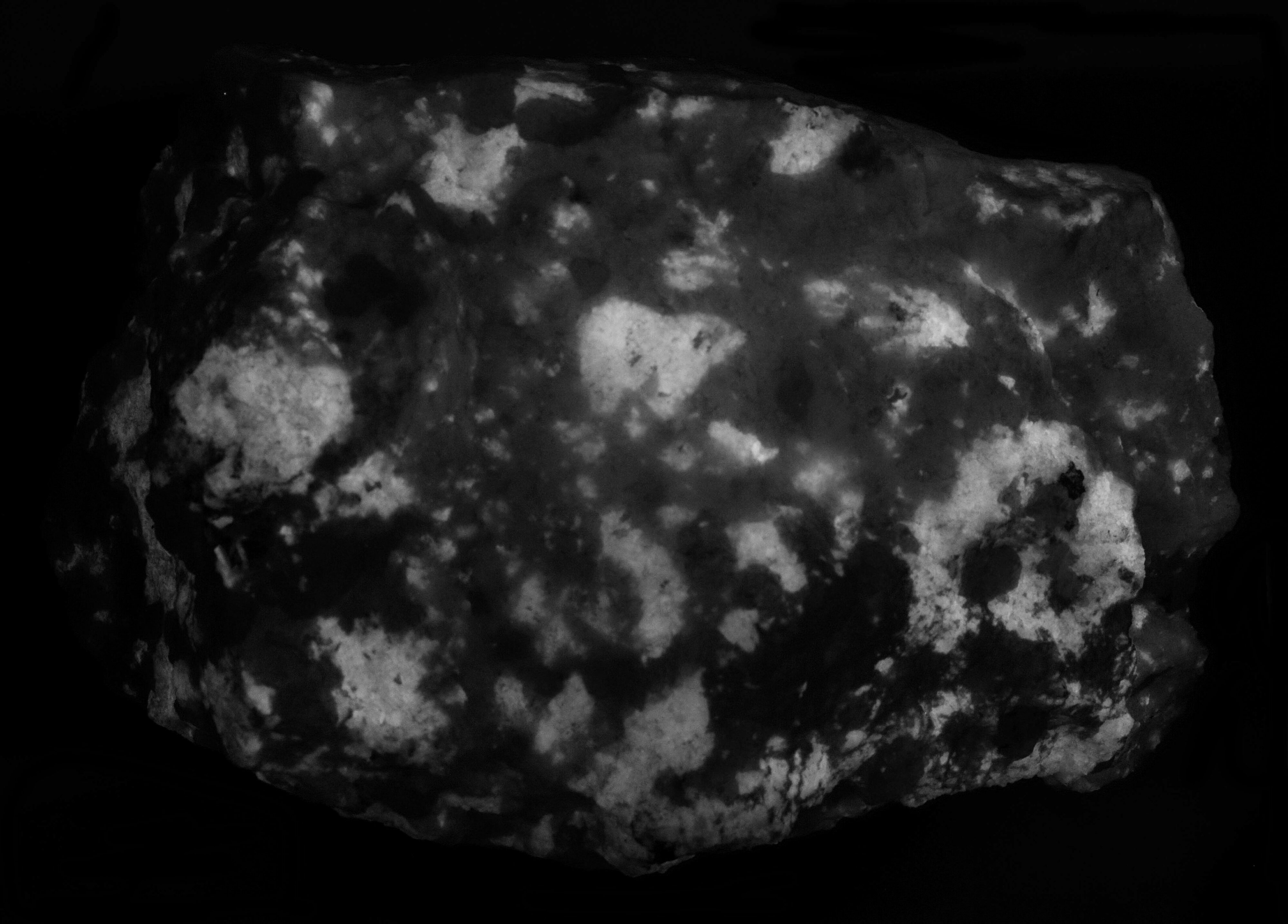
The shortwave image reveals a dull dark red, fluorescent mineral accompanying the bright pink tugtupite, identified as albite. Albite's fluorescence peaks in the near infrared at 719 nm and is similarly activated by ferric iron replacing aluminum within its structure.
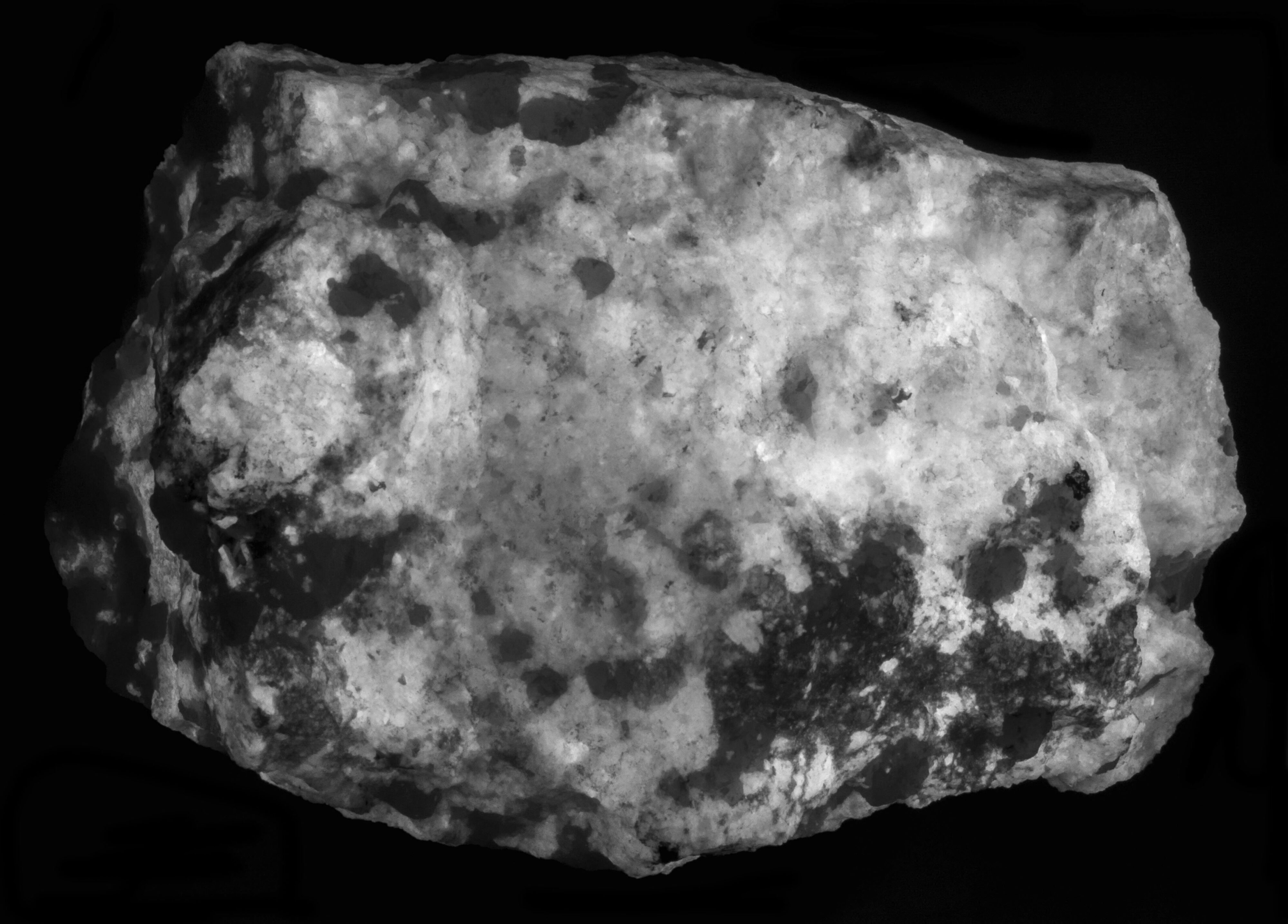
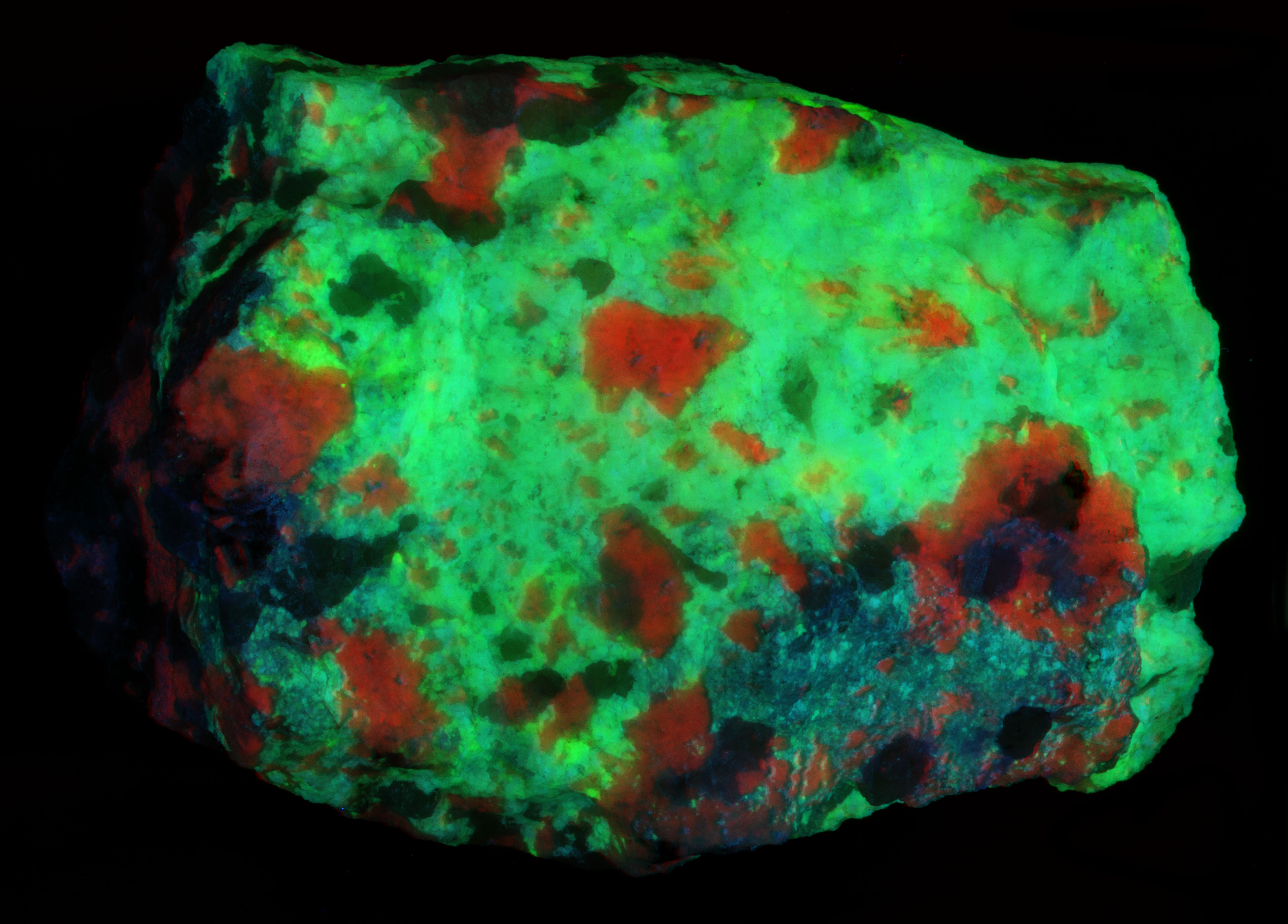
Images capturing near infrared fluorescence demonstrate that tugtupite and albite fluoresce with comparable brightness in the monochrome image taken through a 730 nm bandpass filter. Conversely, the monochrome image taken through an 850 nm cutoff filter, which captures longer wavelengths of near-infrared light, shows the distribution of brighter albite mineralization. The final picture is a color infrared image composed of green and red visible light along with the 850 nm near-infrared image. The color infrared image depicts tugtupite as green and albite as red.
Norrbo, I., Hyppänen, I., and Lastusaari, M. (2017) Up-conversion luminescence– A new property in tenebrescent and persistent luminescent hackmanites, J. of Luminescence, V.191, pp. 28-34.
Summary of luminescence responses:
Tugtupite (Mindat) (RRUFF)
- Fluorescence under Longwave (365nm LED) UV light: Orange
- Fluorescence under Midwave (305nm LED) UV light: White
- Fluorescence under Shortwave (255nm LED) UV light: Pink
- Afterglow after exposure to Shortwave (255nm LED) UV light: Blue
- Afterglow after exposure to Midwave (305nm LED) UV light: Blue