
Wickenburgite from the Potter-Cramer Mine, Maricopa County, Arizona
Contributed by: Michael Crawford
Date: Nov 2nd, 2025
Locality: Potter-Cramer Mine, Vulture Mining District, Maricopa County, Arizona, USA (See on Mindat)
Size: 6 x 7.7 cm
Description:
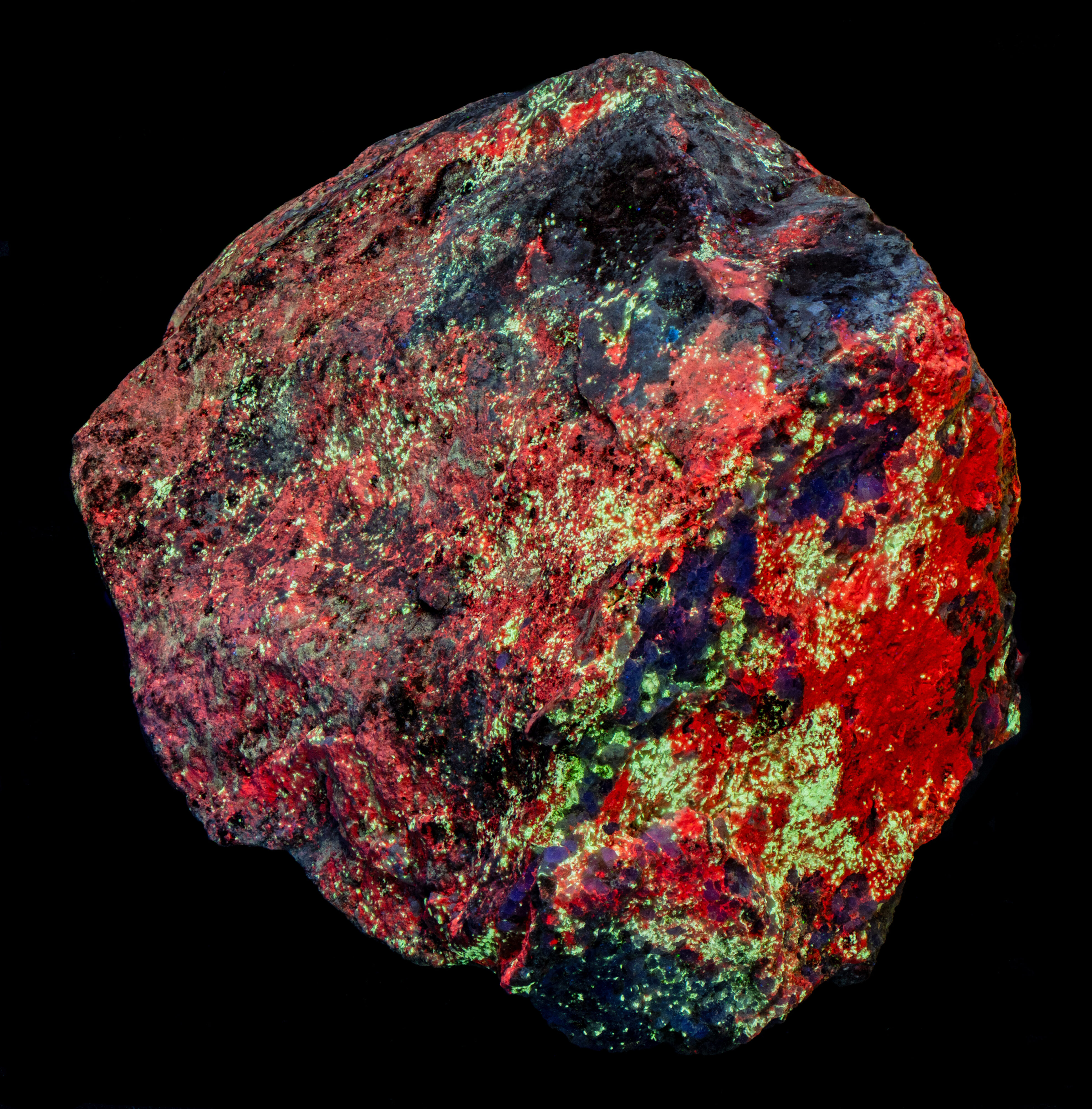
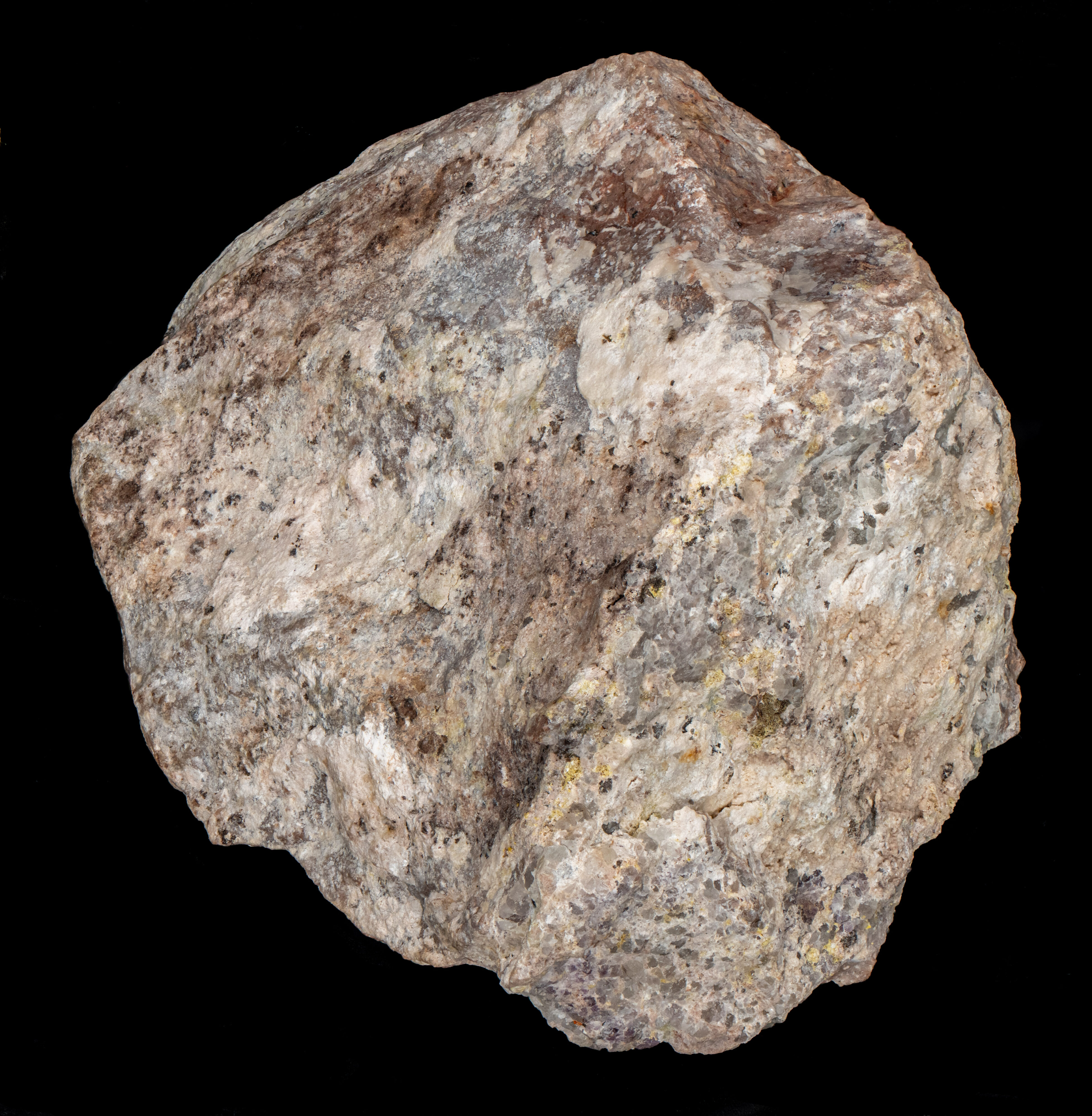
A multi-color specimen from the Potter-Cramer Mine, Maricopa County, Arizona.The specimen contains wickenburgite (CaPb3Al2Si10O24(OH)6), fluorite, and willemite. The Potter-Cramer Mine is the type locality for wickenburgite.
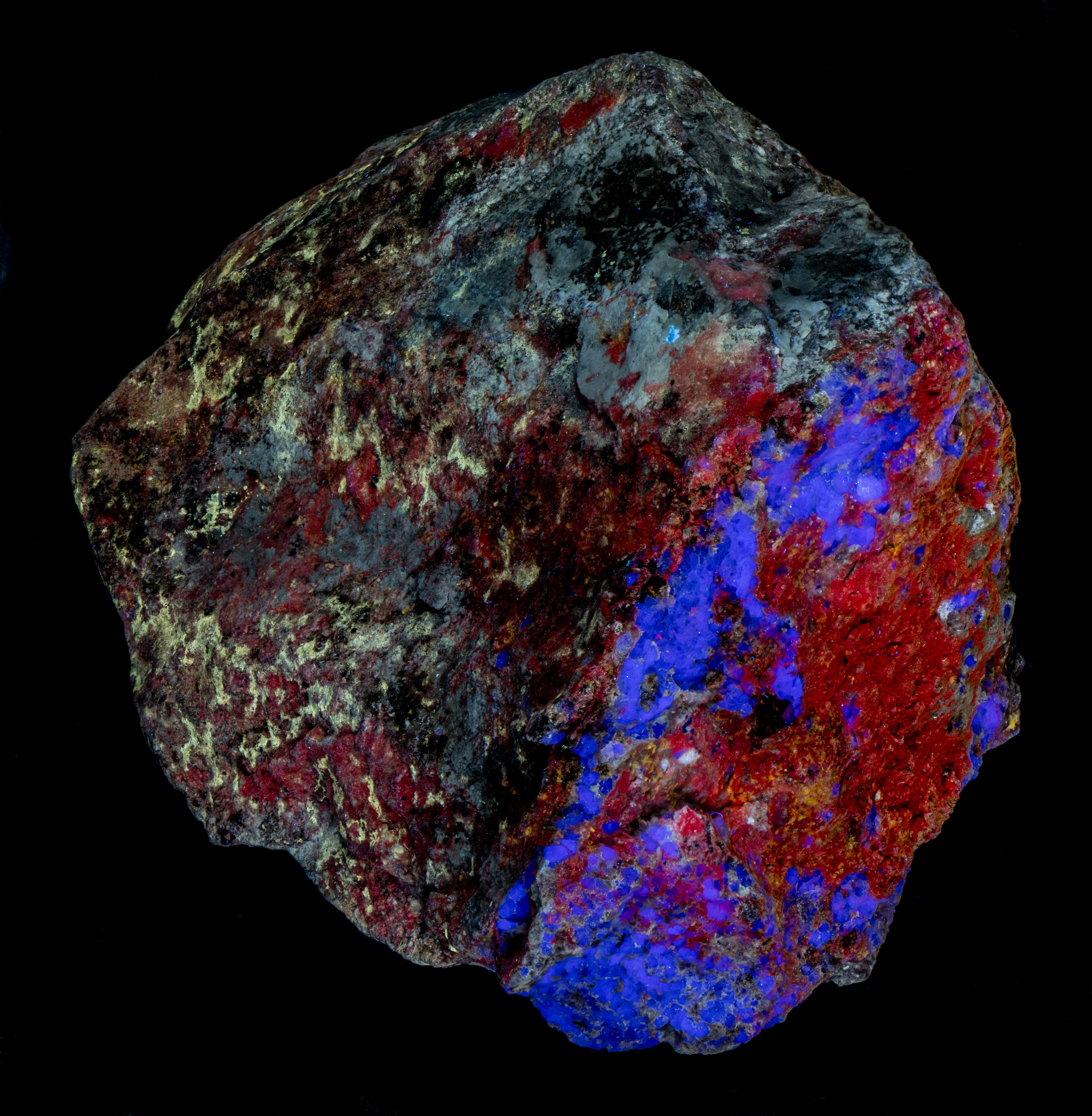
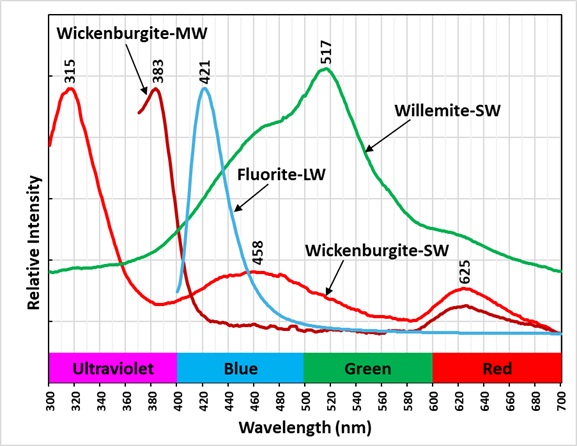
The wickenburgite fluoresces red under midwave and shortwave UV illumination. It is brightest under shortwave. The shortwave emission spectrum has three peaks. The brightest is a sharp peak in the ultraviolet region with a maximum at 315 nm. This peak is likely caused by lead in the wickenburgite. The other two peaks are considerably less intense and much broader. The peak with a maximum around 458 nm may also be caused by lead. The other peak at 625 nm is probably activated by manganese replacing calcium. The midwave emission spectrum has a strong sharp peak at 383 nm and a broad peak in the visible at 625 nm. These peaks are likely caused by lead and manganese respectively.
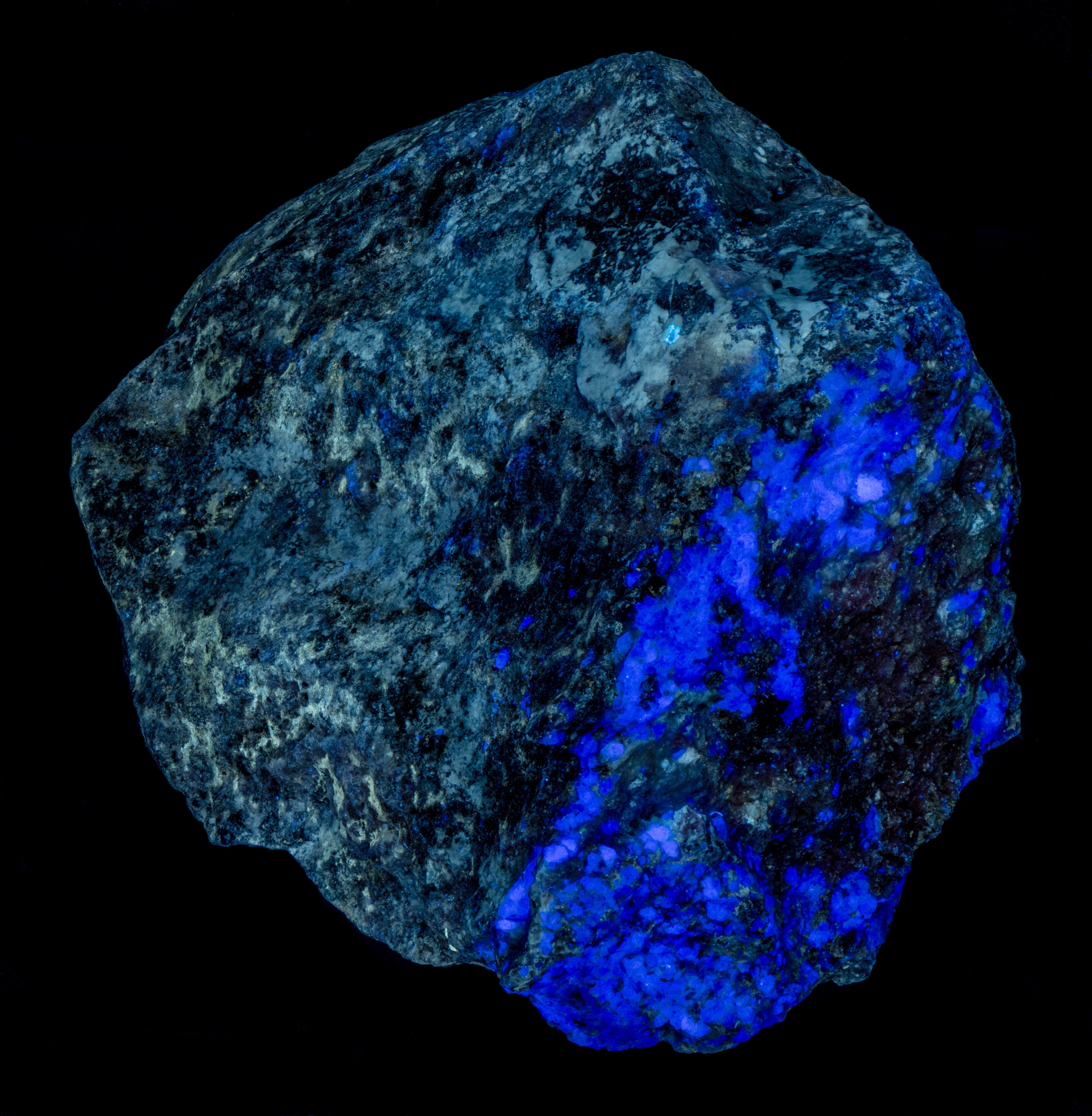
The fluorite in the specimen fluoresces the typical blue color under longwave and midwave UV light. Its longwave emission spectrum is a sharp peak with a maximum at 421 nm. Fluorite fluorescence is activated by europium replacing calcium.
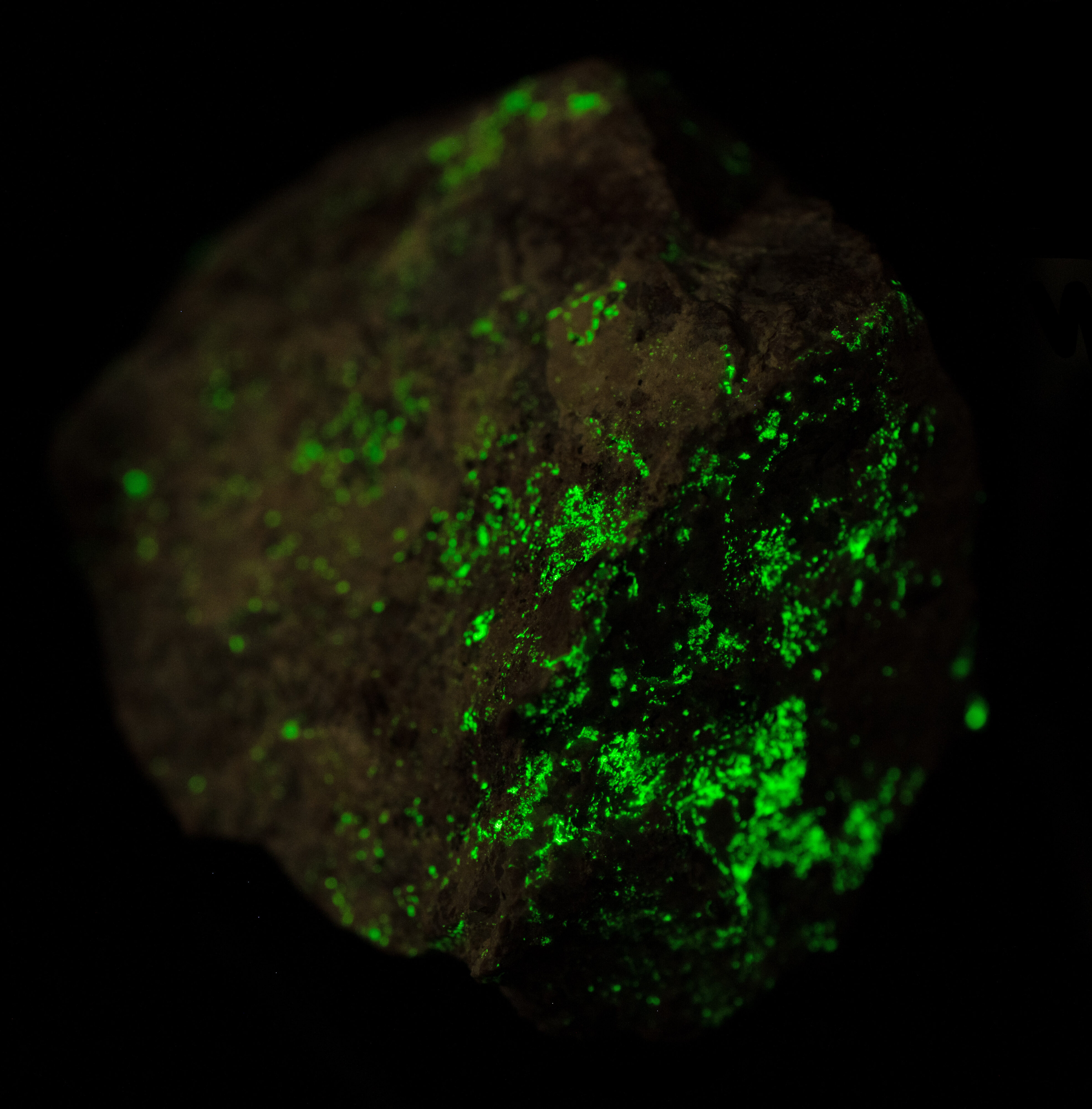
The willemite only fluoresces under shortwave UV light. It’s fluorescence has a pale green color. The shortwave emission spectrum of willemite is composed of two peaks in the visible. It has a broad peak that extends from 400 nm to 560 nm with a maximum around 470 nm. The second peak is much narrower and brighter than the broad peak. Its maximum is at 517 nm and is the green hue of the shortwave fluorescence. The peak is like the spectrum of Franklin, New Jersey willemite, but Franklin willemite typically has a maximum between 519 nm and 525 nm. This sharp peak is activated by manganese and the cause of the broad peak is currently unknown.
Summary of luminescence responses:
Fluorite (Mindat) (RRUFF)
- Fluorescence under Longwave (365nm LED) UV light: Blue
- Fluorescence under Midwave (305nm LED) UV light: Blue
- Fluorescence under Midwave (305nm LED) UV light: Red
- Fluorescence under Shortwave (255nm LED) UV light: Red
- Fluorescence under Shortwave (255nm LED) UV light: Green