
Carpathite from the Picacho Mine, California
Contributed by: Michael Crawford
Date: Sep 28th, 2025
Locality: Picacho Mine (Ramirez Consolidated Mine; Picachos Mine; Los Picachos Mine; Picahotes Mine; Benta Mine; Hernandez Mine; Ramirez Mine; Bonanza Mine), Picacho Peak, San Benito County, California, USA (See on Mindat)
Size: 8 x 9 cm
Description:
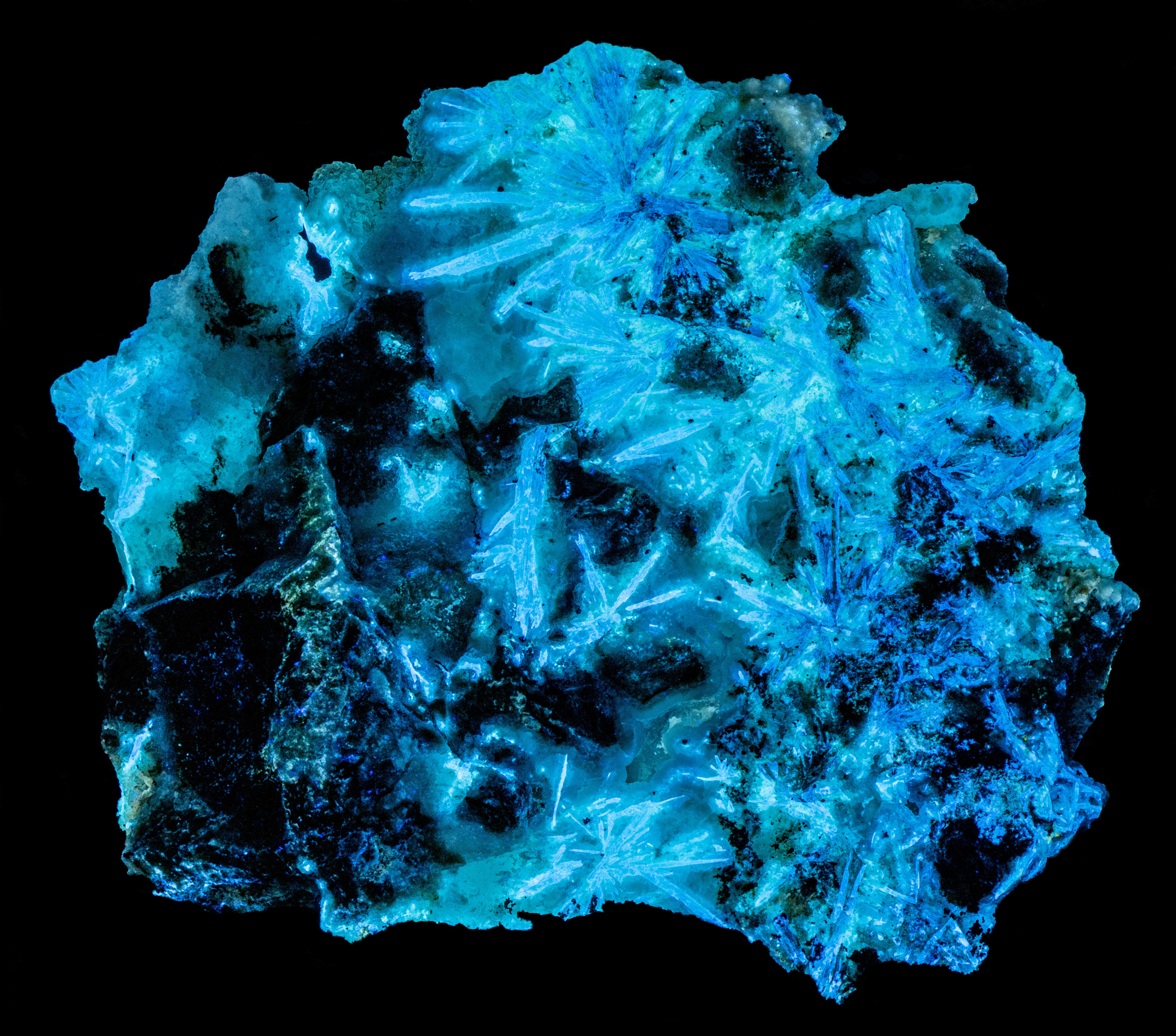
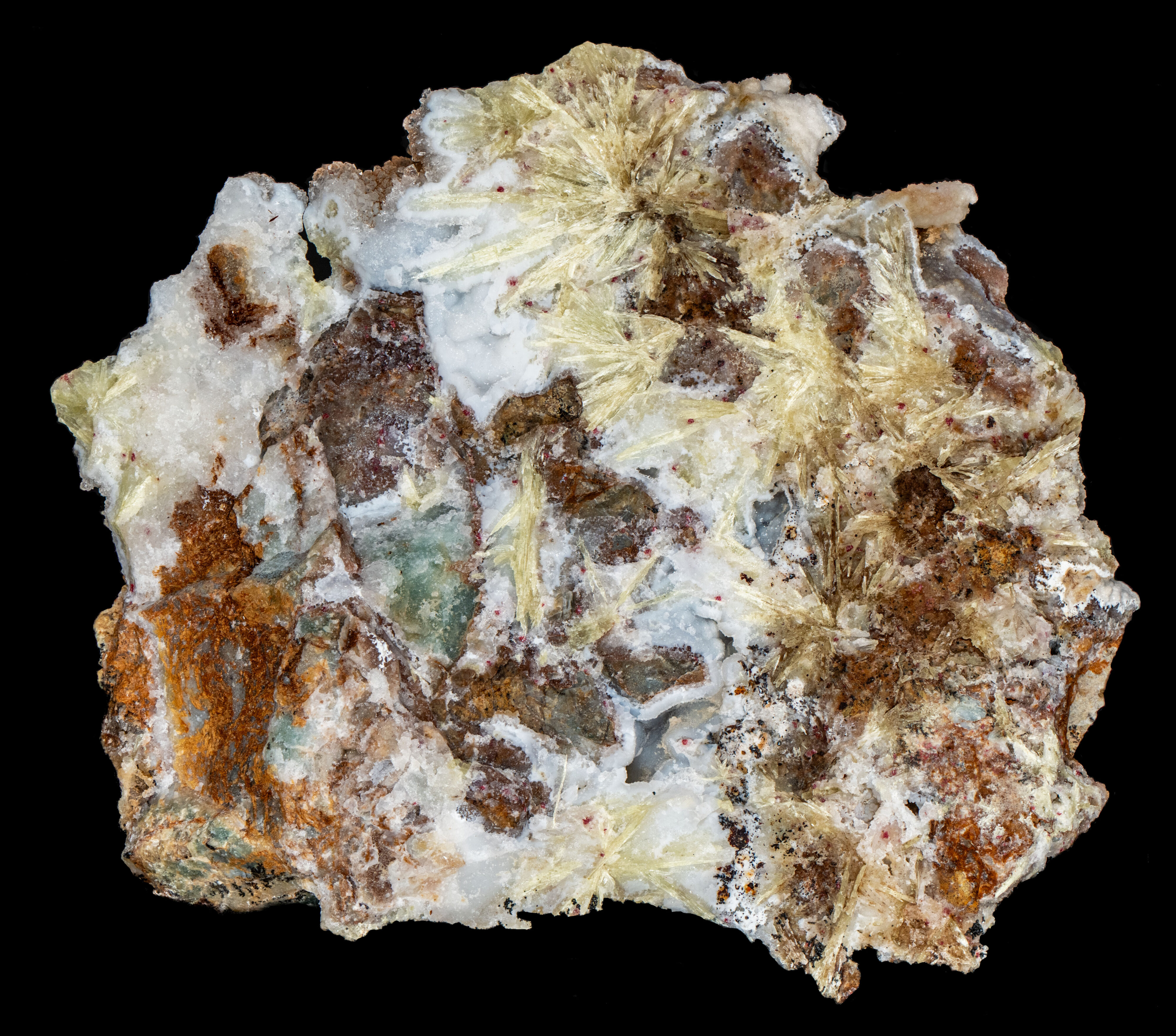
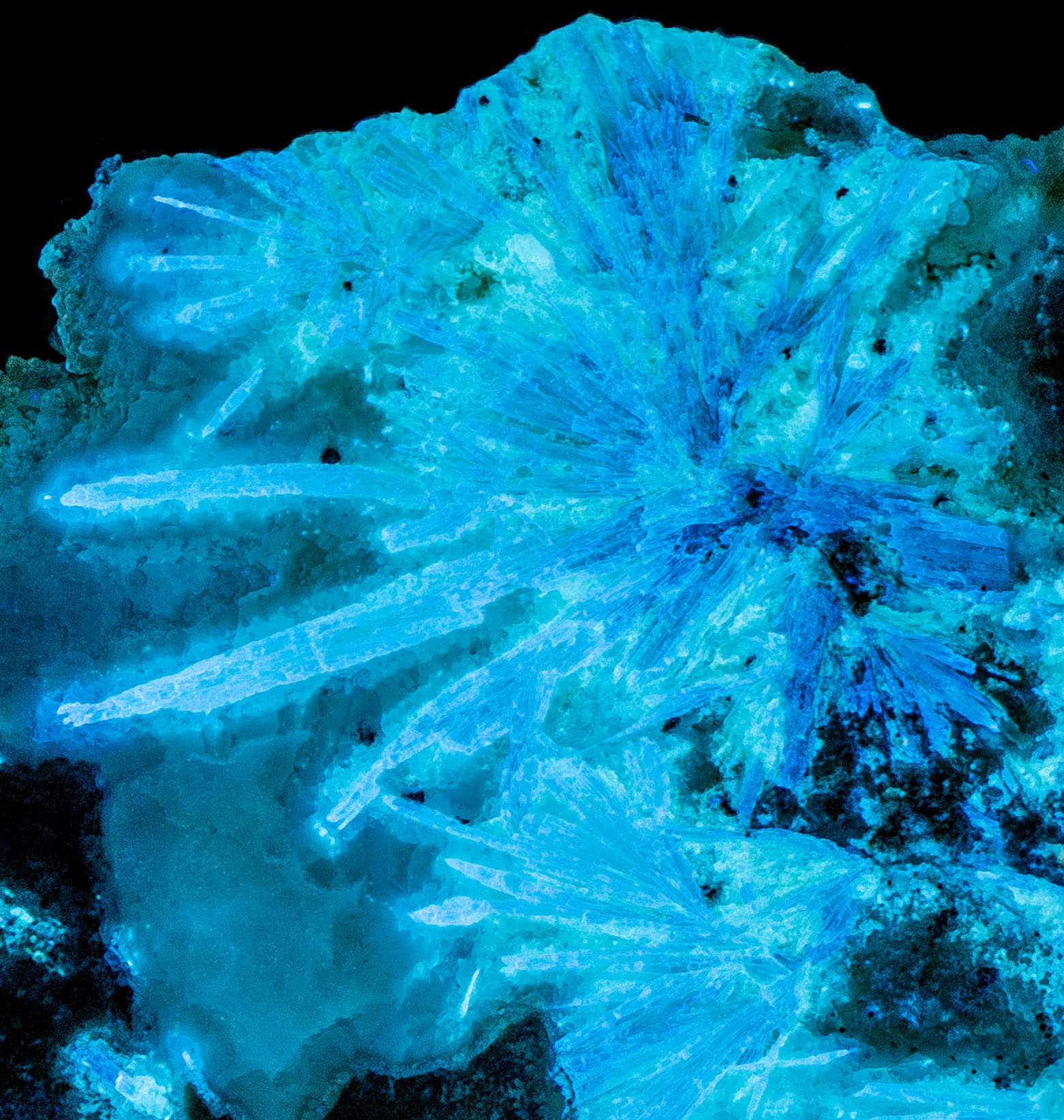
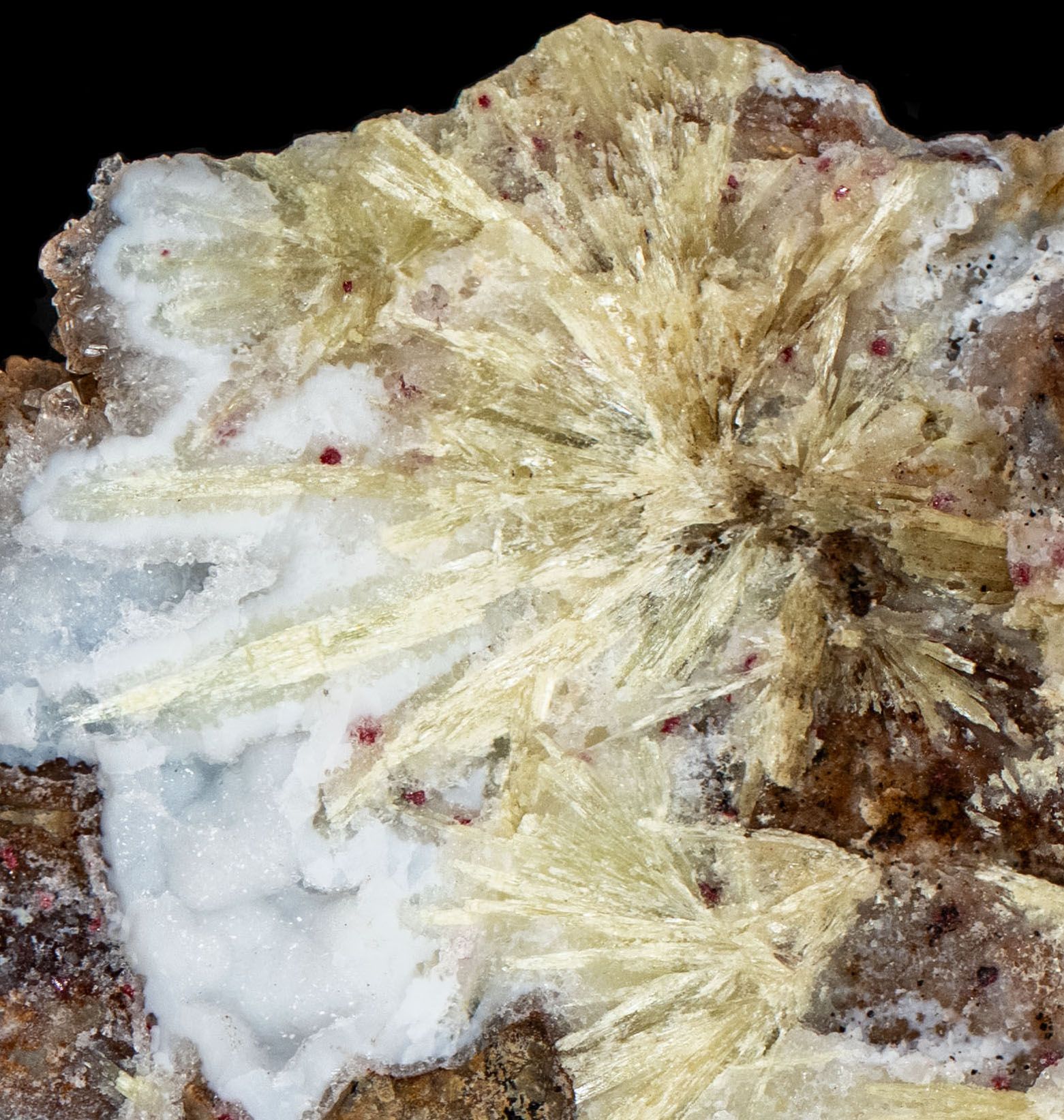
A specimen of the organic mineral, carpathite (C24H12), from the Picacho Mine, Picacho Peak, San Benito County, California. The yellow carpathite crystals form radiating clusters on a fracture surface with small vugs of drusy quartz, and scattered grains of red cinnabar (HgS). The closeup images show the carpathite is surrounded by two layers of quartz.
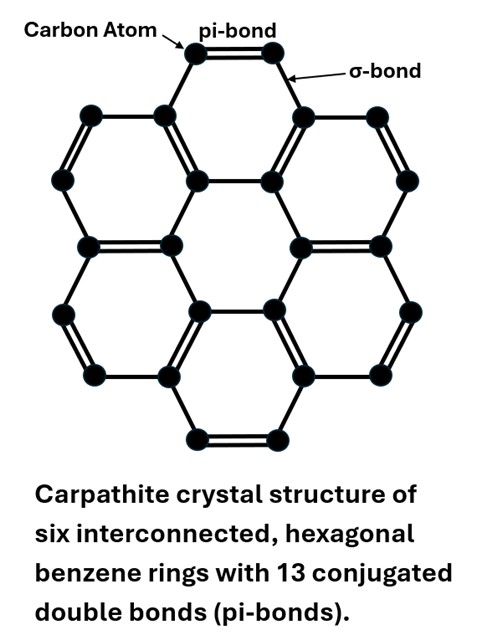
Carpathite is composed of six interconnected, hexagonal benzene rings. It has the same chemistry as coronene, a polycyclic aromatic hydrocarbon (PAH). Carpathite/coronene is toxic and it should be handled carefully. Each benzene ring has alternating single (?) bonds and double (pi) bonds. The conjugated double bonds allow electrons to be easily excited to higher energy states, and when the electrons return to their ground state, photons are emitted causing the fluorescence.
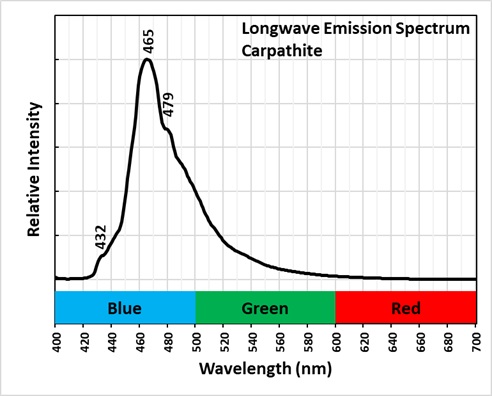
This carpathite specimen fluoresces bright, bluish white under all wavelengths of UV illumination. It has no afterglow. The longwave emission spectrum has a peak at 465 nm with two very small peaks at 432 nm and 479 nm.
Summary of luminescence responses:
Carpathite (Mindat) (RRUFF)
- Fluorescence under Longwave (365nm LED) UV light: Blue
- Fluorescence under Midwave (305nm LED) UV light: Blue
- Fluorescence under Shortwave (255nm LED) UV light: Blue