
Phosgenite from the Monteponi Mine, Sardinia, Italy
Contributed by: Michael Crawford
Date: Sep 13th, 2025
Locality: Monteponi Mine, Iglesias, South Sardinia Province, Sardinia, Italy (See on Mindat)
Size: 6.5 x 11
Description:
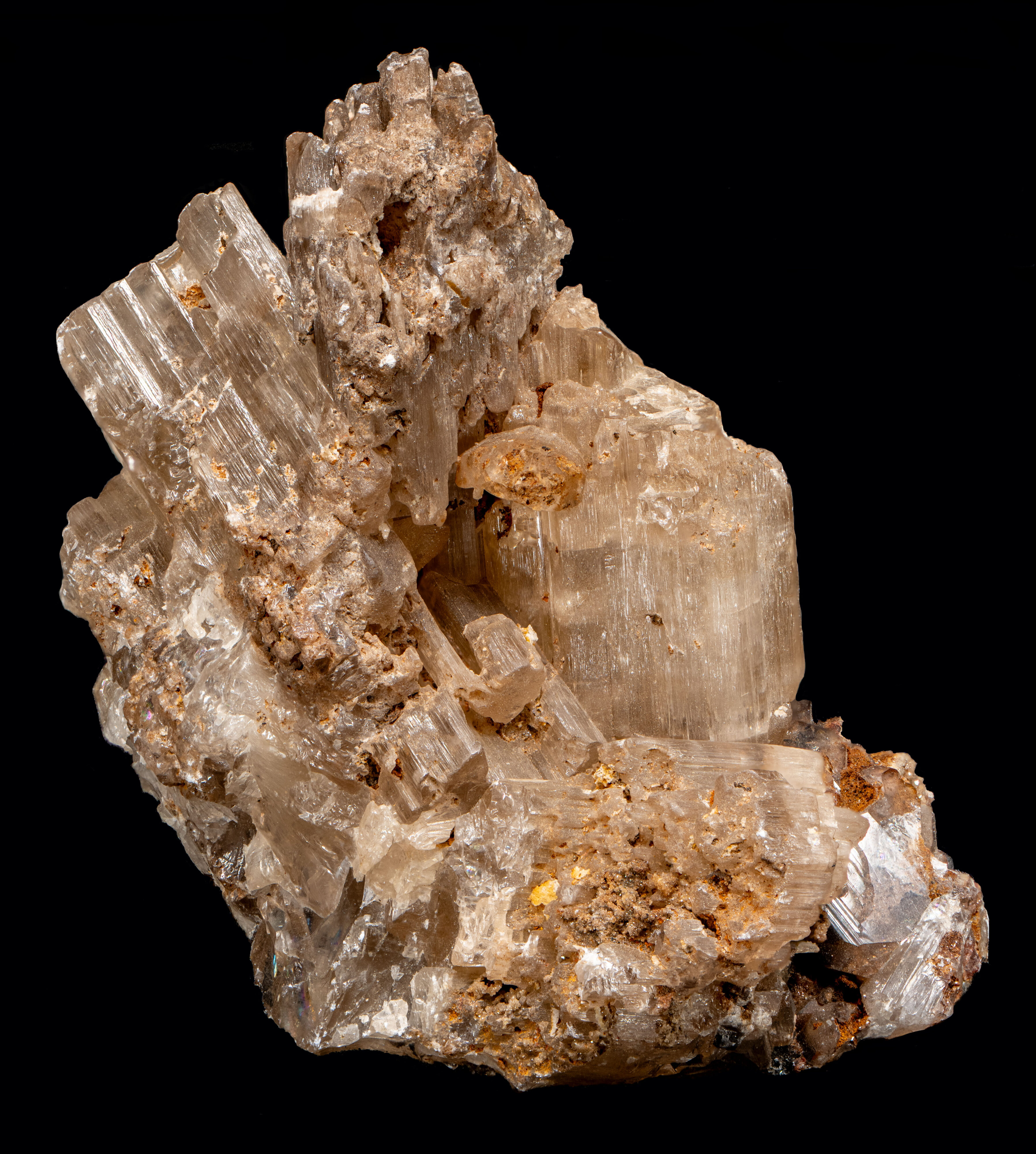
Phosgenite crystals (Pb2CO3Cl2) from the Monteponi Mine, Iglesias, South Sardinia Province, Sardinia, Italy. Phosgenite typically forms from the alteration of galena (PbS) in the oxidation zone of lead ore deposits where there is a source of chlorine. Seawater is a likely source of chlorine.
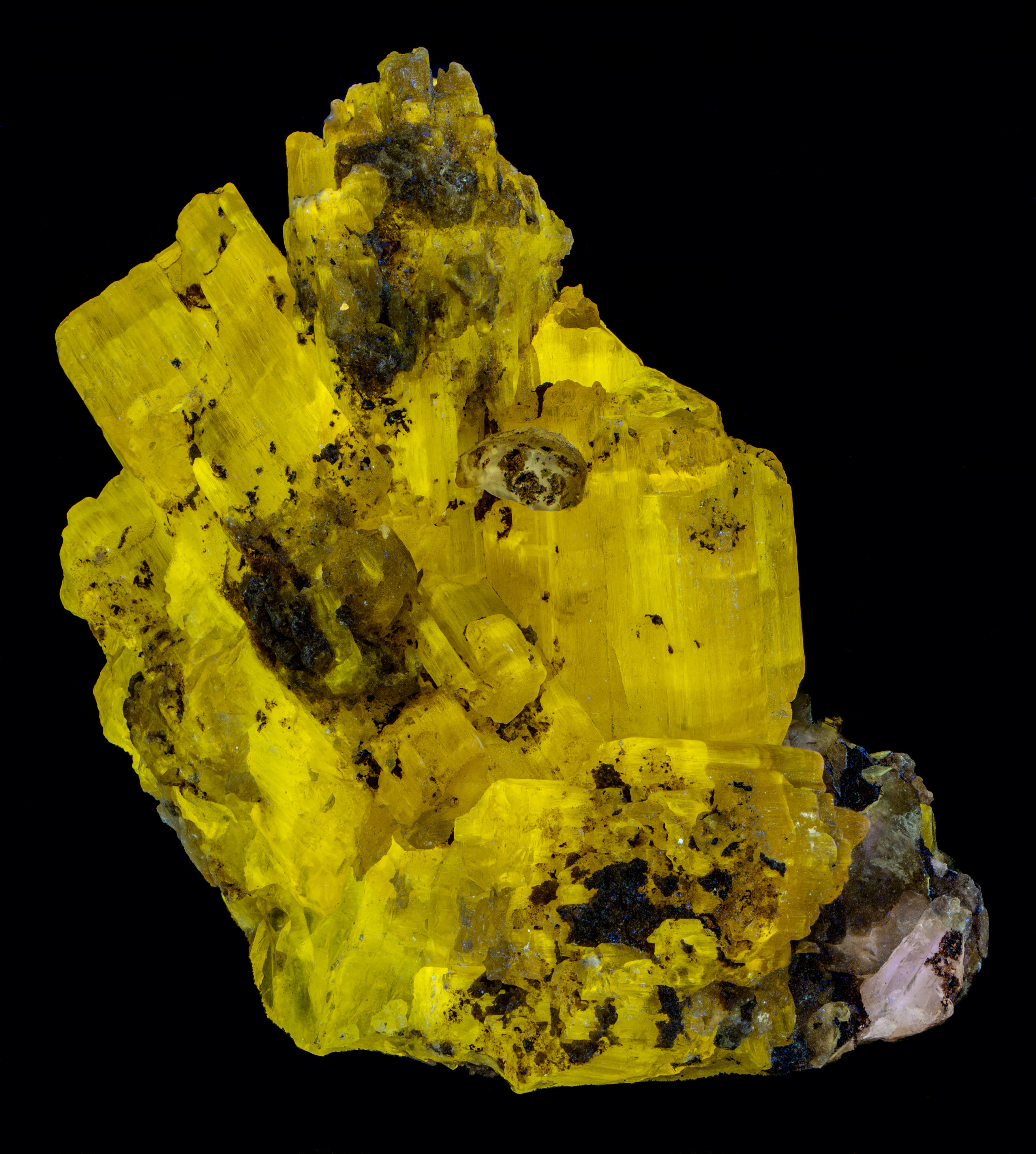
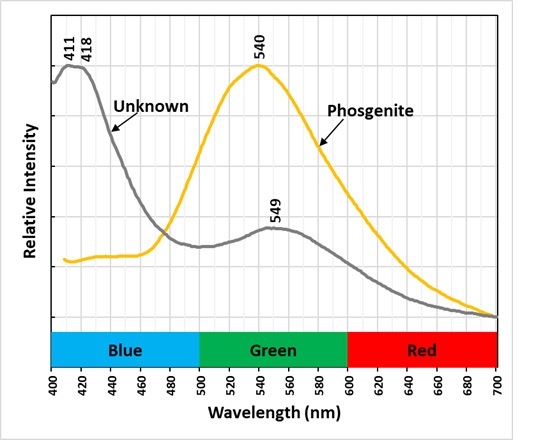
This phosgenite specimen fluoresces bright yellow under longwave UV illumination. The yellow fluorescence is dimmer under midwave light, and it is non-fluorescent under shortwave light. The longwave emission spectrum is a broad peak with a maximum at 540 nm. Phosgenite fluorescence is intrinsic, it is activated by atoms of lead in its crystal lattice. It is not caused by an impurity activator.
In the lower right corner of the specimen is a white, fluorescent mineral under longwave light. The white fluorescence is dimmer under midwave and shortwave light. The longwave emission spectrum of this unknown mineral has two close peaks at 411 nm and 418 nm and a broader peak with a maximum at 549 nm. Possible mineral ID’s for this white fluorescent are cerussite (PbCO3) or anglesite (PbSO4) which also form in the oxidized zone of lead ore deposits from the alteration of galena.
Former Rock Currier specimen #661
Summary of luminescence responses:
Phosgenite (Mindat) (RRUFF)
- Fluorescence under Longwave (365nm LED) UV light: Yellow