
Chiastolite from the Keivy Mountains, Murmansk Oblast, Russia
Contributed by: Michael Crawford
Date: Aug 24th, 2025
Locality: Keivy Mountains, Lovozersky District, Murmansk Oblast, Russia (See on Mindat)
Size: 4.5 x 5 cm
Description:
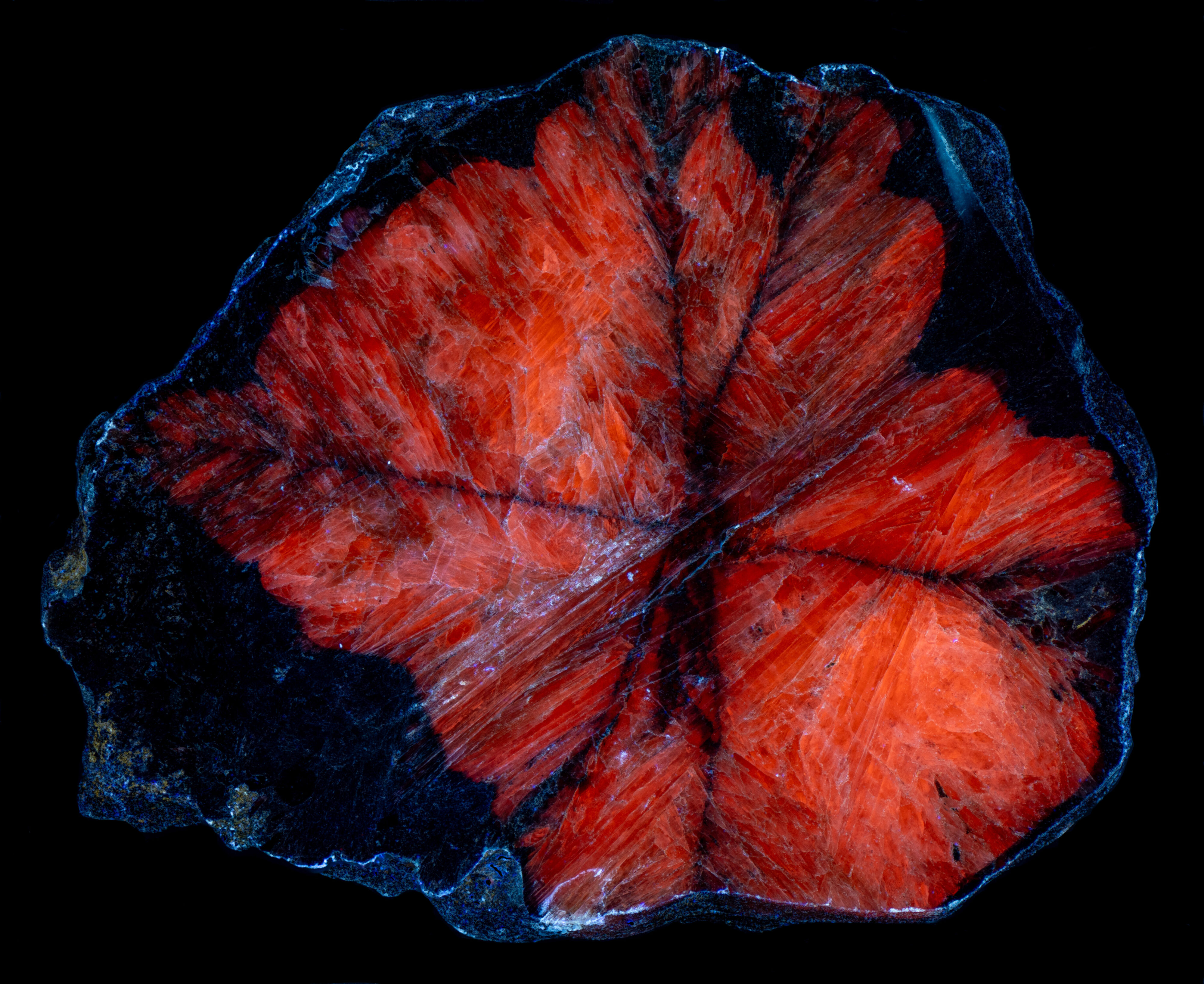
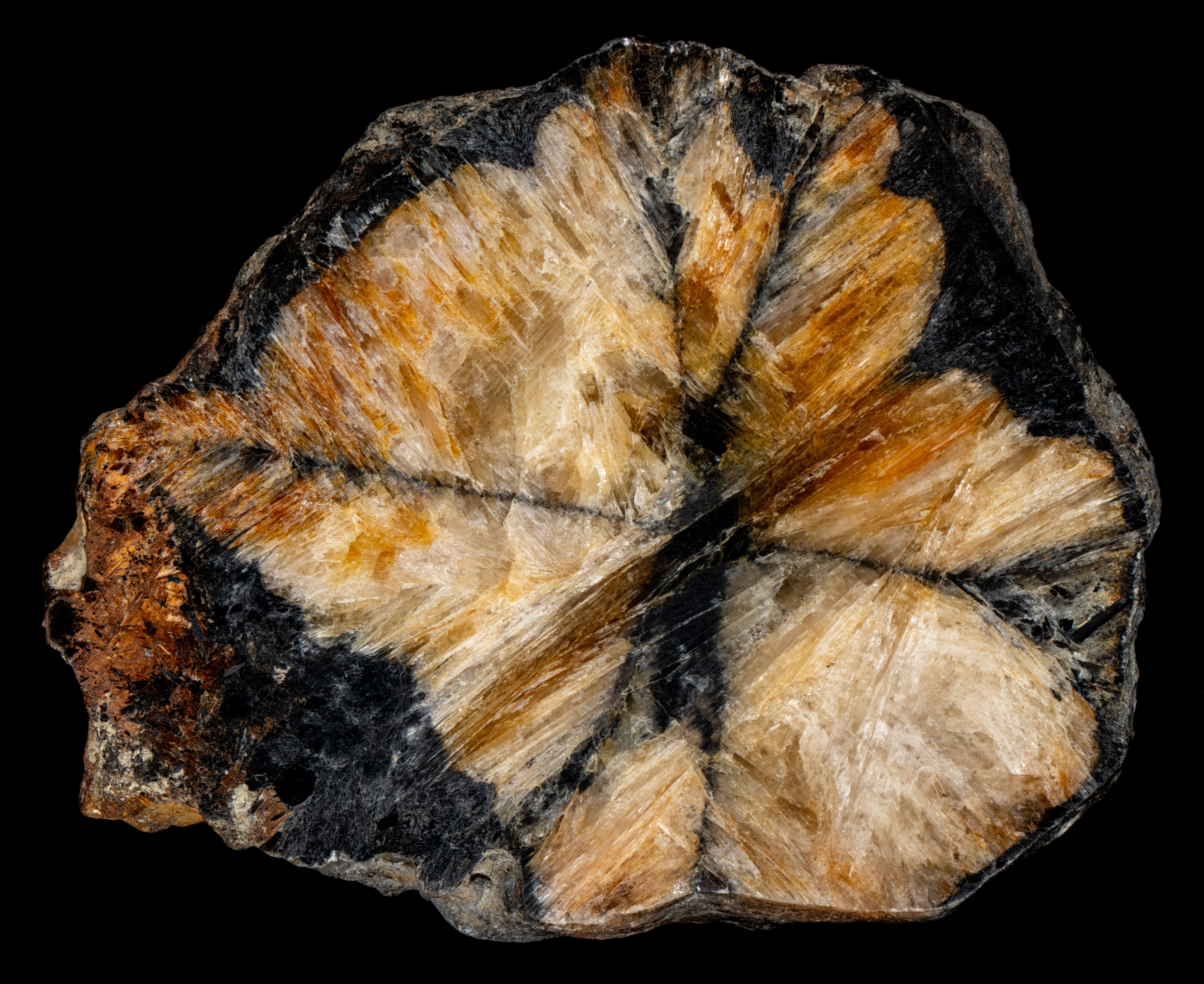
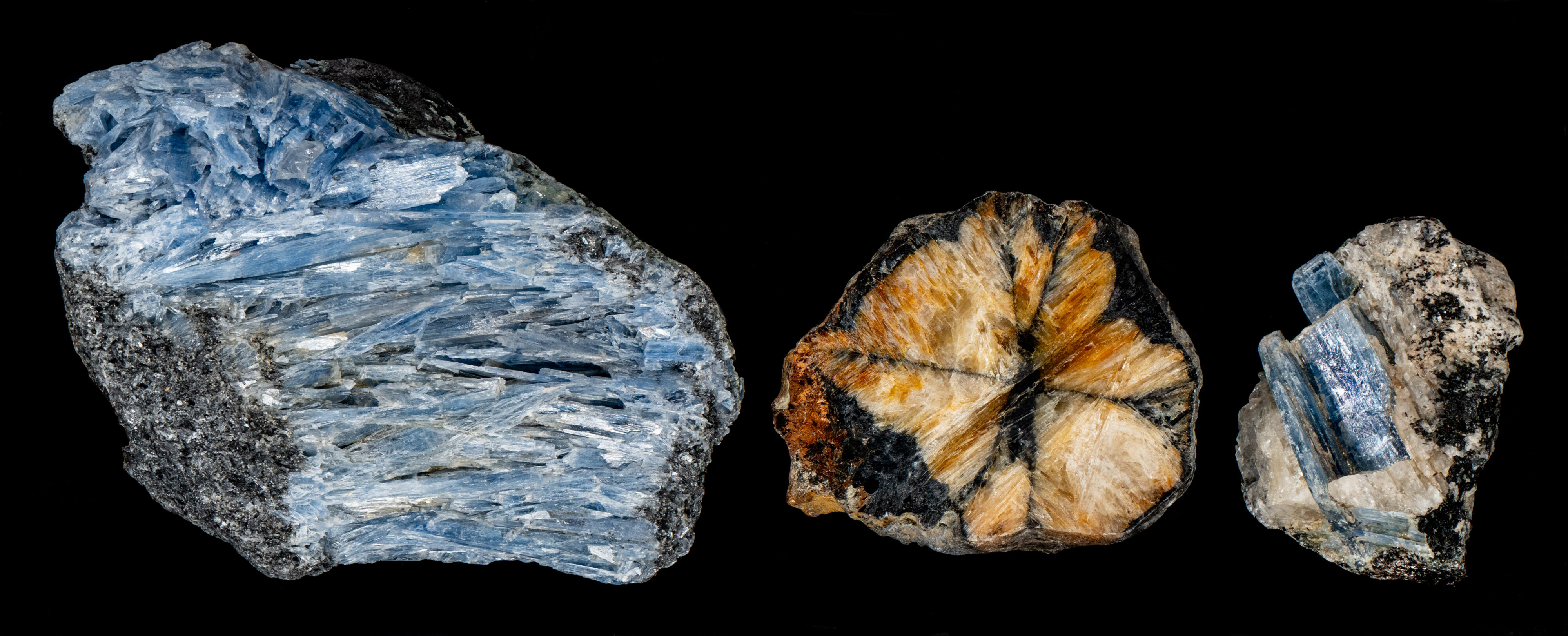
Chiastolite is the name for a variety of andalusite (Al2(SiO4)O) that contains cross-shaped inclusions of carbon. This polished slice of chiastolite comes from the Keivy Mountains, Lovozersky District, Murmansk Oblast, Russia. Recent analytical work has found that the mineral is actually a kyanite pseudomorph from andalusite. Andalusite, kyanite, and sillimanite are polymorphs. They all have the same chemical formula, (Al2(SiO4)O), but they have different crystal structures and physical properties. They form from the metamorphism of alumina-rich sediments.
Kyanite is triclinic and forms at high pressures and low to high temperatures. It crystalizes as thin-bladed crystals.
Andalusite is orthorhombic and forms at low pressures and moderate temperatures. It usually has a prismatic crystal habit. Andalusite transforms to kyanite under higher pressure conditions.
Sillimanite is also orthorhombic, but it belongs to space group Pnnm, whereas andalusite is space group Pbnm. The aluminum atoms that link the chains of Al-O octahedra have tetrahedral coordination in sillimanite, 5-fold coordination in andalusite, and octahedral coordination in kyanite. Sillimanite forms at high temperatures and low pressures. It forms slender, needle-like crystals.
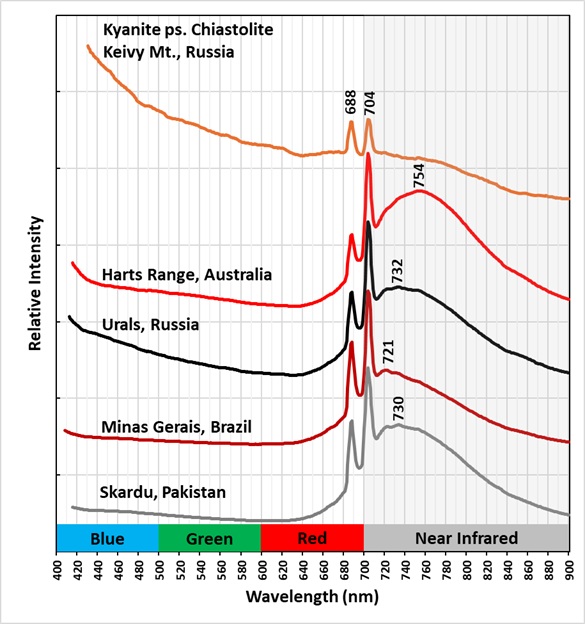
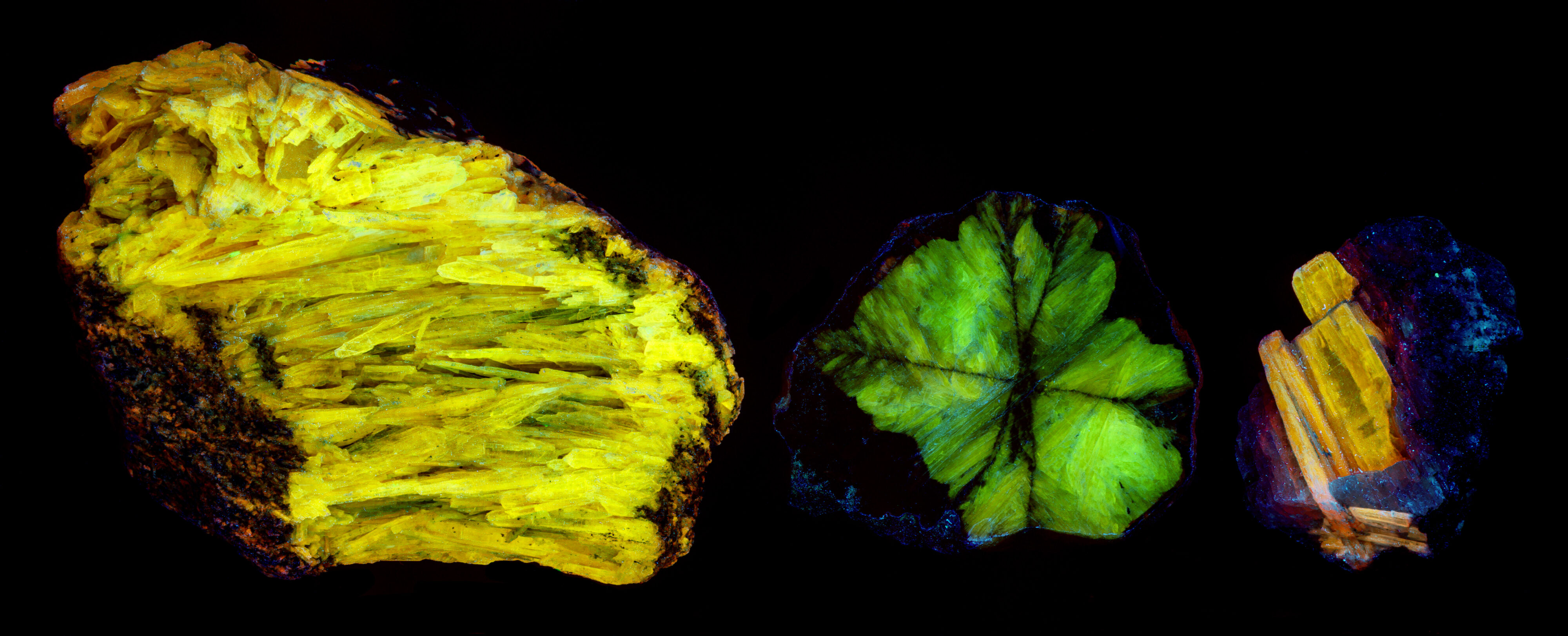
The longwave emission spectrum of this chiastolite has two sharp peaks at 688 nm and 704 nm. These peaks match the sharp peaks in the kyanite emission spectra from four locations. These peaks are activated by chromium (Cr3+) replacing aluminum. The chiastolite spectrum does not have a broad peak with a maximum in the near infrared like the other kyanite spectra. The broad infrared peaks have maximums that range from 721 nm to 754 nm. According to fluomin.org, there are three different aluminum sites in kyanite where chromium can substitute that are responsible for both the sharp and broad peaks in the kyanite emission spectra. Apparently, whatever activates the broad infrared emission is not present in chiastolite to create infrared fluorescence.
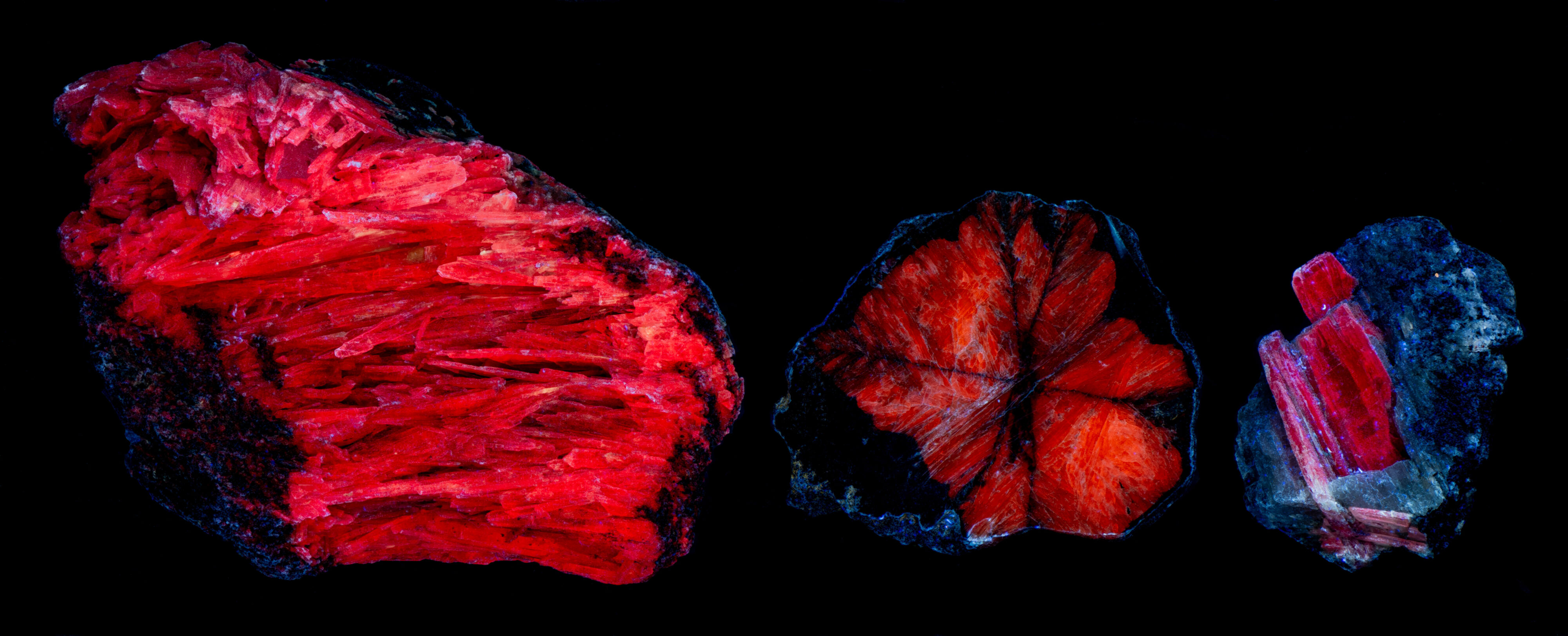
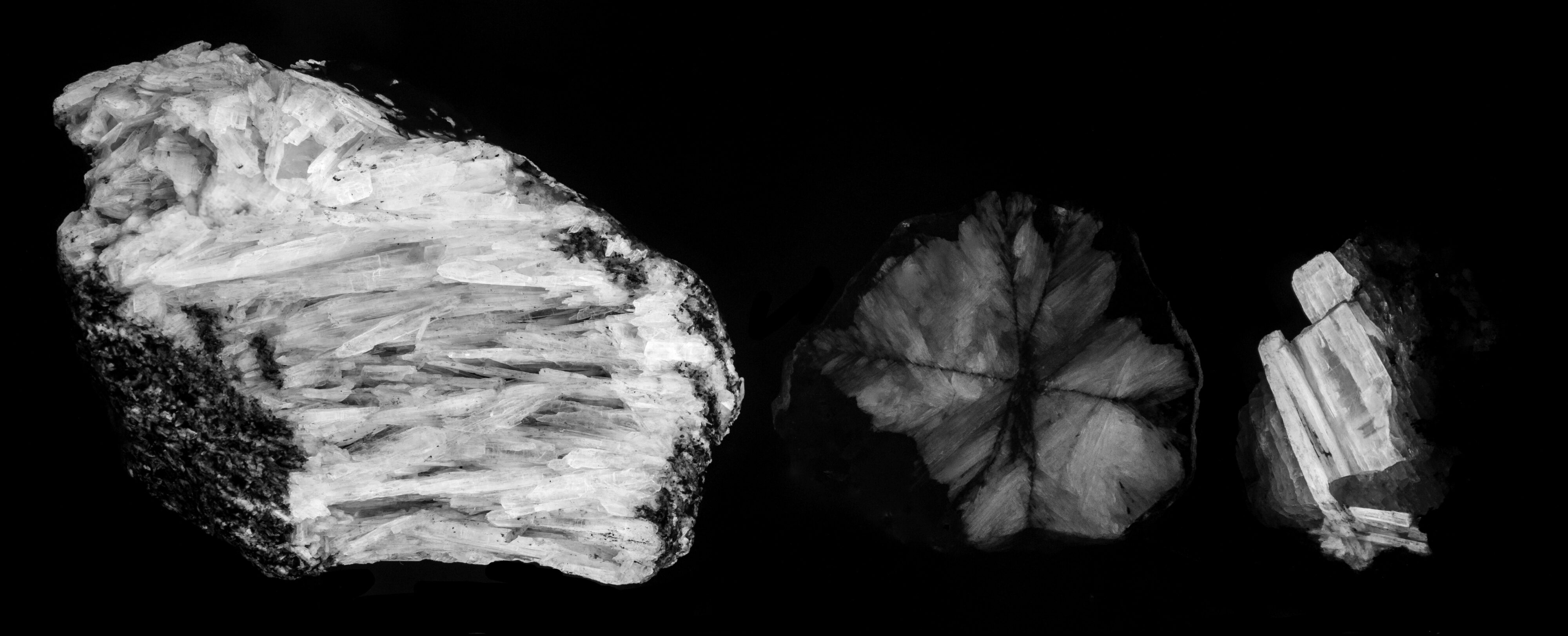
The second set of images compares kyanite specimens from Brazil (on the left) and from Pakistan (on the right) with the chiastolite specimen. The lack of chiastolite infrared fluorescence is also shown in the near infrared image of chiastolite and kyanite specimens from Brazil and Pakistan. This image was taken with a 730 nm bandpass filter. The two kyanite specimens are much brighter than the chiastolite confirming the emission spectra difference.
Summary of luminescence responses:
Chiastolite (Mindat) (RRUFF)
- Fluorescence under Longwave (365nm LED) UV light: Red
- Fluorescence under Longwave (365nm LED) UV light: Red