
Scheelite Spud from Atolia, San Bernardino County, California
Contributed by: Michael Crawford
Date: Aug 16th, 2025
Locality: Spud Patch Mine, Atolia, Atolia Mining District, San Bernardino County, California, USA (See on Mindat)
Size: 8 x 8.5
Description:
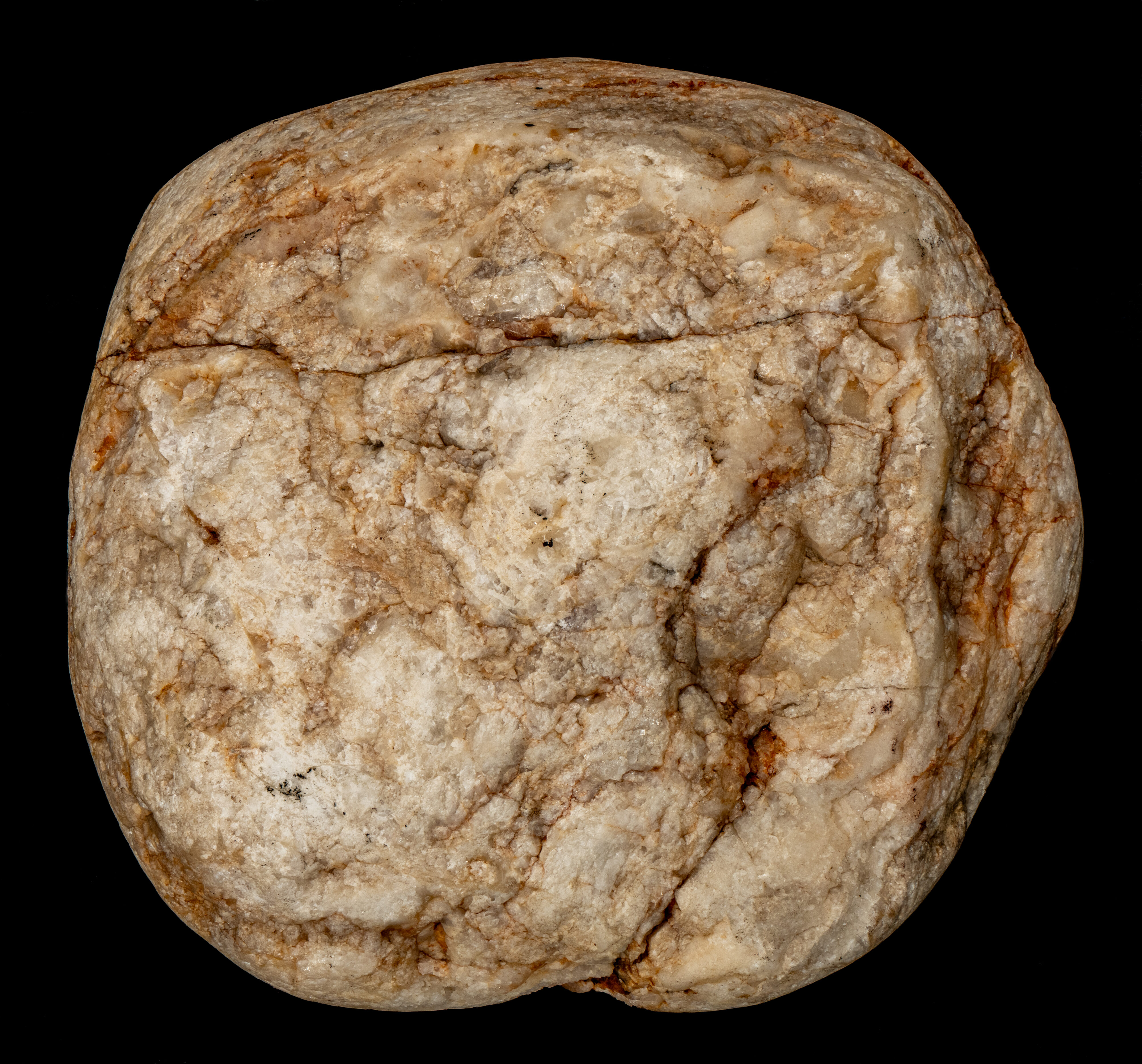
A scheelite “spud,” originating from the Spud Patch within the Atolia Mining District, San Bernardino County, California. The Atolia Mining District holds considerable historical significance, having been the world\'s leading source of tungsten both before and during World War I. Prior to the United States entry into the conflict, most tungsten produced at Atolia was exported to Germany for use in manufacturing hardened steel alloys. Tungsten shipments continued until the United States joined the war. One shipment to Germany was sent by rail from Atolia to Baltimore and then loaded onto a cargo submarine, the U-boat named Deutschland. The U-boat was used circumvent English blockades. It is likely that German war materials produced from the hardened steel were used against the allies.
The Spud Patch, located downslope from the main mines, consists of alluvial material derived from eroded gold and scheelite-bearing vein deposits along with their host rock. Scheelite is resistant to weathering, similar to quartz, and the alluvium contains white cobbles composed both of pure scheelite (such as the specimen described) and quartz. The Spud Patch derives its name from the potato-like appearance of these scheelite cobbles.
Initially, the Spud Patch was mined as a placer deposit for gold. However, miners often encountered an undesirable white mineral referred to as \"heavy spar\" that accumulated in their sluices. In 1904, this mineral was identified as scheelite, and systematic extraction of scheelite began in 1906, rapidly expanding thereafter. By 1916, the price of tungsten ore surged from six dollars per 30 pounds to over a dollar per pound, considerably increasing the value of scheelite. This prompted individuals from surrounding communities to search for ore that littered the ground. Without ultraviolet lamps, prospectors distinguished scheelite from visually similar quartz by its heft. Scheelite’s density is 6.01 g/cm³ compared to the density of quartz (2.65 g/cm³). A scheelite spud is approximately 2.3 times heavier than a quartz spud of similar size.
Scheelite spuds and ore became a recognized medium of exchange in local bars, stores, and gambling establishments; for instance, a walnut-sized spud could purchase a meal, and the specimen described here would have sufficed for a dinner for two with dessert. An article in the Los Angeles Herald newspaper from 1916 described a raid by an armed posse of sheriffs on a gambling establishment in Atolia that found 100 pounds of scheelite bets on the poker table.
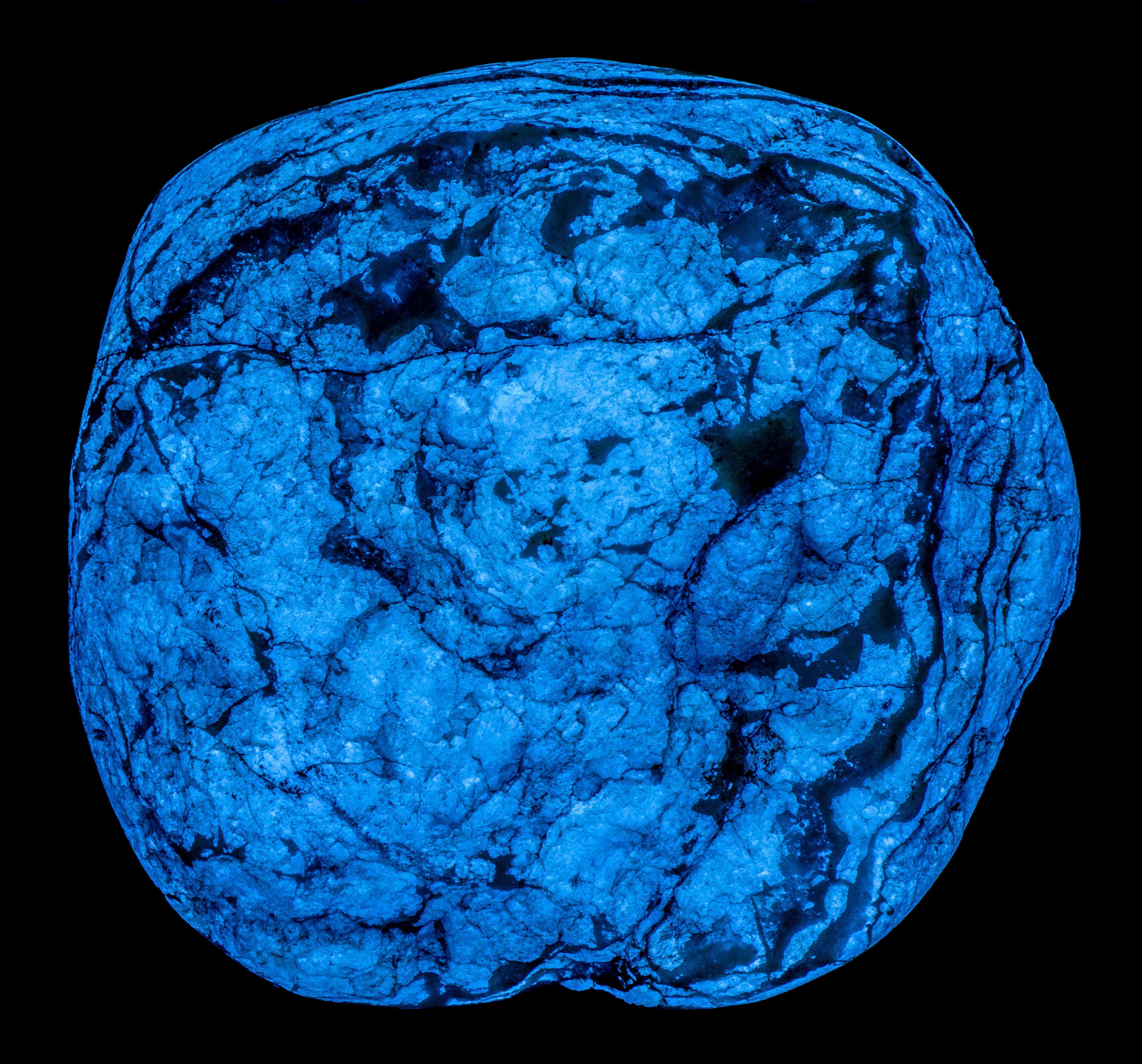
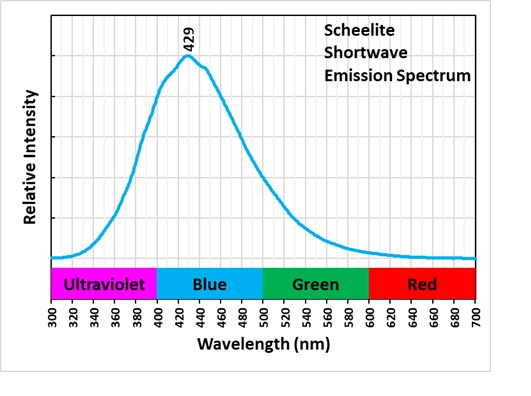
Under shortwave ultraviolet illumination, scheelite exhibits a distinctive light blue fluorescence, with no response under longwave or midwave UV. Its shortwave emission spectrum peaks at 429 nm, with a broad response extending into the ultraviolet range. The fluorescence results from the tungstate ion ((WO?)²?) incorporated within the scheelite crystal lattice, making the fluorescence intrinsic. All scheelite specimens are fluorescent; however, the fluorescence may shift to pale yellow if the molybdenum content exceeds 0.35%. The pronounced light blue fluorescence of this particular specimen indicates a high degree of purity.
Summary of luminescence responses:
Scheelite (Mindat) (RRUFF)
- Fluorescence under Shortwave (255nm LED) UV light: Blue