
Youngite from Wyoming
Contributed by: Michael Crawford
Date: Aug 16th, 2025
Locality: Guernsey, Platte County, Wyoming, USA (See on Mindat)
Size: 13 x 17
Description:
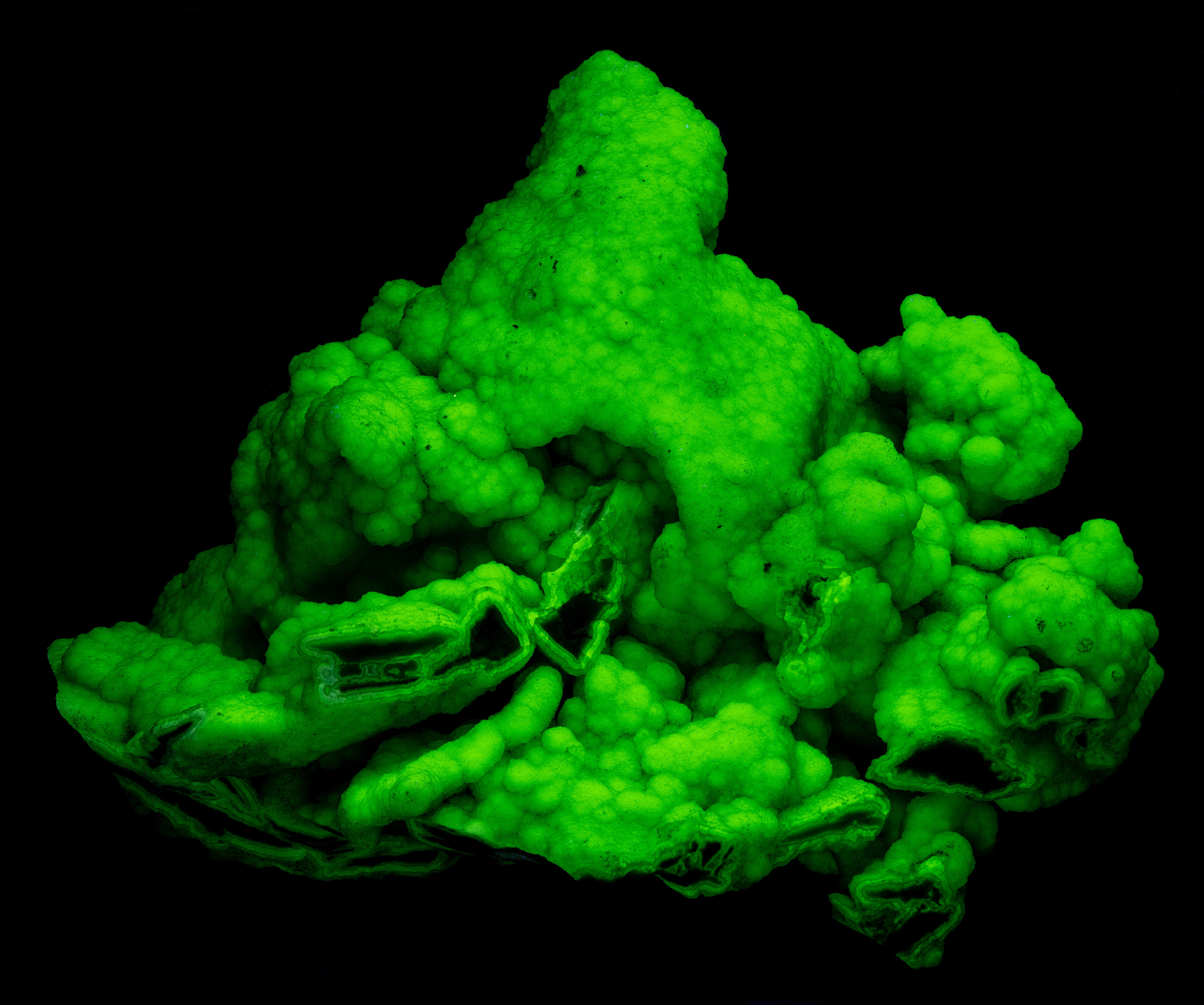
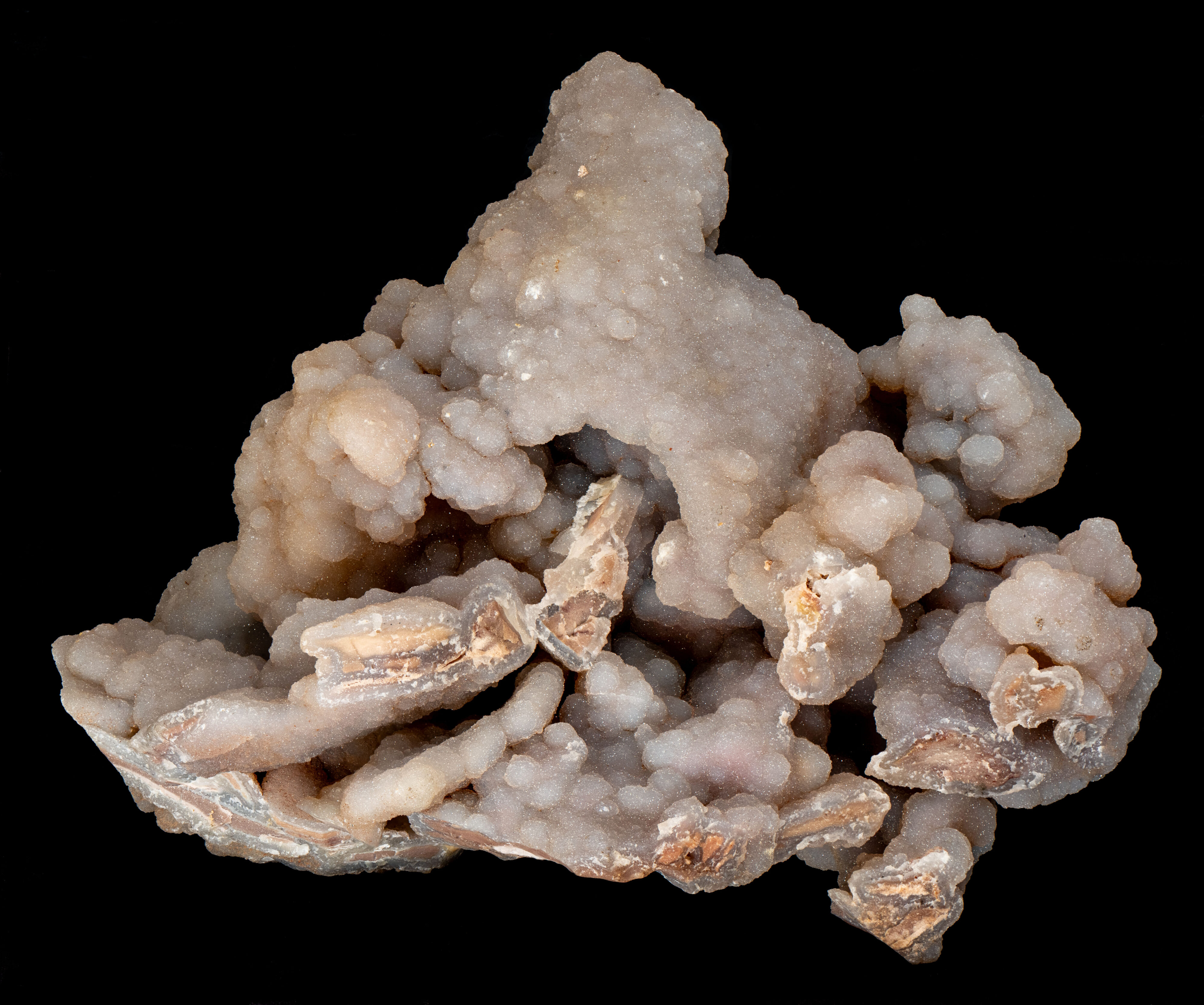
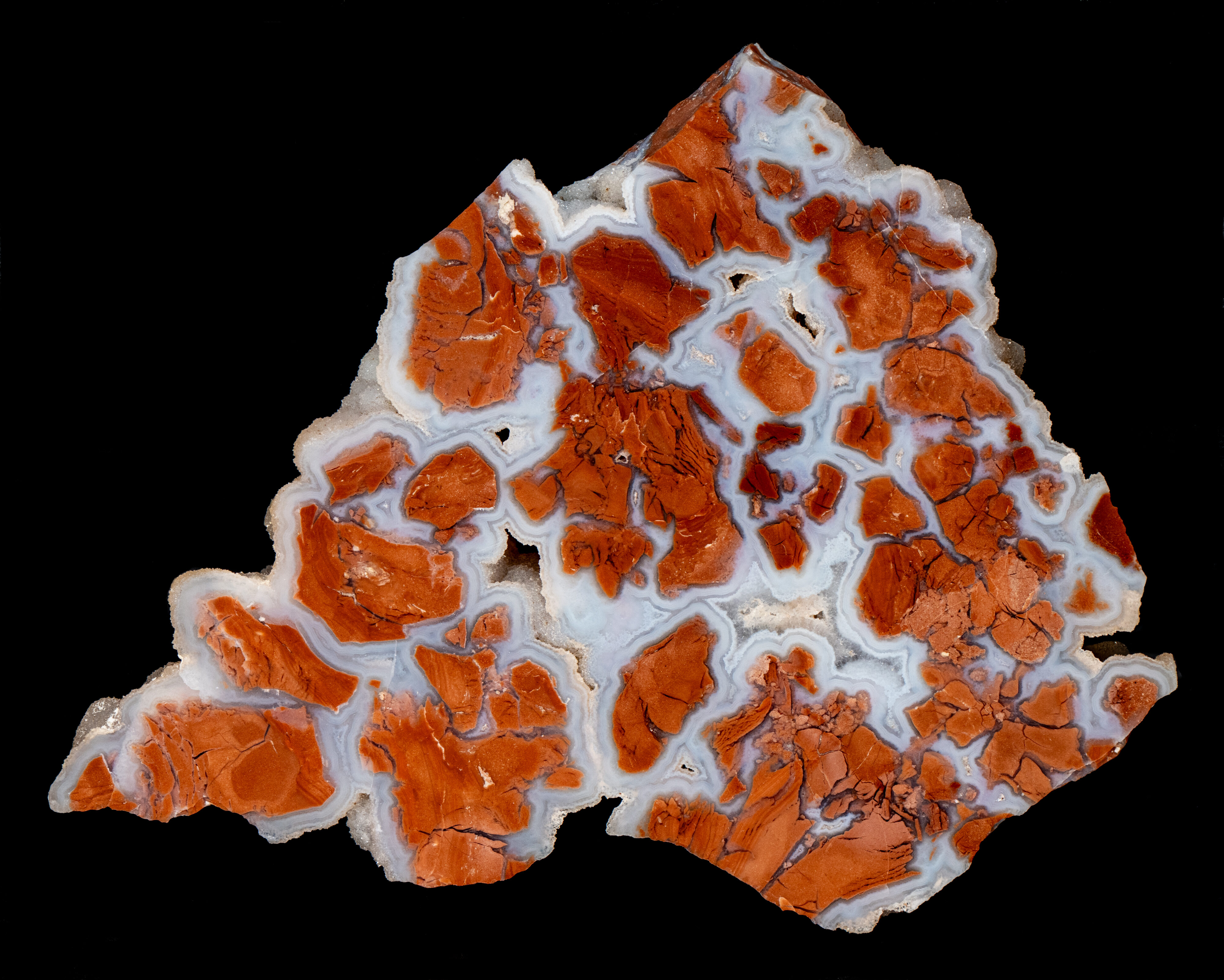
Youngite is local name given to a type of agate/chalcedony that cements fragments of red jasper breccia and has an outer coating of drusy quartz. It is only found in the youngite caves near Guernsey, Platte County, Wyoming, but it is famous worldwide as a unique form of agate, its bright green fluorescence and botryoidal habit. This specimen exhibits the botryoidal habit with an outer coating of drusy quartz that fluoresces bright green.
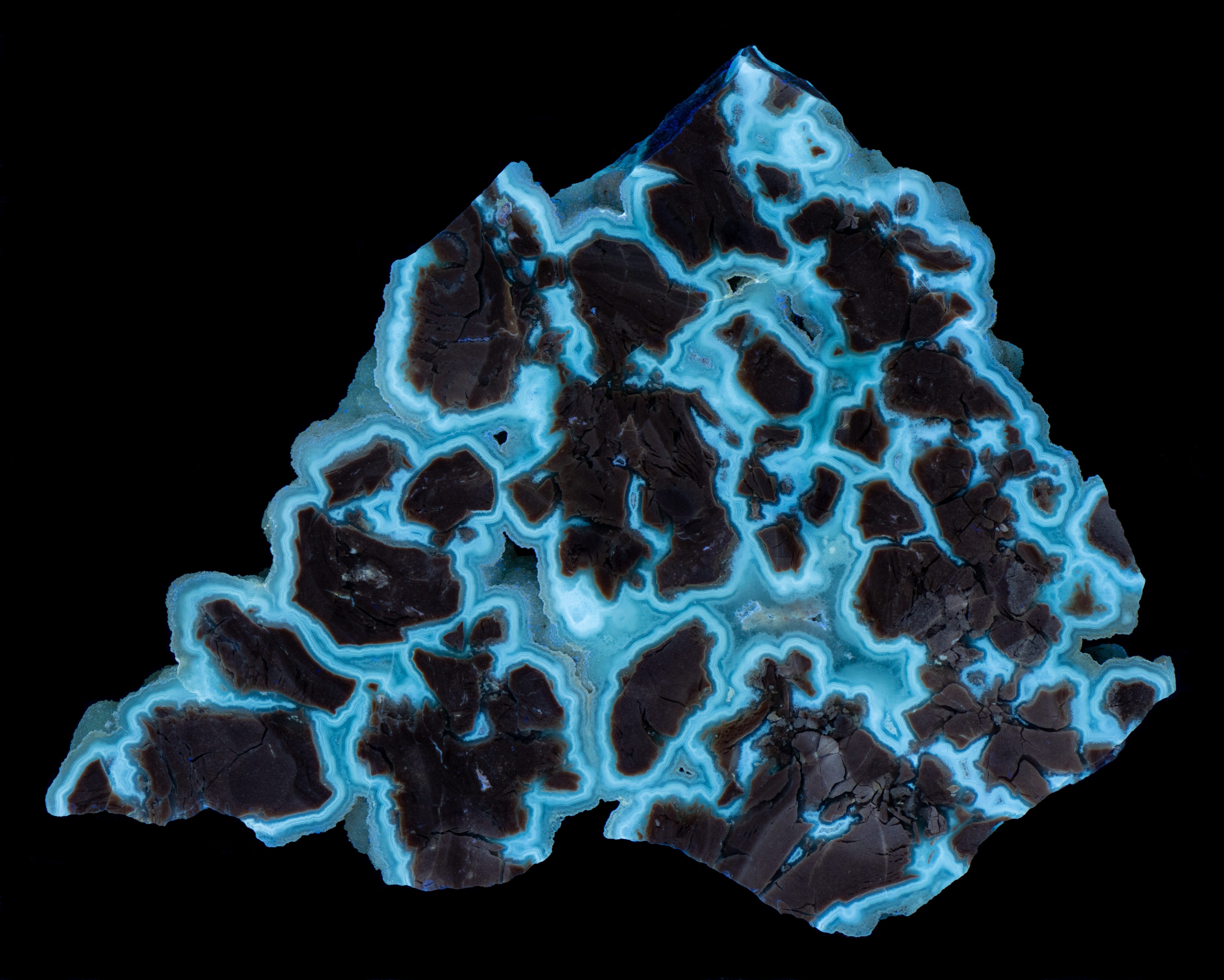
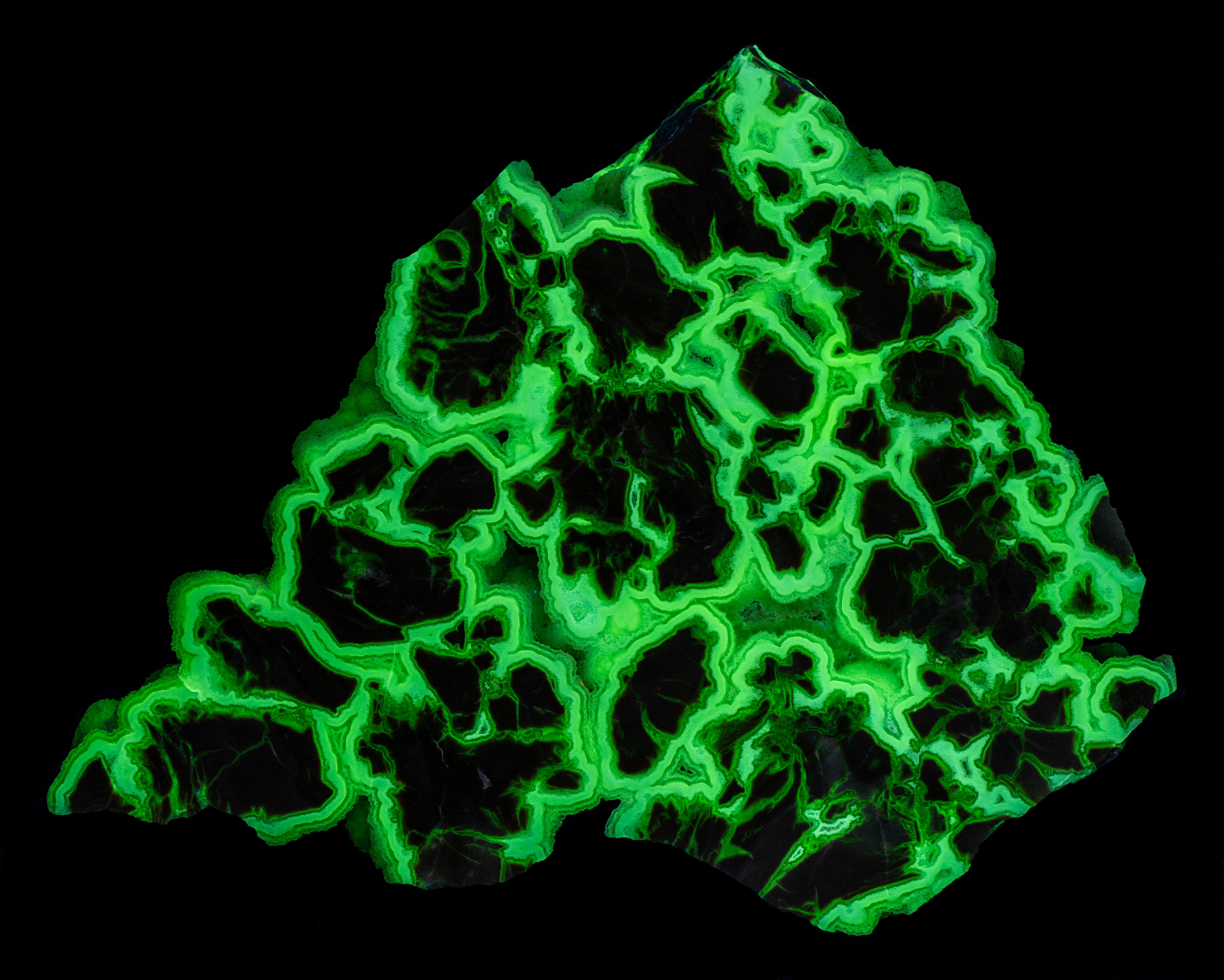
A second set of images shows a cut slab of youngite. Youngite is frequently slabbed and polished for display specimens showing intricate patterns of red jasper fragments and gray to white agate cement. A bonus is the bright green fluorescence of the agate under shortwave UV light and blue-gray fluorescence under longwave UV light.
Youngite formed in Mississipian age limestones where groundwater dissolved the limestone and left behind insoluble red jasper that became brecciated in resulting caves. There is evidence for two periods of cave formation. One occurred shortly after the limestone was deposited. The jasper breccia likely developed during this first cave forming event. The second period of cave formation happened in the Holocene. It was during this second period for cave formation that circulating silica-rich groundwaters deposited chalcedony that cemented the red jasper fragments together. The groundwaters also contained dissolved uranyl ions that were deposited along with the chalcedony. Overlying Oligiocene volcanic ash is a likely source of the silica and uranyl ions carried by the groundwaters. The cement fluoresces bright green under shortwave UV light due to uranyl activation. Drusy quartz formed on surfaces exposed to remaining open spaces.
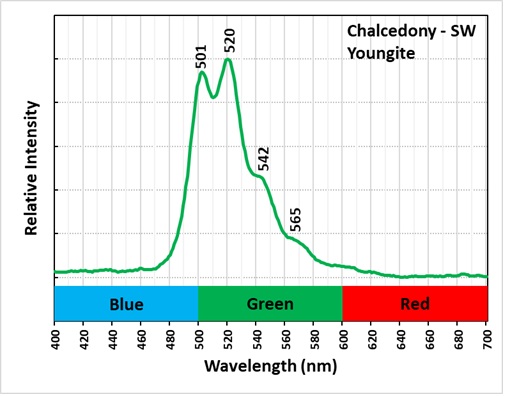
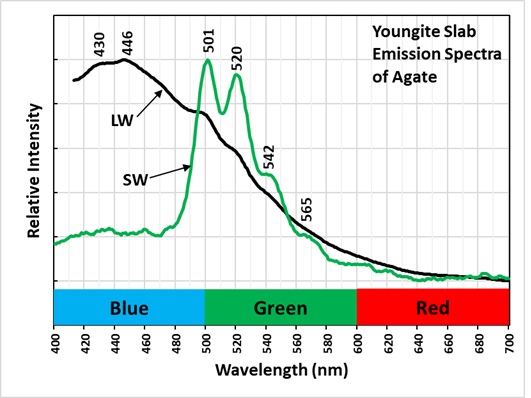
The shortwave emission spectra show multiple sharp peaks that are characteristic of uranyl activation. There are two sharp peaks at 501 nm and 520 nm. There are also inflection points at 542 nm and 565 nm. The agate in the slab has the same shortwave emission spectrum as the botryoidal youngite. The longwave emission spectrum of the agate has a broad peak with a maximum at 446 nm and a smaller peak at 430 nm. The longwave fluorescence is likely activated by organics.
Summary of luminescence responses:
Chalcedony (Mindat) (RRUFF)
- Fluorescence under Longwave (365nm LED) UV light: White
- Fluorescence under Shortwave (255nm LED) UV light: Green