
Fluorite with Ozonide Activated Fluorescence - Wolsendorf, Germany
Contributed by: Michael Crawford
Date: Sep 19th, 2026
Locality: Marienschacht Mine, Wölsendorf, Schwarzach bei Nabburg, Schwandorf District, Upper Palatinate, Bavaria, Germany (See on Mindat)
Size: 6 x 6 cm
Description:
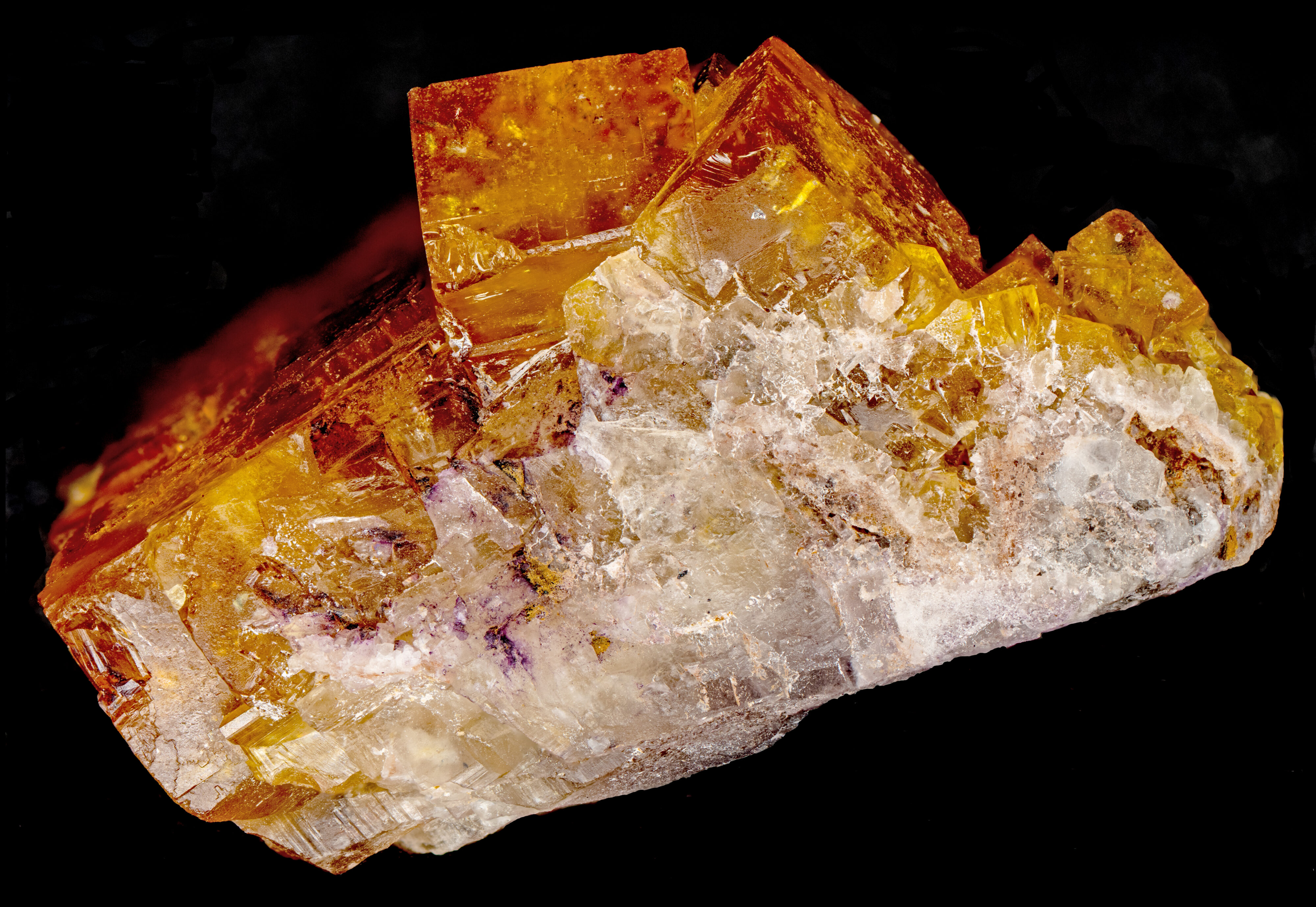
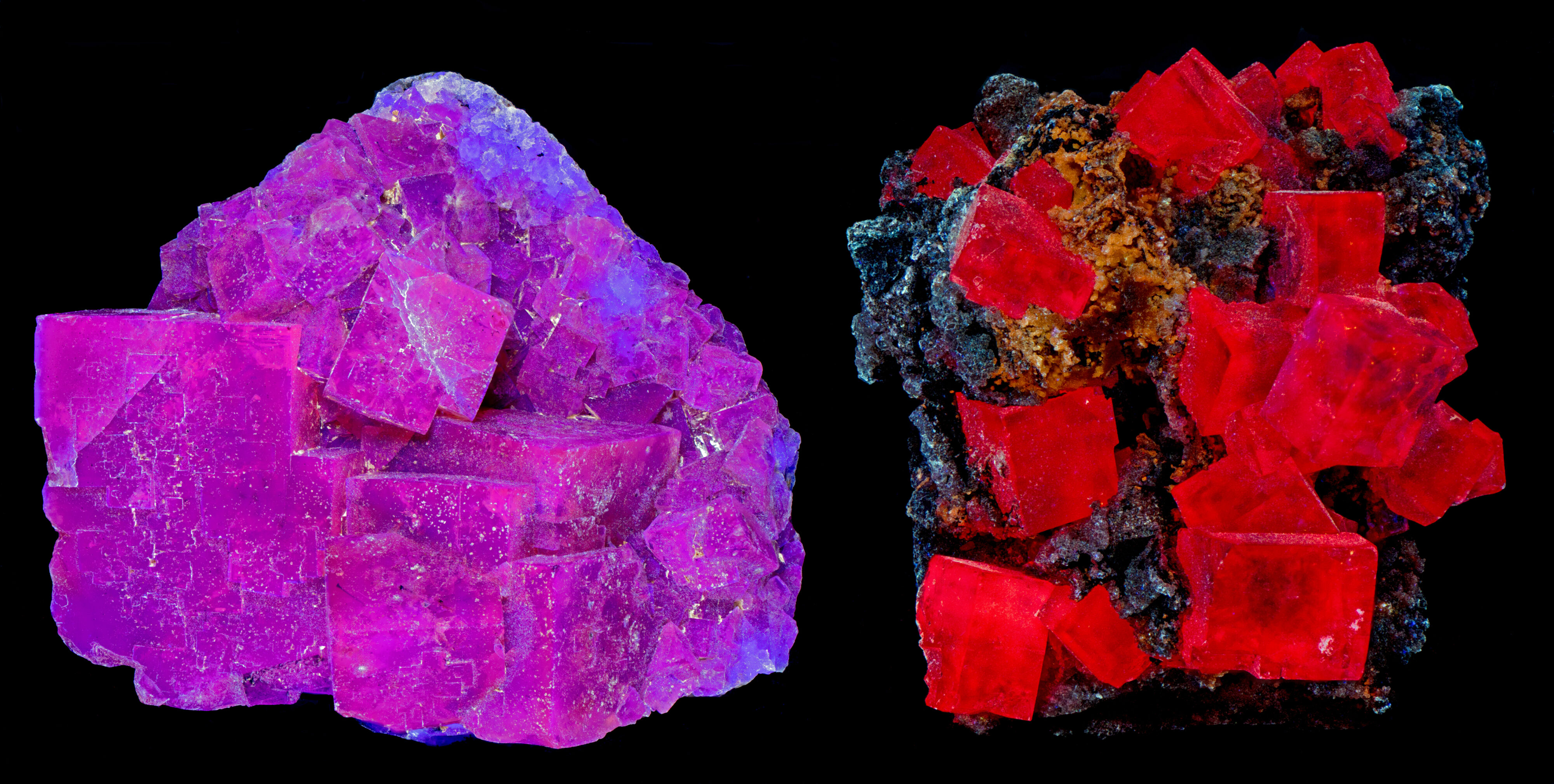
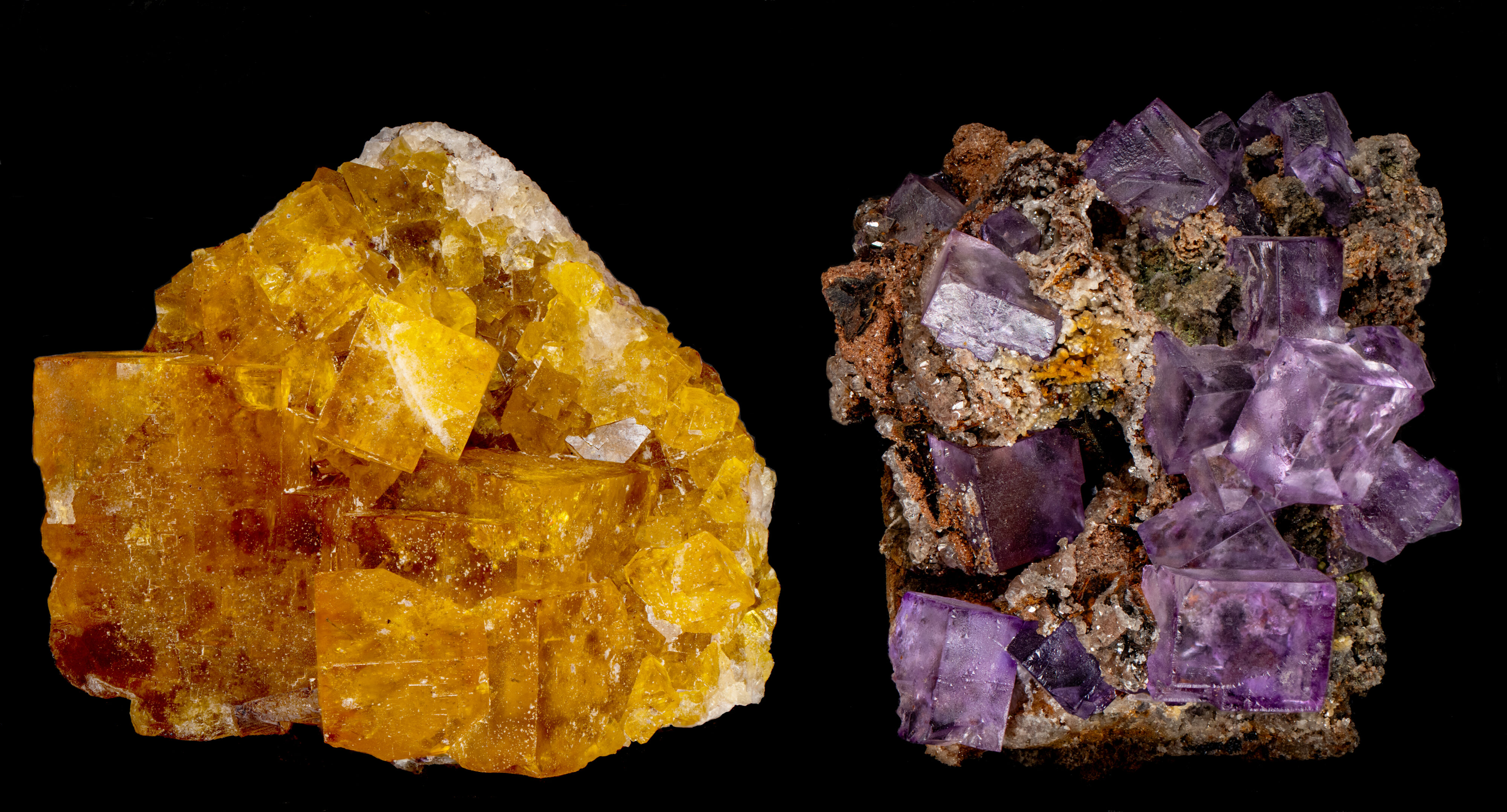
A classic specimen of "honigspat" or honey-spar fluorite from the Marienschacht Mine, Wolsendorf, Germany. The honey-colored fluorite formed over clear fluorite. Bill (1982) attributed the honey color to ozonide (O3-) incorporated into the fluorite lattice. Although he did not examine fluorescence, ozonide and other activators likely the cause of the pink fluorescence under longwave light and yellowish white fluorescence under shortwave light. The clear fluorite shows the violet-blue longwave fluorescence typically activated by europium and it fluoresces white under shortwave light.
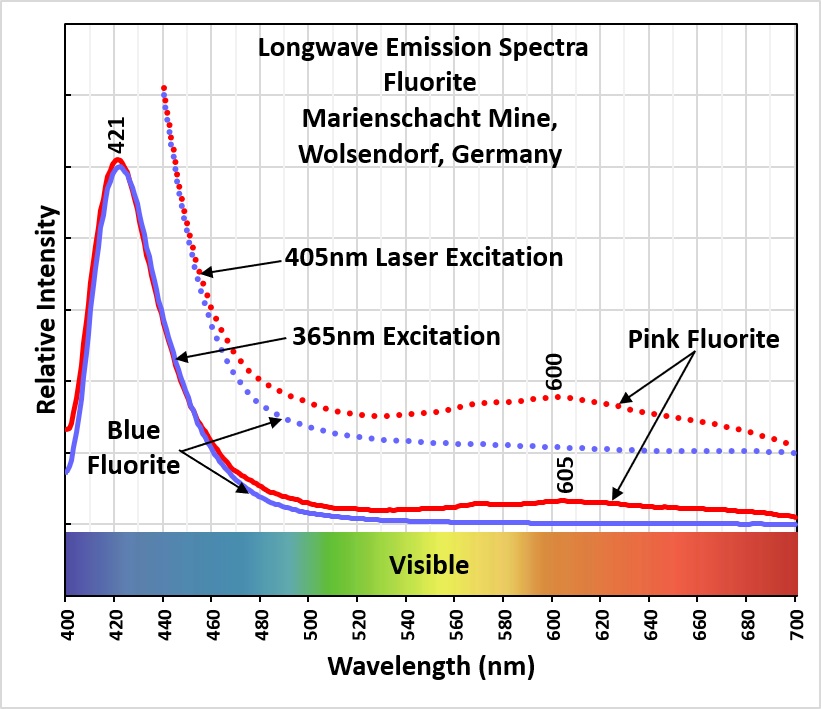
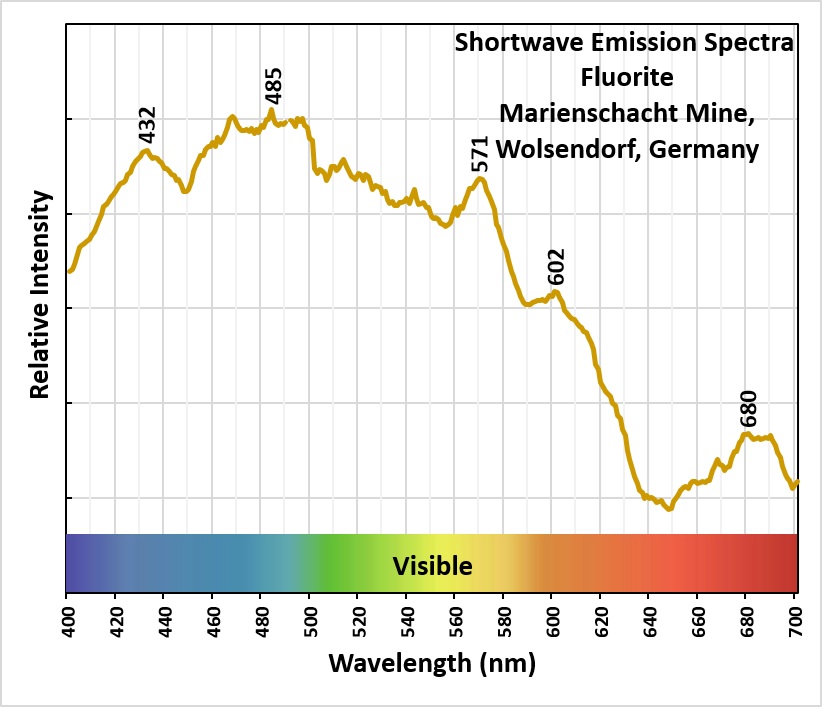
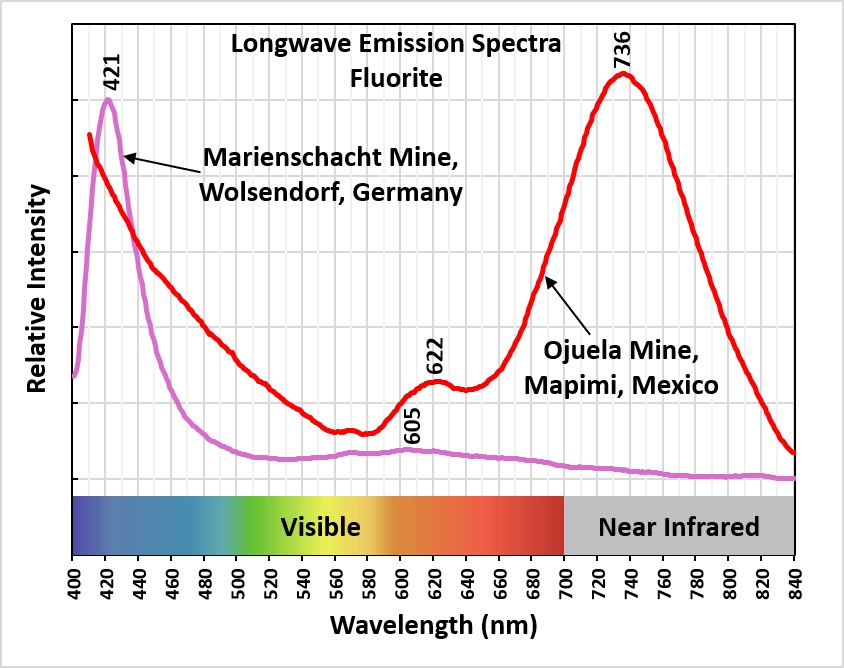
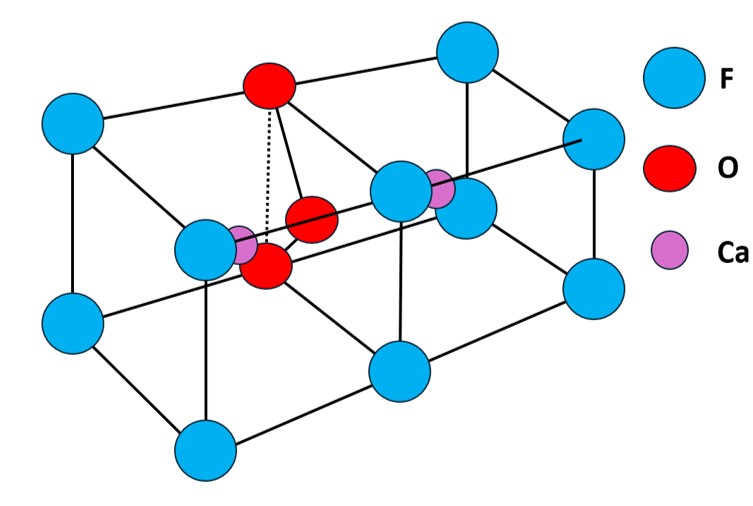
In Bill's (1982) model of ozonide-bearing fluorite, one ozonide oxygen atom replaces a fluorine atom. It is unclear whether a second oxygen atom replaces another fluorine atom, whether that fluorine site is vacant, or whether the model simply omits it. The longwave emission spectrum includes a 421 nm peak from europium substituting for calcium and a broad peak near 605 nm from a second activator. The 605 nm orange emission may result from ozonide combined with a lattice defect; together, the orange-red emission at 605 nm and violet-blue emission at 421 nm produce the pink color. The shortwave spectrum is noisy and contains several peaks whose exact causes remain unknown; possible contributors include ozonide, other elements, and lattice defects.
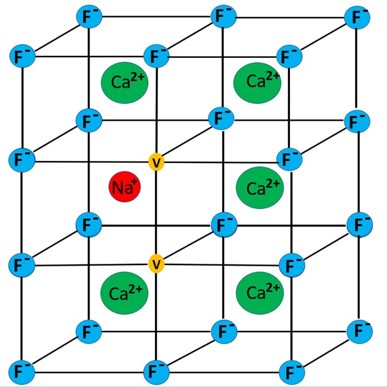
This specimen's orange-red fluorescence differs from that of many other red-fluorescent fluorites, which are activated by lattice defects called M-centers stabilized when sodium replaces calcium (Waychunas, 2023). Radioactive hydrothermal fluids contribute to the formation of both this yellow fluorite and M-center fluorite, yet the yellow specimen and most M-center fluorites are not themselves radioactive. These fluids do not deposit radioactive minerals. Ionizing radiation creates M-center defects, dissociates fluorite into elemental calcium and fluorine, and promotes ozonide formation through reactions between fluorine and water. M-center- and ozonide-activated fluorite differ as follows.
1. M-center activation generally produces redder fluorescence, whereas ozonide activation produces pinker fluorescence.
2. Under white light, M-center fluorites are generally purple, while ozonide fluorites range from yellow to honey-colored. Colloidal calcium causes the purple color.
3. M-center longwave emission is very bright in the near-infrared, with a peak near 736 nm and a smaller red peak at 622 nm. Ozonide fluorescence has no infrared component and instead shows a weak, very broad peak centered near 605 nm.
4. Under shortwave light, ozonide fluorite appears pale yellow to white, while M-center fluorite is nonfluorescent.
5. Prolonged longwave exposure causes M-center fluorite fluorescence to fade, but shortwave exposure can restore it. Ozonide fluorites are less studied and may be less susceptible to this fading.
References:
Bill, H., 1982, Origin of the coloration of yellow fluorites: The O3 ? center structure and dynamical aspects, J. Chem. Phys., V.76, pp.219–224
Waychunas, G., 2023, Deep-red Fluorescent Fluorite from Mapimi, Mexico (and Elsewhere): A Case of an “Electronic Defect” as an Activator., UV Waves, V.53, No.4, pp. 2-7
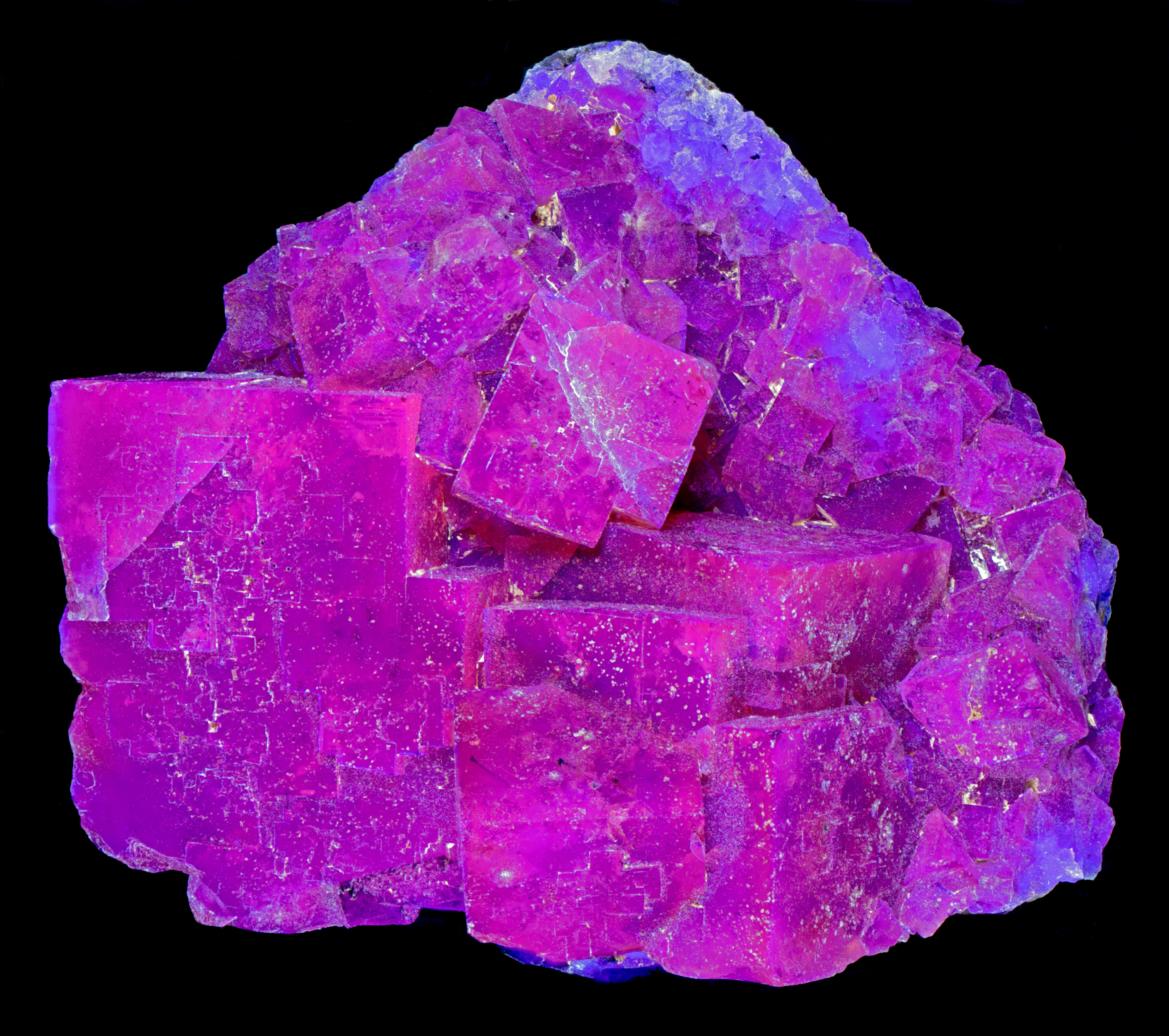
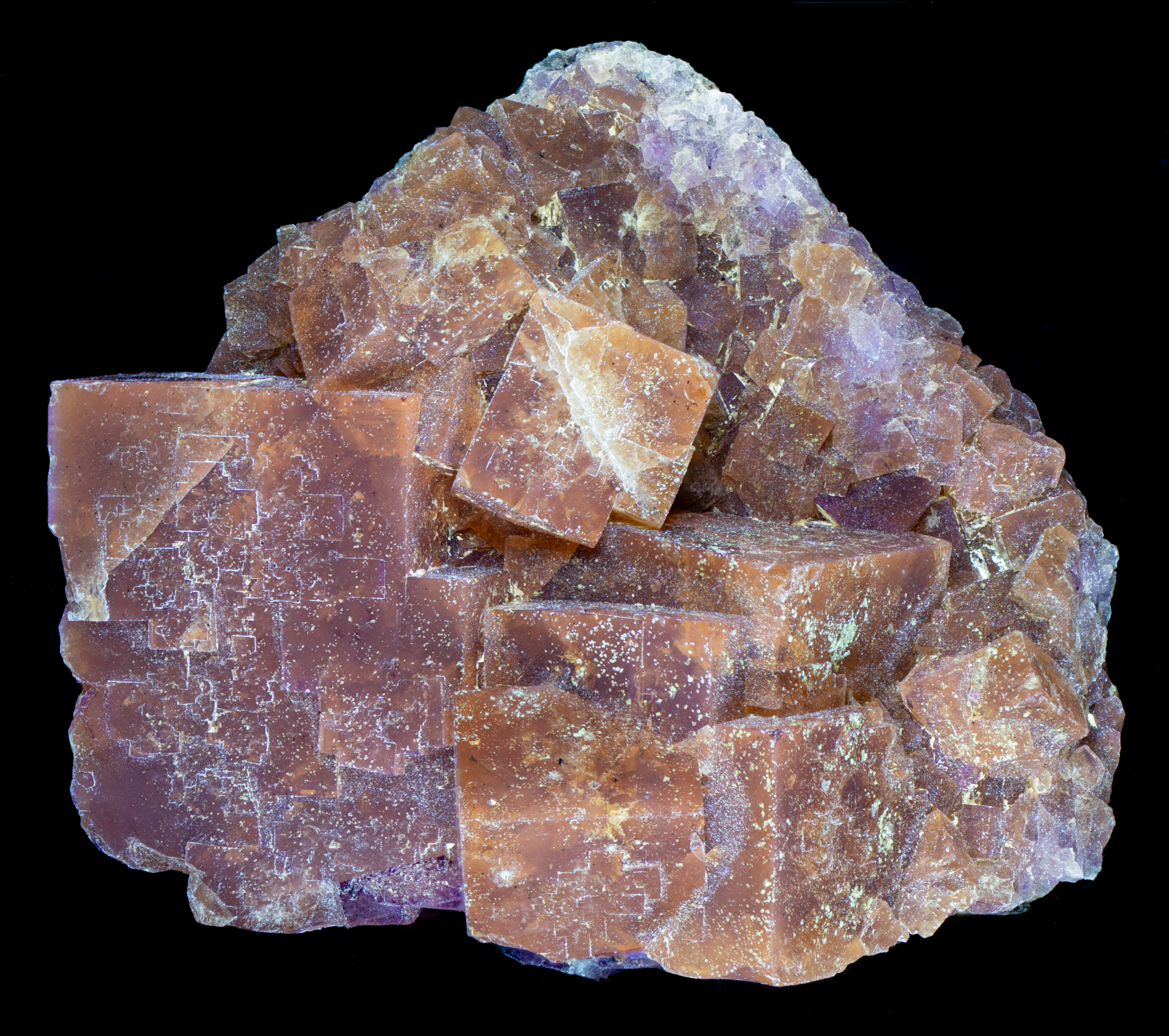
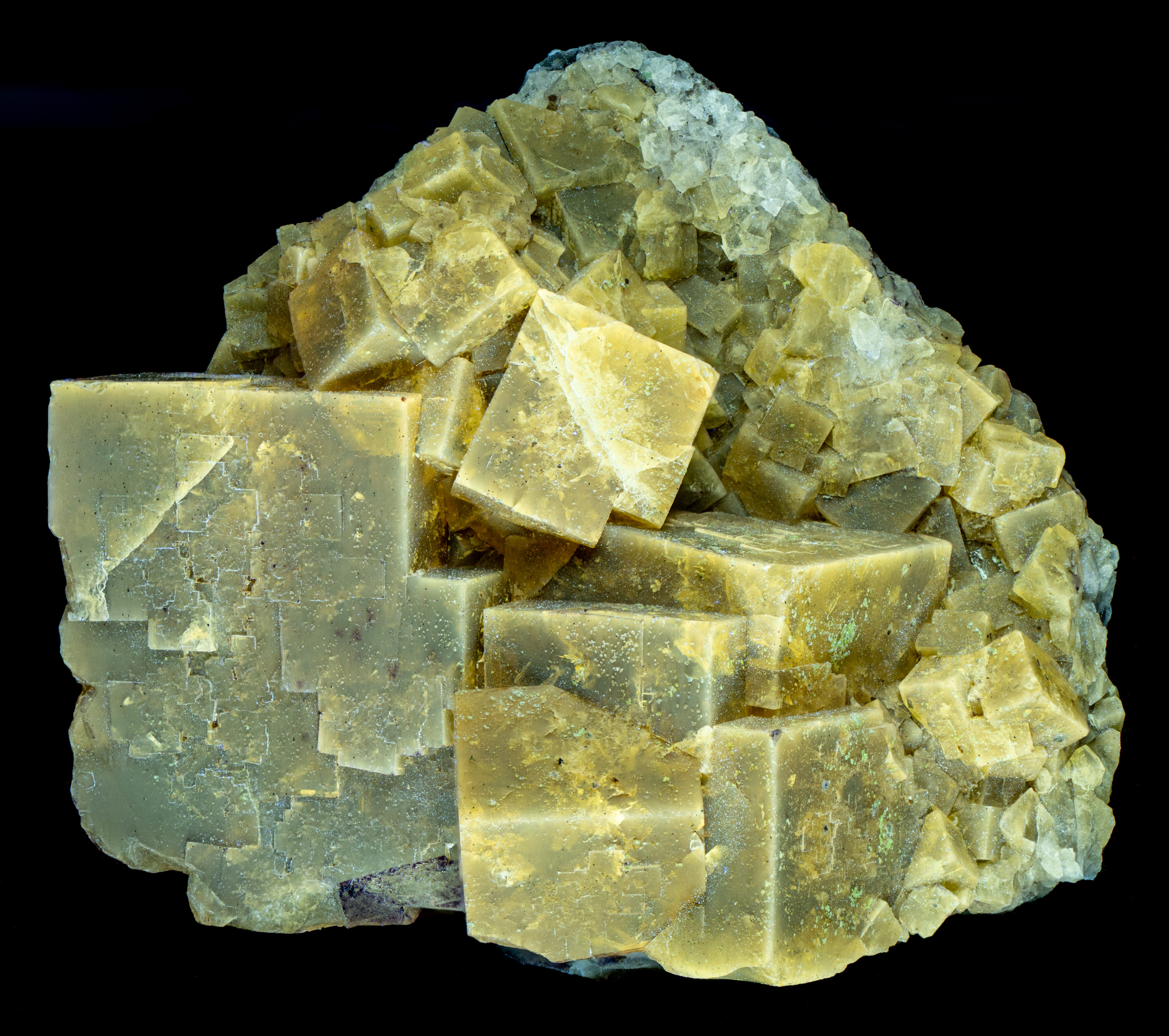
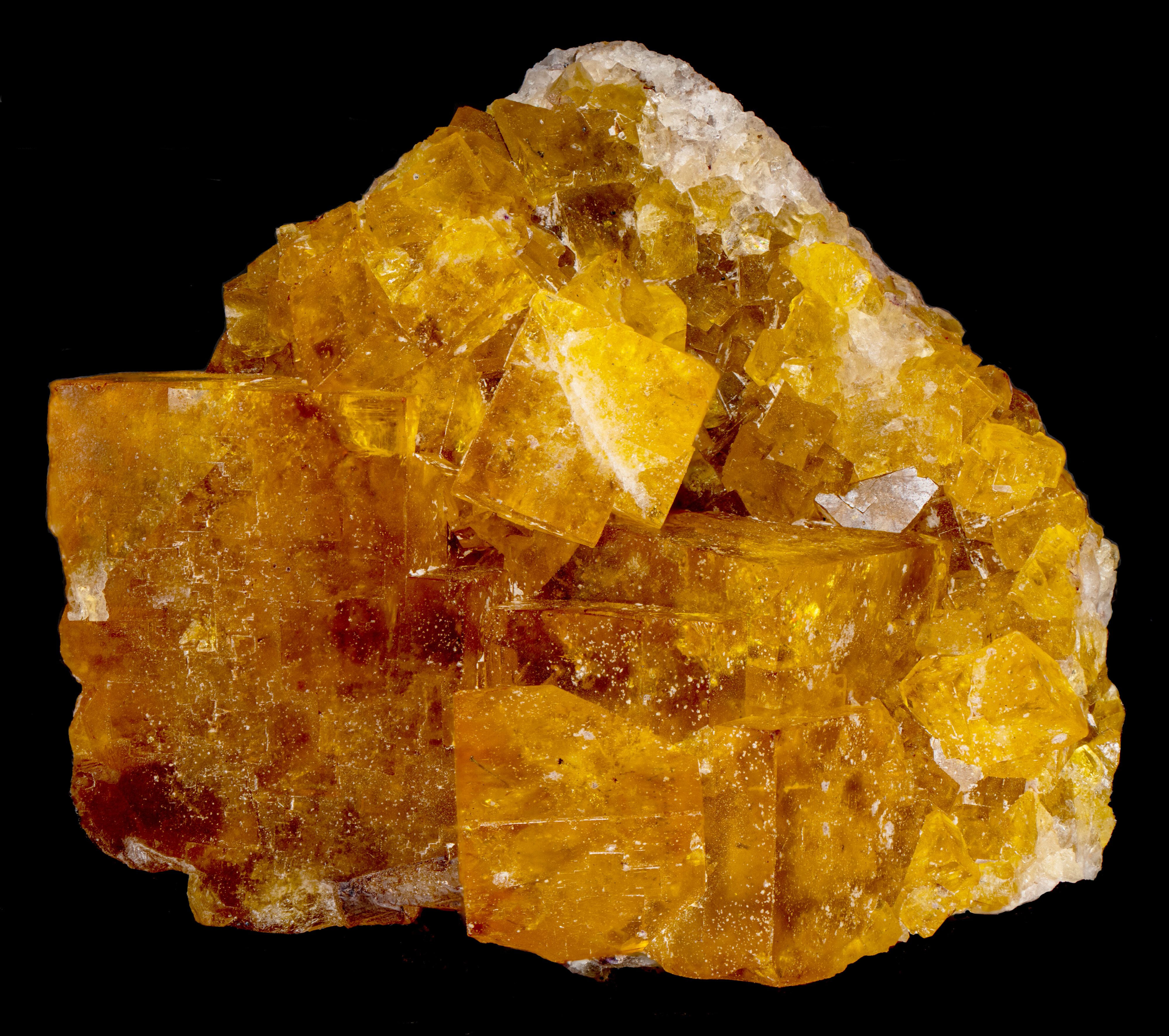
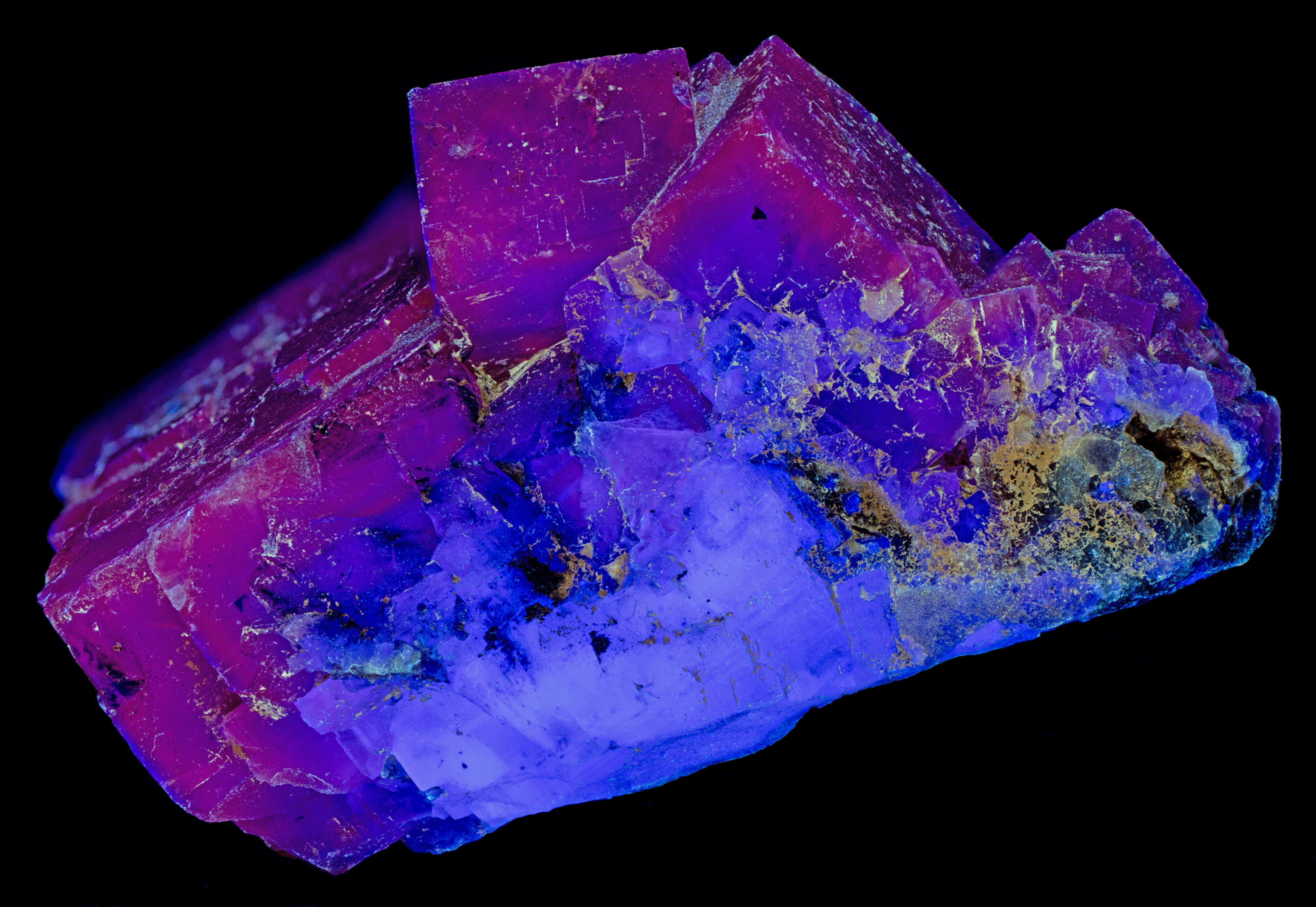
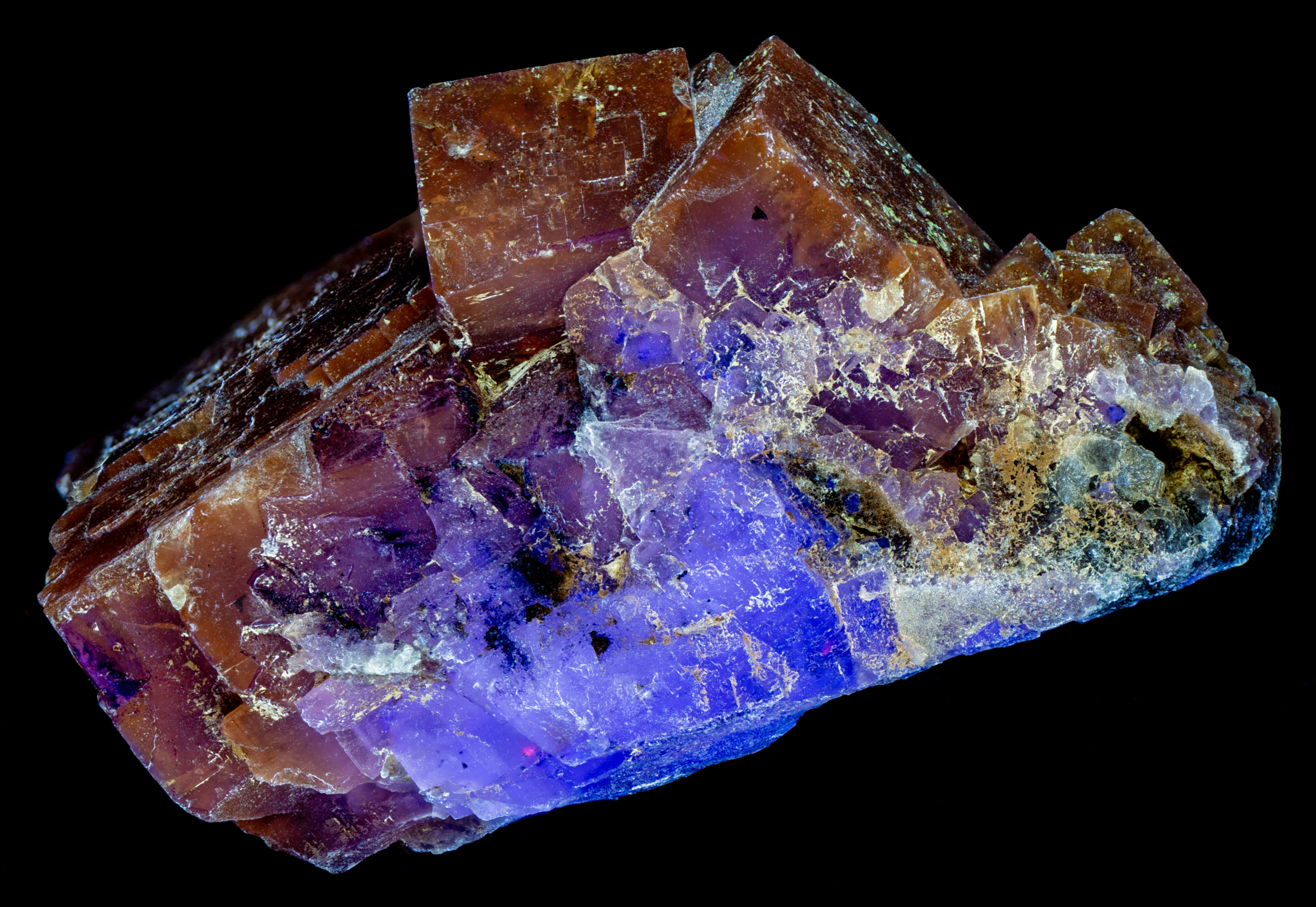
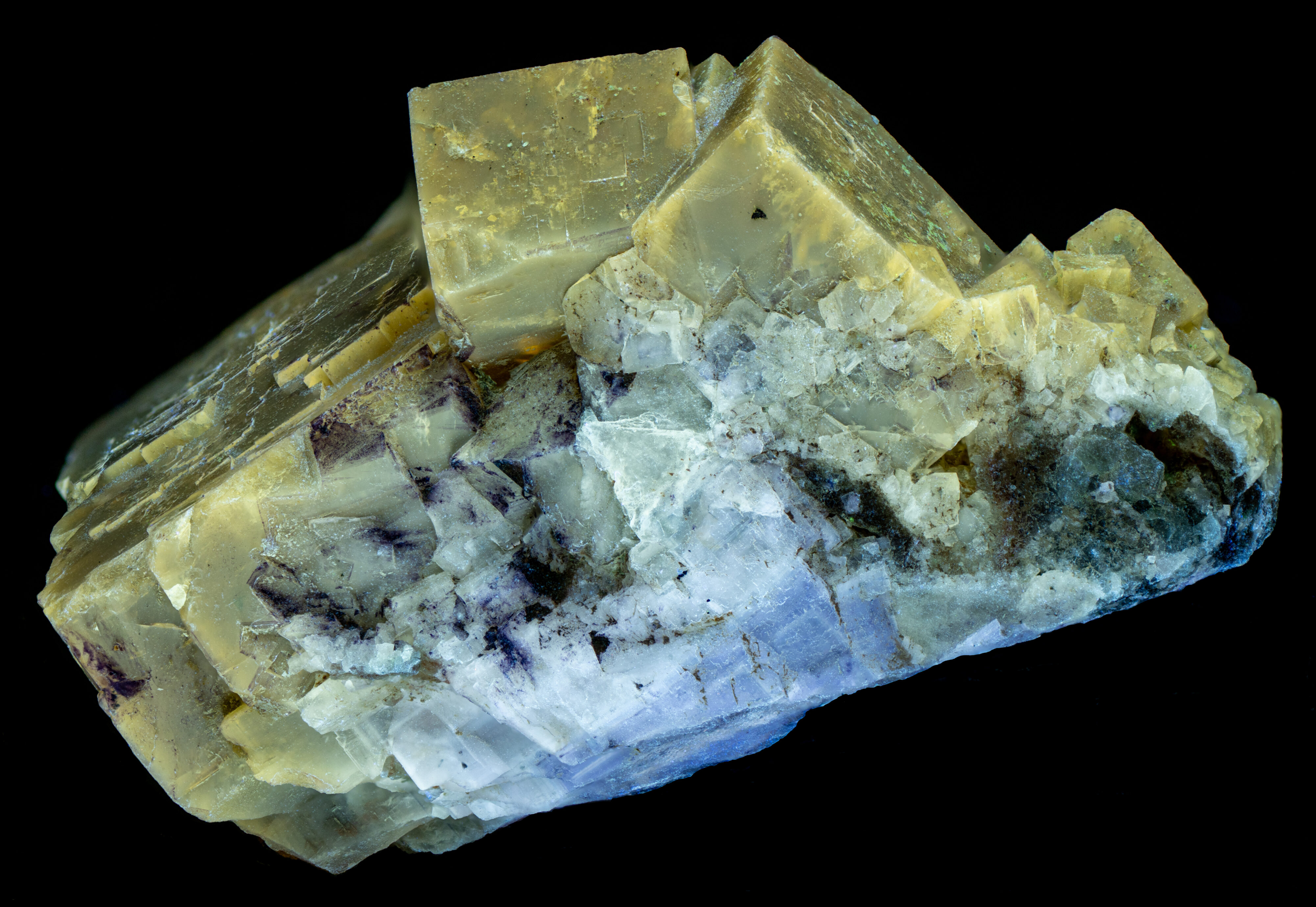
Summary of luminescence responses:
Fluorite (Mindat) (RRUFF)
- Fluorescence under Longwave (365nm LED) UV light: Pink
- Fluorescence under Longwave (365nm LED) UV light: Blue
- Fluorescence under Shortwave (255nm LED) UV light: Yellow
- Fluorescence under Shortwave (255nm LED) UV light: White
- Fluorescence under Midwave (305nm LED) UV light: Yellow
- Fluorescence under Midwave (305nm LED) UV light: Blue