
Terlingua-Type Calcite – Boquillas Del Carmen, Mexico
Contributed by: Michael Crawford
Date: Sep 9th, 2026
Locality: San Vicente Mine, Boquillas Del Carmen, Ocampo Municipality, Coahuila, Mexico (See on Mindat)
Size: 9 x 12 cm
Description:
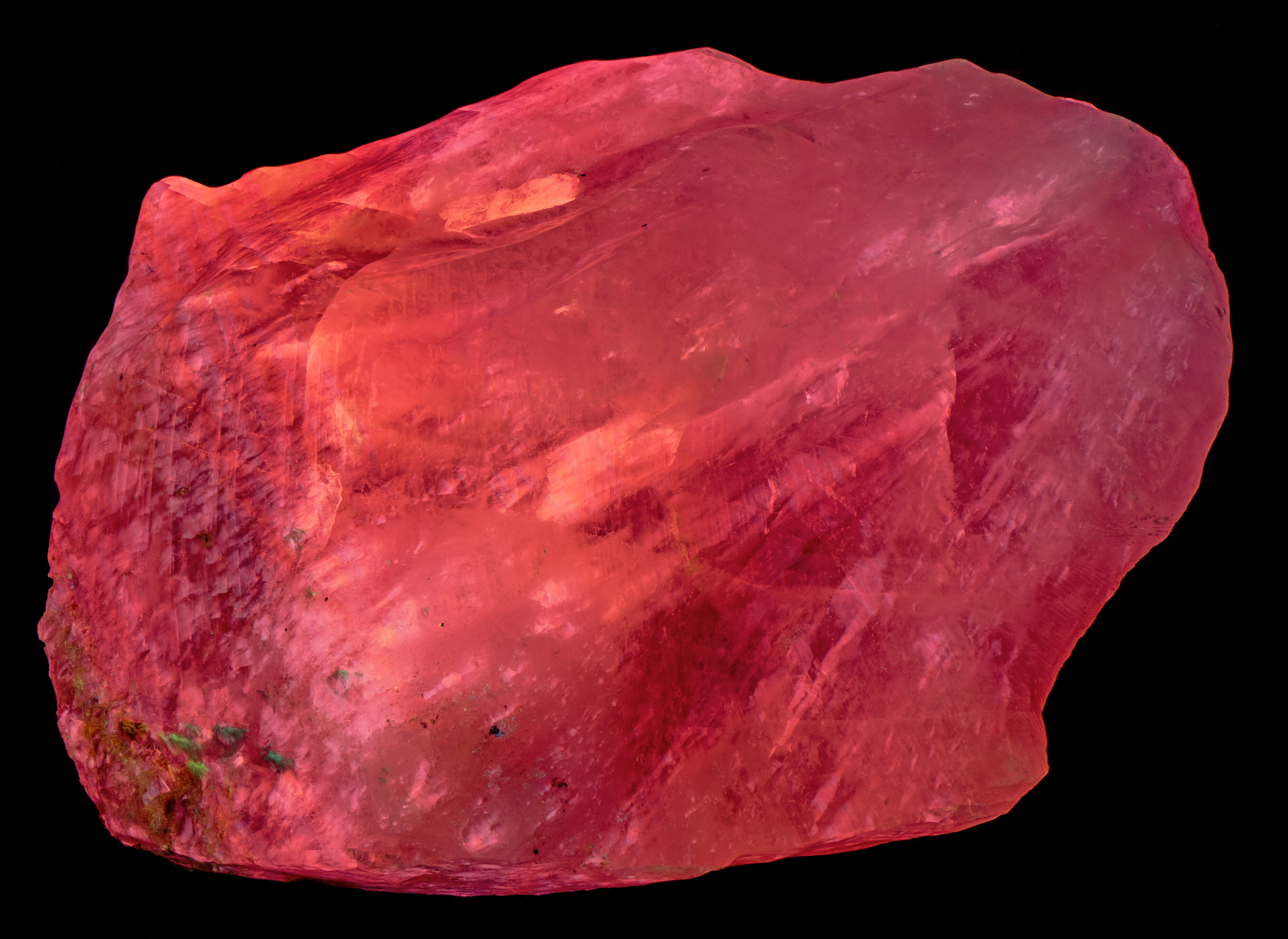
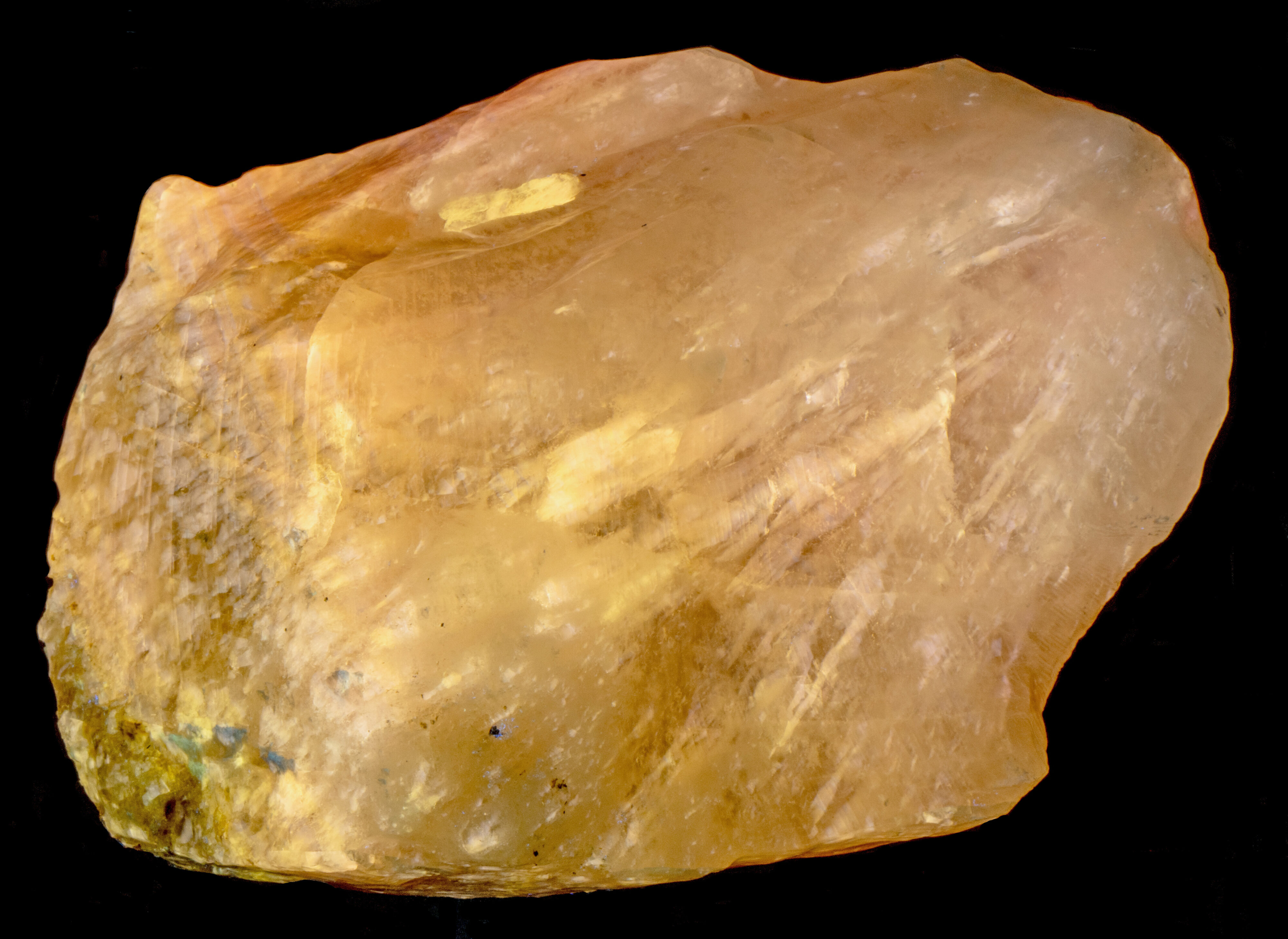
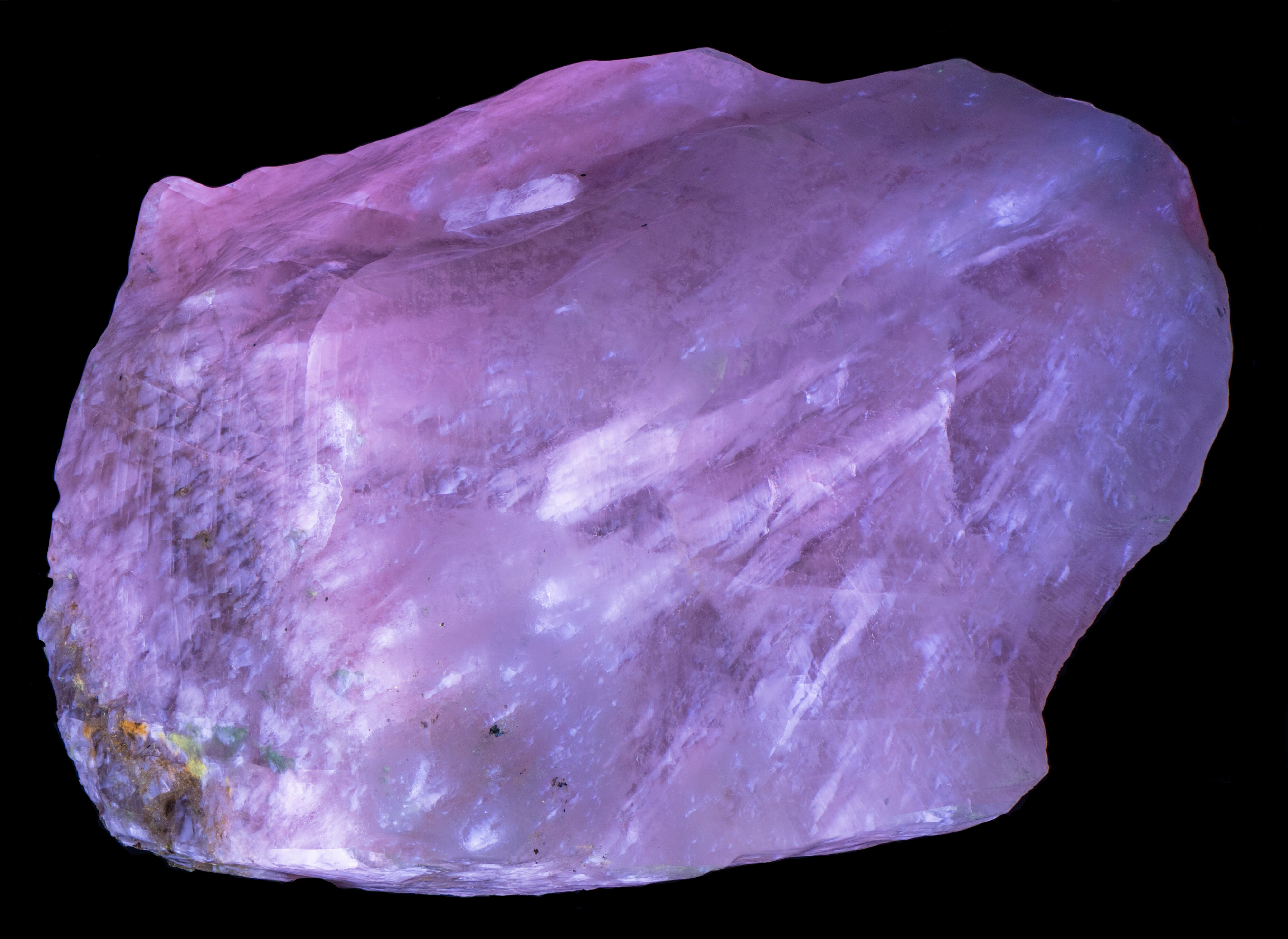
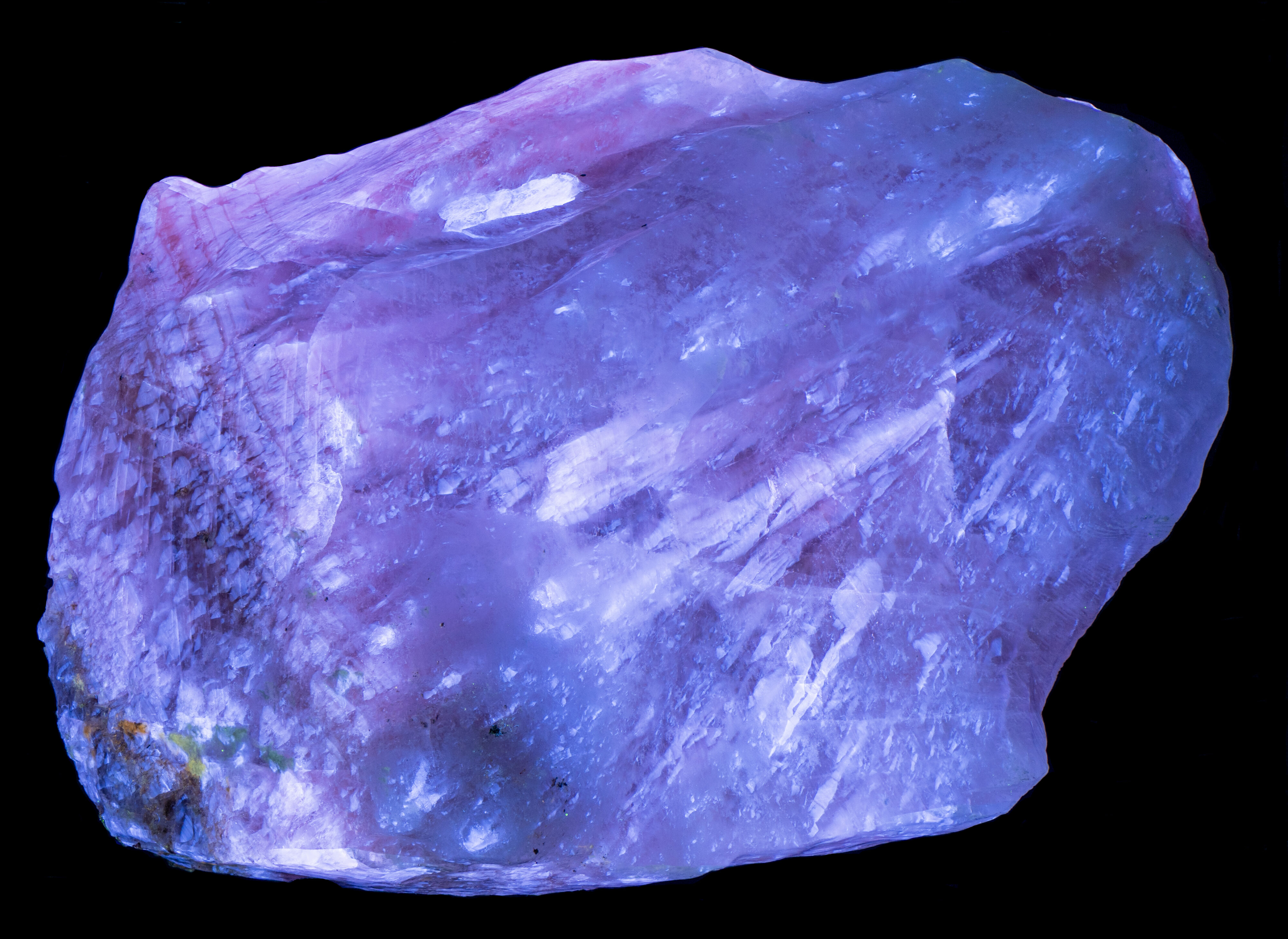
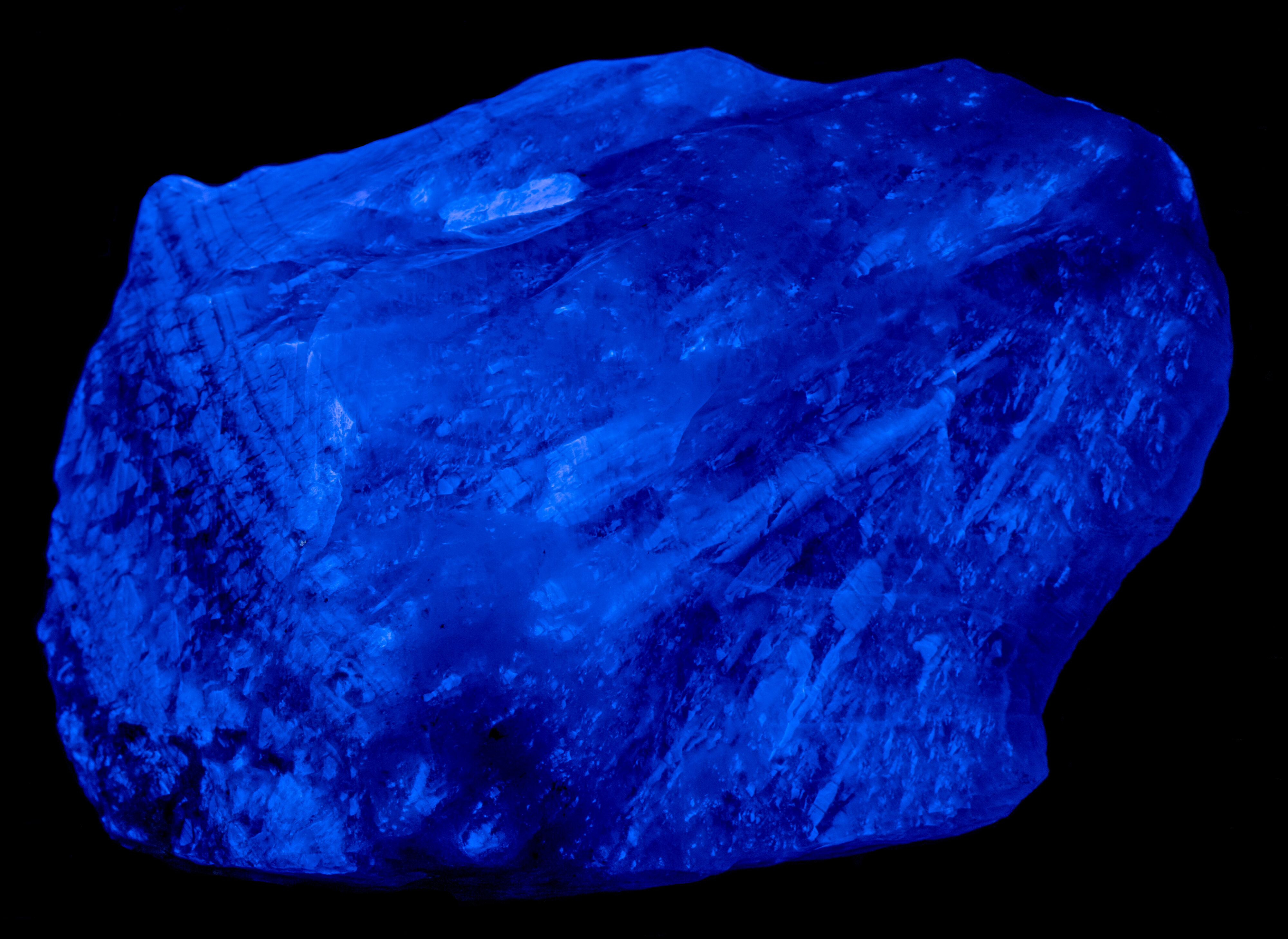
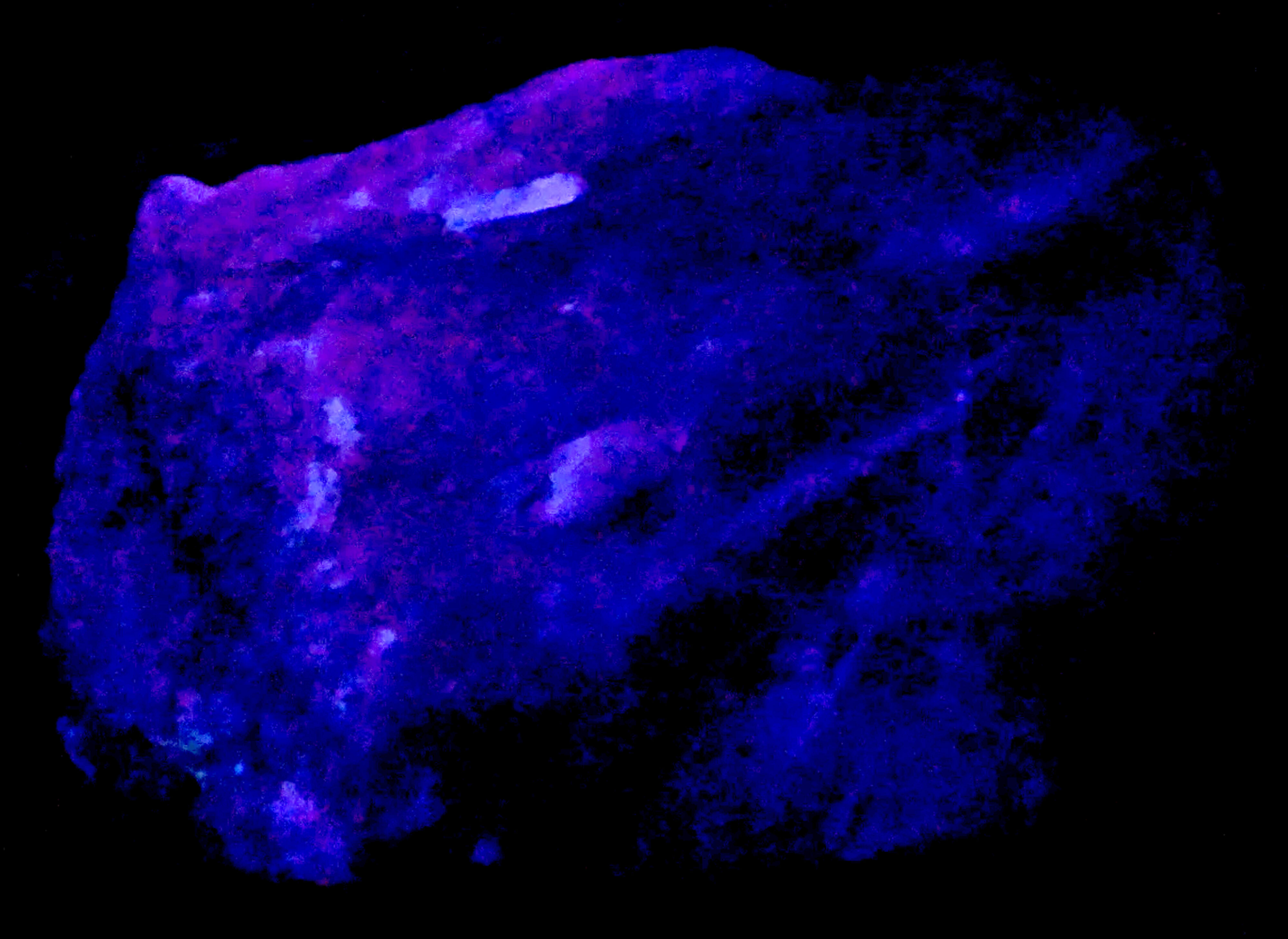
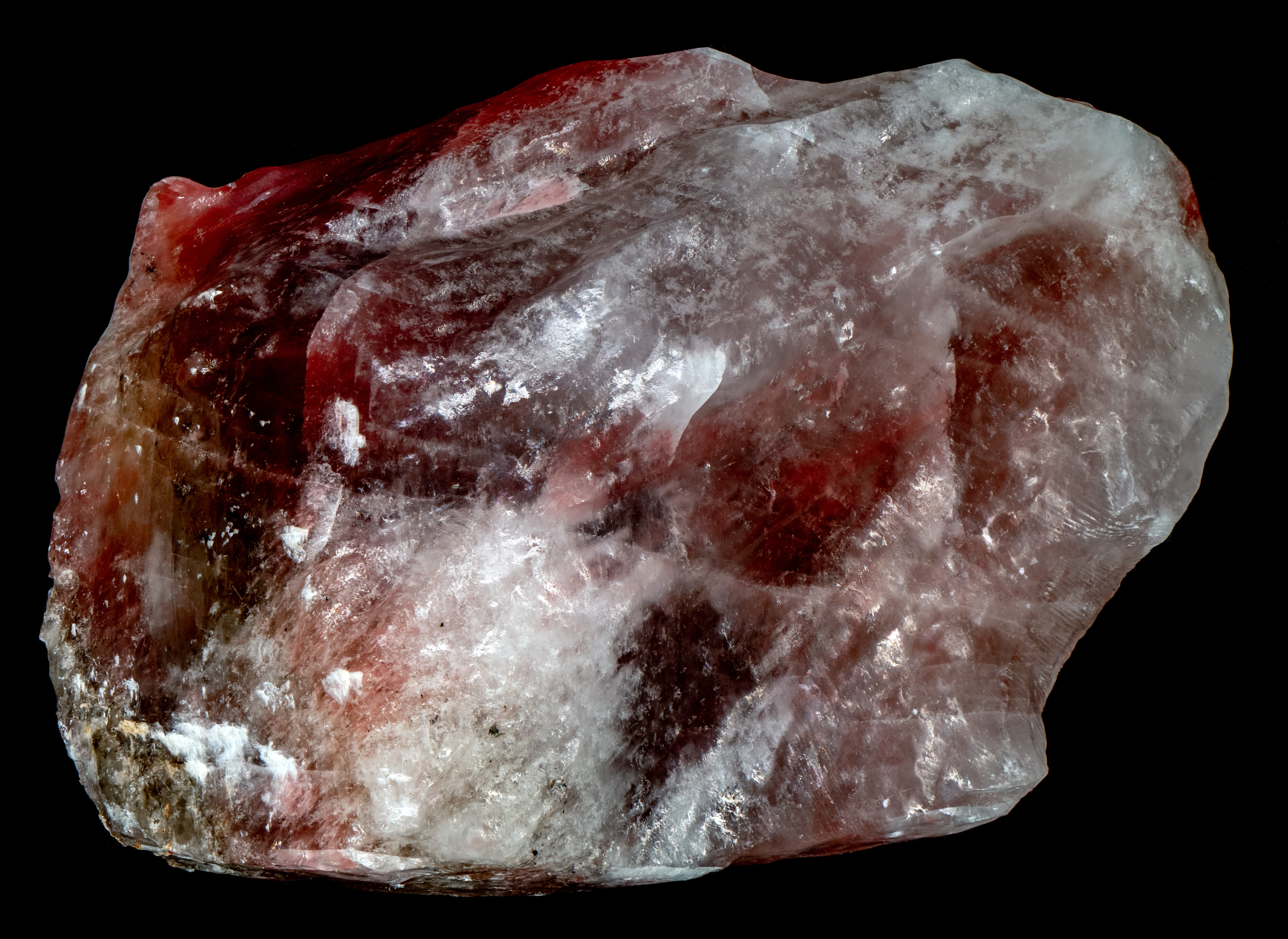
This Terlingua-Type calcite specimen comes from the San Vicente Mine in Boquillas Del Carmen, Coahuila, Mexico. Boquillas calcite is often acid washed, producing the smooth, shiny surface seen here. The specimen displays typical Terlingua-type fluorescence: bright blue, white under shortwave UV, a strong long-lasting blue afterglow, and bright pinkish orange under longwave UV. It also fluoresces pale yellow under 340 nm LED illumination. Under all wavelengths, the brightest fluorescence corresponds to daylight-pink areas, which Waychunas (2012) found to contain higher concentrations of rare earth minerals.
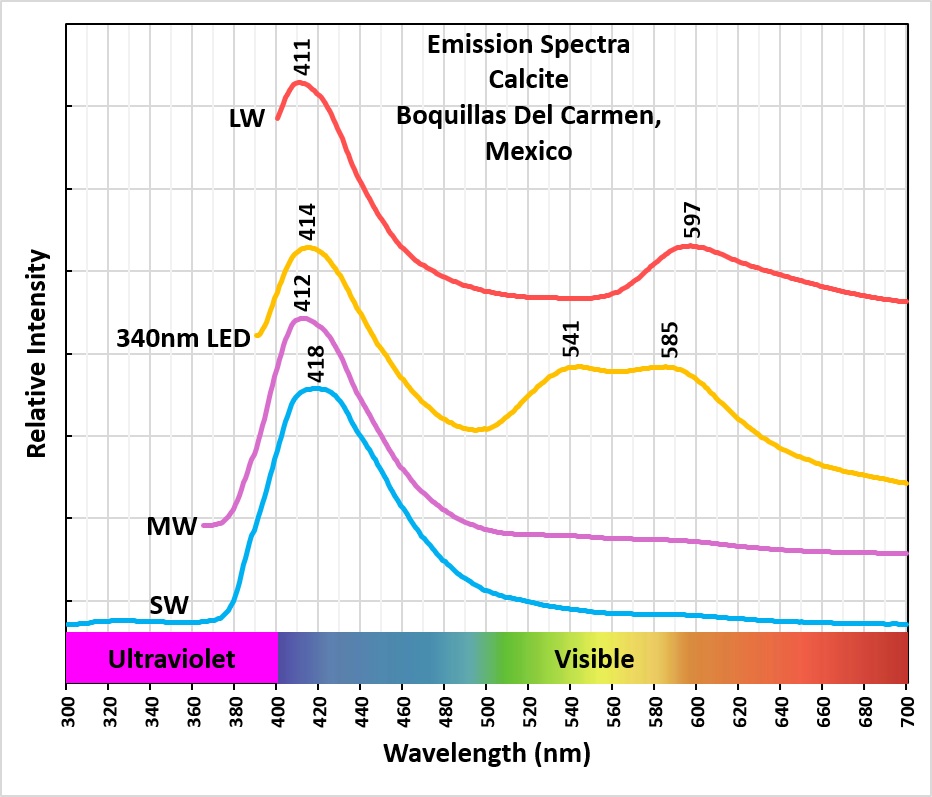
Pinkish-orange longwave fluorescence is common in Terlingua calcite. Its emission spectrum peaks at 411 nm (violet) and 597 nm (orange), and the combined emissions produce the pinkish-orange color. In Terlingua-type calcite, violet and orange fluorescence is activated by radiation-induced lattice defects. These defects are likely linked to different rare earth elements responsible for the 411 nm and 597 nm peaks (Waychunas, 2012), though the specific elements remain unidentified. The defect structure is also unknown; missing carbonate ions are one possible but unproven explanation.
The pale-yellow fluorescence has three emission peaks: 414 nm, 541 nm, and 585 nm. These peaks are probably produced by different rare earth elements coupled with lattice defects. As with the other emissions, the rare earth elements have not been identified, and the defect structure remains unknown.
Under shortwave light, the calcite fluoresces violet blue, with a strong emission peak at 418 nm. This emission is also activated by radiation-induced lattice defects associated with a rare earth element. The intense blue afterglow after shortwave exposure indicates electron traps just below the conduction band. Shortwave light excites electrons into these traps, and ambient thermoluminescence produces the afterglow (Waychunas, 2012). While the shortwave light is on, the specimen emits both violet-blue fluorescence and blue thermoluminescence. Once the light is turned off, fluorescence stops, but thermoluminescence continues as electrons are slowly released into the conduction band, lose some energy, and drop to the excited state. When each electron returns to the valence band, it emits a photon of blue light. Temperature controls how quickly electrons leave the traps and, therefore, how long the afterglow persists; cooler temperatures slow the release and lengthen the afterglow.
When first exposed to shortwave UV, this specimen shows a brief pink flash before violet-blue fluorescence gradually builds and overtakes it. Similar pink flashes have been reported in other Terlingua-type calcites (Snell, 1992; Waychunas, 2012). The effect reflects a visual tradeoff between very fast orange and blue fluorescence and slower ambient thermoluminescence, which quickly intensifies and masks the fluorescence (Waychunas, 2012).
References:
Gaft, M., Nagli, L., Panczer, G., Waychunas,G., Porat,N., 2008, The nature of unusual luminescence in natural calcite CaCO3, American Mineralogist, V.93, pp.158–167
Snell, D., 1992, TERLINGUA, TEXAS CALCITE "THE RED FLASH", UV Waves, V.22, No.2
Waychunas, G.A., 2012, Investigation of the causes of Luminescence in Terlingua-Type (TT) calcite: a case for rare earth activation coupled with electronic defects, FMS Journal, V.32, pp.5-14
Summary of luminescence responses:
Calcite (Mindat) (RRUFF)
- Fluorescence under Longwave (365nm LED) UV light: Red
- Fluorescence under Midwave (305nm LED) UV light: Violet
- Fluorescence under Shortwave (255nm LED) UV light: Blue
- Afterglow after exposure to Shortwave (255nm LED) UV light: Blue
- Fluorescence under Other: Yellow
- Fluorescence under 340nm LED UV light: Yellow