
Multi-Color Calcite – Terlingua, Texas
Contributed by: Michael Crawford
Date: Sep 4th, 2026
Locality: Little 38 Mine, Brewster County, Texas, USA (See on Mindat)
Size: 9.5 x 11 cm
Description:
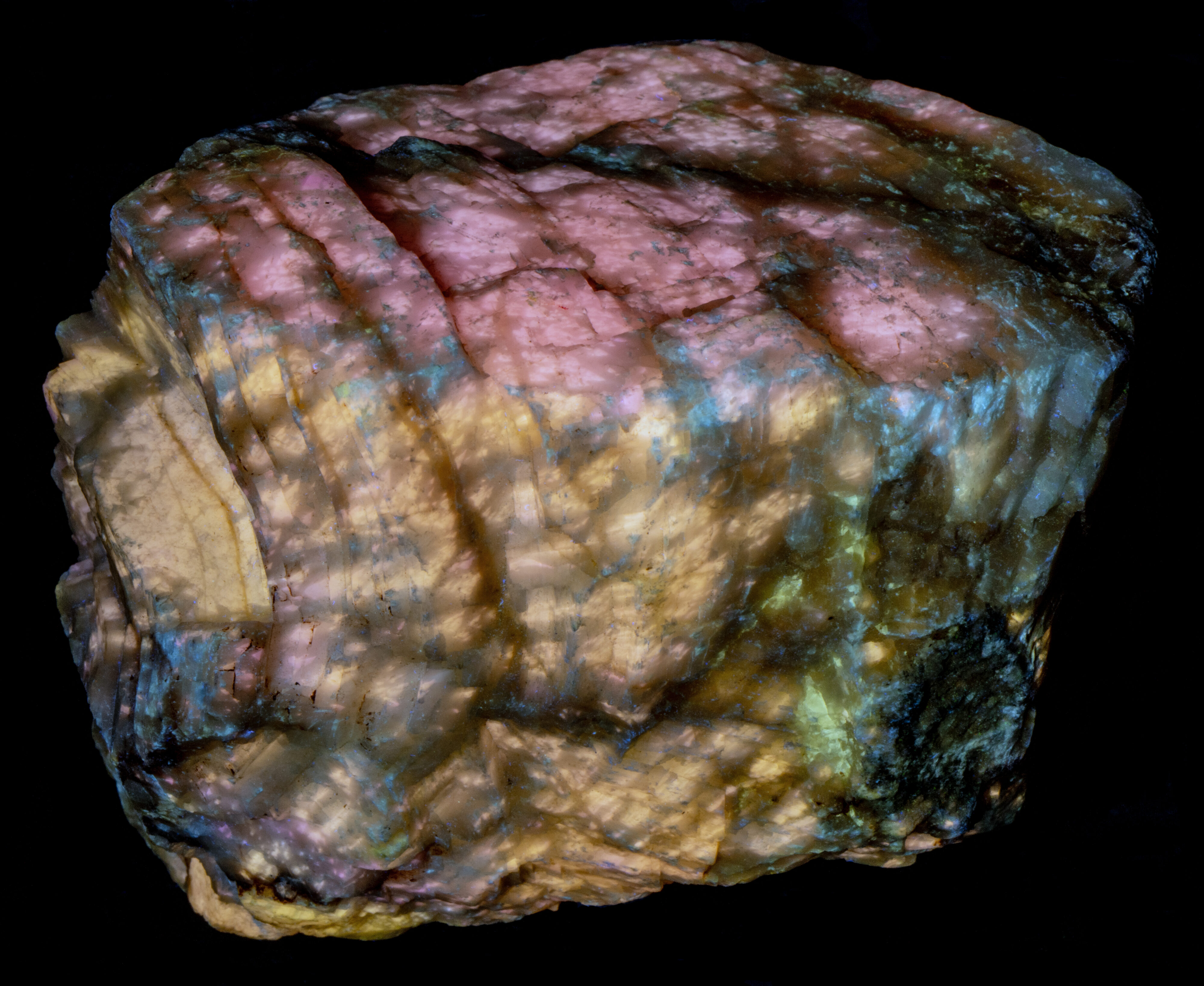
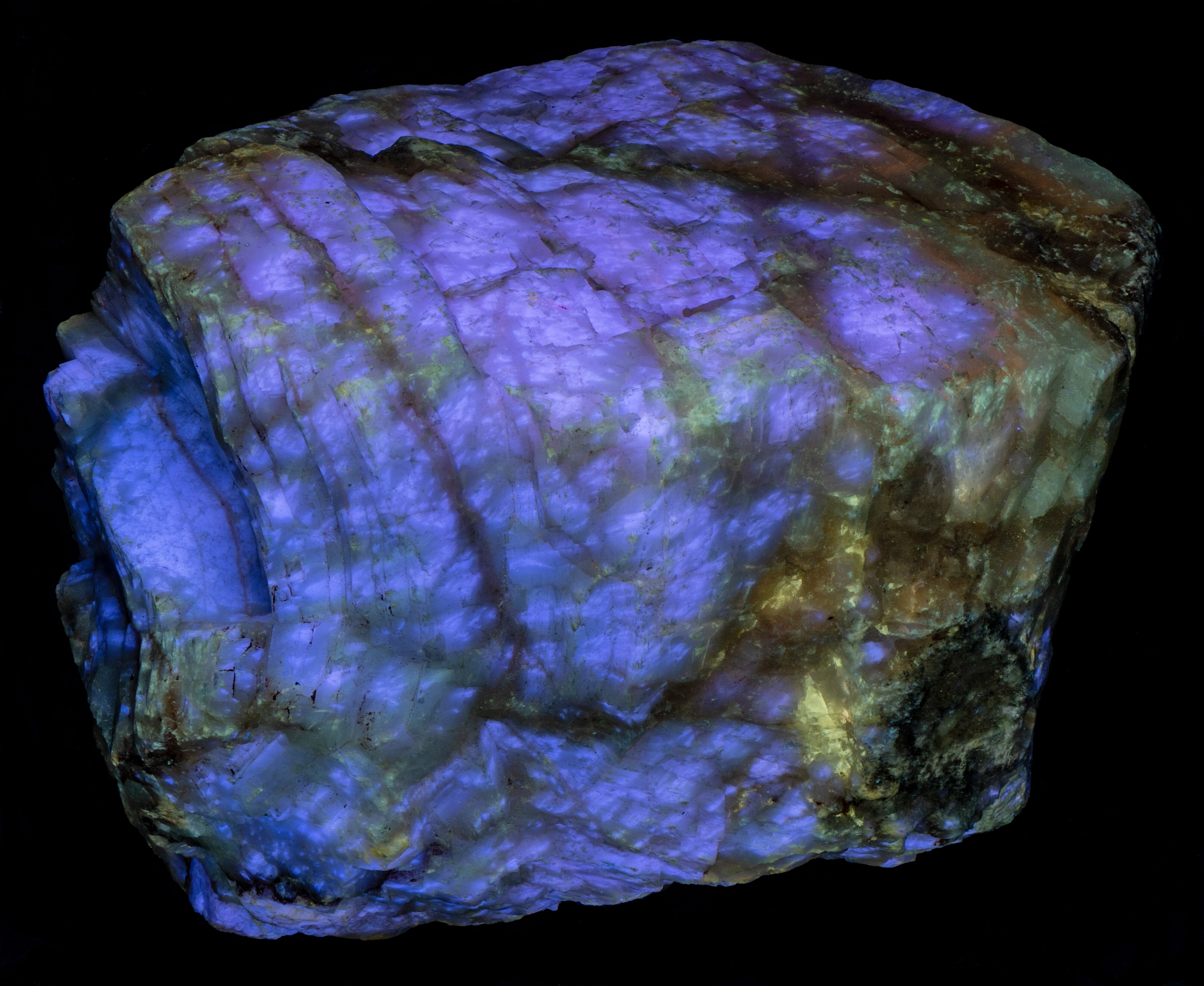
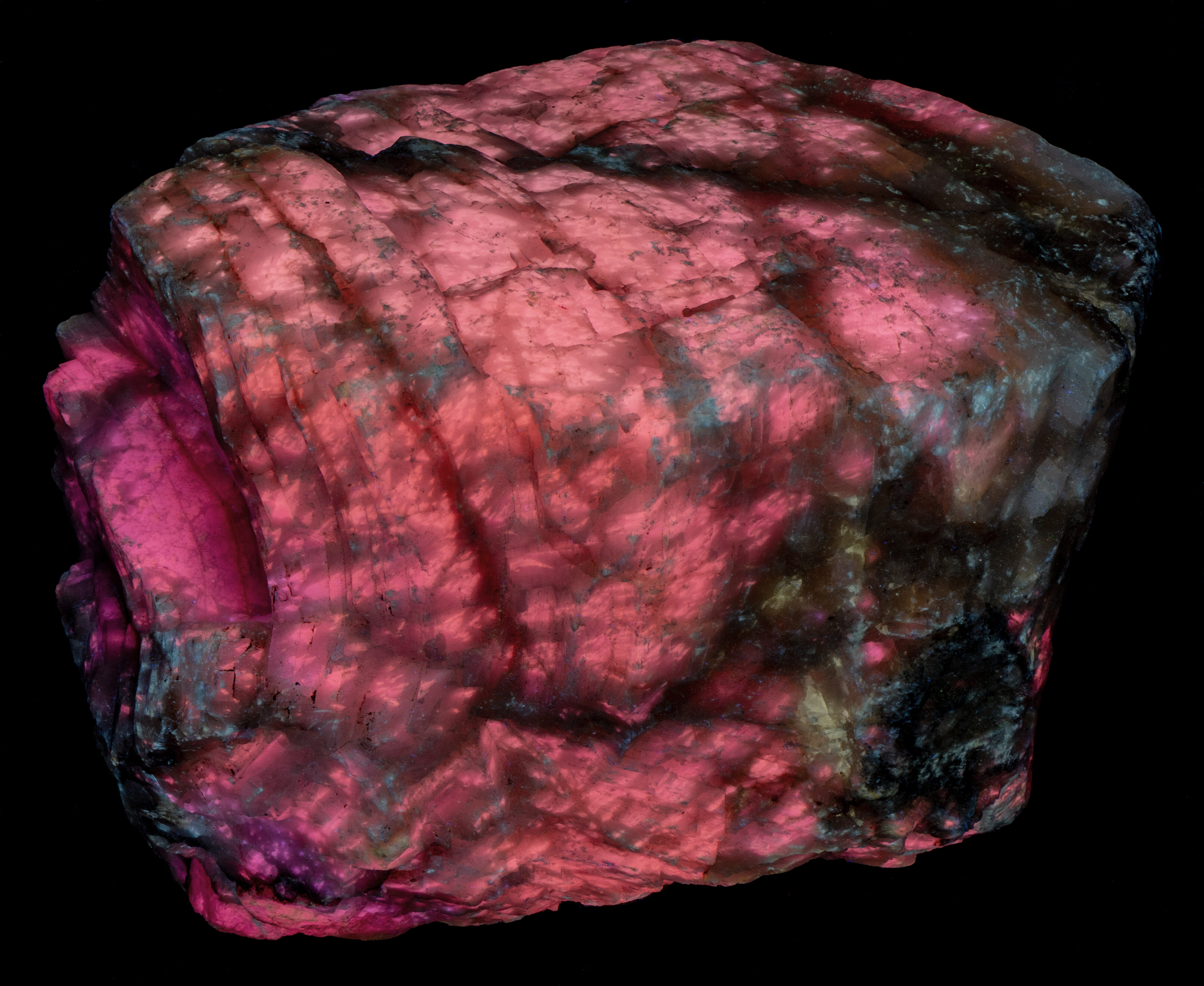
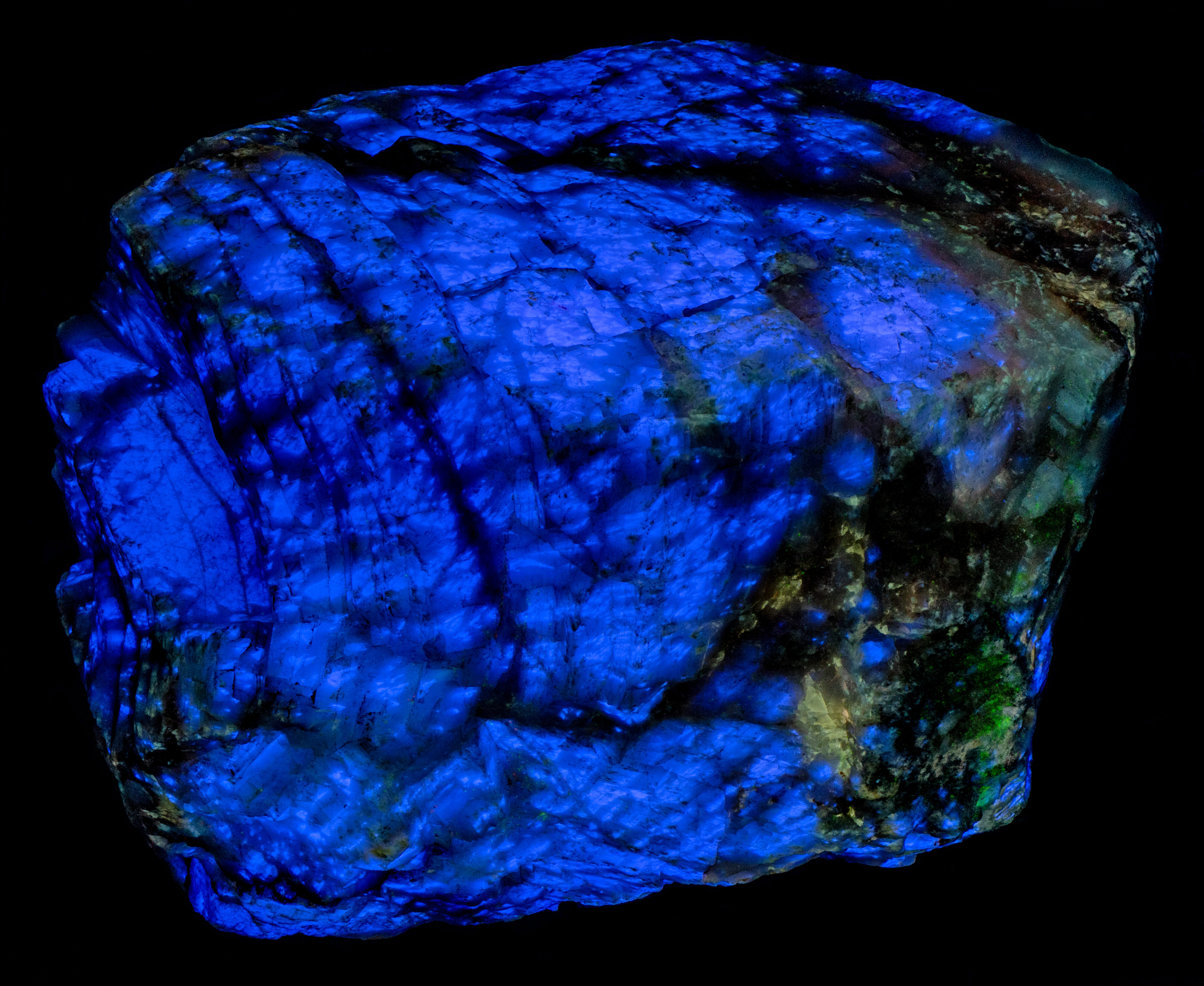
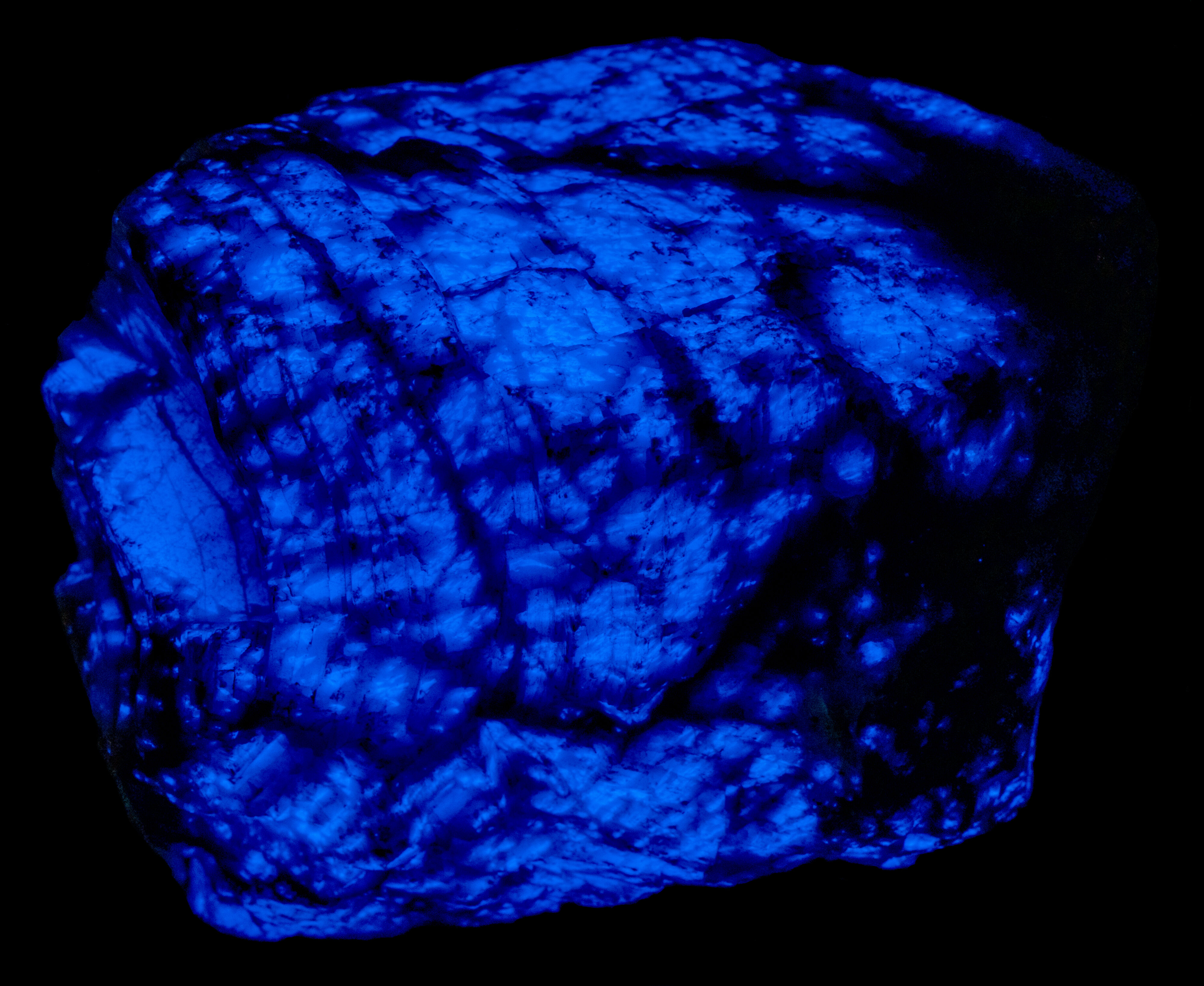
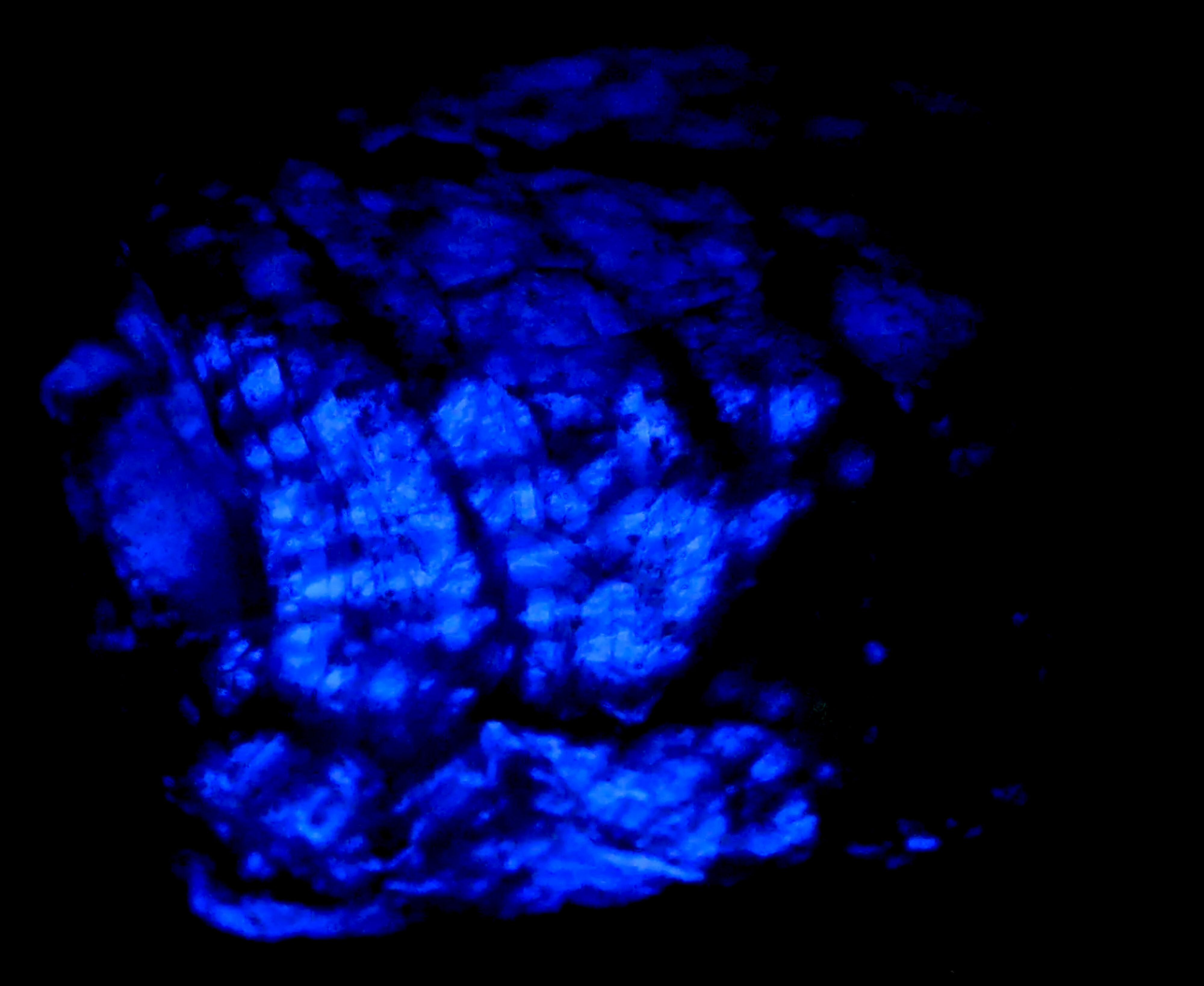
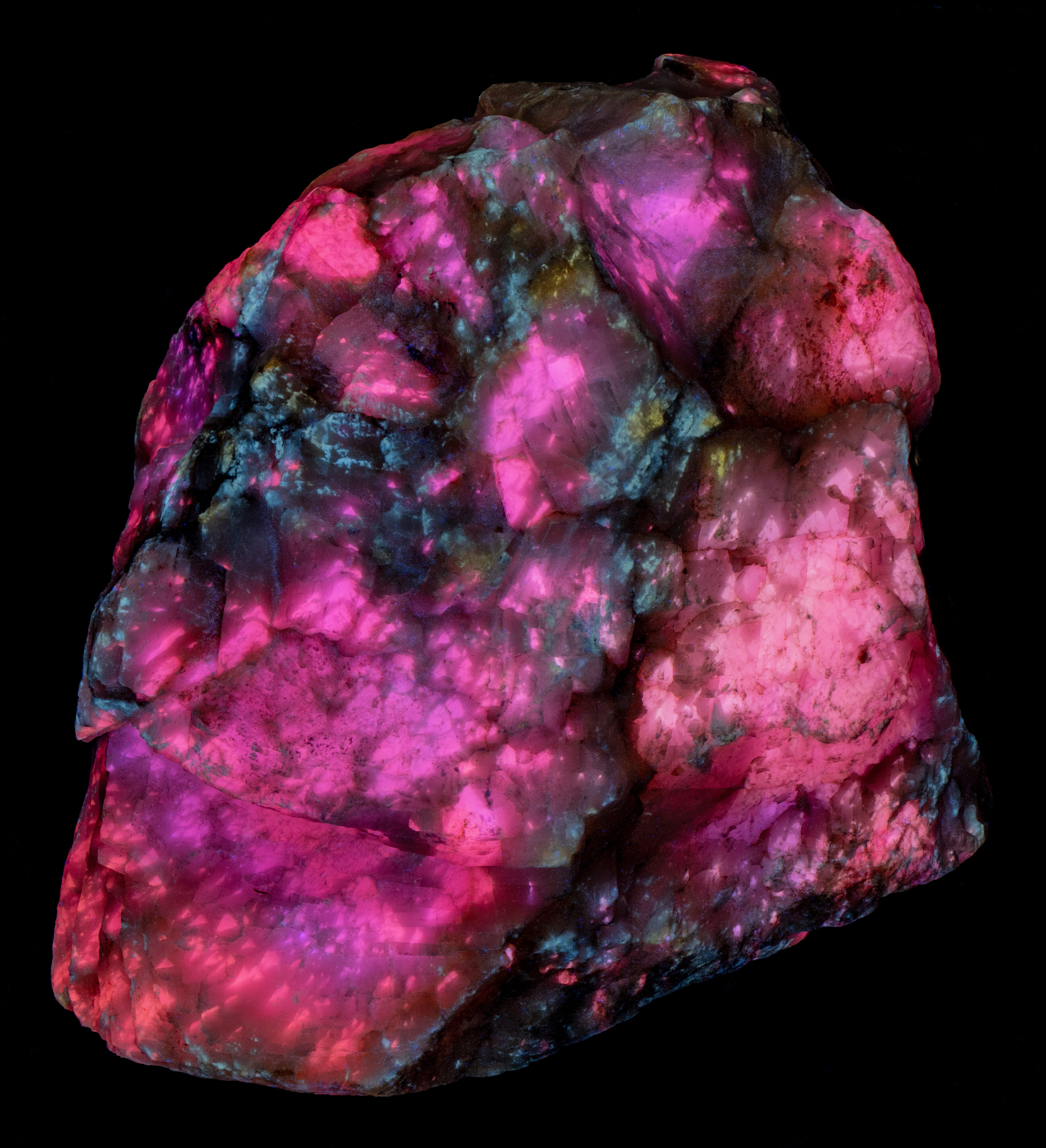
This calcite specimen is from the Little 38 Mine in Terlingua, Texas. It shows the typical fluorescence of Terlingua-type calcite: bright blue-white fluorescence under shortwave UV, a strong long-lasting blue afterglow, and bright pinkish-orange fluorescence under longwave UV. No standard response has been established for Terlingua-type calcite under midwave UV (305 nm) or 340 nm LED illumination. Under those wavelengths, this specimen fluoresces in two colors.
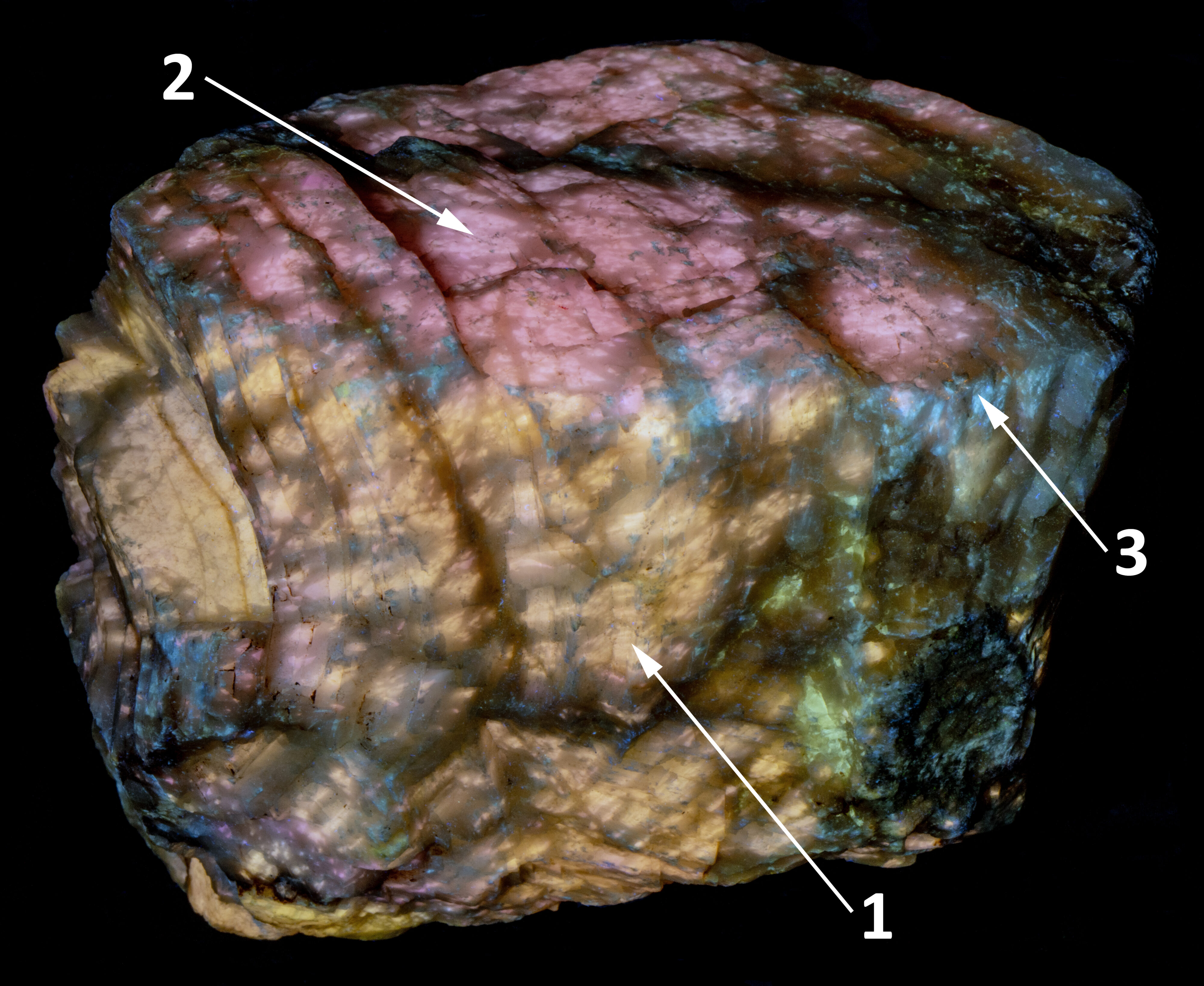
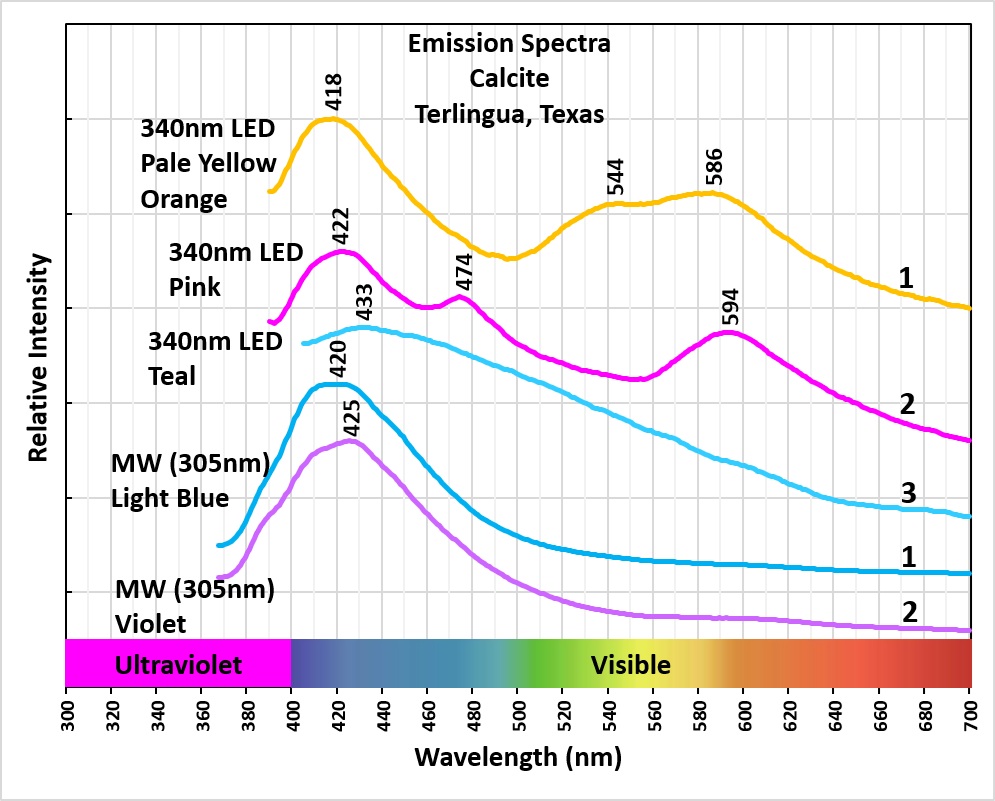
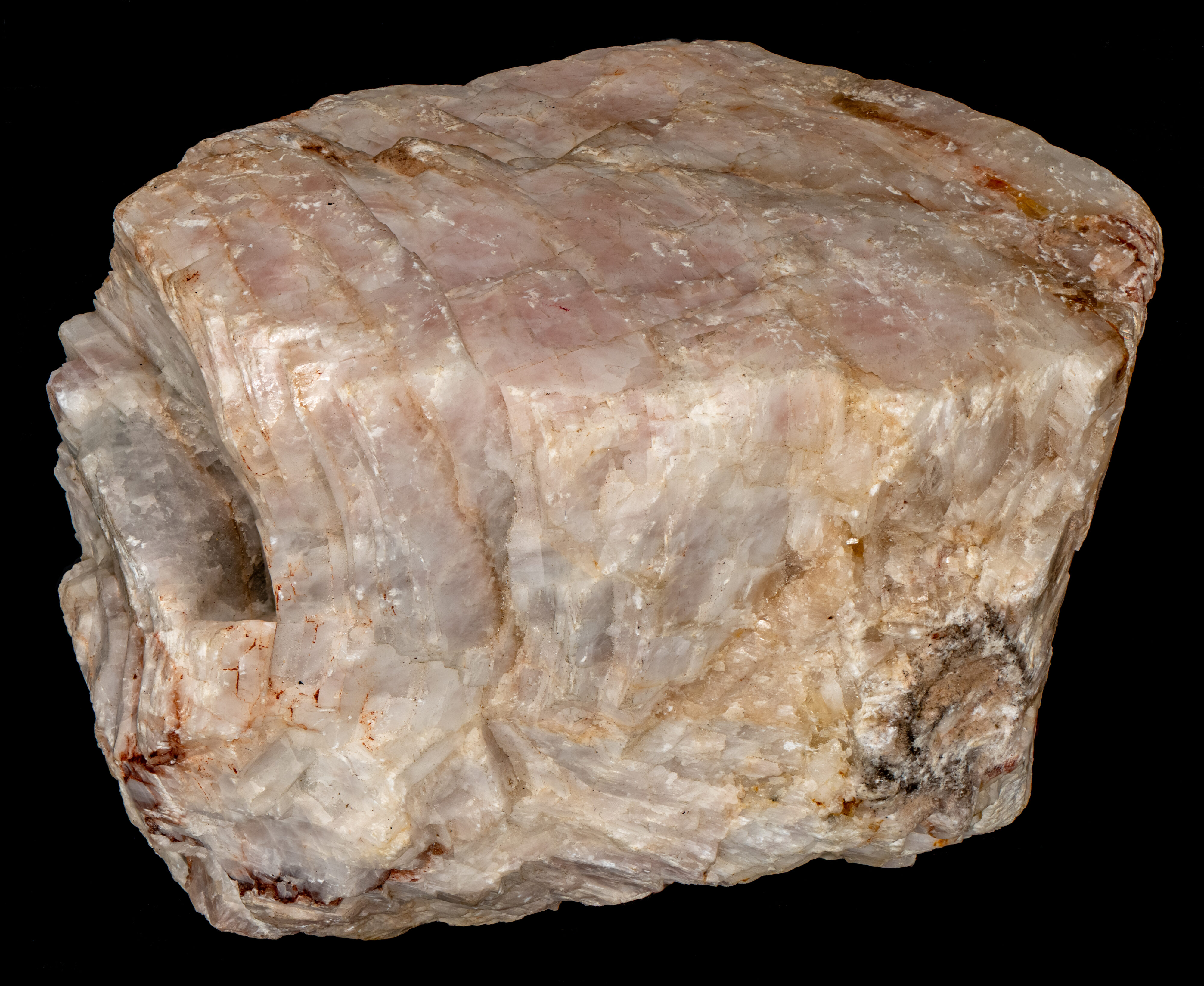
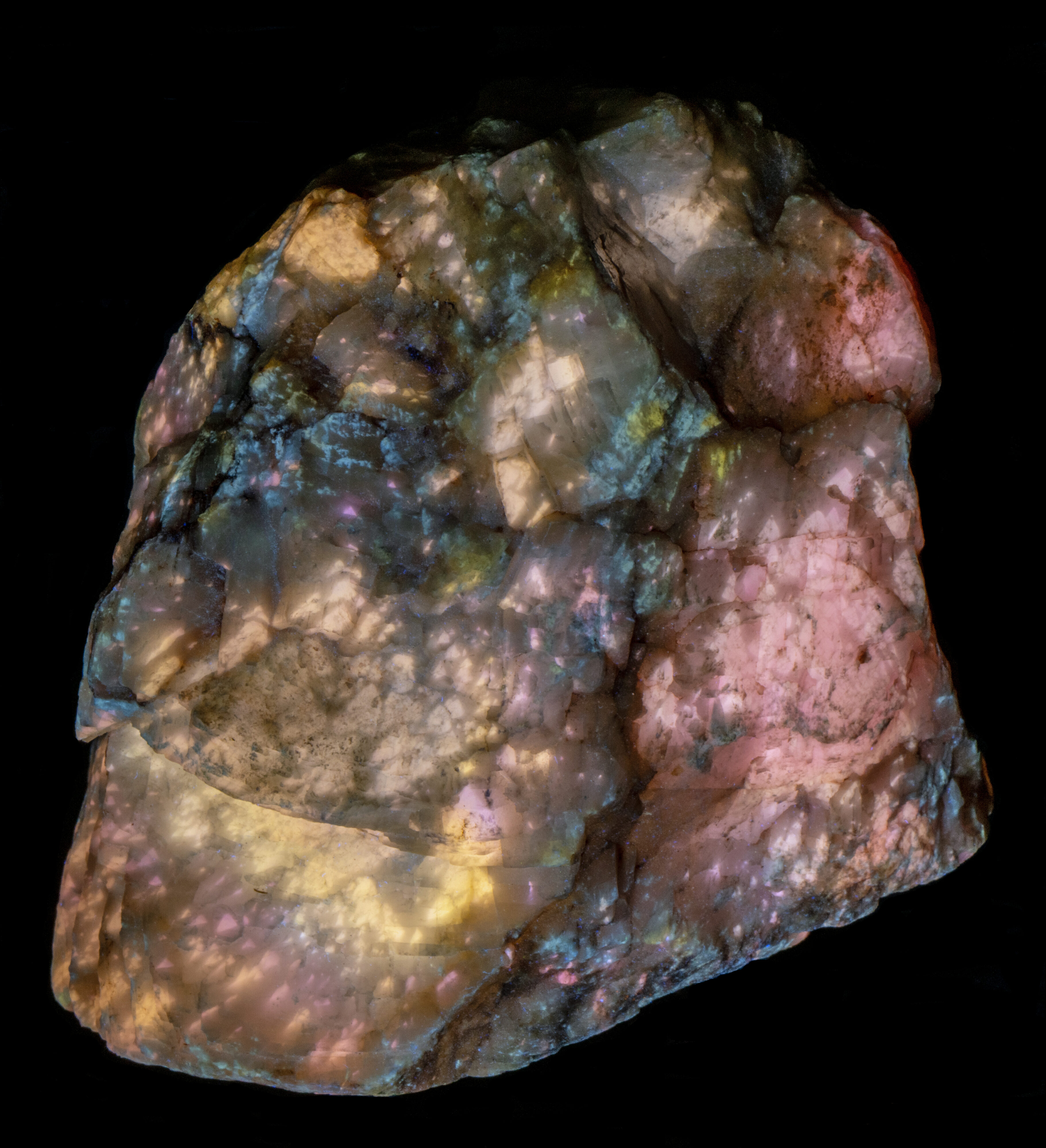
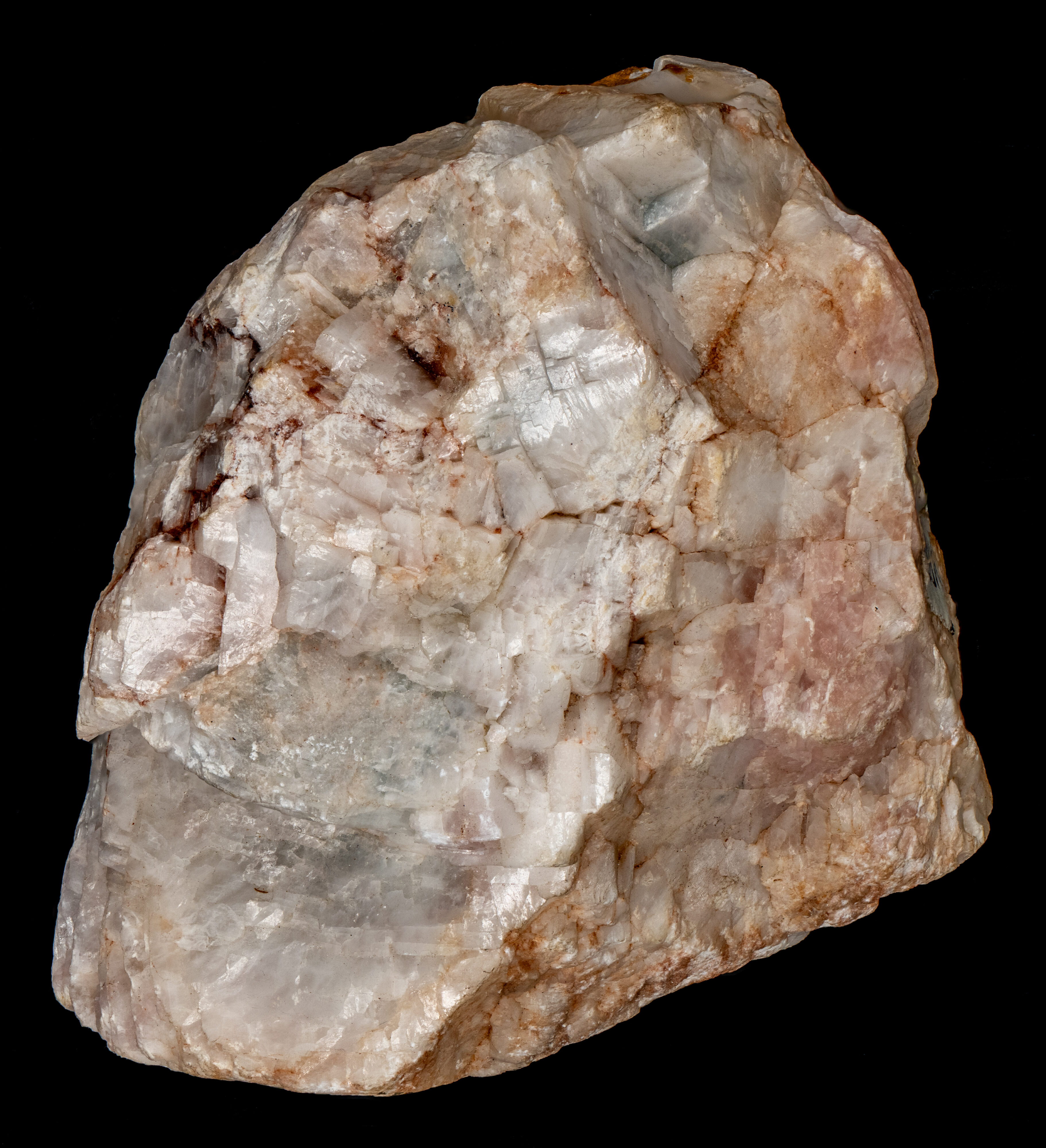
Under 340 nm LED illumination, the specimen shows two large fluorescent regions: the top fluoresces pink, while the side fluoresces pale yellow orange. These regions also differ in daylight color. The pink-fluorescing area appears pink in daylight, whereas the pale yellow-orange, fluorescent area appears white. The pink emission spectrum has three peaks at 422 nm, 474 nm, and 594 nm. The small 474 nm peak is unusual for Terlingua-type calcite and may result from a rare earth impurity replacing calcium. The 422 nm and 594 nm peaks are common in Terlingua-type calcite and are activated by rare earths together with radiation-induced lattice defects. The pale yellow-orange fluorescence also has three emission peaks, but at different wavelengths: 418 nm, 544 nm, and 586 nm. These peaks are likely produced by different rare earth elements coupled with lattice defects. The identity of the rare earth elements has not been determined, and the nature of the lattice defect is unknown as well. One possibility for the defects is missing carbonate ions, but this hypothesis is unproven.
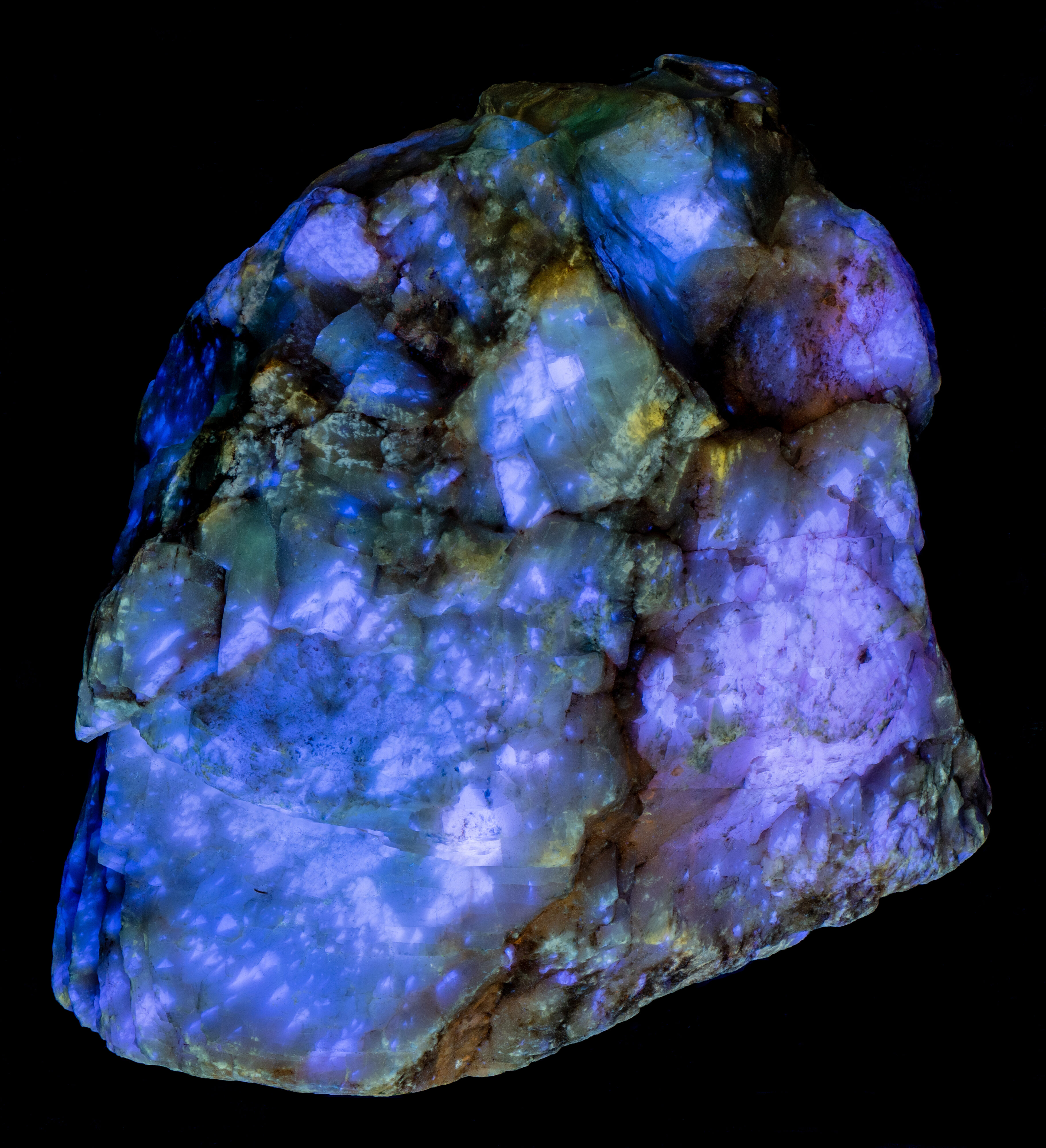
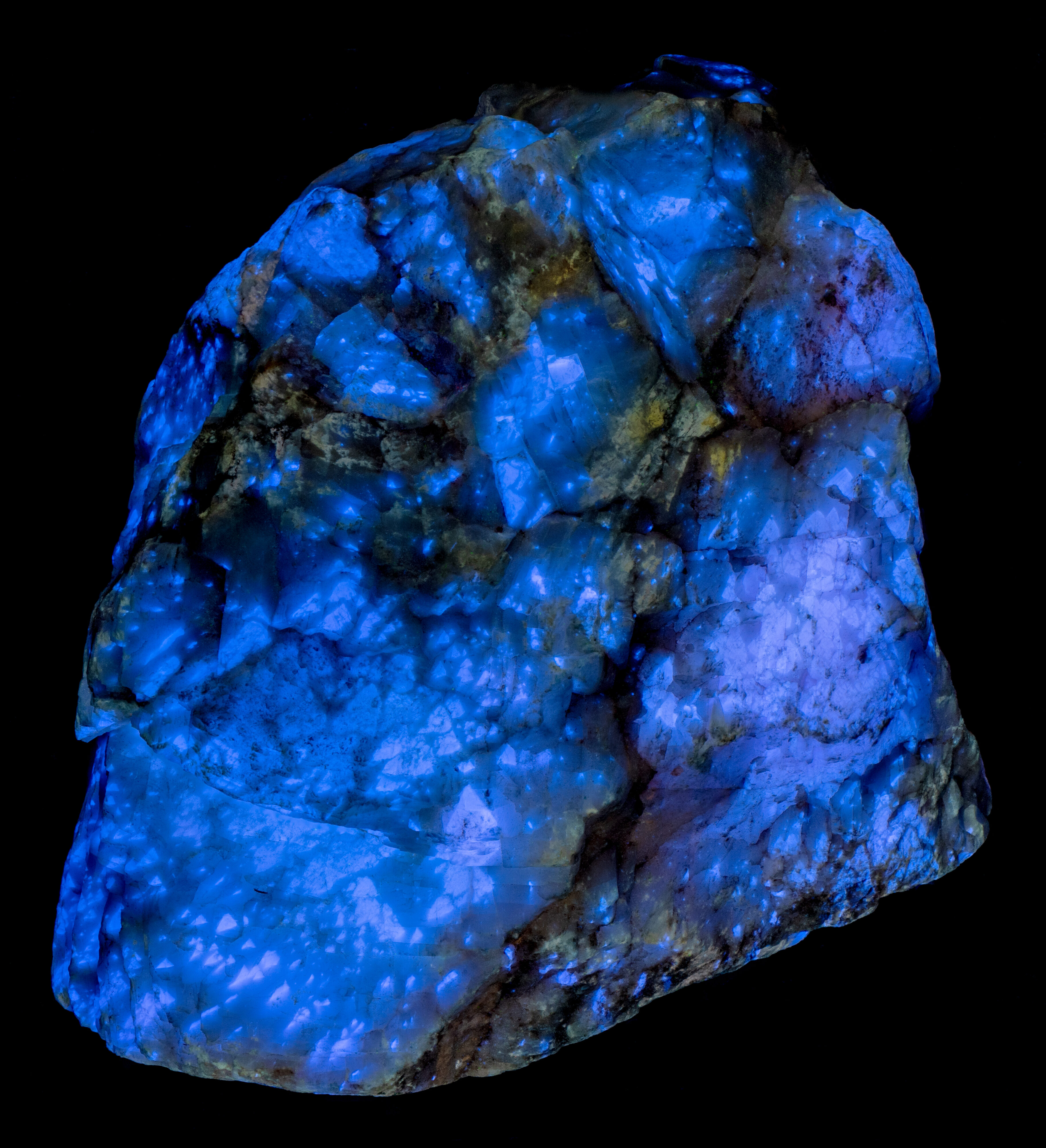
The calcite also shows two midwave fluorescence colors: light blue and violet. Their emission spectra differ only slightly in peak wavelength, with violet fluorescence peaking at 425 nm and light blue fluorescence at 420 nm. Midwave exposure produces no apparent difference in afterglow color or duration.
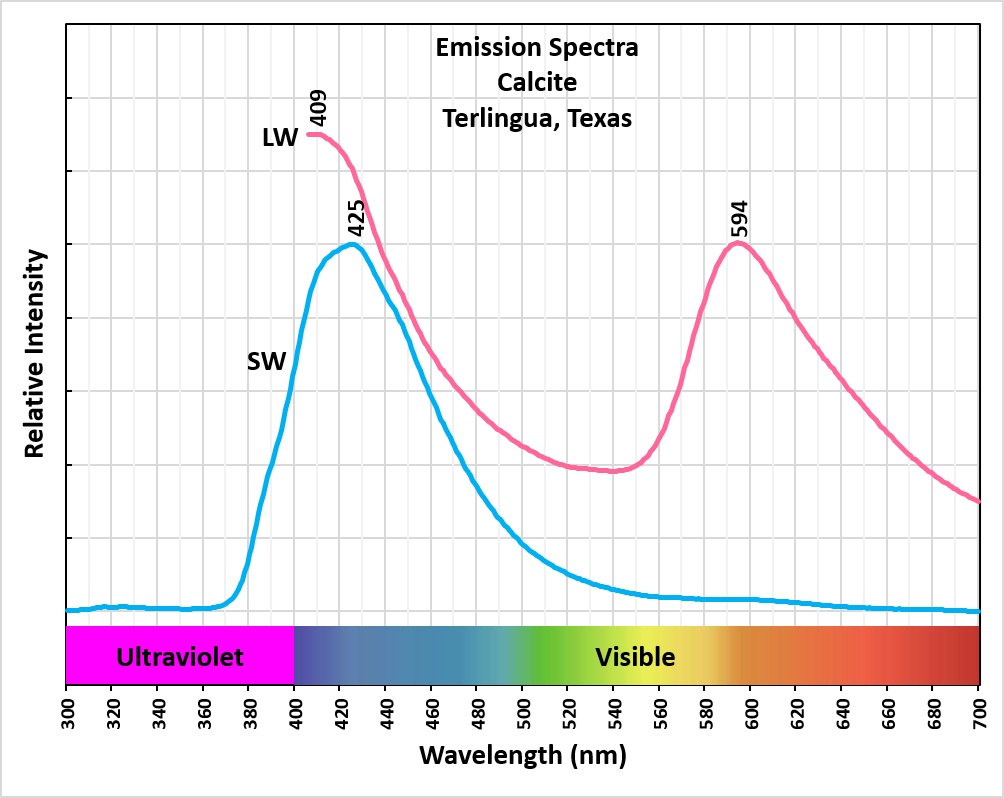
Pinkish-orange longwave fluorescence is common in Terlingua calcite. Its emission spectrum has peaks at 409 nm (violet) and 594 nm (orange); together, these emissions create the pinkish-orange color. In Terlingua-type calcite, the violet and orange fluorescence is activated by radiation-induced lattice defects. These defects are likely associated with different rare earth elements that produce the two emission peaks at 409 nm and 594 nm (Waychunas, 2012), although the specific rare earth elements have not been identified.
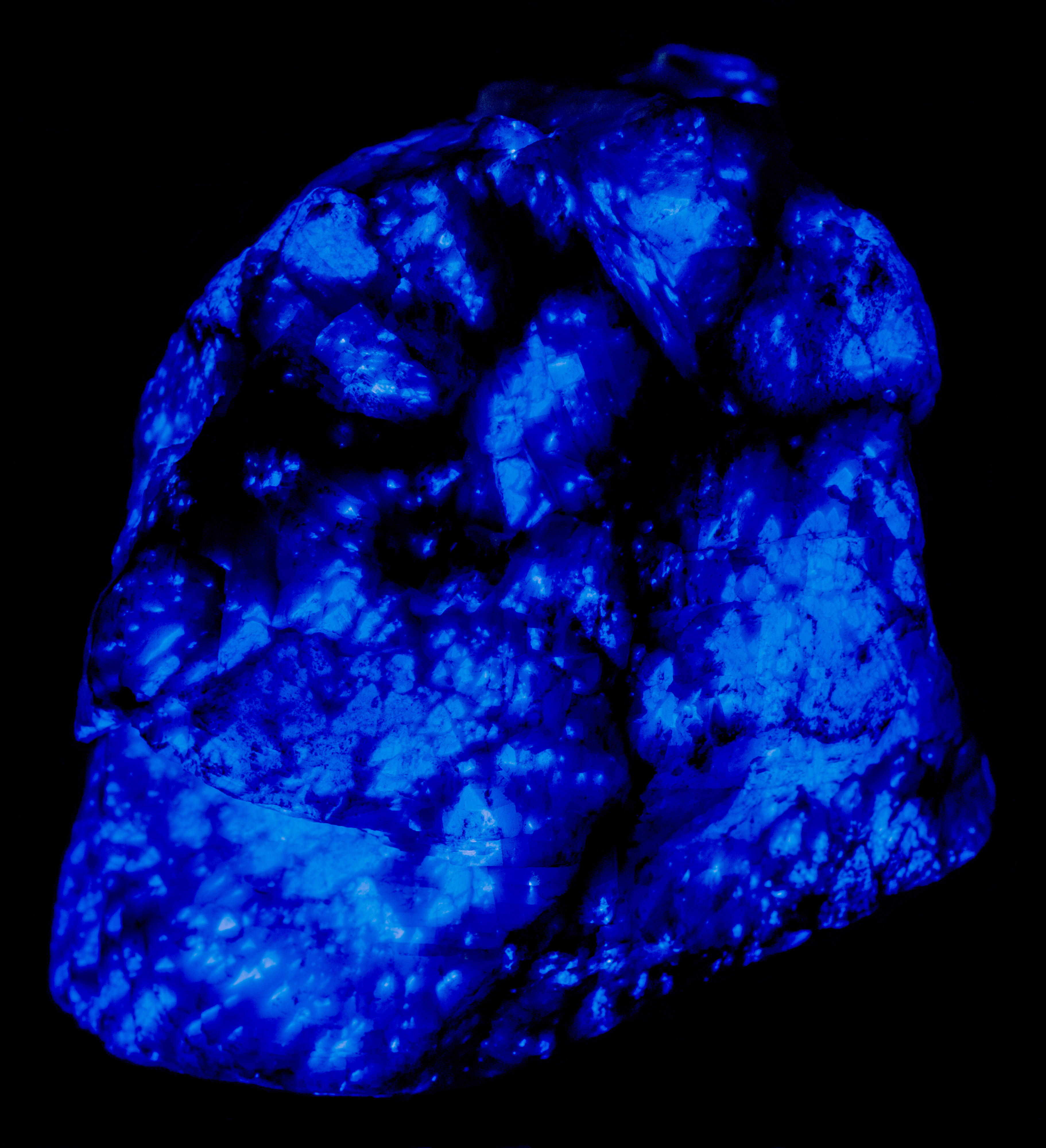
The shortwave emission spectrum has a strong peak at 425 nm. This emission is also activated by radiation-induced lattice defects associated with a rare earth element. The intense violet-blue afterglow following shortwave exposure indicates the presence of electron traps just below the conduction band. Shortwave light excites electrons into these traps. Thermal energy then slowly releases the electrons into the conduction band, where they lose some energy and drop to the excited state. As each electron returns from the excited state to the valence band, that energy is emitted as a photon of violet-blue light. Temperature affects how quickly electrons leave the traps and, therefore, how long the afterglow lasts. Cooler temperatures slow this release and extend the afterglow.
Summary of luminescence responses:
Calcite (Mindat) (RRUFF)
- Fluorescence under Longwave (365nm LED) UV light: Orange
- Fluorescence under Midwave (305nm LED) UV light: Violet
- Fluorescence under Midwave (305nm LED) UV light: Blue
- Fluorescence under Shortwave (255nm LED) UV light: Blue
- Afterglow after exposure to Midwave (305nm LED) UV light: Blue
- Afterglow after exposure to Shortwave (255nm LED) UV light: Blue
- Fluorescence under 340nm LED UV light: Yellow
- Fluorescence under 340nm LED UV light: Pink