
Unusual Terlingua-Type Calcite
Contributed by: Michael Crawford
Date: Aug 31st, 2026
Locality: Challenger Cave System, Monterrey Municipality, Nuevo León, Mexico (See on Mindat)
Size: 9.5 x 11.5 cm
Description:
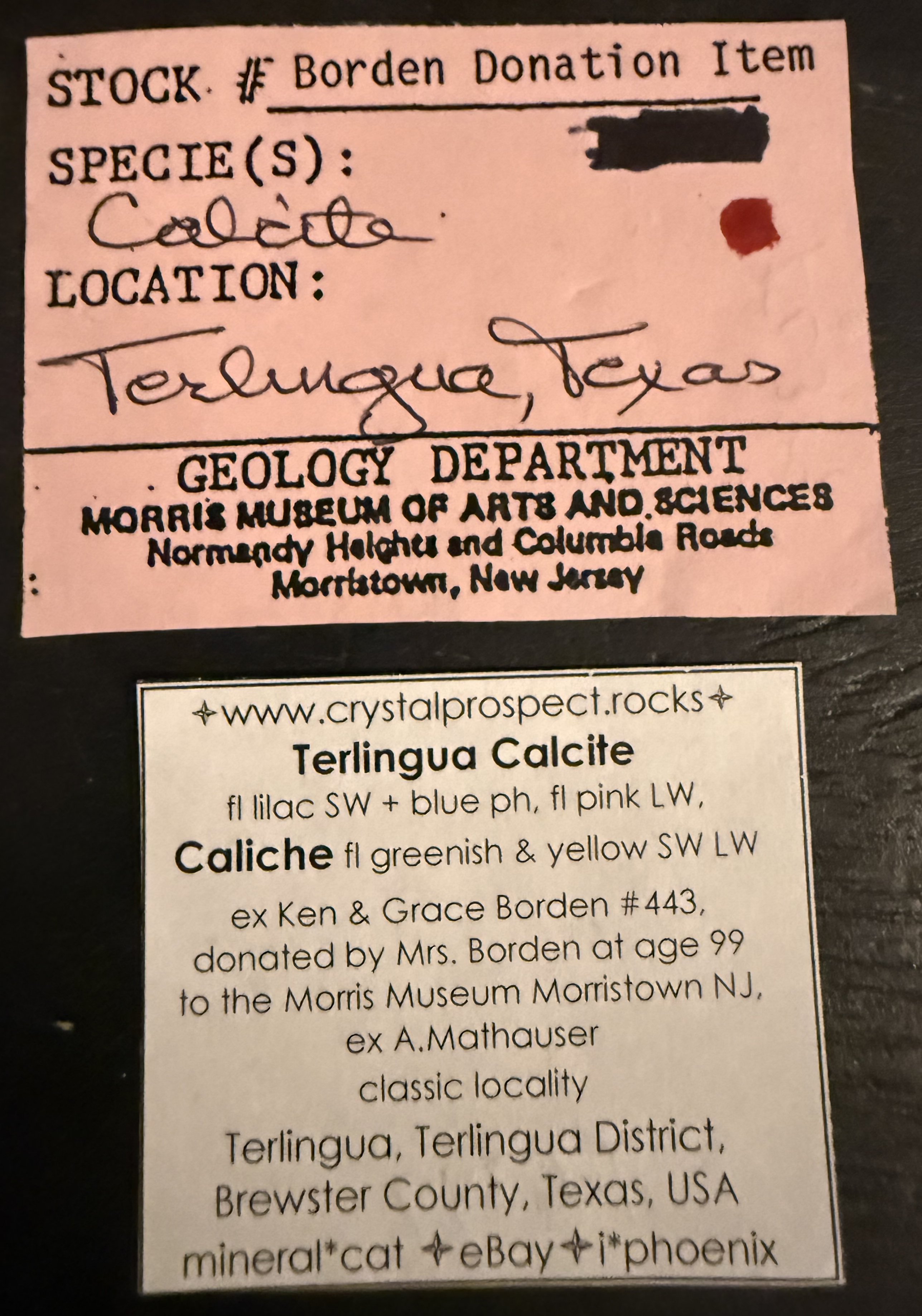
This specimen was sold and labeled as Terlingua calcite from Terlingua, Texas. However, several features suggest it is not from Terlingua, but is more likely Terlingua-type calcite from Challenger Cave, Mexico. Its large rhombohedral habit is typical of Challenger Cave specimens but unusual for true Terlingua calcite, which occurs as euhedral scalenohedral or modified scalenohedral crystals, or as anhedral masses (Gossien, 2005).
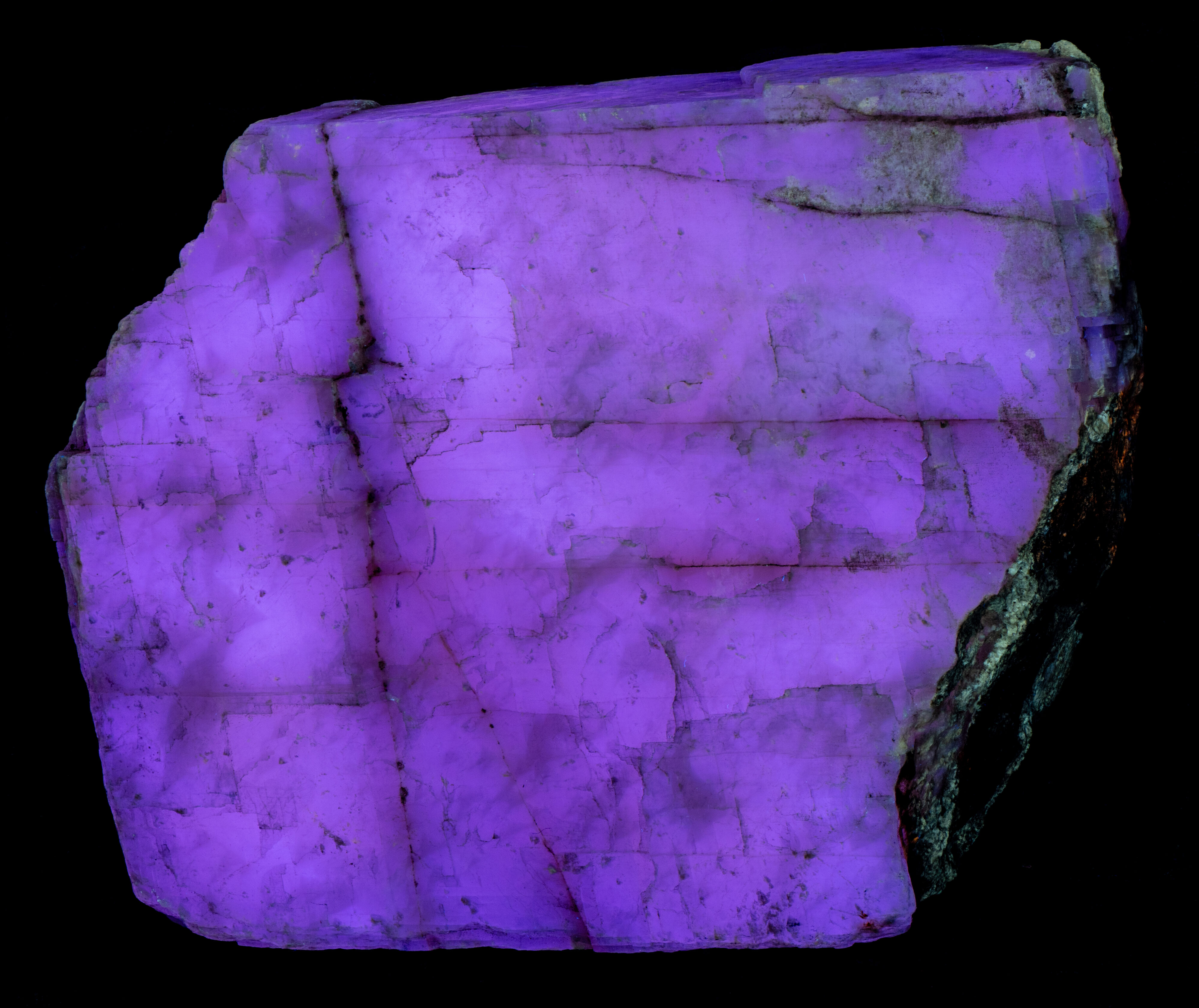
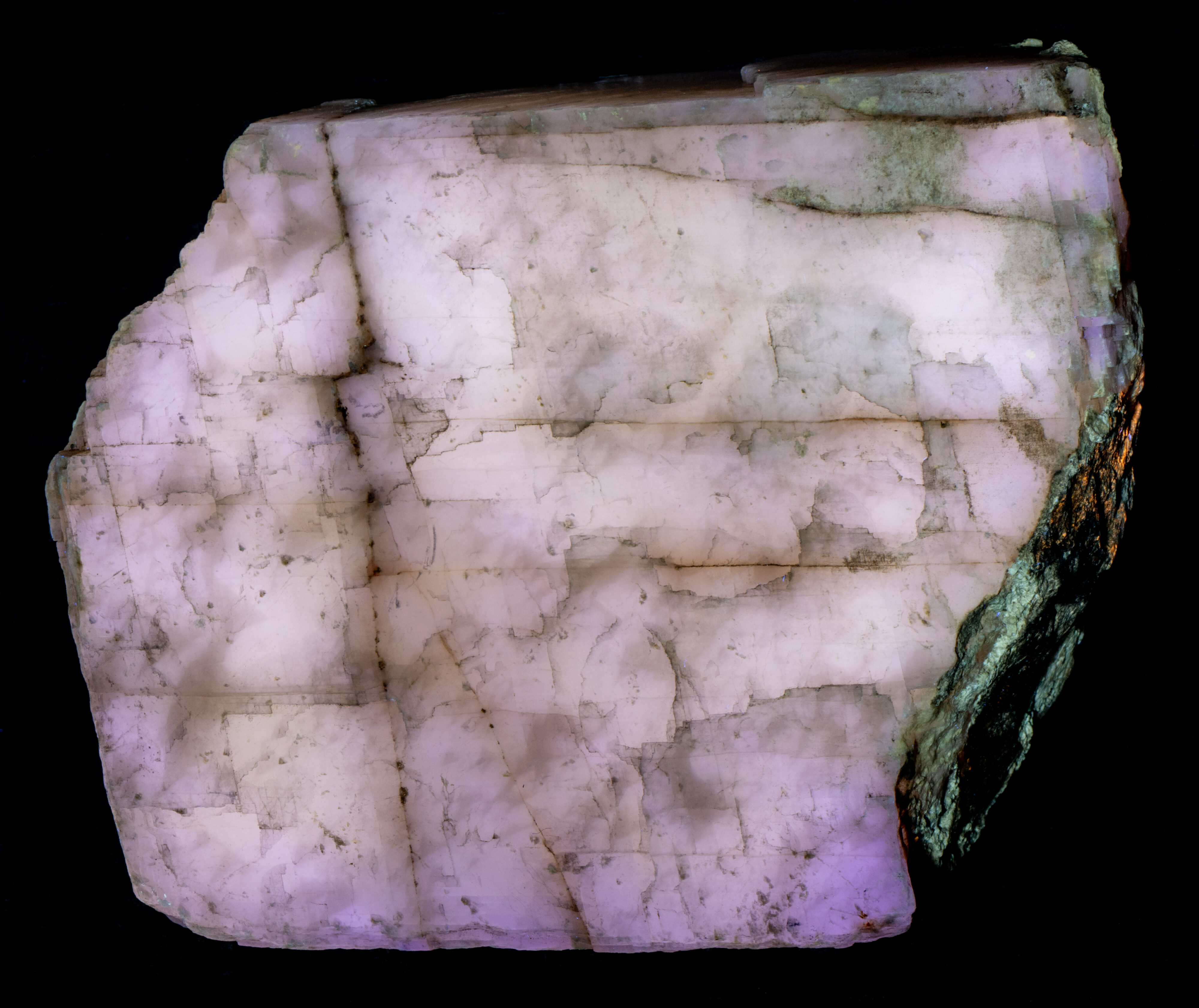
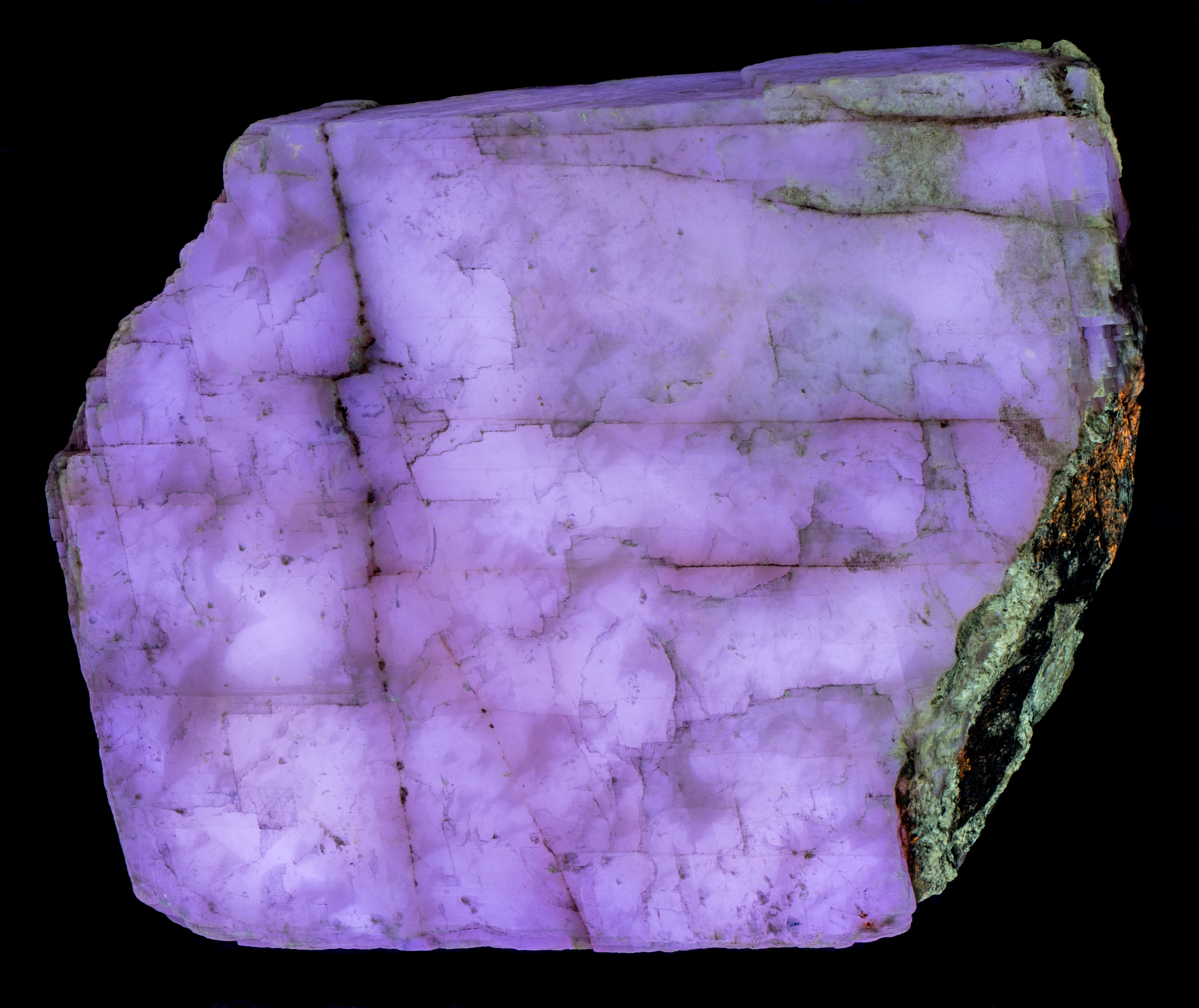
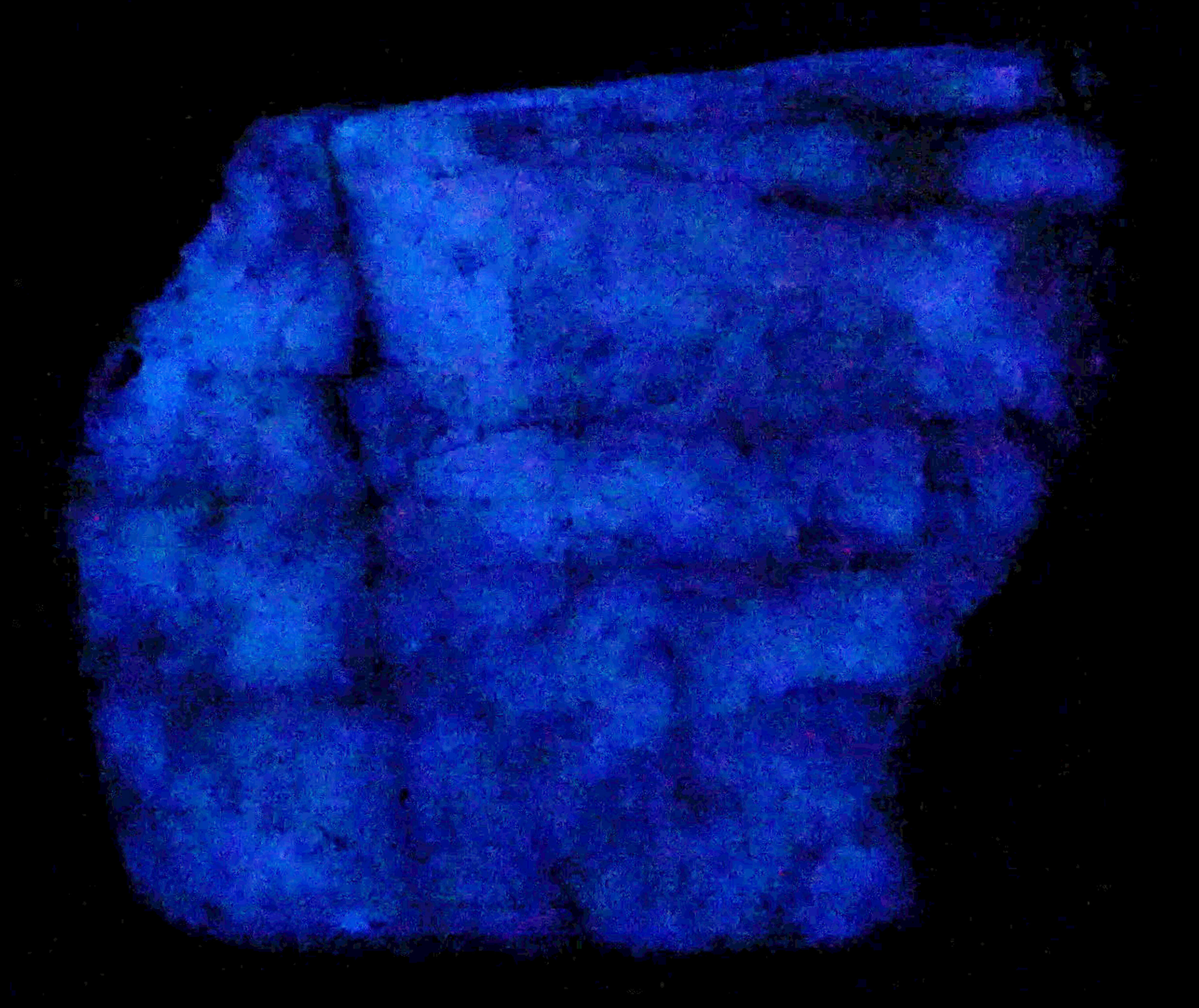
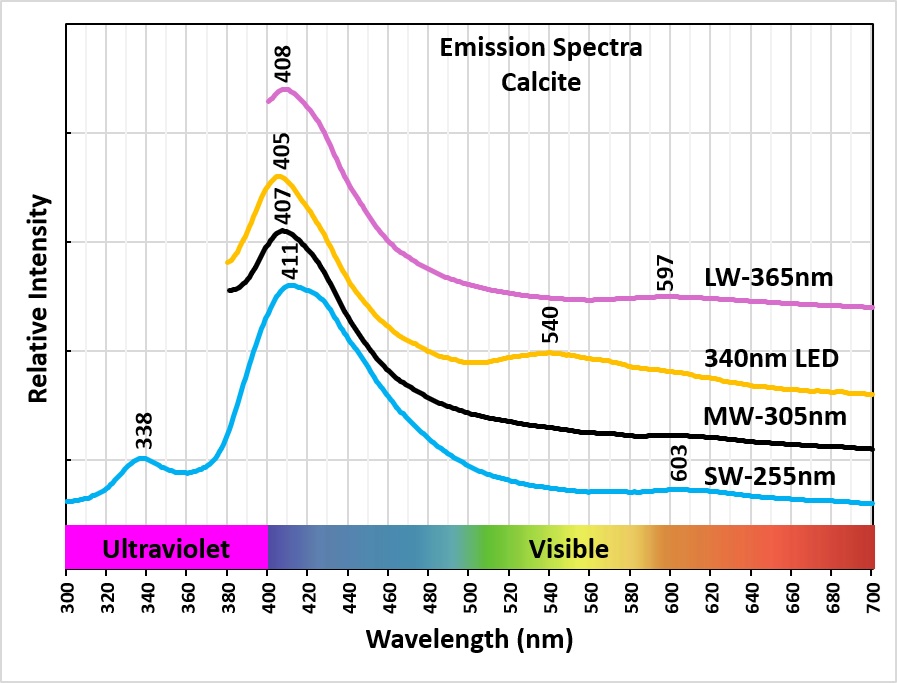
This specimen's fluorescence also differs from the defining characteristics of Terlingua calcite: bright blue-white shortwave UV fluorescence, a bright long-lasting blue afterglow, and bright pinkish-orange longwave UV fluorescence. Under shortwave UV, this specimen fluoresces pinkish violet rather than blue-white, though it does show the strong blue afterglow typical of Terlingua calcite. Its shortwave emission spectrum includes the typical 411 nm peak, but also a subtle broad peak at 603 nm; this orange-red emission produces the specimen’s pinkish color.
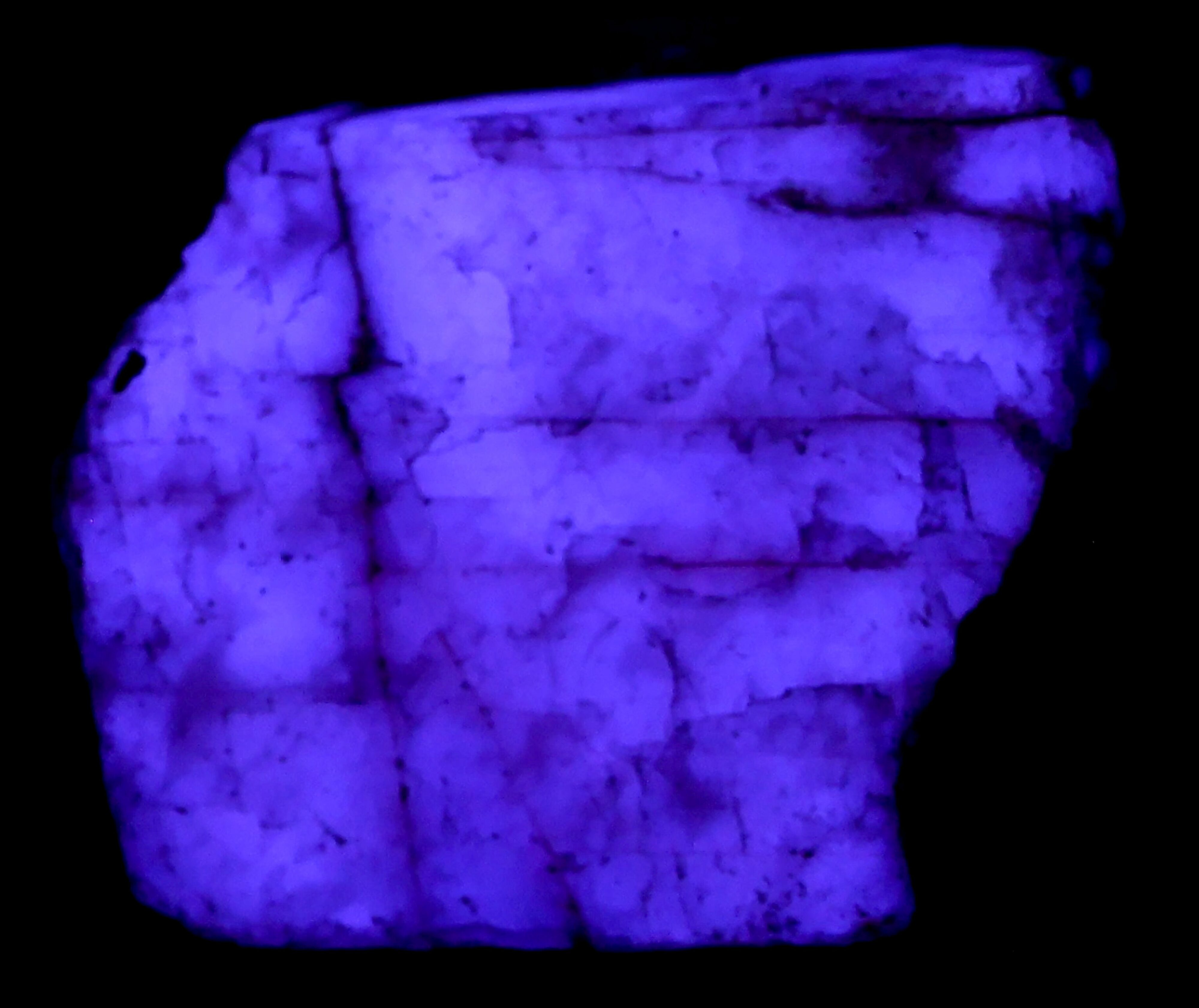
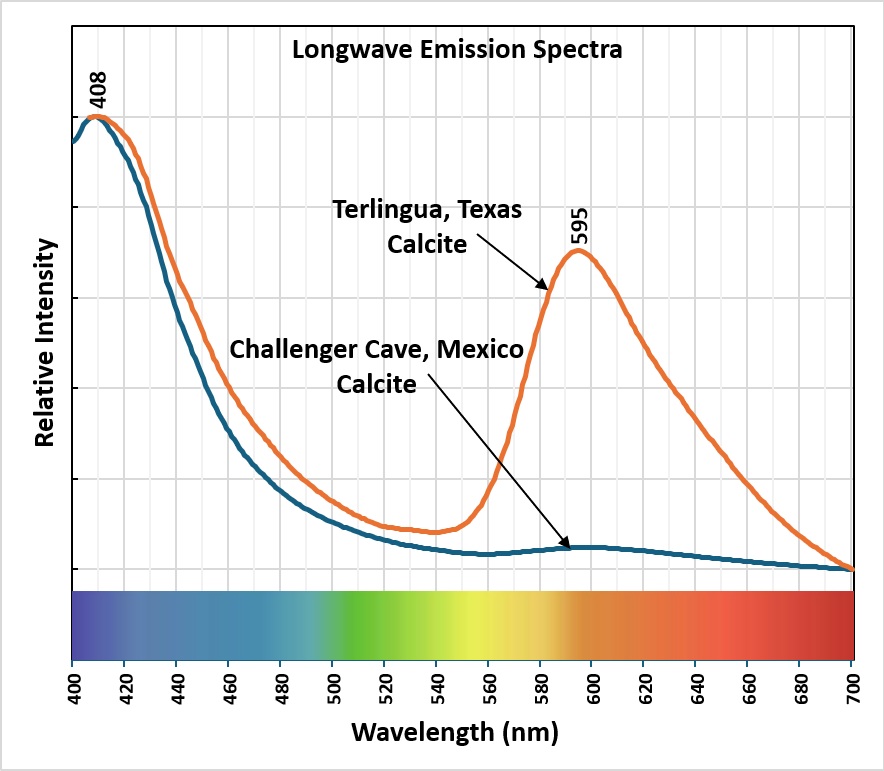
Under longwave UV, the fluorescence is pink rather than the pinkish orange expected for Terlingua calcite. The longwave emission spectrum shows a bright 408 nm peak and a weak broad peak at 597 nm. Although similar to a true Terlingua calcite spectrum, which has peaks at 408 nm and 595 nm, this specimen has much lower orange intensity. It also shows weak longwave afterglow, whereas true Terlingua calcite does not.
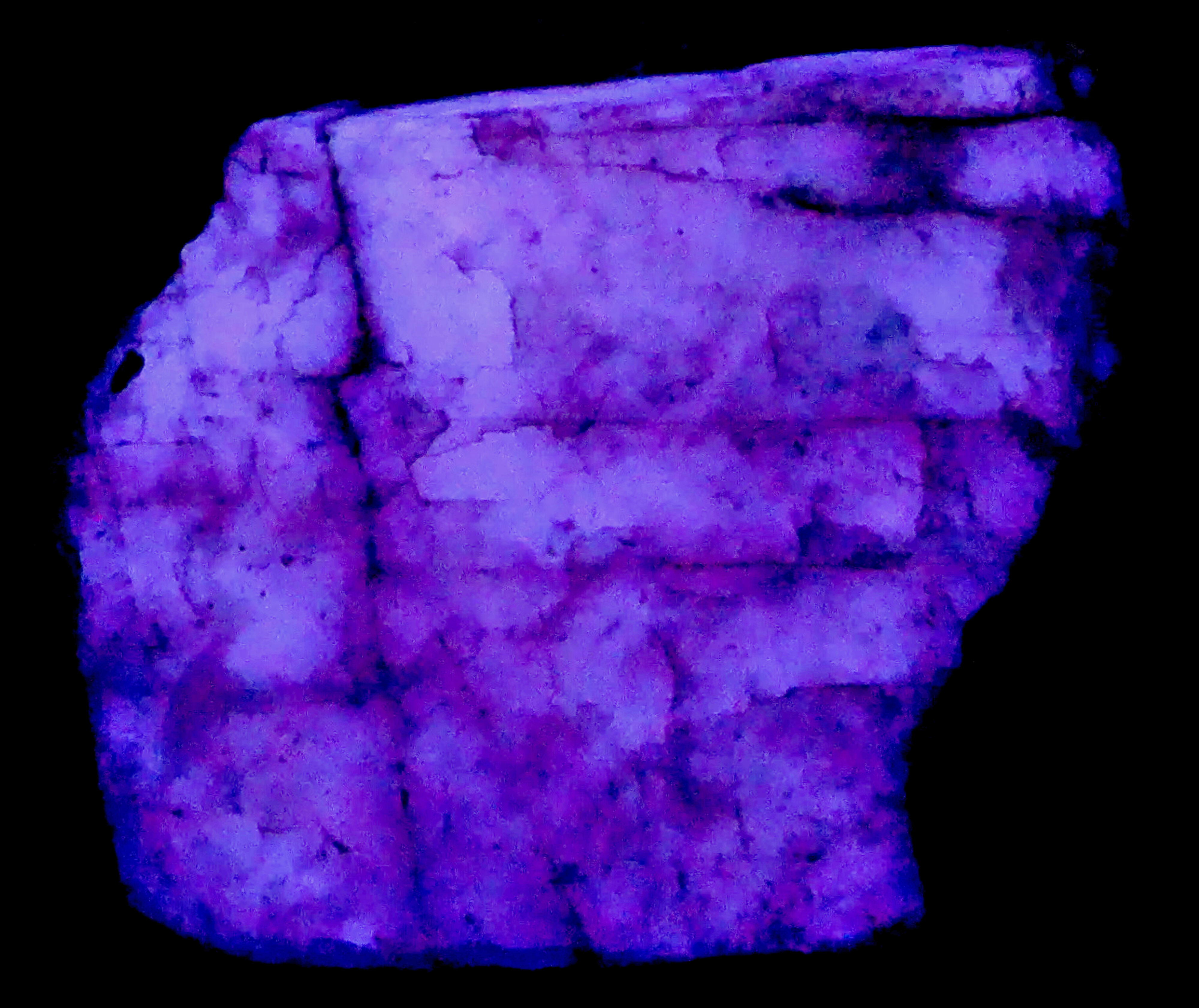
Its midwave fluorescence color, pale pink to white, resembles Terlingua calcite. However, the specimen shows an unusual midwave afterglow: immediately after the light is turned off, brief red and violet patches appear. The red afterglow suggests brief intense phosphorescence (BIP) is caused by a manganese activator. The afterglow then turns blue, as in typical Terlingua-type calcite, but is much shorter and weaker than the shortwave afterglow.
Under 340 nm LED light, the calcite appears white, and its emission spectrum shows a broad peak at 540 nm, as seen in many Terlingua-type calcites from Challenger Cave.
The shortwave emission spectrum also has a small ultraviolet peak at 338 nm. This peak occurs in some Challenger Cave calcites but has not been observed in Terlingua calcites. In a false-color ultraviolet fluorescence image, the specimen appears mostly yellow from the 338 nm ultraviolet peak and the ultraviolet shoulder of the 411 nm violet peak. Green patches correspond to the ultraviolet peak where violet fluorescence is weaker, possibly because the violet-fluorescence activator is less concentrated in those areas.
References:
Gossien, F., 2005, More About Terlingua, UV Waves, V.35, No.4
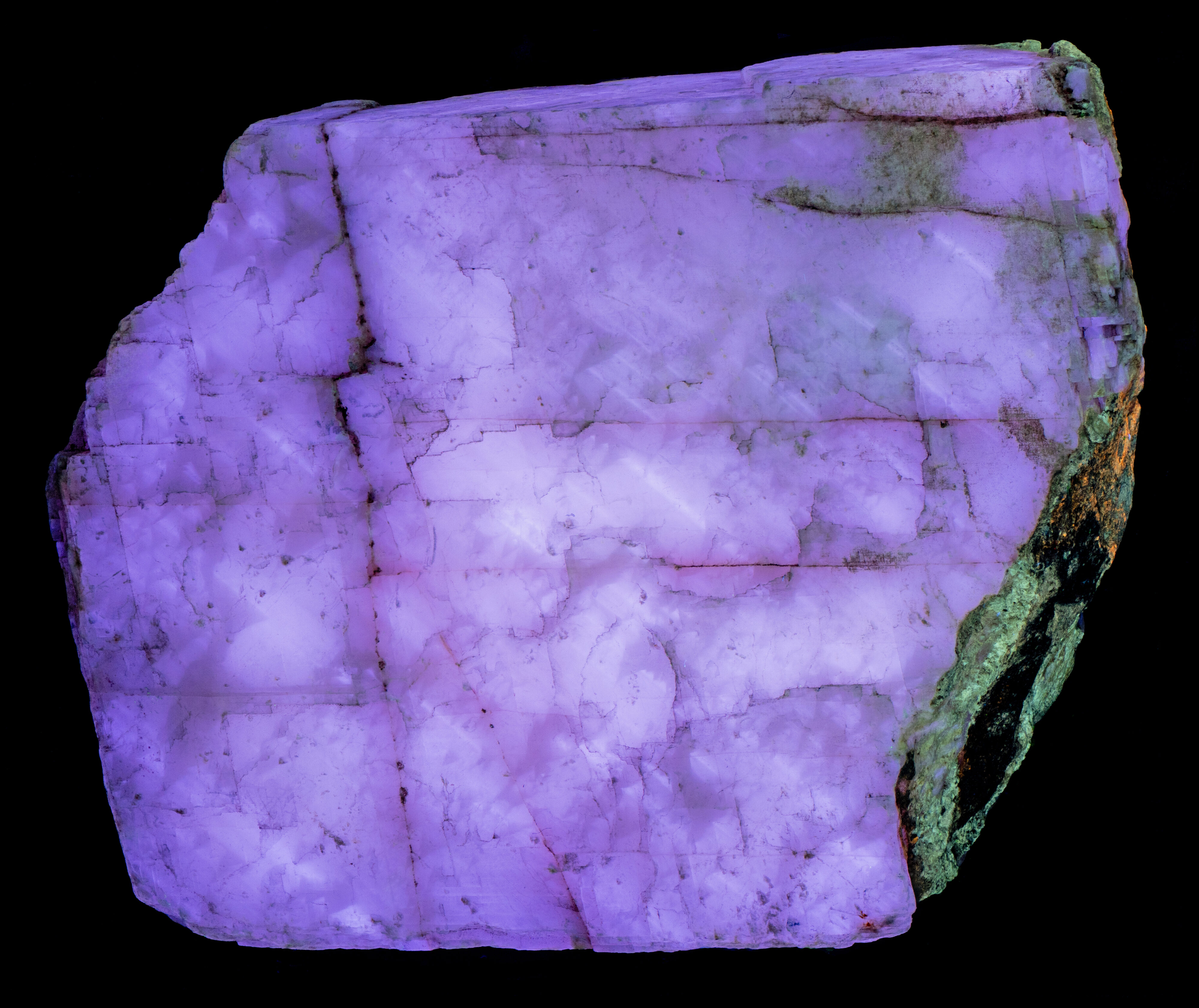
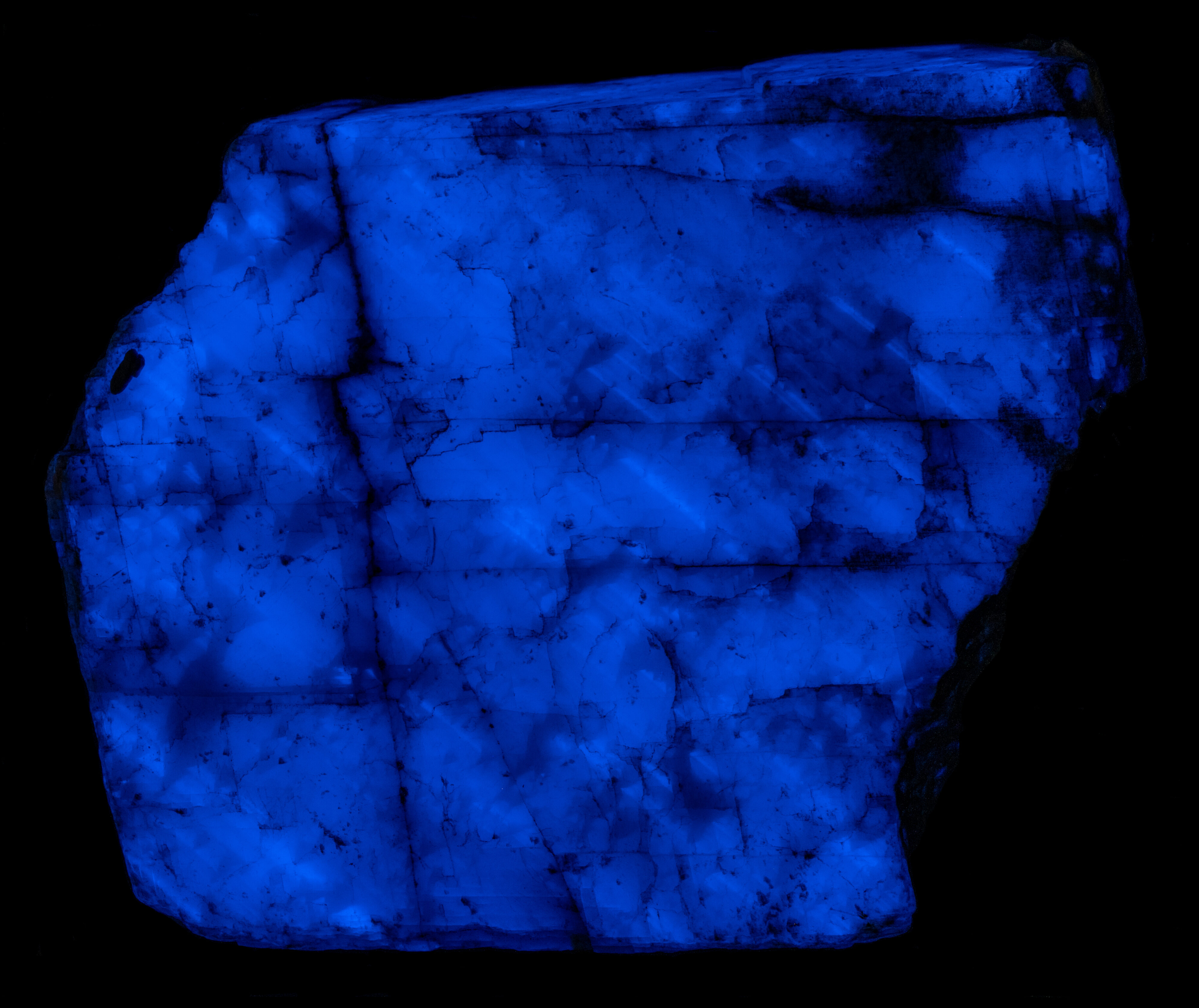
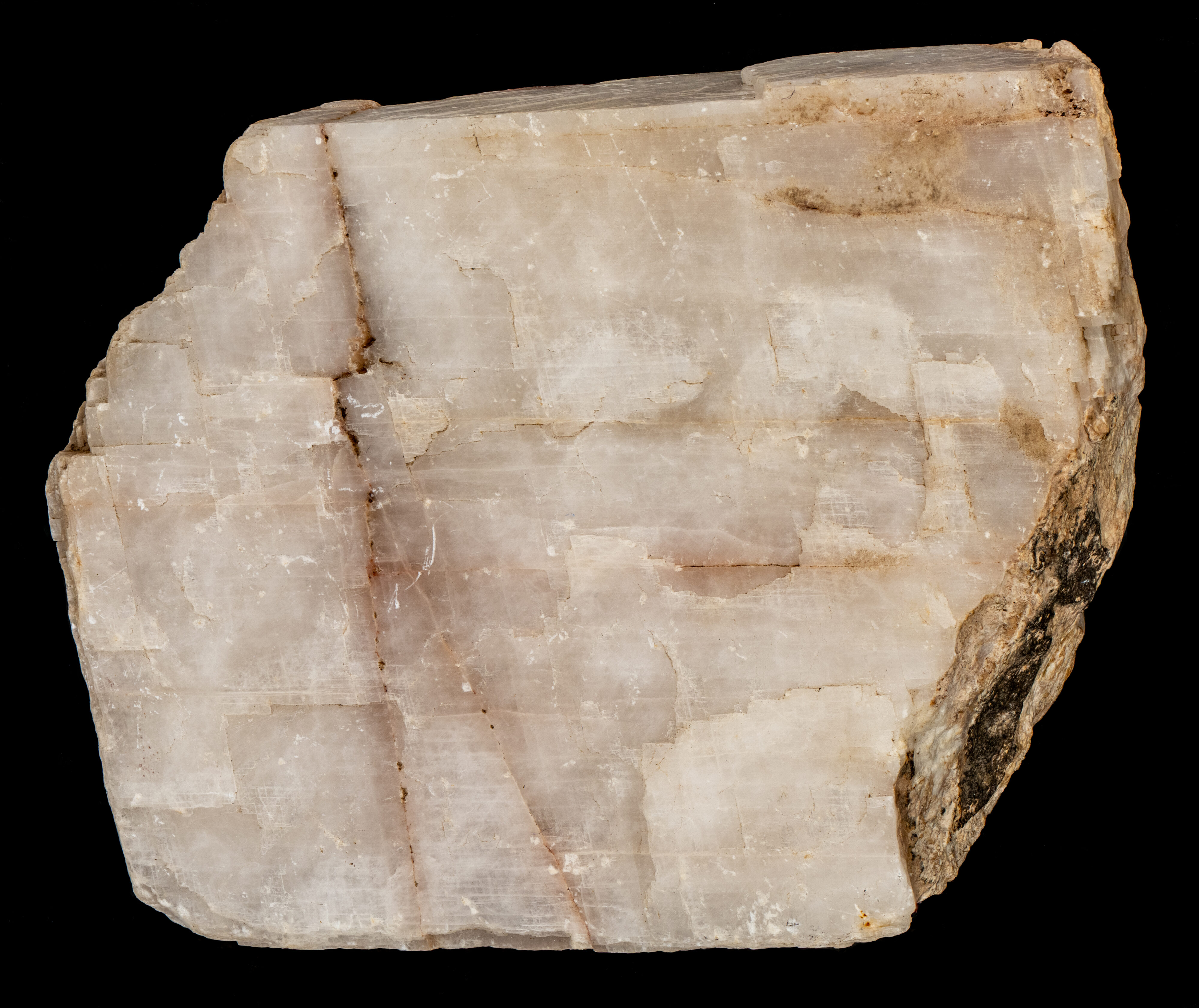
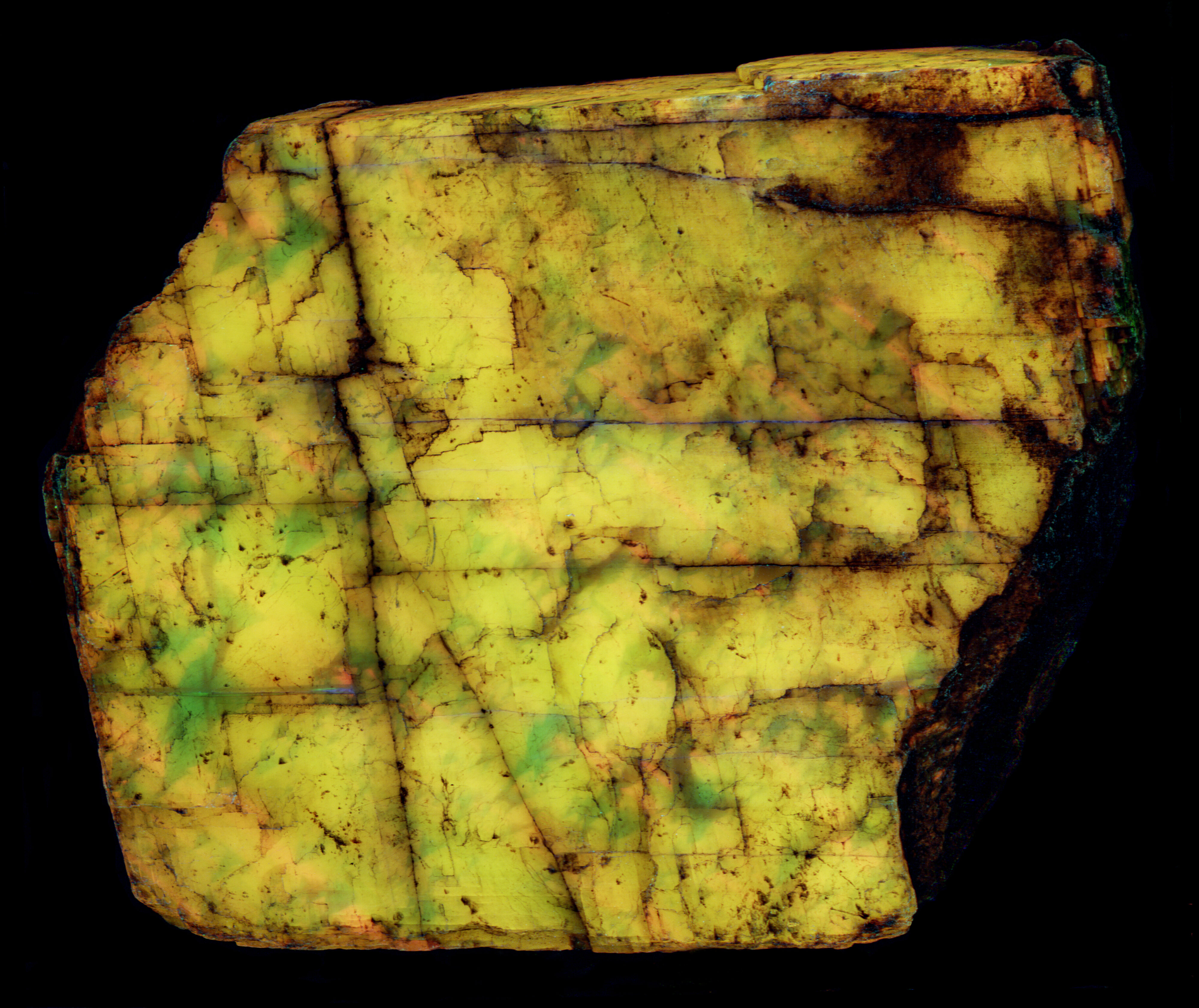
Summary of luminescence responses:
Calcite (Mindat) (RRUFF)
- Fluorescence under Longwave (365nm LED) UV light: Pink
- Afterglow after exposure to Longwave (365nm LED) UV light: Pink
- Fluorescence under Midwave (305nm LED) UV light: White
- Afterglow after exposure to Midwave (305nm LED) UV light: Red
- Afterglow after exposure to Midwave (305nm LED) UV light: Blue
- Fluorescence under Shortwave (255nm LED) UV light: Violet
- Afterglow after exposure to Shortwave (255nm LED) UV light: Blue
- Fluorescence under 340nm LED UV light: White