
Creedite – Hall Molybdenum Mine, Nye County, Nevada
Contributed by: Michael Crawford
Date: Jul 24th, 2026
Locality: Hall Molybdenum Mine (Hall's Mine; Anaconda Mine; Liberty Mine; Cyprus Tonopah Mine; Tonopah Copper Mine), San Antone Mining District, San Antonio Mountains, Nye County, Nevada, USA (See on Mindat)
Size: 6 x 6 cm
Description:
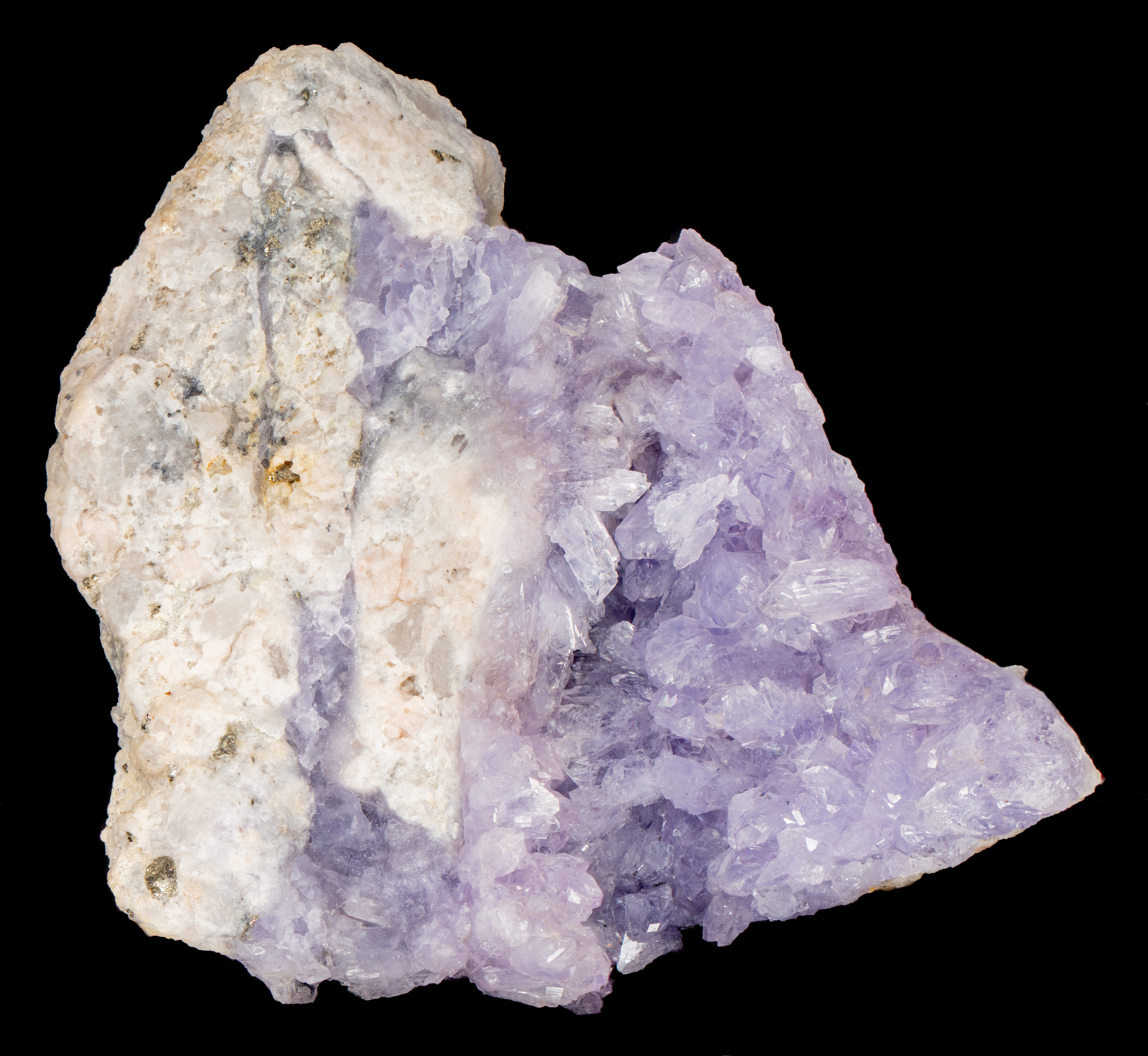
Lavender creedite (Ca3Al2(SO4)(OH)2F8 · 2H2O) crystals from the Hall Molybdenum Mine in Nye County, Nevada. The Hall Molybdenum Mine is a former Mo-Cu-Ag-Au mine that was in operation from 1979 to 1991. Creedite is unusual because it contains both sulfate (SO4) and fluorine anions, and it forms as a secondary mineral in the oxidation zones of fluorine-rich hydrothermal ore deposits.
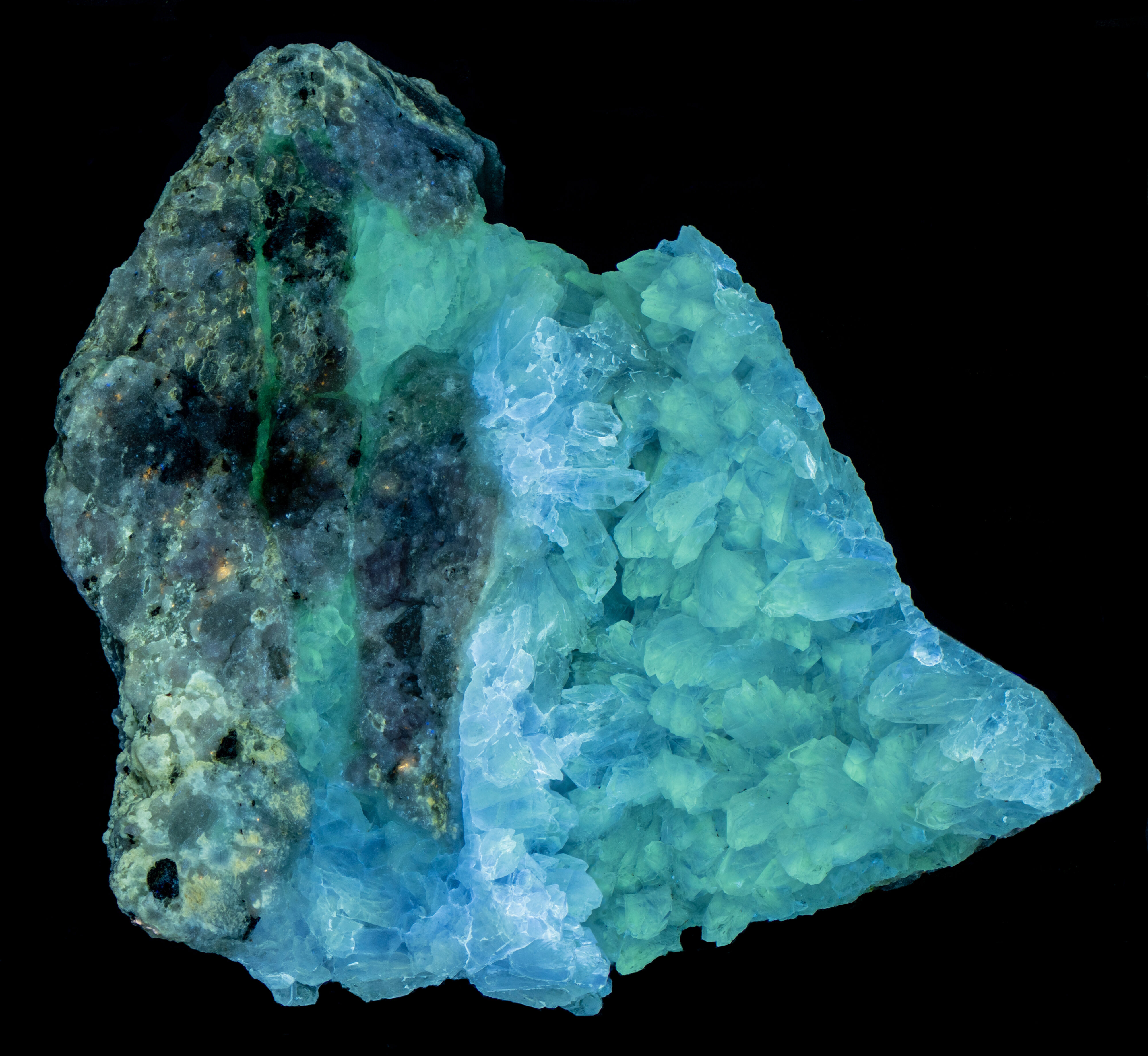
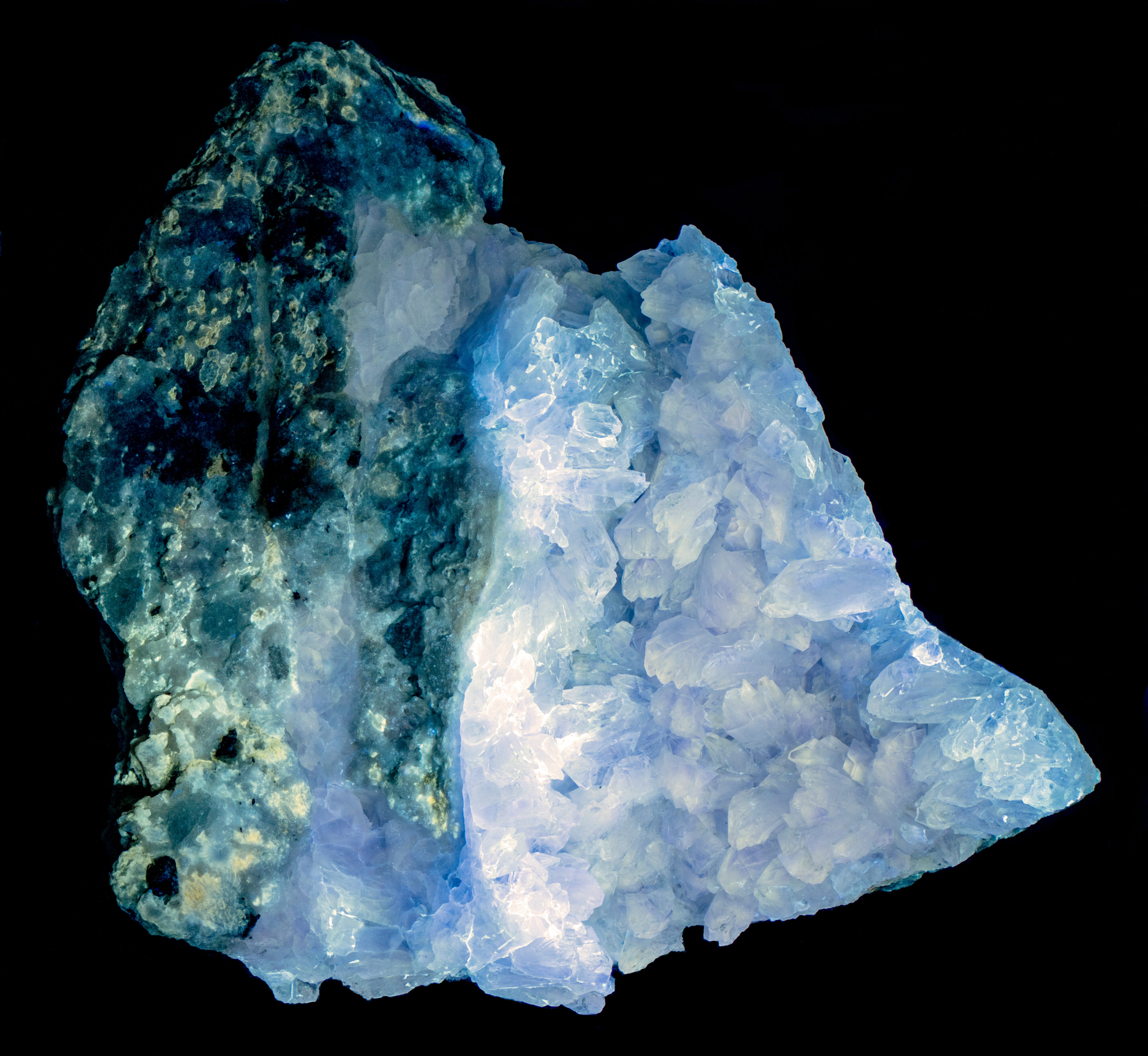
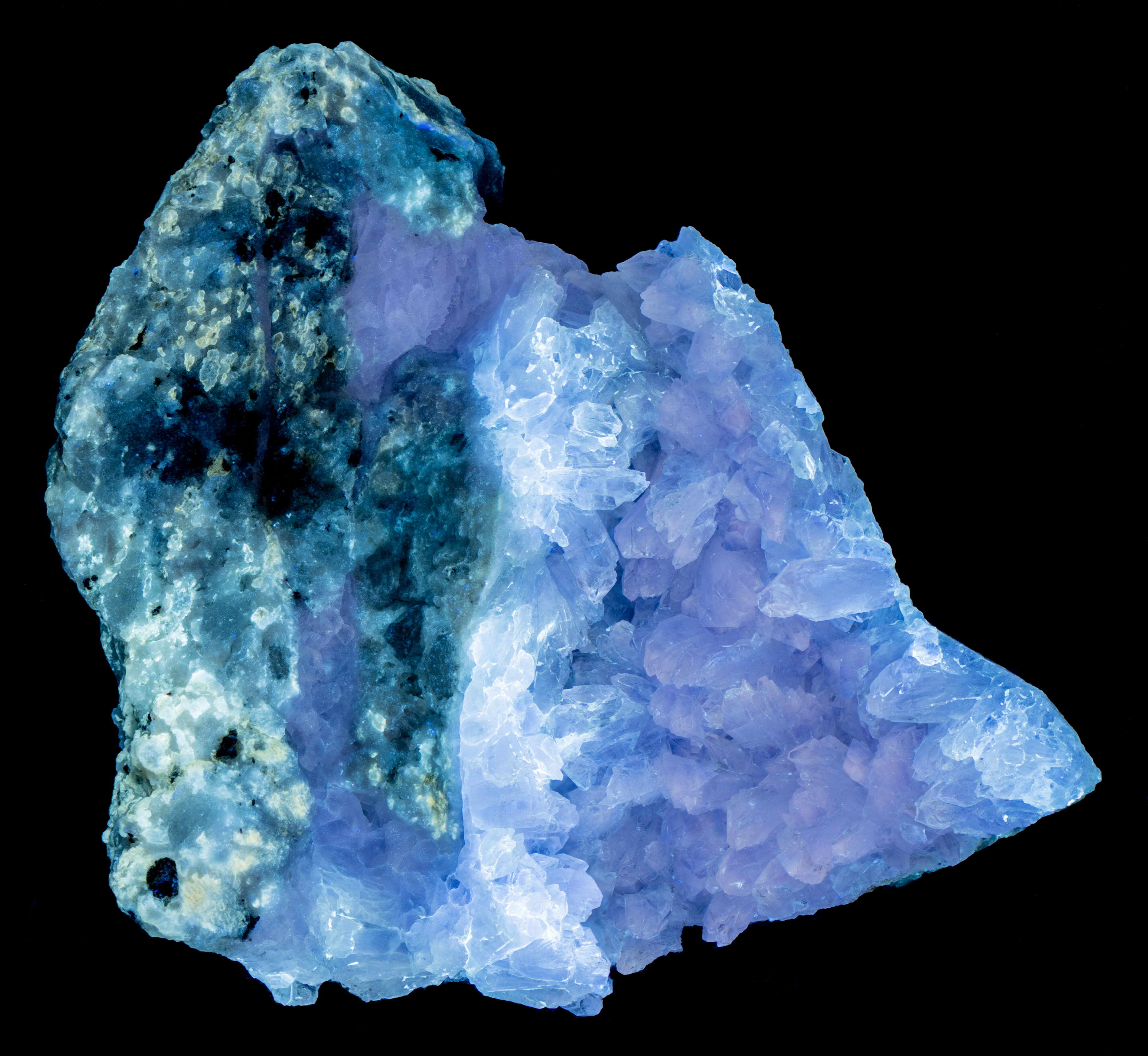
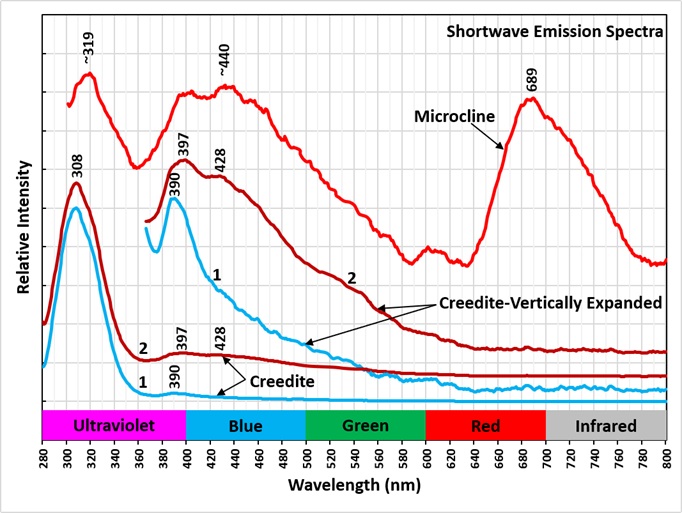
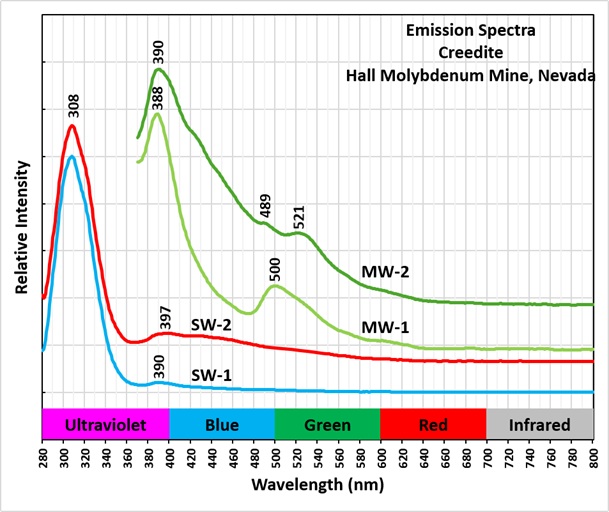
Creedite is not always fluorescent. In this specimen, the visible fluorescence is modest, but it is notable because it responds to all UV wavelengths, producing a different color under each wavelength. This is another specimen where 340nm LED shows a different response compared to the standard UV wavelengths. This creedite also shows unusually strong ultraviolet fluorescence. The shortwave emission spectrum has a sharp maximum at 308 nm, nearly 20 times brighter than the visible fluorescence. The activator for this peak is unknown; possible causes include a rare earth element, lead, or another unidentified activator. A second ultraviolet peak occurs at 390 nm and it is also present in the midwave (305 nm LED) spectrum. The cause of this emission peak is likewise unknown.
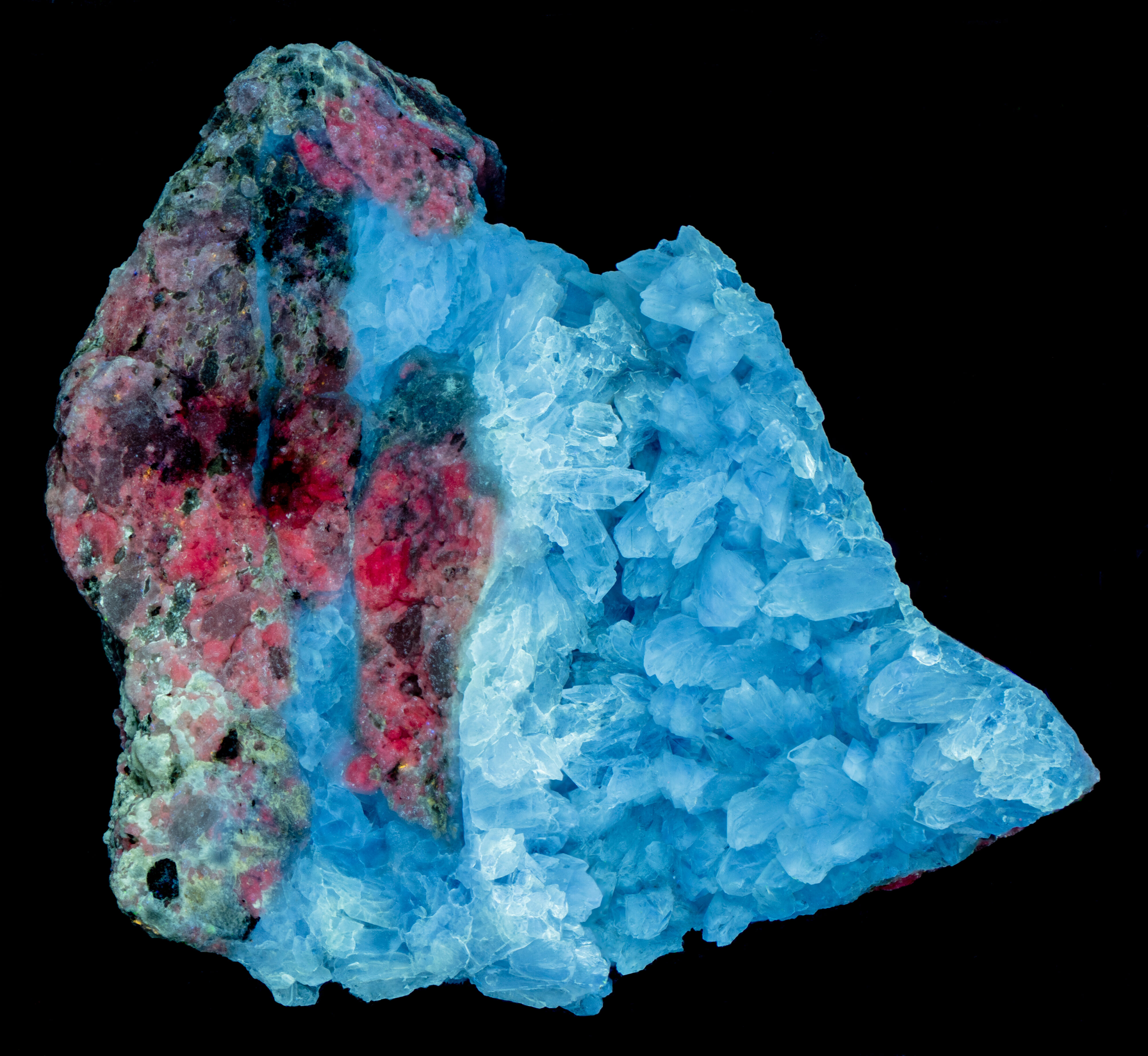
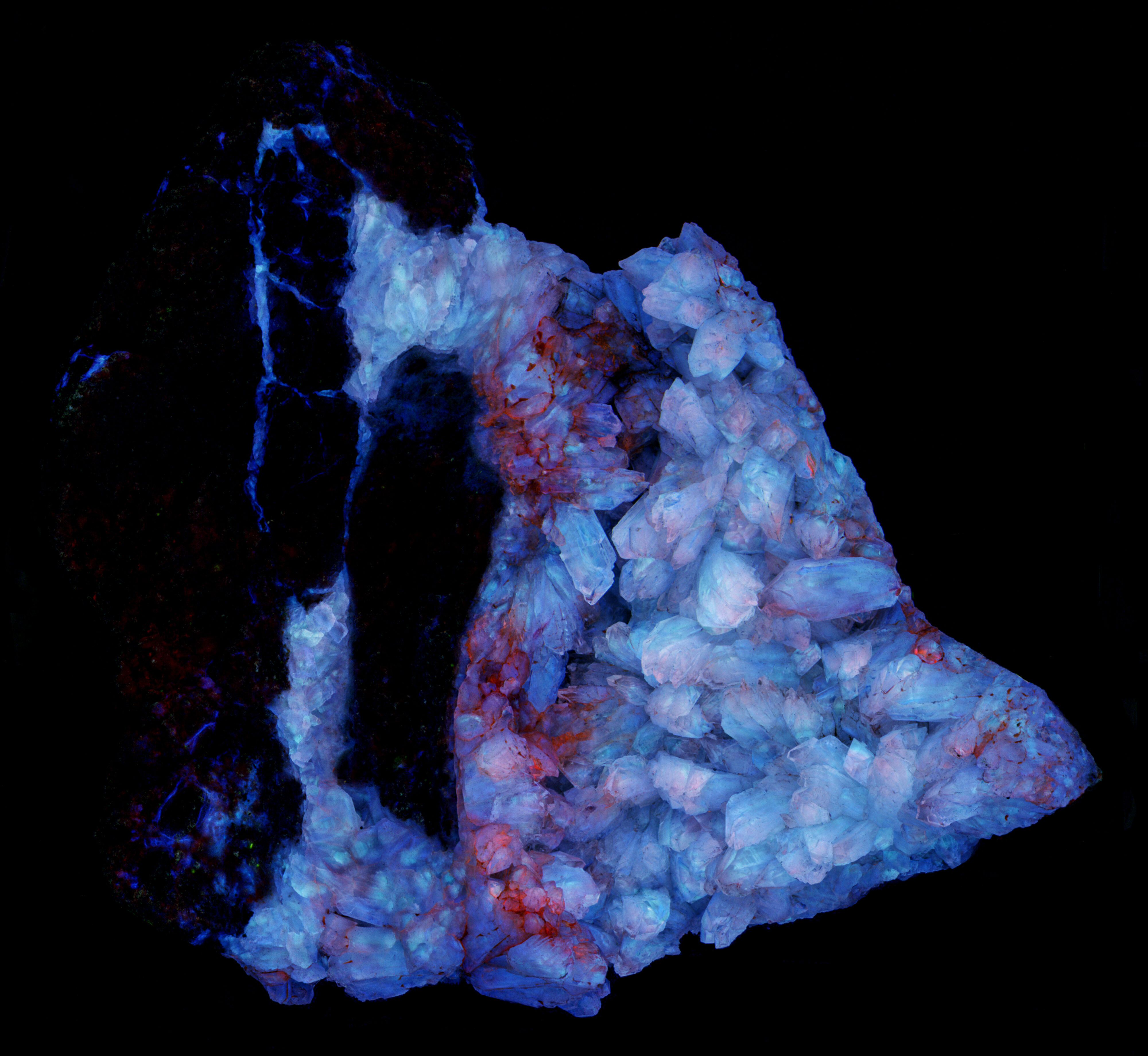
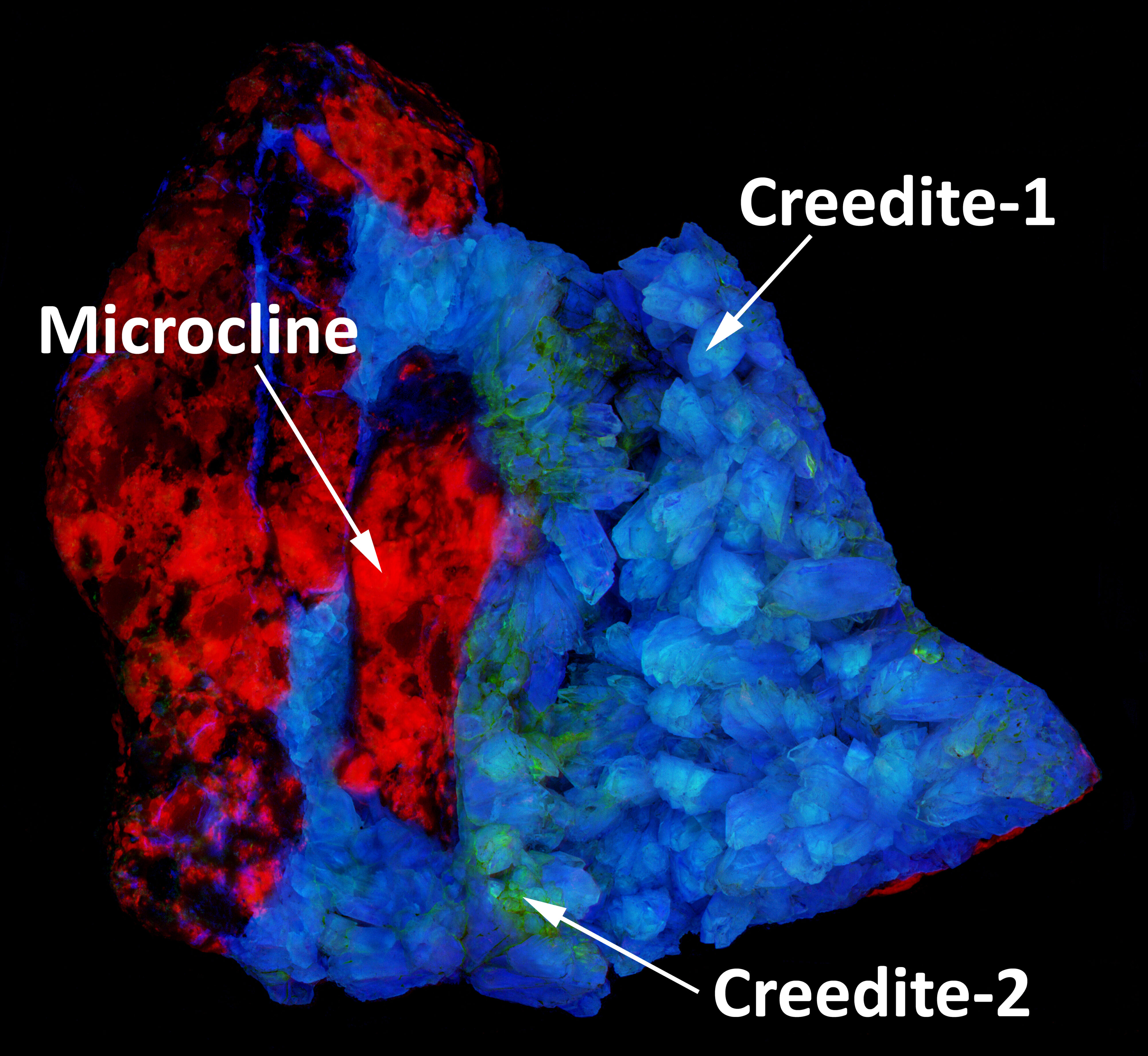
The false-color image of ultraviolet fluorescence shows creedite as light blue with hints of red, including one zone where some crystals appear red. The false color image is composed of three narrow bandpass images (10 nm bandwidth) centered at 310 nm, 350 nm and 394 nm. The false color image is made by assigning the 310 nm image to blue, assigning the 350 nm image to green and assigning the 394 nm image to red. The light blue color in the image is caused by the intense 308 nm peak, while the red tones result from the 390 nm peak. Areas with red ultraviolet fluorescence have weaker 308 nm emission (21,863 counts versus 47,350 counts) and stronger 390 nm emission (2,803 counts versus 2,223 counts). Visible fluorescence also differs, especially under midwave light. Creedite with stronger ultraviolet emission also has a 500 nm peak in the midwave emission spectrum that corresponds to the green hue in the midwave fluorescence image. The other midwave spectrum, associated with the light blue, fluorescent mineral, has two small peaks at 429 nm and 521 nm. These differences may reflect creedite with different activators or the presence of two minerals. Additional analysis is needed to explain the variation.
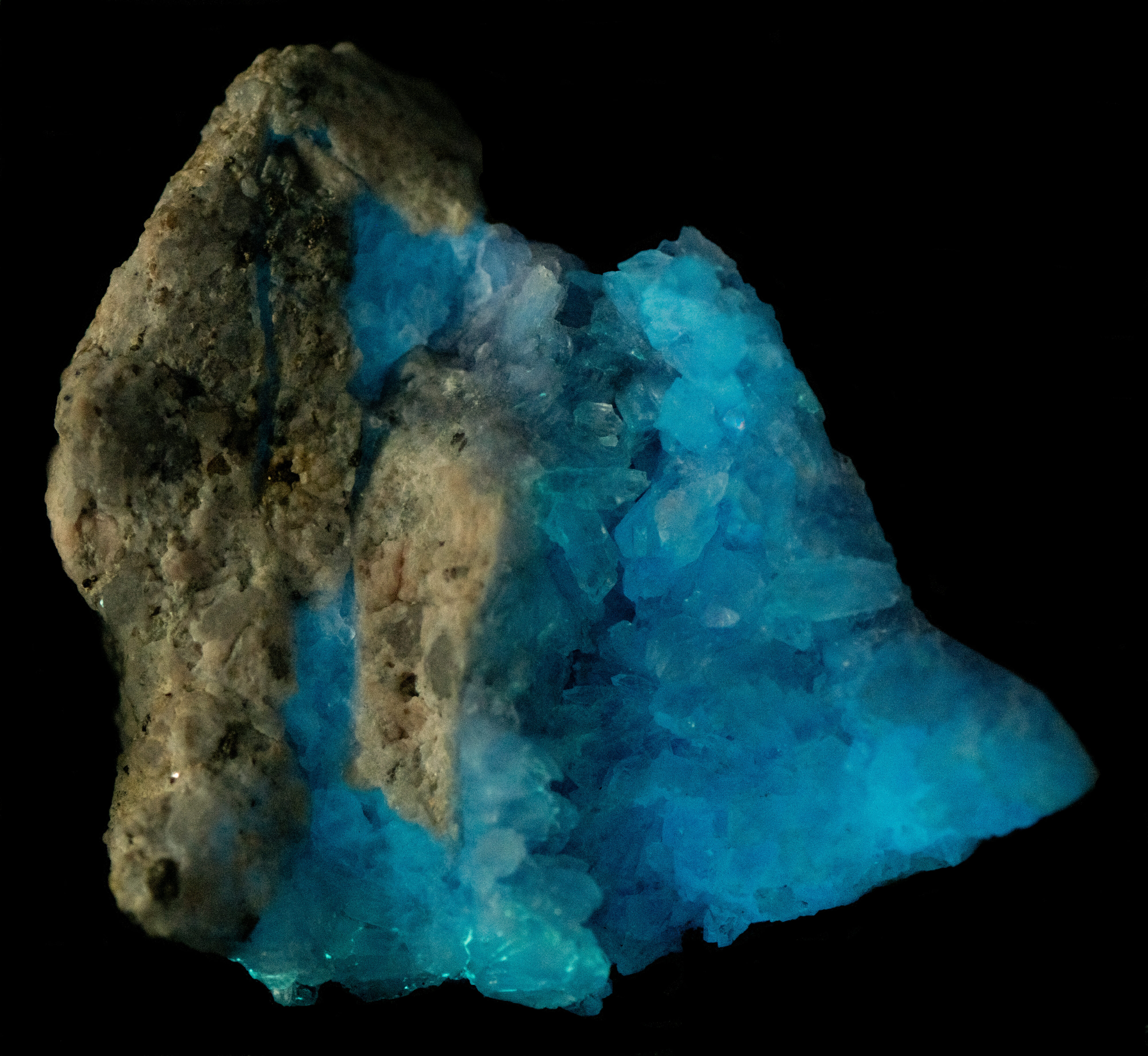
This creedite specimen also shows a modest afterglow after exposure to midwave light, but not after exposure to other UV wavelengths. The midwave green fluorescence and afterglow suggest possible organic activation. Organic compounds may also contribute to creedite fluorescence at other wavelengths. As noted above, this specimen fluoresces in different colors under different UV wavelengths.
Longwave (365 nm LED): pinkish violet
340 nm LED: white to yellowish white
Midwave (305 nm LED): pale green
Shortwave (255 nm LED): light blue
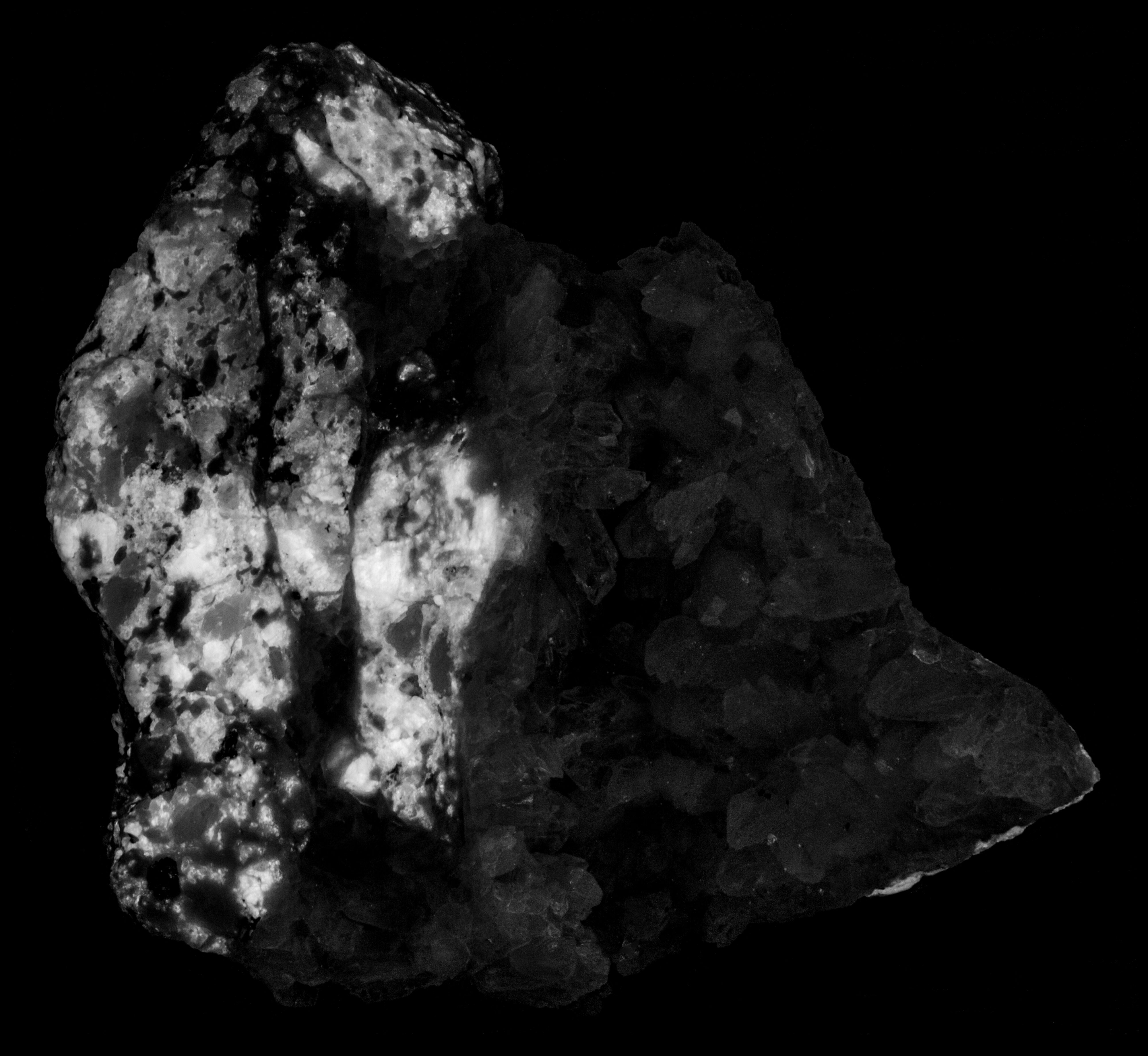
The shortwave emission spectrum of the visible red fluorescence suggests the presence of microcline or another potassium feldspar. The broad red emission peak reaches a maximum at 689 nm and extends into the near infrared, allowing this infrared fluorescence to be imaged with a 720 nm bandpass filter. The infrared image clearly shows the extent of the feldspar. Ferric iron (Fe3+) activates this emission. Although the spectrum is noisy, it also shows a broad peak near 440 nm and a narrower peak near 319 nm, which may be caused by rare earth elements.
Summary of luminescence responses:
Creedite (Mindat) (RRUFF)
- Fluorescence under Longwave (365nm LED) UV light: Pink
- Fluorescence under Midwave (305nm LED) UV light: Green
- Fluorescence under Shortwave (255nm LED) UV light: Blue
- Afterglow after exposure to Midwave (305nm LED) UV light: Blue
- Fluorescence under Shortwave (255nm LED) UV light: Red