
Hardystonite and Esperite - Franklin, New Jersey
Contributed by: Michael Crawford
Date: Jul 4th, 2026
Locality: Franklin Mine, Franklin, Sussex County, New Jersey, USA (See on Mindat)
Size: 7 x 8 cm
Description:
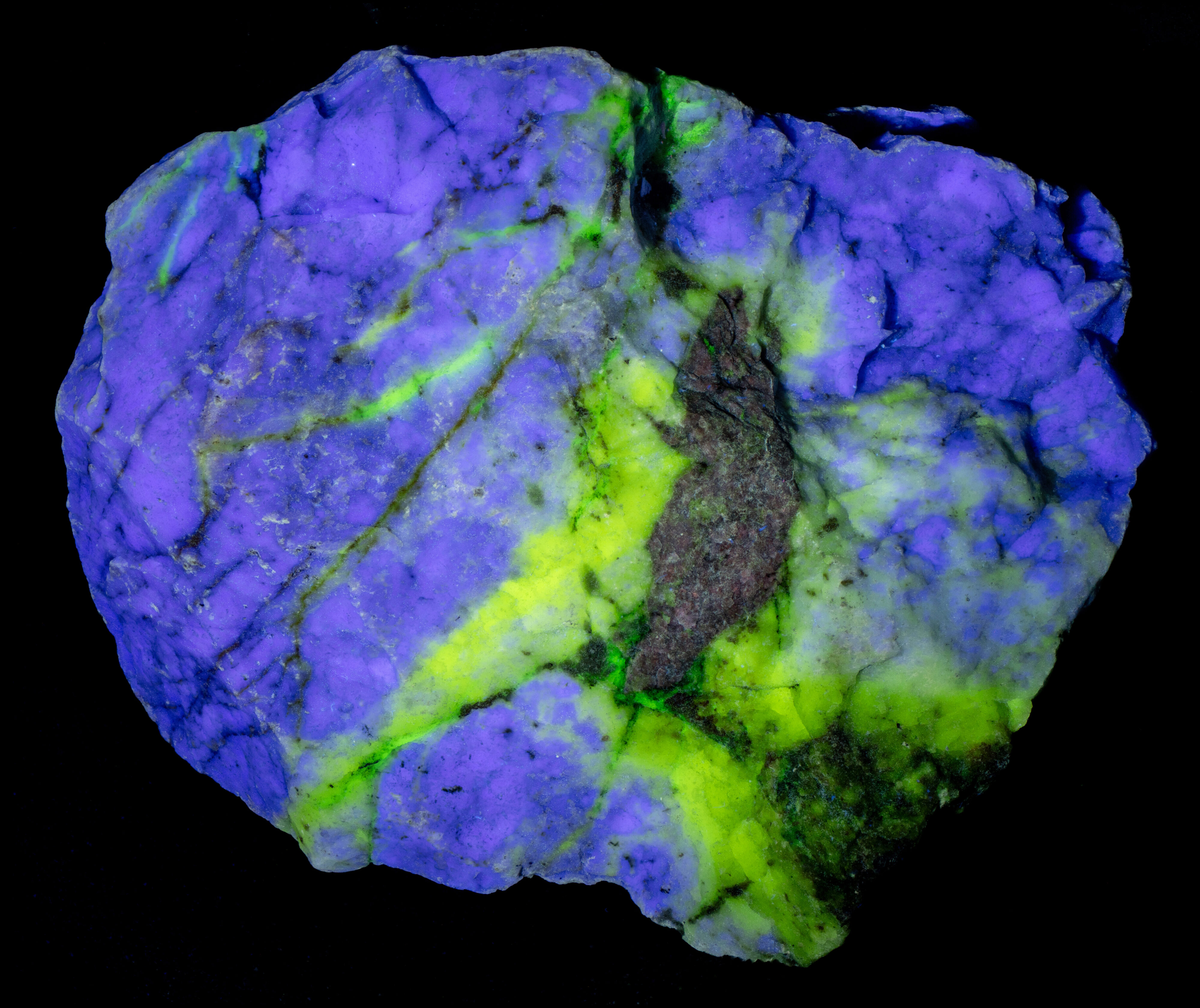
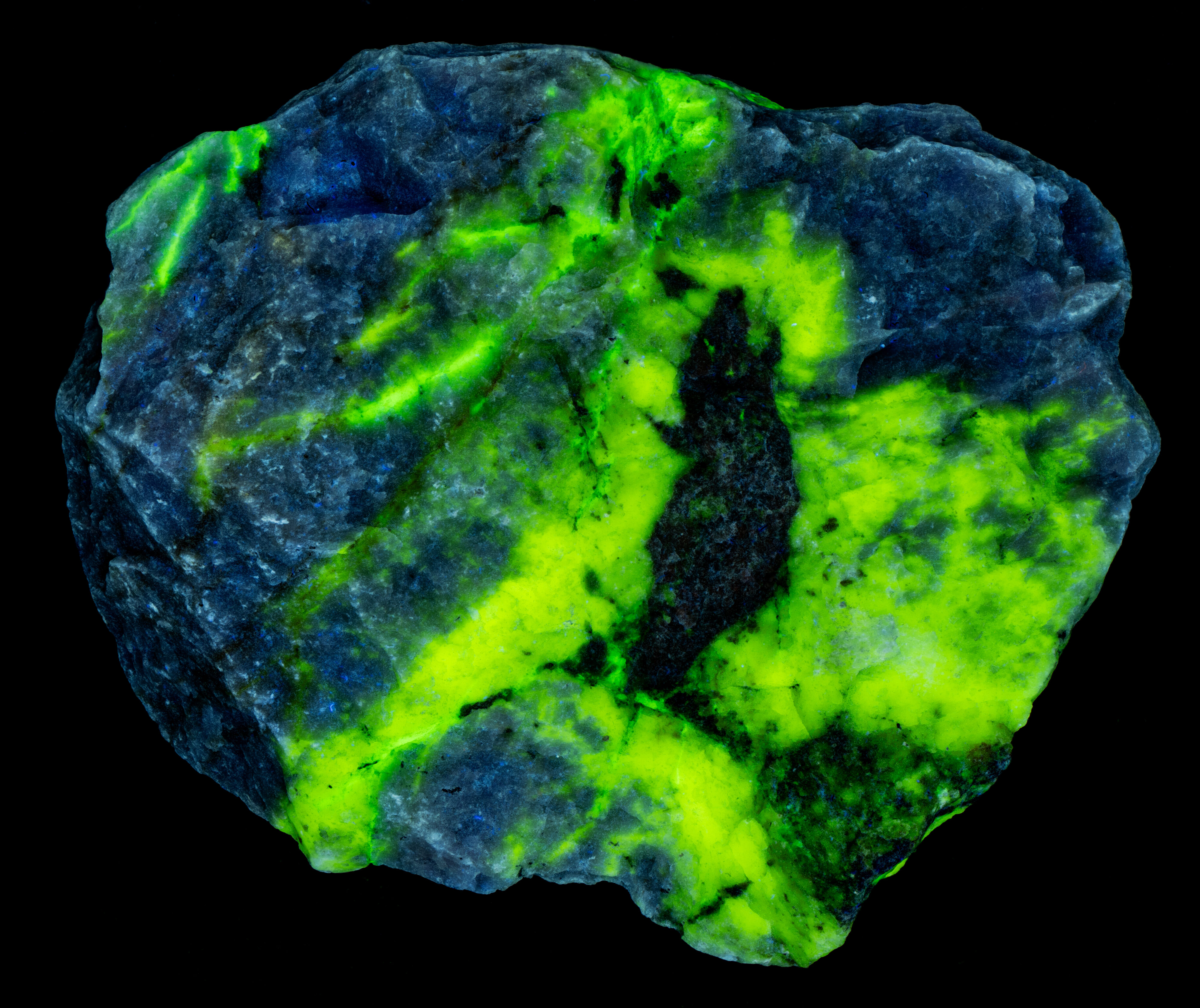
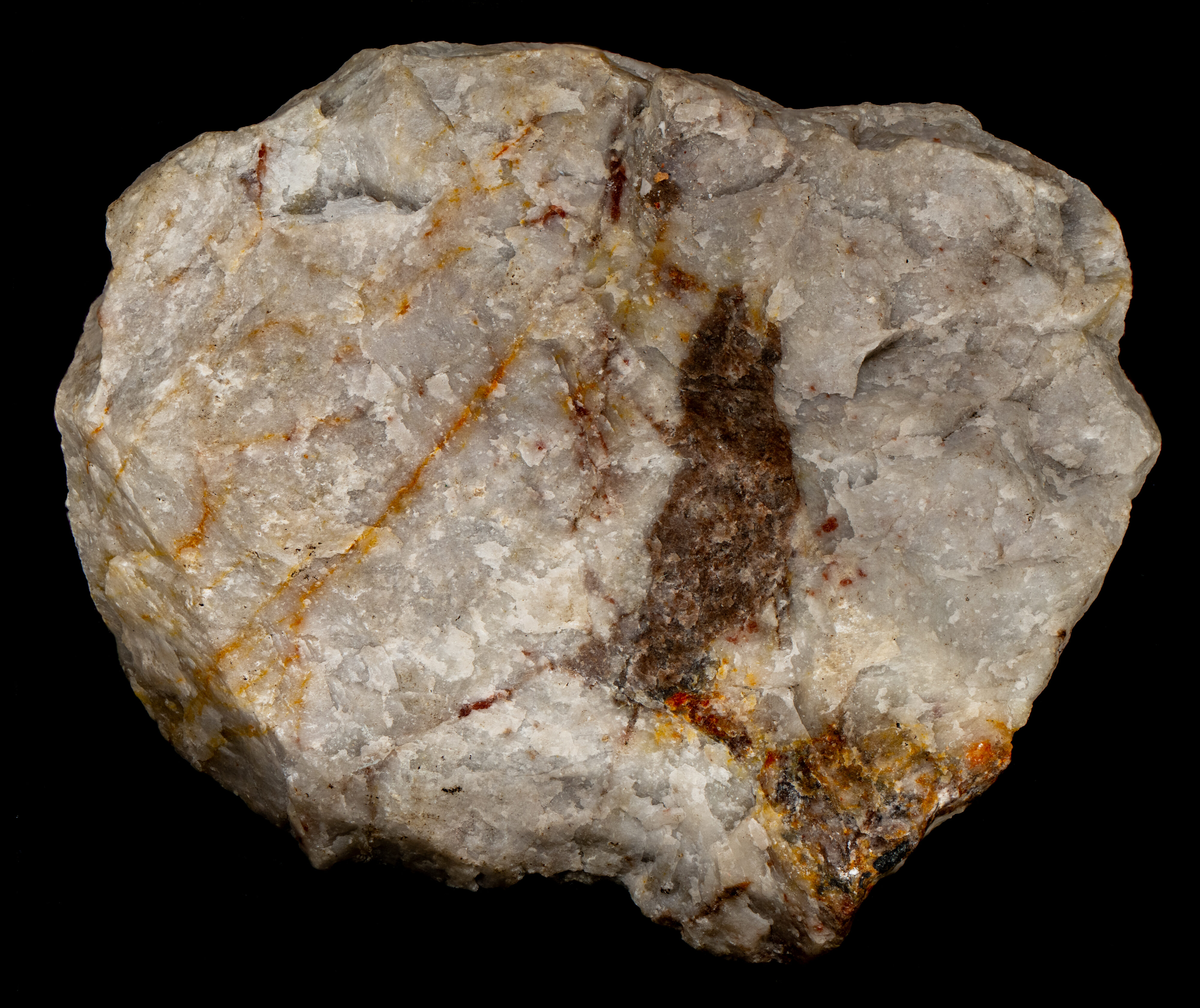
This is a specimen of hardystonite (Ca2Zn[Si2O7]) and esperite (PbCa2Zn3(SiO4)3) from the Franklin Mine, New Jersey. The hardystonite shows violet fluorescence under 340 nm illumination, a UV wavelength that is not typically used to examine specimens for fluorescence. The violet fluorescence under 340 nm light is much brighter than the typical dark blue hardystonite fluorescence seen under SW (255 nm LED) illumination. Most of the hardystonite specimens in my collection fluoresce violet under 340 nm illumination.
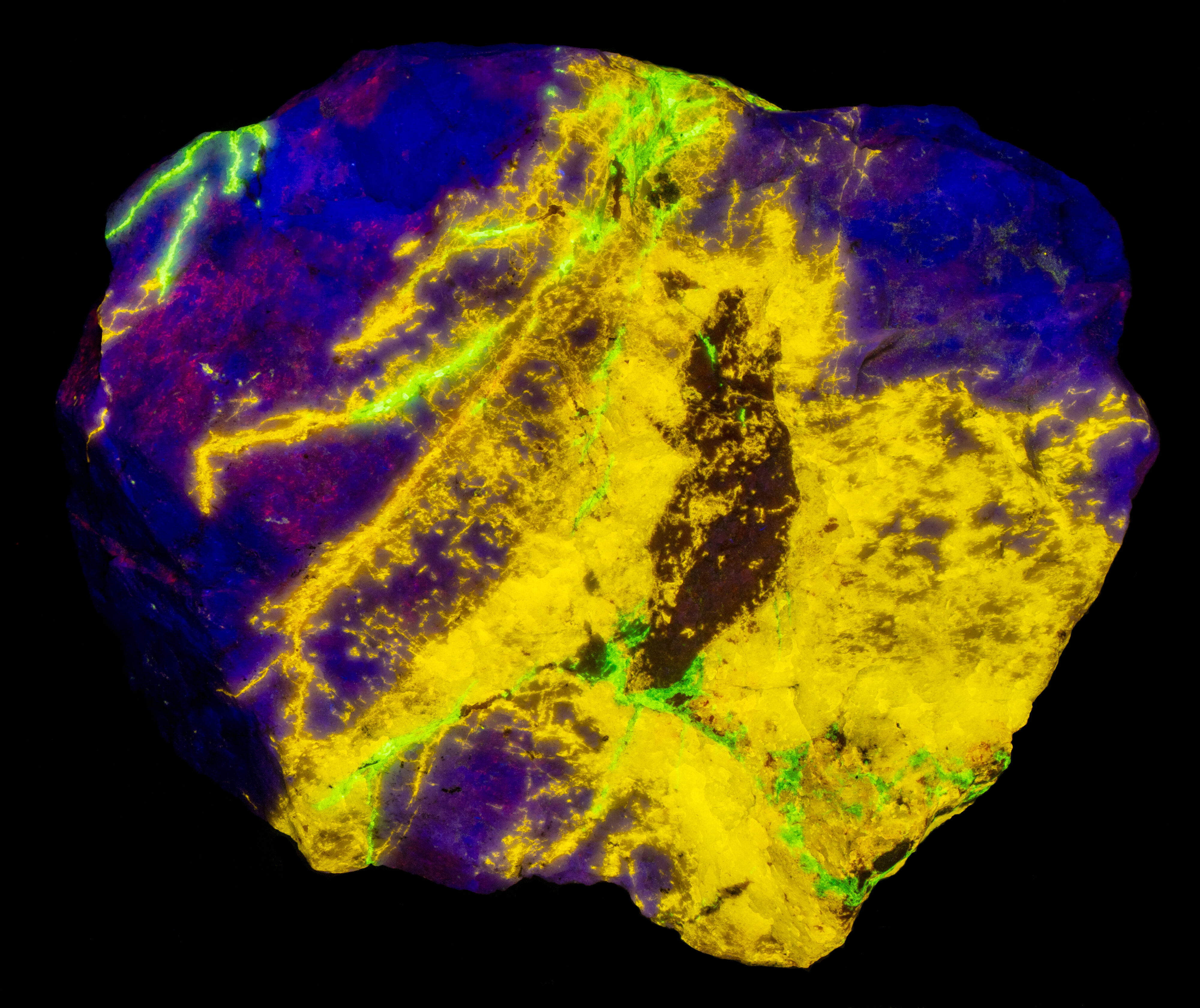
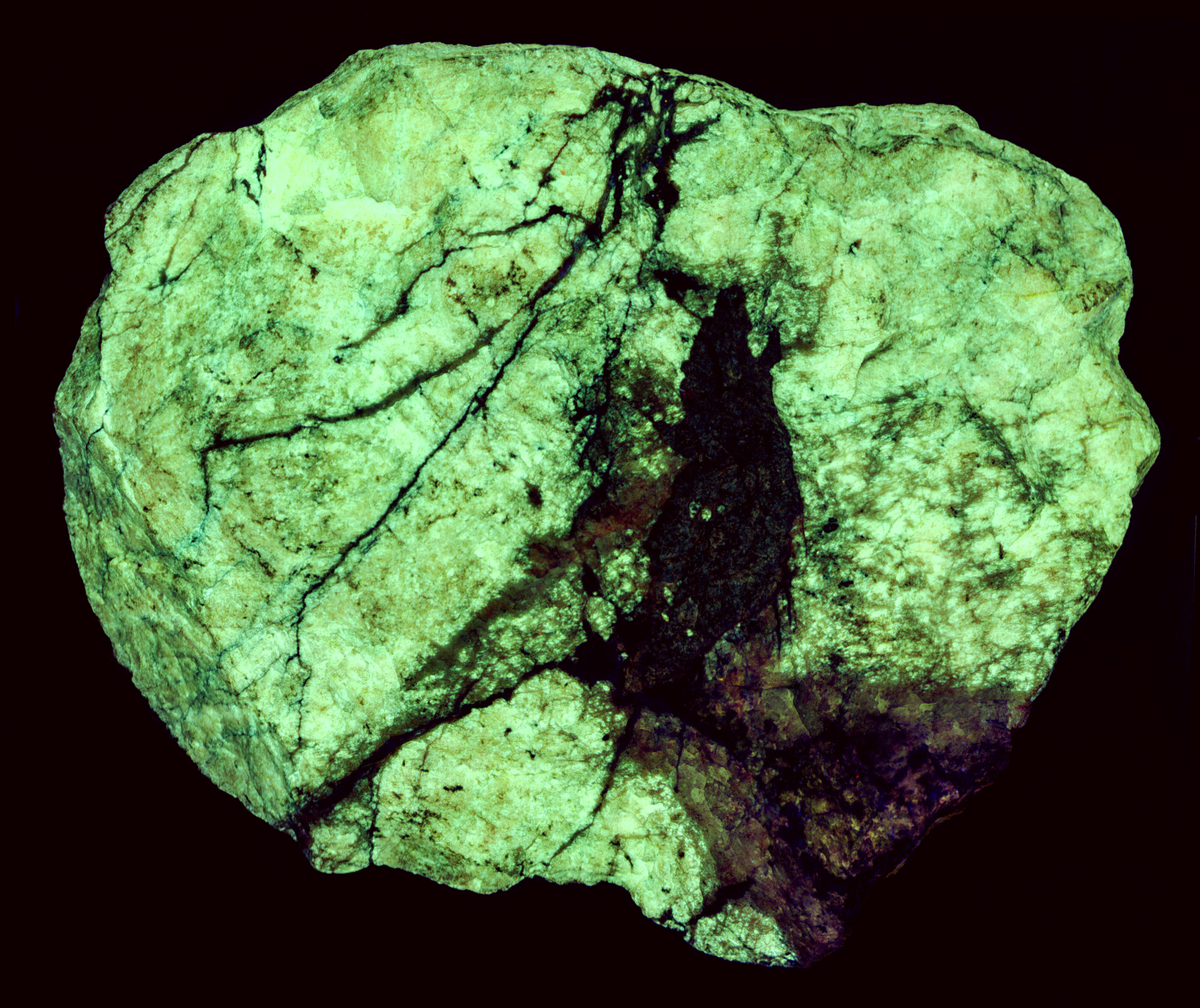
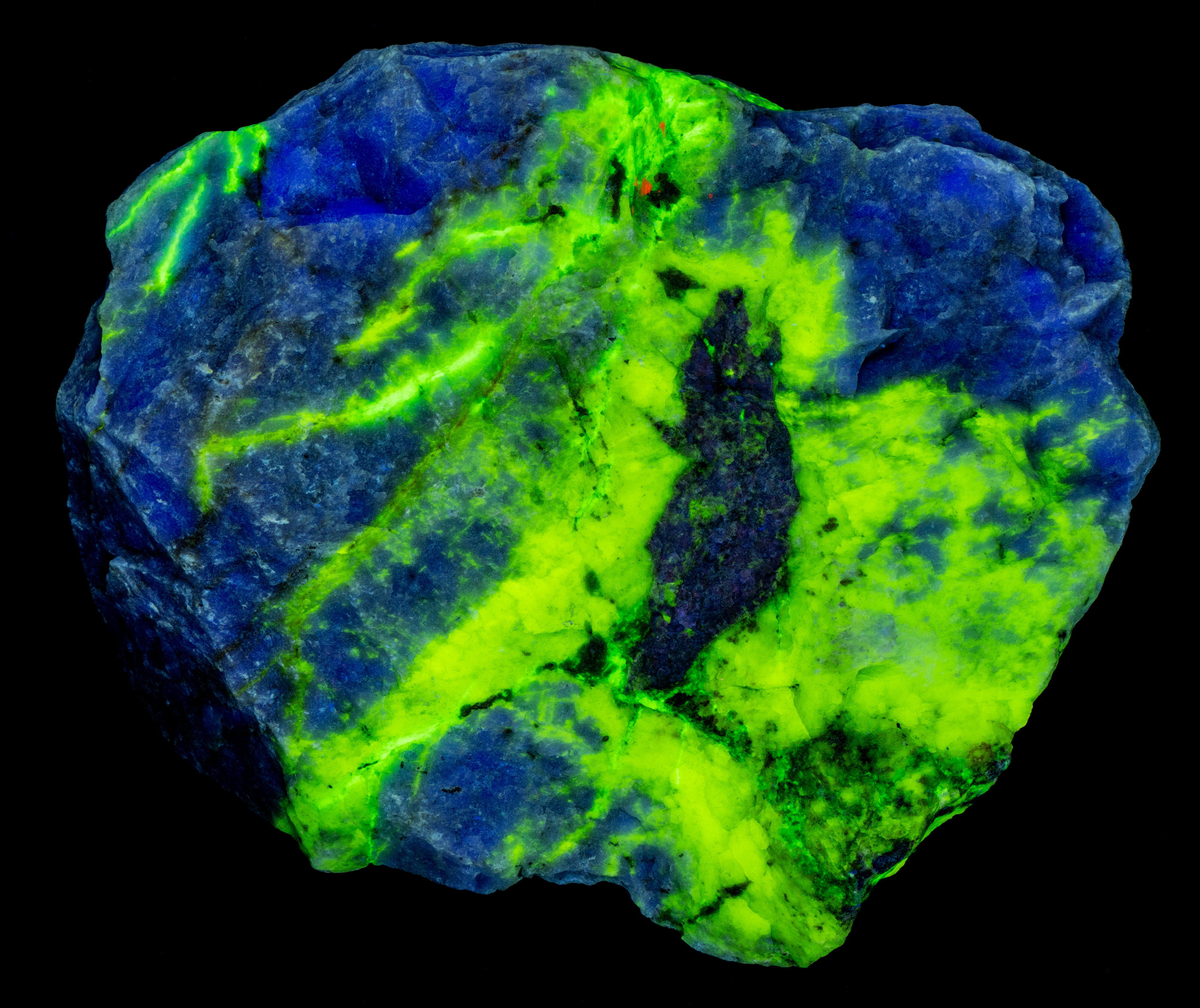
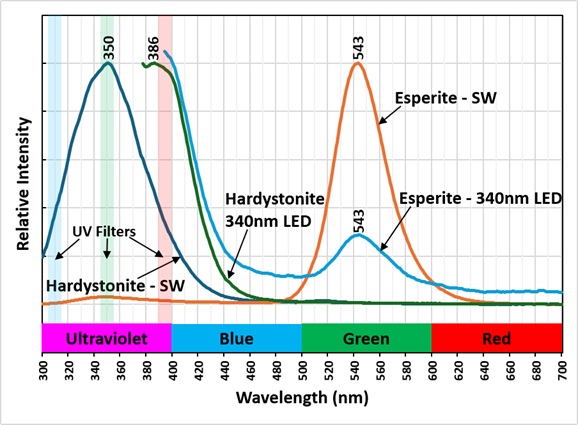
The shortwave emission spectrum of hardystonite has a broad peak in the ultraviolet region with a maximum around 350 nm. The spectra also show an inflection or second peak around 340 nm. The broad ultraviolet peak extends into the visible violet blue producing the dark blue color we observe. The shortwave esperite spectrum has a peak at 543 nm and little fluorescence in the ultraviolet. Esperite is much brighter in the image of visible SW fluorescence compared to hardystonite. However, the false color image of ultraviolet fluorescence shows that the hardystonite is much brighter than esperite. The yellow fluorescence of esperite is activated by manganese (Mn2+) replacing zinc (Zn2+)
The ultraviolet fluorescence of hardystonite is activated by lead. Not sure if lead is replacing calcium, zinc or both to activate the ultraviolet fluorescence. Trace amounts of lead are found in most hardystonite from Franklin. Hardystonite is a potential zinc ore, but the lead content made extraction of zinc by smelting very difficult, so hardystonite was sent to the waste pile. We can thank lead for leaving us an abundance of hardystonite specimens with interesting fluorescence.
Emission spectra measured under 340 nm illumination has a peak at 386 nm just inside the ultraviolet region. The emission is very bright in the ultraviolet and its extension into the visible region produces a violet color. The fluorescence is likely activated by lead like the shortwave fluorescence.
Summary of luminescence responses:
Esperite (Mindat) (RRUFF)
- Fluorescence under Midwave (305nm LED) UV light: Yellow
- Fluorescence under Shortwave (255nm LED) UV light: Yellow
- Fluorescence under Shortwave (255nm LED) UV light: Blue
- Fluorescence under Other: Violet
- Fluorescence under 340nm LED UV light: Violet