
Color Changing Calcite – Challenger Cave, Mexico
Contributed by: Michael Crawford
Date: Jun 30th, 2026
Locality: Challenger Cave System, Monterrey Municipality, Nuevo León, Mexico (See on Mindat)
Size: 4 x 4 x 6 cm
Description:
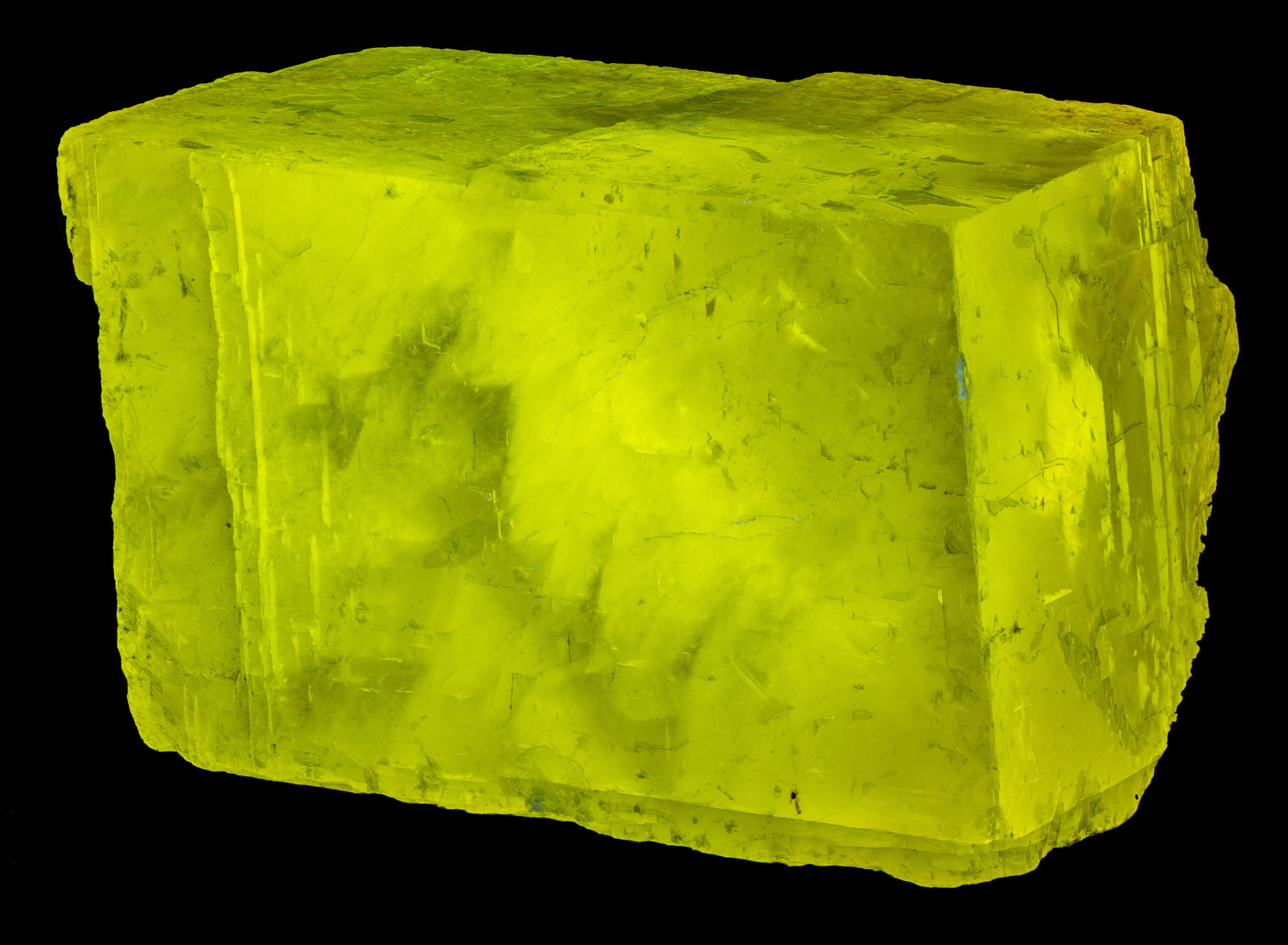
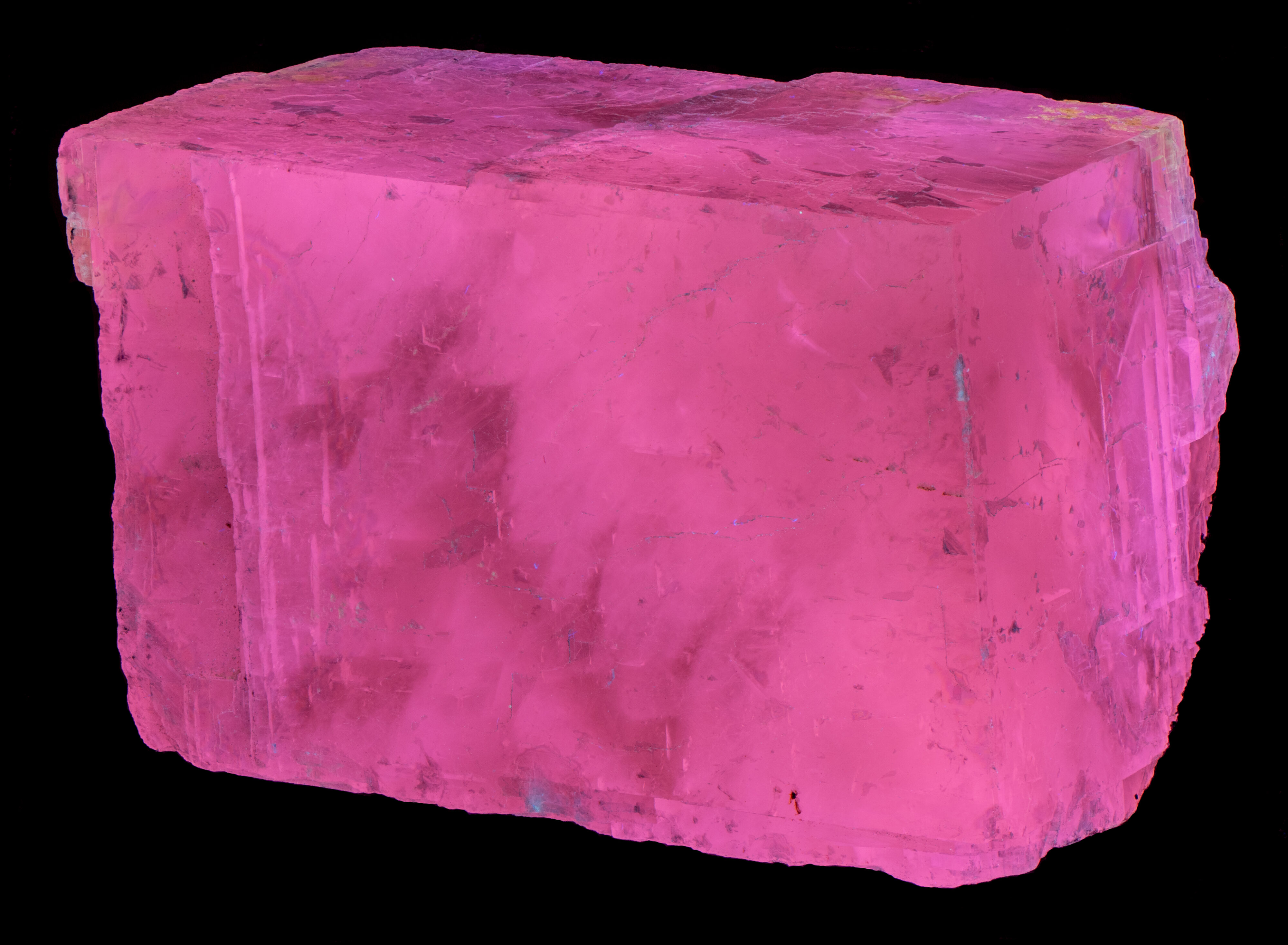
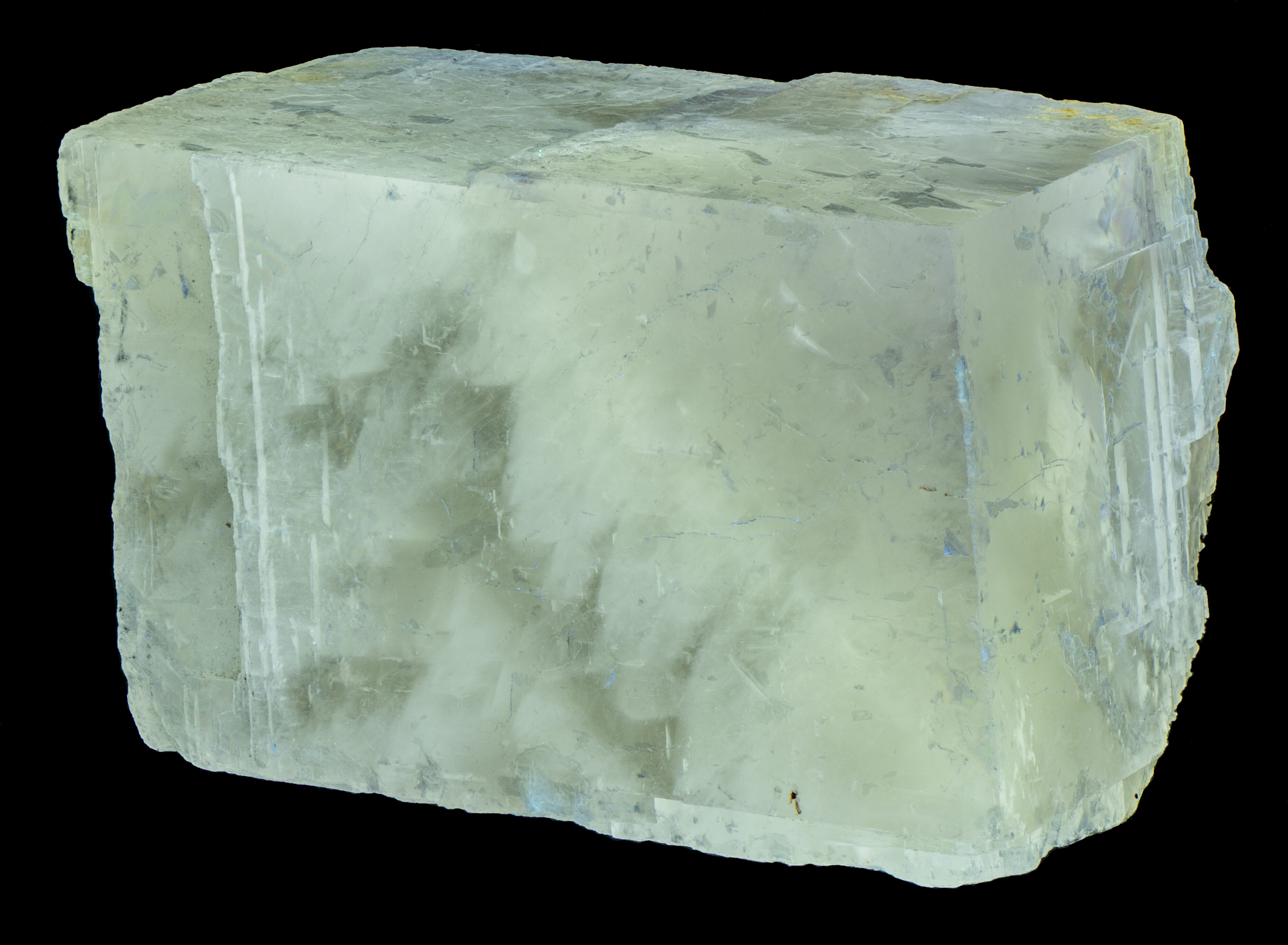
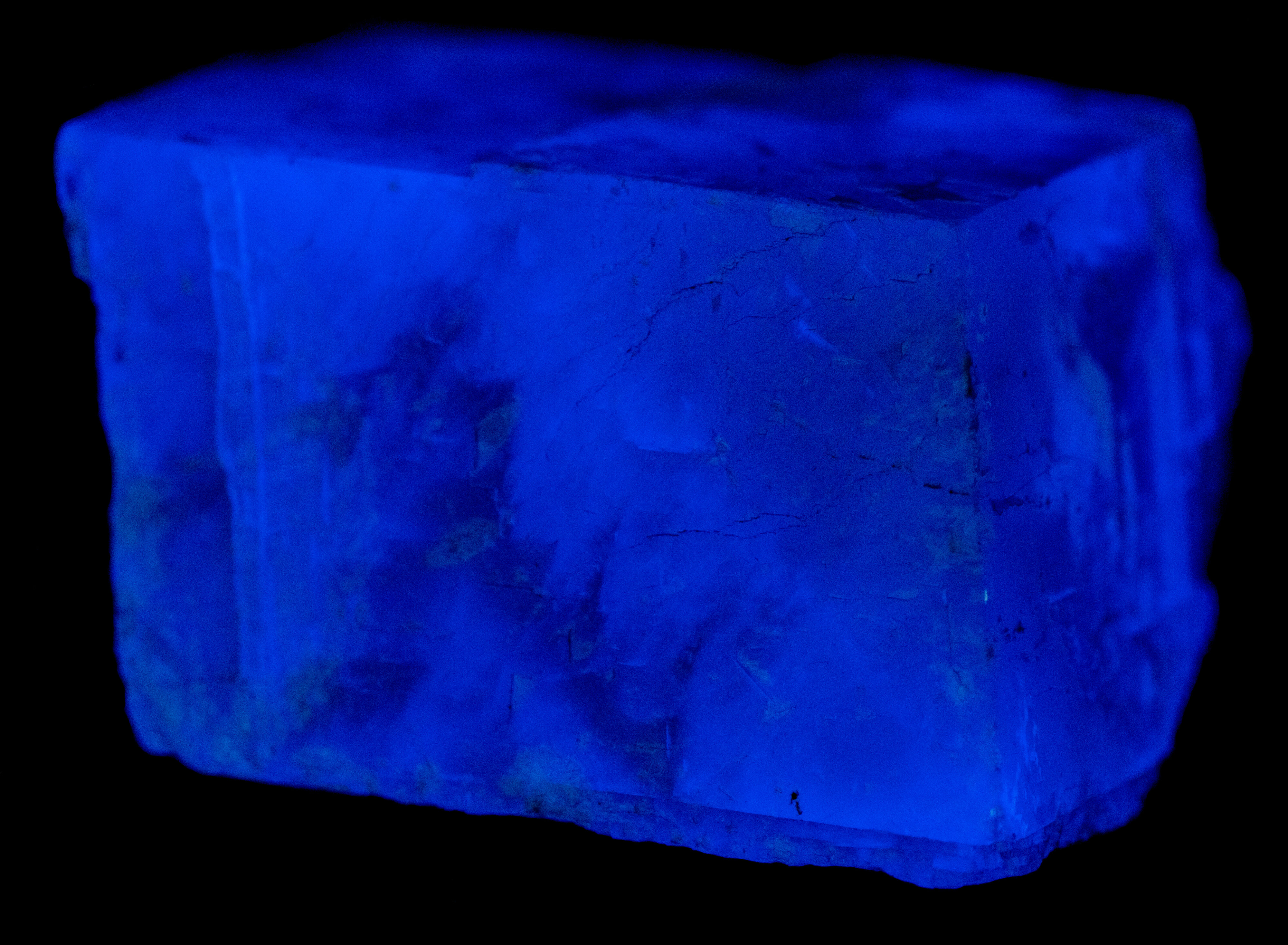
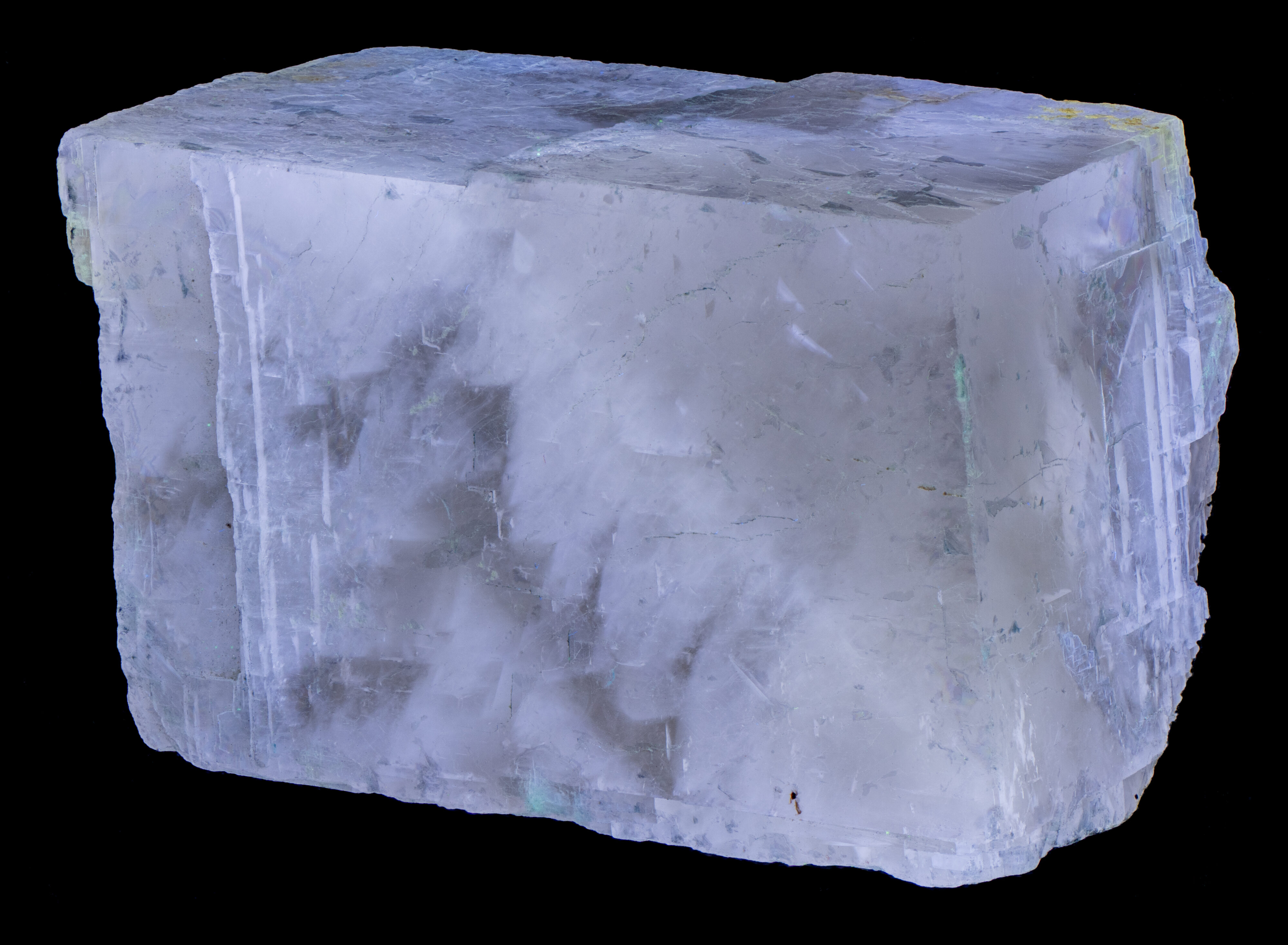
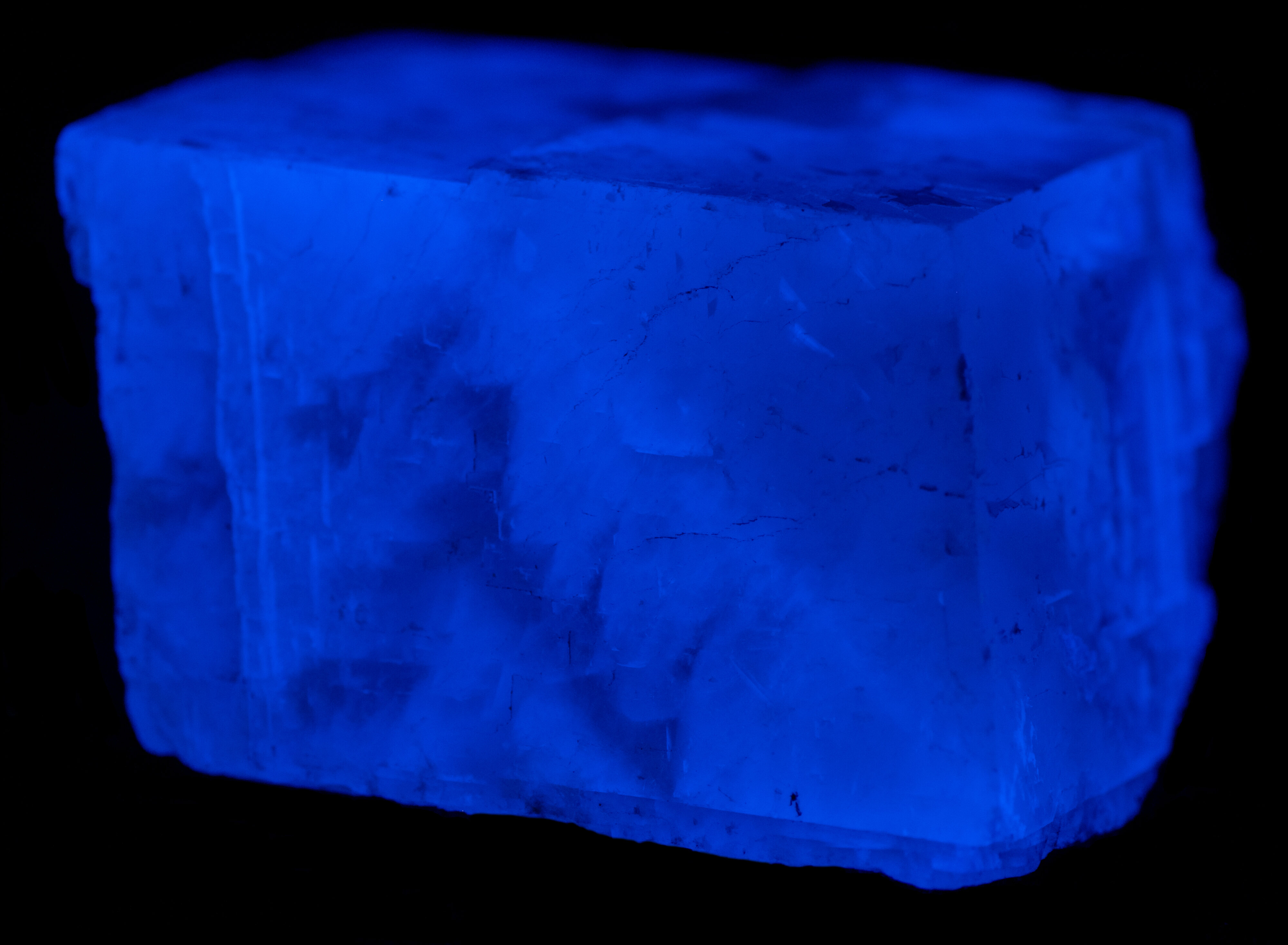
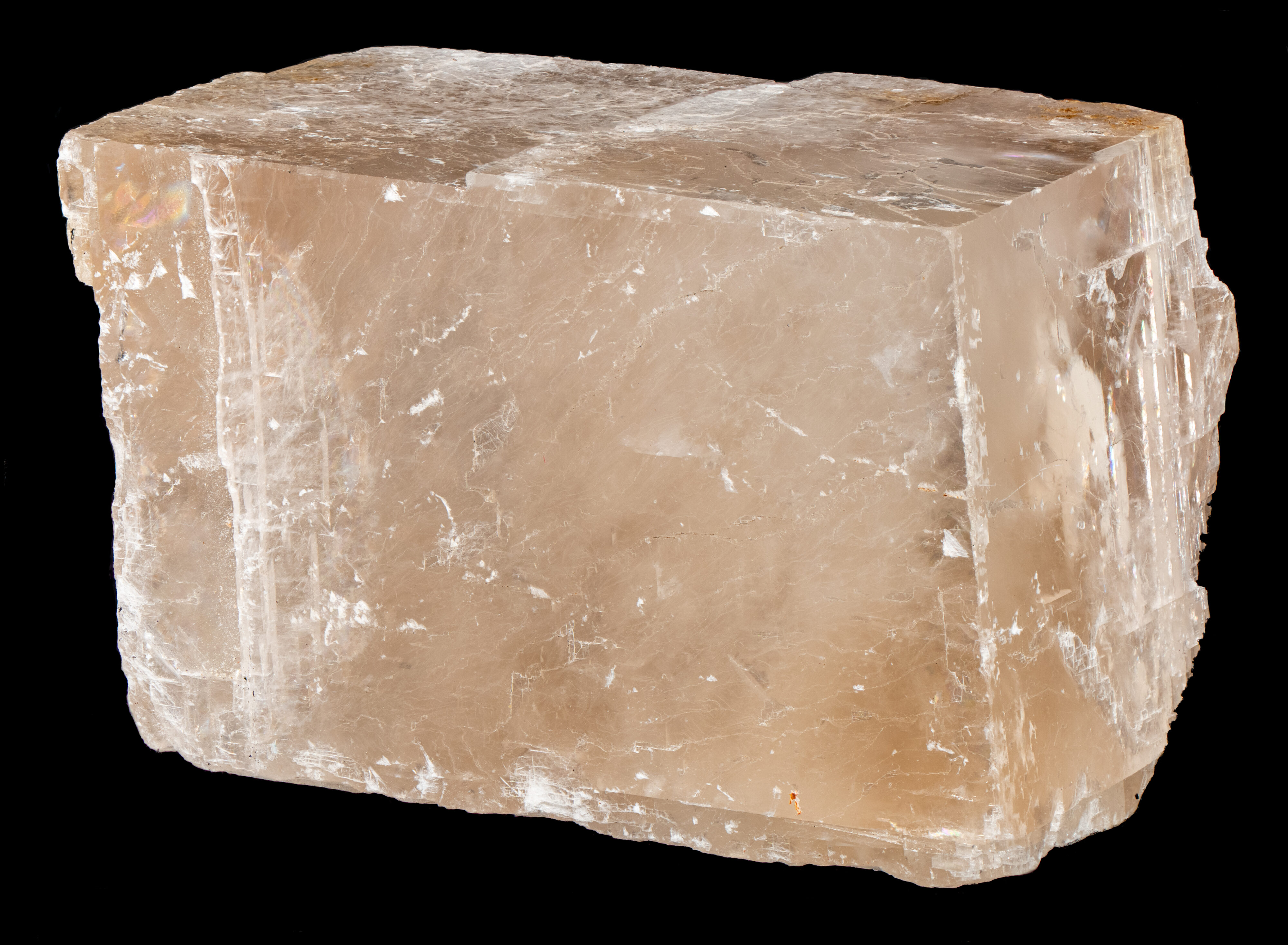
A calcite rhomb from the Challenger Cave System, Nuevo Leon, Mexico. This calcite is classified as Terlingua-type because its fluorescent response mimics the fluorescence of calcites from Terlingua, Texas. Terlingua-type calcites fluoresce pink under longwave UV light and violet blue under shortwave UV light with long-lasting afterglow. The longwave pink fluorescence of this specimen is like the pink fluorescence of Terlingua calcites. However, the MW and SW fluorescence color of this rhomb has a whiter color compared to the violet to blue colors of Terlingua calcites. The rhomb has short-lived afterglow from LW exposure. The afterglow is much more long-lasting from MW and SW exposure, and brightest after SW exposure.
The biggest fluorescent difference of this calcite rhomb is its reaction to 340 nm illumination. The 340 nm fluorescence is bright yellow. Examination of the calcites from Terlingua in my collection with the 340 nm light yields only weak to modest yellowish white fluorescence. Nothing like the saturated yellow fluorescence of this specimen. So far, my examination of other Terlingua-type calcites from other locations with the 340 nm has not shown the same bright yellow fluorescence seen in the Challenger Cave specimens.
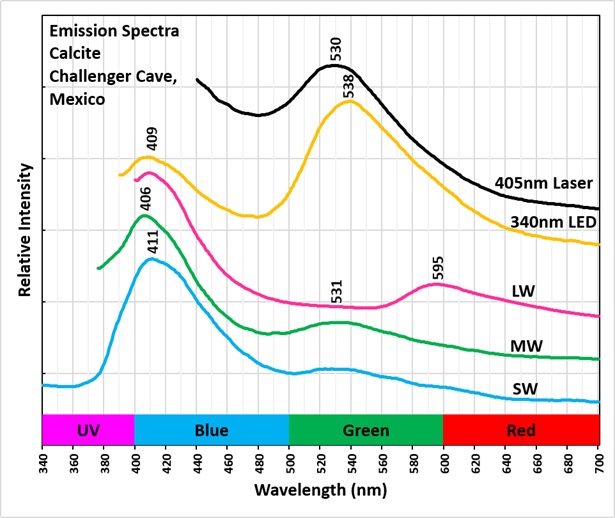
The last image shows emission spectra measured on this specimen. The emission from all wavelengths of UV illumination has a peak value in the violet region around 410 nm. The longwave spectrum also has a broad peak with a maximum at 595 nm. The mix of violet fluorescence and reddish fluorescence creates the pink color we see under longwave illumination. The emission spectrum from 340 nm LED illumination has a broad peak with a maximum at 538 nm.
Studies of Terlingua-type calcites found that radiation-induced crystal lattice defects activate both the violet fluorescence seen under all UV wavelengths and the red longwave fluorescence. Rare earths may play a role in the activation of fluorescence, but a particular rare earth element has not been identified. The bright yellow fluorescence under 340 nm is a recent discovery, and its cause has not been determined.
Summary of luminescence responses:
Calcite (Mindat) (RRUFF)
- Fluorescence under Longwave (365nm LED) UV light: Pink
- Fluorescence under Midwave (305nm LED) UV light: White
- Afterglow after exposure to Midwave (305nm LED) UV light: Blue
- Fluorescence under Shortwave (255nm LED) UV light: Blue
- Afterglow after exposure to Shortwave (255nm LED) UV light: Blue
- Fluorescence under Other: Yellow