
Scapolite and Hackmanite – Bancroft area, Ontario, Canada
Contributed by: Michael Crawford
Date: Jun 12th, 2026
Locality: Bancroft area, Ontario, Canada (See on Mindat)
Size: 10 x 8.5 x 18 cm
Description:
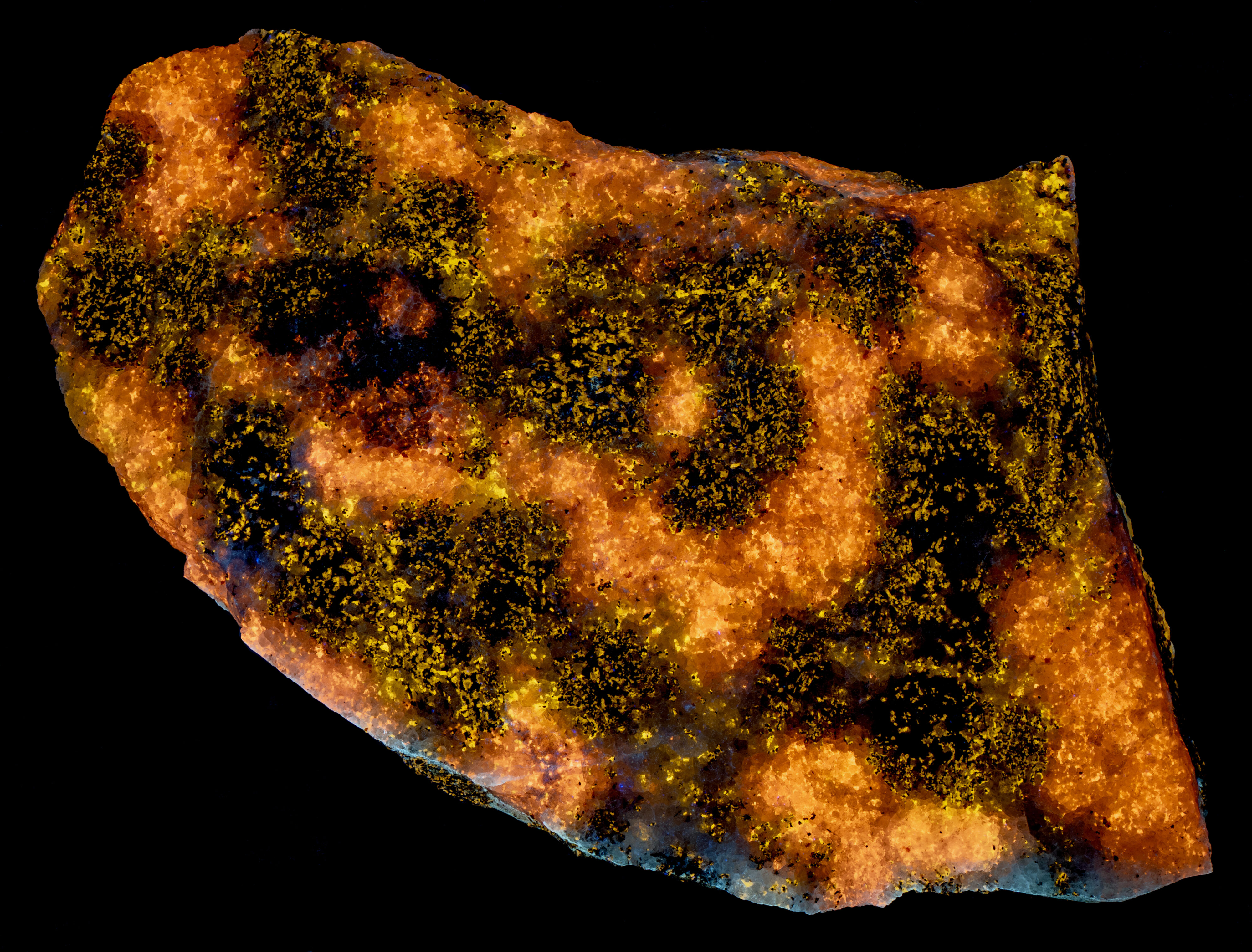
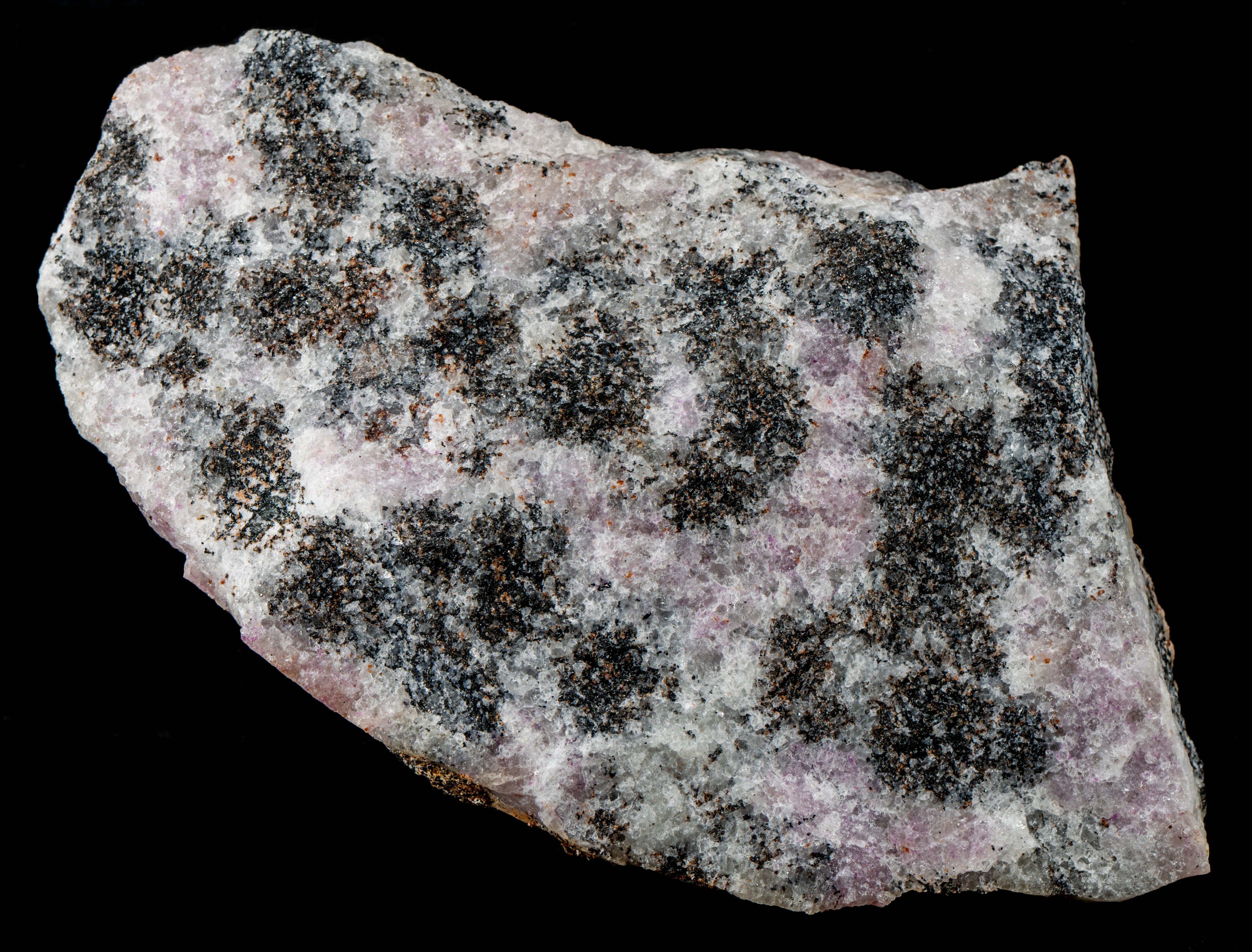
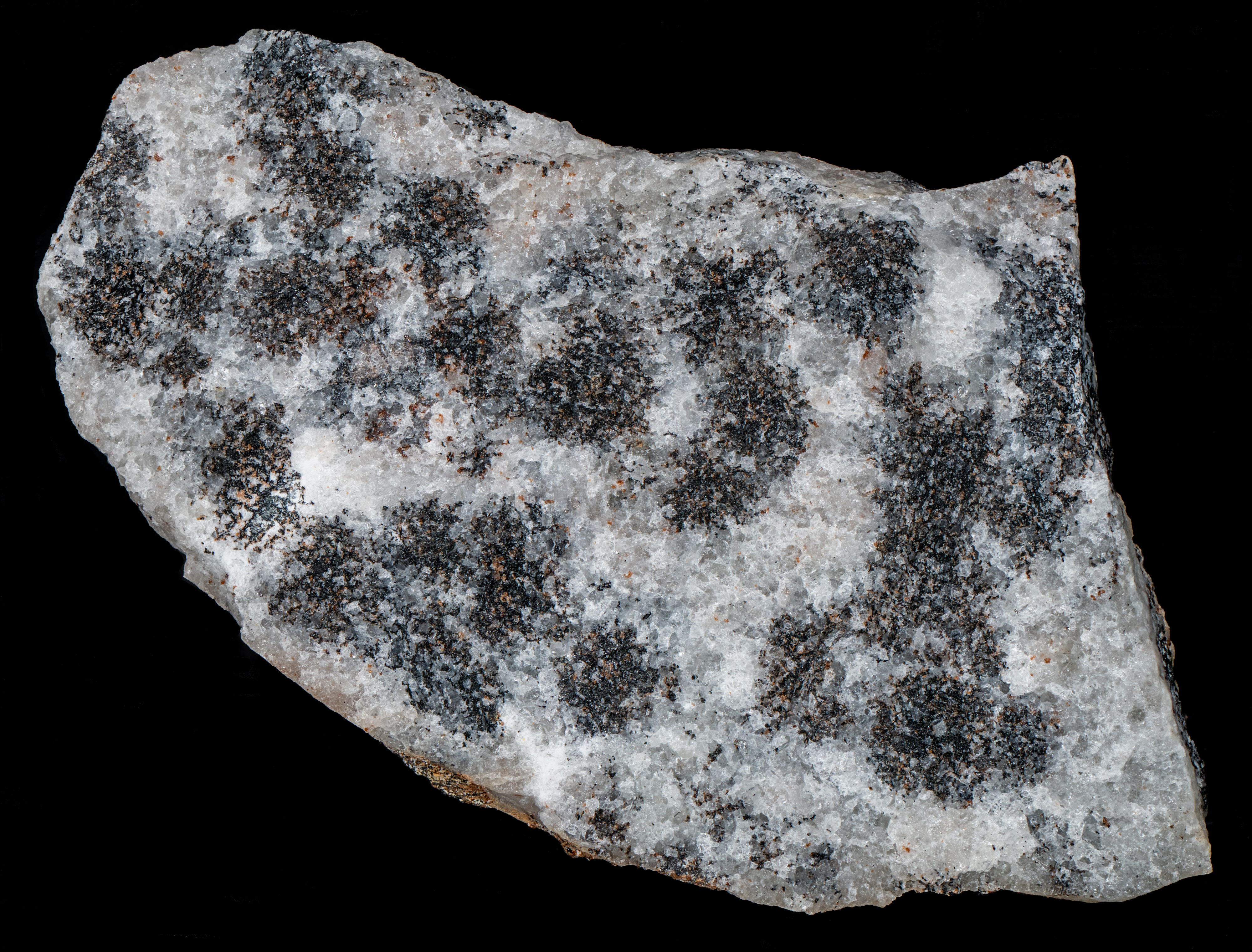
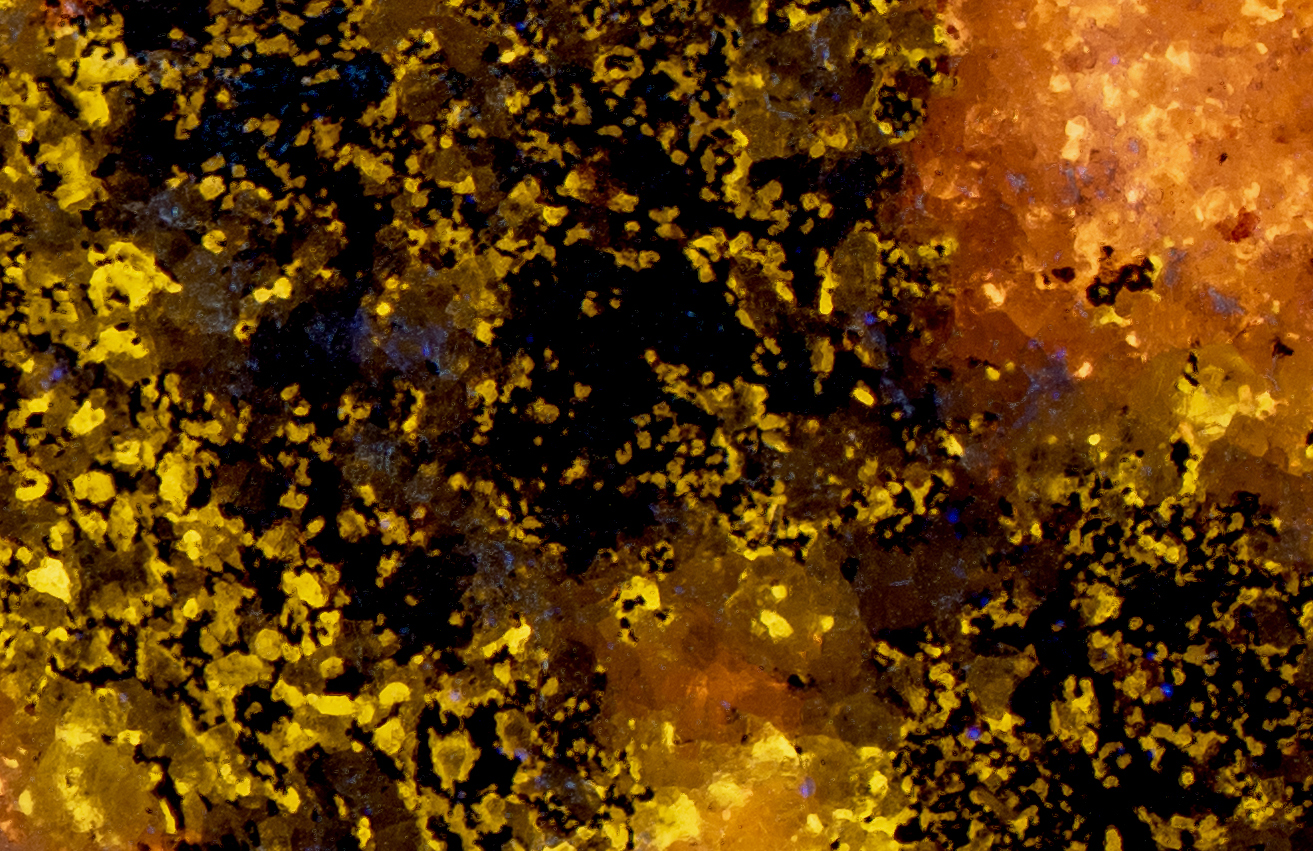
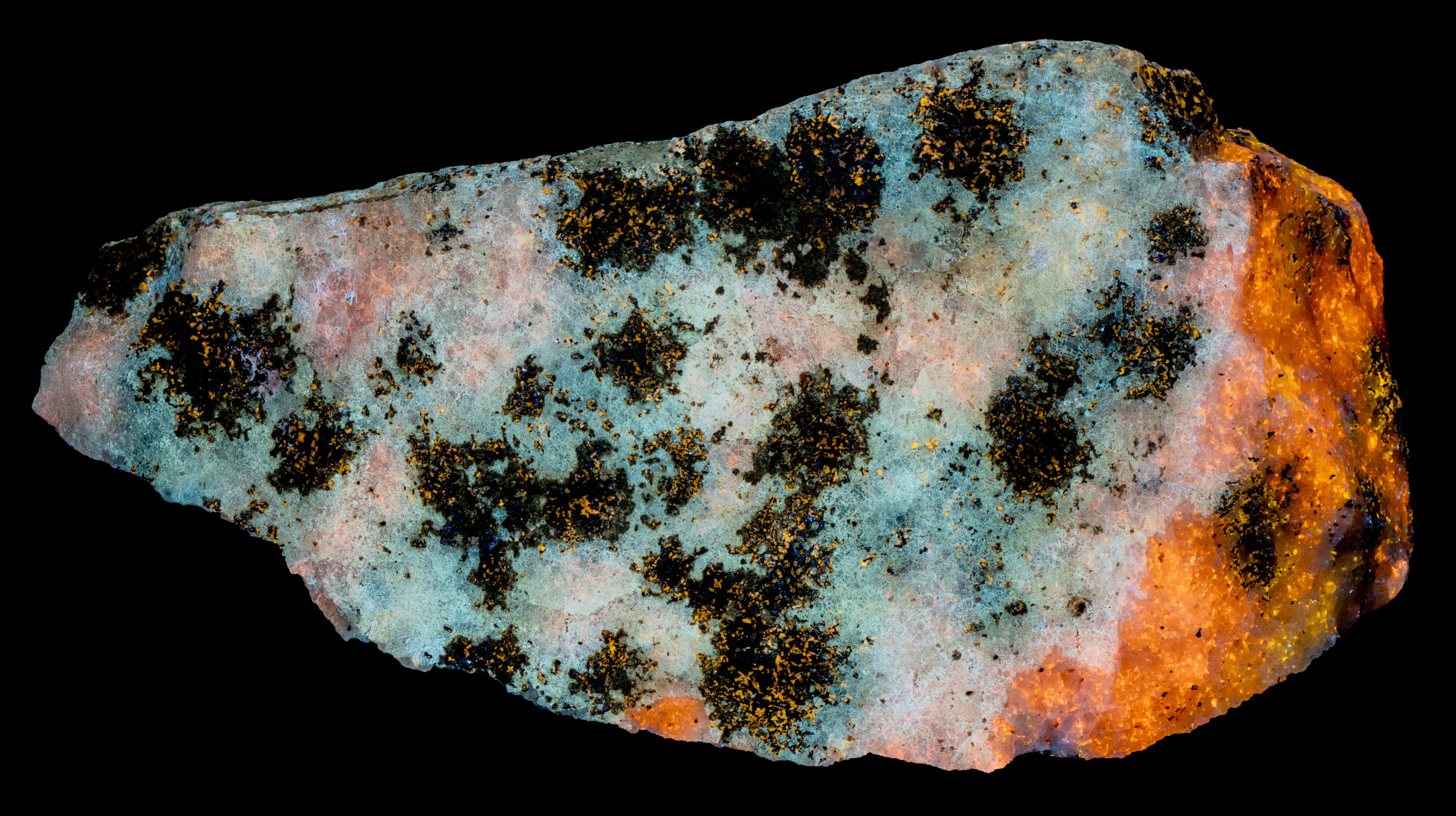
This is a scapolite and sodalite var. hackmanite specimen from the Bancroft area of Ontario, Canada. The longwave fluorescence is very bright. Clusters of yellow, fluorescent scapolite and an unknown shiny black mineral are set in a bright orange, fluorescent matrix of hackmanite that makes an exceptional display specimen.
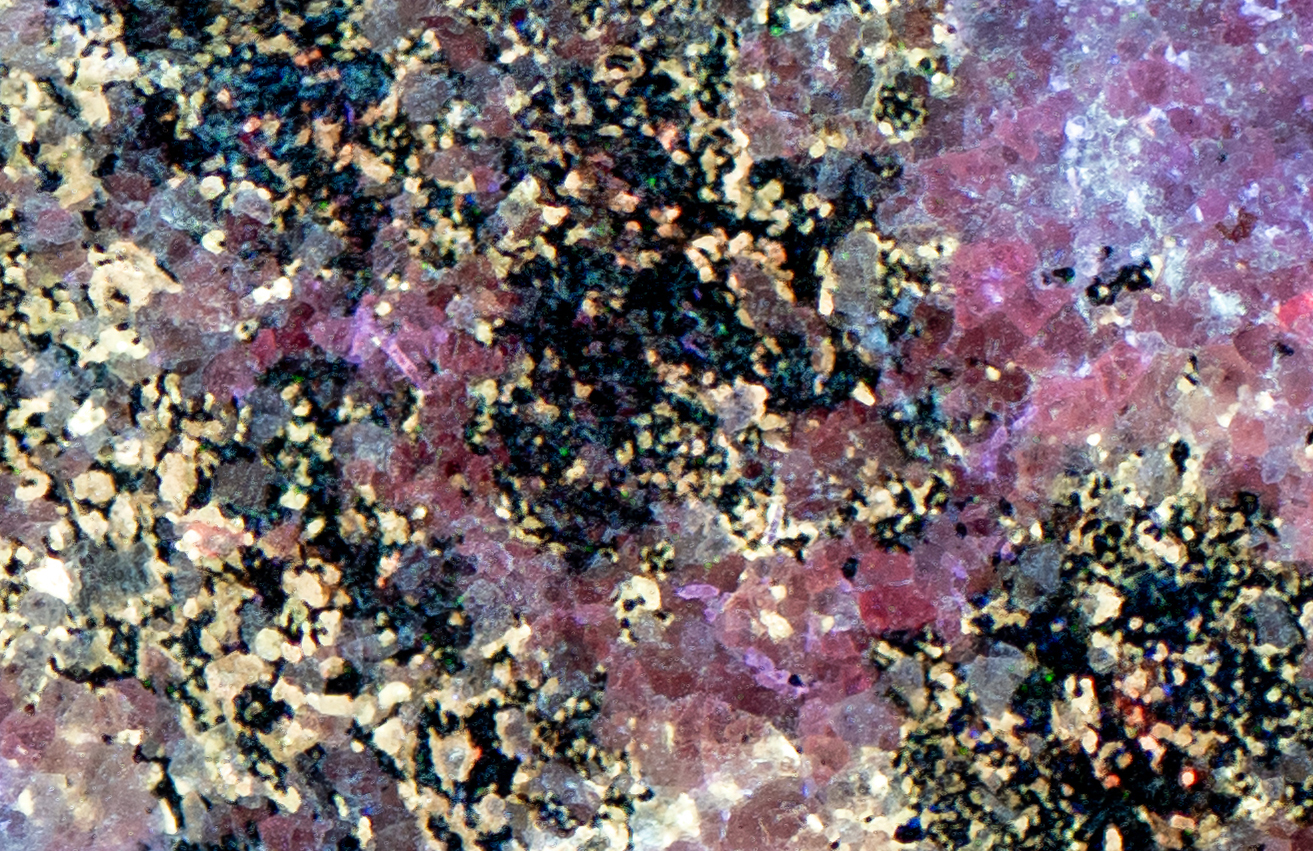
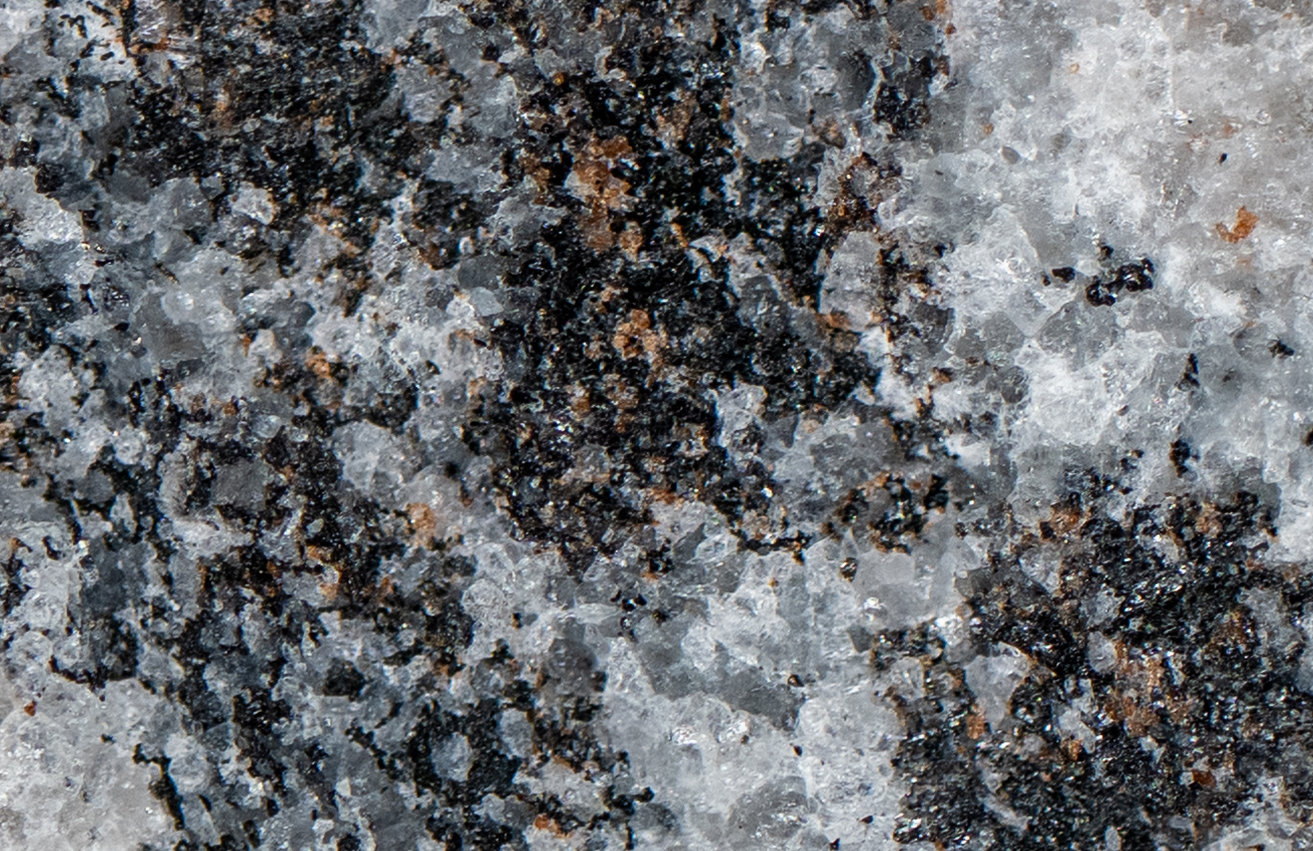
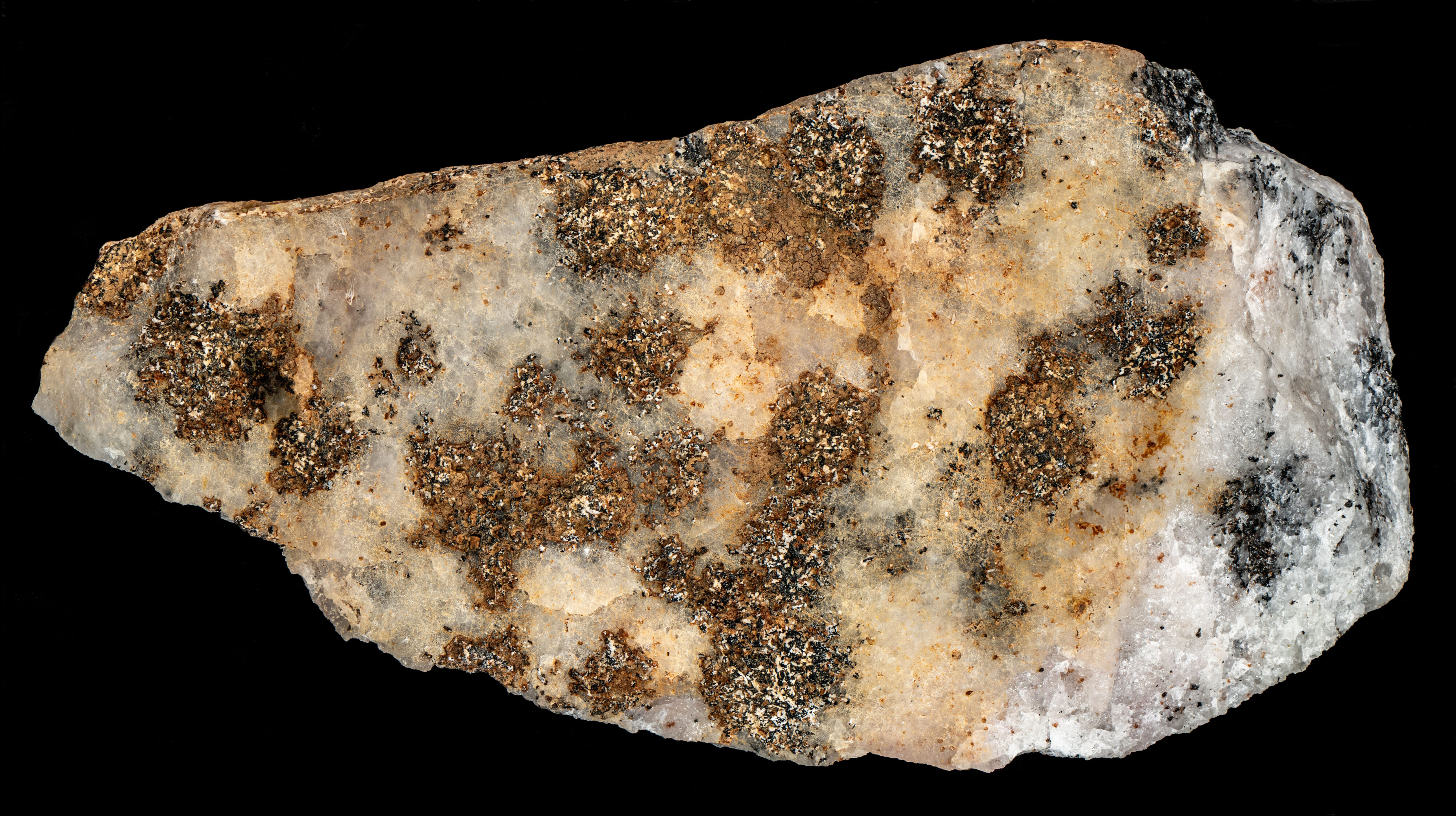
A closeup of the mineral cluster in white light shows the clear scapolite grains along with two unknown non-fluorescent minerals. One unknown mineral is shiny black and opaque, and the other unknown mineral is honey-colored and translucent.
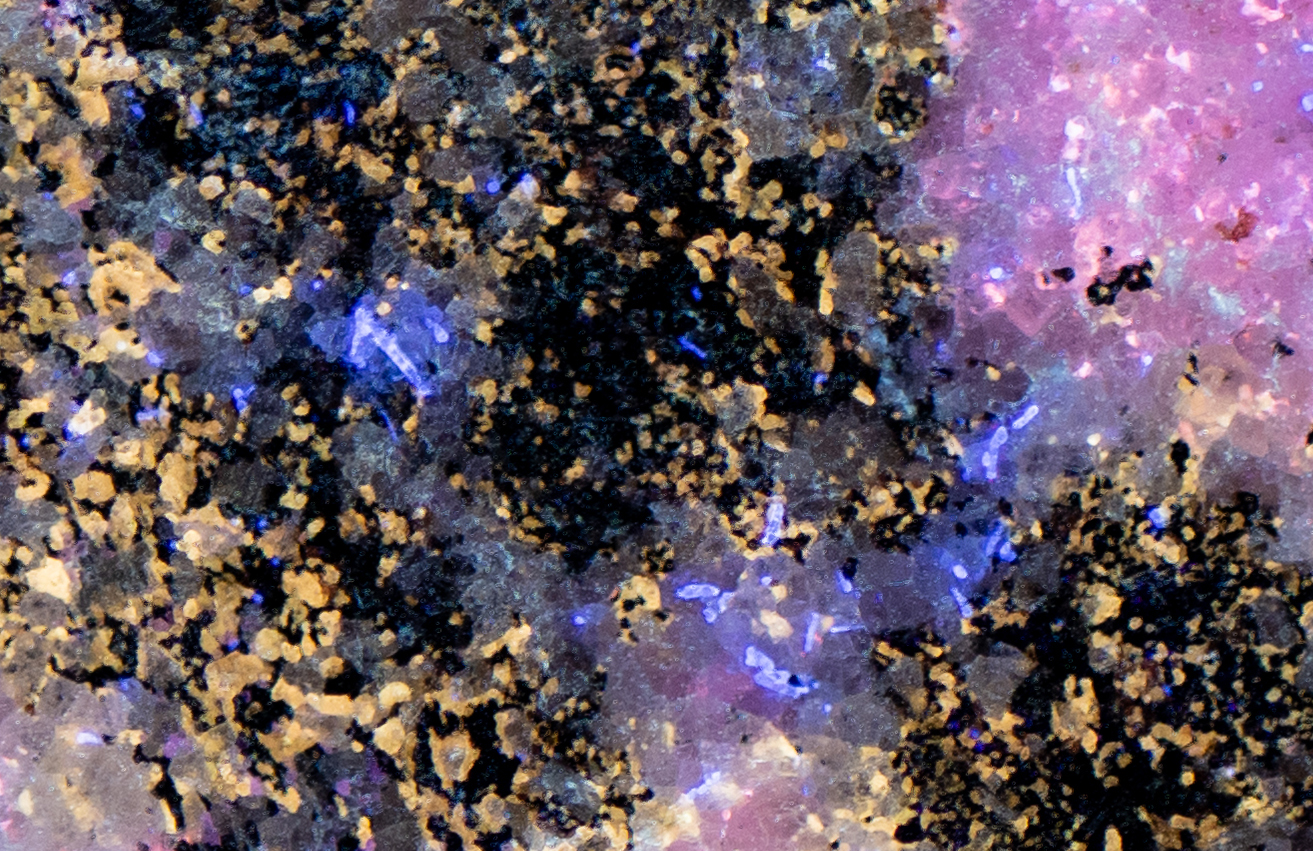
The MW closeup image of the clusters shows 1 mm to 2 mm elongated crystals that fluoresce violet. These crystals are pink in the SW closeup image, and they are non-fluorescent under LW. The fluorescence and shape suggest these crystals are fluorapatite. Most of the fluorapatite occurs in the hackmanite matrix.
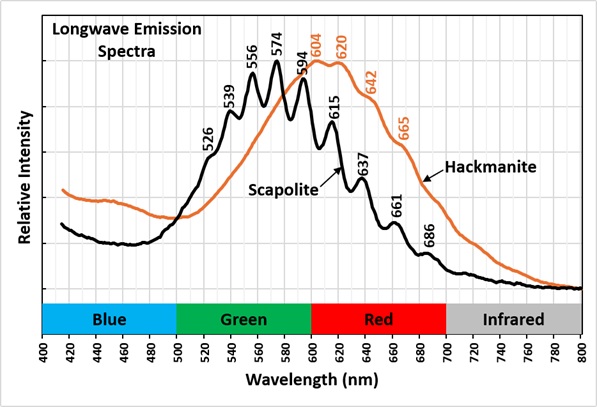
Scapolite generally refers to a solid solution series with the end members marialite (Na4Al3Si9O24Cl) and meionite (Ca4Al6Si6O24CO3). The yellow fluorescence of scapolite is activated by the disulfide ion ((S2)2-) replacing either chlorine (Cl-) or carbonate (CO3)2- anions. The linear structure of disulfide causes it to vibrate when exposed to UV light that produces a vibronic emission spectrum. The spectrum contains at least nine sharp peaks that form a broad peak. The maximum is at 574 nm. Scapolite fluorescence is brightest under longwave (365 nm LED) light.
This specimen exhibits many changes that occur in sodalite when different impurities and crystal lattice defects are present. The pure form of sodalite has the formula Na4(Si3Al3)O12Cl and its crystal structure is composed of alternating alumina (AlO4) tetrahedra and silicon (SiO4) tetrahedra that form a cage-like framework. Sodium cations and chlorine anions occupy the cage interiors.
Like scapolite, a disulfide impurity activates orange longwave fluorescence. Disulfide replaces some of chlorine in the sodalite cage. The longwaare emission spectrum of sodalite contains vibronic peaks like the scapolite spectrum, but there are fewer peaks, the broad spectrum is shifted towards the red end of the visible region, and the amplitude of the peaks is considerably less compared to the scapolite spectrum. The maximum emission of sodalite is 604 nm.
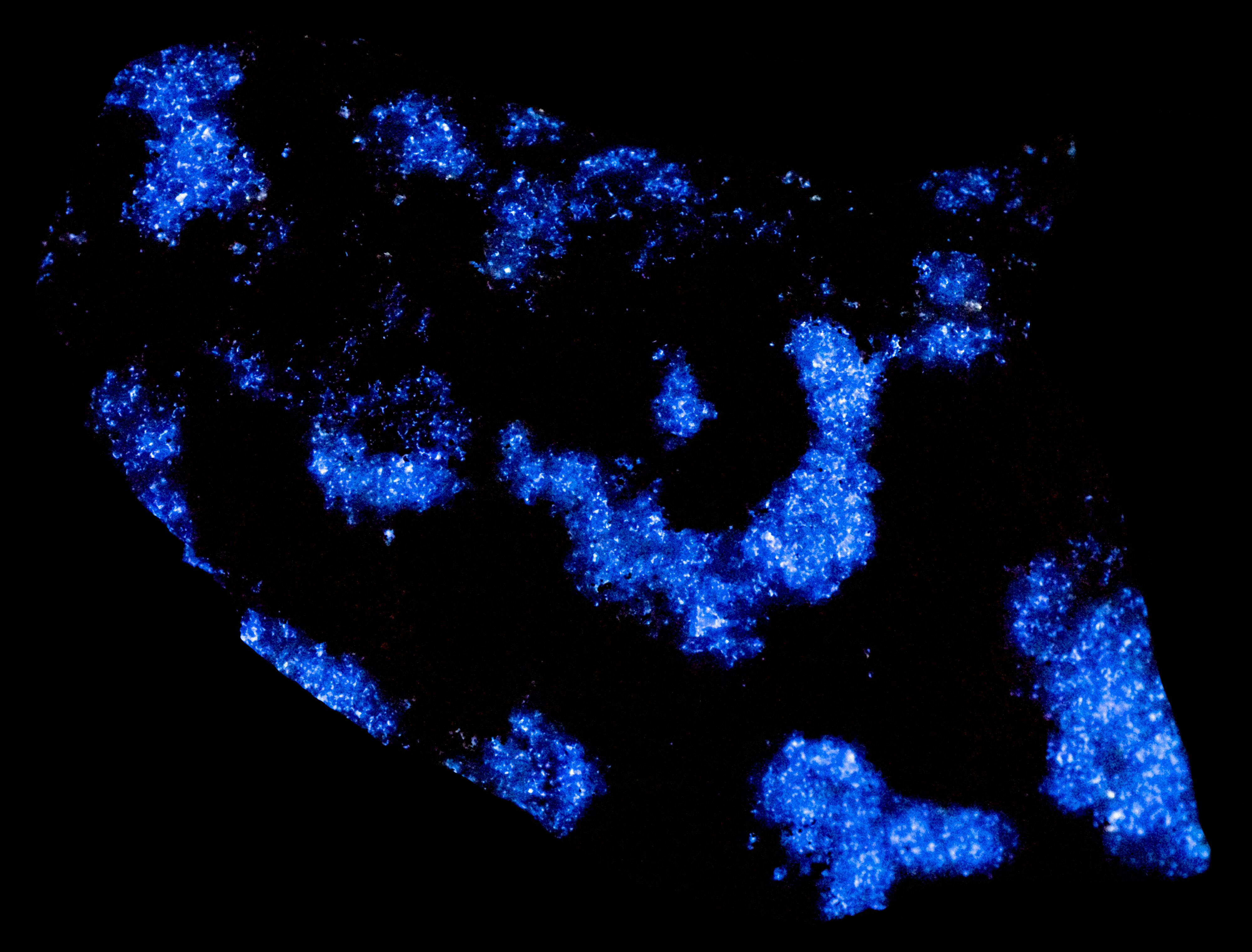
This sodalite is also phosphorescent after exposure to midwave and shortwave light. A titanium (Ti3+) impurity that substitutes for aluminum (Al3+) and an adjacent oxygen vacancy (crystal defect) are known to cause blue-white afterglow in sodalite. Electrons are trapped in the oxygen vacancy during MW and SW illumination, and they slowly return to their ground state causing the afterglow when the UV light is turned off.
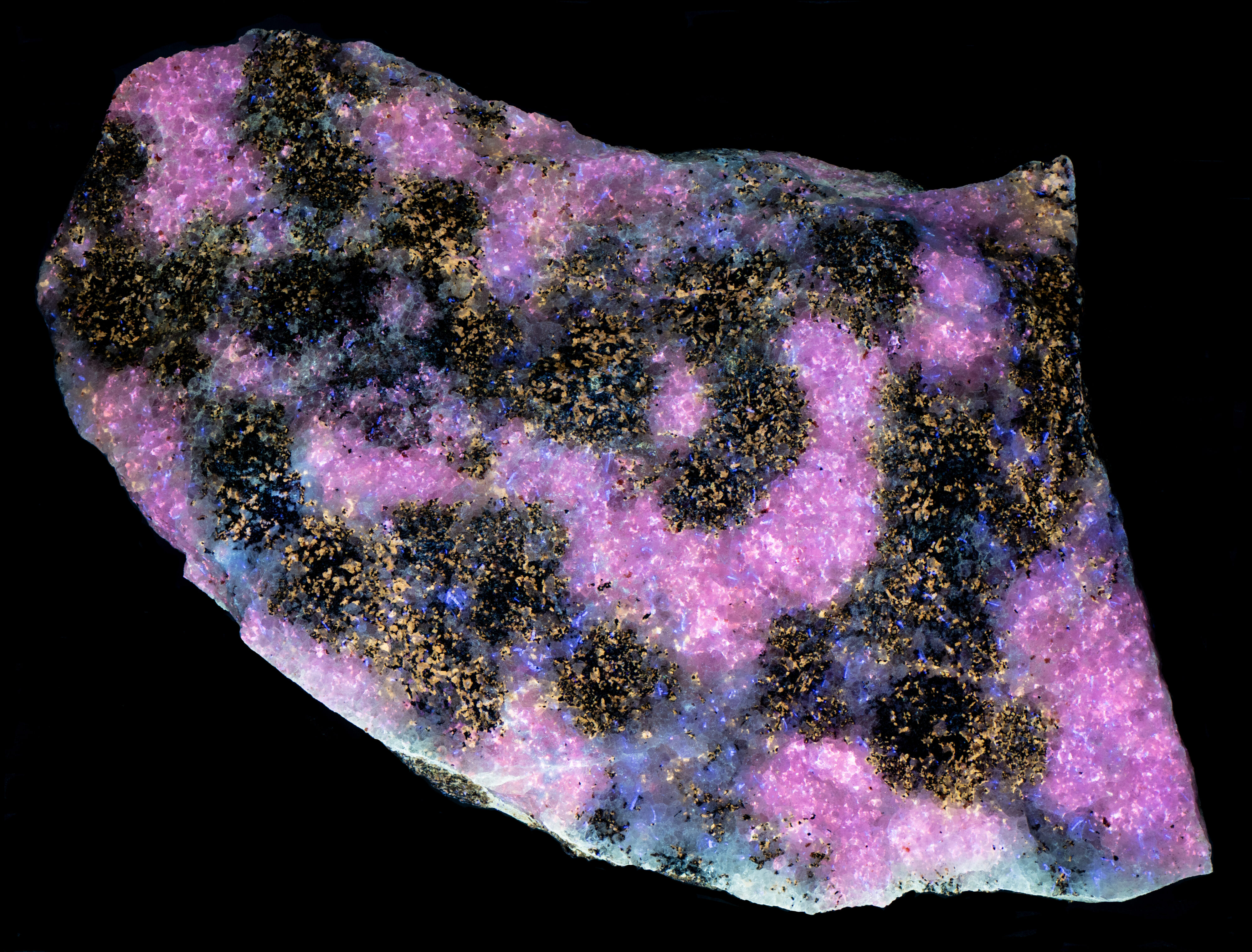
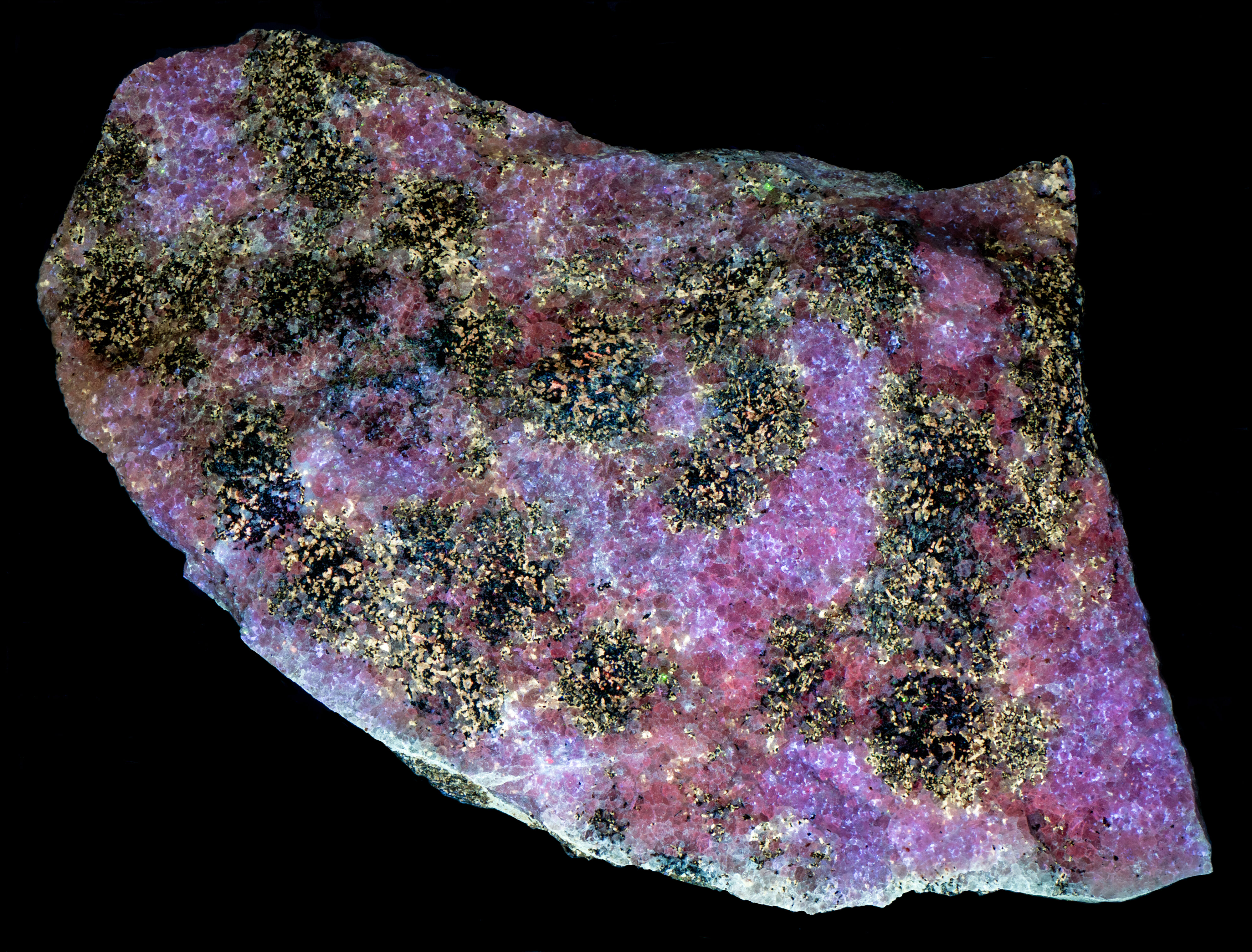
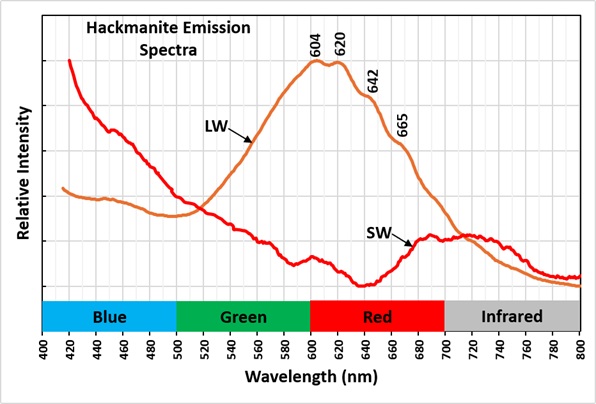
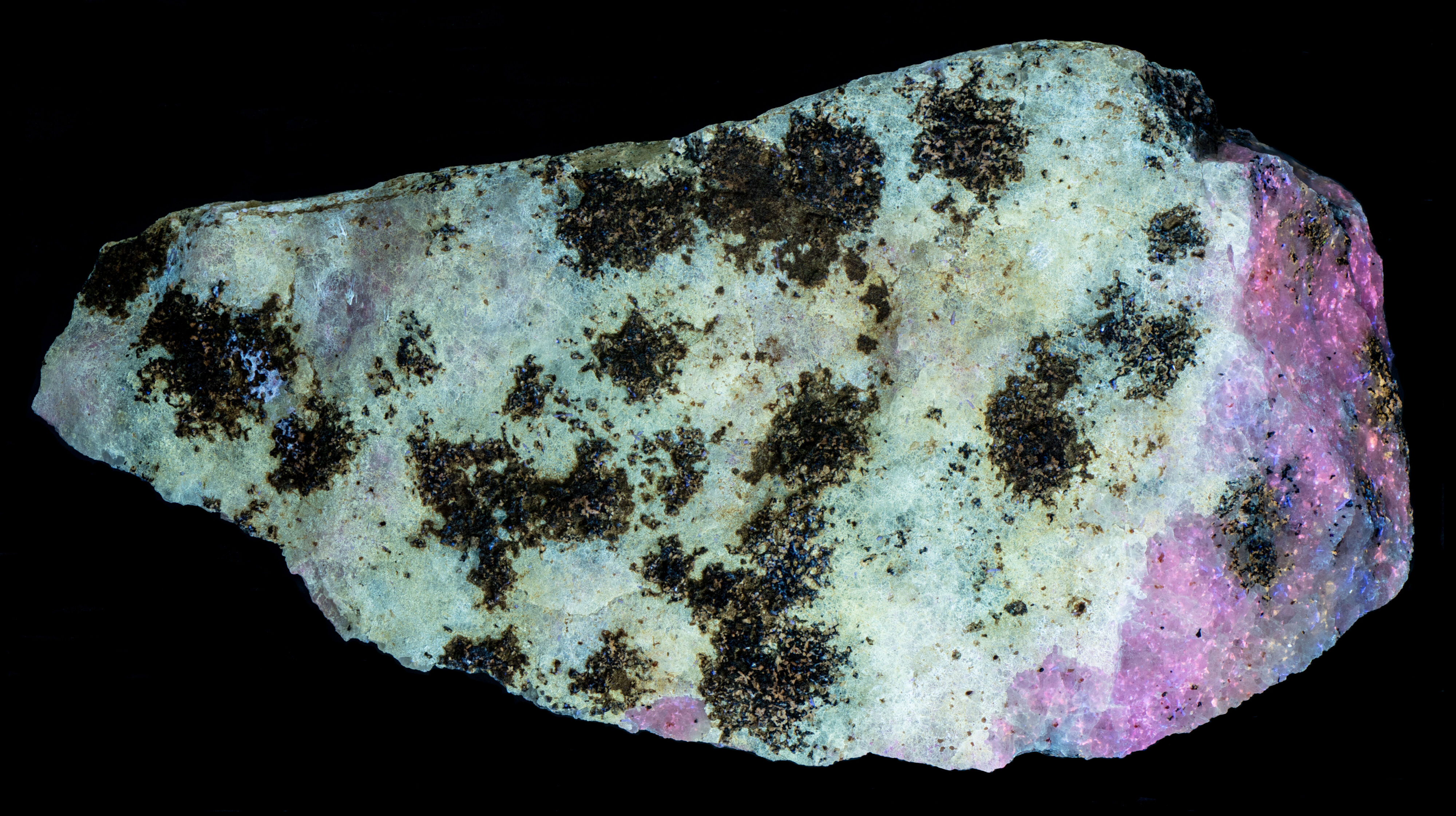
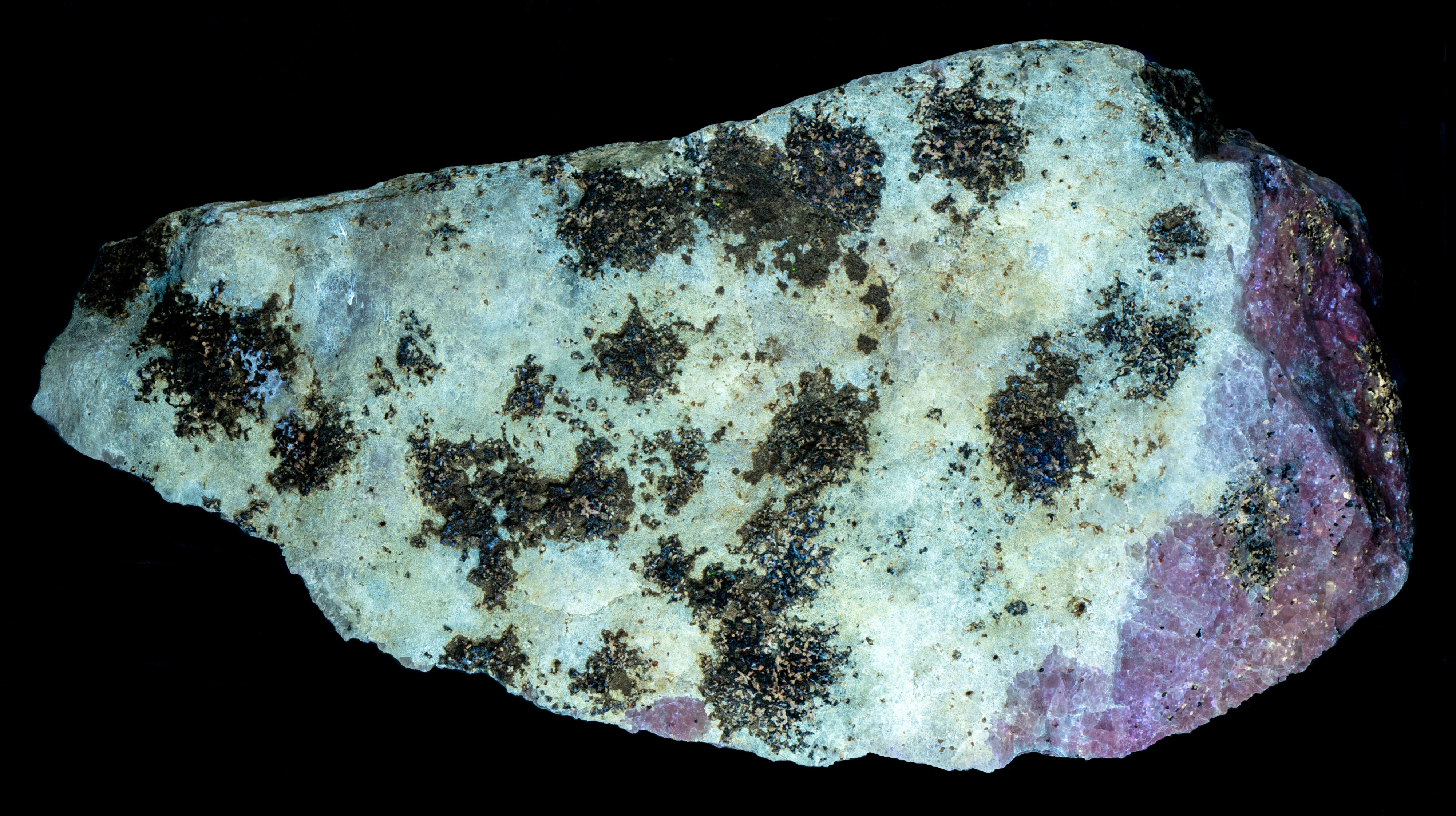
Under shortwave UV light, the sodalite fluoresces a reddish color and is pink under midwave light. An impurity of ferric iron (Fe3+) replaces some aluminum (Al3+) in the alumina tetrahedra. The emission spectrum produced by the ferric iron impurity is a broad peak that spans the visible red region and the shorter wavelength parts of the near infrared. The titanium-oxygen vacancy also introduces blue-white fluorescence under midwave and shortwave light. The blue-white fluorescence combined with the red iron activated fluorescence creates the pink sodalite fluorescent color under midwave UV. The red emission is more dominant in the shortwave fluorescence. The shortwave fluorescence is weak.
This specimen is weakly tenebrescent after exposure to all wavelengths of UV illumination. Tenebrescence is the property that makes sodalite a hackmanite. Hackmanite tenebrescence is caused by a crystal defect and an impurity. The defect is an empty sodalite cage where the chlorine anion is missing and an adjacent cage where the chlorine has been replaced by an impurity that acts as an electron donor when exposed to UV light. In this specimen, disulfide is the impurity and electron donor.
When UV light illuminates hackmanite, it causes an electron to be transferred from the disulfide ion to the vacant chlorine site. The result of an electron being transferred is the creation of an F-center (from the German word "Farbzentrum", where Farbe means color, and zentrum means center). The electron remains trapped in the F-center after the UV light is turned off. When visible light strikes the F-center, it absorbs the green wavelengths of visible light and some of the blue and red wavelengths. The maximum light absorption is at 550 nm. Visible light reflected from the tenebrescent specimen contains blue and red wavelengths to produce a purple color. Exposure to white light or thermal energy causes the trapped electrons in the F-centers to transfer back to the adjacent cages with the donor ions and the purple color fades away.
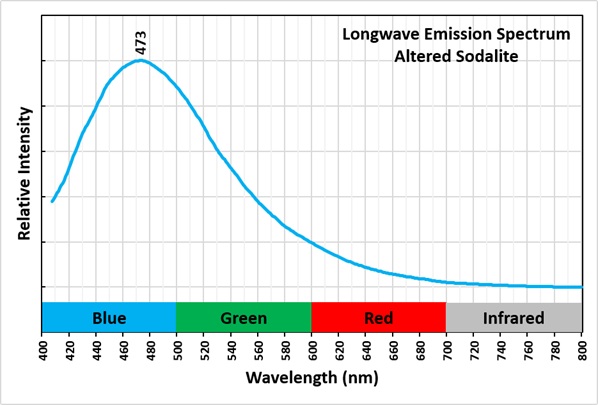
The second side of this specimen contains a white, fluorescent mineral that appears to be an alteration of the hackmanite. The mineral fluoresces white under all wavelengths of UV light and is brightest under longwave UV. It has no afterglow. The mineral does not react to acid. When I asked Google AI, "what mineral forms as an alteration of sodalite", it suggested several zeolites and cancrinite. I could not find information on the fluorescence of the zeolite minerals suggested by Google or cancrinite.
Summary of luminescence responses:
Hackmanite (Mindat) (RRUFF)
- Tenebrescence after exposure to Longwave (365nm LED) UV light: Purple
- Tenebrescence after exposure to Midwave (305nm LED) UV light: Purple
- Fluorescence under Shortwave (255nm LED) UV light: Purple
- Fluorescence under Longwave (365nm LED) UV light: Yellow
- Fluorescence under Midwave (305nm LED) UV light: Yellow
- Fluorescence under Shortwave (255nm LED) UV light: Yellow
- Fluorescence under Longwave (365nm LED) UV light: Orange
- Fluorescence under Midwave (305nm LED) UV light: Pink
- Fluorescence under Shortwave (255nm LED) UV light: Red
- Tenebrescence after exposure to Shortwave (255nm LED) UV light: Purple
- Afterglow after exposure to Midwave (305nm LED) UV light: Blue
- Afterglow after exposure to Shortwave (255nm LED) UV light: Blue