
Two-Color Ruby from North Macedonia
Contributed by: Michael Crawford
Date: Jun 1st, 2026
Locality: Sivec marble quarries, Sivec Mountain, Prisad, Prilep Municipality, North Macedonia (See on Mindat)
Description:
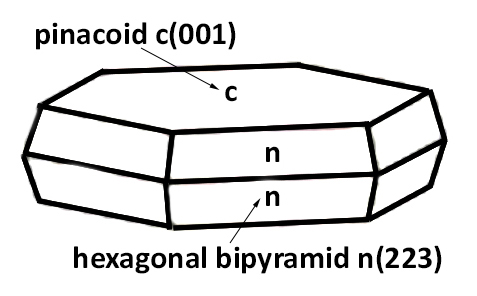
These are corundum var. ruby (Al2O3) crystals from the ancient Sivec Marble Quarries, Prilep, North Macedonia. The extraction of rubies from the Sivec Quarry began in Roman times. The hexagonal ruby crystals are found in dolomitic marbles of Precambrian age. The crystals have well-developed pinacoidal and bipyramidal faces.
Sivec rubies frequently contain oriented inclusions of diaspore (AlO(OH)) within the crystals. The diaspore occurs in lamellae that are parallel to the rhombohedral planes of the ruby crystal. The diaspore can create a unique silky, silvery reflection that has been named "diasporescence". Sivec is the only location in the world where this type of ruby has been found.
These rubies have a unique 2-color fluorescent response under longwave UV illumination. There is the typical bright red fluorescence under longwave UV light that is much dimmer under midwave and very weak under shortwave. There is also orange fluorescence under longwave, midwave and shortwave. It is brightest under longwave. The orange fluorescence occurs as a coating on the pinacoid faces of both crystals.
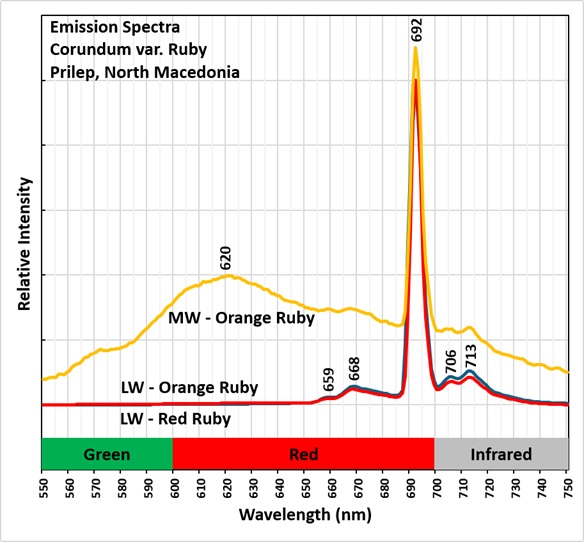
Longwave emission spectra of the ruby have a very sharp prominent peak at 692 nm. There are much smaller peaks on either side of the main peak at 659 nm, 668 nm, 706 nm and 713 nm. These peaks are activated by chromium (Cr3+) replacing aluminum (Al3+) in the ruby structure.
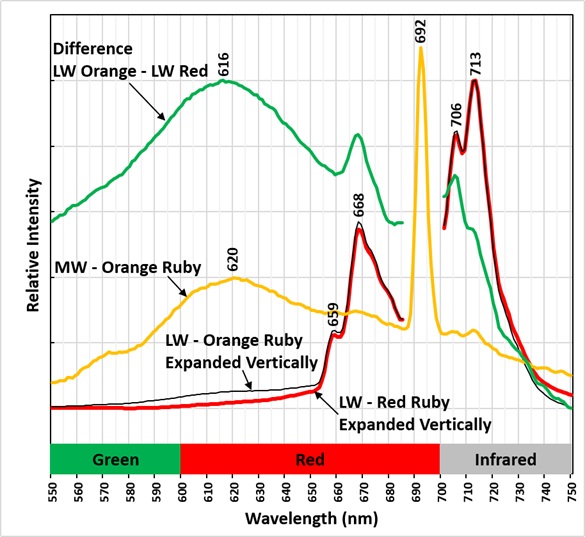
The longwave spectra of the red and orange fluorescence are nearly identical. The difference between the two spectra can be seen by vertically expanding the low-level emission as shown in the second plot. The emission spectrum of the orange fluorescence is slightly brighter in the 560 nm to 660 nm range. Subtracting the red LW spectrum from the orange LW spectrum has a broad peak in the orange with a maximum around 616 nm. This calculated difference is similar to the measured midwave emission spectrum of the orange fluorescence. The midwave emission spectrum is a broad peak with a maximum around 620 nm. The midwave spectrum also has sharp peak at 692 nm caused by the chromium activator.
Several references attribute the orange fluorescence to diaspore in the ruby crystal. The orange fluorescence appears to be a surface coating whereas descriptions have diaspore as inclusions within the crystal and these inclusions form lamellar planes that are parallel to the rhombohedral planes of the ruby crystal. These planes are at a high angle to the pinacoid face where the orange fluorescence occurs.
References also suggest that the orange fluorescence in Sivec rubies is caused by manganese (Mn2+) activation. There is a charge imbalance if manganese replaces aluminum (Al3+) in either ruby or diaspore. Some charge compensation mechanism would be needed for manganese to replace aluminum. Manganese is the likely fluorescent activator, but it is likely in a mineral other than ruby or diaspore.
The ruby crystals are 4 cm x 3.5 cm and 5.5 cm x 4 cm.
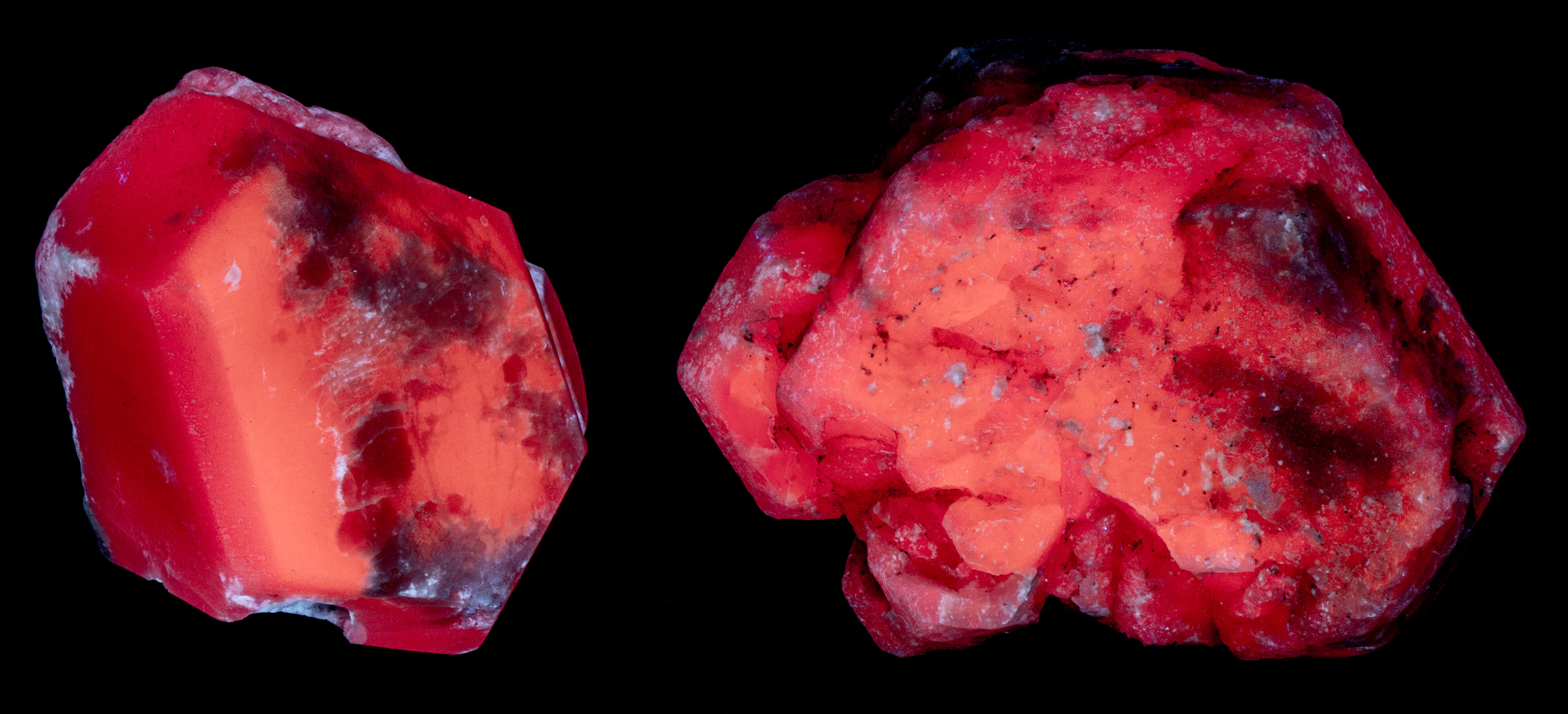
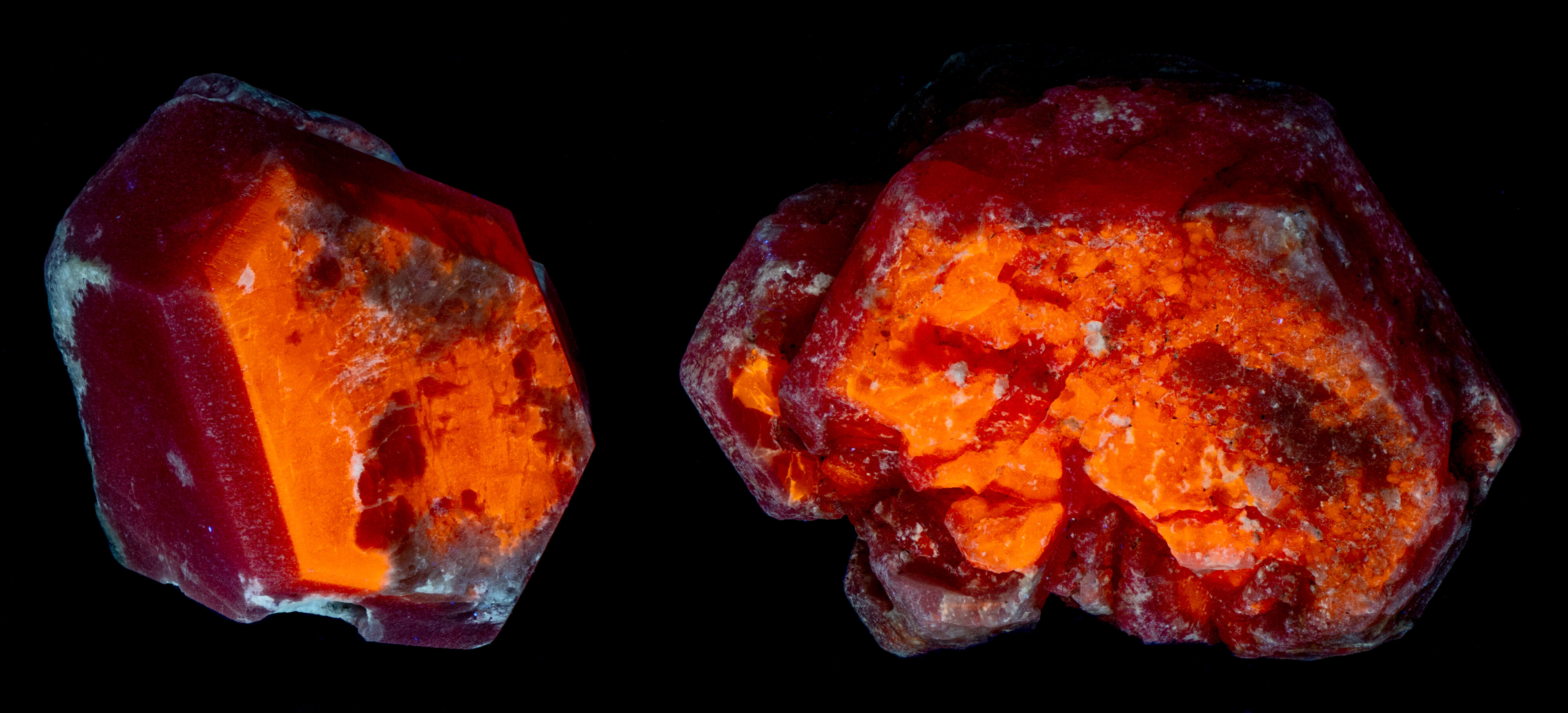
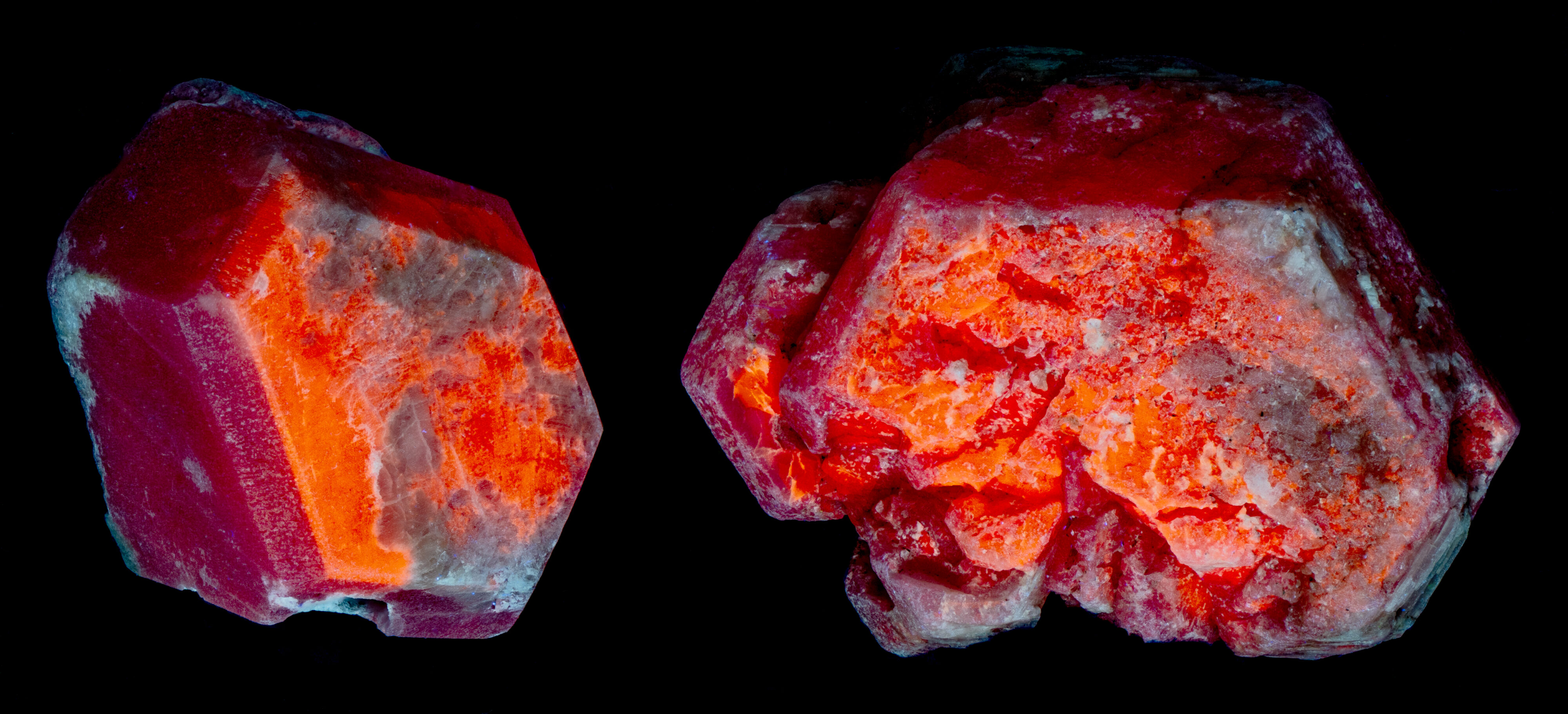
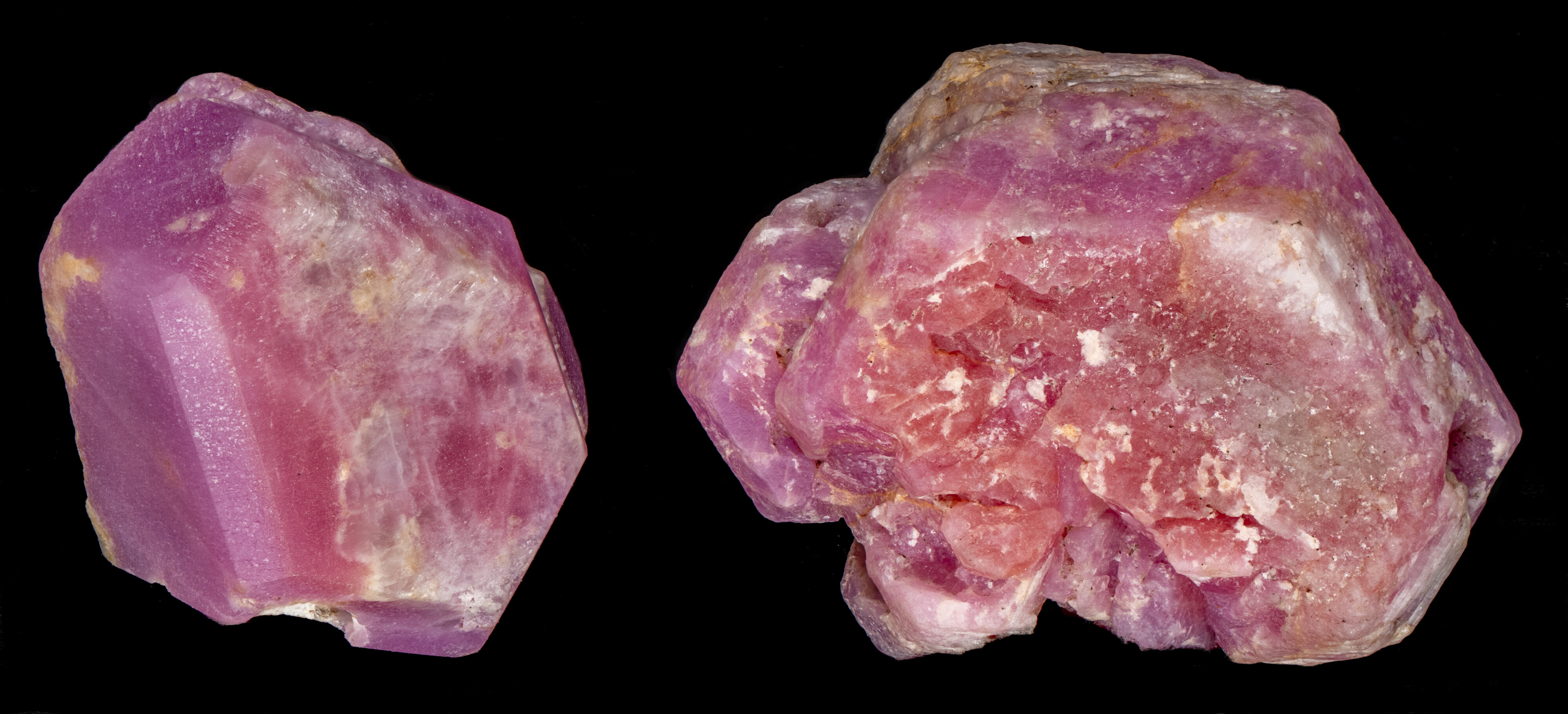
Summary of luminescence responses:
Corundum var. Ruby (Mindat) (RRUFF)
- Fluorescence under Longwave (365nm LED) UV light: Red
- Fluorescence under Longwave (365nm LED) UV light: Orange