
Dugway Geode – Happy Faces
Contributed by: Michael Crawford
Date: Jun 1st, 2026
Locality: Dugway geode beds, Dugway Pass area, Juab County, Utah, USA (See on Mindat)
Size: 9 x 11 cm
Description:
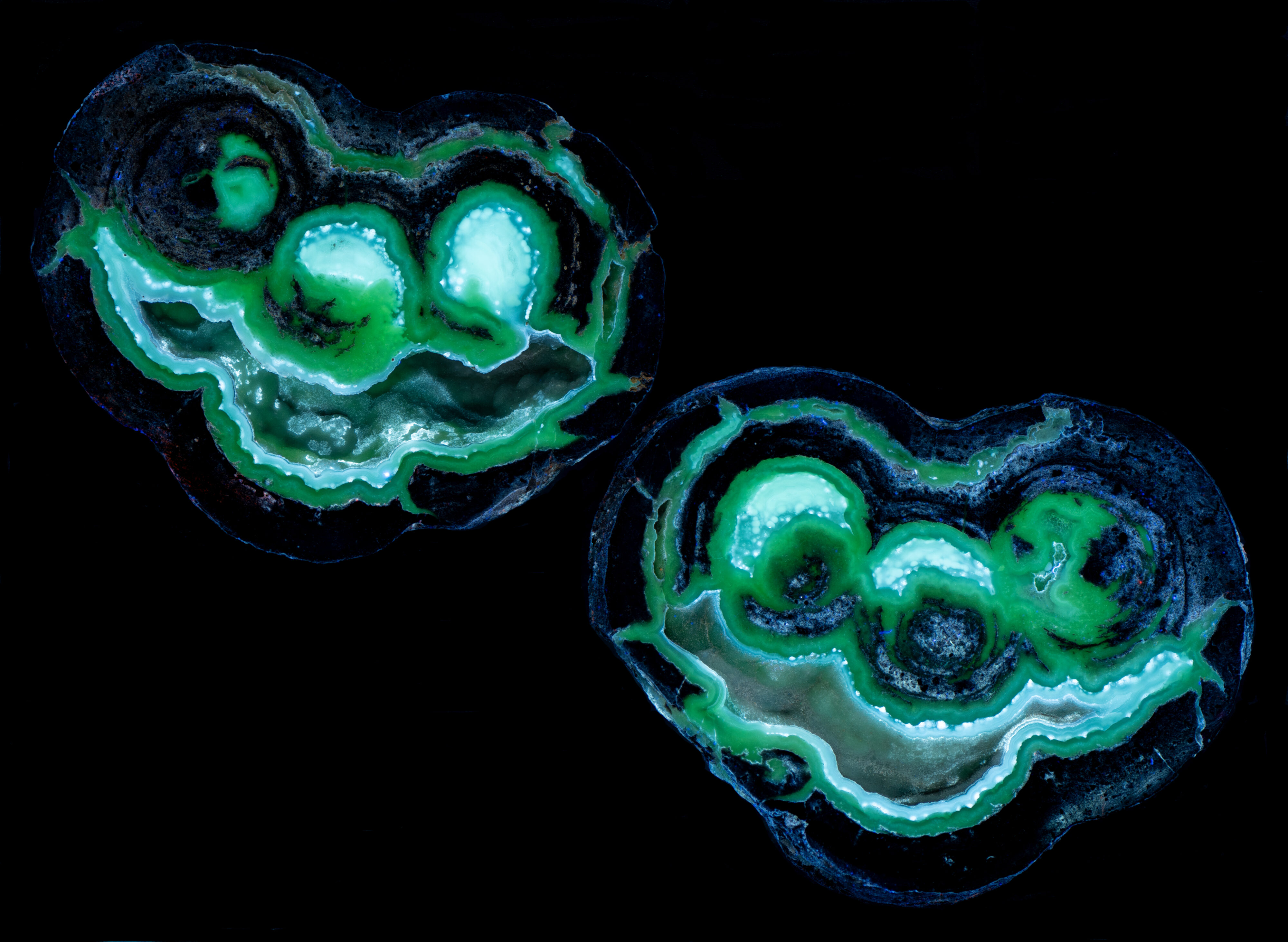
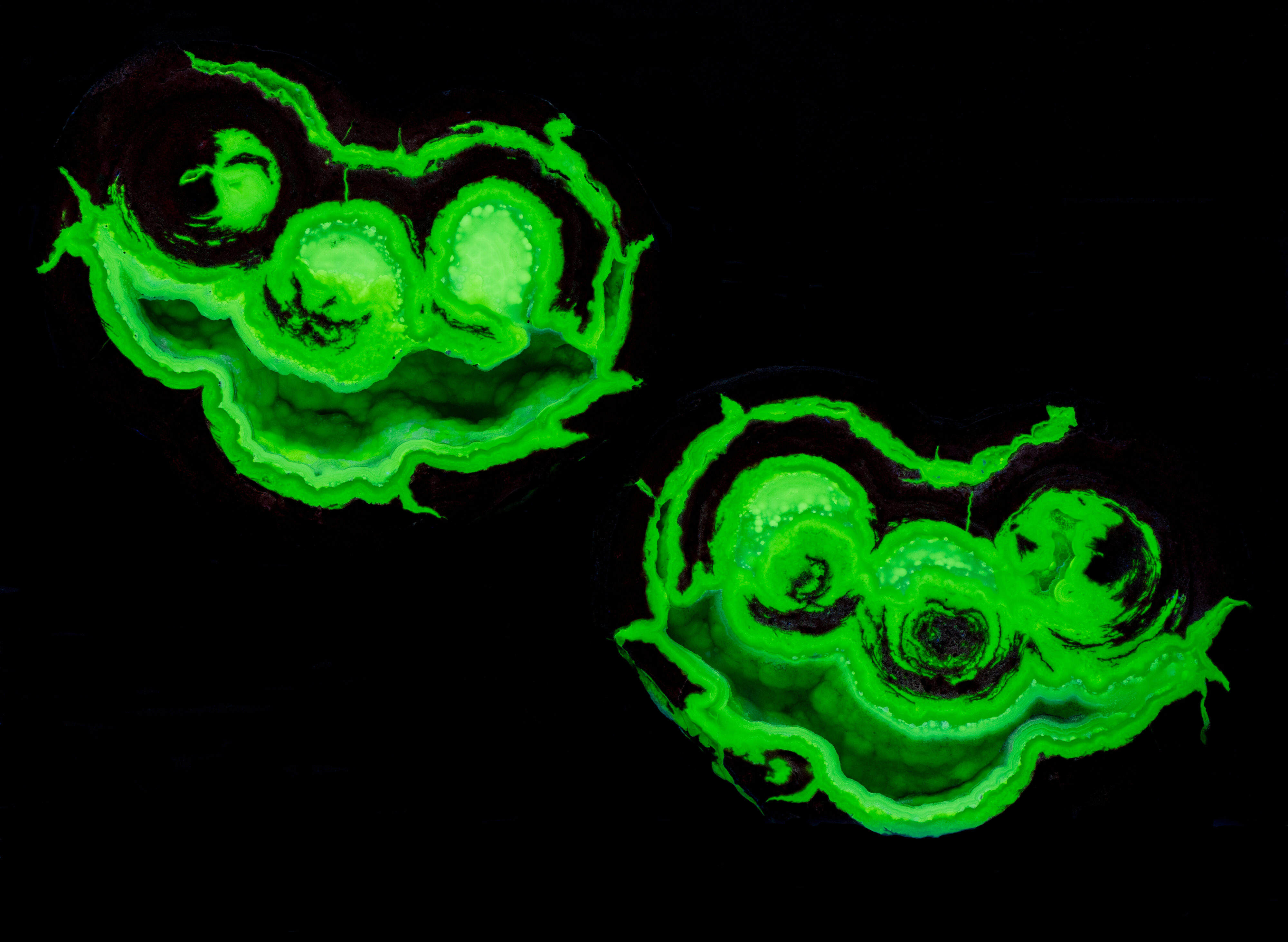
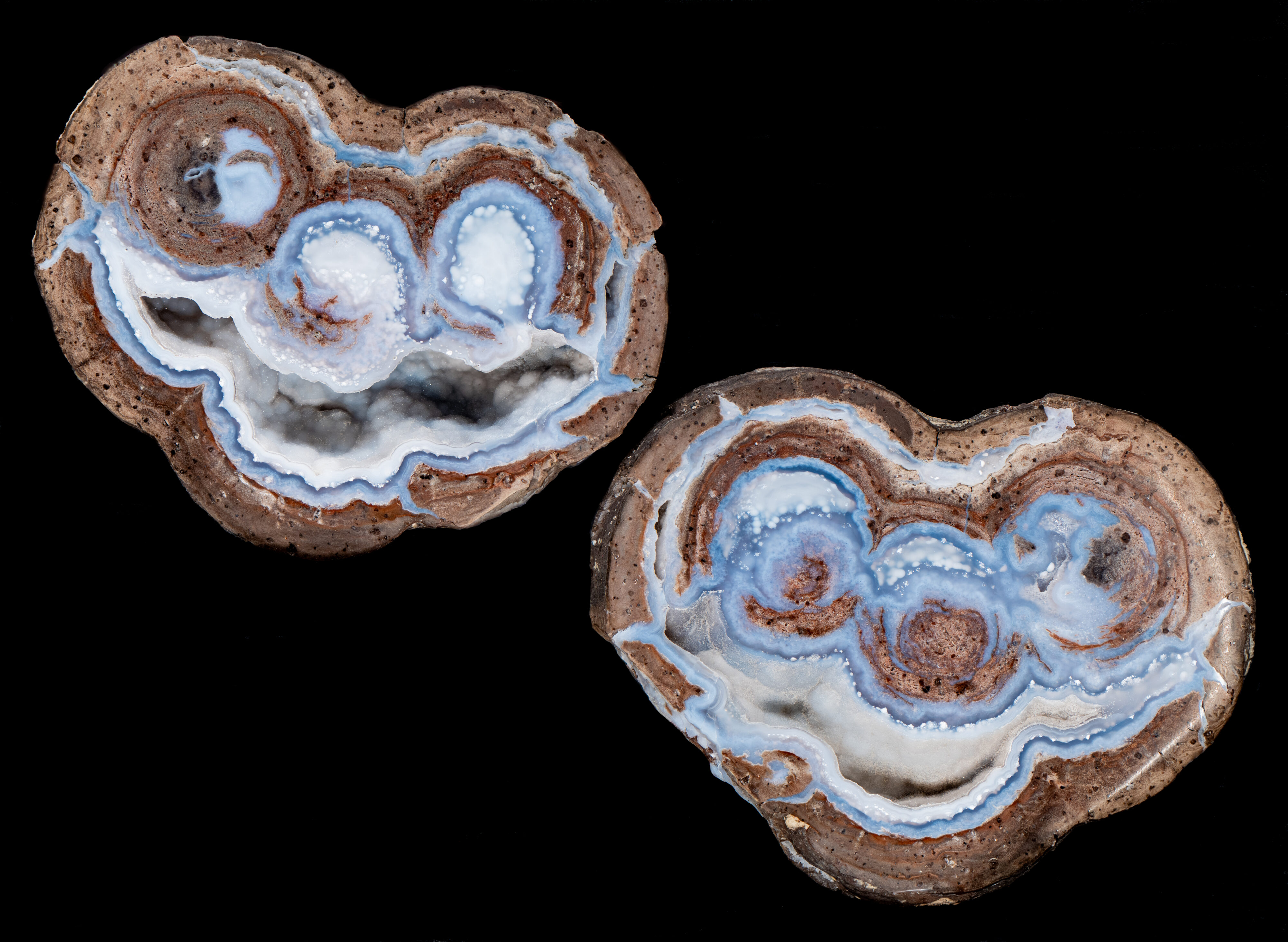
It is relaxing work to scan my fluorescent collection with a UV light. It brings a smile to my face. It is really nice when the rocks smile back.
This a Dugway Geode from Juab County, Utah. These geodes formed approximately 6 to 8 million years ago during the Miocene epoch. Volcanic activity occurred in the Dugway area of western Utah and deposited an extrusive igneous rock called rhyolite. Gases trapped inside the rock caused cavities to form. Millions of years of circulating groundwater dissolved silica and trace amounts of uranyl ions from the rhyolite and precipitated chalcedony into the cavities. The uranyl ions were deposited with the chalcedony and the uranyl ions activate the green fluorescence. The groundwaters also picked up organic molecules that were deposited with the chalcedony and the organics activate the white longwave fluorescence. The banding is the result of separate episodes of deposition and the groundwater in each episode having different concentrations of activators and coloring agents.
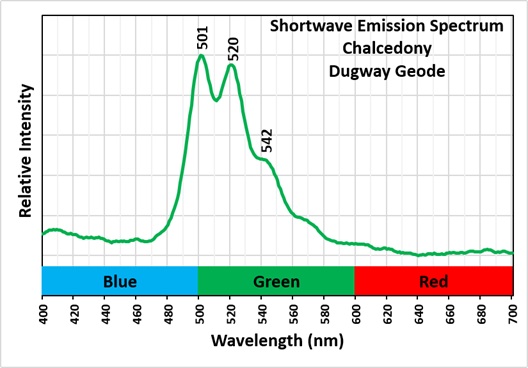
The plot shows the shortwave emission spectrum of the green chalcedony fluorescence. The spectrum has sharp peaks at 501 nm and 520 nm and an inflection at 542 nm. This spectrum is typical of uranyl activated chalcedony.
Summary of luminescence responses:
Chalcedony (Mindat) (RRUFF)
- Fluorescence under Longwave (365nm LED) UV light: Green
- Fluorescence under Longwave (365nm LED) UV light: White
- Fluorescence under Shortwave (255nm LED) UV light: Green