
Ludlow Diamond (Partial Diamond) - San Bernardino County, California
Contributed by: Chris Clemens
minID: E1C-LX6
Date: May 22nd, 2026
Locality: Ludlow (Stagg), San Bernardino County, California, USA (See on Mindat)
Size: 8 x 5 x 11 cm
Weight: 436 g
Description:
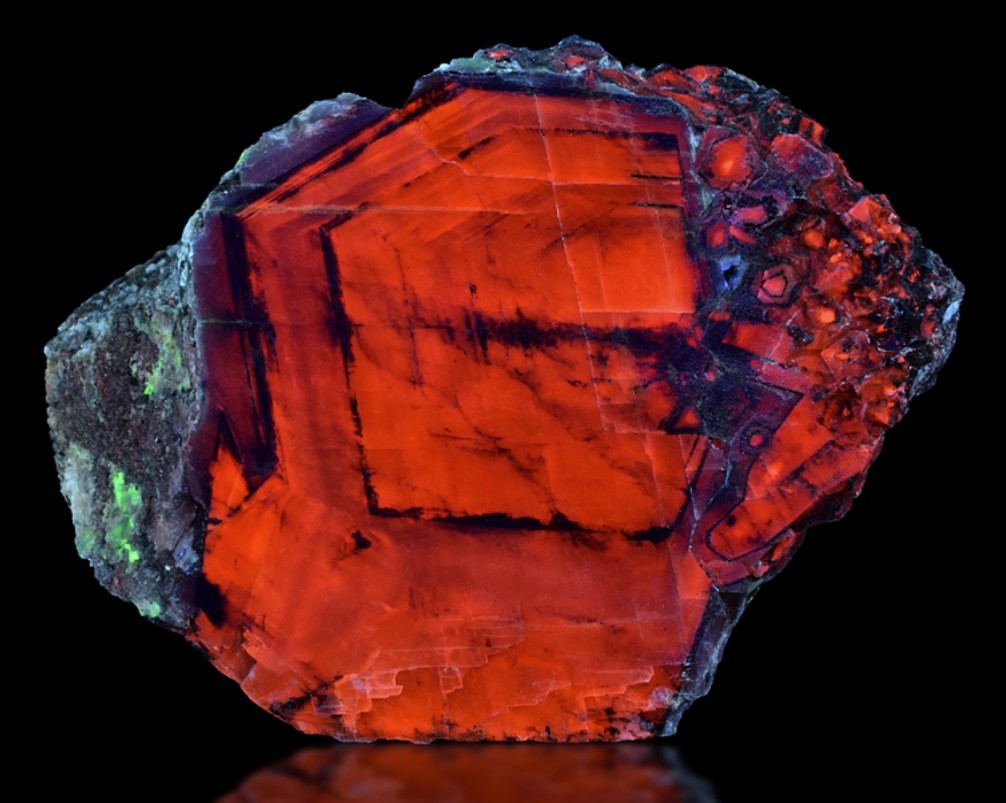
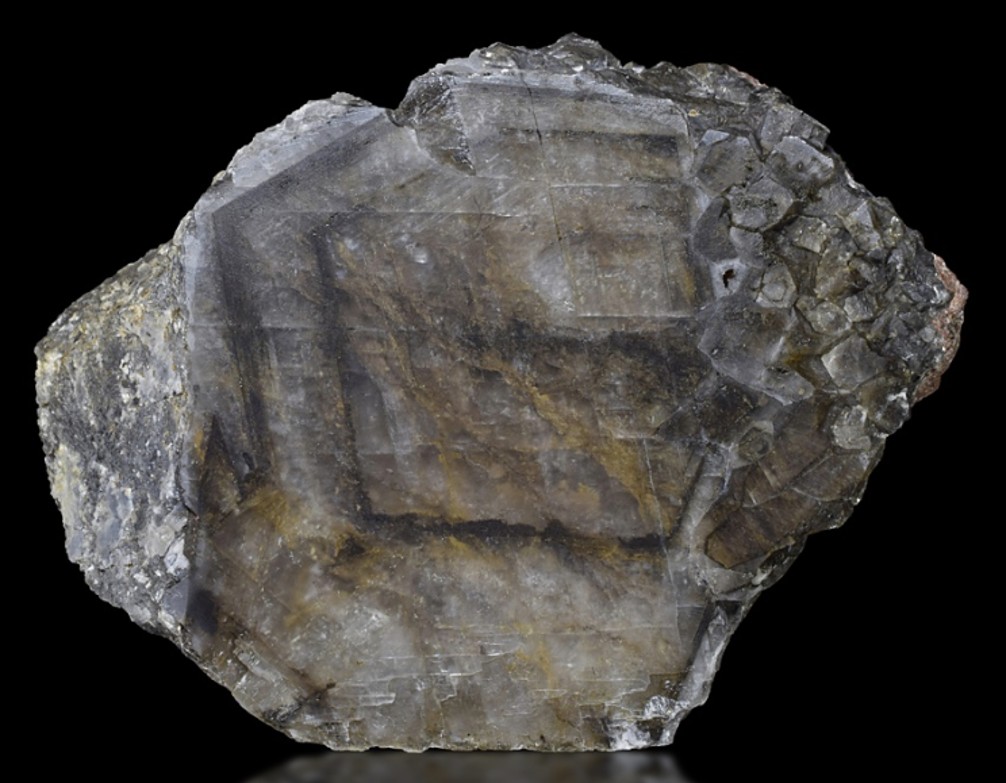
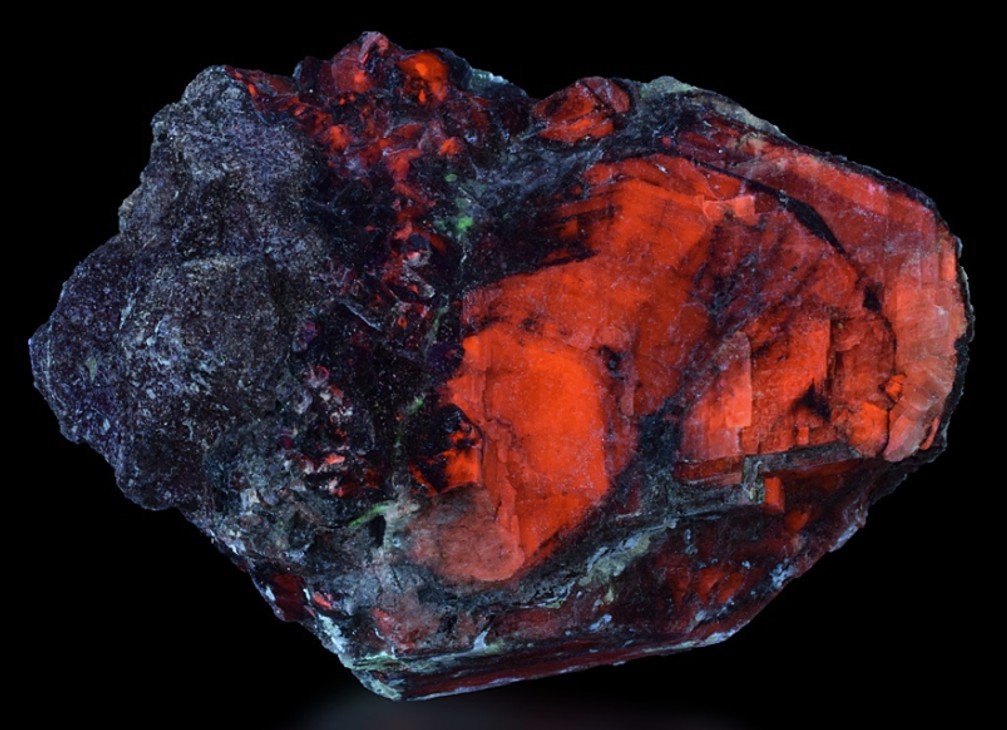
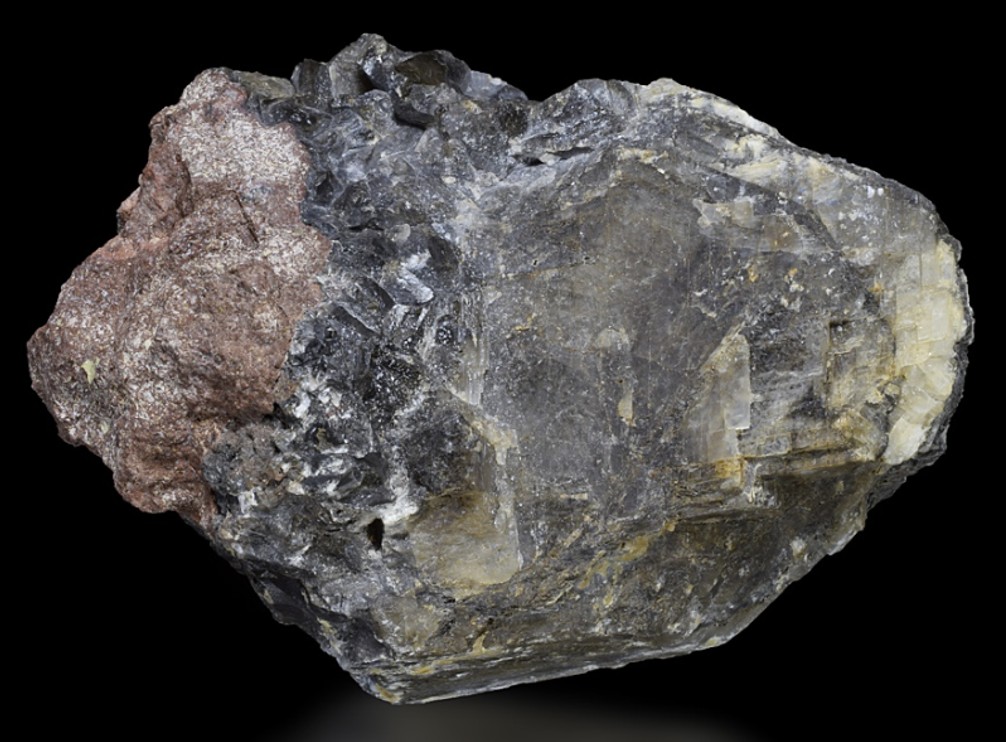
These unique and interesting fluorescent specimens are known as "Ludlow Diamonds", and were collected from an isolated occurrence in the Mojave Desert, in the Cady Mountains of San Bernardino County, near the town of Ludlow, California. Briefly, the proposed formative process is a three-phase sequence of events:
1.) Initial crystallization of scalenohedral calcite crystal containing lead and manganese activators, resulting in bright orange/red fluorescence;
2.) Deposition of non-fluorescent manganese oxide coating on the crystal growth surfaces, resulting in dark cross-sectional outlines; and
3.) Formation of additional calcite, absent of lead and manganese activators, that encased the original fluorescent calcite scalenohedron within a larger mass of colorless and weakly-fluorescent calcite.
When the resulting formation is cleaved, a diamond-shaped cross section of the original fluorescent calcite crystal is revealed within a larger colorless groundmass (Robbins, Fluorescence, Gems and Minerals Under Ultraviolet Light, 1994). Sadly, the collecting site was reportedly obliterated by blasting decades ago and specimens of Ludlow diamonds are exceedingly rare today. The specimen featured in this post consists of a calcite cleavage fragment containing a partial Ludlow diamond.
Originally posted by Chris Clemens on Nature's Rainbows in 2021.
Summary of luminescence responses:
Calcite (Mindat) (RRUFF)
- Fluorescence under Shortwave (254nm Lamp/Mercury) UV light: Red