
Multi-Wave Calcite from the Heart of America’s Dairyland
Contributed by: Chris Clemens
minID: FPW-CKQ
Date: May 20th, 2026
Locality: Shullsburg area, Lafayette County, Wisconsin, USA (See on Mindat)
Size: 6.7 x 6.52 x 8.45 cm
Weight: 317 g
Description:
Wisconsin is famous for its dairy production and badgers but is not generally known as a source of fluorescent minerals. In 1826, lead ore was discovered in southwestern Wisconsin, in the Shullsburg area. An influx of miners resulted, who dug into the surrounding hills in search of ore, and lived in the holes they dug. They came to be called "badgers", and hence the origin for the nickname of Wisconsin, "The Badger State". Now closed, these lead mines also produced an entire suite of collectible minerals, including beautiful specimens of calcite.
This specimen is a cluster of large, modified rhombohedral calcite crystals from one of the lead mines in Shullsburg. It is a spectacular display piece under visible light, but also shows a subdued, but beautiful multi-wave fluorescent response under UV. Under shortwave UV (254nm) this calcite fluoresces pastel pink/red but shows its brightest response under midwave (302nm), glowing a more vivid purple/magenta color. The fluorescence of this specimen is weakest under longwave (365nm), under which it glows a dim red/purple.
Originally posted by Chris Clemens on Nature's Rainbows in 2016.
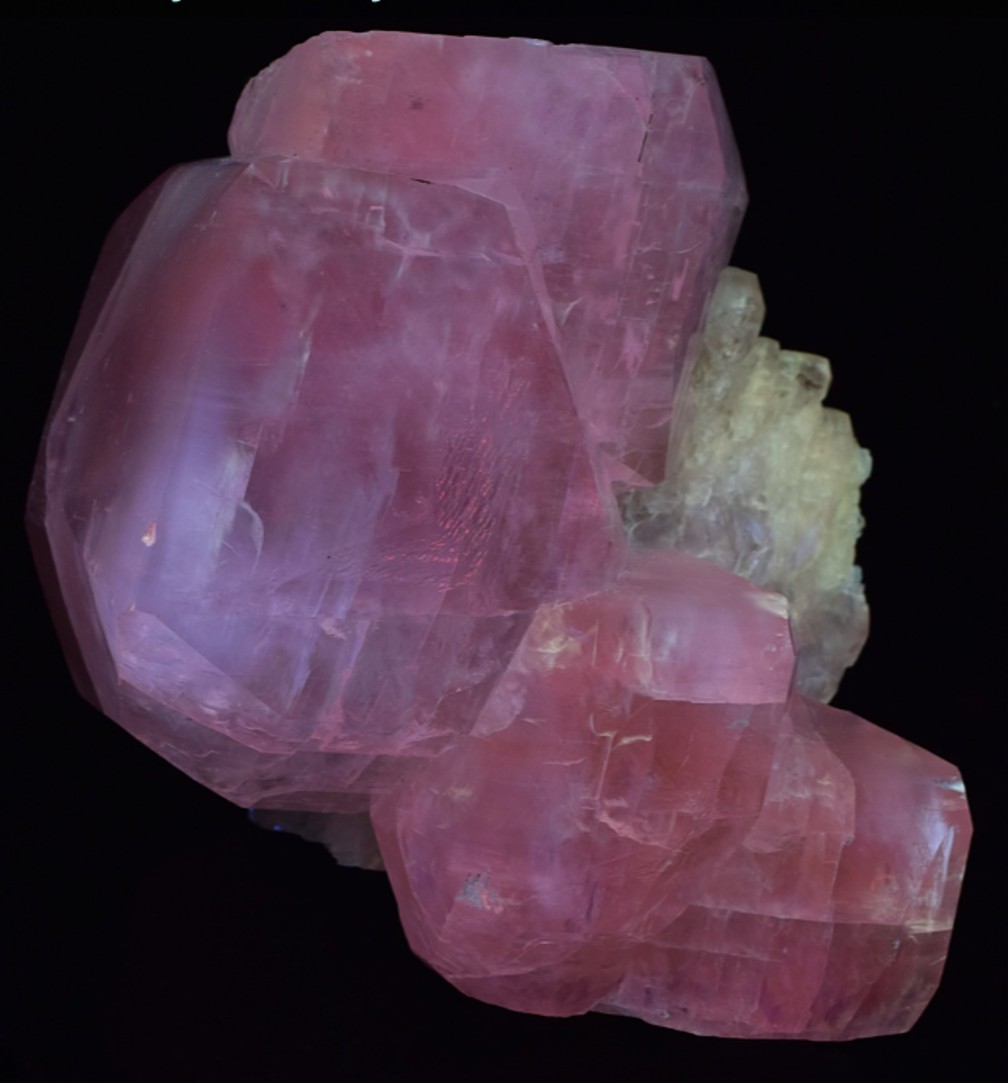
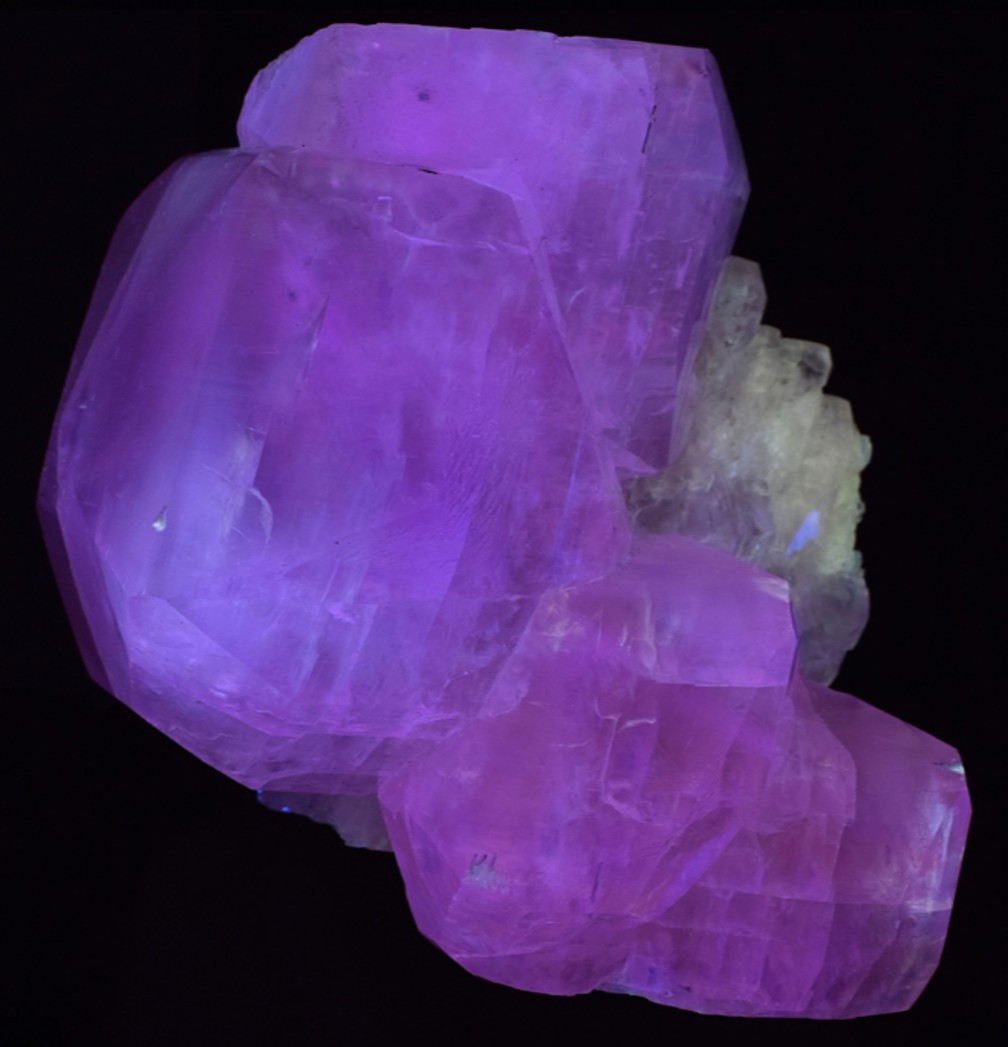
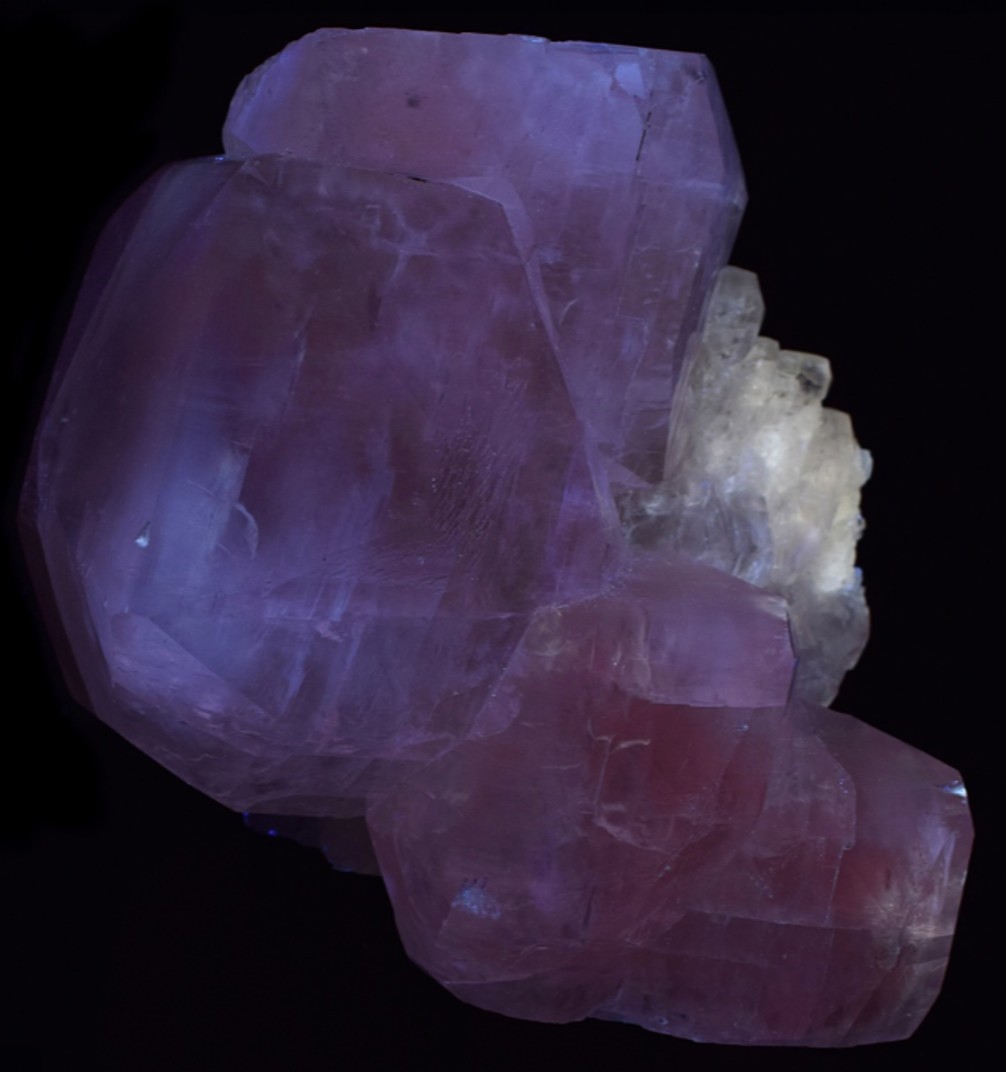
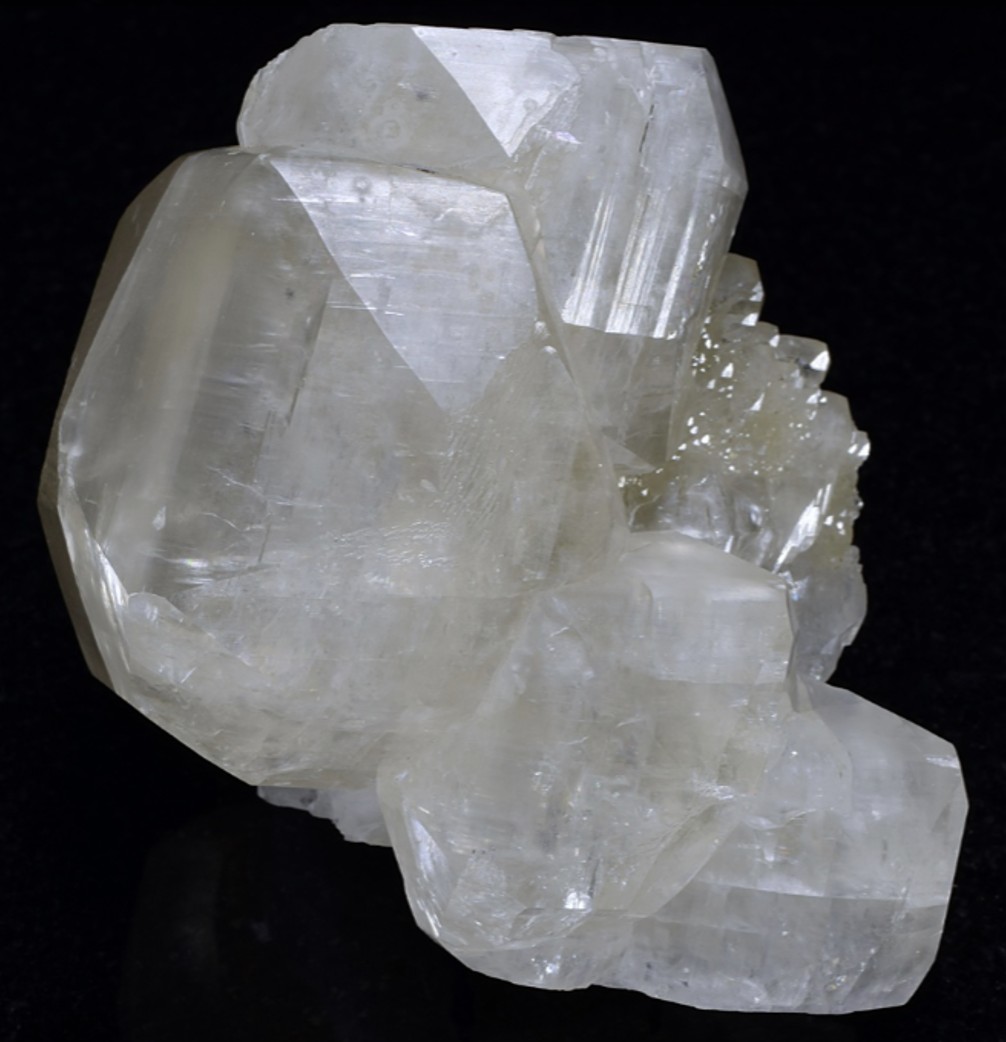
Summary of luminescence responses:
Calcite (Mindat) (RRUFF)
- Fluorescence under Midwave (305nm Lamp/Mercury) UV light: Violet
- Fluorescence under Shortwave (254nm Lamp/Mercury) UV light: Orange