
Gemmy "Terlingua-type" Calcite with Blue Light and Green Laser Fluorescence
Contributed by: FMS Admin
Date: May 14th, 2026
Locality: Challenger Cave System, Monterrey Municipality, Nuevo León, Mexico (See on Mindat)
Size: 2.2 x 1.4 x 2.4 cm
Description:
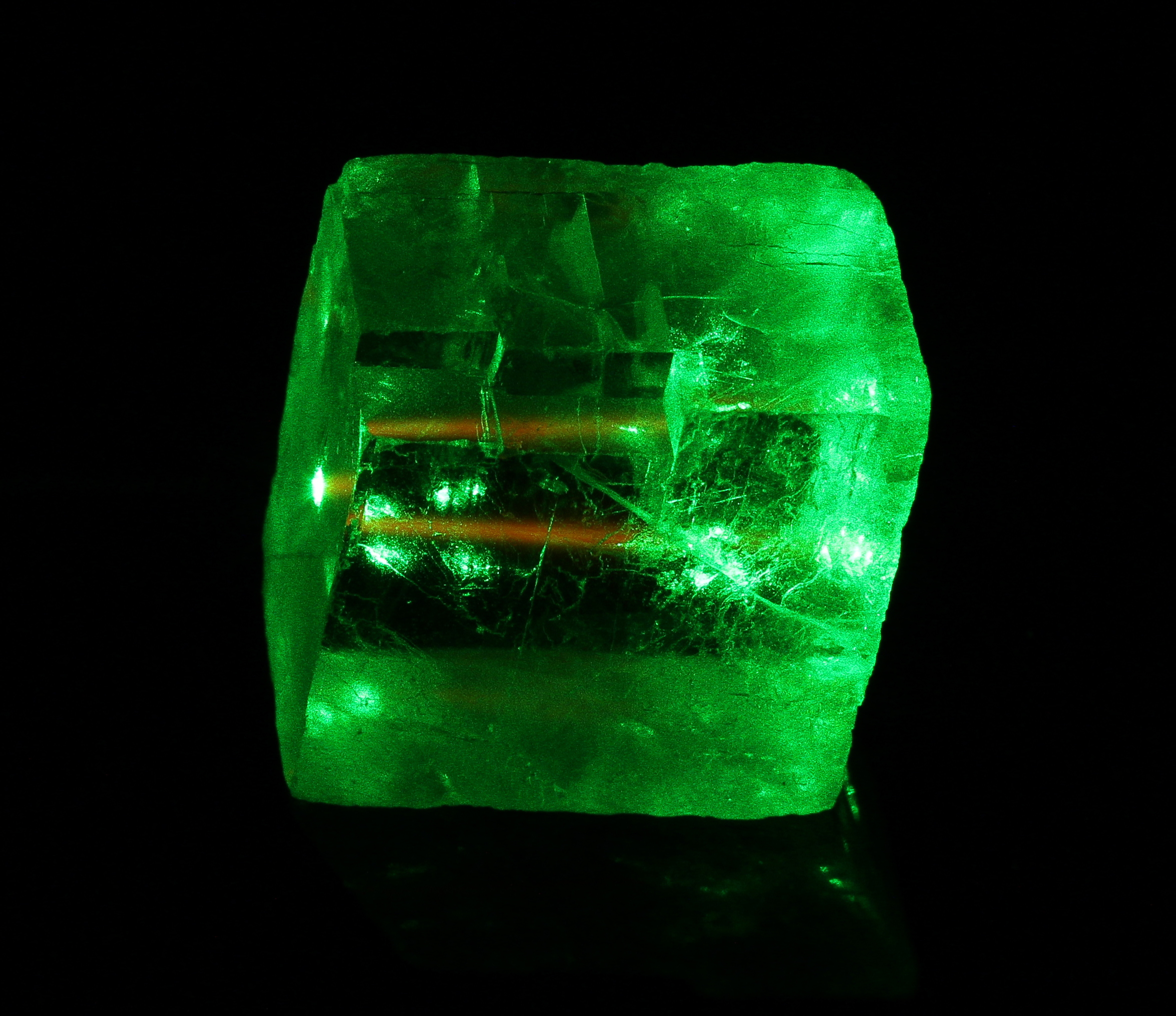
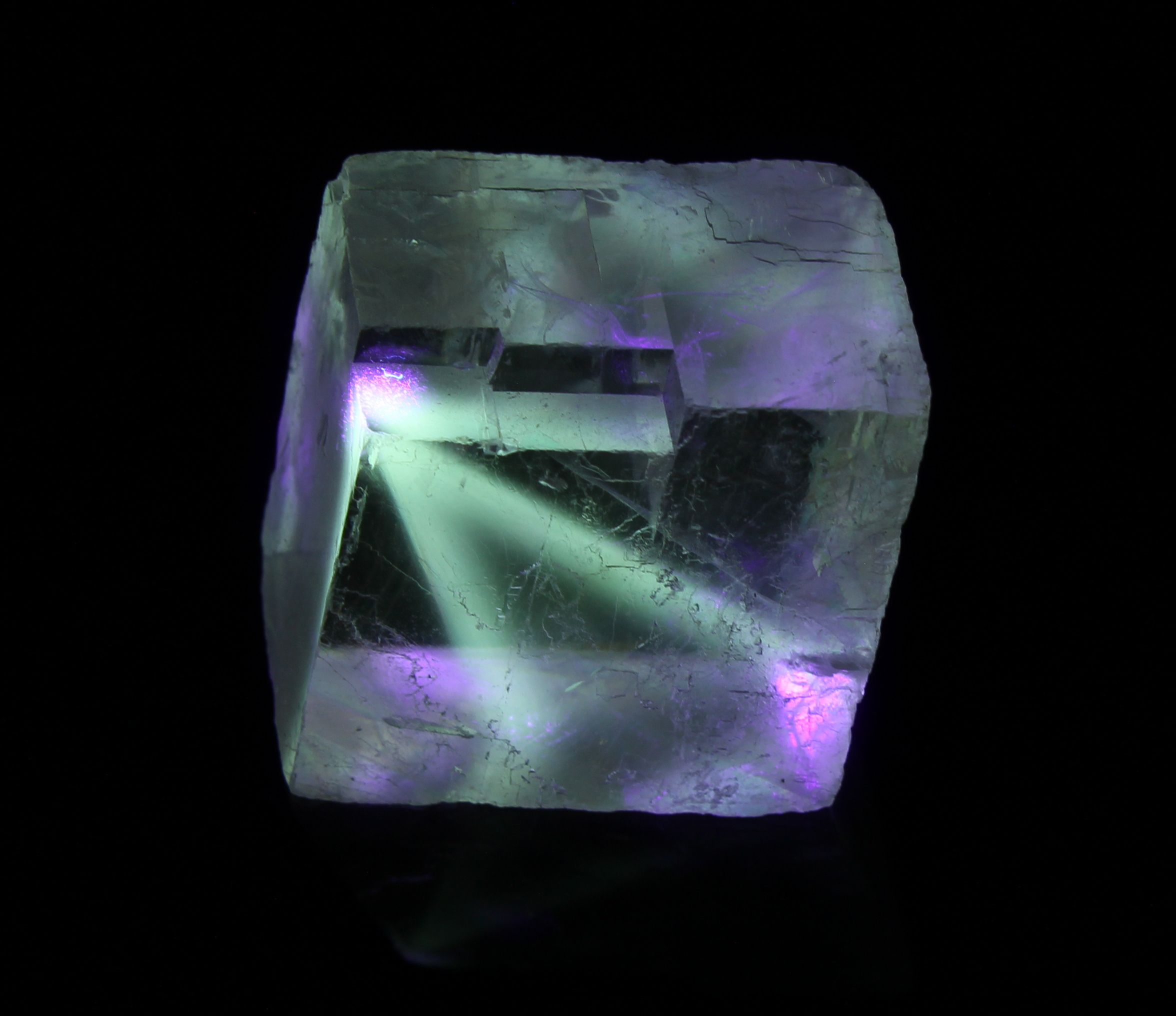
Shown here is a small but nicely transparent, gemmy cleavage rhomb of "Terlingua-type" calcite from the Challenger Cave, Nuevo Leon, Mexico. Like other specimens of that material, not only does it react to all UV wavelengths, fluorescing a different color under each, but also to blue light (450 nm), violet/blue lasers (405 nm), green lasers and green light (532 nm). Since this specimen has a nice transparency, it is an ideal candidate for photographing its response to laser beams, which I did not photograph in my previously posted specimen from the same locale, which is not gemmy like this one.
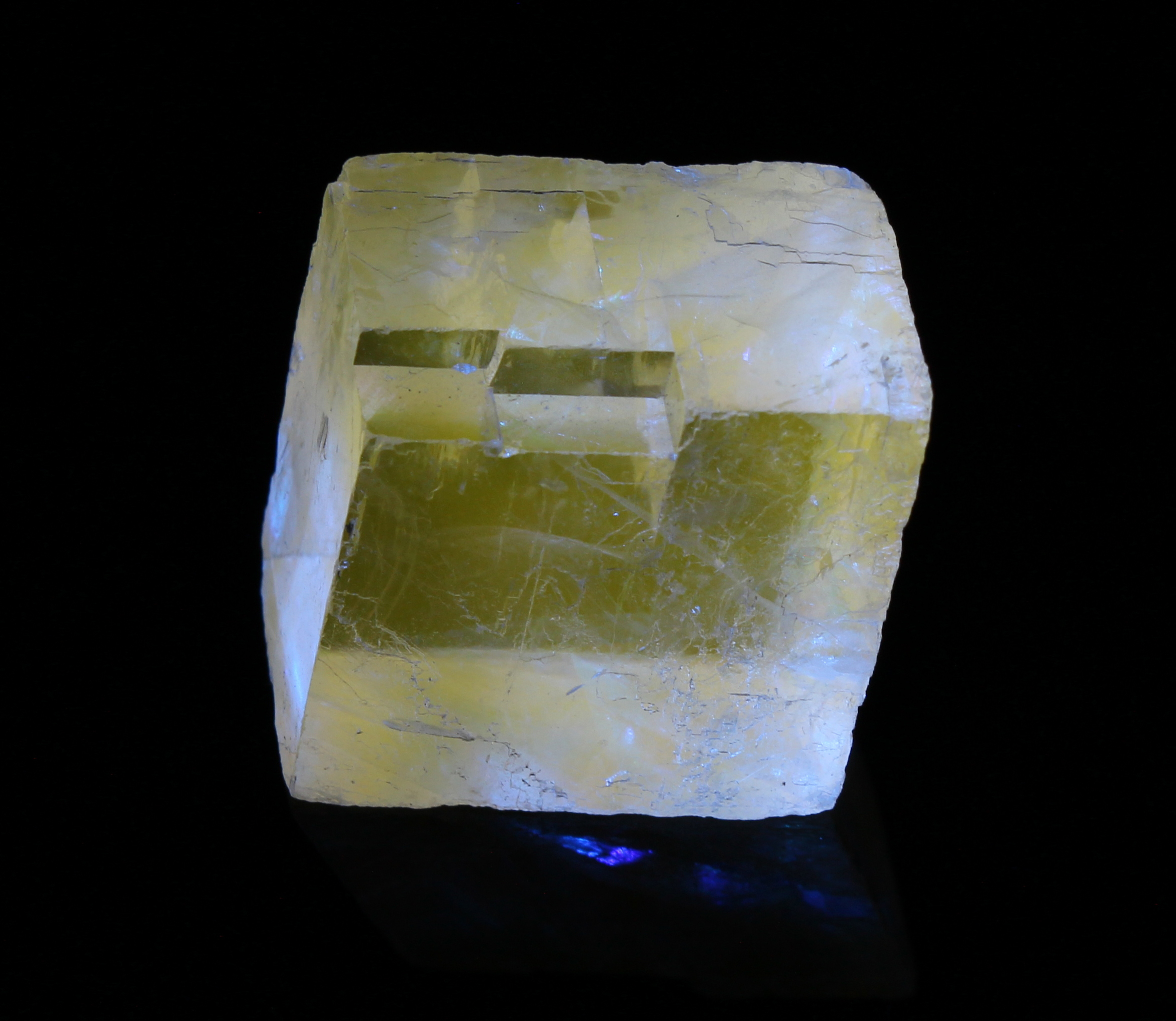
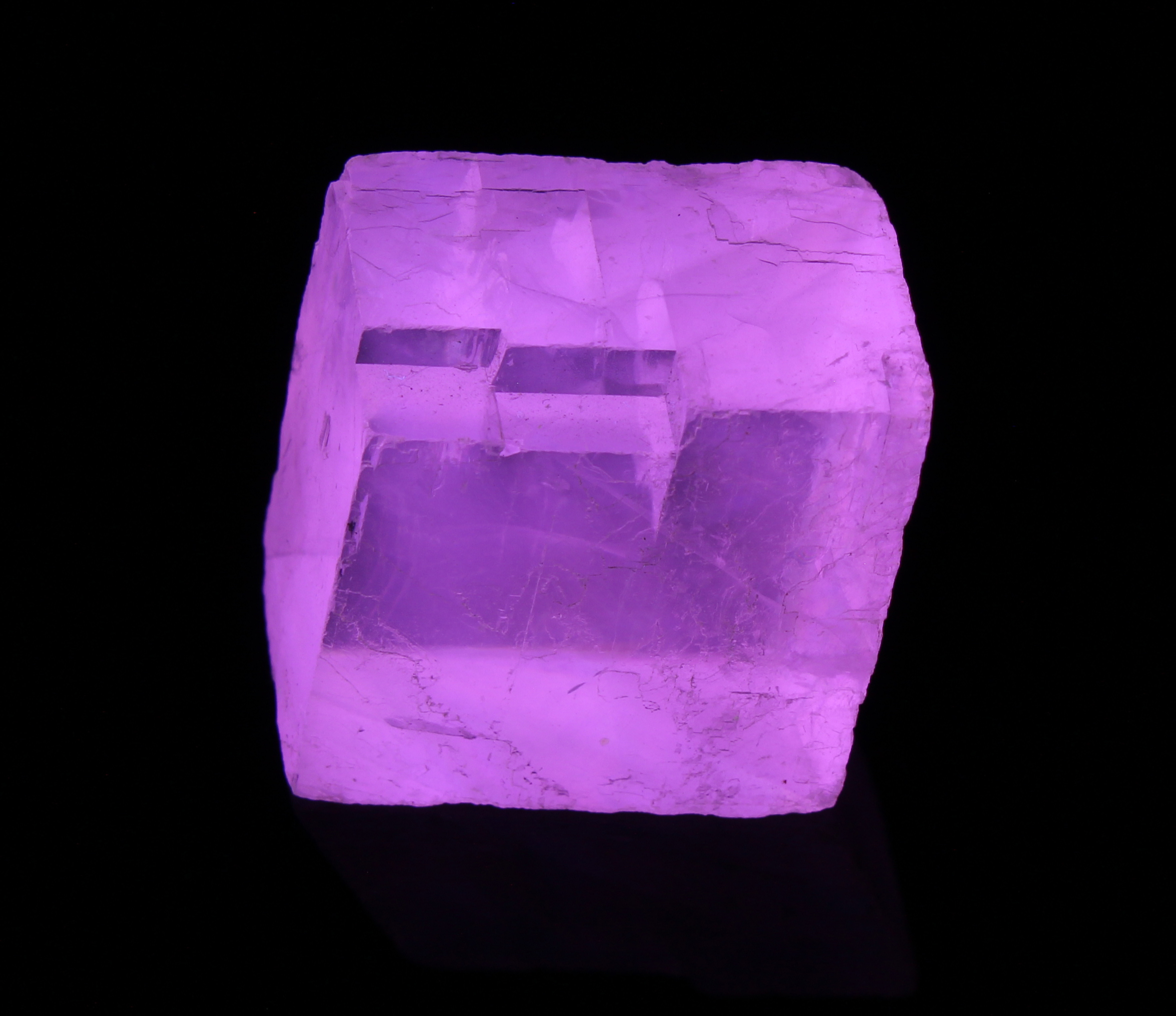
Shown respectively in the gallery below: Green laser (530 nm) fluorescence, violet/blue laser (405 nm) fluorescence (note how the laser beam is split by the double refringence of the calcite), blue light (450 nm) fluorescence, longwave UV fluorescence, LW UV phosphorescence (very short lived), midwave UV (306 nm) fluorescence, shortwave UV fluorescence, SW UV phosphorescence, visible light. I did not take pictures of the midwave UV phosphorescence, since it's similar to the SW UV afterglow.
***Important note: DO NOT experiment with lasers and minerals unless you really know what you are doing, and most importantly, NEVER do so without adequate protective goggles! Most minerals have highly reflective surfaces, as well as internal reflections, which inevitably result in the laser beam being reflected in various directions across the room; if the laser beam gets in unprotected eyes, a fraction of a second can be enough to lose eyesight! For green lasers, magenta or red goggles are required; for violet/blue lasers, yellow goggles are needed. Make sure that your goggles are actually "antilasering" goggles, not just any colored goggles.
Originally posted by Frédéric Messier Leroux on Nature's Rainbows in 2021.
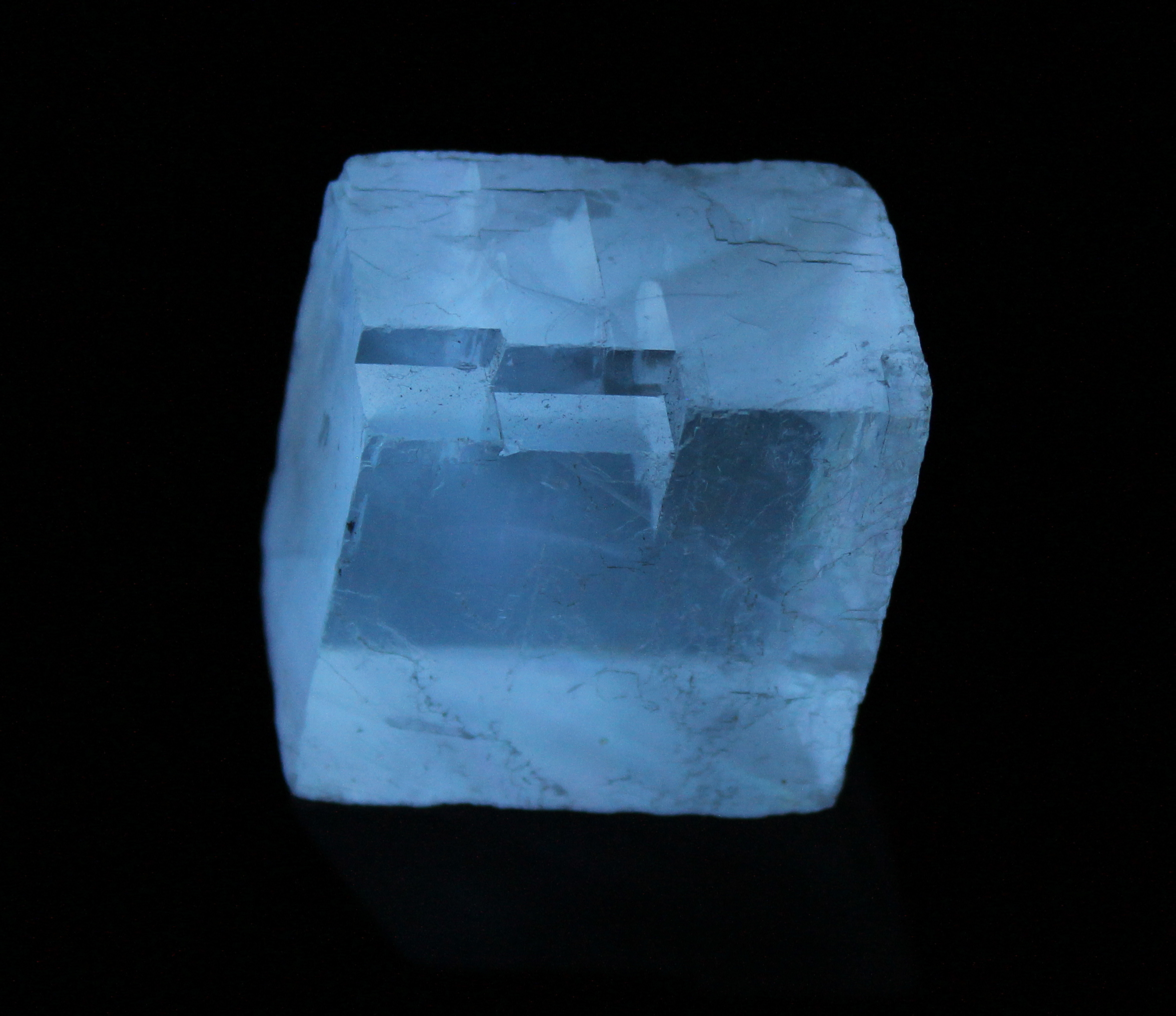
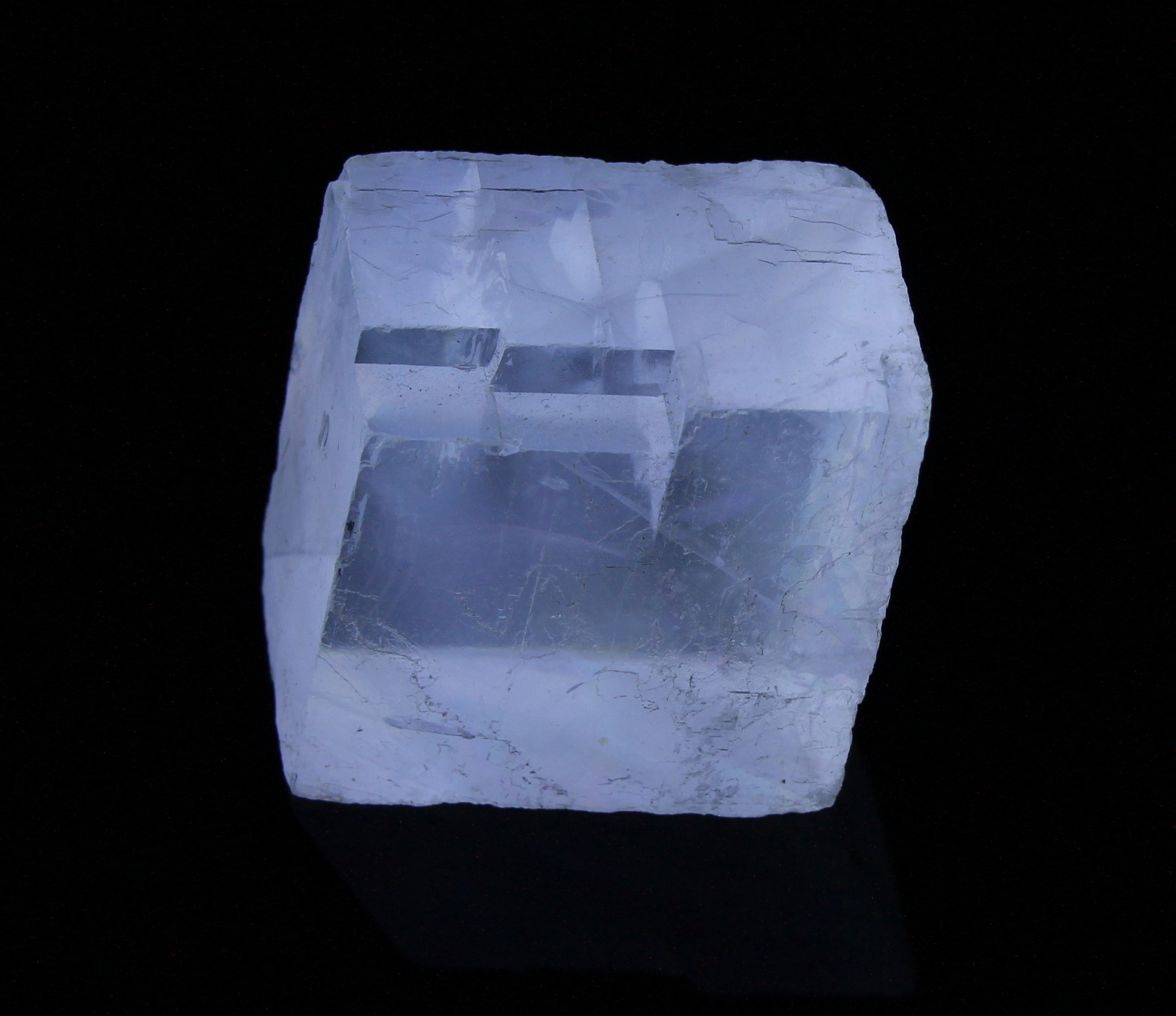
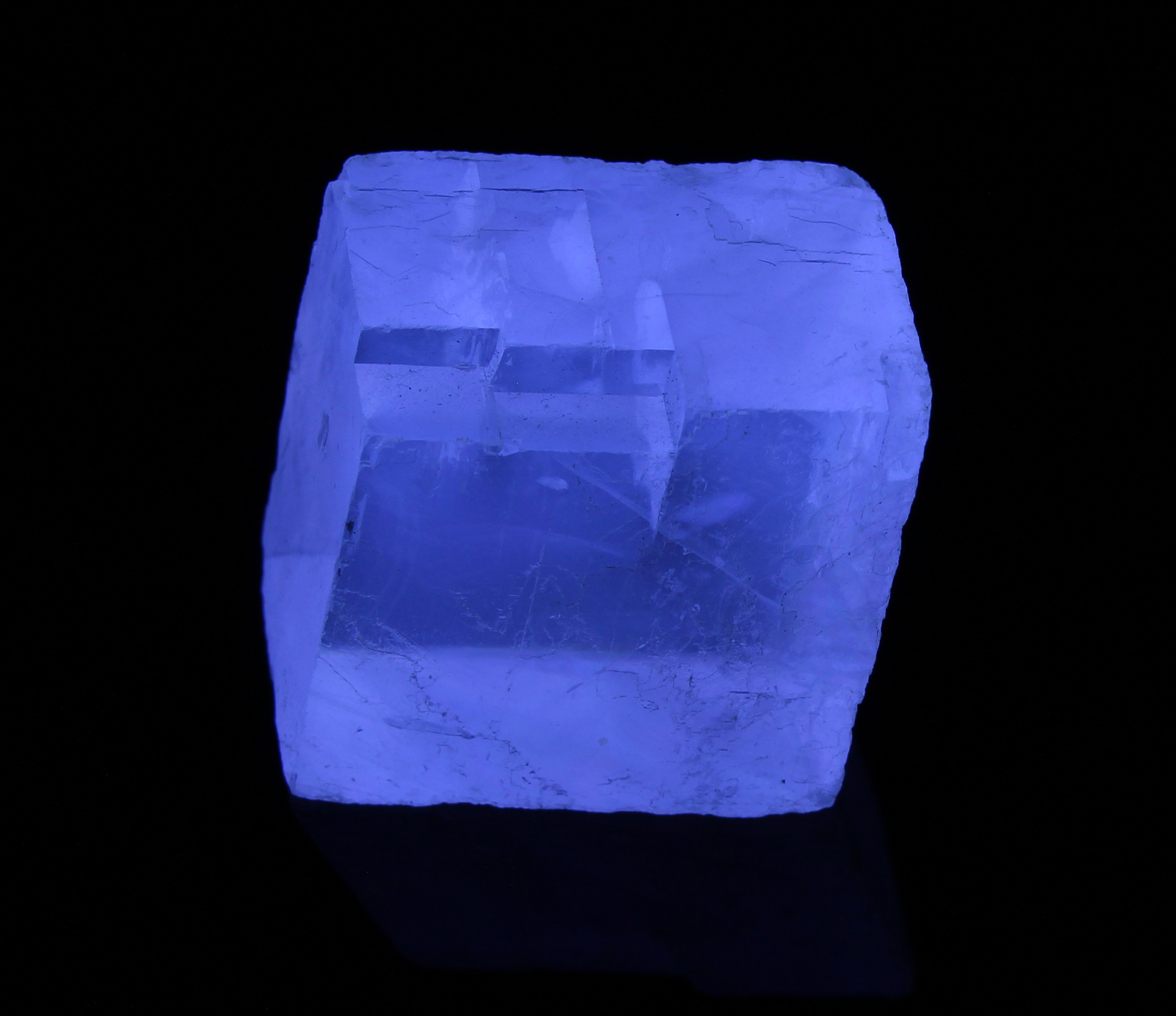
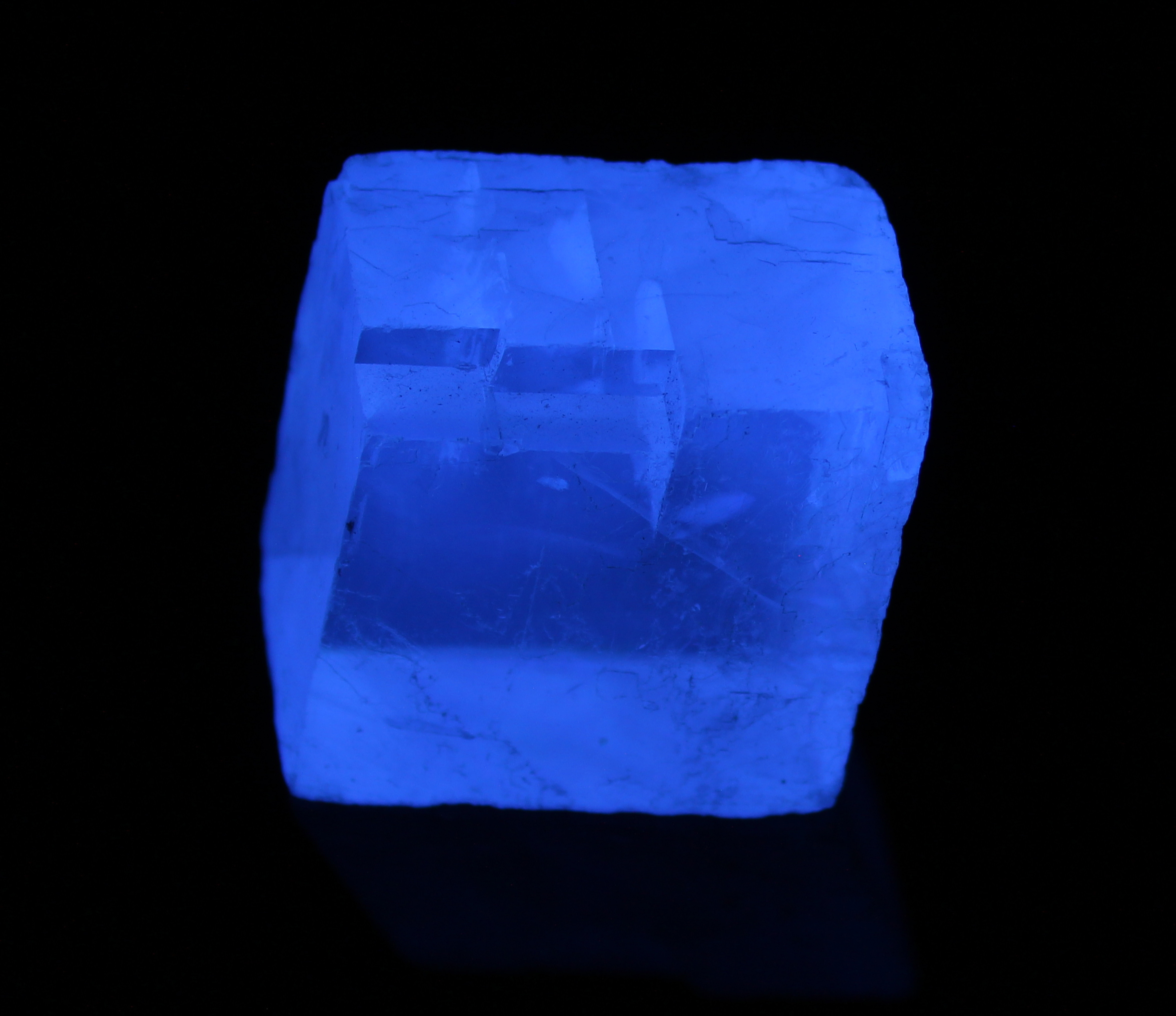
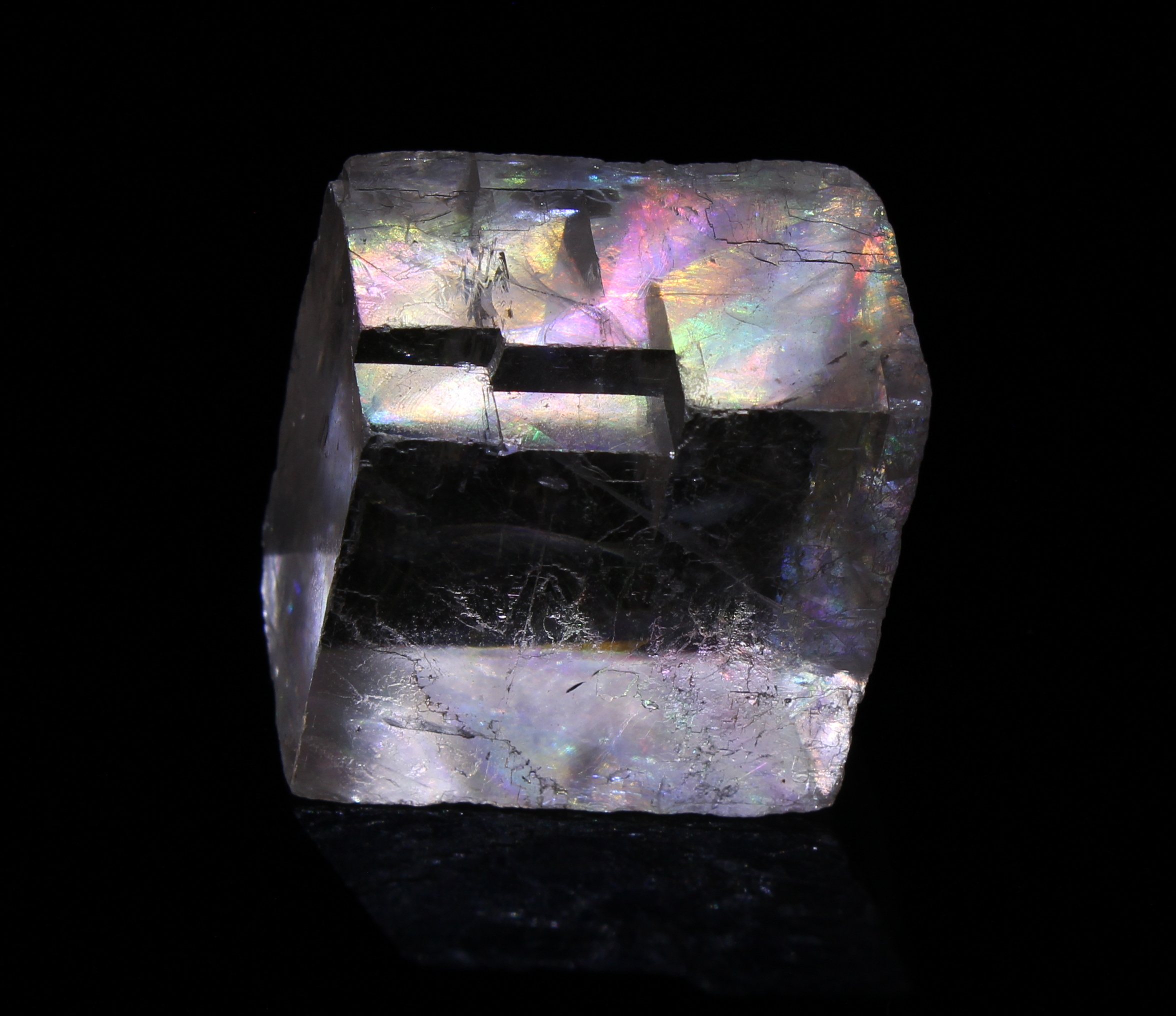
Summary of luminescence responses:
Calcite (Mindat) (RRUFF)
- Fluorescence under Longwave (365nm LED) UV light: Pink
- Fluorescence under Midwave (305nm LED) UV light: White
- Fluorescence under Shortwave (255nm LED) UV light: Blue
- Fluorescence under Blue light (450nm LED): Yellow
- Afterglow after exposure to Longwave (365nm LED) UV light: Blue
- Afterglow after exposure to Shortwave (255nm LED) UV light: Blue