
Calcite with Dolomite and Quartz - Sainte-Clotilde, Québec, Canada
Contributed by: FMS Admin
minID: HVP-C2E
Date: May 14th, 2026
Locality: Sainte-Clotilde-de-Châteauguay quarry (Marcil quarry), Sainte-Clotilde-de-Châteauguay, Les Jardins-de-Napierville RCM, Montérégie, Québec, Canada (See on Mindat)
Size: 17.5 x 10.3 x 19.7 cm
Description:
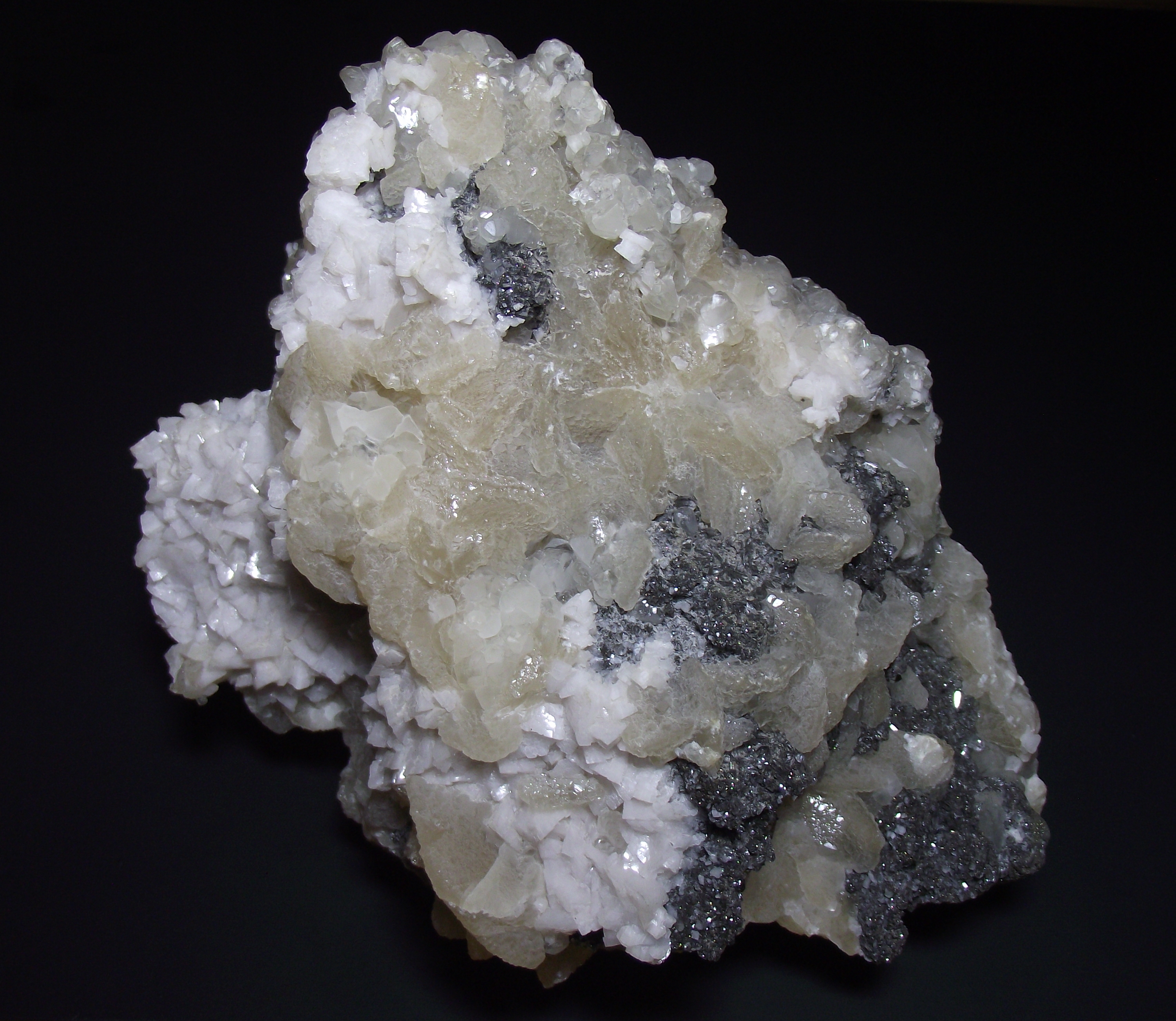
The now inaccessible Chenail quarry (formerly Marcil quarry), in Sainte-Clotilde-de-Châteauguay, Montérégie, Québec, Canada, is a classic Canadian locality, well-known for its very aesthetic specimens of calcite, dolomite, quartz, pyrite, sphalerite, etc. (all of them often being present in the same specimen). Like many other occurrences in the Beekmatown group (Ordovician dolomitic limestones with karstic pocket-bearing strata), for example the numerous quartz occurrences in the area of Herkimer, New-York, the mineralogy encountered there is quite simple but usually very well-formed, and often in big specimens; but it is rarely heard-of as a fluorescent mineral occurrence.
What is interesting is that some pockets contained virtually no UV reactive specimens; in other cases, they contained weakly fluorescing specimens, but in some cases most pieces from a specific pocket were brightly fluorescent. This is the case with this specimen and others found in the same pocket.
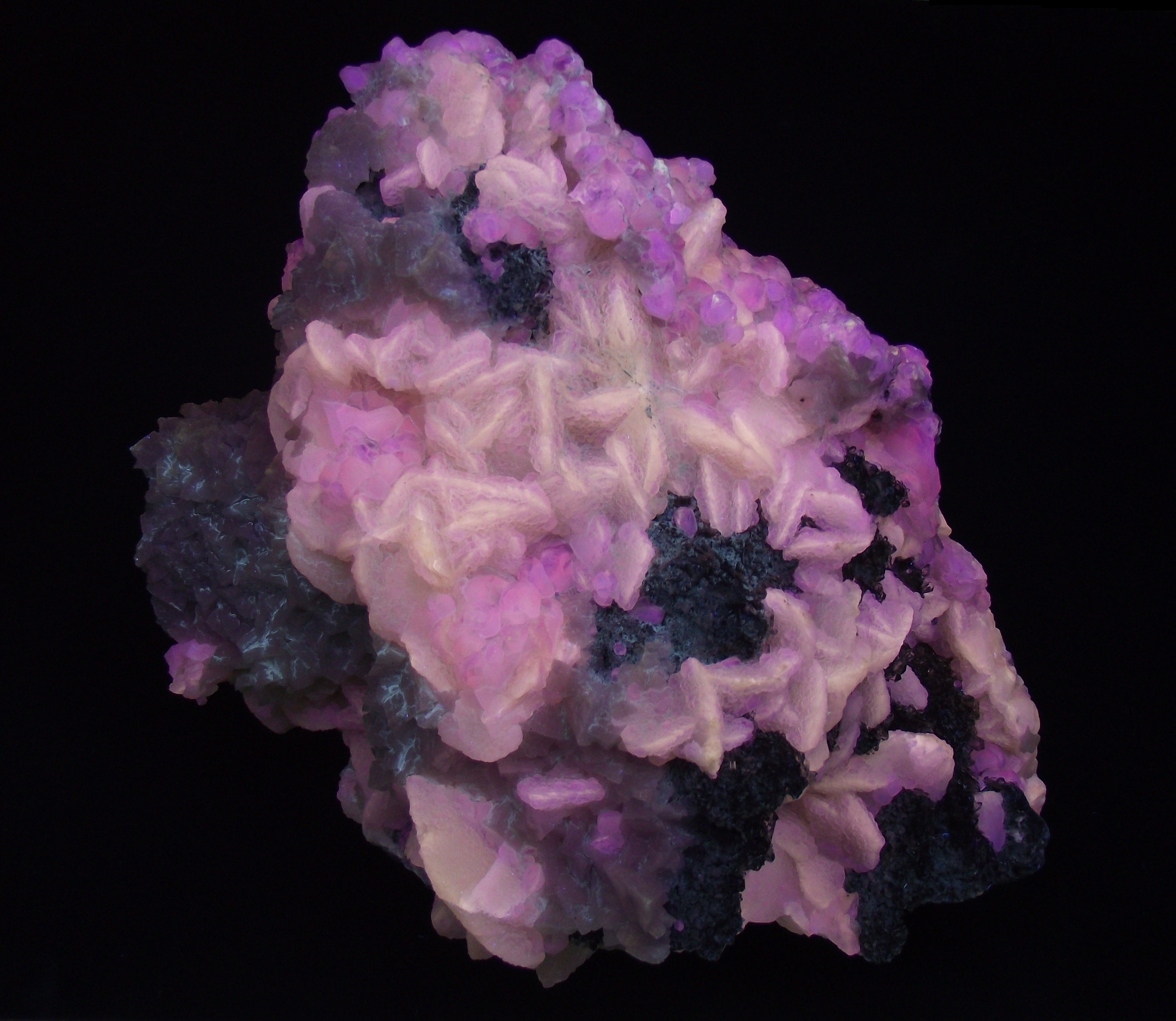
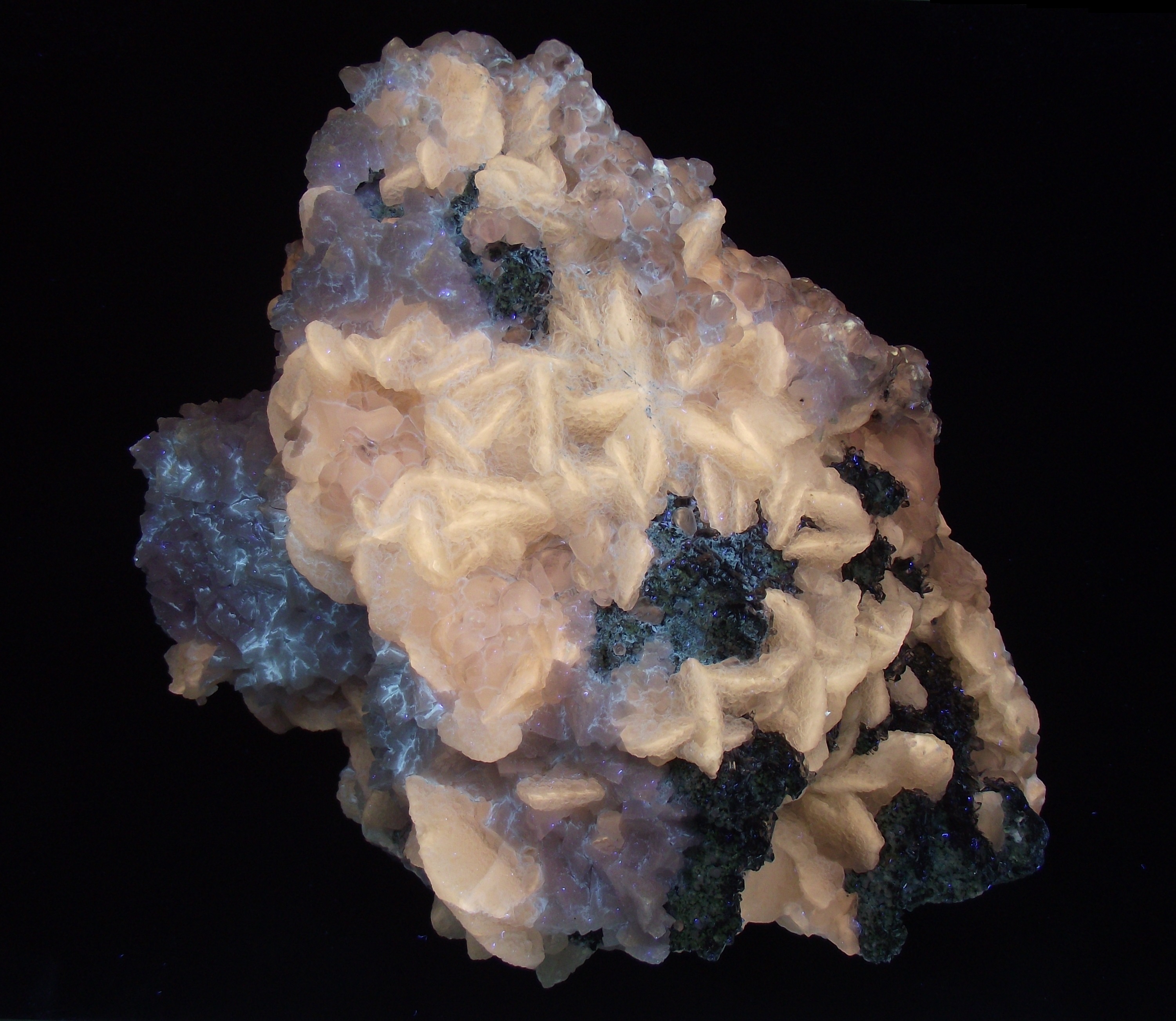
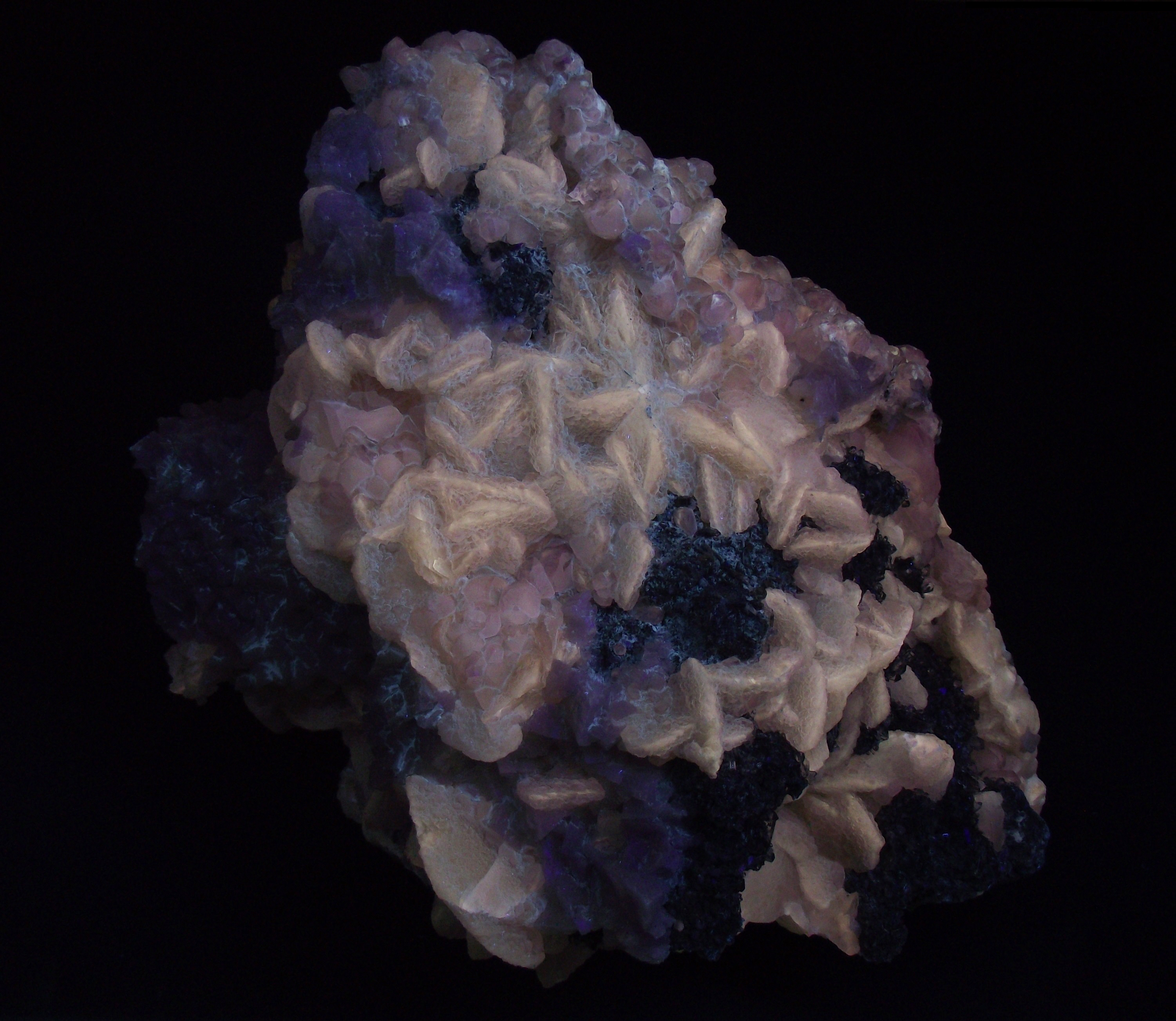
It consists of two successive generations of calcite (each having a different crystal habit), which grew over dolomite, quartz, and minor amounts of pyrite and chalcopyrite. The calcite of the first-generation glows bright yellow under longwave, then is a bit weaker under midwave, and even weaker under shortwave. The second-generation calcite barely reacts to both longwave and shortwave (it glows a very weak red under both, barely noticeable under LW since it is overwhelmed by the bright yellow fluorescing first generation calcite) but shows a brighter pink response under midwave. The dolomite glows a very weak reddish pink under both LW and MW (brighter LW), which, to my knowledge, is quite unusual in Québec Beekmantown occurrences. Between the dolomite crystals, some unidentified mineral (I suspect baryte) glows a quite bright blueish white (stronger LW, then weaker under MW and very weak SW). While it is a bit brighter under longwave, the specimen is definitely at its best under midwave.
Originally posted by Frédéric Messier Leroux on Nature's Rainbows in 2021.
Summary of luminescence responses:
Calcite (Mindat) (RRUFF)
- Fluorescence under Midwave (305nm LED) UV light: Pink
- Fluorescence under Midwave (305nm Lamp/Mercury) UV light: White
- Fluorescence under Longwave (365nm LED) UV light: Yellow
- Fluorescence under Shortwave (255nm LED) UV light: Yellow