
Interesting Zonal Fluorescence in a Barite Crystal from the Linwood Mine, Buffalo, Iowa
Contributed by: Chris Clemens
Date: Apr 29th, 2026
Locality: Linwood Mine, Buffalo, Scott County, Iowa, USA (See on Mindat)
Size: 5.1 x 4.1 x 8.8 cm
Weight: 368 g
Description:
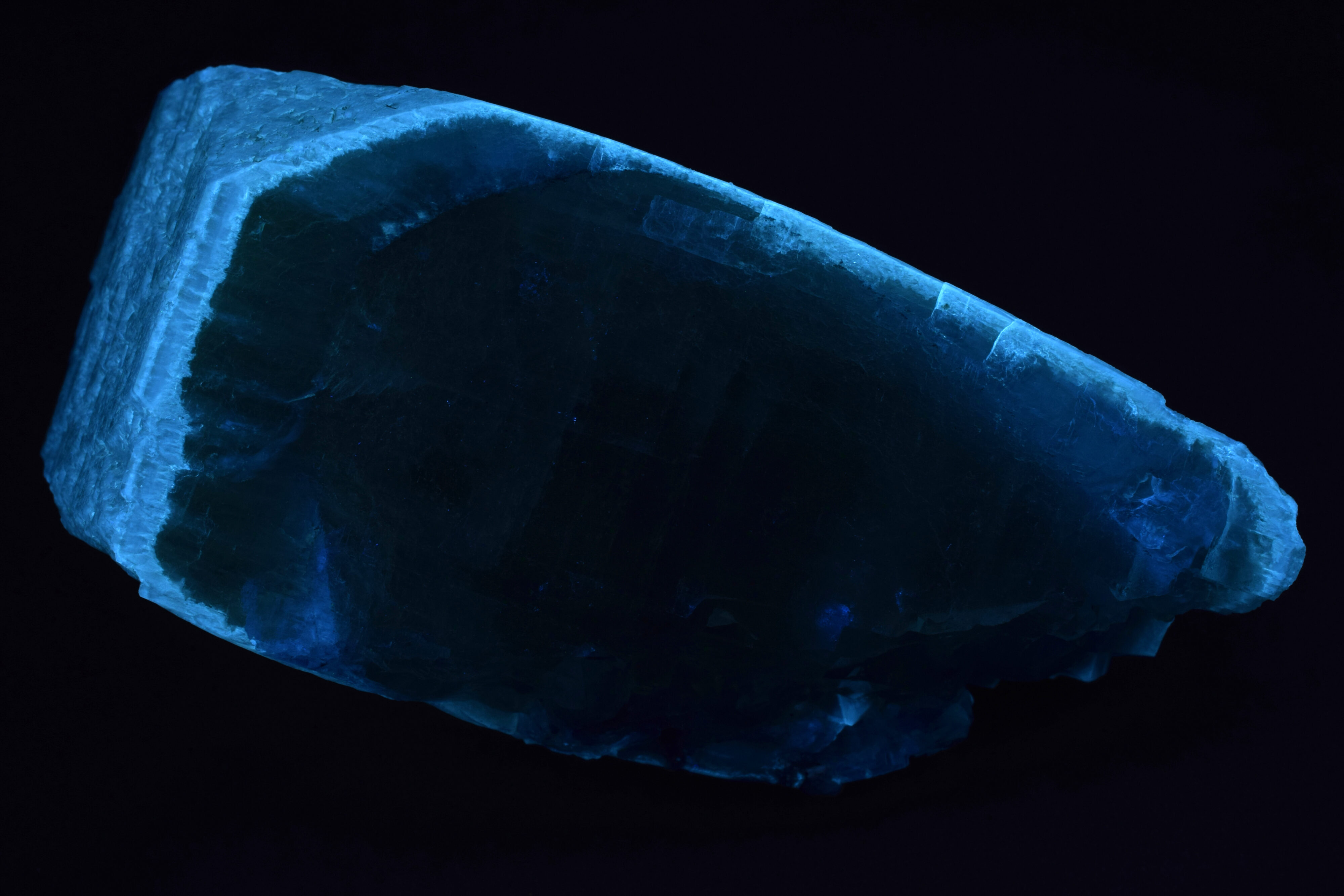
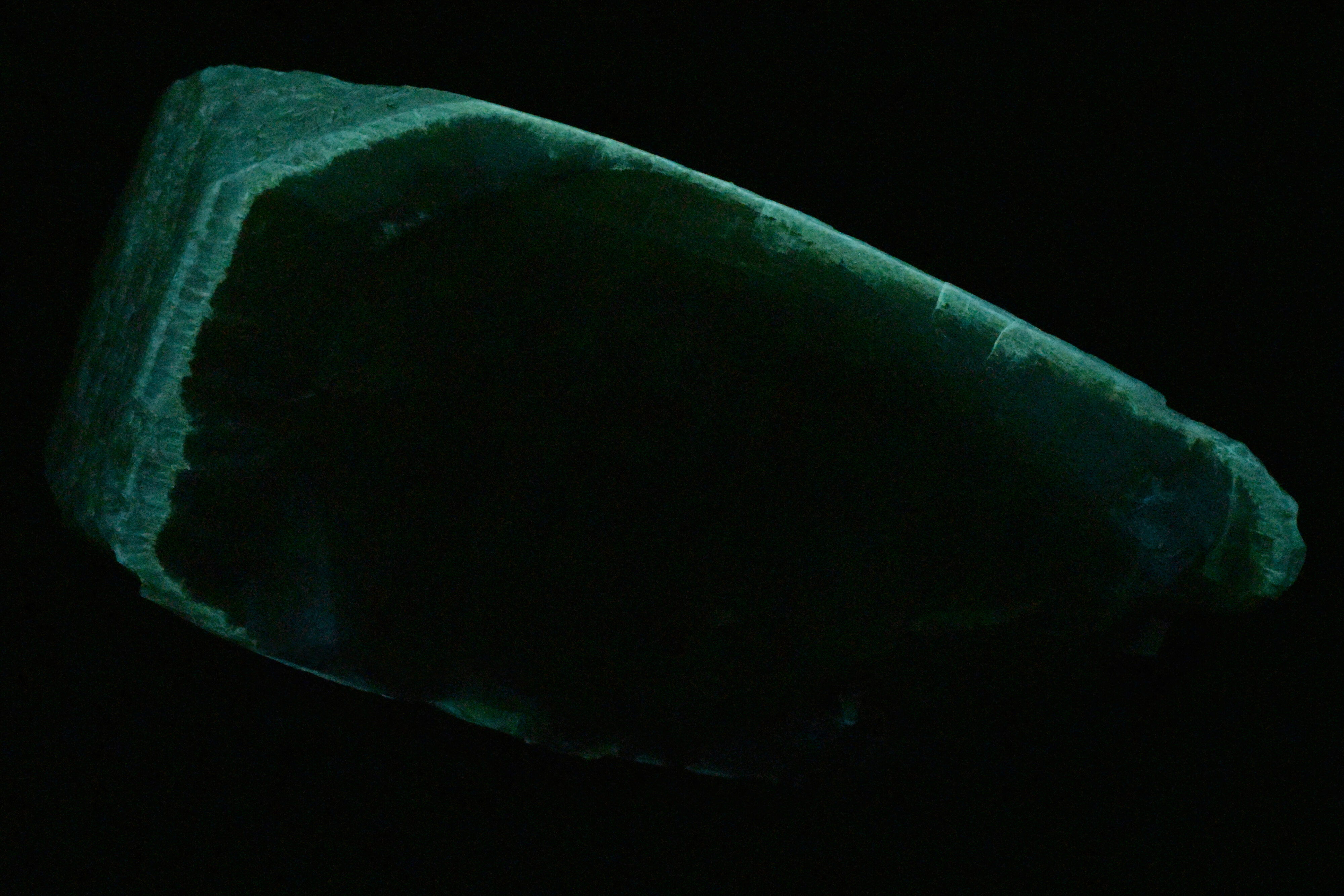
This specimen of barite from the Linwood Mine, Buffalo, Scott County, Iowa, is most interesting from a scientific perspective. It is one of the brightest fluorescing and phosphorescing barites that I have seen from this location. As a daylight display piece, it doesn’t have much to offer- it’s a drab looking, single, large, grey/yellow colored crystal that was broken off from its matrix, with the plane of breakage showing a perfectly flat cleavage surface. Under UV however, this specimen comes to life, showing bright blue/white fluorescence under all wavelengths, with bright and lasting blue/green phosphorescence after shortwave, and green phosphorescence after longwave.
The most interesting aspect of this specimen is the zone in which fluorescence occurs. Viewing the cleavage surface under UV provides an ideal cross-sectional view of the fluorescent region within the crystal, showing that the fluorescence and phosphorescence only occur in the outer approximately 3 mm of the crystal surface, with the greater interior of the crystal being non-fluorescent. This finding suggests that the solution environment from which this crystal precipitated changed during the final phase of crystallization includes the activator of fluorescence, which was apparently not present during the initial stages of crystal formation. The final result being an outer layer of fluorescent barite deposited over a larger interior of non-fluorescent barite.
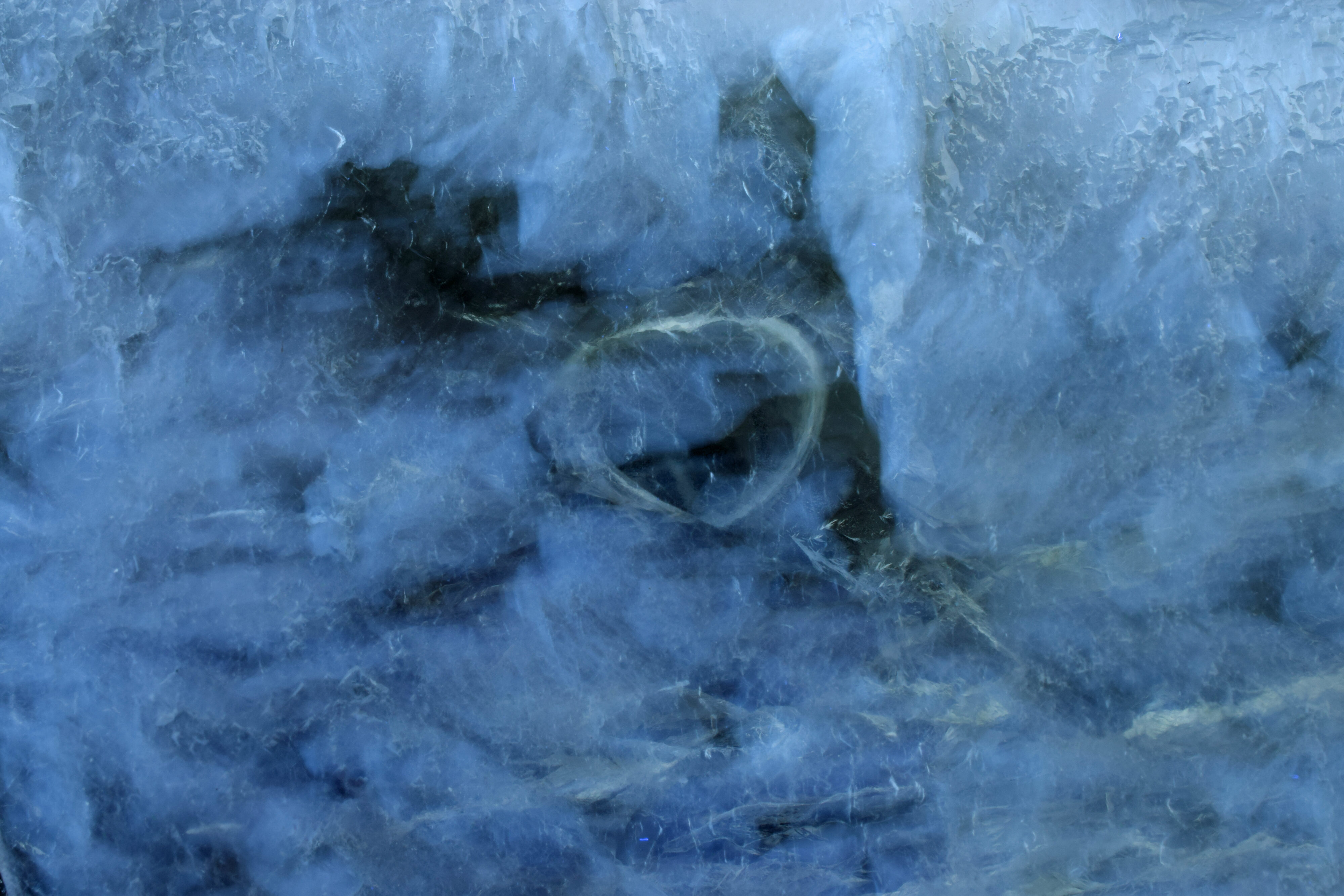
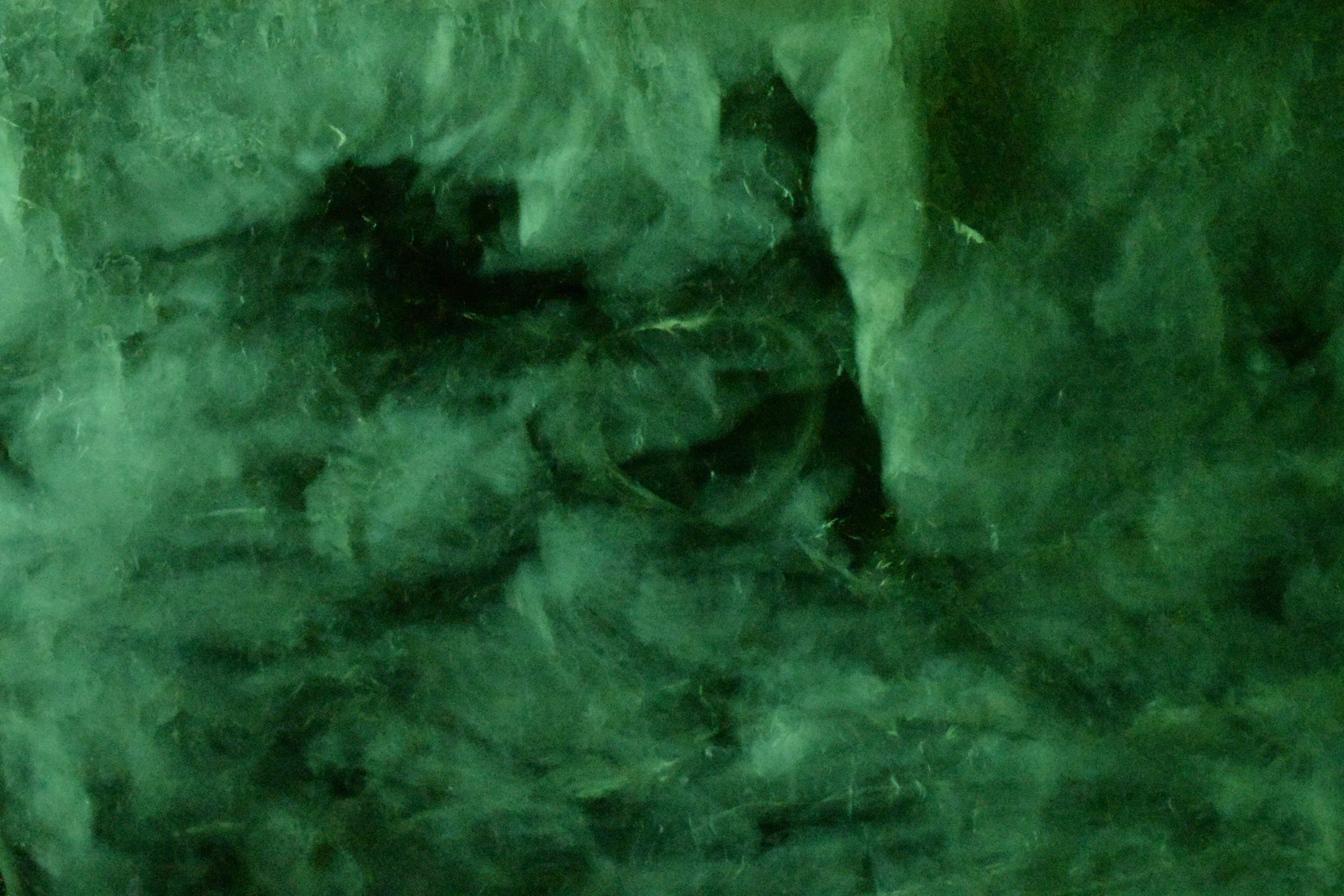
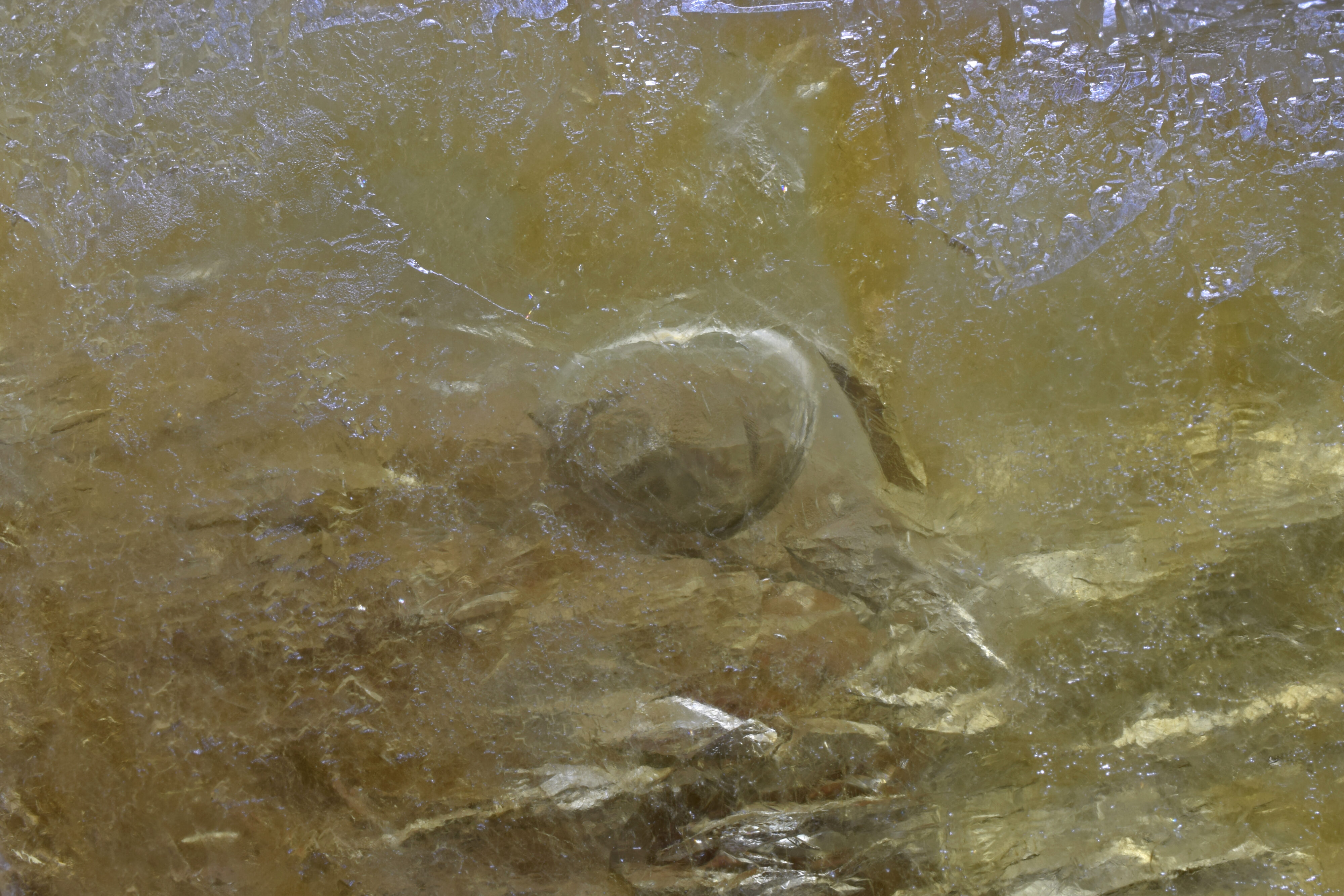
An additional point of interest for this specimen is that it contains a large fluid inclusion within which a mobile gas bubble occurs that is approximately 6 mm in diameter. This inclusion can be clearly seen under visible light. The inclusion does not appear to be fluorescent but is highlighted by the fluorescence/phosphorescence of the surrounding barite.
Originally posted by Chris Clemens on Nature's Rainbows in 2017.
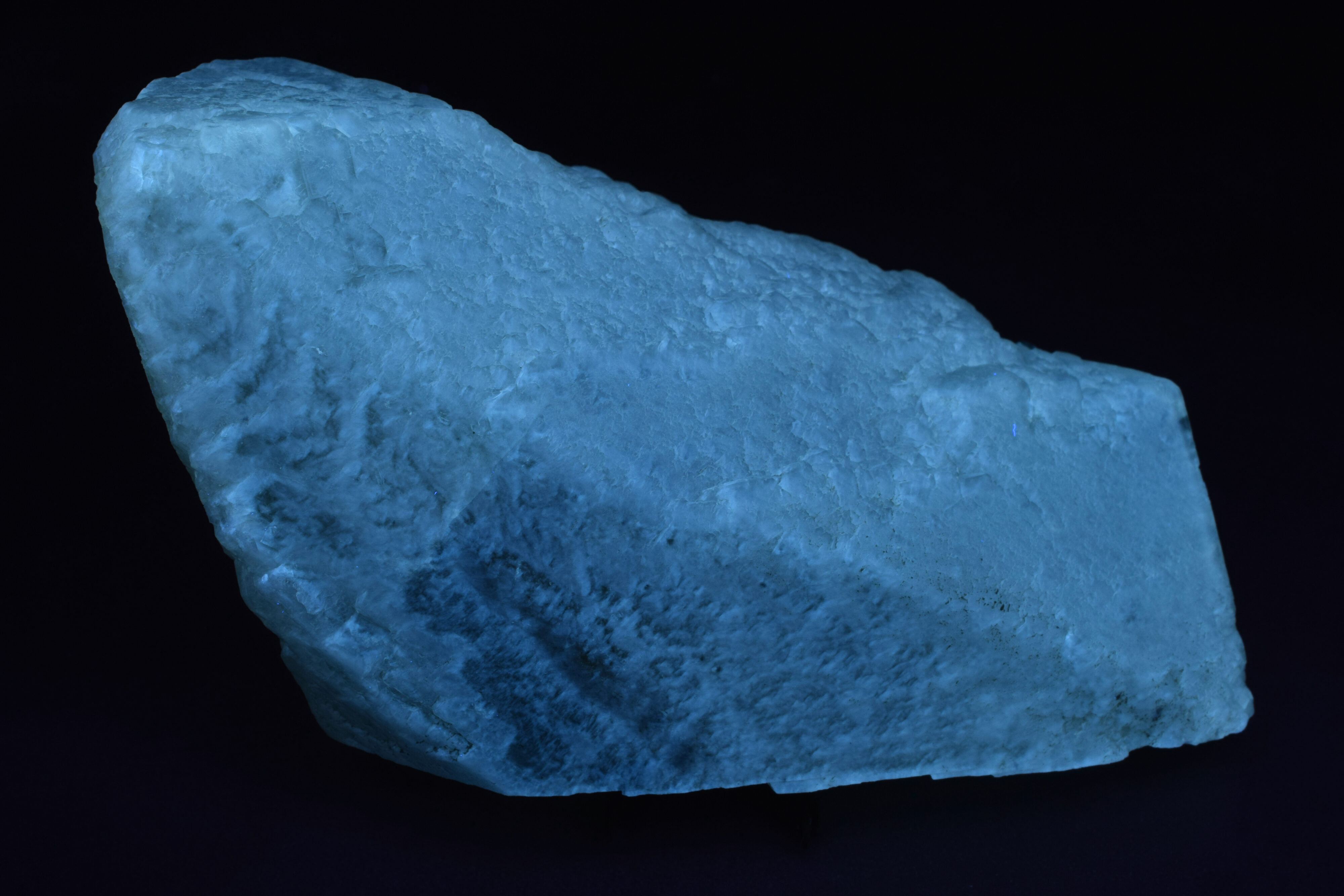
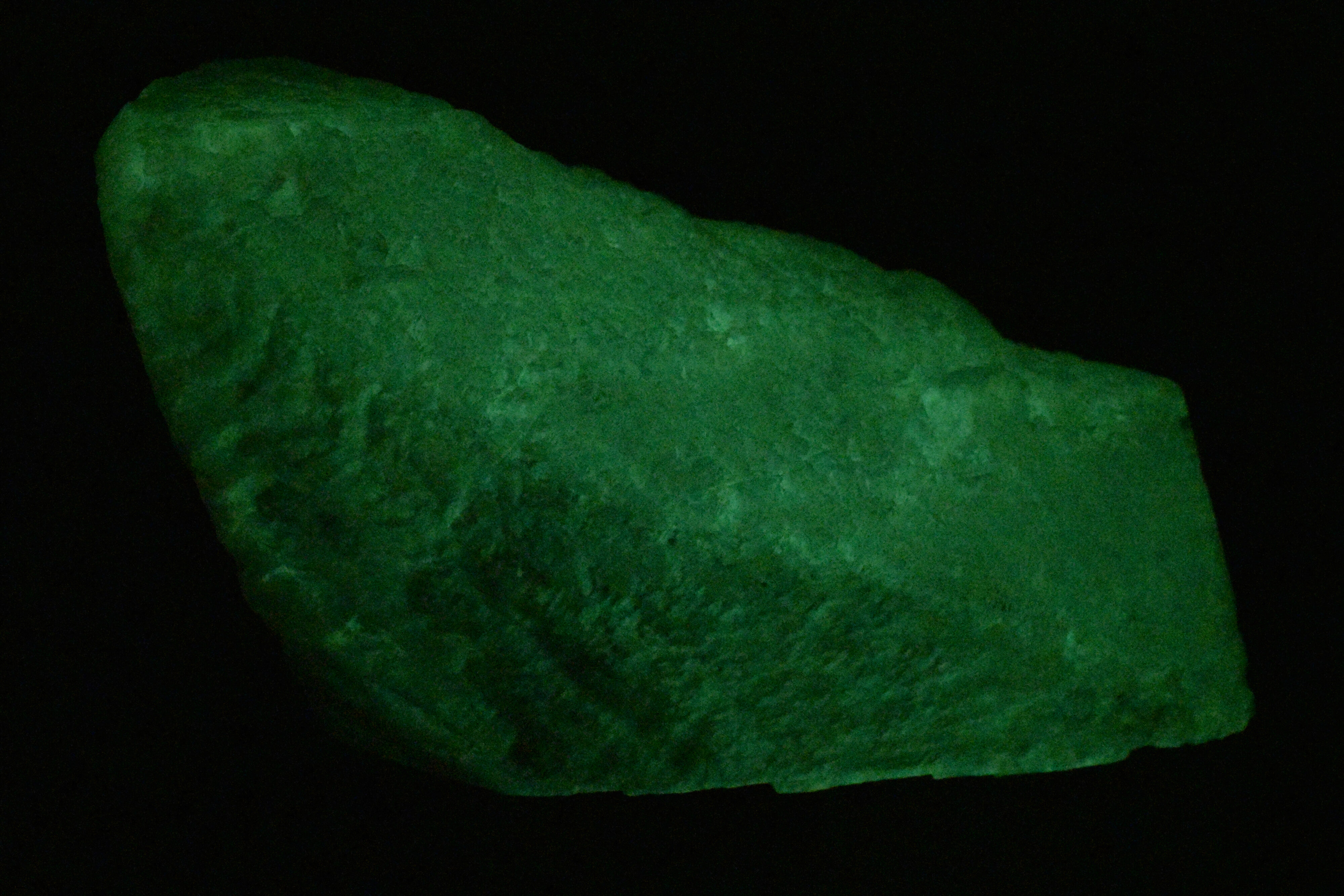
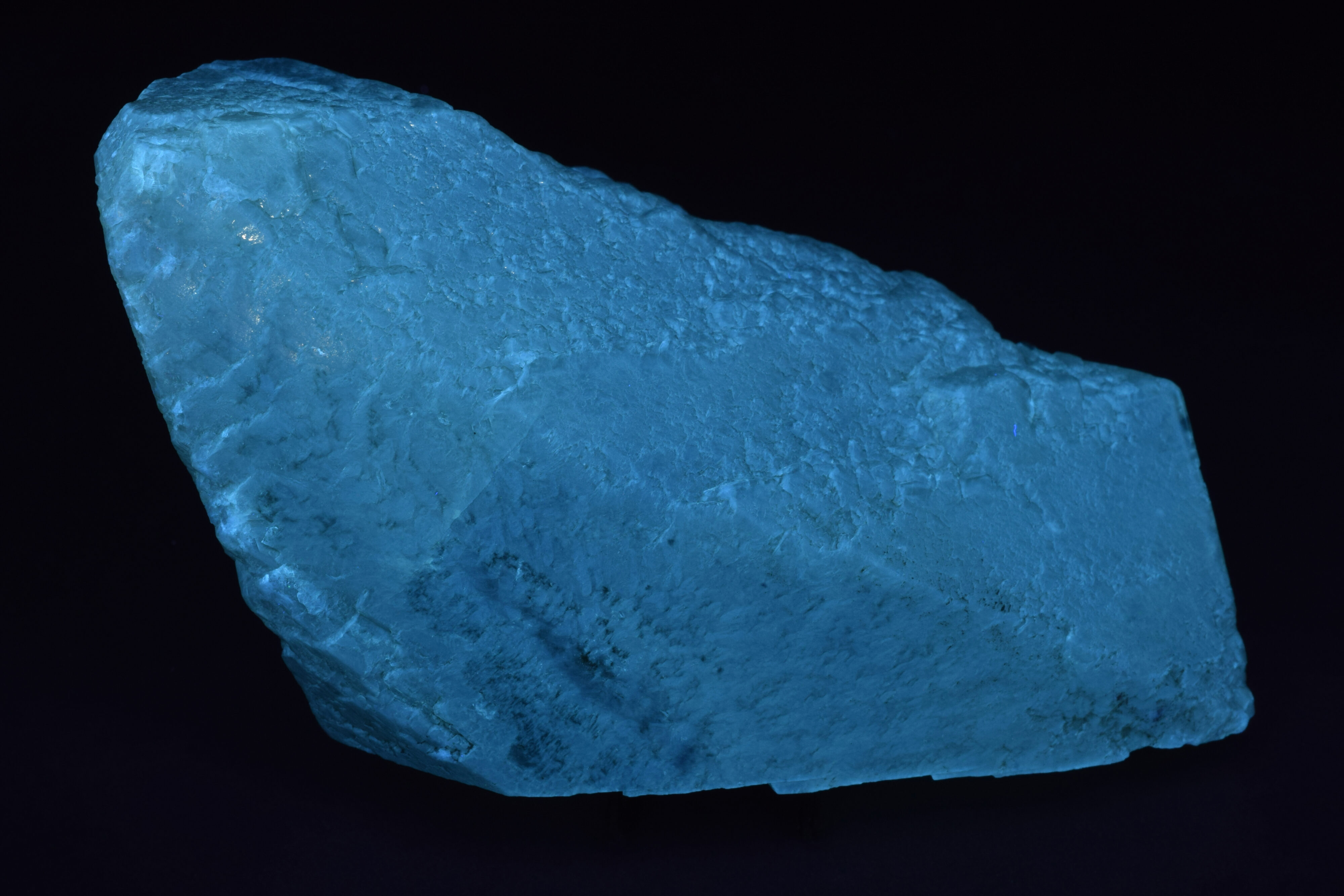
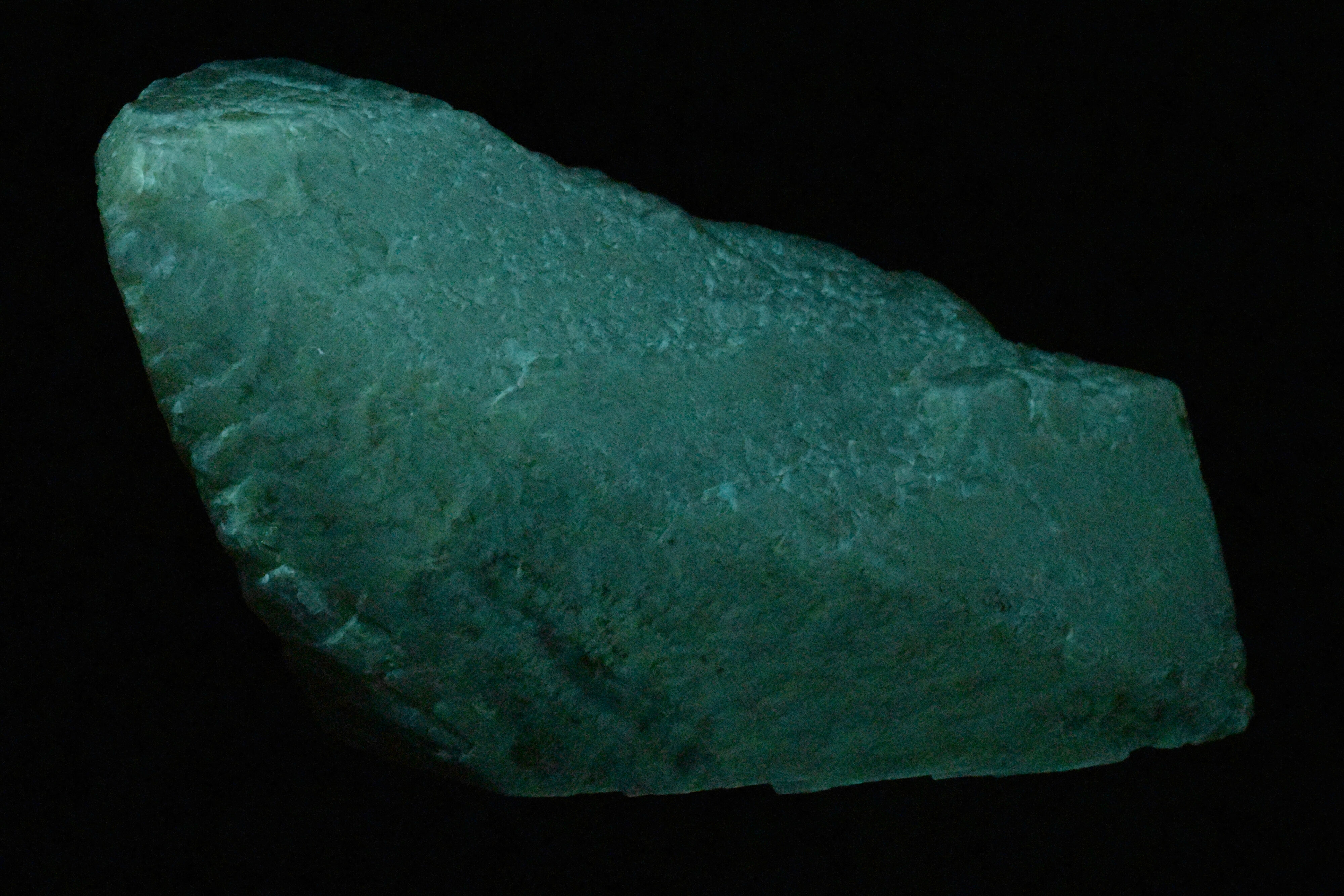
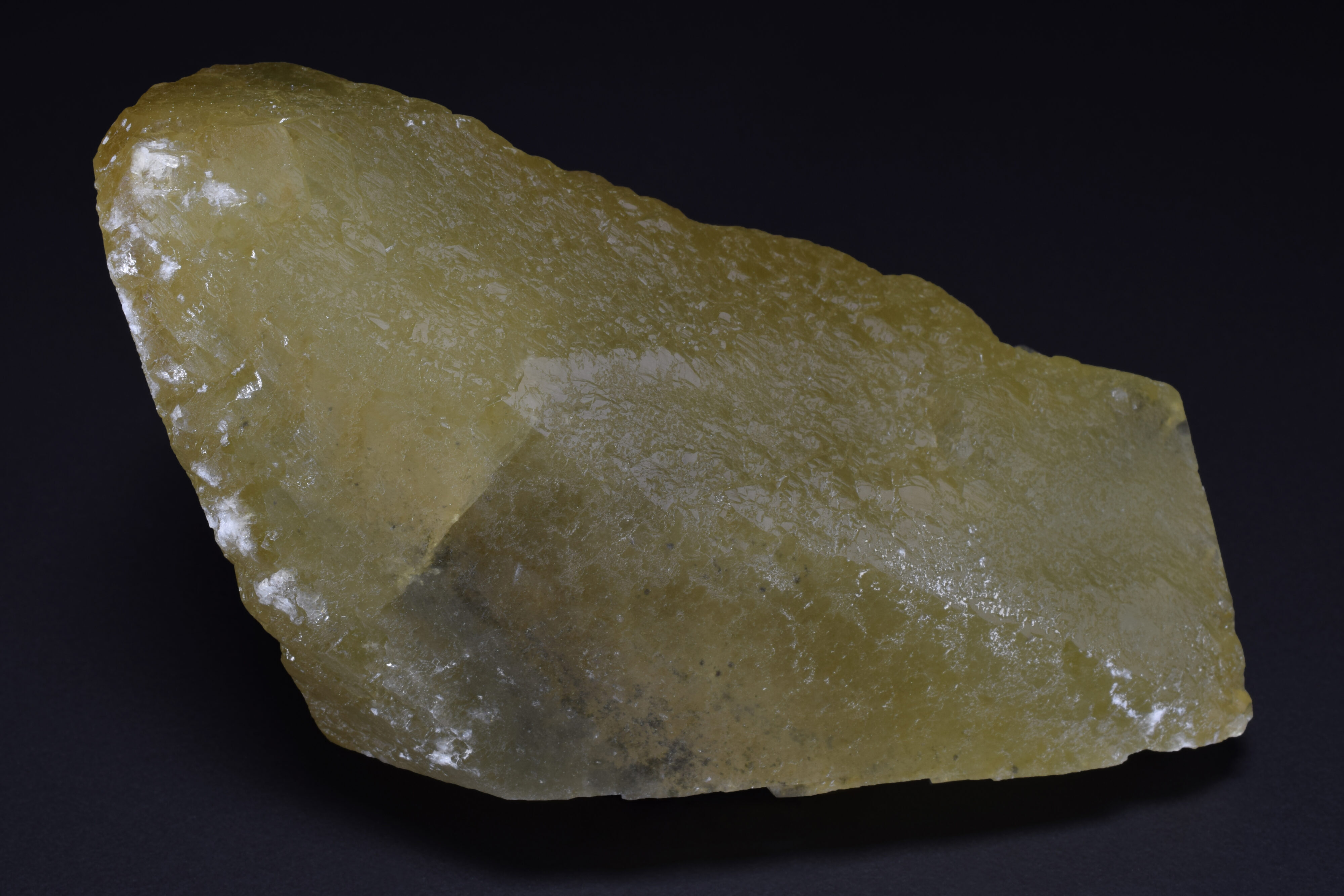
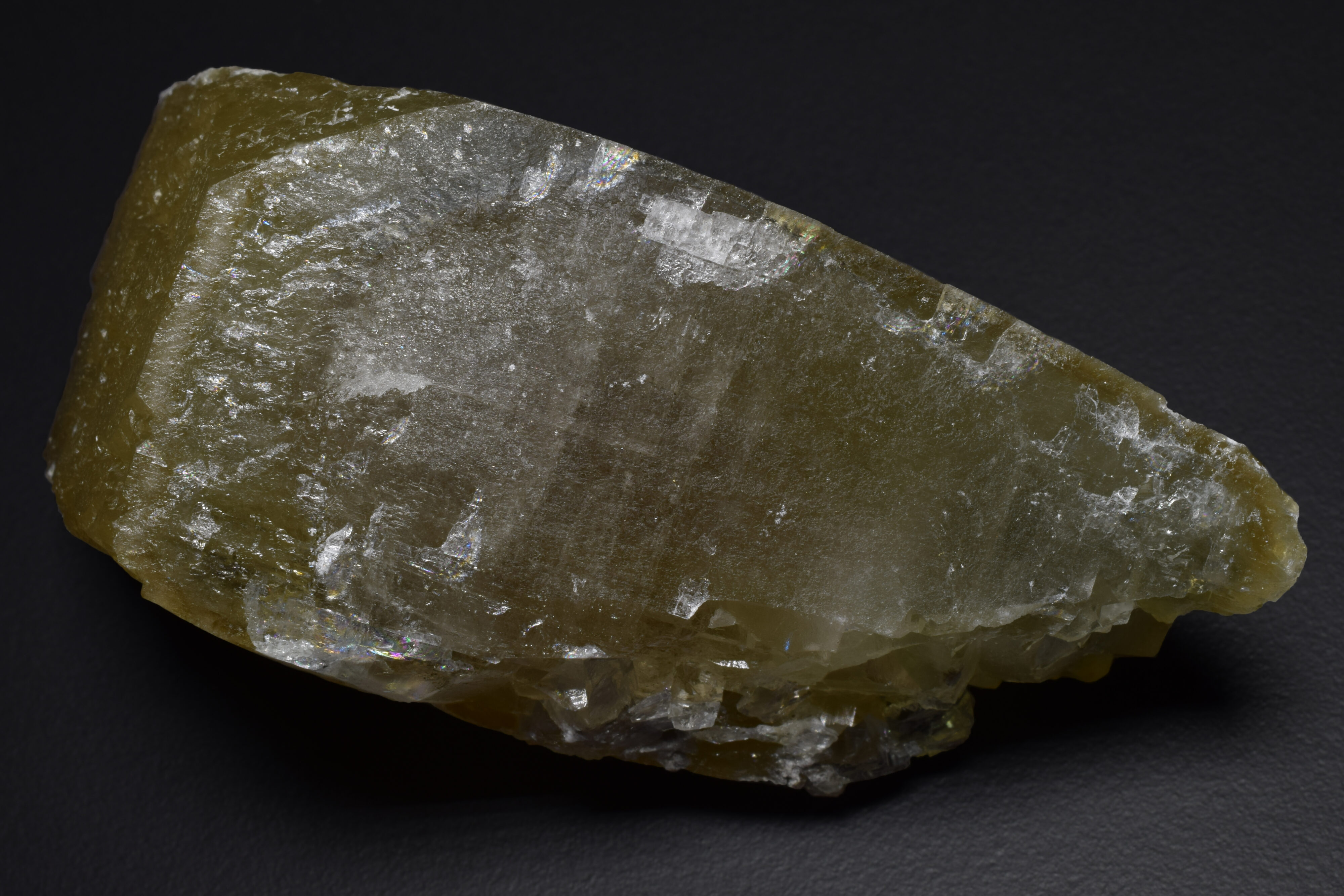
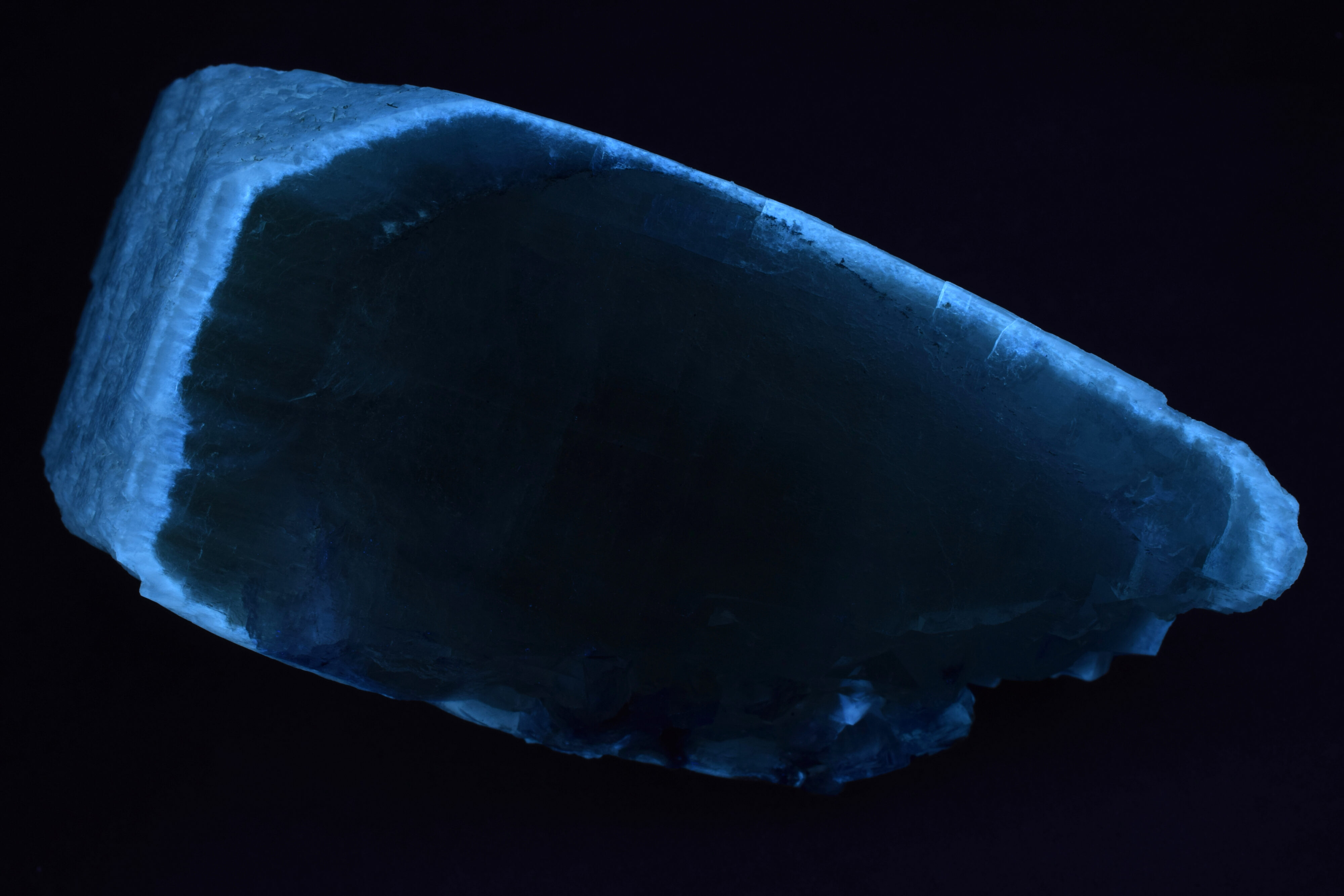
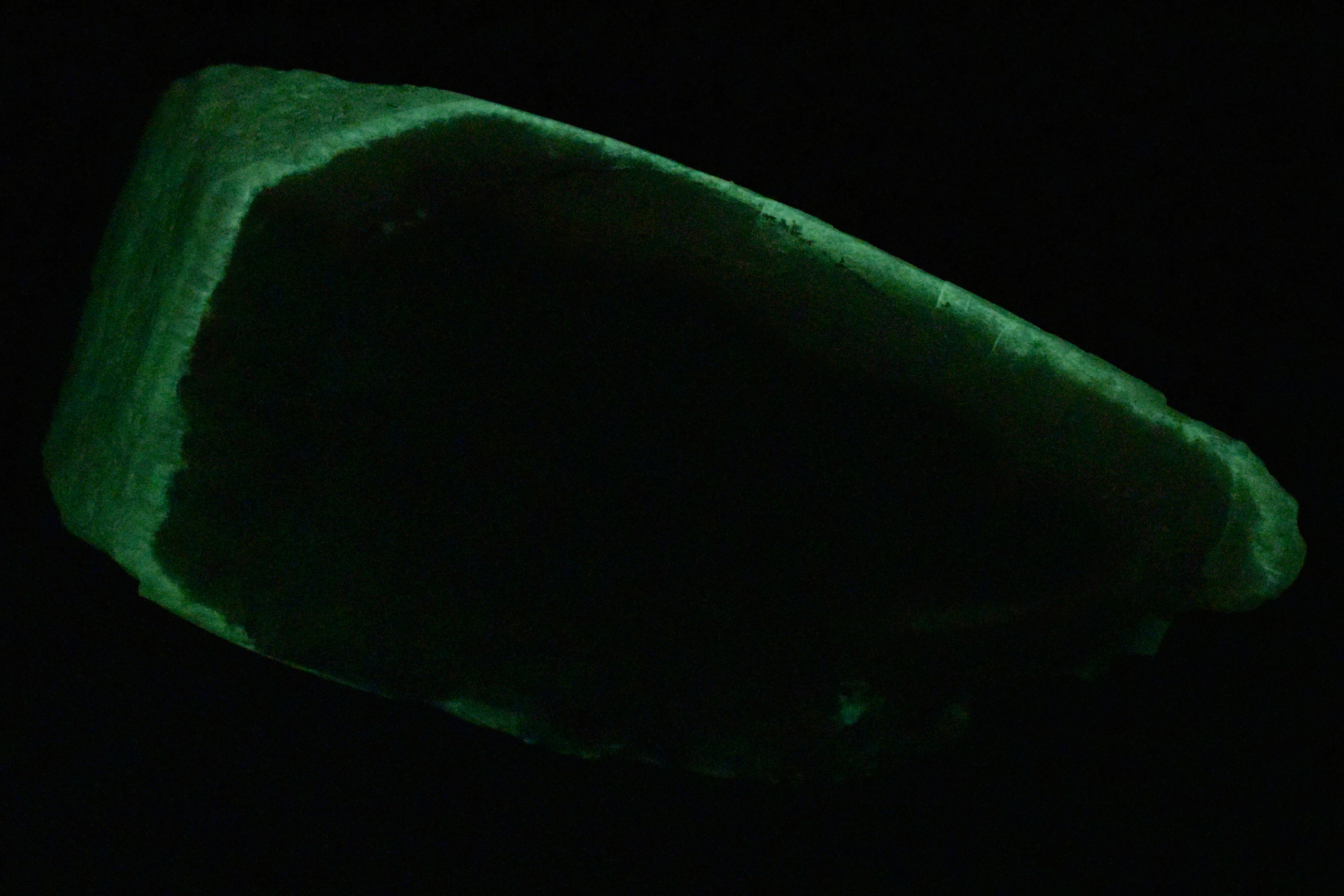
Summary of luminescence responses:
Baryte (Mindat) (RRUFF)
- Fluorescence under Longwave (365nm LED) UV light: White
- Afterglow after exposure to Longwave (365nm LED) UV light: Green
- Fluorescence under Shortwave (254nm Lamp/Mercury) UV light: White
- Afterglow after exposure to Shortwave (254nm Lamp/Mercury) UV light: Blue