
Fluorescent Calcite - Linwood Mine, Buffalo, Iowa
Contributed by: Chris Clemens
Date: Apr 27th, 2026
Locality: Linwood Mine, Buffalo, Scott County, Iowa, USA (See on Mindat)
Size: 5.5 x 3.5 x 7 inches
Description:
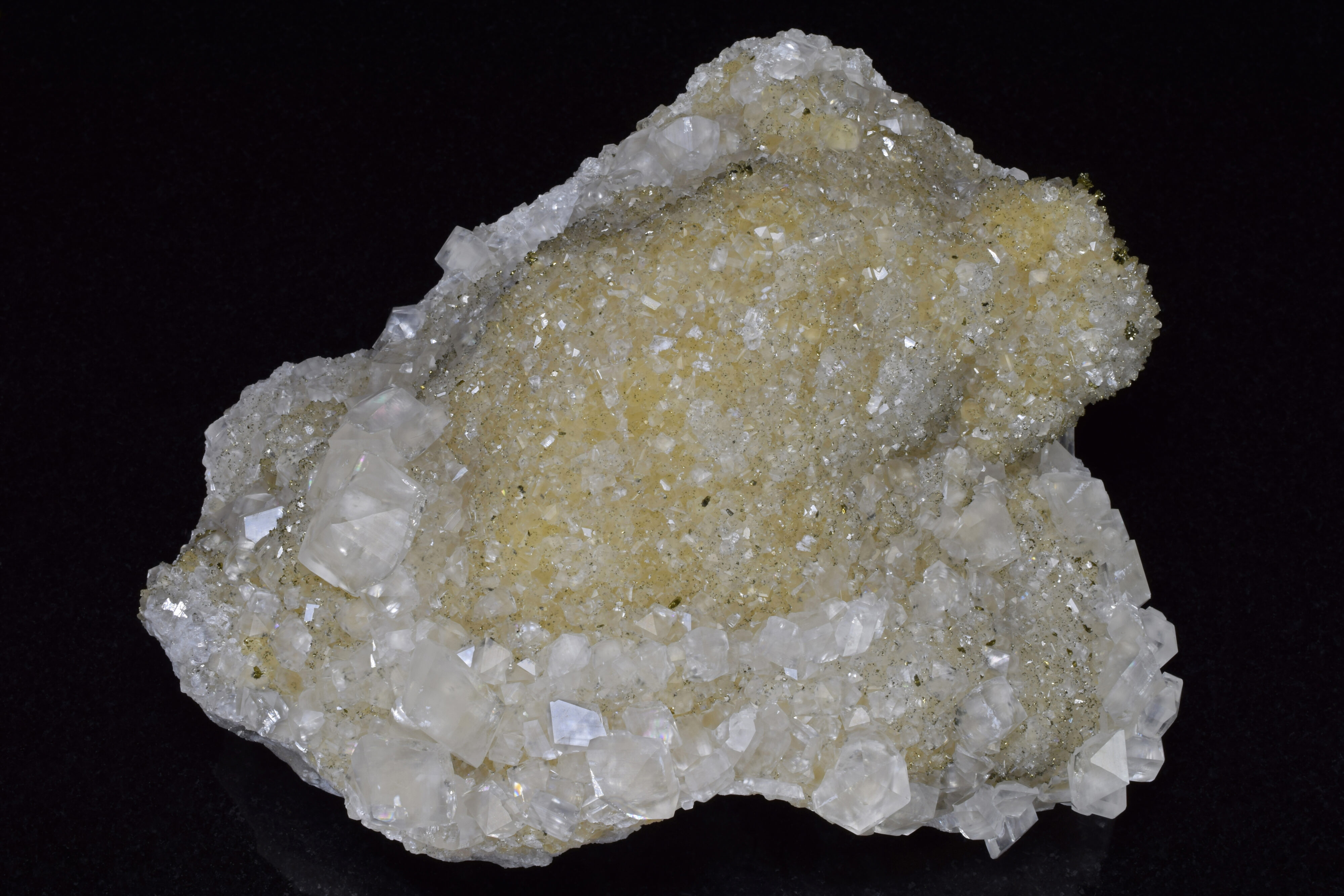
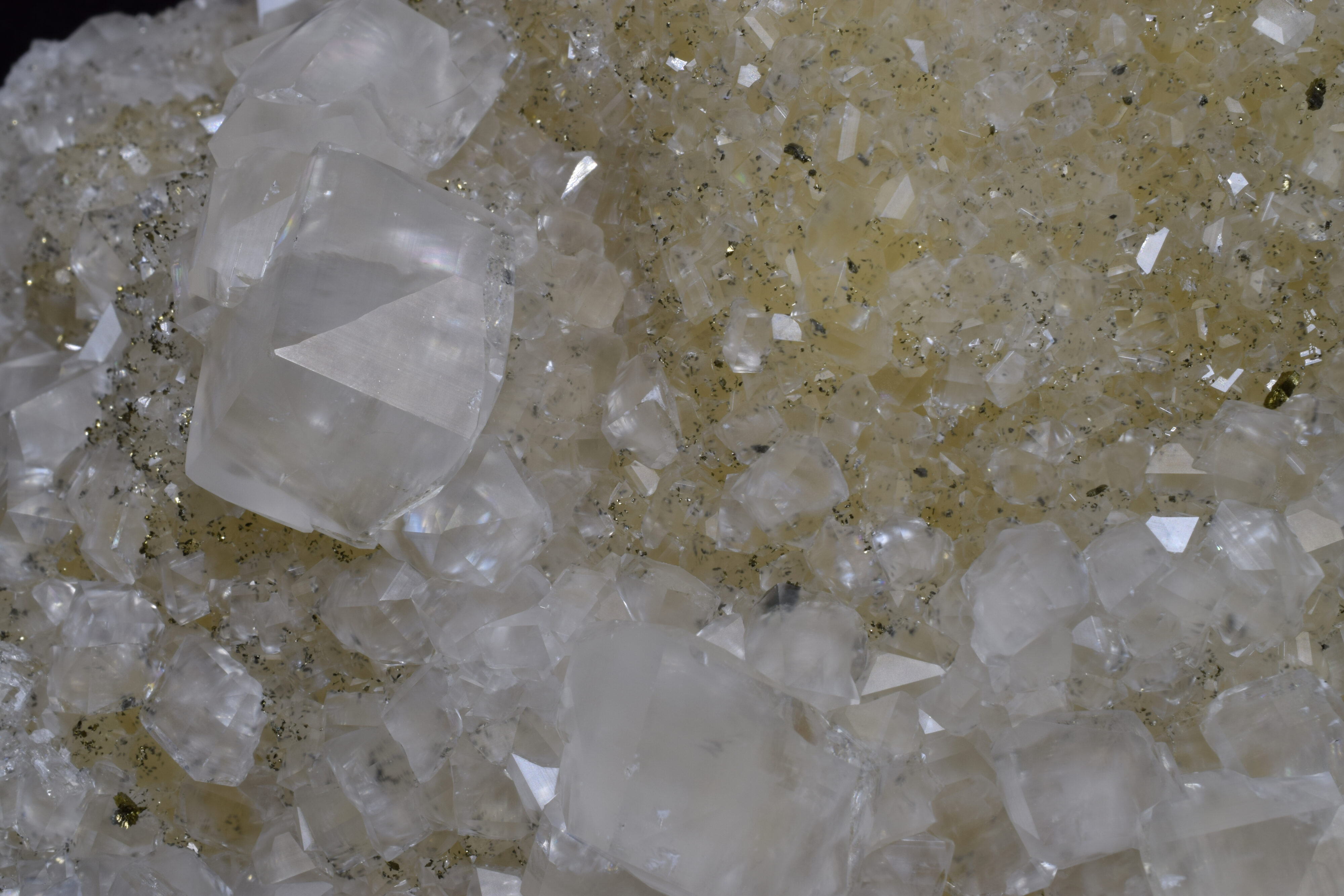
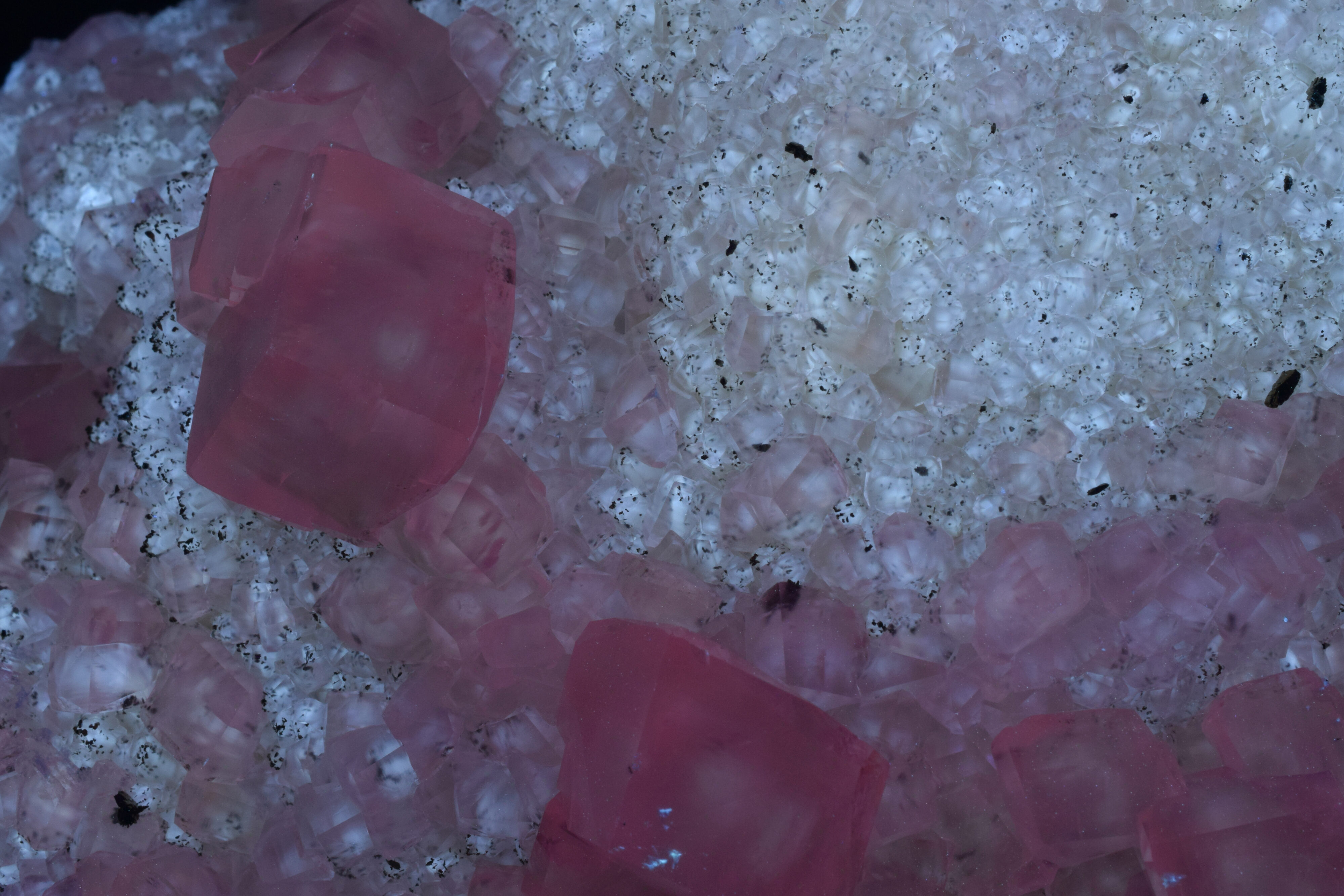
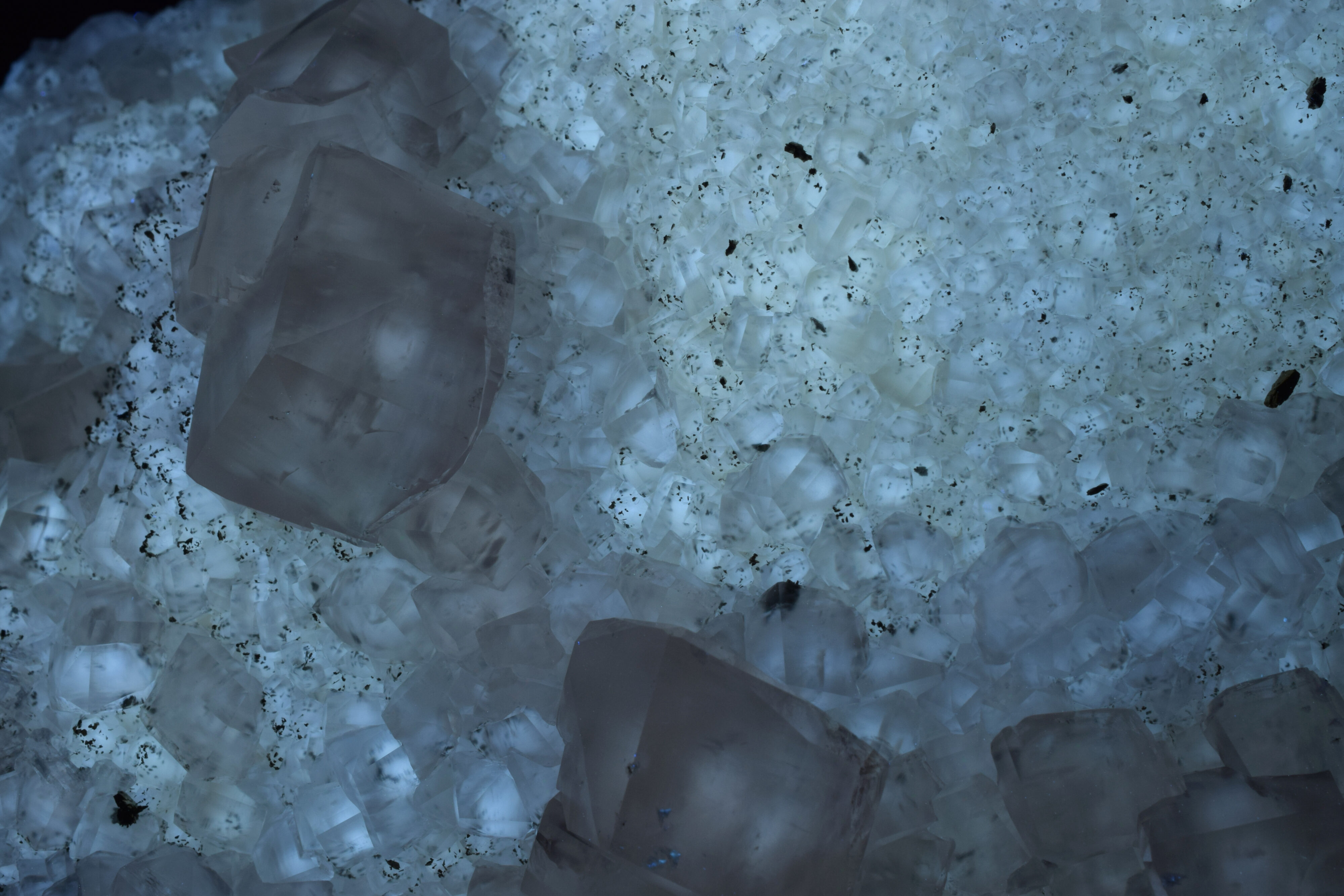
This is a larger specimen consisting of what appear to be two generations of calcite crystals on a limestone matrix, from the Linwood Mine, Buffalo, Scott County, Iowa. The earlier, first-generation crystals cover the entire piece, and consist of small, modified rhombs, most with marcasite inclusions. It is noteworthy that these crystals have a distinct amber to light brownish color. The later stage, second-generation crystals, are much larger modified rhombohedrons, are colorless, and lie on top of the first-generation crystals. Under short wave UV (254nm) the smaller first-generation crystals fluoresce white, while the larger second-generation crystals show a moderate to dim pink response. When the shortwave lamp is turned off, the first-generation crystals show a brief cream/white phosphorescent response. Under longwave UV (365nm) the first-generation crystals again fluoresce white, but the larger second-generation crystals are not significantly fluorescent. When the longwave source is discontinued, dim, brief, green phosphorescence is seen from the second-generation crystals. As has been hypothesized in other posts of Linwood calcite on this site, these observations suggest that an organic activator is responsible for the white fluorescence of the first-generation crystals, and an inorganic activator, such as manganese/lead, may be responsible for the pink fluorescence seen in the larger second-generation crystals under shortwave UV.
Originally posted by Chris Clemens on Nature's Rainbows in 2017.
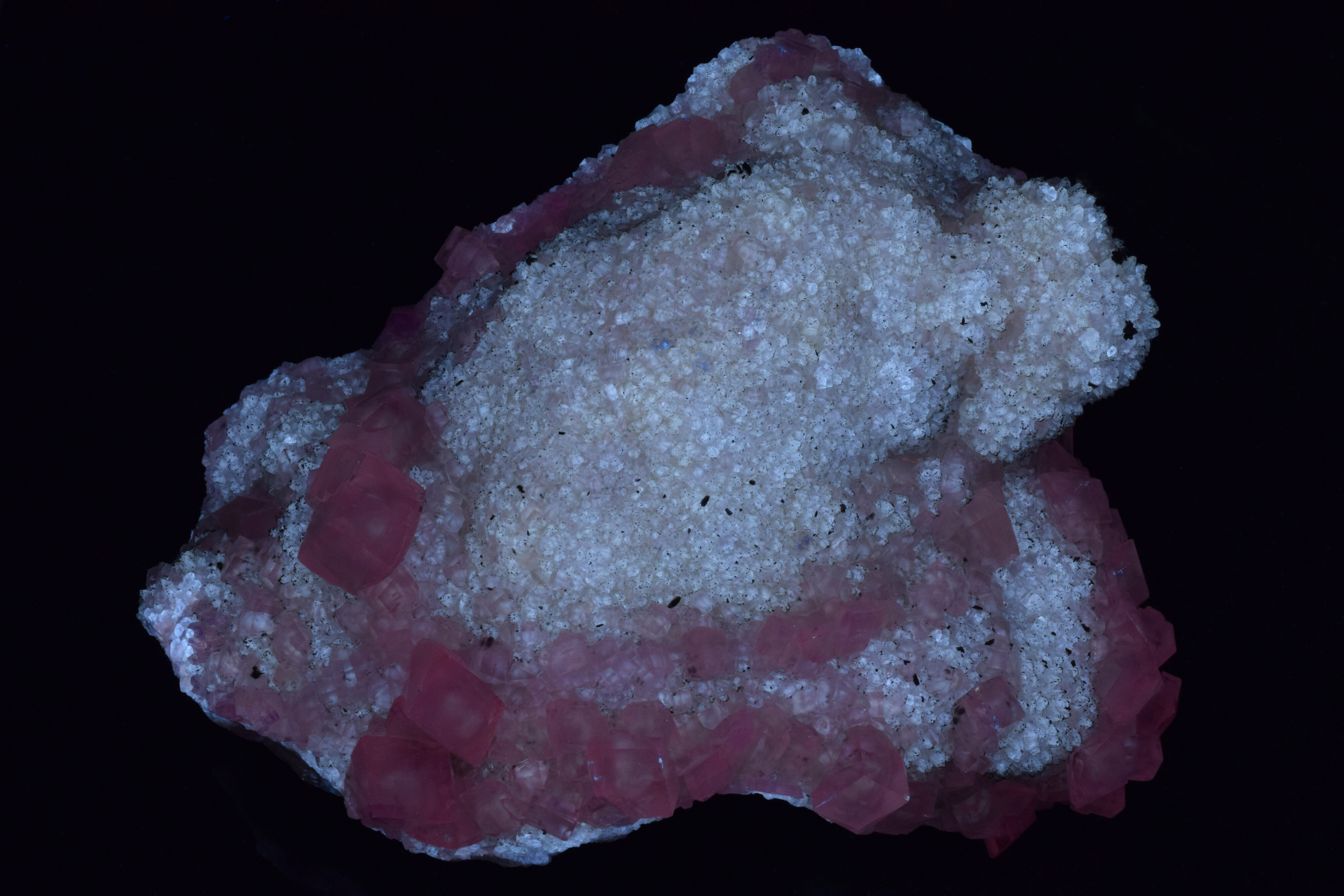
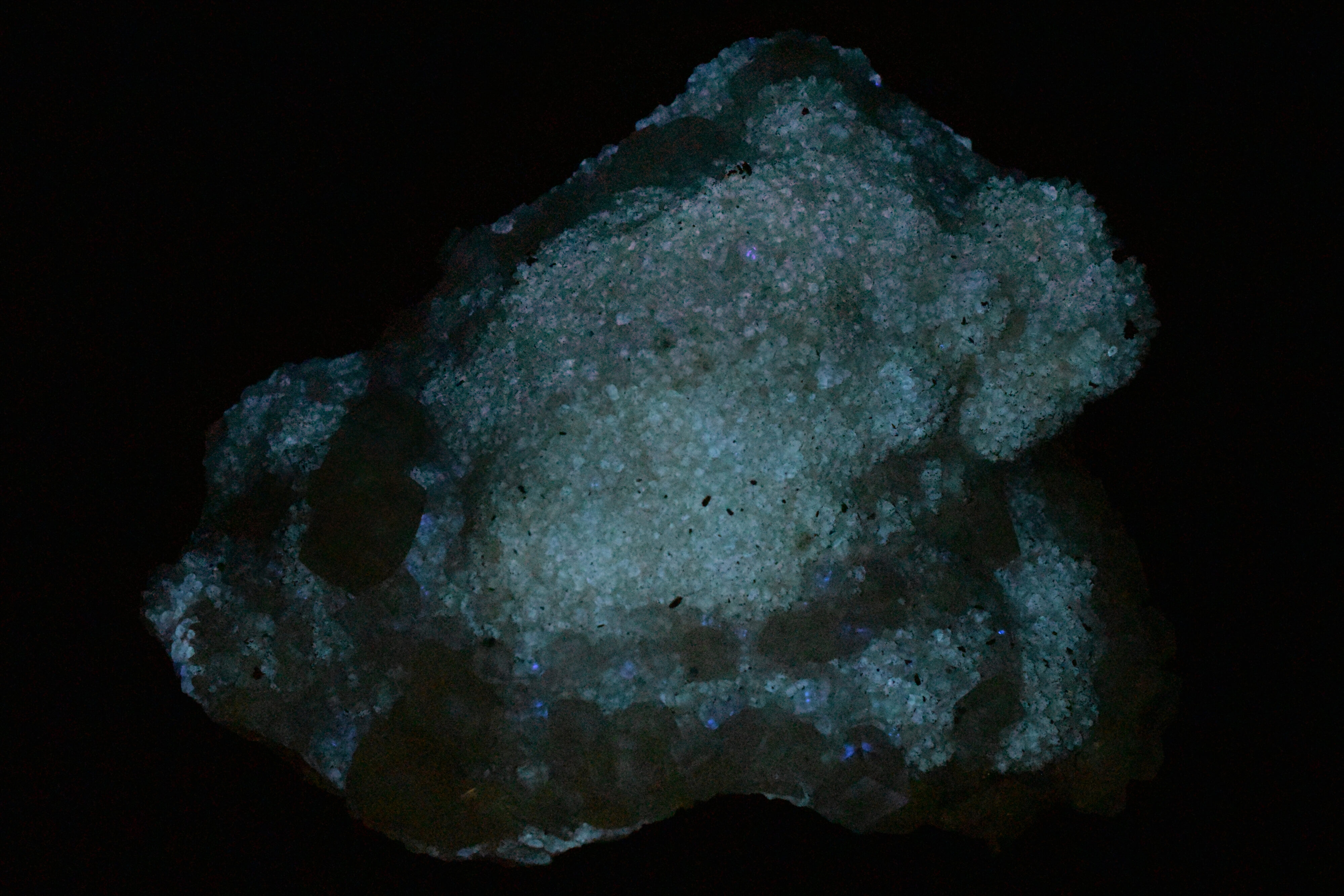
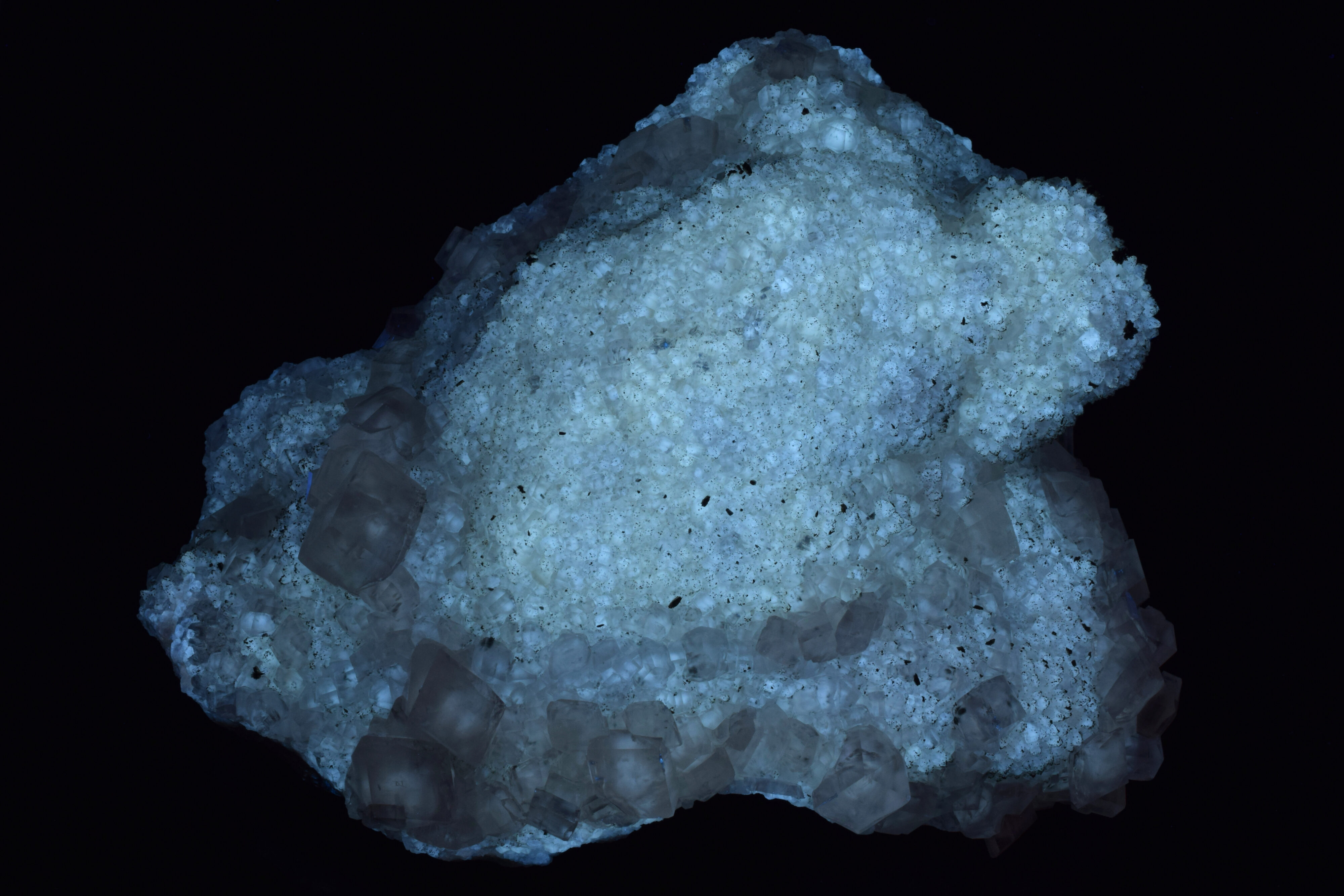
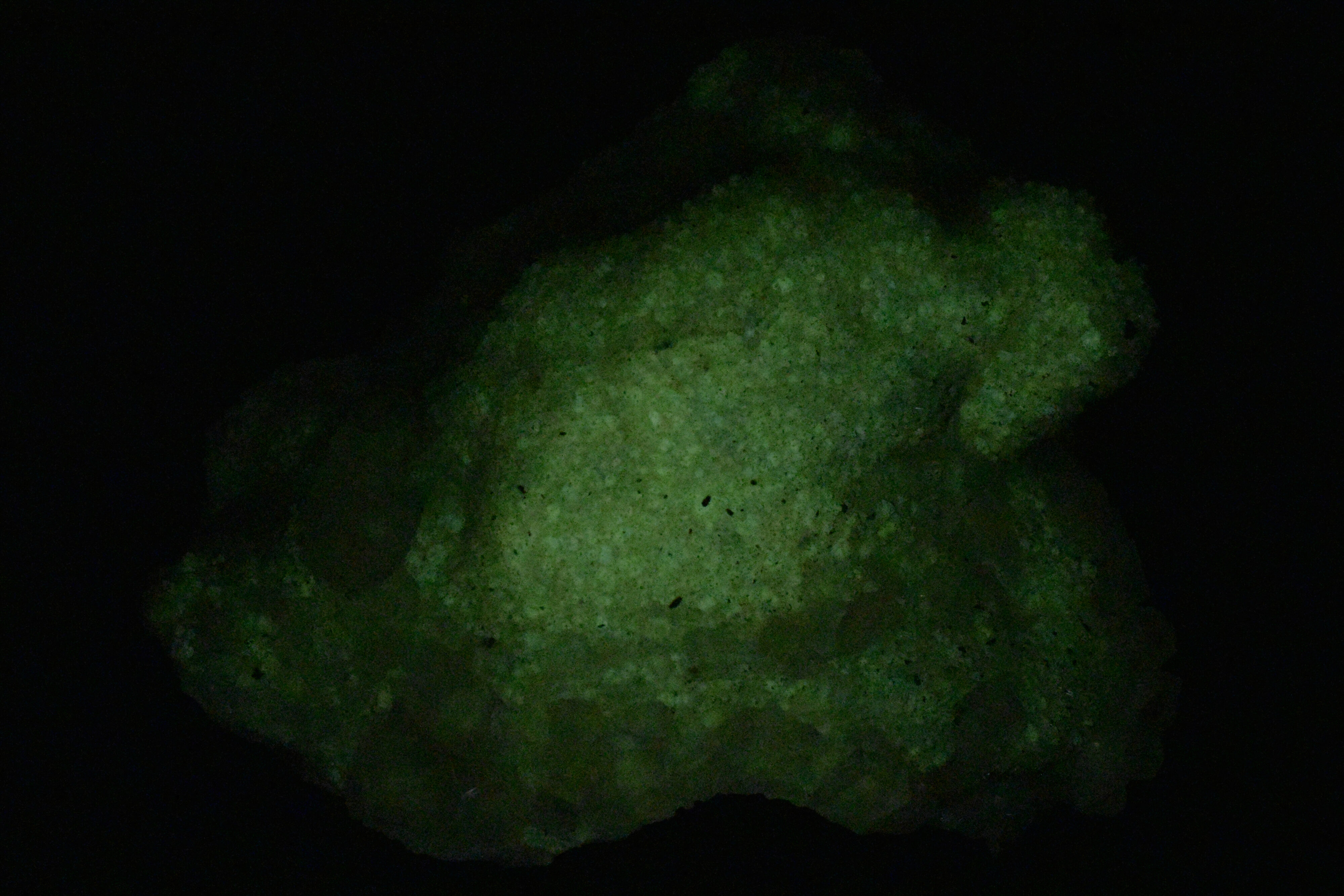
Summary of luminescence responses:
Calcite (Mindat) (RRUFF)
- Fluorescence under Longwave (365nm LED) UV light: White
- Fluorescence under Shortwave (254nm Lamp/Mercury) UV light: Yellow
- Fluorescence under Shortwave (254nm Lamp/Mercury) UV light: Red