
Scapolite and Calcite – Franklin Mine, Franklin, New Jersey
Contributed by: Michael Crawford
Date: Apr 26th, 2026
Locality: Franklin Mine, Franklin, Sussex County, New Jersey, USA (See on Mindat)
Size: 6 x 12 cm
Description:
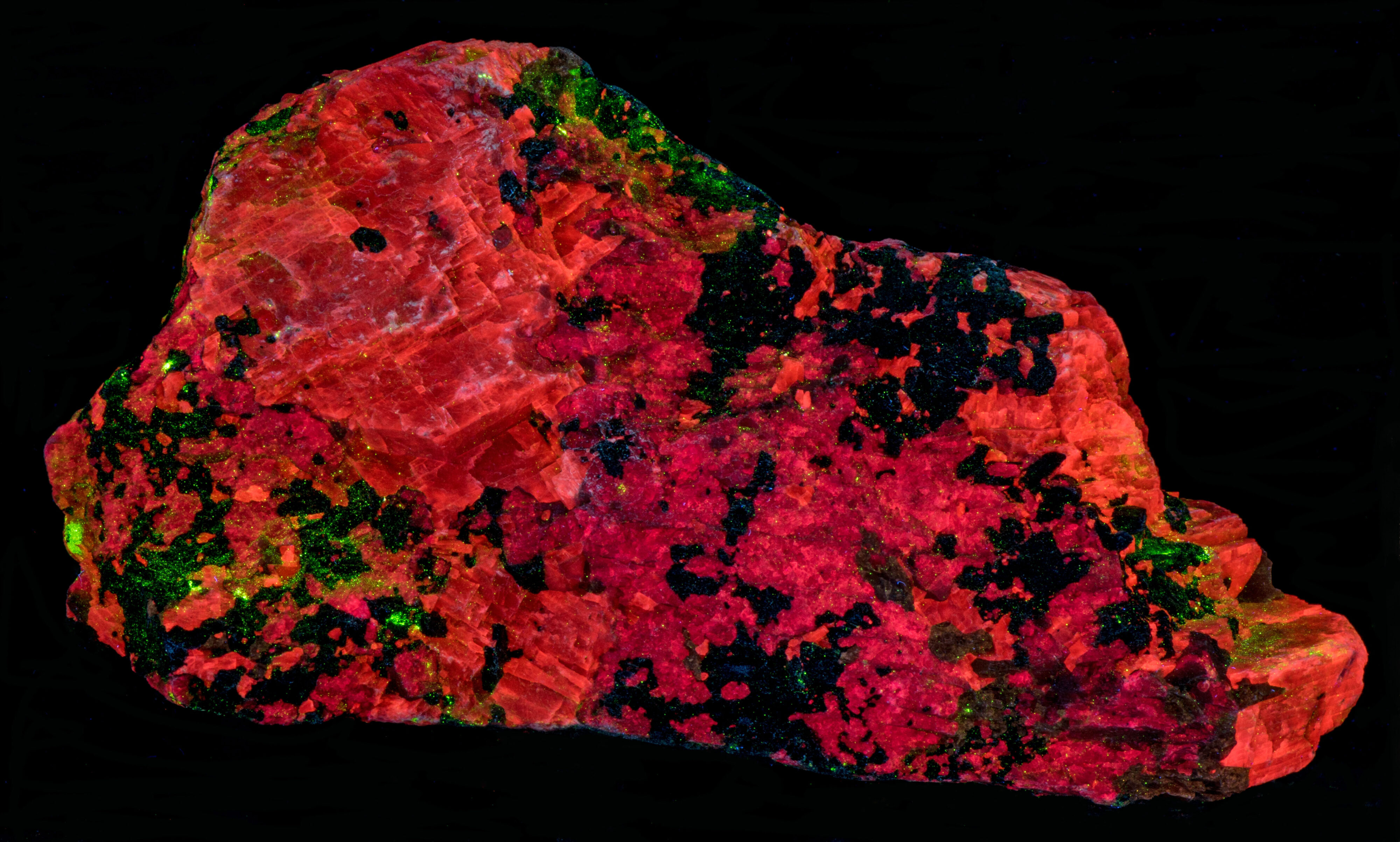
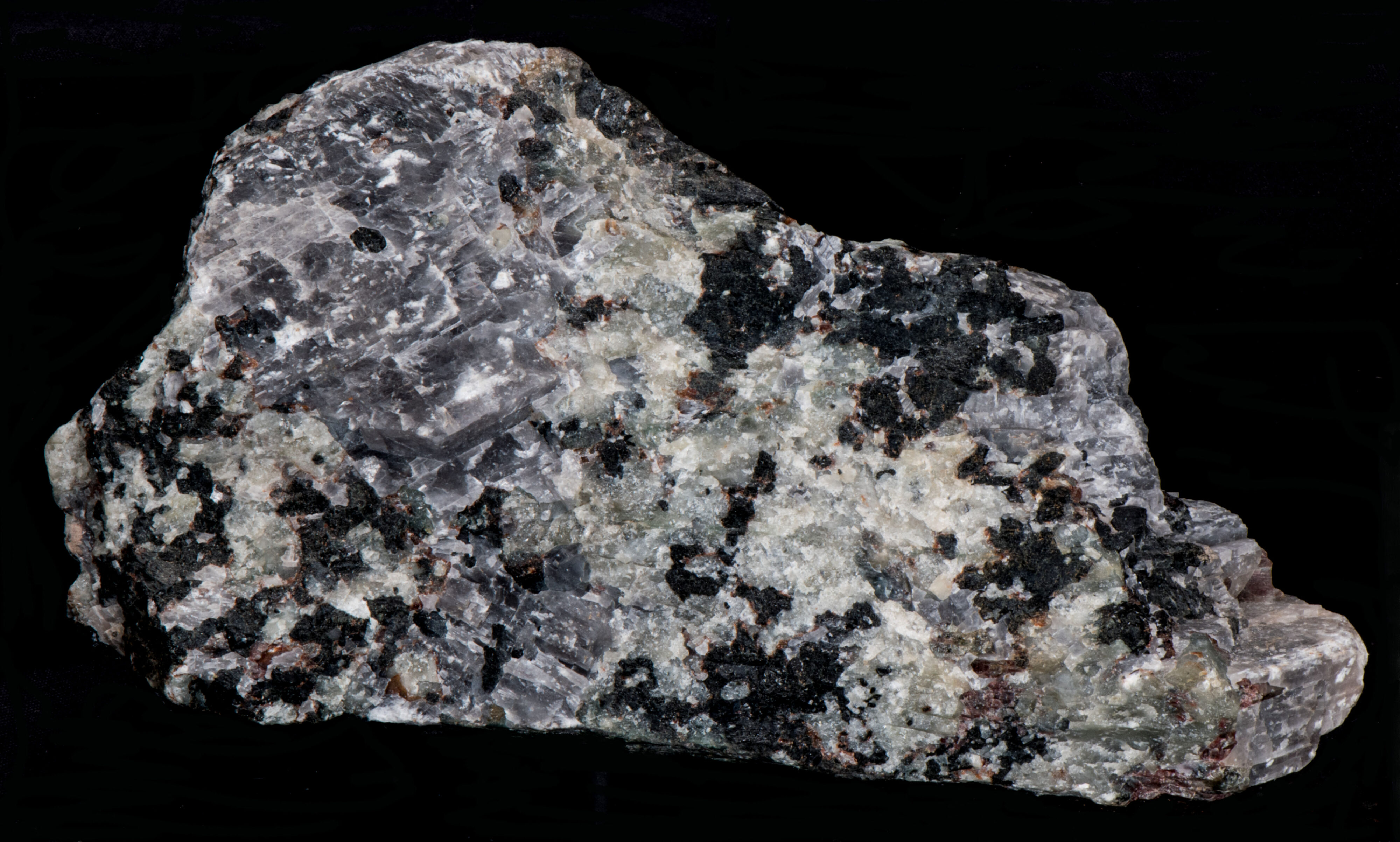
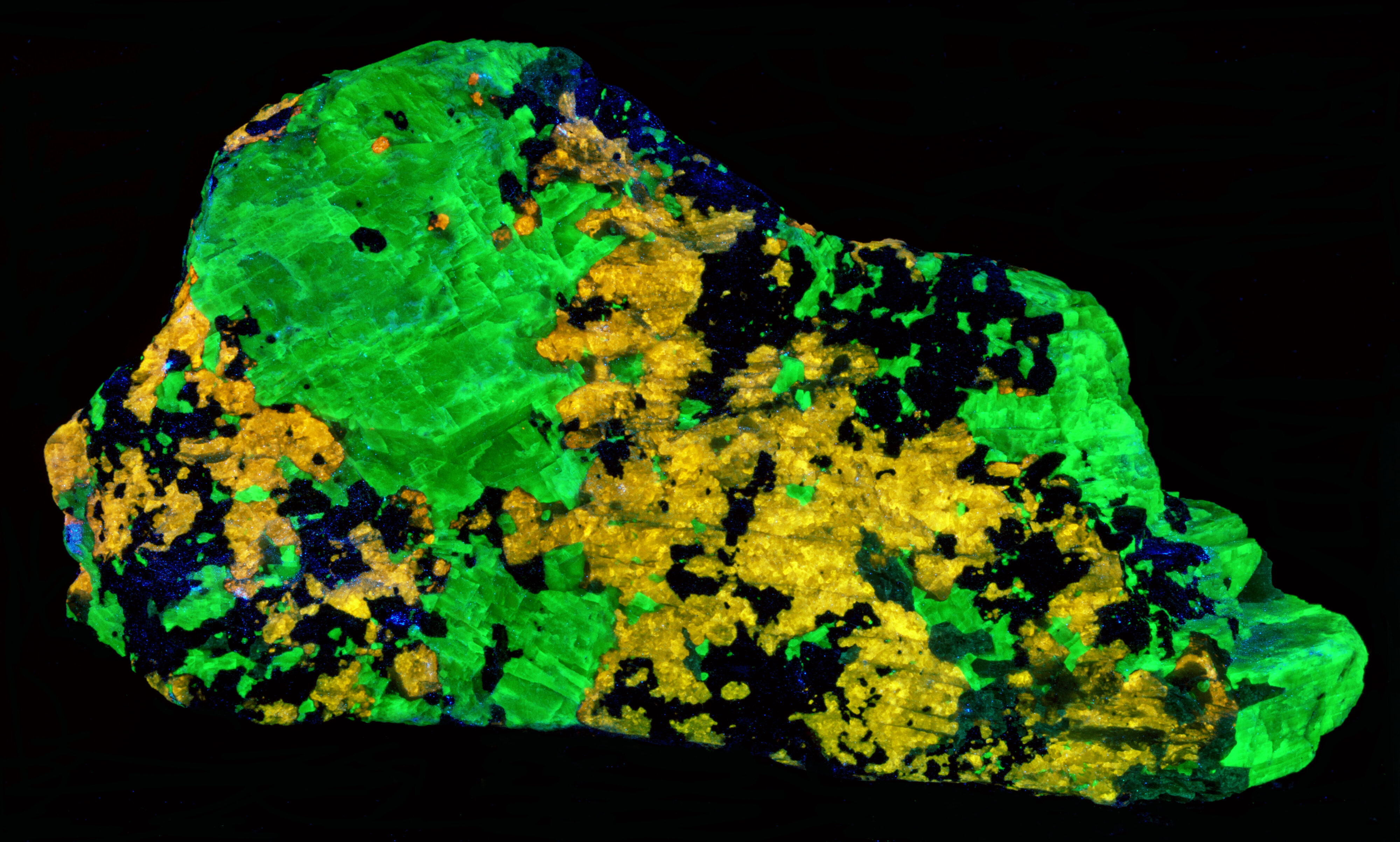
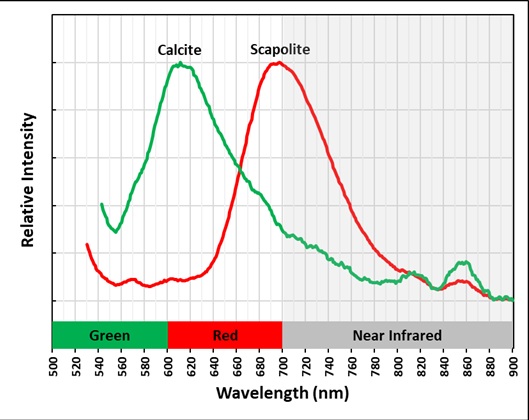
A specimen of calcite and scapolite that are both red under shortwave UV illumination. The specimen is from the Franklin Mine, Sussex County, New Jersey. Shortwave calcite fluorescence is almost entirely in the visible part of the emission spectrum with a maximum around 610 nm. Scapolite shortwave fluorescence spans both visible and near infrared. It peaks at 697 nm. The emission spectra of the two minerals cross around 660 nm in the visible red which explains why the minerals' fluorescence appears the same in the true color image. The color infrared image includes a near infrared band that clearly differentiates the areas of calcite from the areas of scapolite. The calcite is green and the scapolite is yellow in the color infrared image. The color infrared image is composed of visible green band assigned to blue, visible red band assigned to green and the near infrared band assigned to red.
Summary of luminescence responses:
Calcite (Mindat) (RRUFF)
- Fluorescence under Shortwave (255nm LED) UV light: Red
- Fluorescence under Shortwave (255nm LED) UV light: Red