
Fluorescent Fossil Clams, Pipe Creek Jr. Quarry, Marion, Indiana
Contributed by: Chris Clemens
Date: Apr 25th, 2026
Locality: IMI Pipe Creek Jr. Quarry, Grant County, Indiana, USA (See on Mindat)
Size: 8 x 4.6 x 8.5 cm
Weight: 215 g
Description:
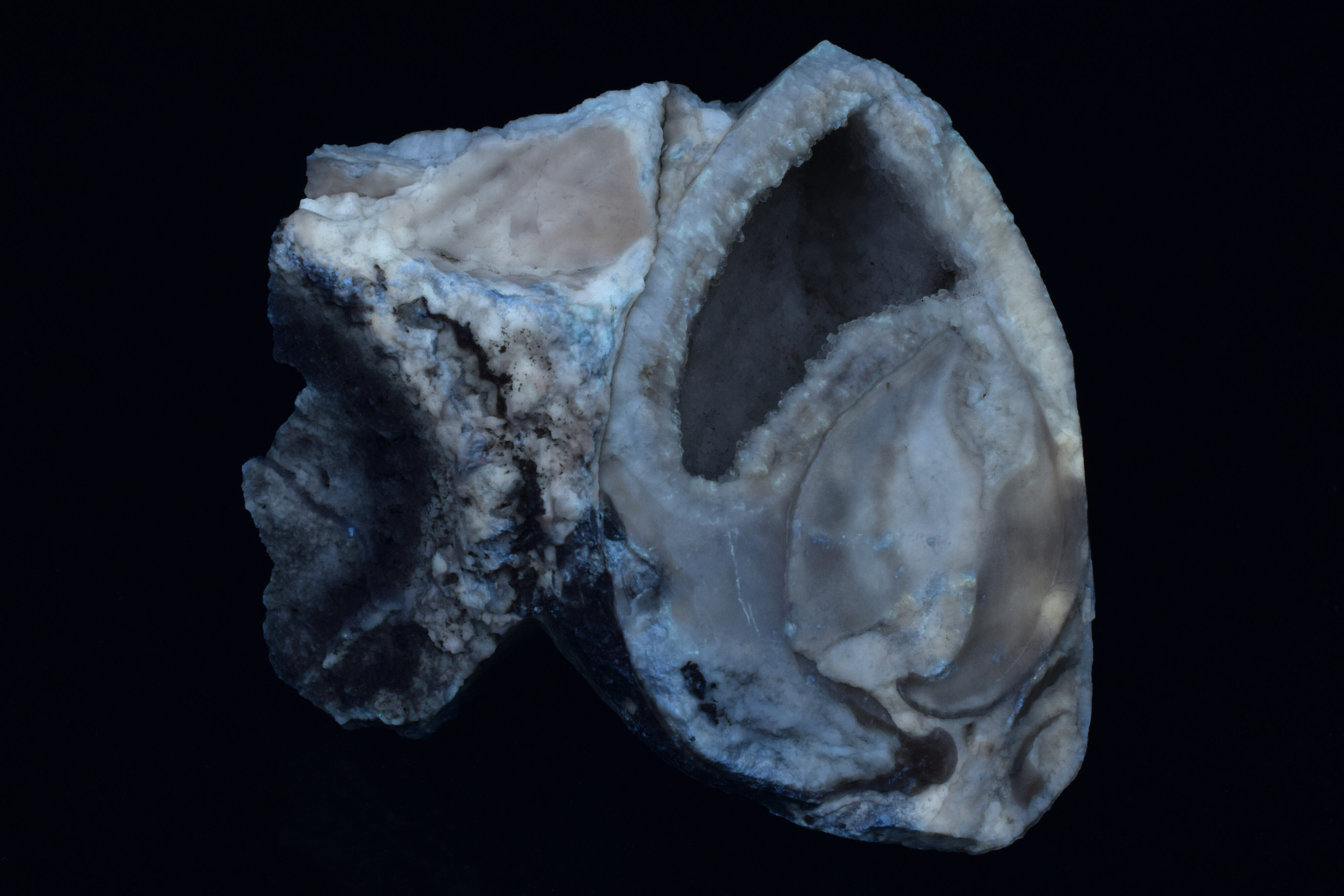
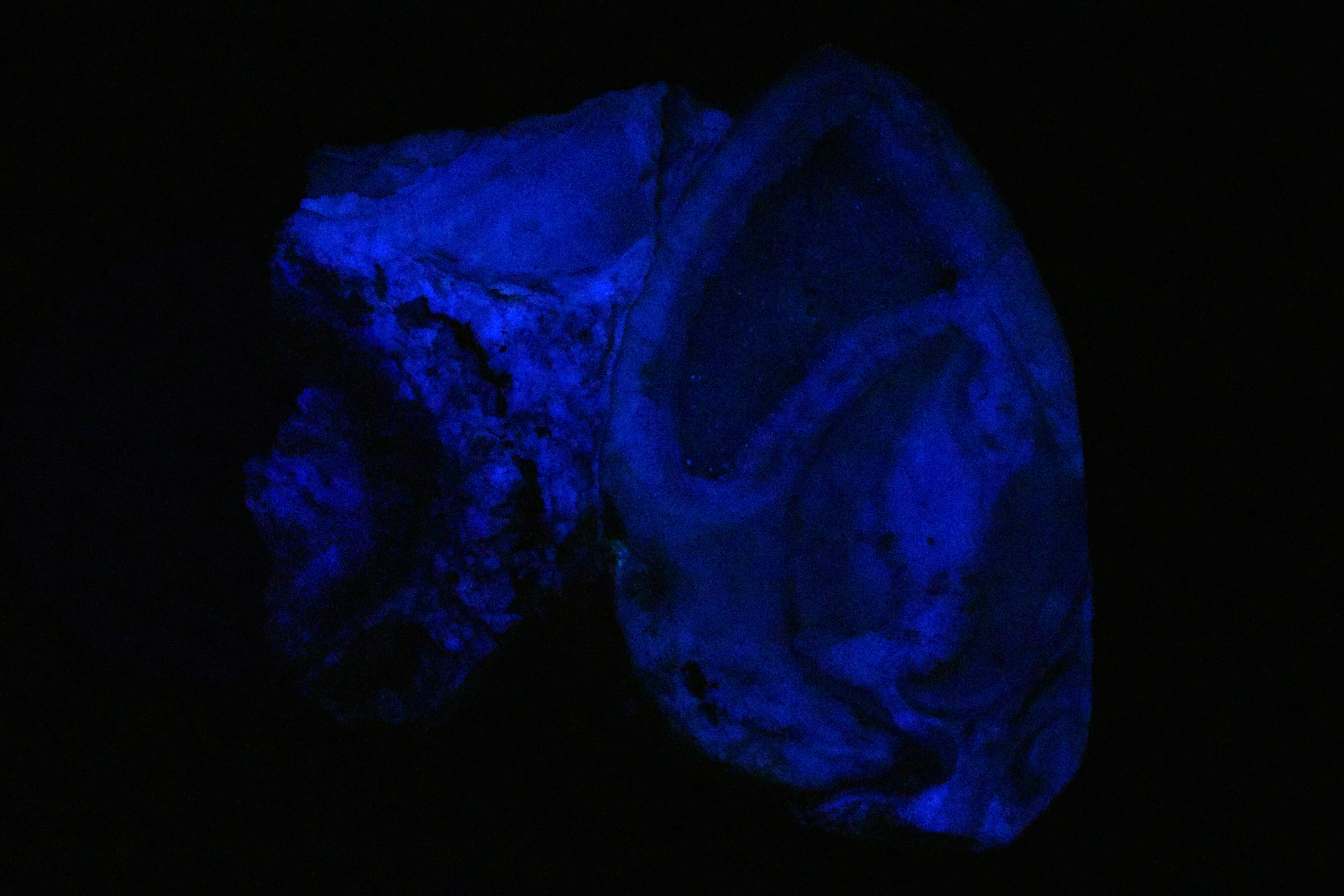
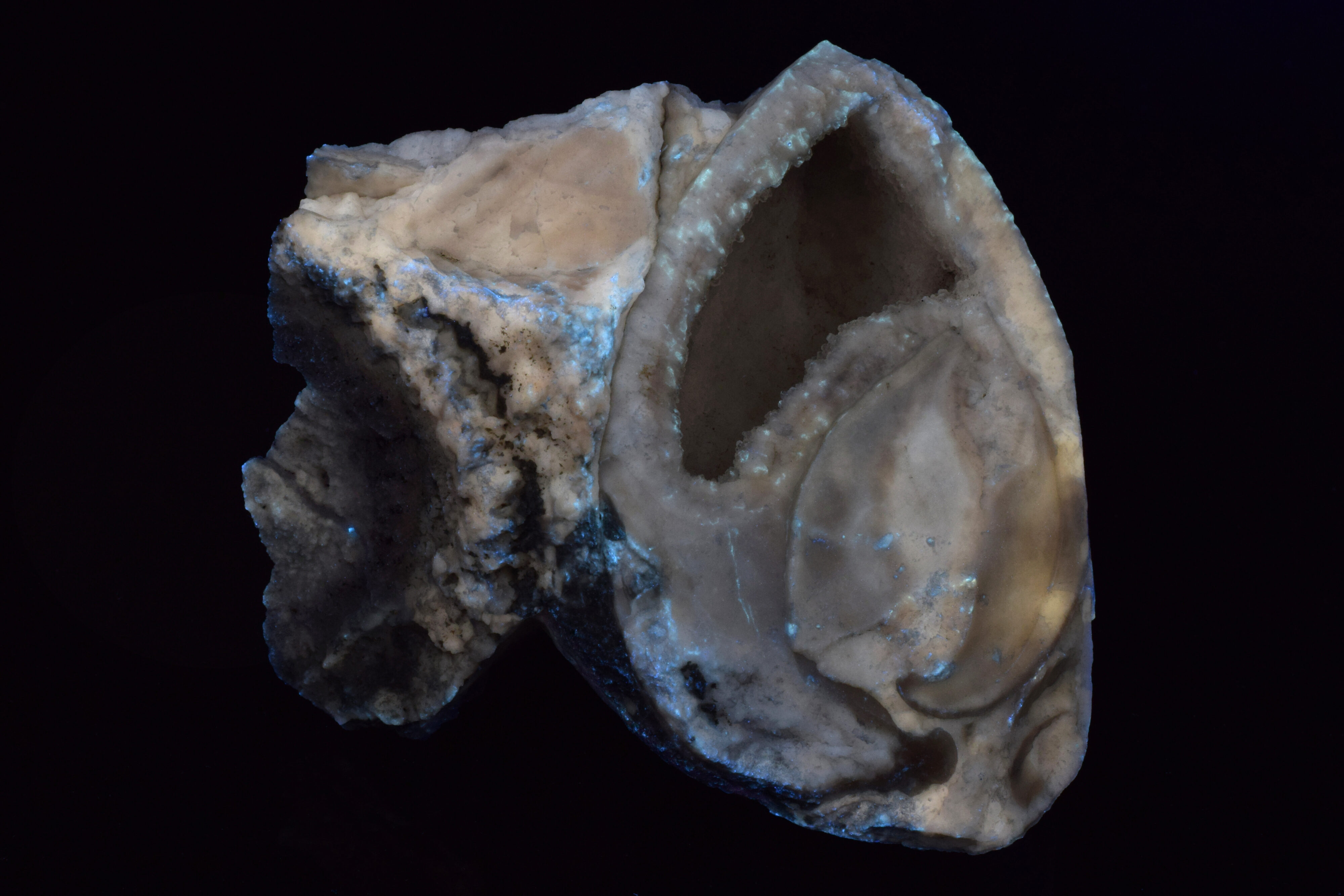
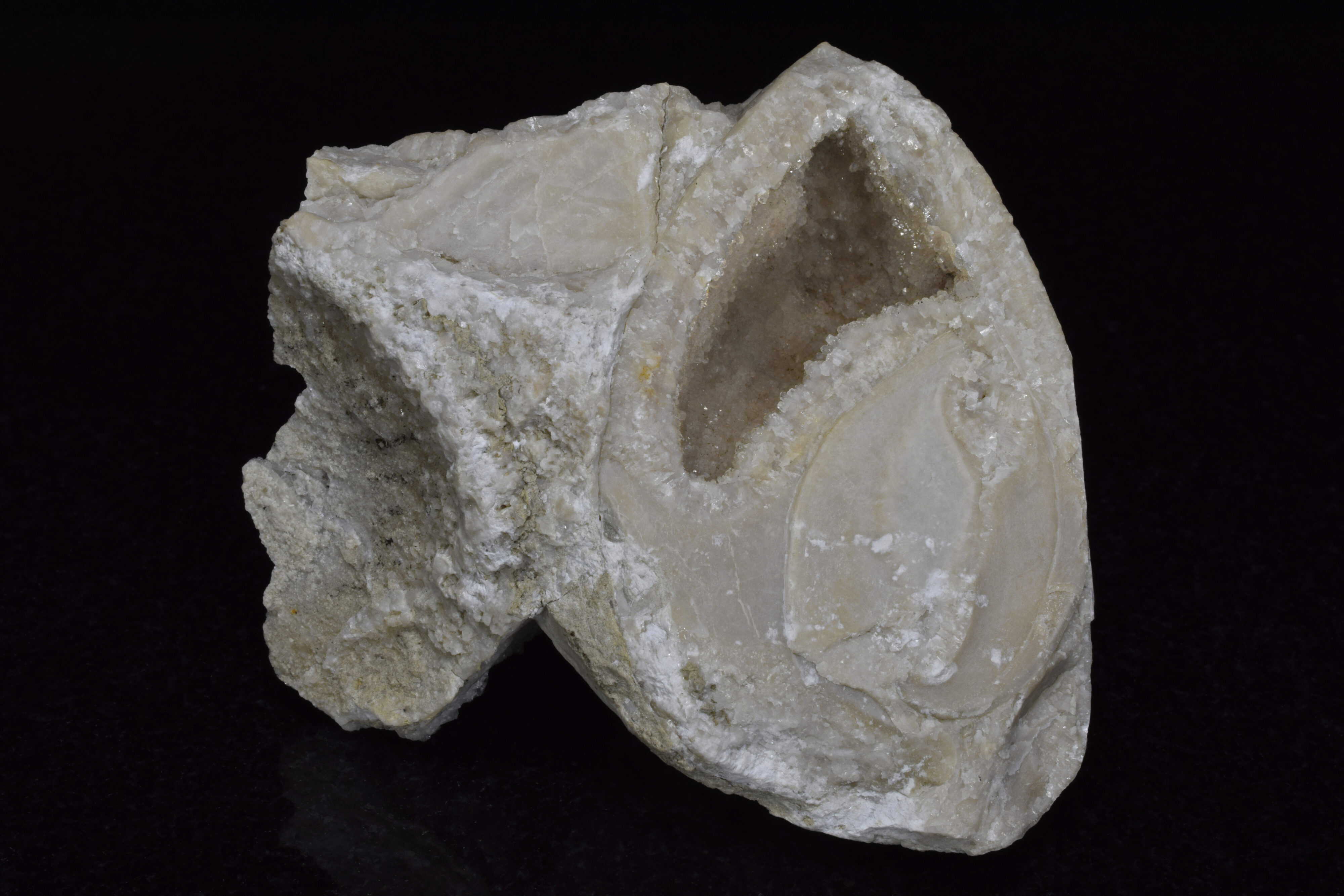
And now for something a little different! This is a fossil comprised of bivalve mollusk shells in limestone, from the Pipe Creek Jr. Quarry in Marion, Indiana. Similar to the famous clam fossils from Ruck's Pit, Florida, the interior surfaces of some of these shells are covered with a calcite druse. On its own, this is an interesting and attractive fossil display specimen, but under UV light this piece also shows a unique fluorescent response. The brightest response is seen under longwave UV, with the dominant colors of fluorescence being cream/white, orange, and various shades of pastel purples. Brief, dim green phosphorescence is also seen after longwave exposure. Under shortwave UV, this piece shows a similar, but cooler response, but most interesting is the deep blue phosphorescence after the shortwave lamp is turned off.
Located in Marion County, Indiana, the Pipe Creek Jr. Quarry has excavated down into the remains of a Silurian age reef, approximately 418-422 mya. This fluorescent fossil specimen provides a very interesting and unusual example from a Midwestern location not generally known for producing fluorescent minerals.
Originally posted by Chris Clemens on Nature's Rainbows in 2016.
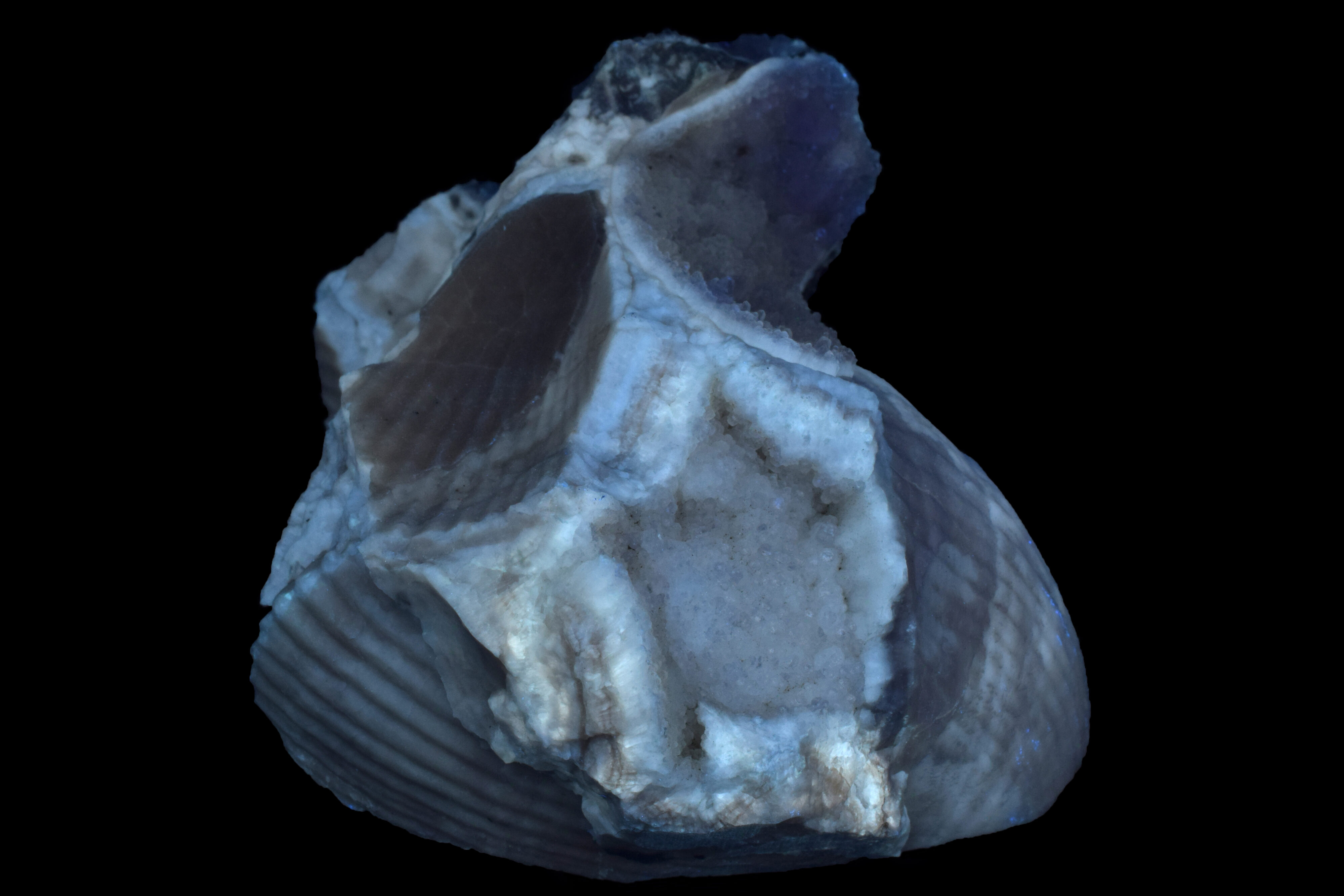
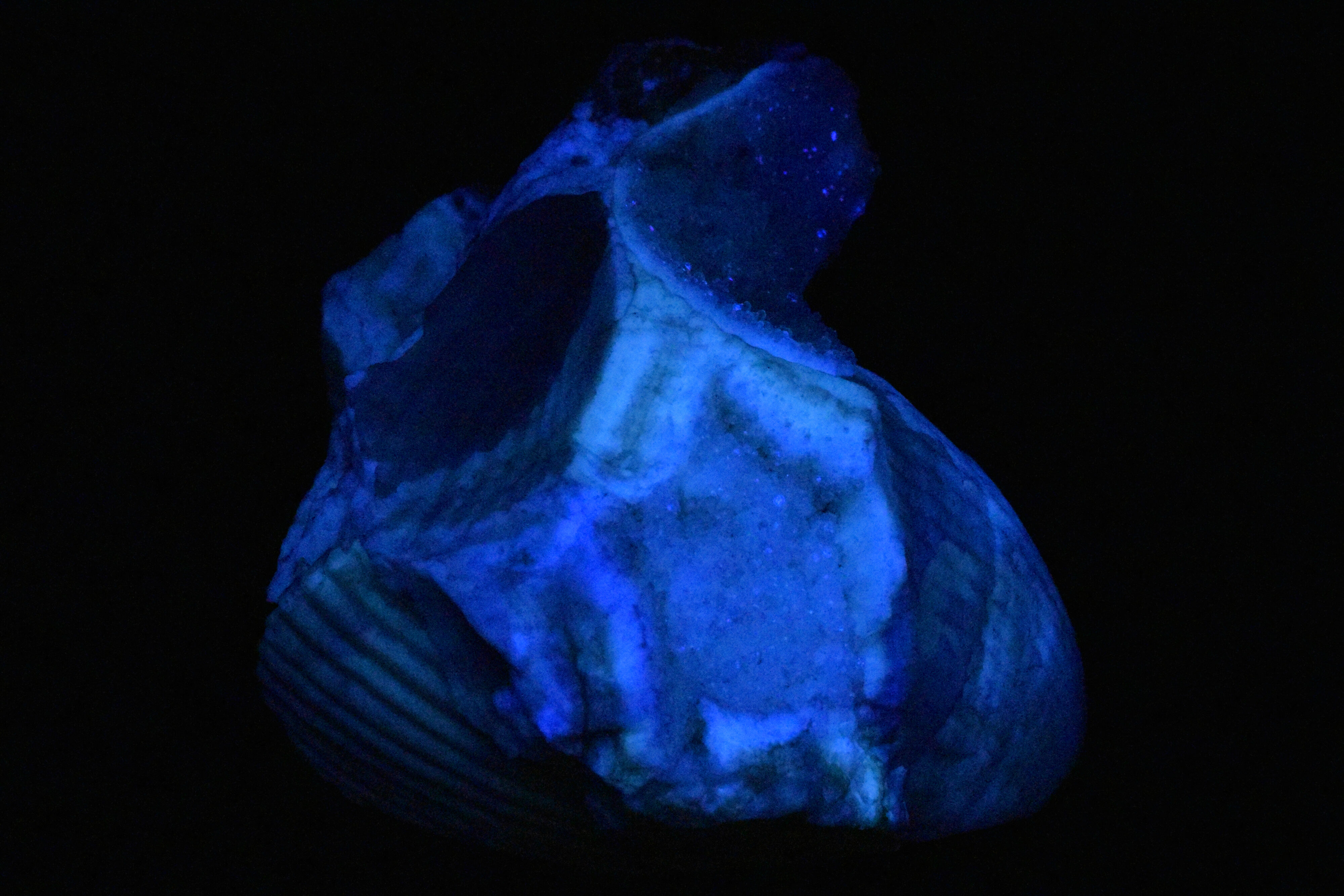
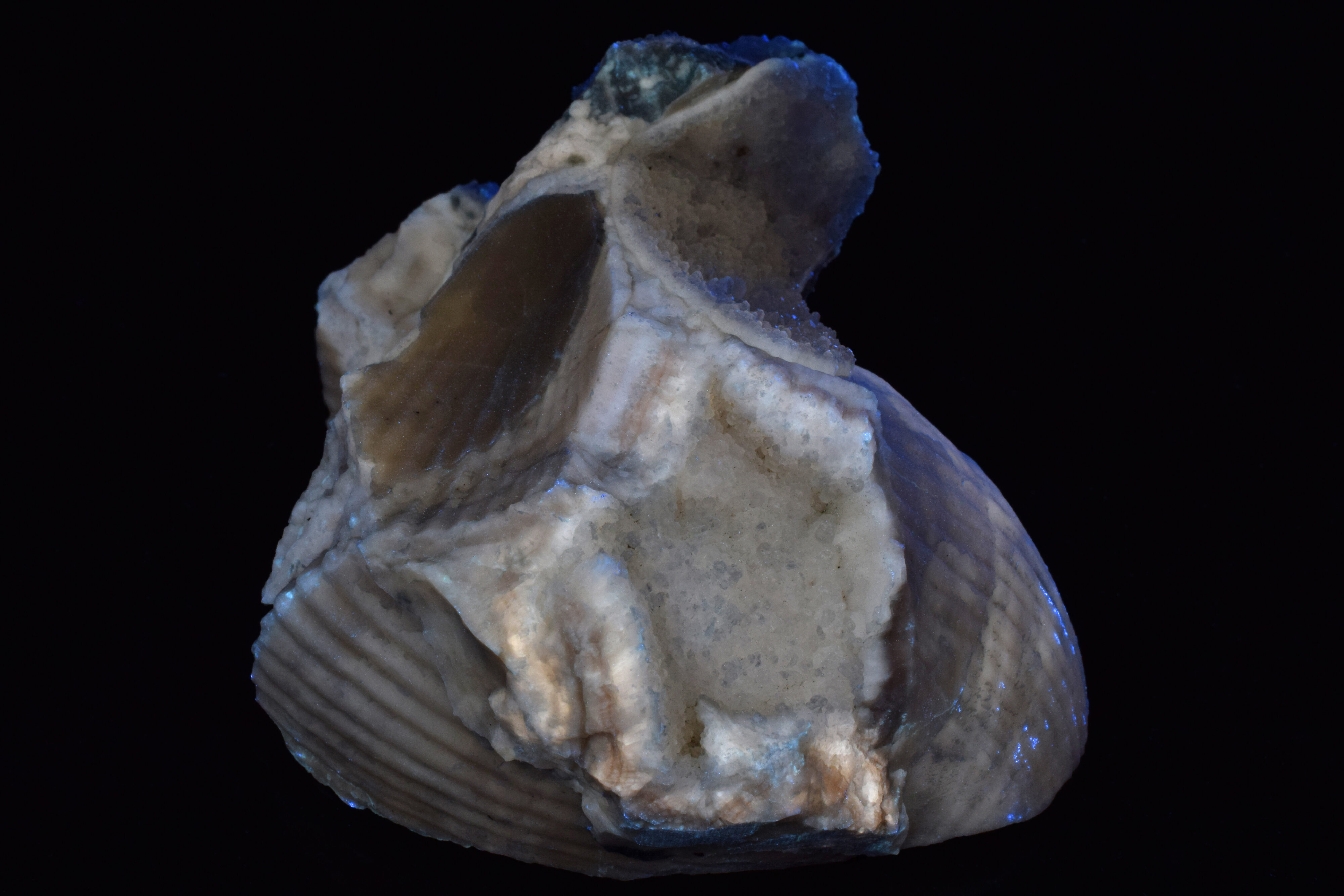
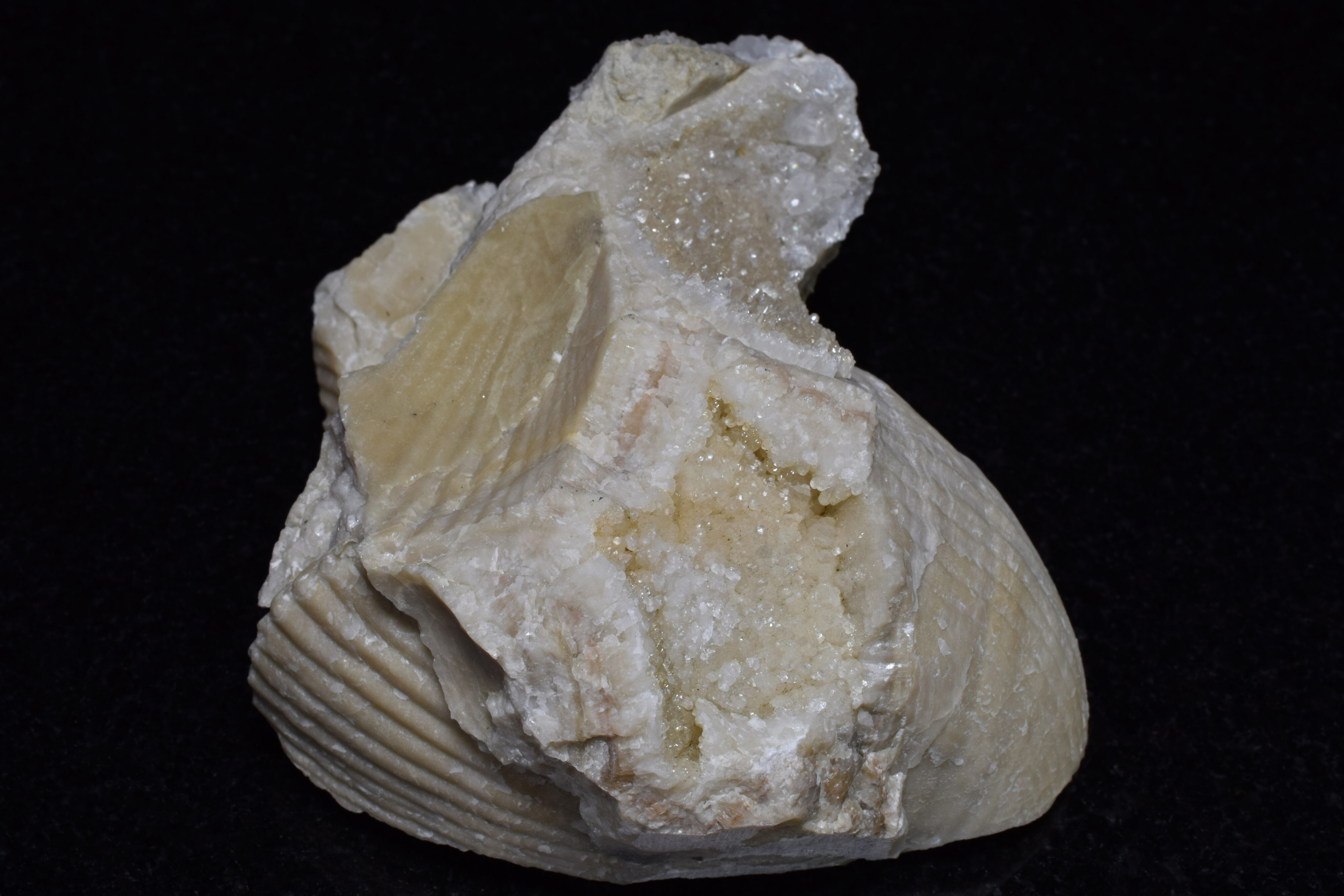
Summary of luminescence responses:
Calcite (Mindat) (RRUFF)
- Fluorescence under Longwave (365nm LED) UV light: Yellow
- Fluorescence under Shortwave (254nm Lamp/Mercury) UV light: White
- Afterglow after exposure to Shortwave (254nm Lamp/Mercury) UV light: Blue
- Fluorescence under Shortwave (254nm Lamp/Mercury) UV light: White