
Carpathite, A Rare Fluorescent Organic Mineral
Contributed by: Chris Clemens
Date: Apr 23rd, 2026
Locality: Picacho Mine (Ramirez Consolidated Mine; Picachos Mine; Los Picachos Mine; Picahotes Mine; Benta Mine; Hernandez Mine; Ramirez Mine; Bonanza Mine), Picacho Peak, San Benito County, California, USA (See on Mindat)
Size: 53 x 33 x 55 mm
Weight: 77 g
Description:
Carpathite (formerly called karpatite) is a very interesting fluorescent mineral. The vast majority of minerals (fluorescent and non-fluorescent alike) are composed of inorganic, crystalline, compounds. Carpathite however, is a very rare, crystalline organic hydrocarbon mineral. It has the molecular formula C24H12 and is the naturally occurring mineral form of the polycyclic aromatic hydrocarbon compound coronene. The fluorescence of this mineral is due to excitation of the pi electrons associated with the multiple conjugated double bonds in the polycyclic aromatic ring structure. Carpathite is named after the Carpathian Mountains, where it was first described in 1955 for an occurrence in Transcarpathian Oblast, Ukraine.
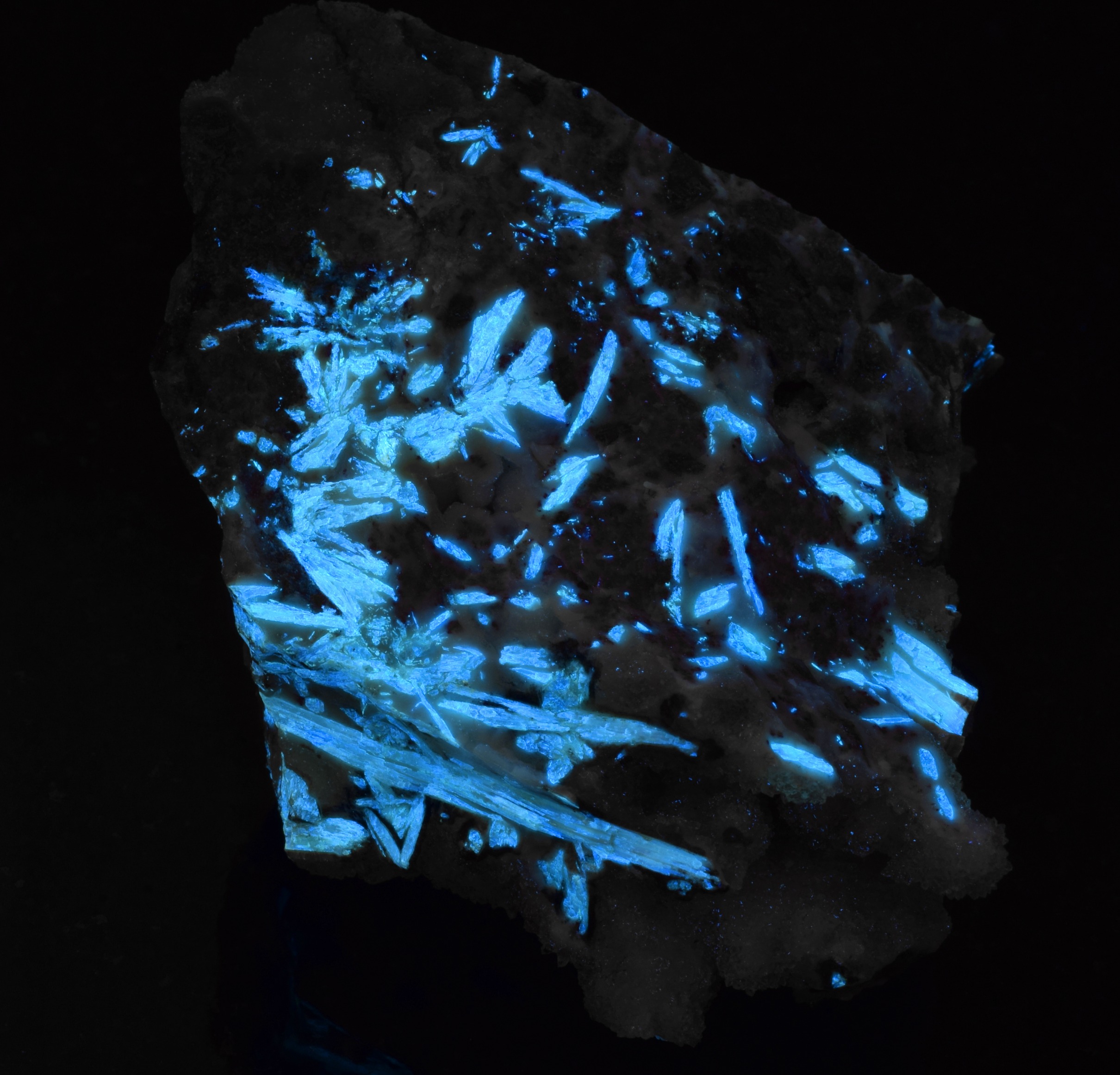
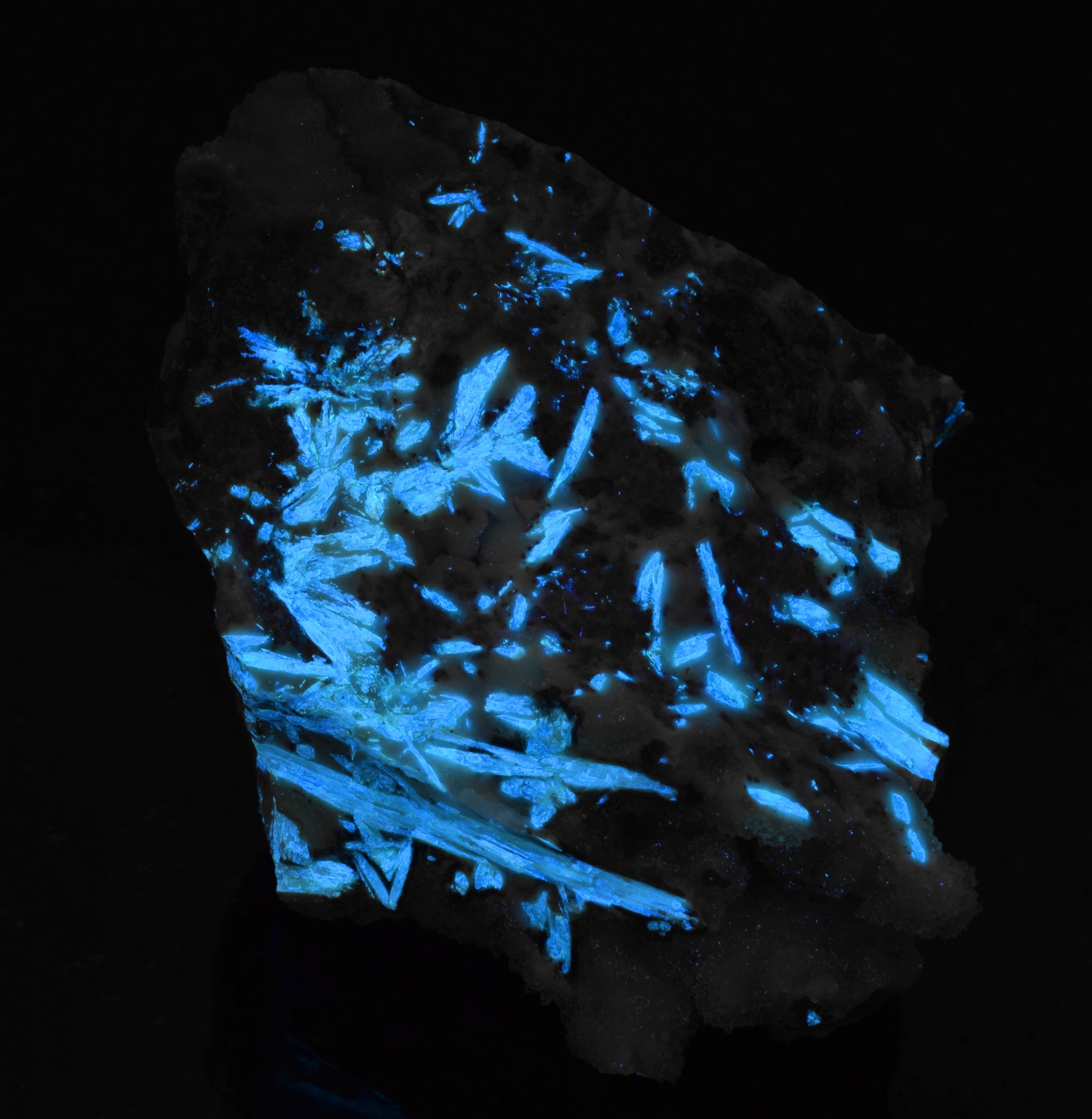
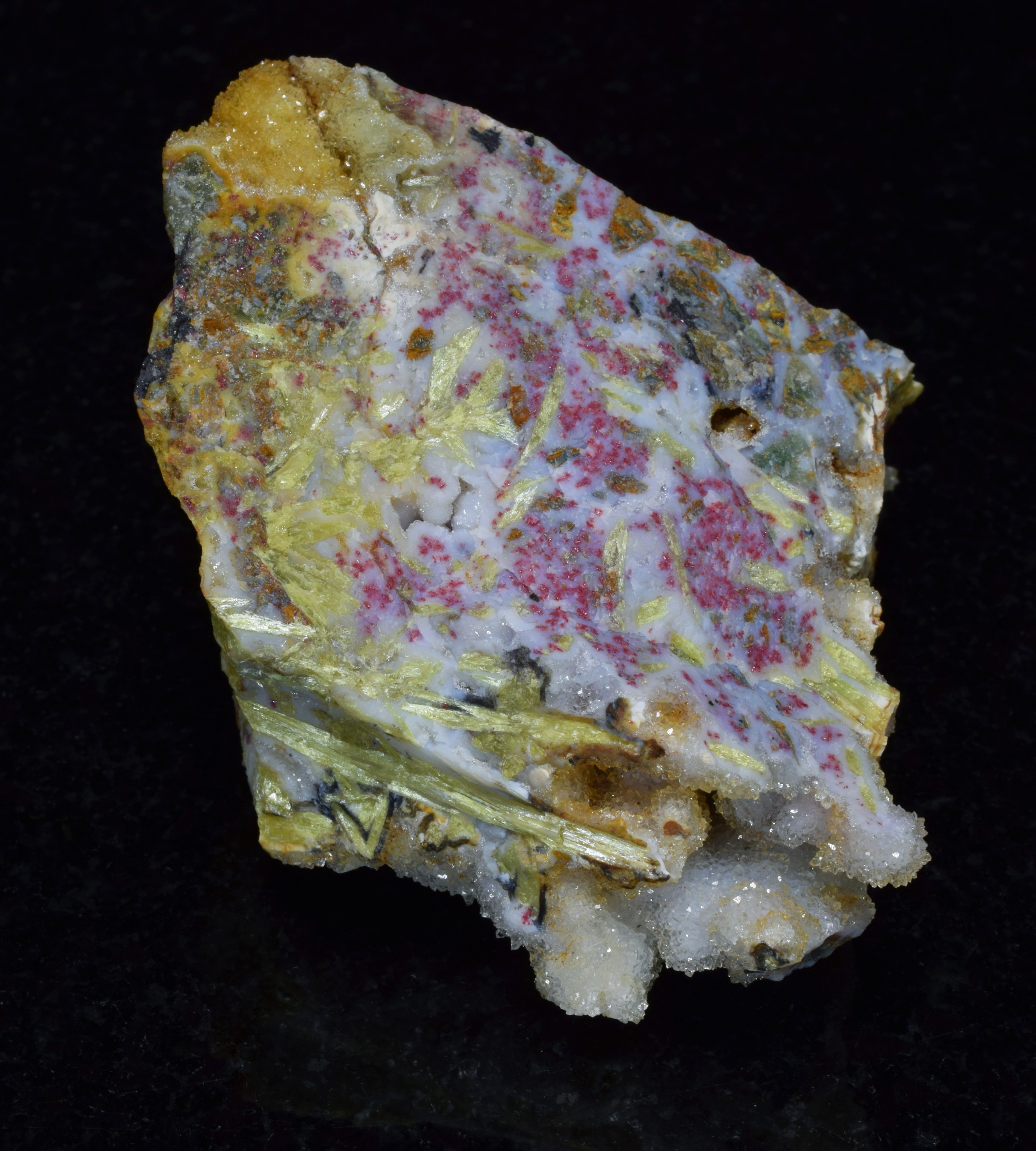
This specimen of carpathite is from the Picacho Mine, Picacho Peak, Diablo Range, San Benito County, California, and contains sprays of yellow carpathite crystals on a matrix of brown jasper, red cinnabar and light milky quartz. Under both shortwave and longwave UV, the carpathite fluoresces bright blue/white.
Originally posted by Chris Clemens on Nature's Rainbows in 2016.
Summary of luminescence responses:
Carpathite (Mindat) (RRUFF)
- Fluorescence under Longwave (365nm LED) UV light: Blue
- Fluorescence under Shortwave (254nm Lamp/Mercury) UV light: Blue