
Slow to Glow Hemimorphite from the Skorpion Mine, Namibia
Contributed by: Chris Clemens
minID: M88-3E9
Date: Apr 19th, 2026
Locality: Skorpion Mine, Rosh Pinah, Oranjemund Constituency, ?Karas Region, Namibia (See on Mindat)
Size: 42 x 34 x 99 mm
Weight: 83 g
Description:
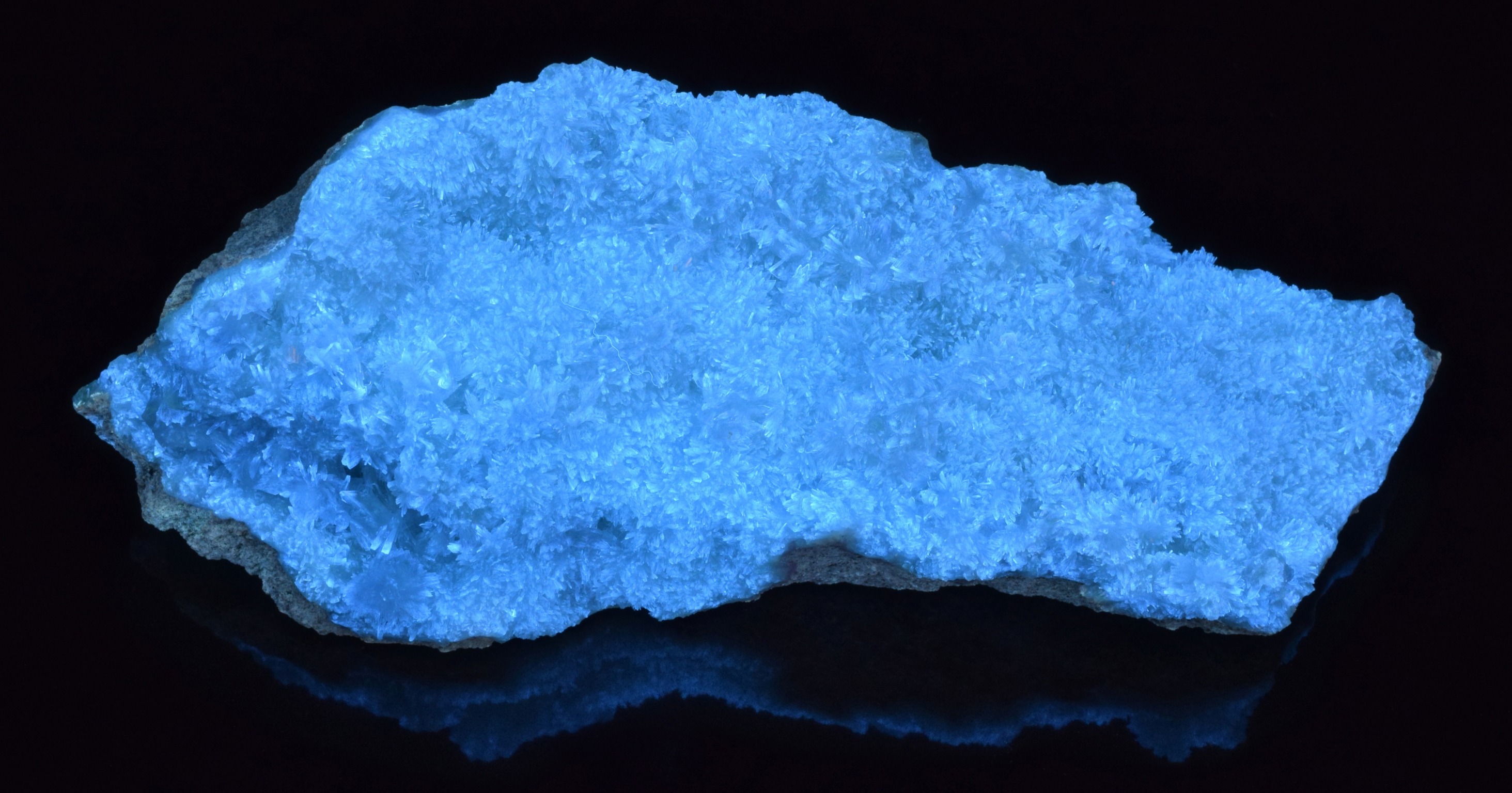
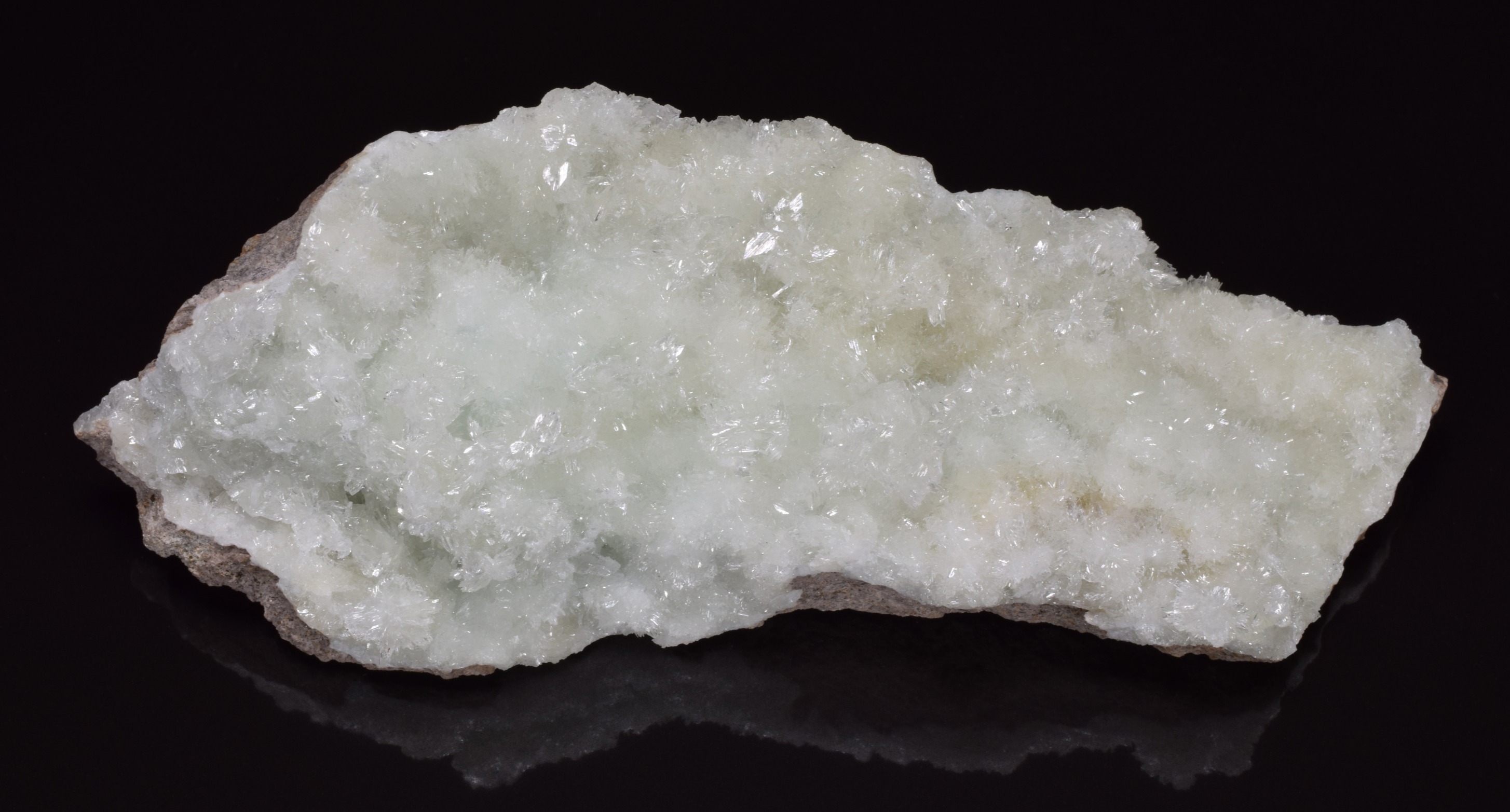
Hemimorphite is a zinc silicate hydrate mineral that is found in various locations worldwide. Most hemimorphite specimens show little or no fluorescence under UV, but some will respond with colors blue or green, usually under shortwave UV. The Skorpion Mine, located in the town of Rosh Pinah, southern Namibia, is known for producing beautifully crystallized specimens of hemimorphite, some of which show moderate to bright blue/white fluorescence under short wave UV. The specimen shown in the photographs below provides a good example of a brightly fluorescent hemimorphite from the Skorpion Mine.
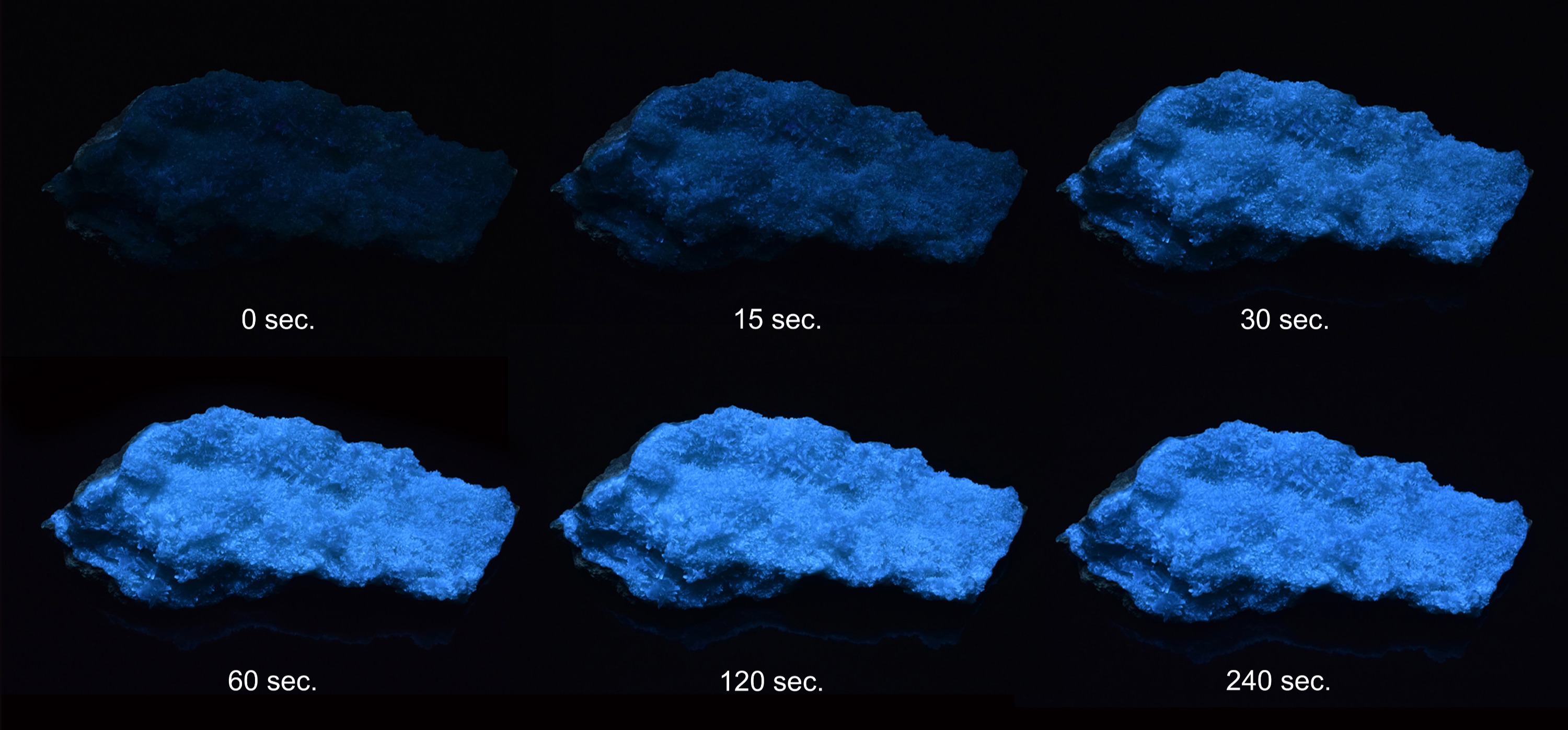
Some of the fluorescent hemimorphite from the Skorpion Mine exhibits an interesting phenomenon that has been nicknamed "slow to glow". Instead of immediately attaining full brightness of fluorescence when the shortwave UV source is turned on, this slow to glow hemimorphite initially shows a dim response that slowly increases in brightness over time, taking 30 seconds to several minutes to reach maximum under constant UV exposure. Although the mechanism of slow to glow fluorescence is not fully understood, it is thought that following initial absorption of UV, the excitation of electrons does not immediately result in the emission of fluorescence by their return to ground state as is the case with other fluorescent minerals. Instead, these electrons move to different sites within the crystal lattice and become temporarily trapped. Luminescence does not occur until these trapped electrons are freed by additional excitation by the impinging UV, and the subsequent loss of energy through heat and emission of fluorescence. Under constant UV excitation, the number of trapped electrons increases over time, resulting in the slow buildup to maximum fluorescence, and thus slow to glow (Waychunas 2019).
The specimen featured here provides an excellent example of the slow to glow phenomenon. The last sequence of photographs was taken following intervals of UV exposure of increased duration, as indicated. The exposure settings were the same for each image.
The Skorpion Mine hemimorphite specimen was exposed to short wave UV from a 48-watt, fixed distance source for increased lengths of time. The photographic exposure was the same for each image. As can be seen, the brightness of the fluorescent response increased as the duration of UV exposure increased. Maximum brightness occurred following 120 seconds (2 minutes) of exposure and began to fall off thereafter.
Reference:
Waychunas G. Hemimorphite from Skorpion Zinc Mine, Namibia: Slow Buildup Luminescence with No Afterglow, and Tenebresence. UV Waves (Newsletter of the Fluorescent Mineral Society); 2019, March-April, Vol. 49(2):2-4
Originally posted by Chris Clemens on Nature's Rainbows in 2020.
Summary of luminescence responses:
Hemimorphite (Mindat) (RRUFF)
- Fluorescence under Shortwave (254nm Lamp/Mercury) UV light: Blue