
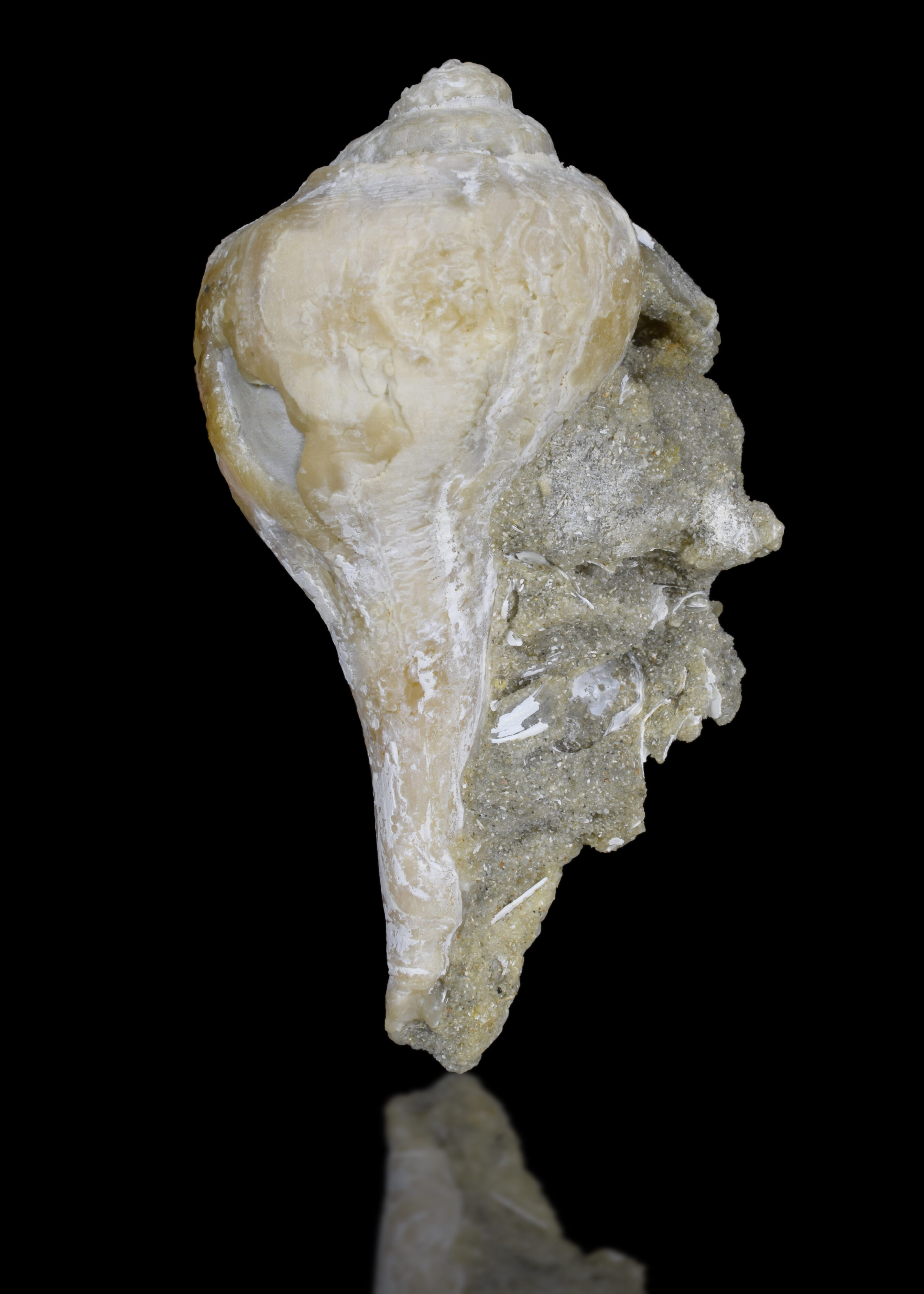
Fluorescent Whelk Fossil from Rucks' Pit, Fort Drum, Florida
Contributed by: Chris Clemens
Date: Apr 17th, 2026
Locality: Rucks\' Pit, Fort Drum, Okeechobee County, Florida, USA (See on Mindat)
Size: 3.9 x 3.2 x 6.4 cm
Weight: 51 g
Description:
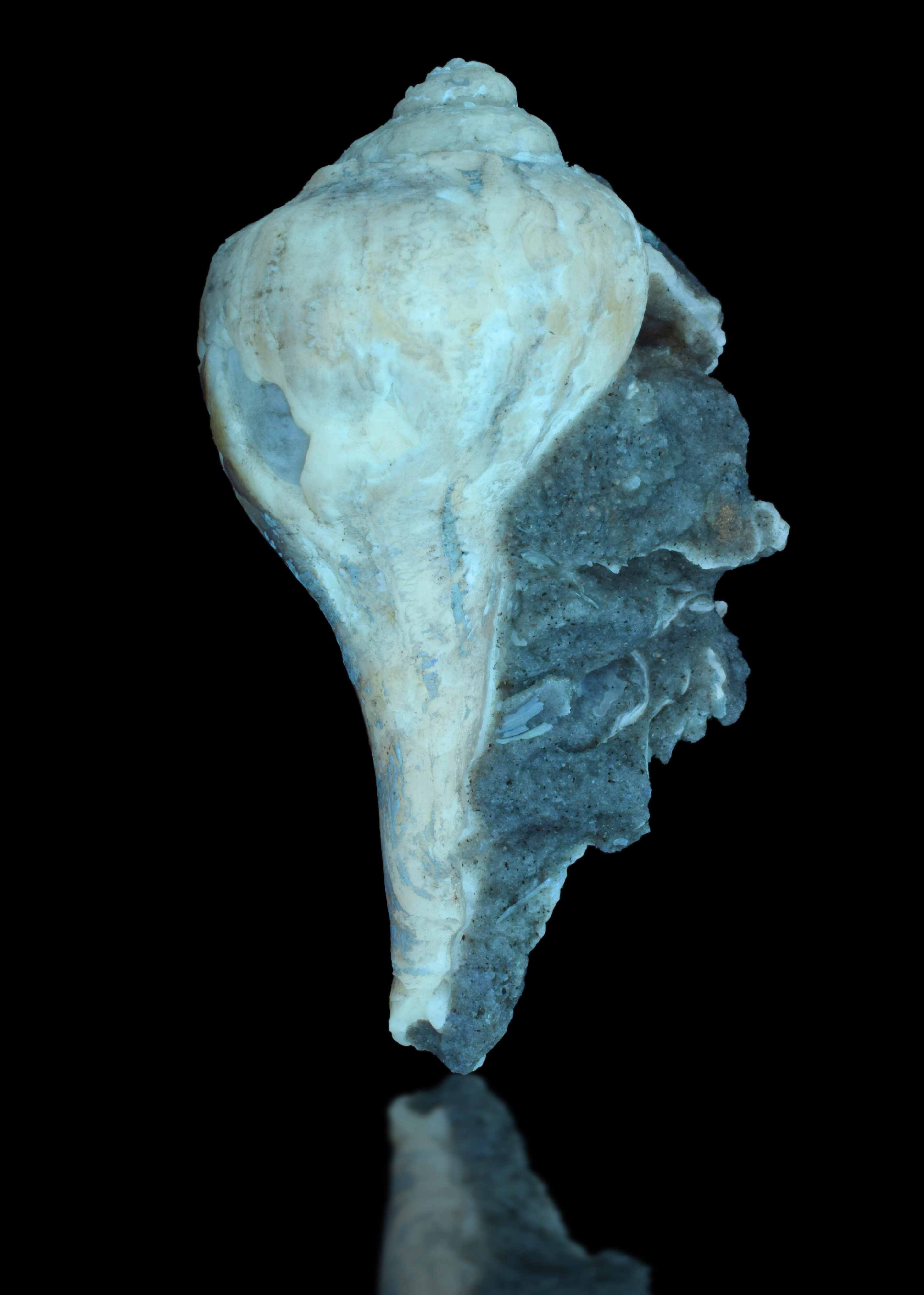
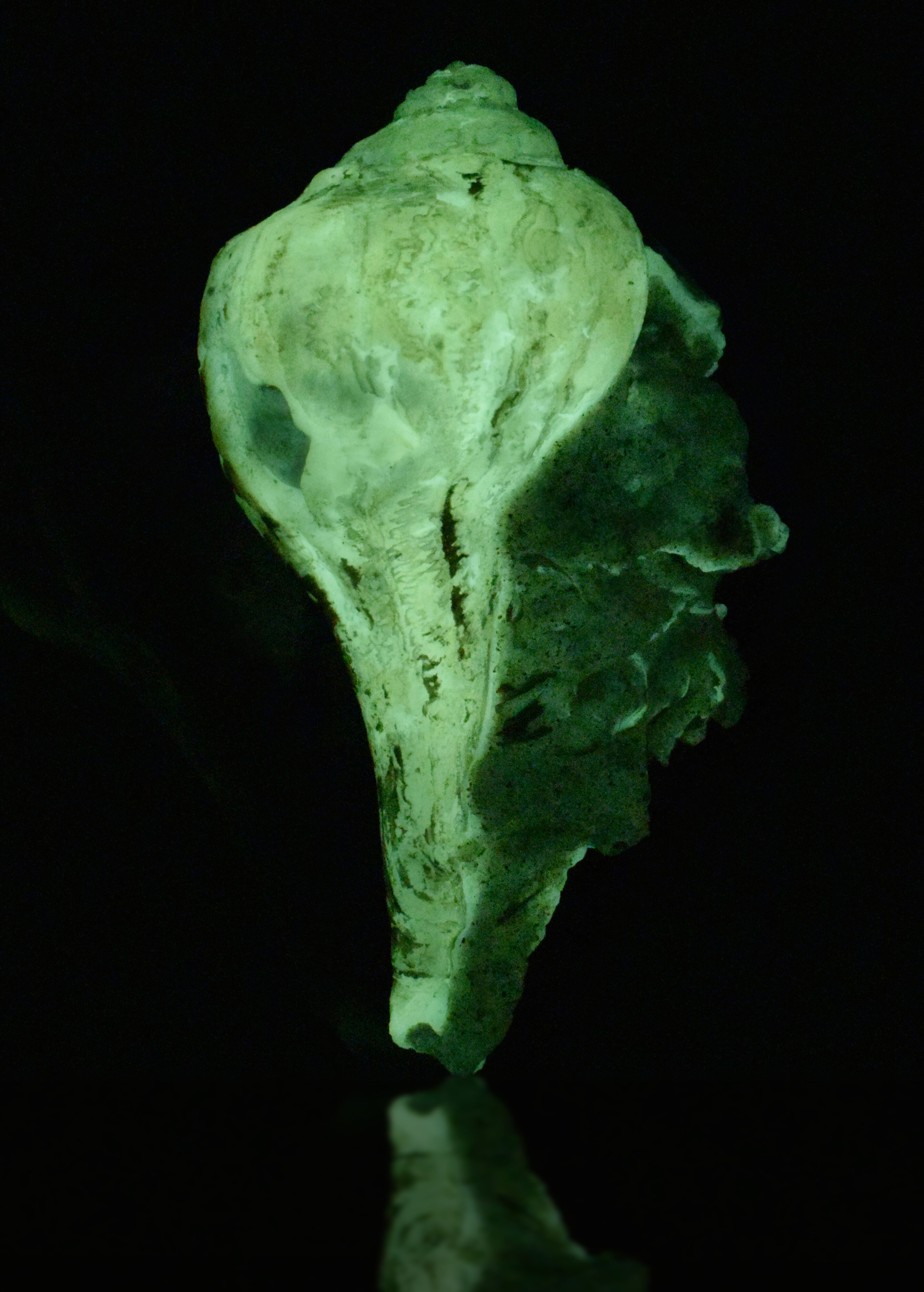
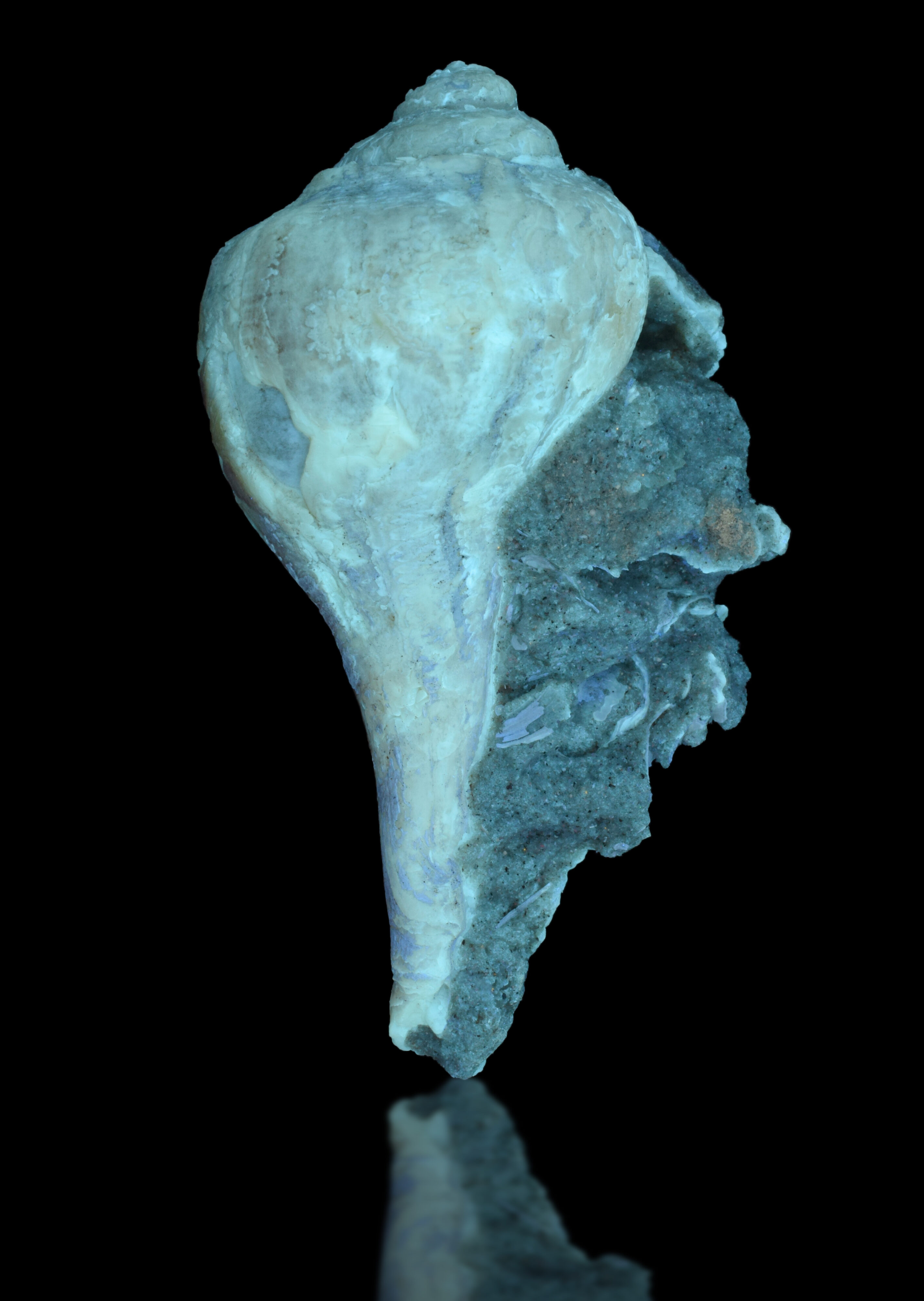
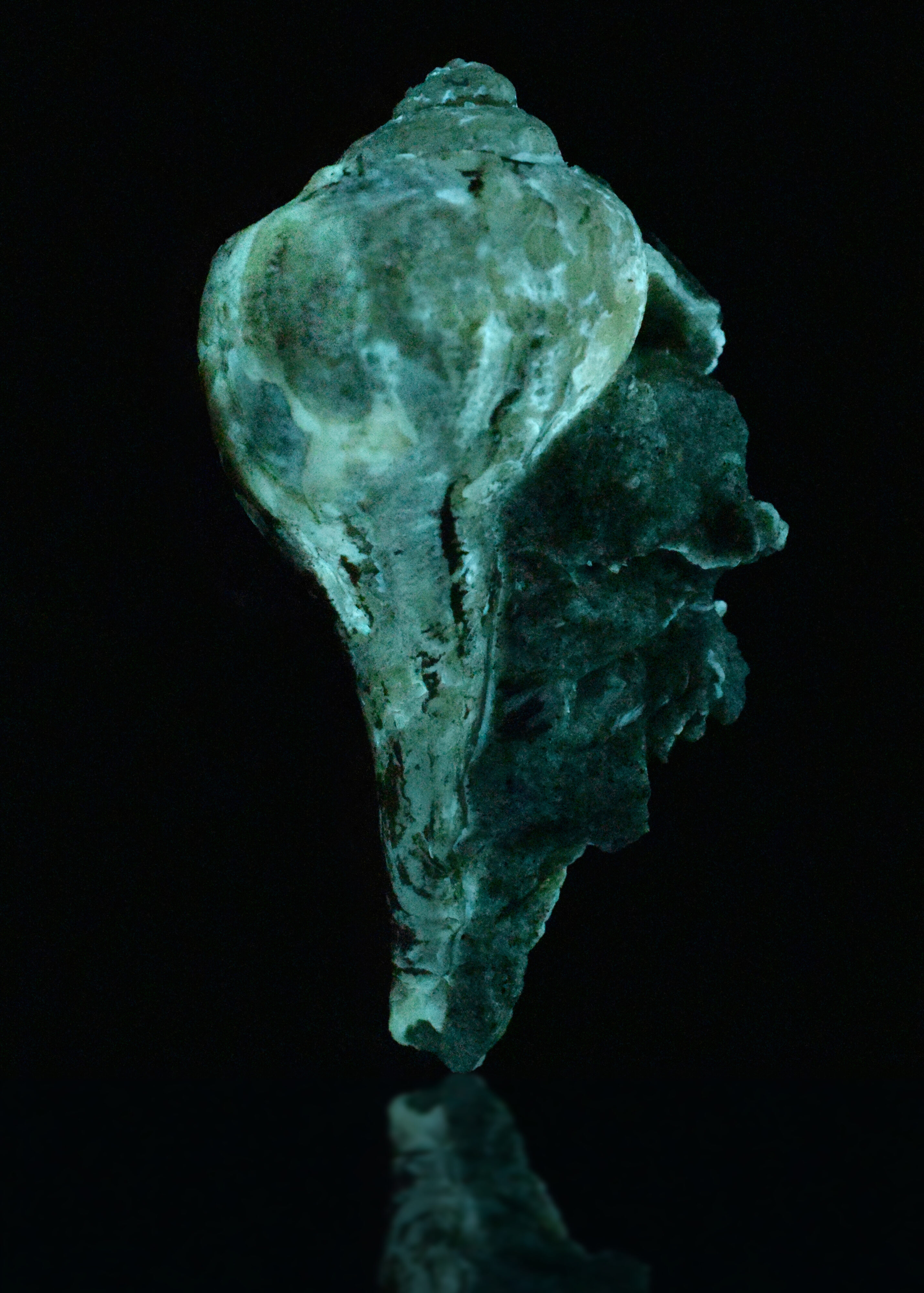
This is a fluorescent, Pleistocene age (approx. 1-2 Ma) Busycon rucksorum whelk fossil from the famous Rucks\'' Pit site in Fort Drum, Florida. These fossils occur in the Fort Drum Member of the Nashua Formation, which is exposed in Rucks' Pit in Okeechobee County. Busycon whelk fossils are less common at Rucks' Pit than the recrystallized Mercenaria clams. Rucks' Pit is best known for producing clam fossils of the species Mercenaria permagna, which often feature beautifully crystallized scalenohedral calcite. During the fossilization process of these gastropods, the calcium carbonate from the original shell material dissolved and recrystalized as light tan to honey-colored calcite. The resulting calcite is brightly fluorescent under all wavelengths of UV and also displays a short-lived phosphorescence. The shell is encrusted with small amounts of coquina from which it was removed.
Originally posted by Chris Clemens on Nature's Rainbows in 2020.
Summary of luminescence responses:
Calcite (Mindat) (RRUFF)
- Fluorescence under Longwave (365nm LED) UV light: White
- Afterglow after exposure to Longwave (365nm LED) UV light: Green
- Fluorescence under Shortwave (254nm Lamp/Mercury) UV light: Yellow
- Afterglow after exposure to Shortwave (254nm Lamp/Mercury) UV light: Blue
- Fluorescence under Longwave (365nm LED) UV light: White
- Fluorescence under Shortwave (254nm Lamp/Mercury) UV light: White