
Bird\'s Eye Sphalerite from Balmat, New York
Contributed by: Michael Crawford
Date: Dec 2nd, 2025
Locality: Empire State No. 4 Mine, Balmat, Fowler, St. Lawrence County, New York, USA (See on Mindat)
Size: 7 x 12 cm
Description:
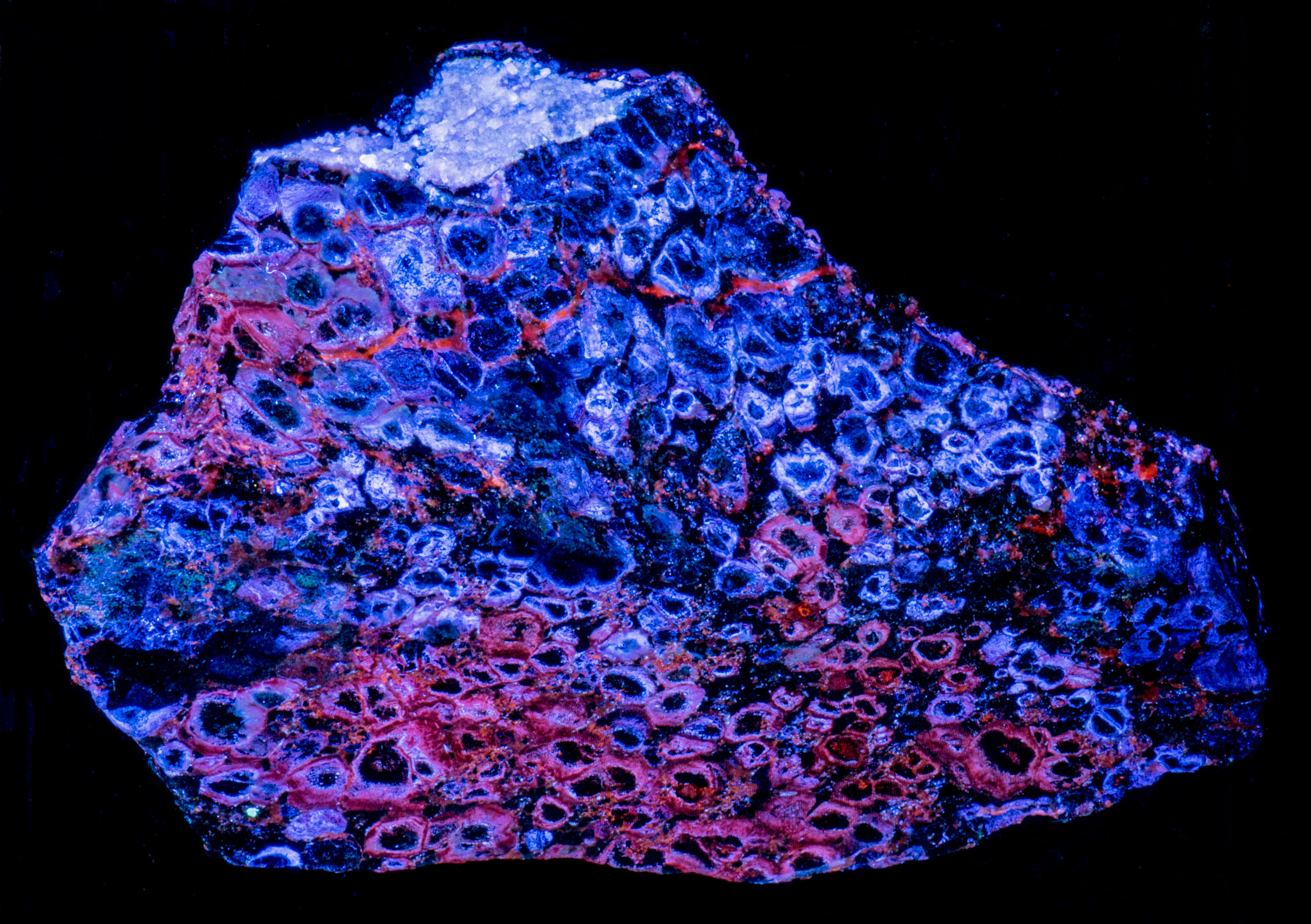
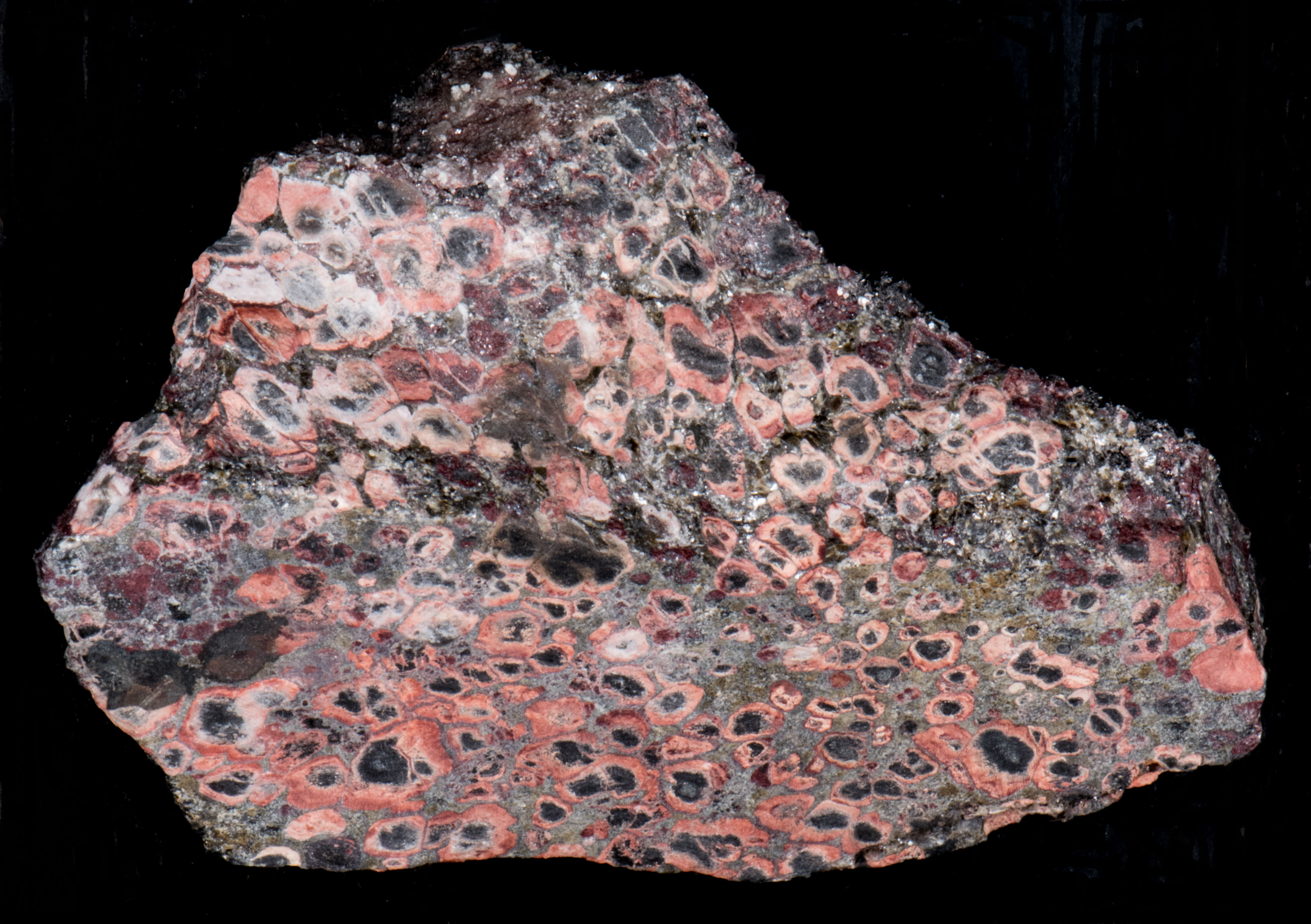
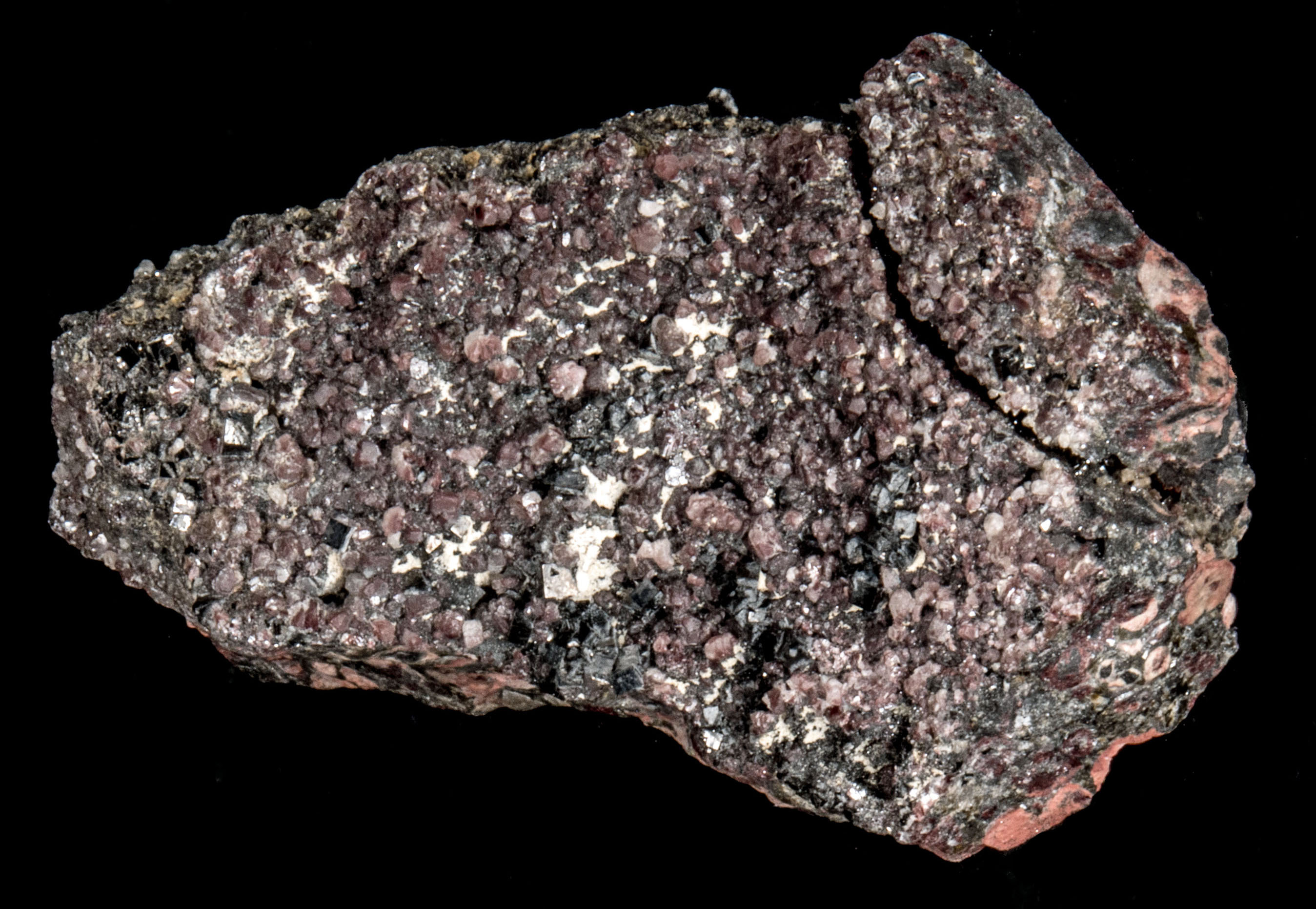
A specimen of “bird’s eye” sphalerite from the 2500 ft level of the ZCA Mine No. 4 (Empire State), Balmat, St. Lawrence County, New York. The specimen exhibits the classic “bird’s eye” structure that I think is unique to this mine. The bird’s eye structure is a rounded grain of black magnetite surrounded by a halo of sphalerite. I was not able to find any reference material on how the bird’s eye structure forms. I speculate that there was some mechanical tumbling of early formed magnetite crystals in the hydrothermal fluid that rounded the crystals. The fluid changed composition to deposit sphalerite and the tumbling continued keeping the round structure of the magnetite and surrounding sphalerite. The eyes got locked in place when more sphalerite and other minerals precipitated and filled remaining voids between the eyes.
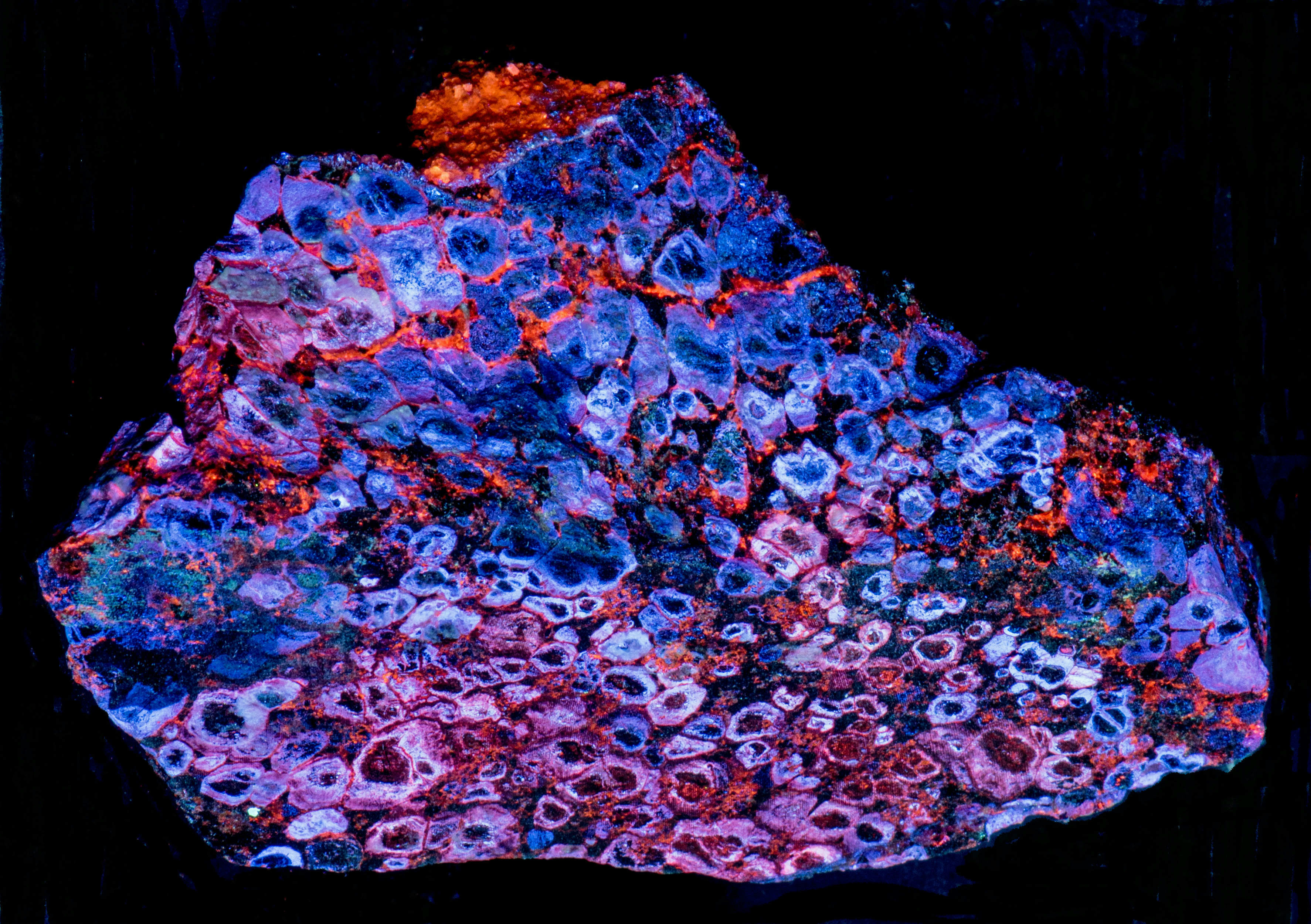
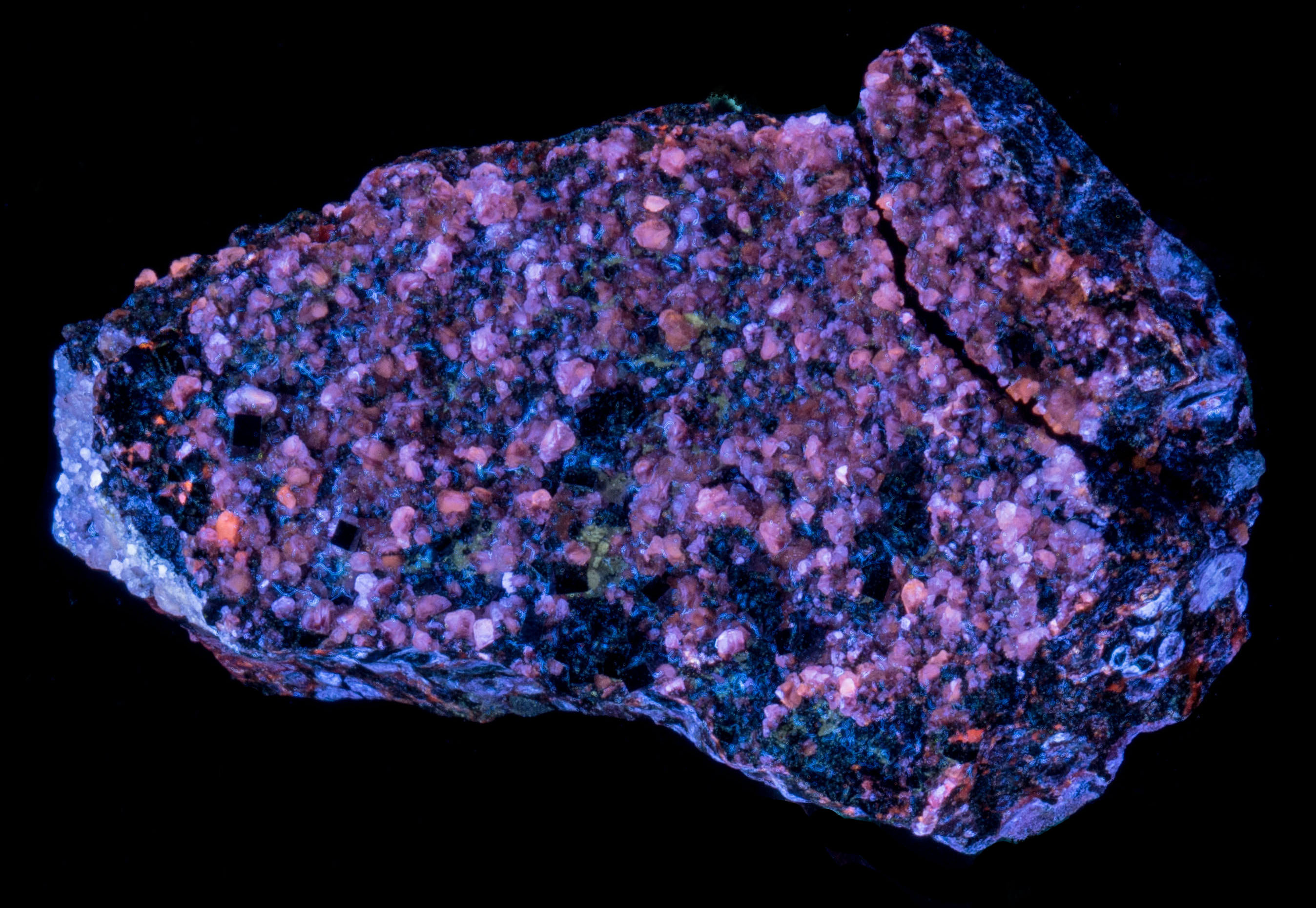
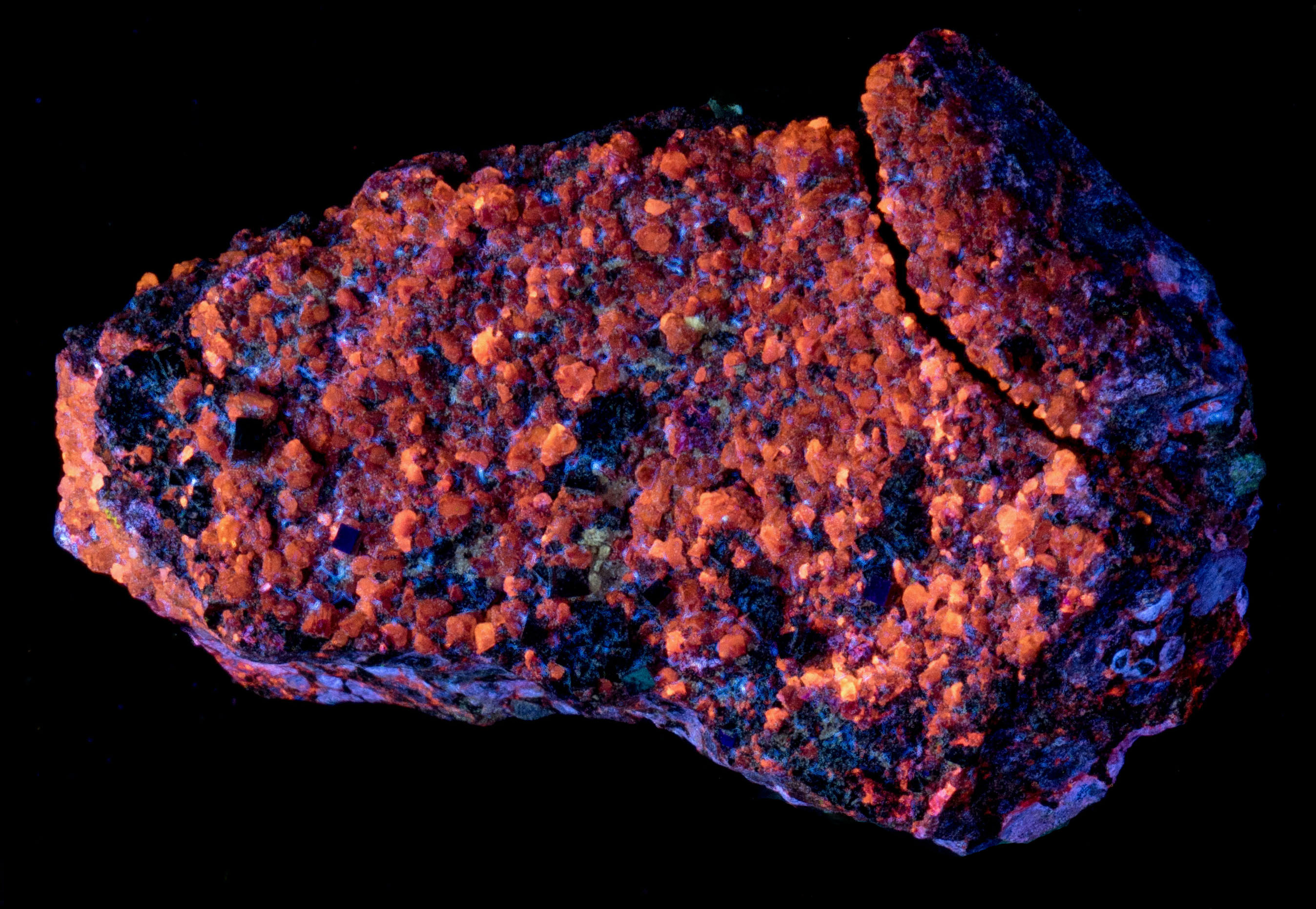
Some of the sphalerite rings fluoresce violet and blue, other rings fluoresce orange and pink. The fluorescent colors are more vivid under midwave illumination and dimmer under shortwave light. The bird’s eye sphalerite in the specimen has no afterglow.
There are also veins of sphalerite that fluoresce orange that cut across the specimen and an exposed vein at the top of the specimen that fluoresces violet blue and has long lasting afterglow. The exposed vein that was violet blue under longwave light is orange under midwave and shortwave light.
The back side of the specimen has crystalline sphalerite that fluoresces violet, blue, and pink and has afterglow from exposure to longwave light. The crystalline sphalerite changes fluorescent color to orange under midwave and shortwave light and there is no afterglow from these wavelengths.
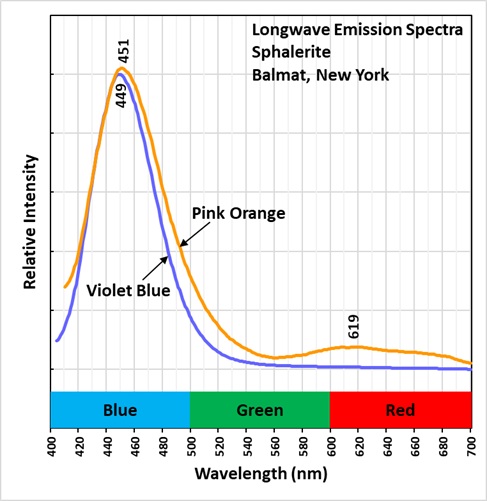
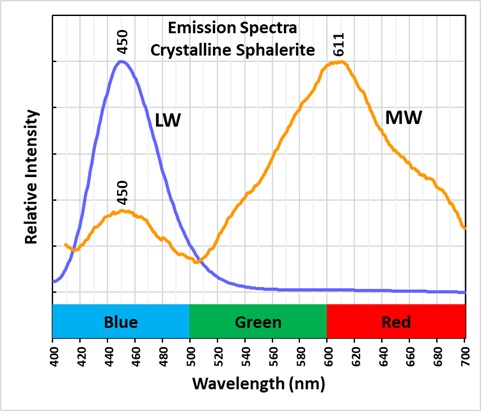
Sphalerite is a semi-conductor. The band gap between the valance band and the conduction band is narrow enough that electrons can move to the conduction band when sphalerite is exposed to UV light. When the electrons return to the valance band, blue photons are emitted. The emission spectrum of this blue fluorescence peaks at 450 nm. For more details on semiconducting minerals and band transitions see the article by Glenn Waychunas, in the 2020 FMS Journal.
Manganese replacing zinc in the activates the orange fluorescence. It takes less energy to create this manganese activated fluorescence, so the light emitted is at a longer wavelength. The longwave emission spectrum of this orange fluorescence is a broad peak with maxima around 619 nm The 450 nm peak is still present in the emission of the orange, fluorescent sphalerite.
The crystalline sphalerite in the exposed vein and on the back side of the specimen has a more profound color change from longwave illumination to midwave and shortwave illumination. The fluorescent color changes from violet blue to orange. The longwave emission spectrum has a strong peak with a maximum at 450 nm. The spectrum of the midwave emission has a broad peak with a maximum at 611 nm. The emission retains some of the violet blue fluorescence with the 450 nm peak.
Summary of luminescence responses:
Sphalerite (Mindat) (RRUFF)
- Fluorescence under Longwave (365nm LED) UV light: Violet
- Fluorescence under Longwave (365nm LED) UV light: Pink
- Fluorescence under Midwave (305nm LED) UV light: Orange
- Fluorescence under Shortwave (255nm LED) UV light: Orange