
Kyanite from Russia
Contributed by: Michael Crawford
Date: Sep 6th, 2025
Locality: Borisovskie Sopki kyanite deposit (incl. Kyanitovaya pit), Plast, Plastovsky District, Chelyabinsk Oblast, Russia (See on Mindat)
Size: 5.5 x 7 cm
Description:
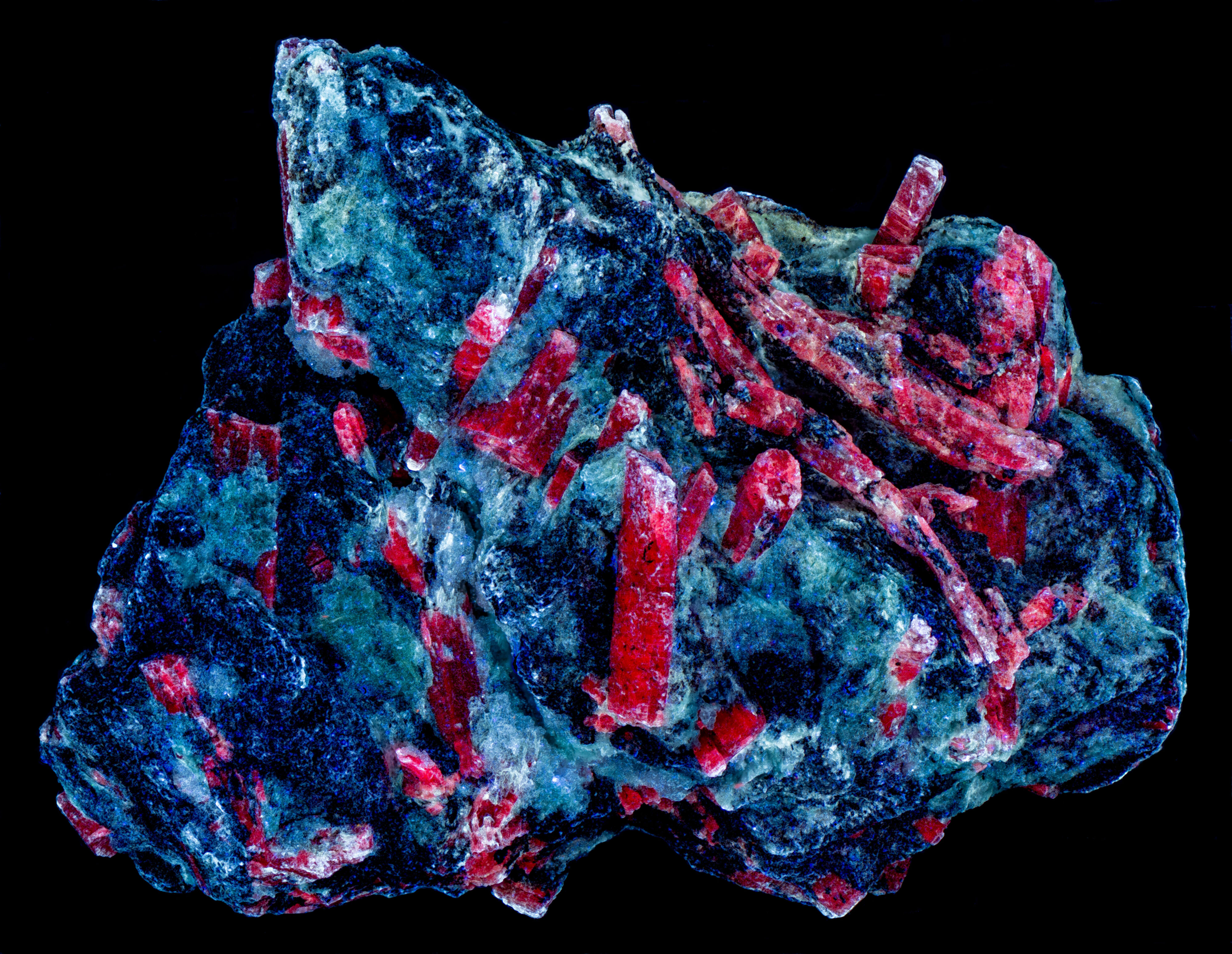
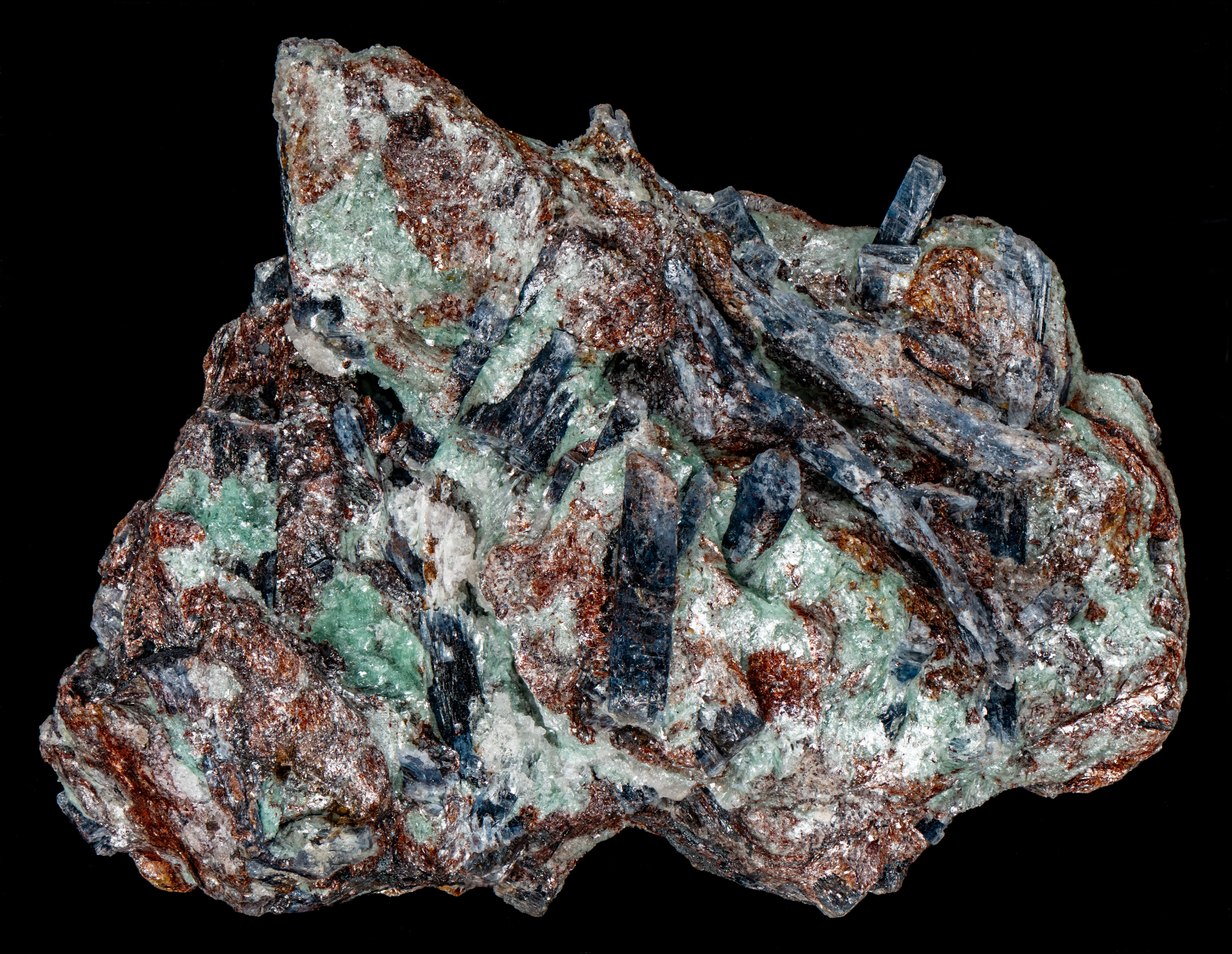
Dark blue kyanite crystals in a mica schist matrix from the Borisovskie Sopki Deposit, Plast, Plastovsky District, Chelyabinsk Oblast, Russia. The schist matrix contains green fuchsite, a chromium bearing variety of muscovite (K(Al,Cr)3Si3O10(OH)2)). The kyanite fluoresces red under longwave UV light. It is non-fluorescent under midwave and shortwave UV light.
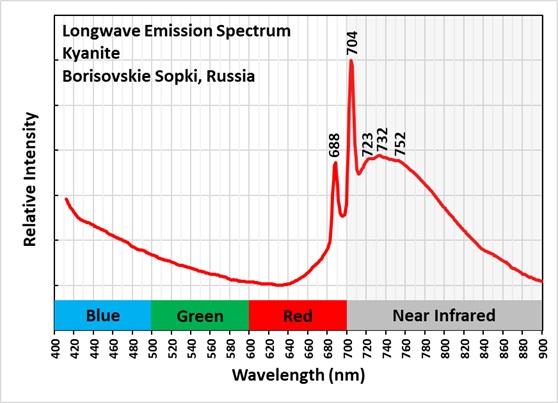
The emission spectrum has two large very sharp peaks at 688 nm and 704 nm. These sharp peaks are superimposed on a broader peak. Most of this broader peak is in the near infrared with a maximum around 732 nm. The fluorescence is activated by chromium (Cr3+) replacing aluminum (Al3+). According to fluomin.org, there are three different aluminum sites in kyanite where chromium can substitute that are responsible for the sharp and broad peaks in the emission spectrum.
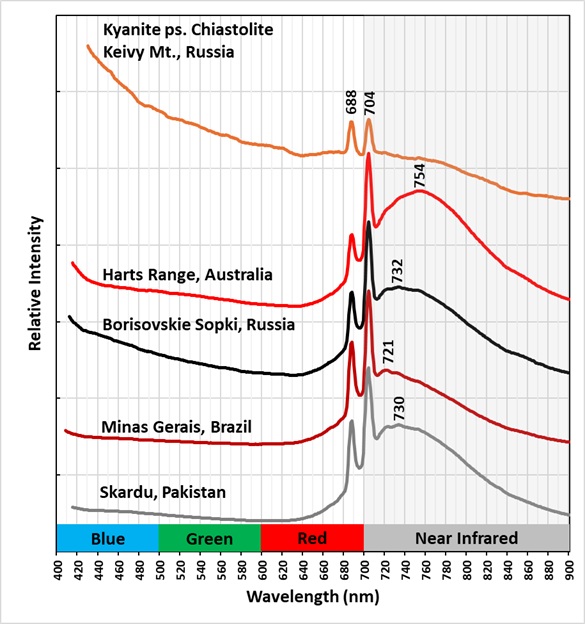
A comparison of the emission spectra of kyanite specimens from other locations show that the sharp peaks at 688 nm and 704 nm are present in all the spectra. However, the maximum of the broad near infrared peak is different in all specimens. The cause of this difference needs further study.
Summary of luminescence responses:
Kyanite (Mindat) (RRUFF)
- Fluorescence under Longwave (365nm LED) UV light: Red