
Marshite from the Rubtsovsk Mine, Russia
Contributed by: Michael Crawford
Date: Sep 2nd, 2025
Locality: Rubtsovsk Mine, Rubtsovsky District, Altai Krai, Russia (See on Mindat)
Size: 3 x 3 cm
Description:
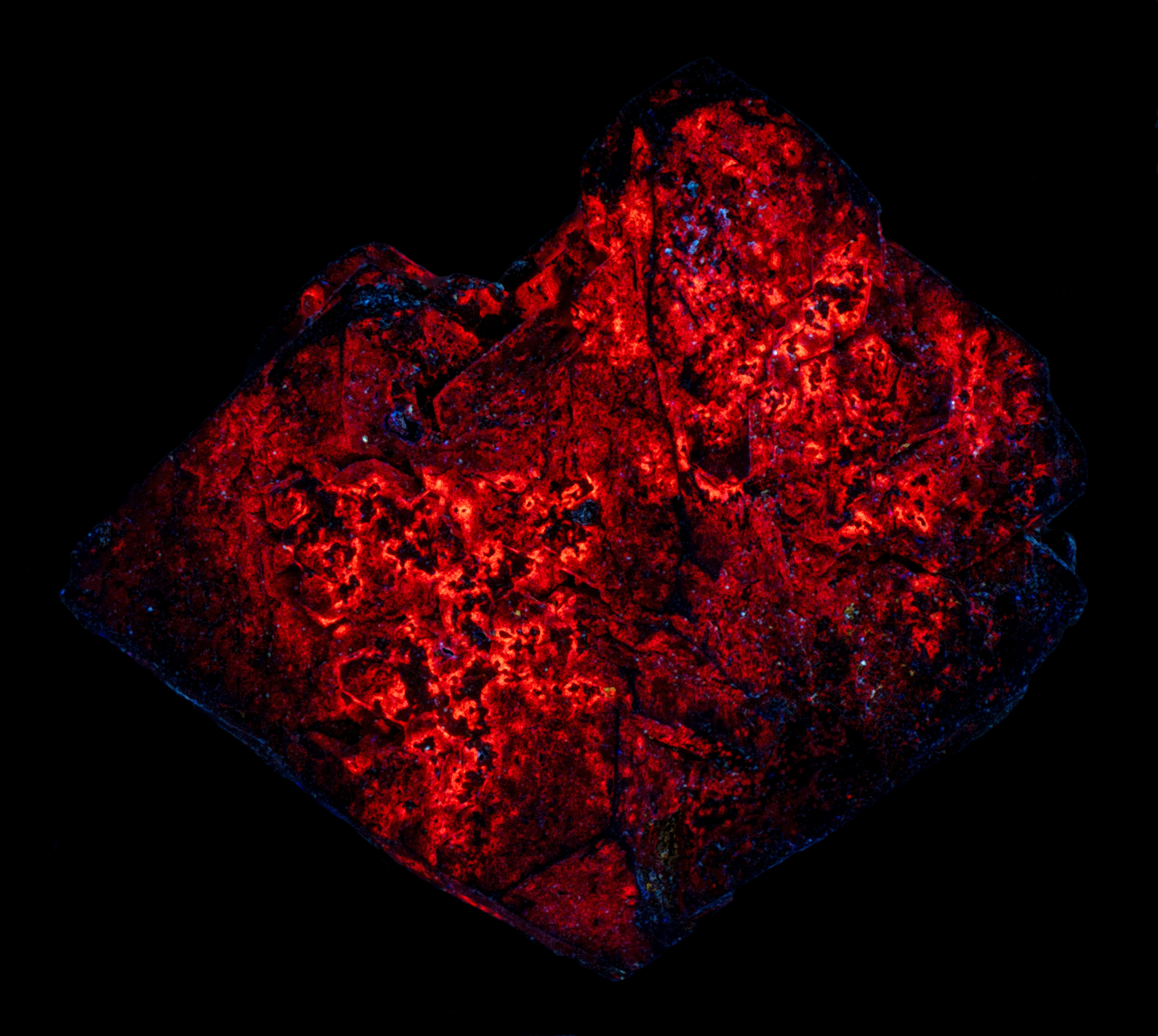
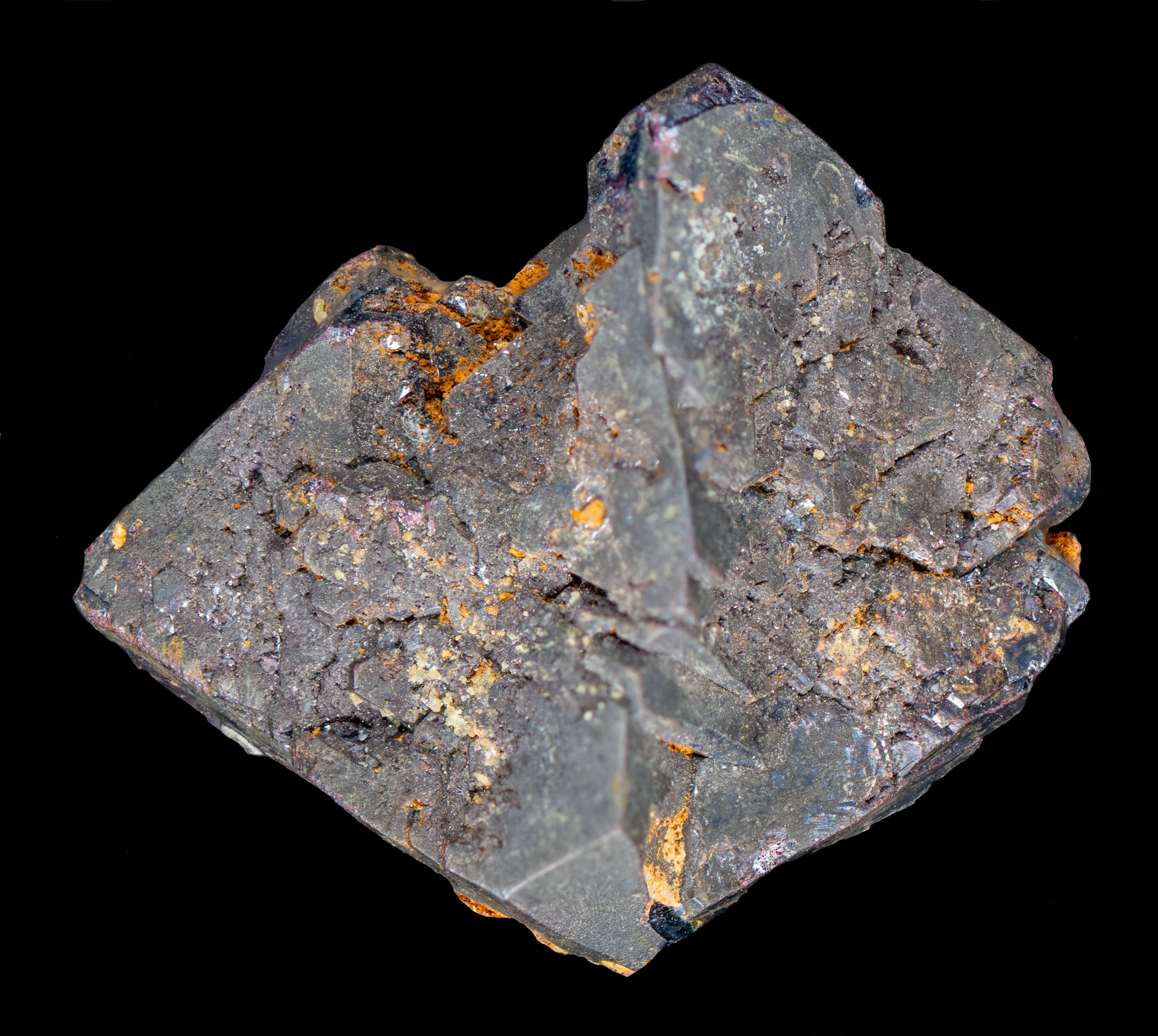
A thumbnail specimen of marshite (CuI) coating a cuprite (Cu2O) crystal. Marshite is an uncommon copper iodide mineral. This marshite and cuprite specimen comes from the Rubtsovsk Mine, Altai Krai, Russia. Marshite and cuprite formed in the oxidized zone of a massive sulfide deposit of zinc-lead-copper ores. The red fluorescence of marshite is brightest under longwave illumination. It also fluoresces under midwave and shortwave UV light, but it is much dimmer.
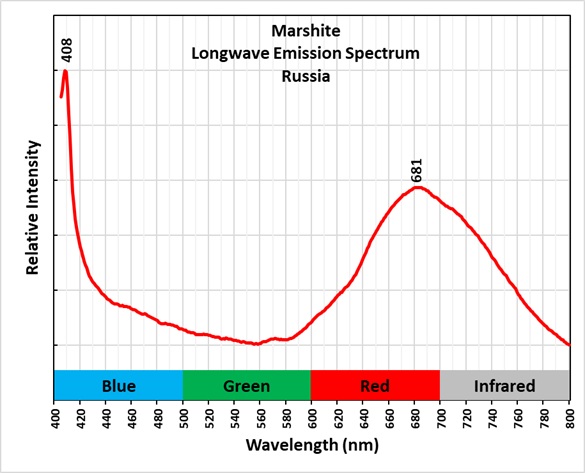
It is very unusual for a copper mineral to fluoresce. Copper ions have two oxidation states. Cupric copper (Cu2+) is the most common oxidation state and the most stable form. Cupric copper is usually a quencher of fluorescence. Cuprous copper (Cu+) is the second oxidation state, and it is the ion that bonds to iodine to form marshite. Marshite’s red fluorescence is intrinsic due to the cuprous ion. The longwave emission spectrum is unique. It has a sharp violet peak with a maximum at 408 nm and the broad peak in the red region with a maximum at 681 nm.
Summary of luminescence responses:
Marshite (Mindat) (RRUFF)
- Fluorescence under Longwave (365nm LED) UV light: Red