
Arctite, Fluorapatite, Sodalite and Microcline from the Koashva Mine, Murmansk Oblast, Russia
Contributed by: Michael Crawford
Date: Aug 26th, 2025
Locality: Koashva Open Pit, Koashva Mt, Khibiny Massif, Murmansk Oblast, Russia (See on Mindat)
Size: 13 x 13 cm
Description:
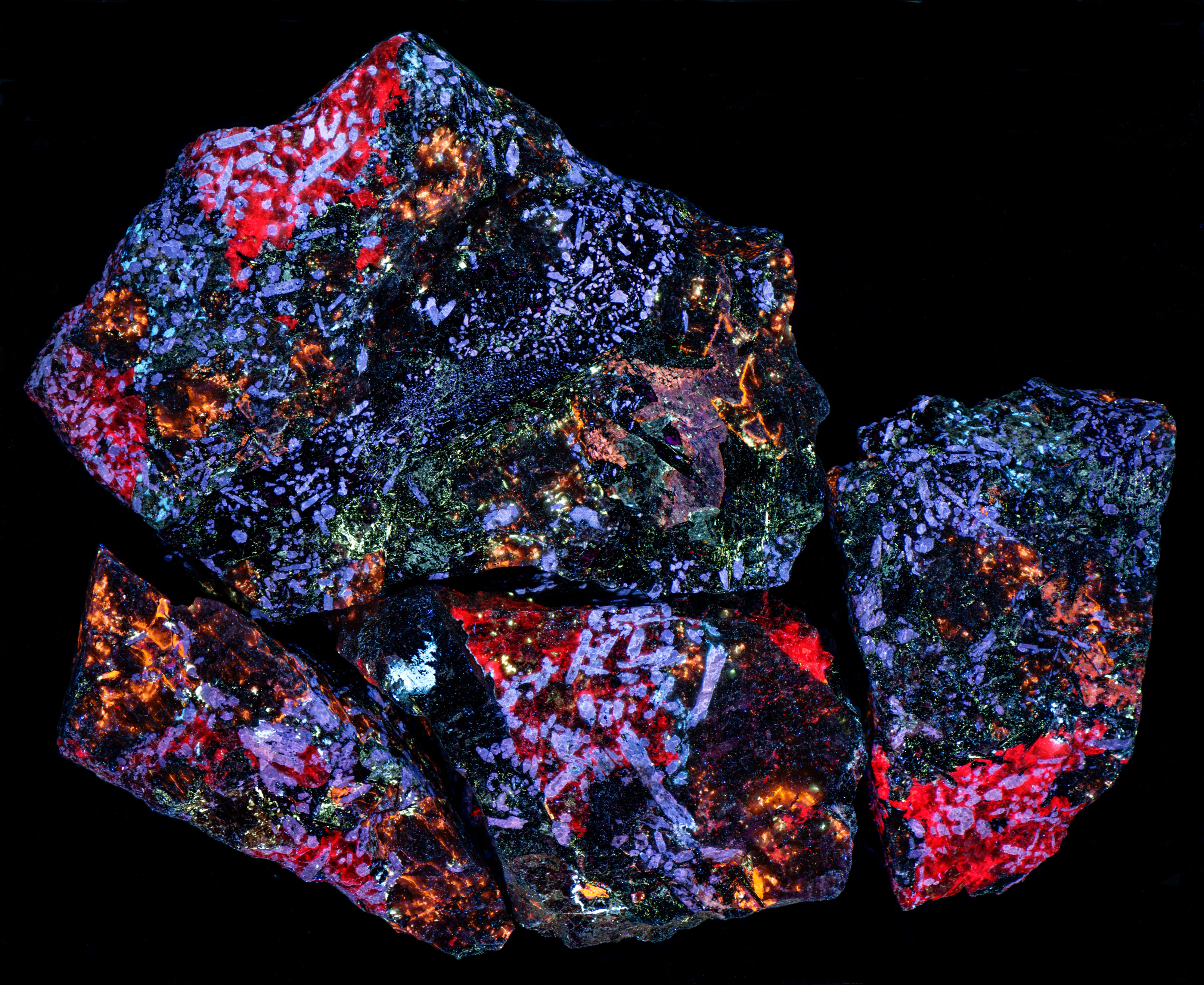
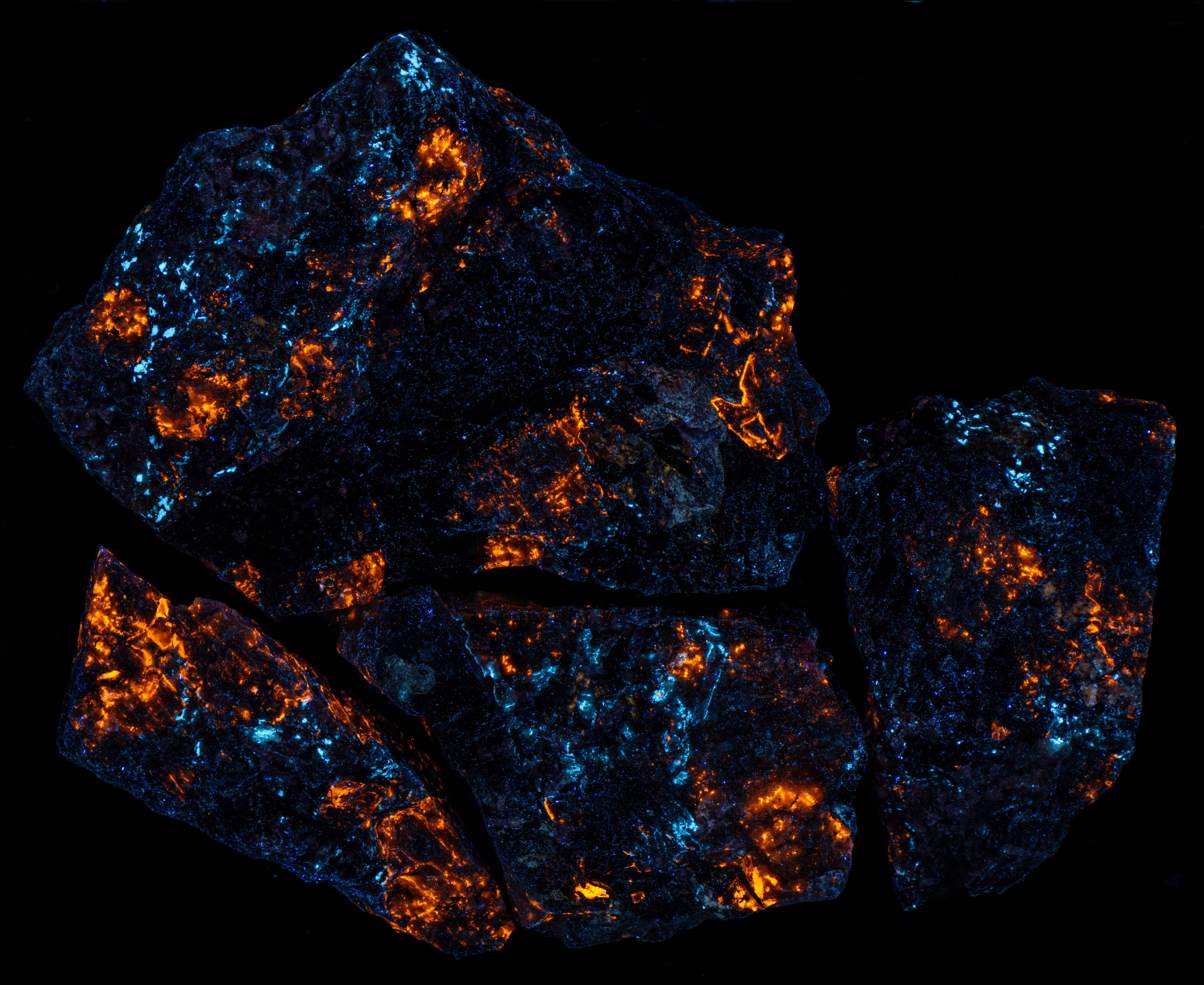
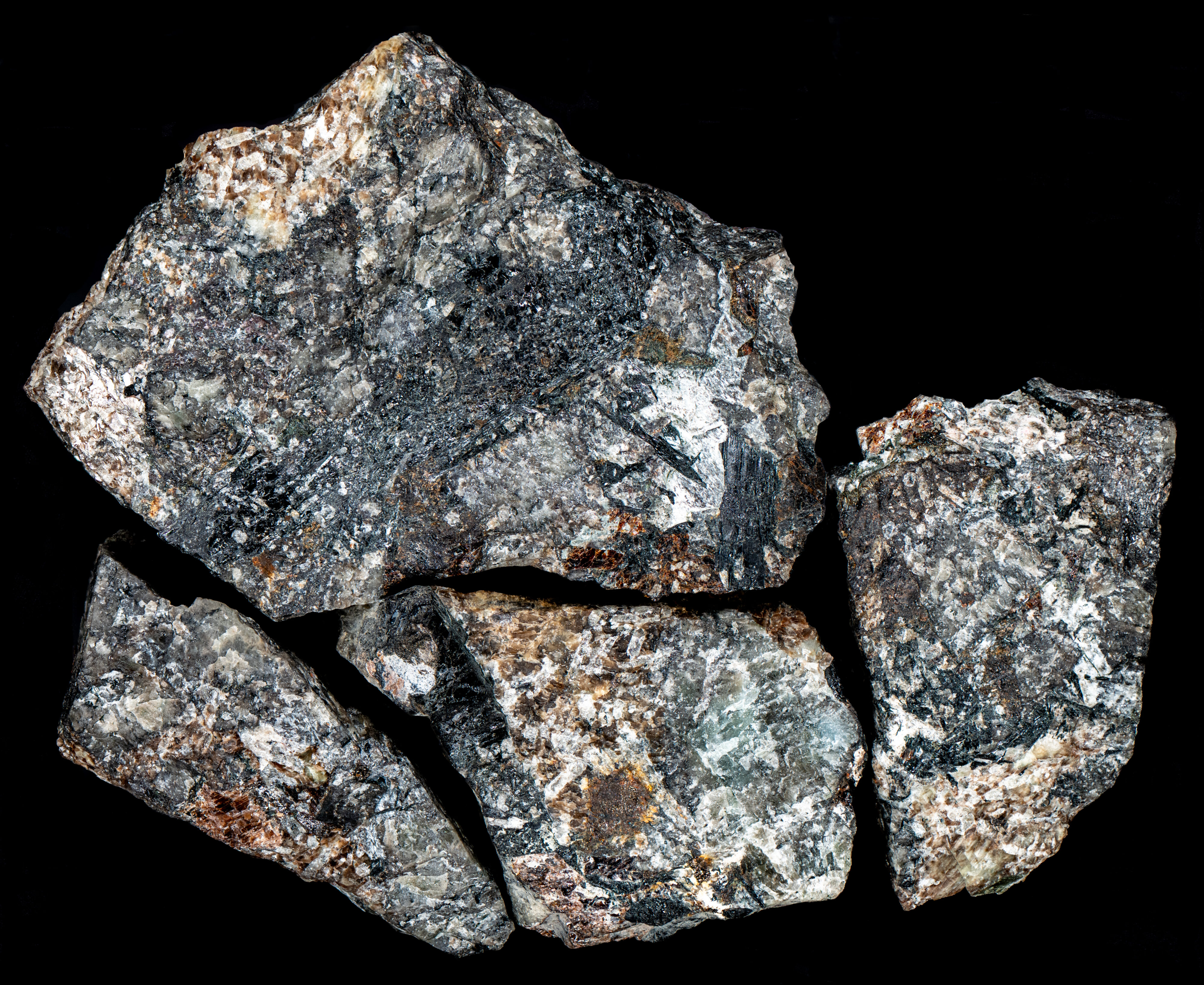
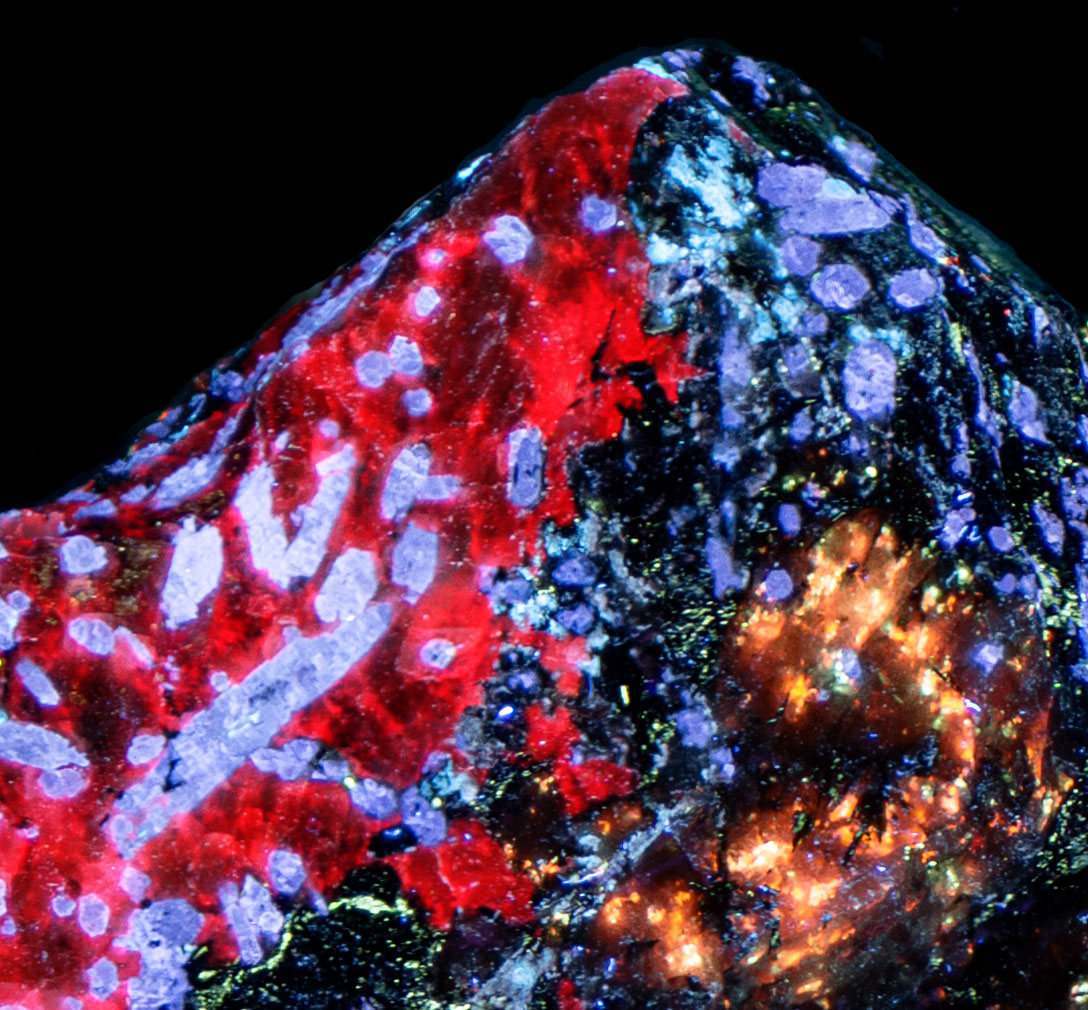
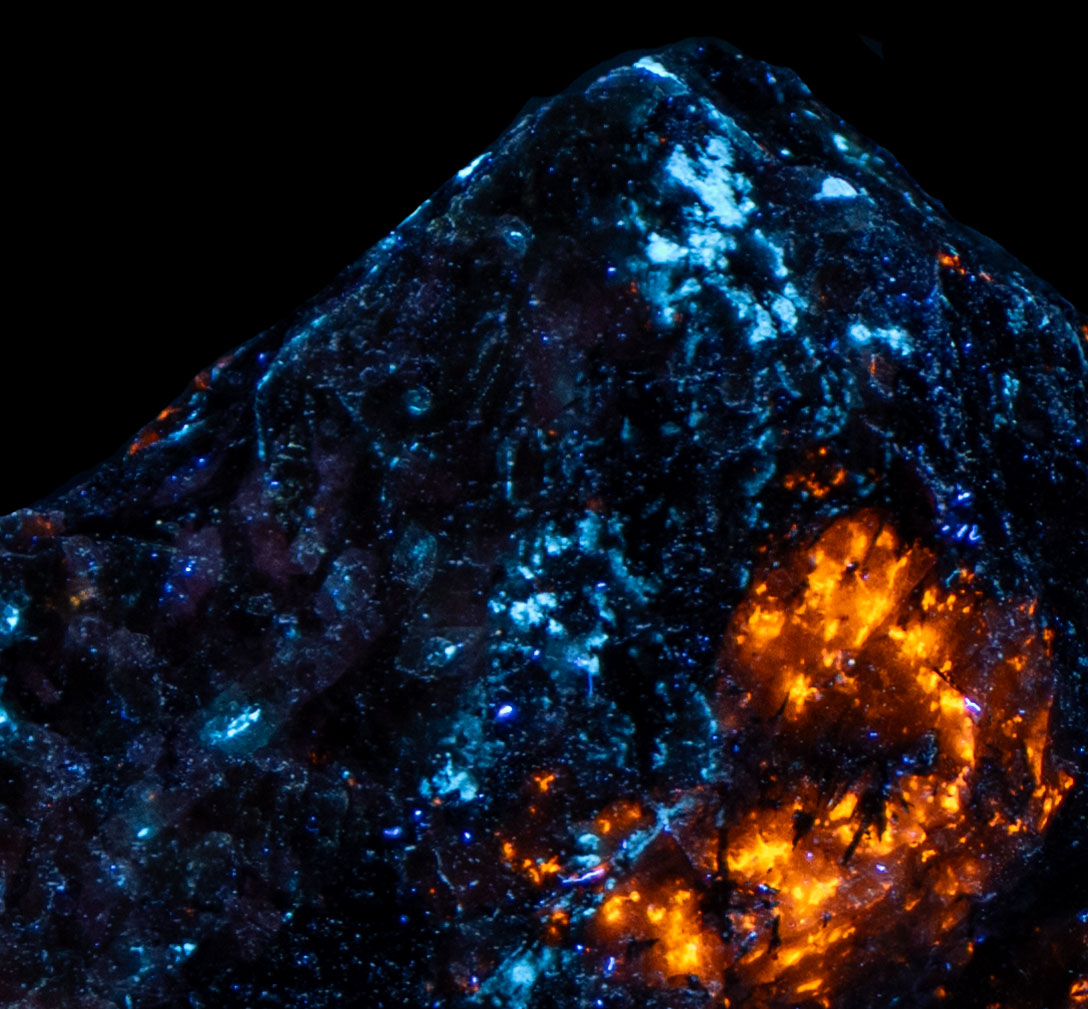
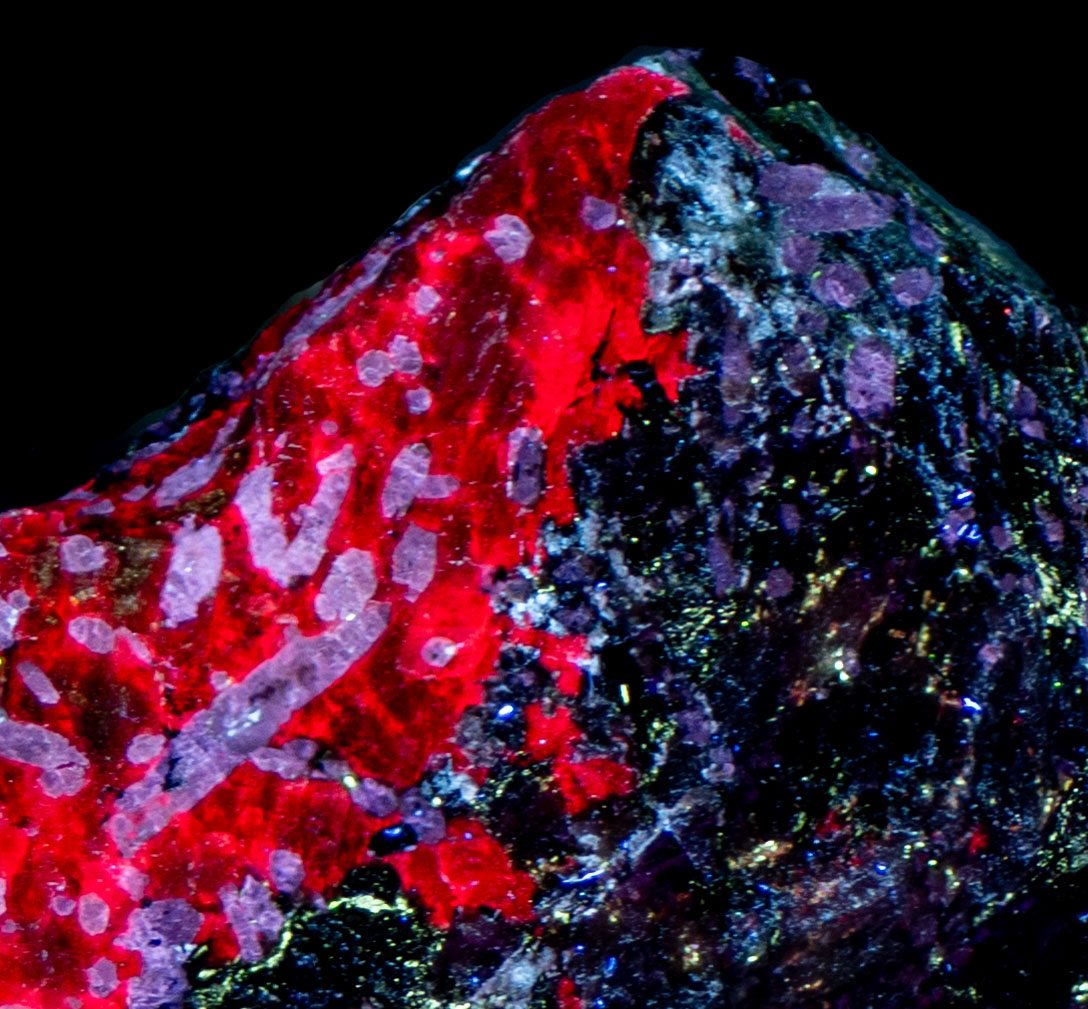
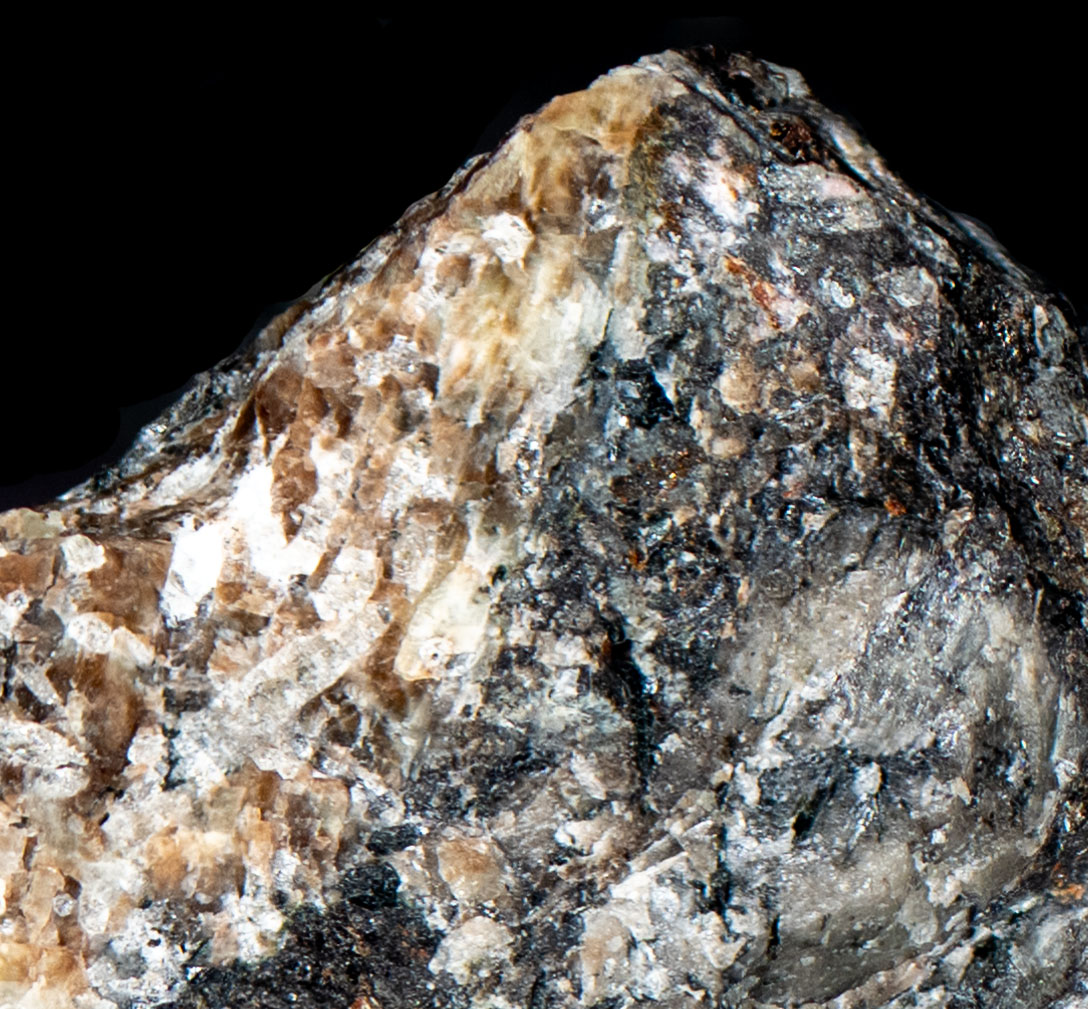
This is a mini display of several specimens from the Koashva Open Pit Mine, Koashva Mountain, Khibiny Massif, Murmansk Oblast, Russia. This mine extracts phosphate from fluorapatite that is used for fertilizer. These specimens would not make a good display because the bright fluorescent minerals occur as small grains and the other fluorescent minerals are not that bright. These specimens are interesting because they contain at least four fluorescent minerals and possibly more. One of the fluorescent minerals is the uncommon mineral, arctite (Na2Ca4(PO4)3F). Arctite’s chemistry is similar to the chemistry of fluorapatite (Ca5(PO4)3F). Arctite fluoresces a bright bluish white under longwave illumination, and it occurs as small grains in the specimens. Arctite is dimmer under midwave light and non-fluorescent under shortwave light.
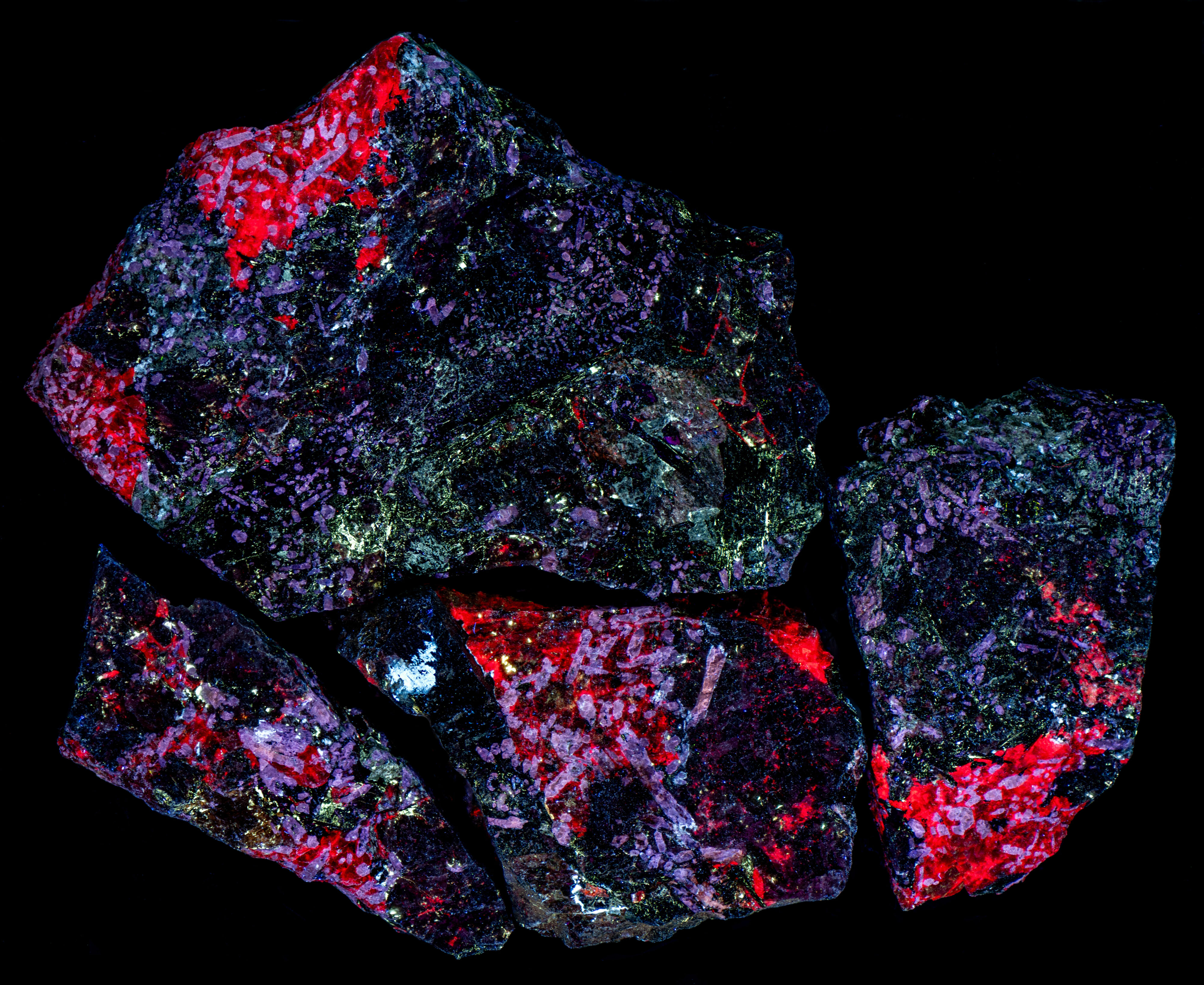
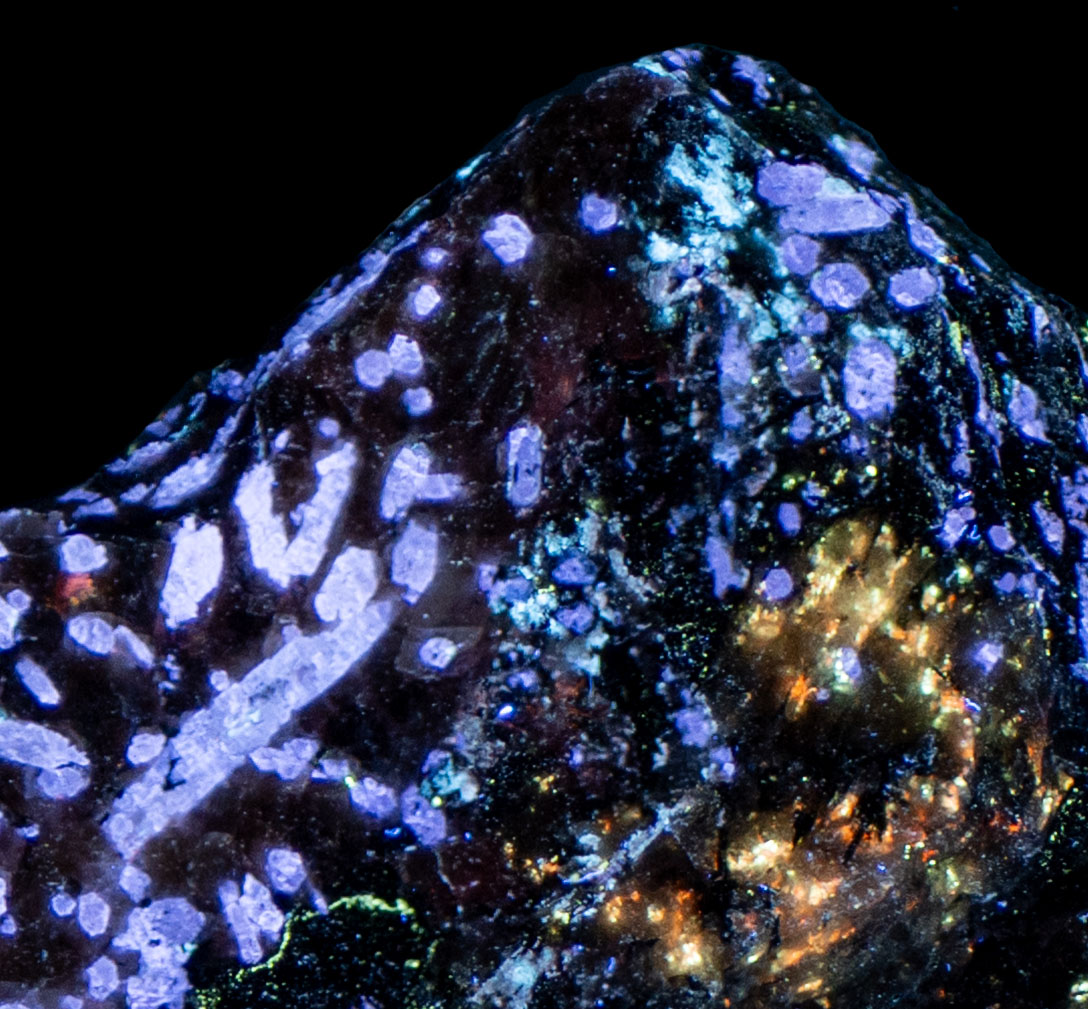
Orange fluorescing sodalite (Na4(Si3Al3)O12Cl) is also present. It is brightest under longwave UV light, much dimmer in MW and non-fluorescent in SW. Fluorapatite (Ca5(PO4)3F) is the most common fluorescent mineral in these specimens. It is modestly bright under midwave illumination, dimmer under shortwave and non-fluorescent under longwave. It has a violet color under midwave and shortwave UV light. The fourth identifiable fluorescent mineral is microcline (K(AlSi3O8)). The microcline fluoresces a dull red under shortwave UV illumination. The specimens also contain non-fluorescing black aegirine and brown lamprophyllite.
There is a patch of an unknown blue-white fluorescing mineral in the shortwave image. The shortwave image also contains greenish-gray, fluorescent grains of another unknown mineral that is also phosphorescent.
The first image is a digital composite of the longwave, midwave and shortwave images. Differing fluorescent intensities and different intensities of the longwave, midwave and shortwave UV lights prevented taking the image directly. Strong longwave UV lights and bright fluorescent minerals (arctite and sodalite) allowed the images to be taken with exposures of half a second. Long exposures (6 to 8 seconds) were needed to capture the midwave and shortwave images because of the weak fluorescence and less intense lights.
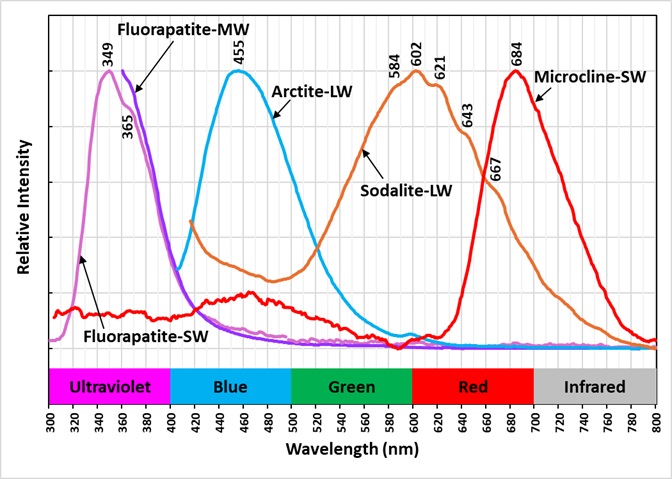
The last image shows the emission spectra of arctite, fluorapatite, sodalite, and microcline found in these specimens. The fluorapatite has very strong emission in the ultraviolet with a maximum at 349 nm. The shoulder of this emission extends into the visible region to create the violet fluorescence. The ultraviolet fluorescence of fluorapatite is activated by cerium (Ce3+) replacing calcium.
The arctite longwave emission spectra has broad peak with a maximum at 455 nm. The bluish white fluorescence is likely activated by europium (Eu2+) replacing calcium. The longwave sodalite emission spectrum shows the characteristic vibronic signature caused by disulfide ion replacing chlorine. The fourth spectrum in the plot is the shortwave emission spectrum of microcline. The microcline spectrum peaks in the red region with a maximum at 684 nm. Microcline can be differentiated from albite by this emission spectrum. The albite spectrum typically peaks in the near infrared around 720 nm. The microcline fluorescence is activated by ferric iron (Fe3+) replacing aluminum.

Summary of luminescence responses:
Arctite (Mindat) (RRUFF)
- Fluorescence under Longwave (365nm LED) UV light: Blue
- Fluorescence under Longwave (365nm LED) UV light: Orange
- Fluorescence under Midwave (305nm LED) UV light: Violet
- Fluorescence under Shortwave (255nm LED) UV light: Violet
- Fluorescence under Shortwave (255nm LED) UV light: Red