
Fluorite var. Antozonite – Wolsendorf, Germany
Contributed by: Michael Crawford
Date: Sep 19th, 2026
Locality: Wölsendorf, Schwarzach bei Nabburg, Schwandorf District, Upper Palatinate, Bavaria, Germany (See on Mindat)
Size: 11 x 4 x 13.5 cm
Description:
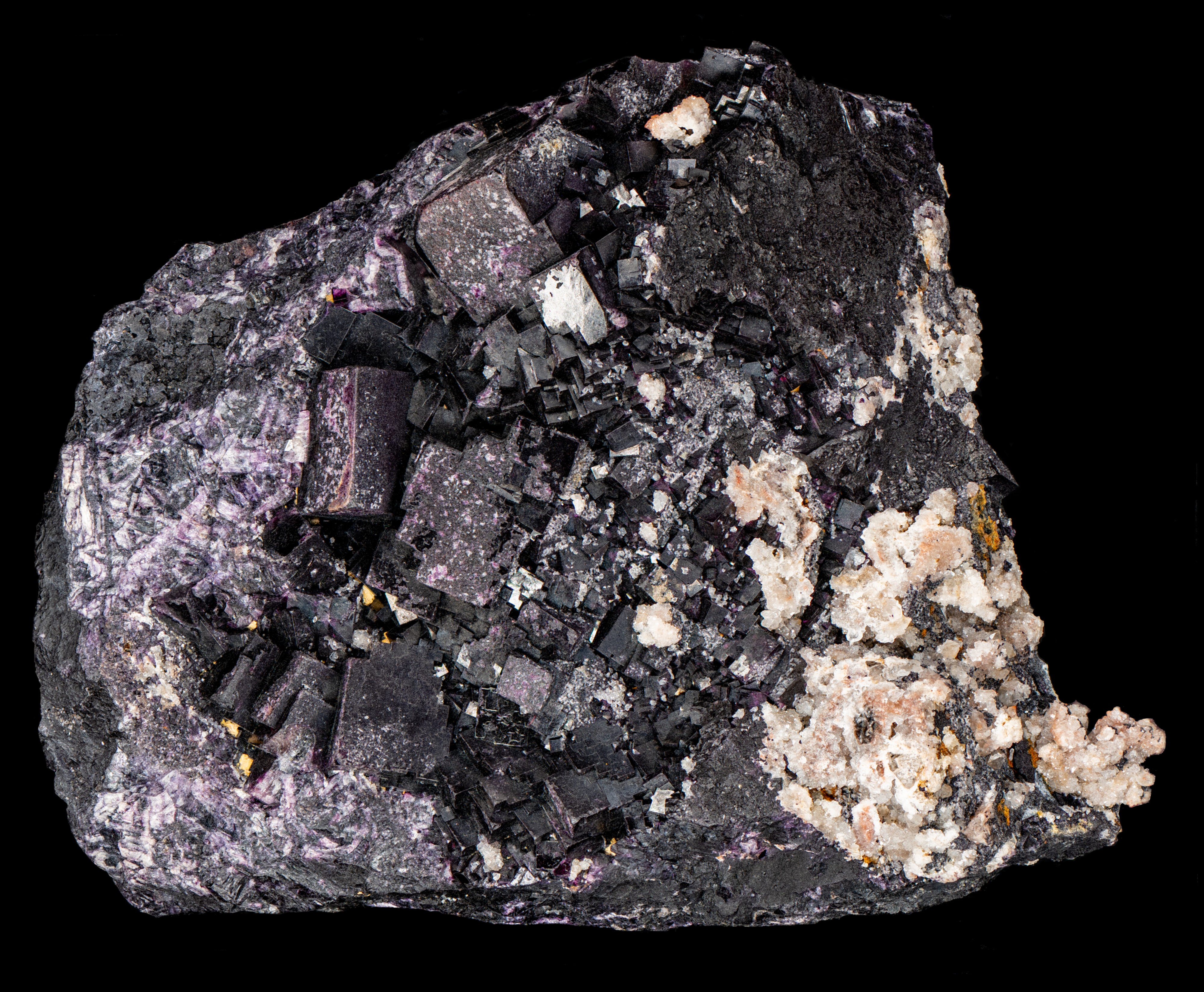
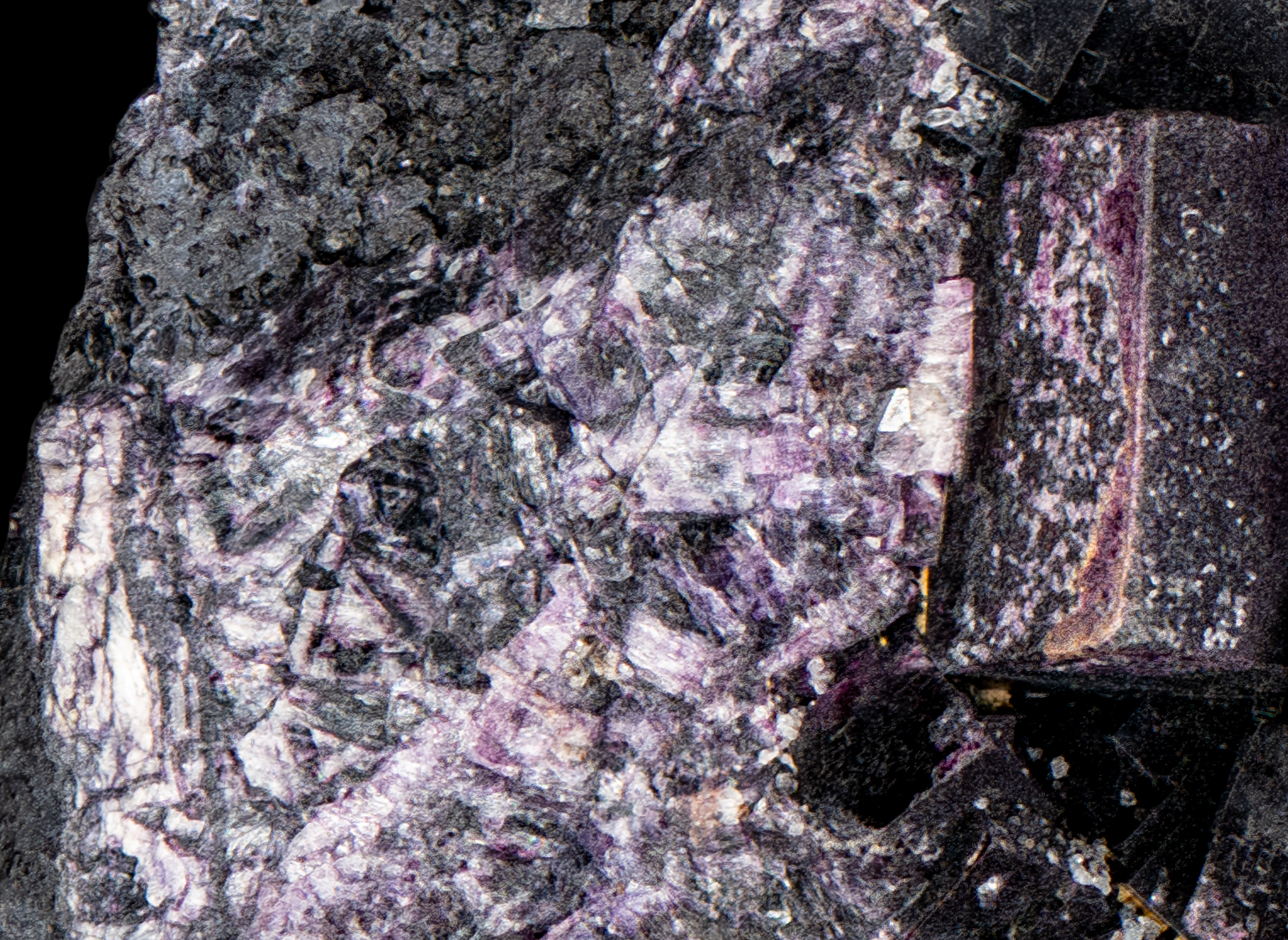
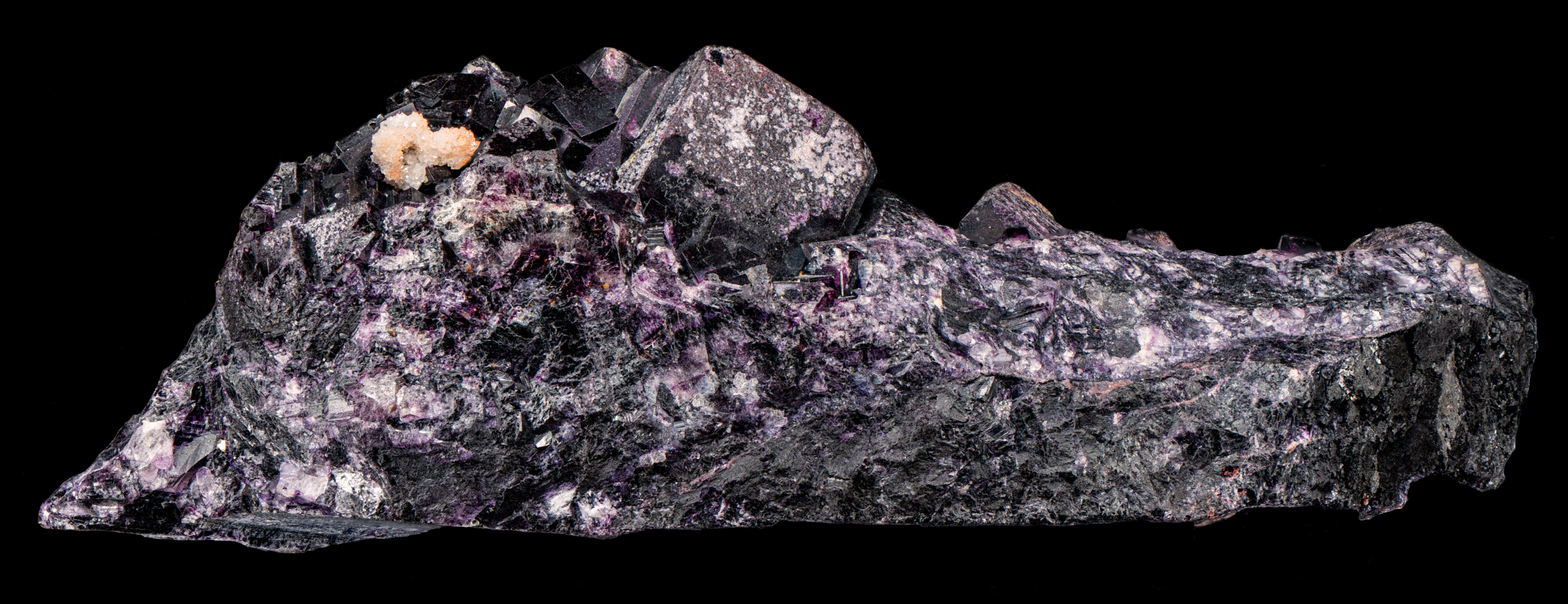
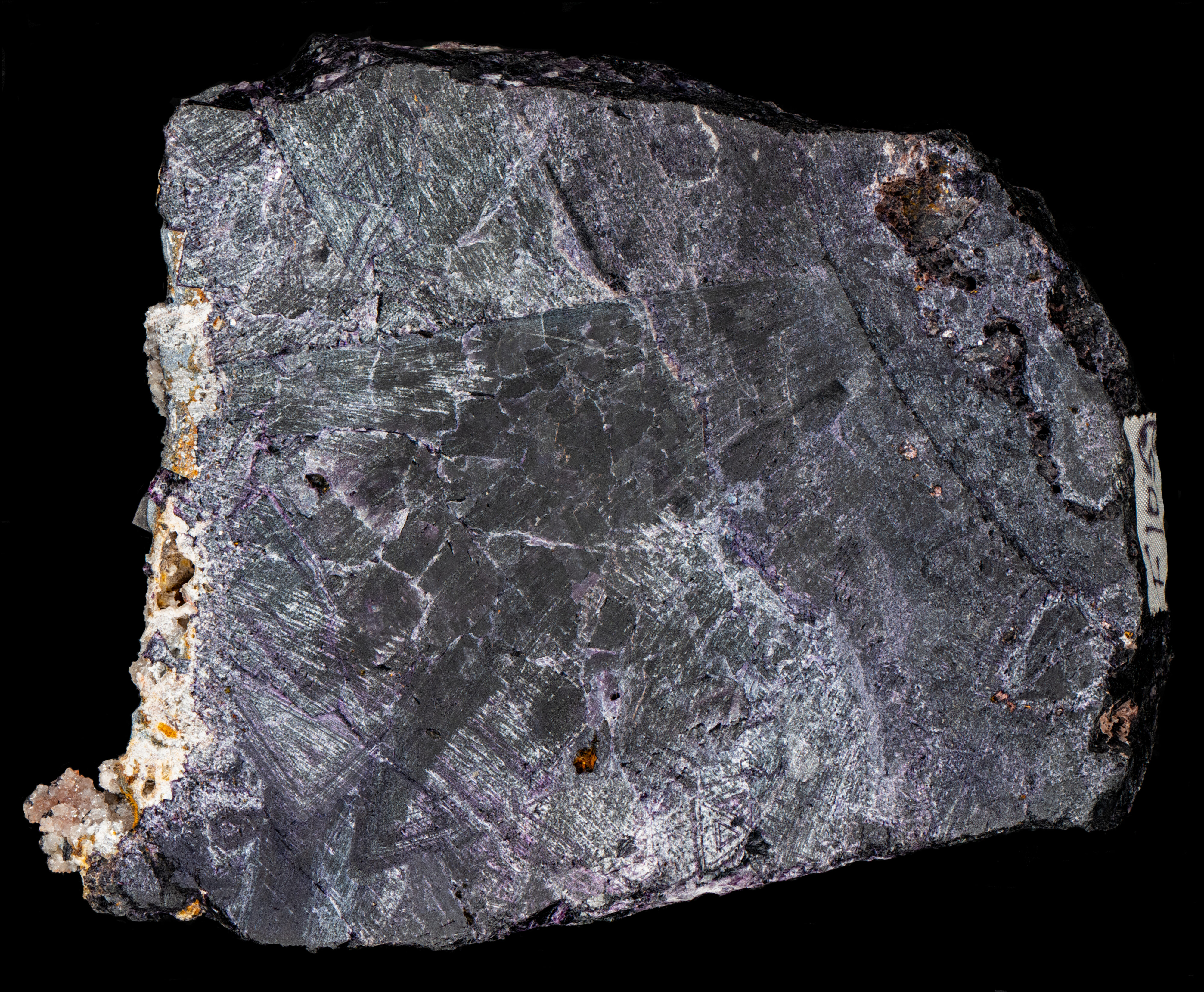
A dark purple-to-black specimen of fluorite var. antozonite from the Wölsendorf area of Bavaria, Germany. Antozonite is also called stinkfluss, stinkspat, stinkstein, stinkspar, or fetid fluorite. These "stinky%quot; names refer to the pungent, unpleasant odor released when the mineral is crushed; miners exposed to it reported headaches and sometimes vomiting. Crushing antozonite releases elemental fluorine gas, which reacts with atmospheric oxygen and water vapor to form hydrofluoric acid (HF) and ozone (O3). The odor's cause was debated for 200 years until Schmedt auf der Günne and colleagues (2012) used in situ Magic-Angle-Spinning - Nuclear Magnetic Resonance (MAS)-(NMR) spectroscopy to show that antozonite contains elemental difluorine trapped as occlusions of gas.
Antozonite is often associated with radioactive minerals, and this specimen is slightly radioactive (150 cpm). Natural radioactivity broke fluorite (CaF2) into its constituent elements. Colloidal calcium—clusters of elemental calcium—produces antozonite's purple-to-black color. The elemental fluorine forms fluorine gas (F2) that remains in minute inclusions, isolated from the calcium by nonreactive fluorite.
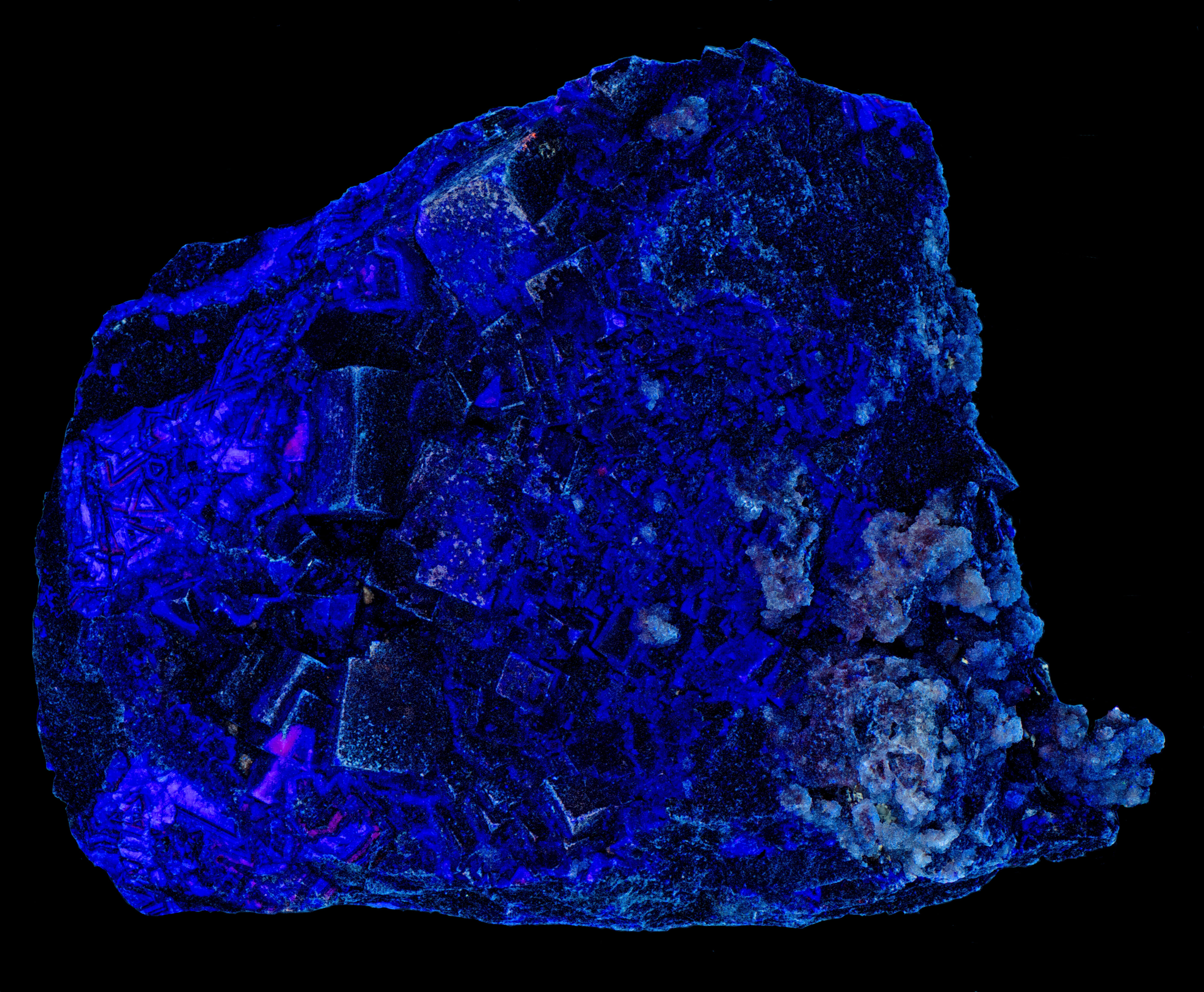
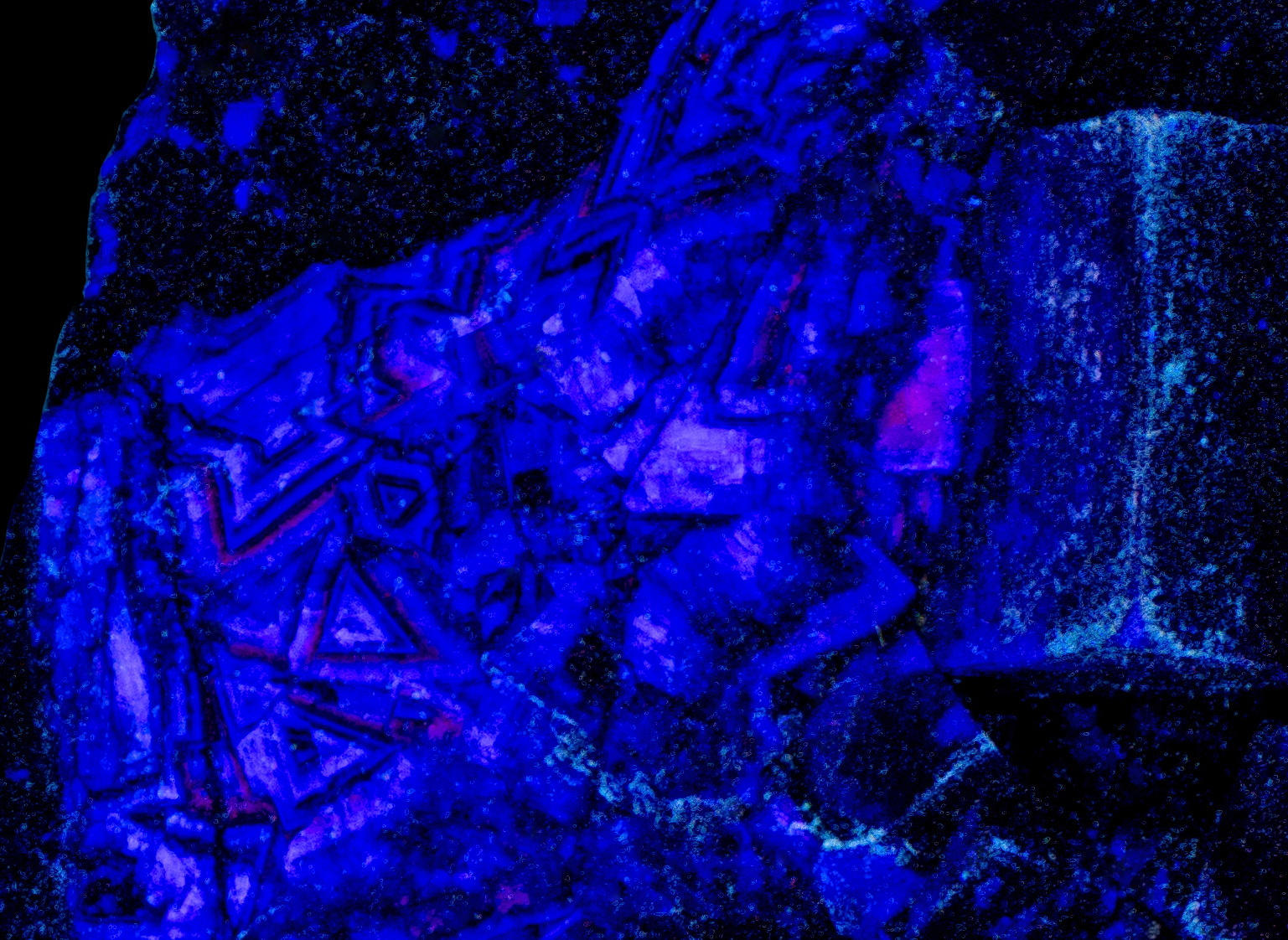
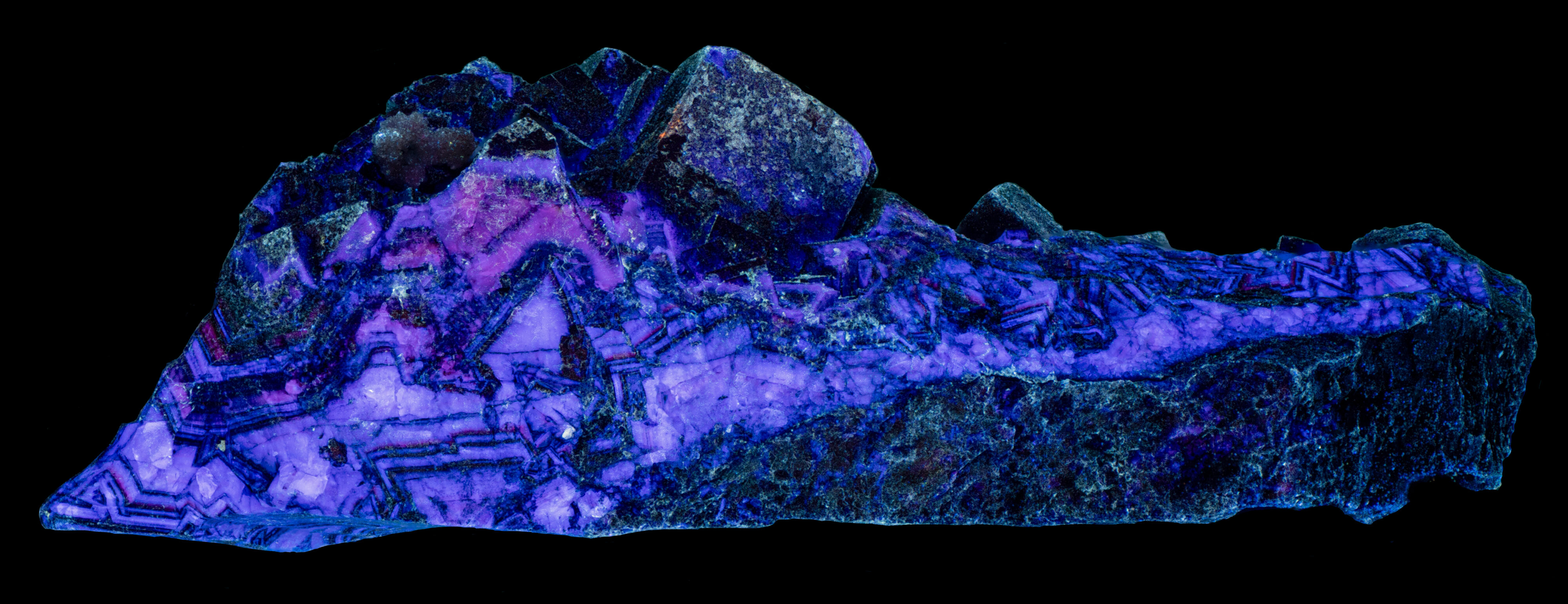
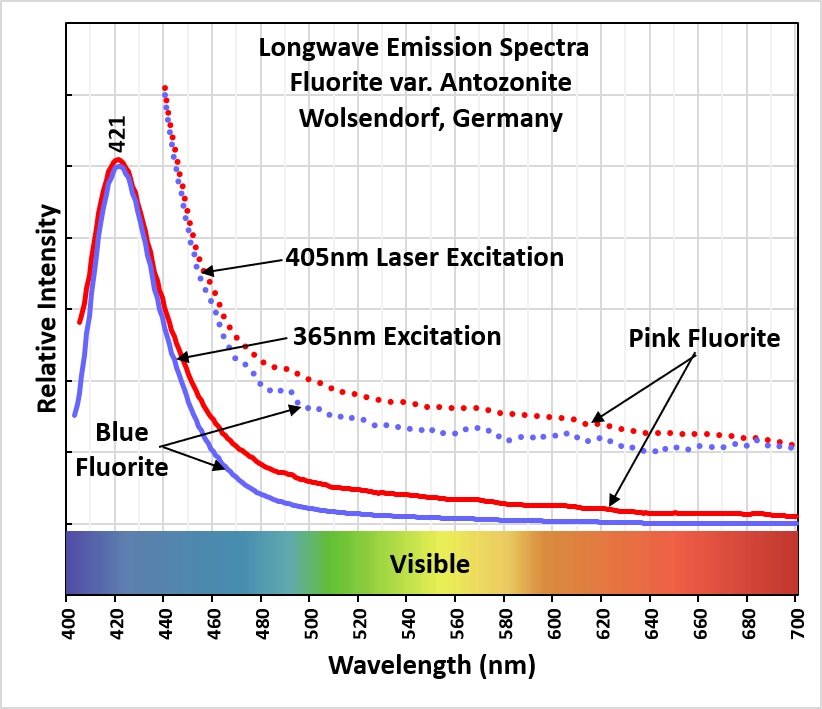
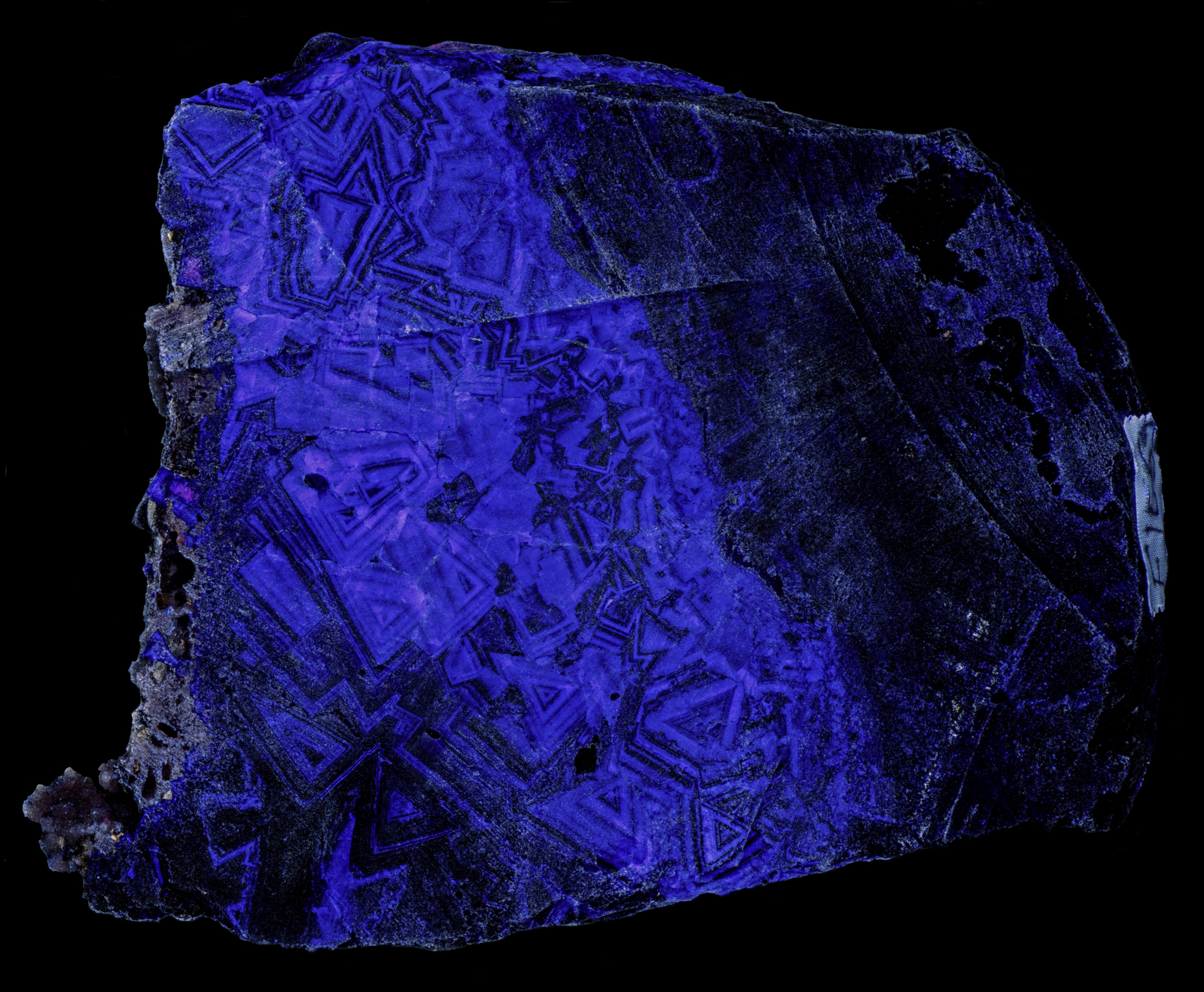
This antozonite specimen is weakly fluorescent; imaging it requires a very bright 365 nm LED and a long, two-second exposure. Most longwave fluorescence in this specimen is violet blue that is typical of fluorite activated when europium (Eu2+) replaces calcium. The longwave emission spectrum is a sharp emission peak at 421 nm. Small areas in the specimen also fluoresce pink. Their spectra retain the europium-related 421 nm peak but show no distinct orange-to-red peak that would combine with the blue emission to produce pink. The additional orange-to-red emission is likely caused by ozonide (O3-) substituting for fluorine in the fluorite lattice. This ozonide probably formed when elemental fluorine in the hydrothermal fluid reacted with water and was incorporated into crystallizing fluorite. The blue-fluorescent fluorite is zoned; the side view of the specimen reveals layers with different fluorescence, including pink-fluorescent bands near the specimen's outer edge. This layering records multiple episodes of hydrothermal deposition that produced fluorite of differing chemical compositions.
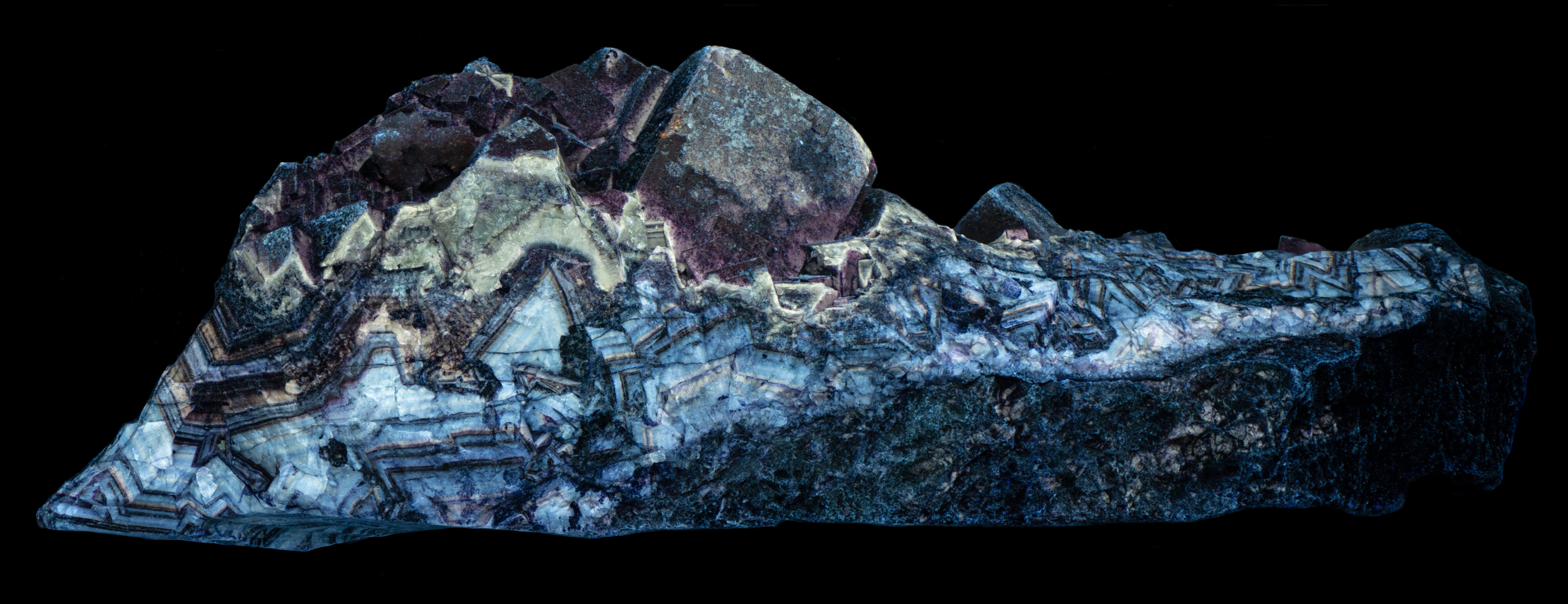
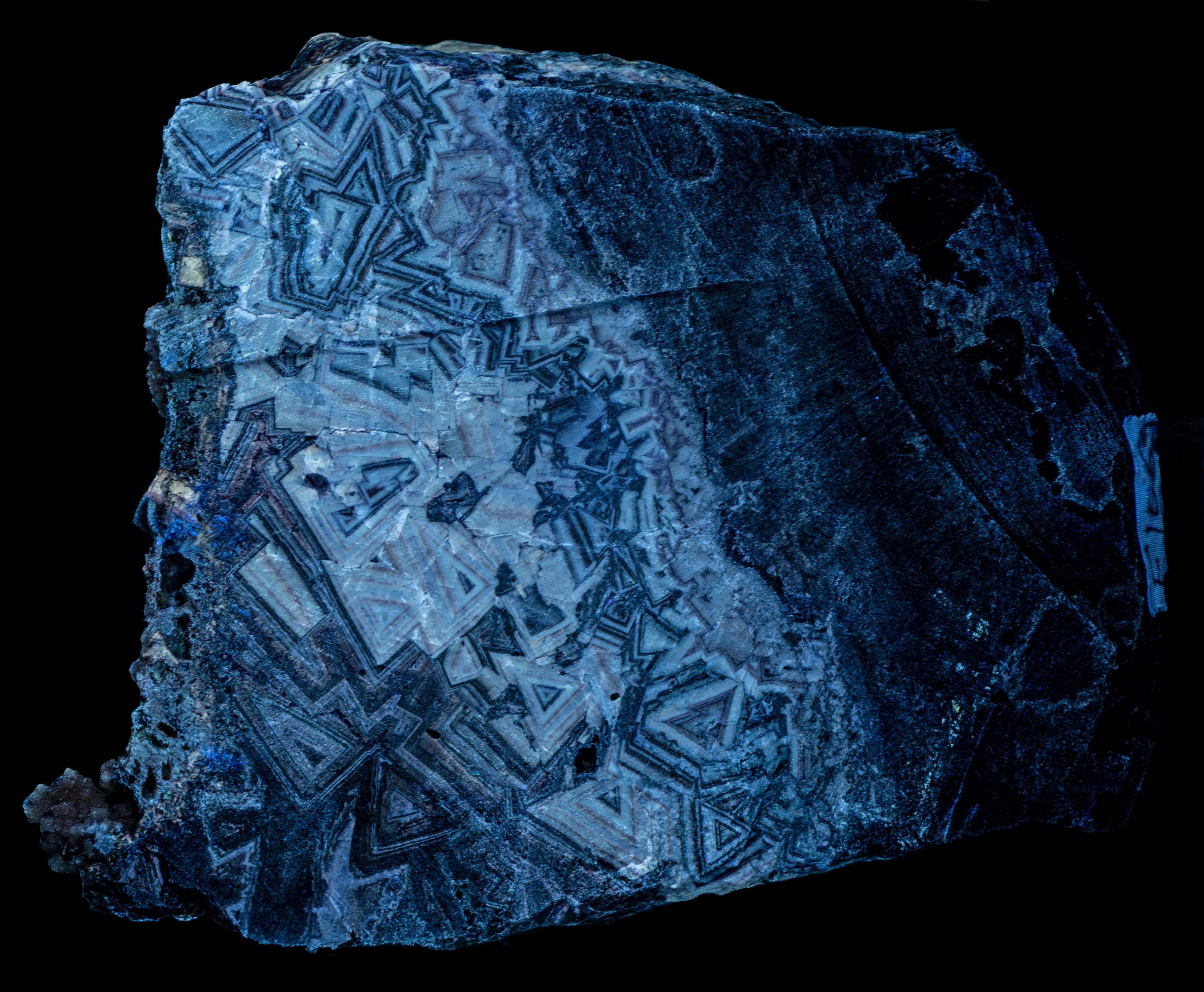
Under shortwave light, the antozonite that fluoresces pink under longwave appears off-white, while the longwave blue-fluorescent fluorite appears light blue. This weak shortwave response is atypical of fluorite and is likely activated by ozonide, possibly with other activators.
Reference
Schmedt auf der Günne, J., Mangstl, M. and Kraus, F., 2012, Occurrence of Difluorine F2 in Nature—In Situ Proof and Quantification by NMR Spectroscopy, Angewandte Chemie, V.51, pp.7847-7849
Summary of luminescence responses:
Fluorite var. Antozonite (Mindat) (RRUFF)
- Fluorescence under Longwave (365nm LED) UV light: Blue
- Fluorescence under Longwave (365nm LED) UV light: White